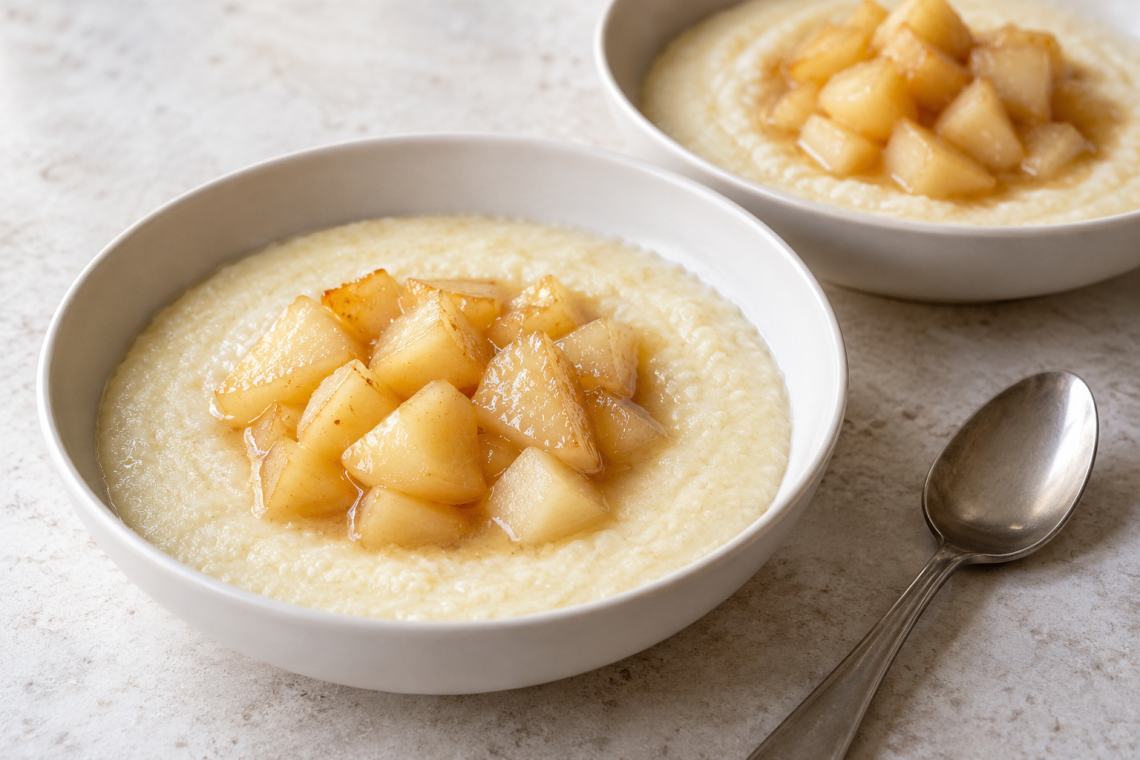
Miso pear semolina pudding for two starts with a familiar warm milk pudding and adds a savory accent through the fruit. Pear pieces soften in butter, then receive a light maple-miso glaze. They sit over a gently sweet semolina base, so each spoonful can carry both creamy grain and tender fruit.
The intention is a dessert with a salted finish, not a bowl that tastes strongly of soup or fermented paste. Mild white miso is measured by the teaspoon. Keeping it in the pear topping gives you a clear flavor contrast and makes the pudding itself simple to cook.
Choose the semolina that matches a quick pudding
Use fine semolina sold for pudding or porridge. It is made from wheat and is different from cornmeal, rice cereal and prepared couscous. Coarse grains take longer to soften and can leave an unexpectedly gritty bowl within the stated cooking time.
The recipe uses thirty grams with three hundred milliliters of milk. Weighing the grain is useful because a heaped spoonful can add enough to turn a soft pudding into a stiff mound. The three-tablespoon measure is a guide; the weight is the more consistent target.
The fruit and glaze in miso pear semolina pudding for two
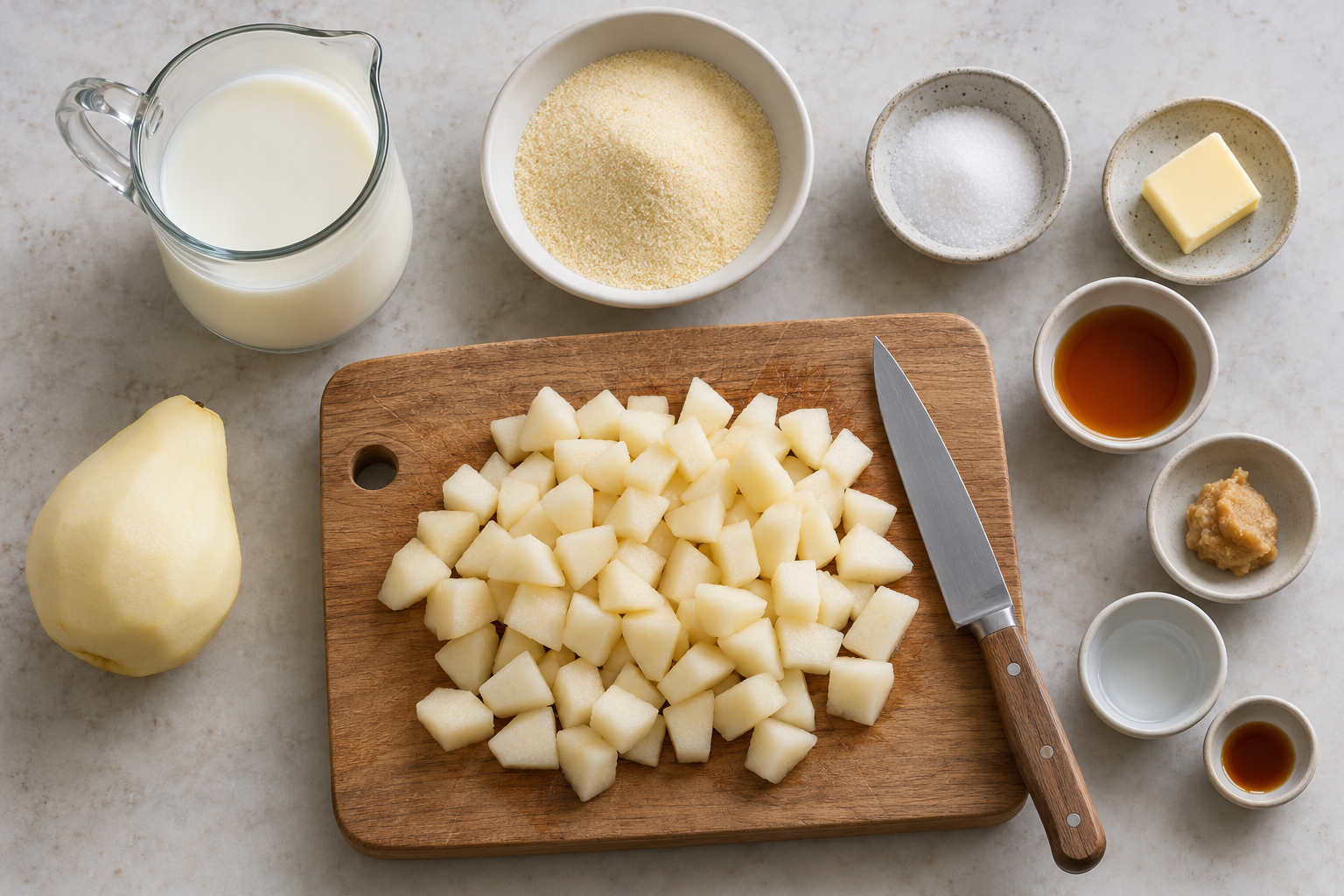
Choose a ripe but firm pear that gives slightly near the stem. An extremely hard pear can take much longer to soften, while an overripe one may collapse into sauce before it gains any color. Peel, core and dice it, then weigh two hundred grams of usable fruit.
Half-inch pieces are small enough to soften in a skillet but large enough to remain distinct. Mix sizes as evenly as you can. Tiny scraps may brown while larger chunks stay hard, forcing you to choose between overcooked edges and an undercooked center.
Whisk the white miso with maple syrup and the measured two teaspoons of water before adding it to the skillet. This prevents salty lumps. Use a mild white miso and taste a tiny amount from the package if it is unfamiliar; different brands vary in strength.
Red miso is not a straightforward equal replacement. Its stronger flavor can take over a small dessert. For this version, keep to the mild paste and let maple syrup connect it to the pear’s sweetness. No extra salt is included.
A practical order: fruit first, pudding second
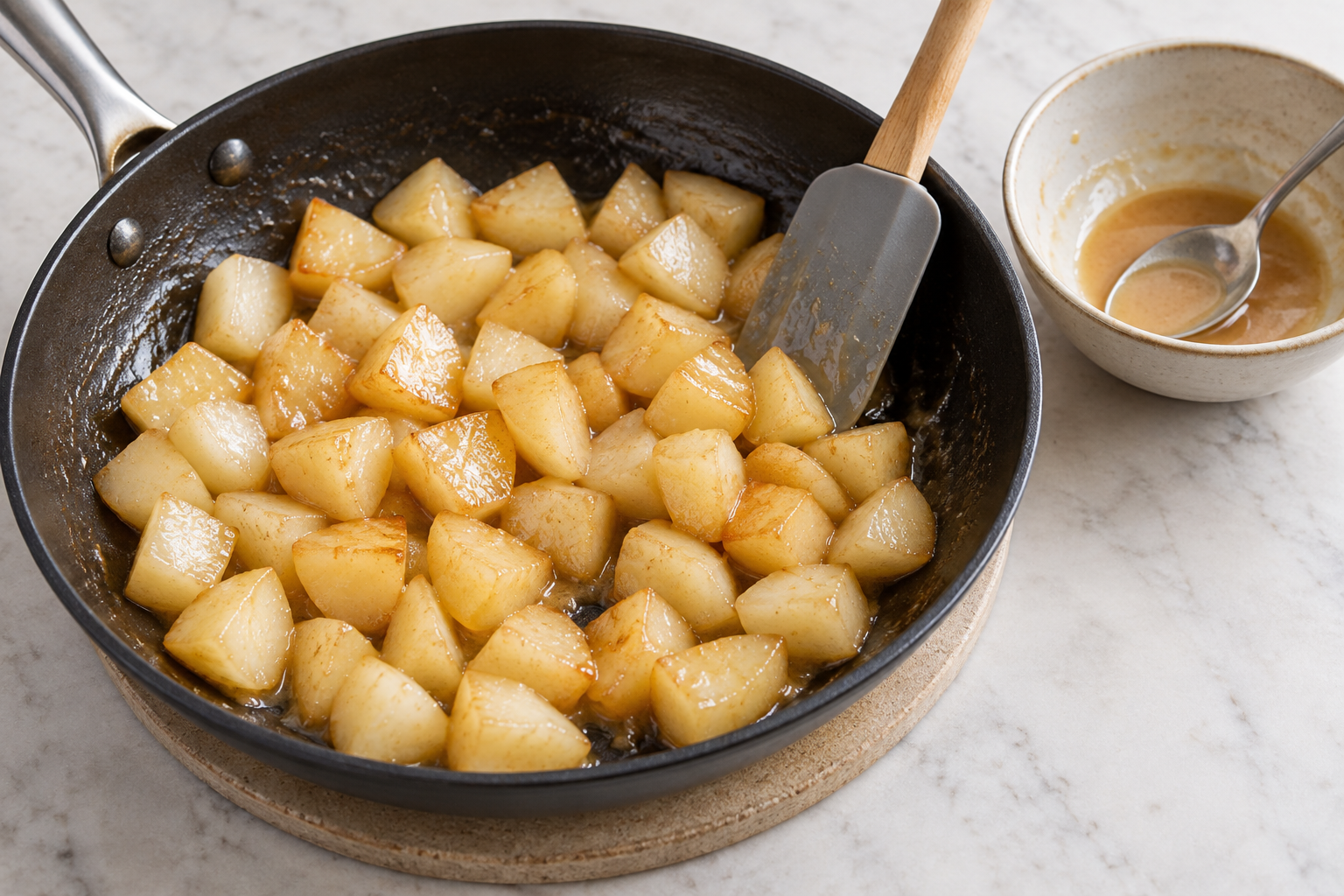
Begin with the pears because they can wait briefly while the pudding cooks. Melt the butter over medium heat, add the fruit and stir occasionally. Look for tenderness and a few pale golden edges, not a dark crust. The fruit should still hold its shape when lifted.
If the skillet becomes dry before the pear softens, add one tablespoon of water and let it evaporate. That small amount helps the fruit finish cooking without burning the butter. It is separate from the measured water already mixed into the glaze.
Take the skillet off the heat before adding the maple-miso mixture. Toss gently so every piece gets a light coating, then cover loosely. There is no need to boil the glaze into a caramel. The measured syrup should cling to the fruit without becoming a thick sticky pool.
Whisk the grain in slowly
Warm the milk and sugar in a heavy saucepan until steaming. You do not need a rolling boil. Sprinkle the semolina in a thin, steady stream while whisking with your other hand. Pouring the entire measured portion into one spot can create lumps with dry centers.
Reduce the heat and continue whisking, reaching the curved edges of the saucepan as well as the center. Milk can catch in those corners. A flexible spatula is useful for an occasional scrape, followed by the whisk to keep the mixture even.
The proposed cooking interval after adding the grain is five to six minutes. Taste a small cooled spoonful to check tenderness. The pudding should fall from the spoon in a thick ribbon, with no hard grainy bite. It will continue thickening as it stands.
Two textures that should remain distinct
| Part | Ready-to-serve cue | Avoid |
|---|---|---|
| Semolina base | Softly spoonable and flowing slowly | A stiff mass that must be cut with the spoon. |
| Pear pieces | Tender enough to pierce easily, still recognizable | Large hard chunks or a completely broken-down purée. |
| Maple-miso glaze | A thin coating over the fruit | Undissolved salty miso pockets. |
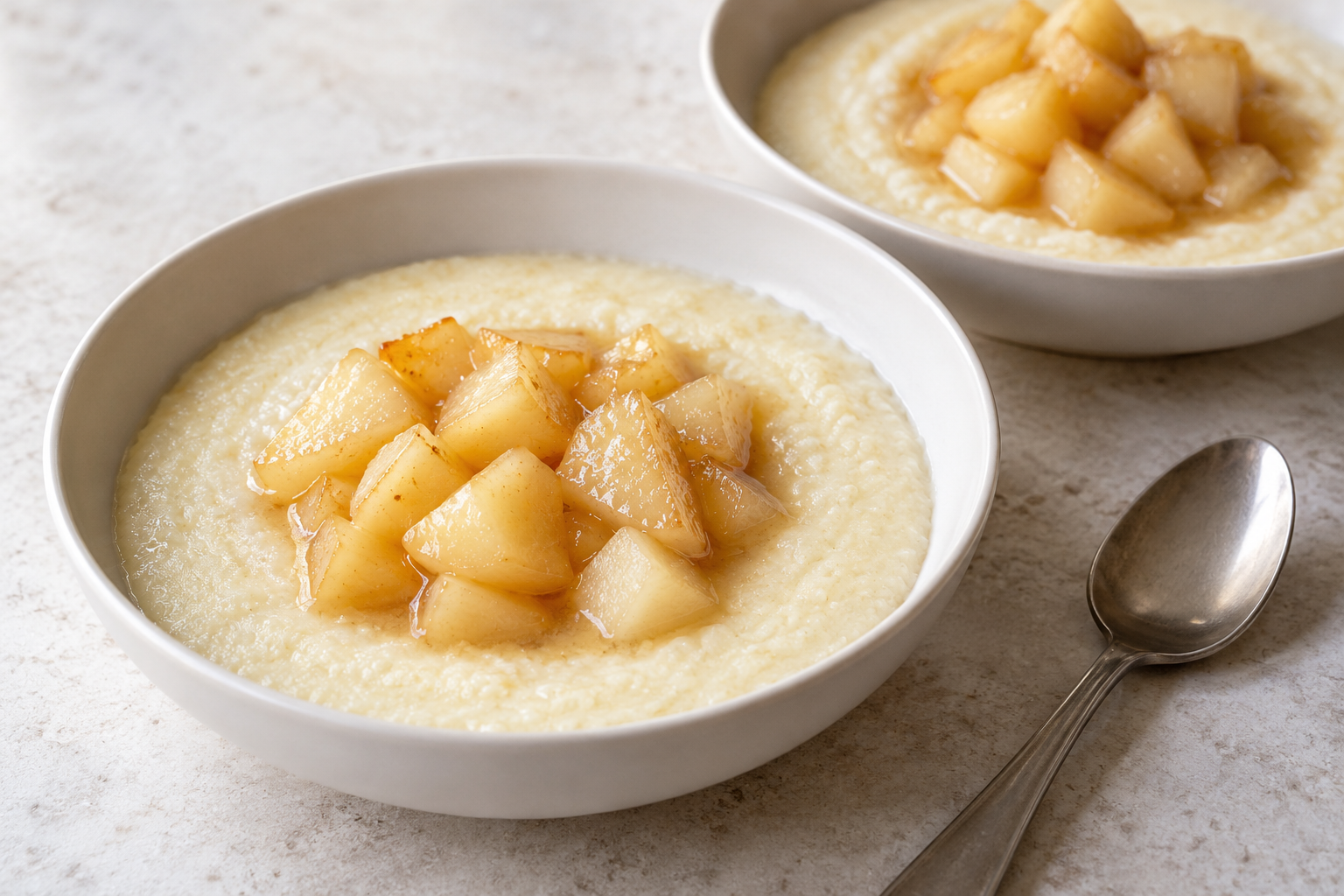
Divide the pudding between two wide twelve-ounce bowls. These leave room for the fruit without filling to the rim. Spoon the pears and their glaze over the center, keeping a little plain pudding visible around the edge.
Let the bowls stand for five minutes. This is included in the total time and gives the grain a chance to settle into its serving texture. If the pudding tightens in the saucepan before portioning, whisk in warm milk a teaspoon at a time until it loosens.
Useful fixes for a small batch
- Lumps appear as the grain goes in.
- Whisk immediately and lower the heat. Next time, sprinkle slowly rather than tipping the grain into one spot.
- The base is thick but gritty.
- The grain needs more time and possibly a little milk. Keep the heat low; extra heat alone can scorch the bottom.
- The pears taste sharply salty.
- Check the miso amount and type. Serve them with more of the plain base rather than adding salt or more miso.
- The fruit is firm but the butter is browning.
- Add the measured optional spoonful of water and let the fruit soften before the glaze goes in.
Serving variations with clear limits
A little finely grated lemon zest on an individual bowl can brighten the dessert. Start with a small pinch, avoiding the bitter white pith. Extra nuts or biscuit crumbs are optional, but this version is designed around the contrast between soft pudding and tender pear.
Four questions about preparation and leftovers
Can I make it with semolina pasta flour?
Products vary in how finely they are milled. Choose one labeled for quick porridge or pudding when possible. A different grind may clump or need another cooking interval.
Can I use canned pears?
They are already soft and may contain syrup. The skillet timing and sweetness would need adjustment, so they are not a direct substitute for the fresh pear in this recipe.
Can it be served cold?
Yes, after prompt refrigeration, but the pudding will set firmer. Keep the fruit separate until serving if you want the glaze to remain distinct.
How should leftovers be stored?
Refrigerate promptly at 40°F or below and use within three days. Follow USDA leftover guidance for limiting room-temperature time to two hours, or one hour above 90°F. Reheat to 165°F, adding a little milk to loosen the grain.
The balance in miso pear semolina pudding for two depends on mild miso, tender fruit and a base that stays soft. Keep those three points steady, and the unusual glaze has room to complement the dessert.
A closer look at milk, grain and serving texture
The easiest way to troubleshoot a small pudding is to separate three questions: has the grain softened, has too much liquid evaporated, and has the mixture simply cooled? Those can all make a spoonful feel thicker, but they call for different responses. Check a cooled taste of the plain base before you judge it with sweet, soft pear on top.
Soft grain, stiff pudding
If the grain feels tender but the base barely moves, the mixture needs loosening. Take the saucepan off the burner and whisk in a teaspoon of warm milk. Repeat only as needed, giving each addition time to blend. This is a texture adjustment after cooking; it does not replace the milk measured at the start.
A wide saucepan loses liquid over a larger surface than a narrow one. Use the small heavy saucepan specified in the recipe so this modest quantity does not spread into a very thin layer. A larger pan may require closer attention even if you keep the same heat setting.
Firm grain, thick pudding
If individual grains still feel hard, adding cold milk and immediately serving will not finish them. Keep the mixture over low heat with enough milk to remain stirrable. Follow any longer cooking guidance on your semolina package, then taste another cooled spoonful. Thickness alone is not a signal that the grain has cooked.
Whisk along the edge where the bottom curves into the sides. If you smell scorching, stop scraping the base and transfer the unburned upper portion to a clean pan. Taste that portion before continuing; extra sugar and pear will not remove a burned flavor.
Keep the milk choice consistent
Whole milk is the starting point for the written recipe. Lower-fat milk changes the richness, while sweetened plant drinks change both sweetness and flavor. A different drink may also thicken differently. If you want to explore a substitute, keep a note of the product and adjust from a small batch rather than describing every milk as an identical swap.
Reserve any extra milk for correcting the cooked texture. Do not pour it into the pan simply because it is sitting beside the stove. Using one measuring jug for the recipe amount and a separate small cup for adjustments prevents an accidental change to the grain-to-liquid ratio.
Finish the base with the vanilla
Stir the measured quarter teaspoon of vanilla into the pudding after removing it from the heat, as the recipe card directs. The vanilla belongs in the milk base; the maple and miso belong in the fruit glaze. Keeping those flavors in their intended parts gives the dessert a clear contrast instead of one uniformly salty-sweet mixture.
Taste a little cooked pudding with one glazed pear piece before adding any optional garnish. If the combination is already sweet enough, do not add more syrup automatically. Use a small amount of lemon zest only if you want a brighter aroma. Juice is a different ingredient and adds liquid and acidity to the milk.
Plan ahead without holding a pan on the stove
For a short head start, weigh the grain and sugar into separate covered containers and mix the glaze in a small bowl. Keep milk and other perishable ingredients refrigerated until needed. Prepare the pear close to cooking, and set out the two bowls before heating the milk so the finished base can be portioned promptly.
For leftovers, transfer the pudding and pears into separate shallow containers and refrigerate promptly. There is no need to leave a saucepan on the counter until completely cold. Separate containers let you stir the pudding smooth without breaking up the fruit. Label the date, and follow the three-day storage plan above.
Reheat only the portion you intend to eat. Use gentle heat with a little milk, stirring well and checking that leftovers reach 165°F throughout. Then let the serving cool to a comfortable eating temperature. A soft spoonable consistency does not establish a safe reheating temperature.
More FAQs about miso pear semolina pudding for two
Can I make it without miso?
You can leave the miso out of the pear glaze for a simpler maple-pear topping. Keep the other quantities steady and taste before adding anything else. The result loses the savory accent, so it is a variation rather than the same flavor balance. Do not replace miso with a teaspoon of salt.
Can I use couscous instead of semolina?
No direct swap is provided here. Prepared couscous consists of formed granules and behaves differently from the fine semolina used to thicken this milk pudding. Use the product described in the ingredients, or choose a recipe written for the grain you have.
What changes if I make four servings?
Double all the ingredients, choose pans with enough room to stir, and keep the pear pieces the same size. A larger milk quantity takes longer to heat. The cooking time does not simply double, so check grain tenderness and fruit texture rather than extending every stage by the same amount.
For miso pear semolina pudding for two, the final check is a tender base that still moves on the spoon, topped with distinct pieces of pear. Serve the warm dessert promptly after its brief stand, with the full recipe below available to print.
Miso Pear Semolina Pudding for Two
Ingredients
Equipment
Method
- Peel, core and dice the pear into 1/2-inch pieces, then weigh 200 g. Whisk the maple syrup, white miso and 2 teaspoons water in a small bowl until smooth.
- Melt the butter in an 8-inch skillet over medium heat. Add the pear and cook for 8–10 minutes, stirring, until tender with a few pale golden edges. If the pan dries before the pear softens, add 1 tablespoon water and let it evaporate. Remove from the heat, stir in the maple-miso mixture, and cover loosely while making the pudding.
- In a 1-quart heavy saucepan, warm the milk with the sugar over medium-low heat until steaming, about 3–4 minutes. Whisk continuously while sprinkling in the semolina in a thin stream.
- Reduce the heat to low. Cook for about 5–6 minutes, whisking and scraping the corners, until the grains are tender and the pudding falls from a spoon in a thick ribbon. Do not let the base scorch; follow any longer cooking time required by your particular semolina package.
- Remove from the heat and stir in the vanilla. Divide between two wide serving bowls. Spoon the warm pears and their light glaze over the pudding.
- Let stand for 5 minutes before serving. If the pudding has become too thick before portioning, whisk in a little warm milk, 1 teaspoon at a time.