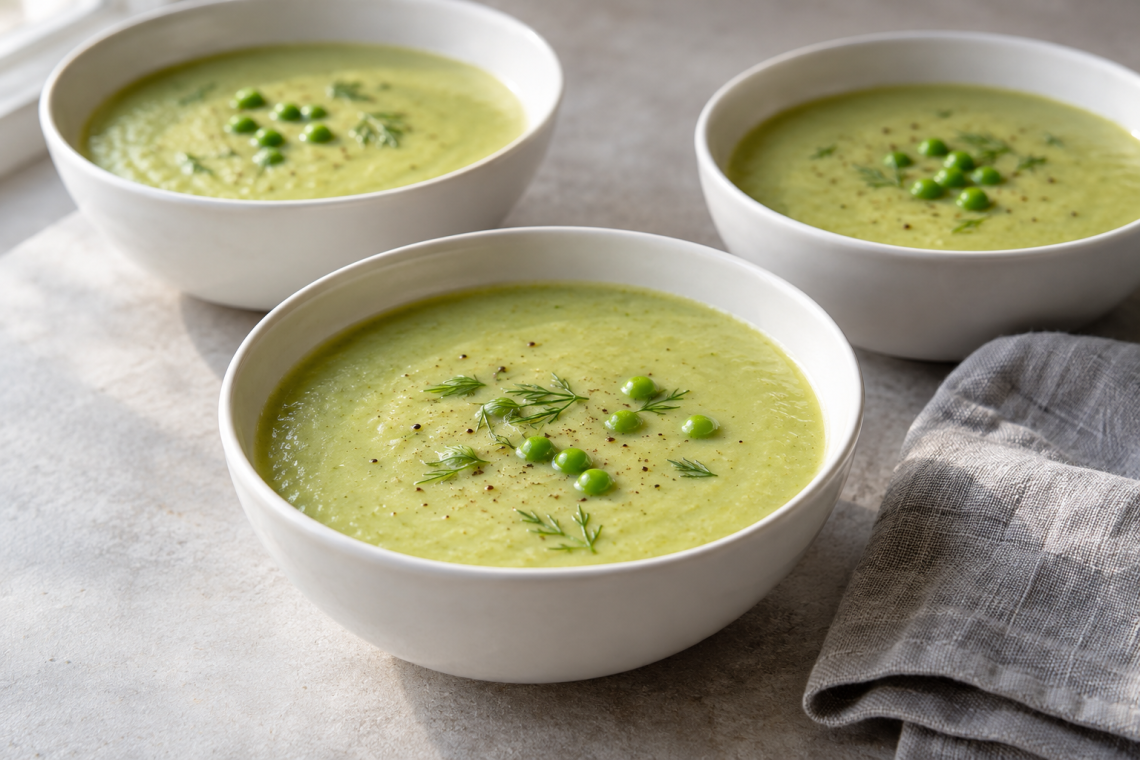
Frozen cauliflower pea soup without heavy cream turns two freezer vegetables and one small potato into a smooth, bright bowl without relying on dairy. The cauliflower and potato form the pale, creamy base; the peas are added only after those vegetables are tender so they keep more of their fresh color and flavor.
This small pot makes three modest bowls for lunch with toast or sandwiches. Expect a mellow cauliflower flavor, a little sweetness from the peas, and a fresh finish from lemon and dill. You do not need milk, a flour roux, or a separate cream substitute. The key is to soften the potato completely before blending and hold back the extra broth until you see the finished texture.
Find what you need: Ingredients · Step-by-step method · Texture fixes · Storage · FAQs.
Frozen cauliflower pea soup at a glance
- Estimated yield: 3 modest bowls, roughly 1 to 1 1/4 cups each
- Preparation: about 10 minutes
- Cooking: about 24–32 minutes
- Estimated total: about 34–42 minutes
- Equipment: 3-quart saucepan with lid, cutting board, chef’s knife, measuring cups and spoons, heatproof ladle, and an immersion blender
The stated cooking range includes softening the onion, bringing the cold vegetables and broth to a simmer, simmering until the potato is completely tender, and briefly heating the peas. Burner strength, pan width, starting broth temperature and potato size will change the clock, so the method uses physical cues as the final decision point.
Allow extra time when the frozen-pea package requires a longer cooking stage than the original estimate.
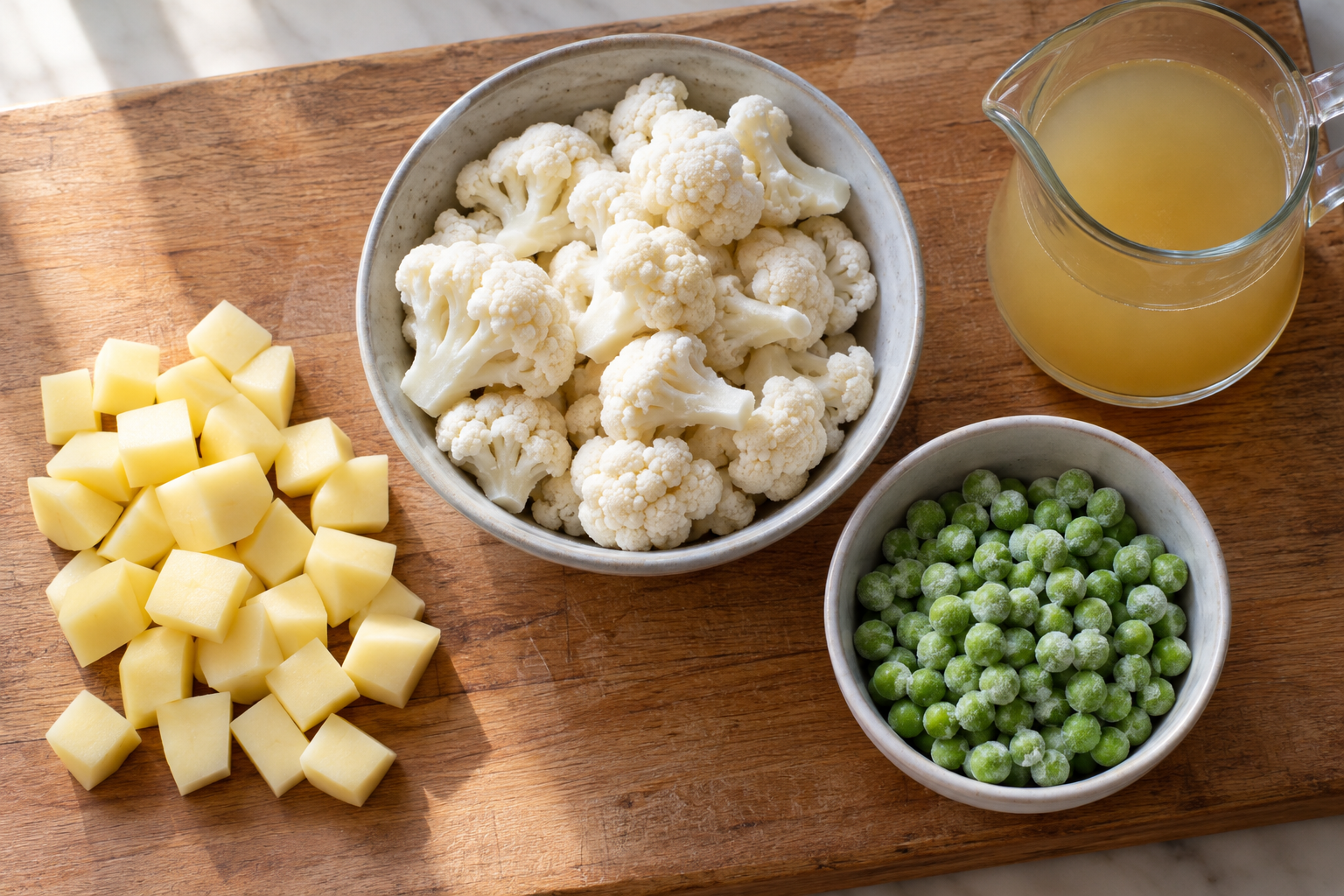
Measured ingredients and preparation notes
- 1 tablespoon olive oil
- 1/2 medium yellow onion, cut into 1/4-inch pieces (about 1/2 cup)
- 1 small russet or yellow potato, peeled and cut into 1/2-inch cubes (about 5 ounces or 1 cup)
- 2 cups frozen cauliflower florets, kept frozen
- 2 1/2 cups low-sodium vegetable broth, plus up to 1/2 cup more for thinning
- 3/4 cup frozen green peas, kept frozen
- 1/4 teaspoon dried dill, or 1 teaspoon finely chopped fresh dill
- 1 tablespoon lemon juice, plus more to taste
- 1/4 teaspoon fine salt to start, only if the broth needs it
- 1/8 teaspoon black pepper, plus more to taste
Why potato replaces heavy cream
Potato releases starch as it cooks and supplies body when blended with the tender cauliflower. It does not add dairy flavor, but it can make the broth feel fuller and reduce the need for cream. Keep the cubes close to 1/2 inch. Larger pieces may stay firm after the cauliflower is ready, while very small pieces can break down before the rest of the pot has softened.
Why the peas go in last
Frozen peas need much less cooking than the potato and cauliflower, but they still need their full package-directed cooking time. Adding them after the potato and cauliflower are tender protects the sequence without treating the peas as raw garnish. Reserve visible green pieces only after they are completely cooked.
Choose broth before adding salt
Vegetable broths vary widely in sodium and seasoning. Taste the broth before measuring the salt, then begin conservatively. It is easier to add salt after blending than to correct an over-salted purée. Check labels if you need the soup to be gluten-free, because some broths include flavorings or processing statements that may matter.
Before you turn on the stove
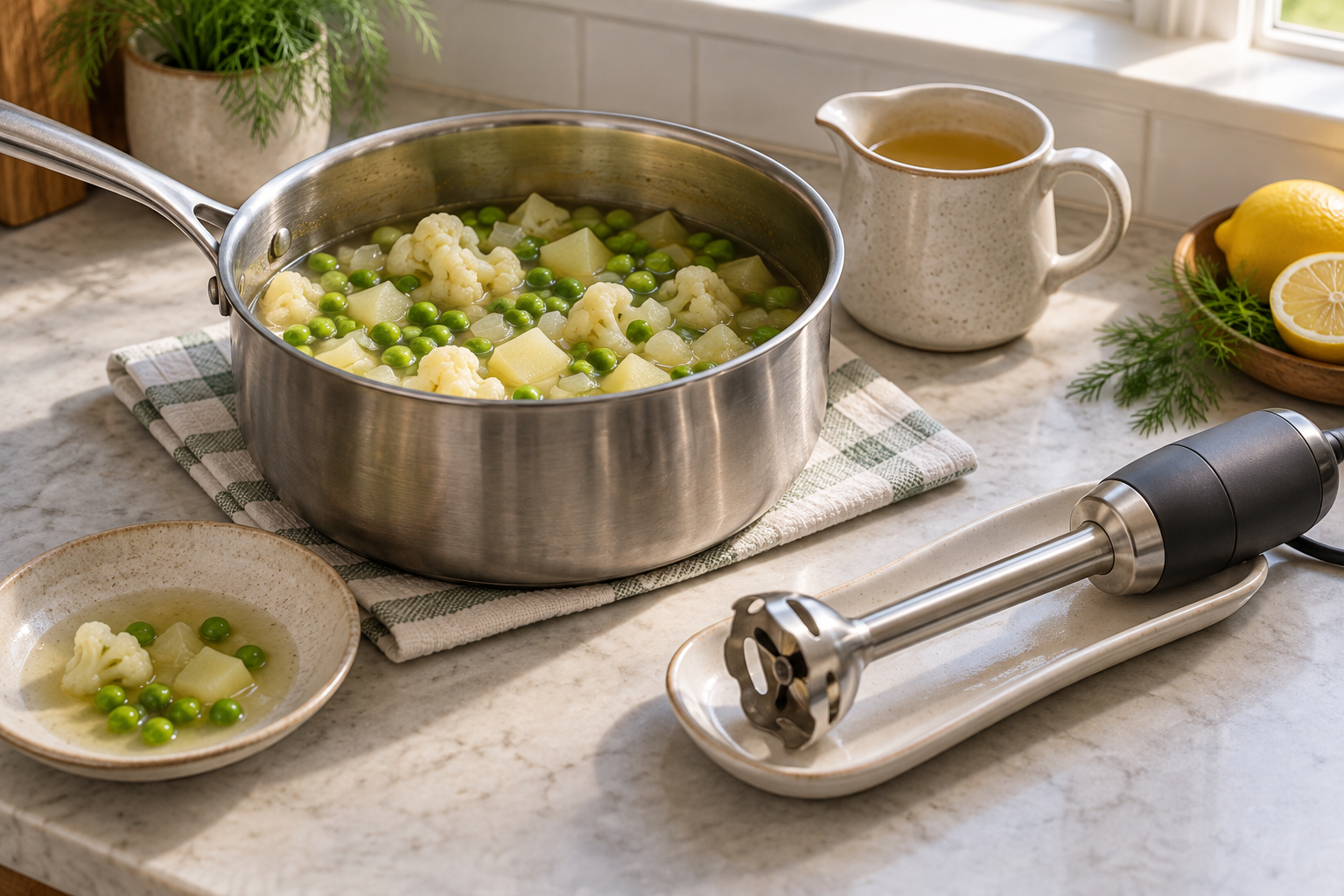
- Keep the two frozen vegetables separate. The cauliflower cooks with the potato; the peas join later. Use plain vegetables without butter, cheese sauce, or seasoning packets.
- Measure the reserve broth separately. Start the pot with 2 1/2 cups and keep up to 1/2 cup nearby. You may not need all of it.
- Check the pea package. Follow its cooking method and full cooking time. If it requires a different method, cook the peas separately, drain, and add them cooked.
- Set out the blender and a spoon rest. Keep the cord away from the burner. The blender should be switched off before you put its head into the soup or lift it out.
Frozen vegetables need thorough cooking before eating; see the Food Standards Agency guidance. A bright green color alone is not a cooking test.
Cook frozen cauliflower pea soup without heavy cream
- Prepare the vegetables. Chop the onion and cut the peeled potato into even 1/2-inch cubes. Separate loose frozen cauliflower pieces by hand. Do not force a knife through a solid frozen block; let connected pieces soften in the cooking liquid before separating them safely with a spoon.
- Soften the onion. Warm the olive oil in a 3-quart saucepan over medium heat. Add the onion and cook for 4–5 minutes, stirring often, until softened and translucent but not deeply browned. Lower the heat if the edges begin to color quickly.
- Build the soup base. Add the diced potato, frozen cauliflower and 2 1/2 cups broth. Stir, scrape the bottom of the pan, and increase the heat to medium-high. Allow about 5–7 minutes for the cold mixture to reach an active simmer; do not count this heating period as part of the tenderizing time.
- Simmer until completely tender. Reduce the heat to maintain steady bubbles, partly cover the pan, and cook for 13–17 minutes. Stir once or twice. The potato is ready when a fork slides through the center of the largest cube without resistance, and a cauliflower stem should crush easily against the side of the pan.
- Cook the peas fully. Stir in the frozen peas and follow the package’s stovetop cooking instructions, including its full cooking time. Count the cooking time from the point specified on the package, allowing the soup to return to a simmer or boil as directed. If the package requires a separate method, cook the measured peas as directed and add them fully cooked and drained. For visible green pieces, use a slotted spoon to reserve about 1/4 cup cooked peas before blending.
- Blend safely. Remove the pan from the heat. Keep the immersion-blender head fully submerged and blend in short bursts until the soup is mostly smooth. Move the blender around the pan without lifting the blades above the liquid. If using a countertop blender, first check that the manufacturer permits hot ingredients in that exact model. Follow its temperature, fill and venting instructions; do not put hot or warm soup into a sealed personal blender cup. A brief cooling period does not make an unsuitable blender safe. Nutribullet’s official safety guidance specifically warns against hot or warm ingredients in sealed cups.
- Set the final consistency. Return the pan to low heat. Stir in the dill, lemon juice, starting salt and pepper. Add reserved peas if using. If the soup mounds on the spoon or leaves a rigid trail across the pan, stir in extra broth 2 tablespoons at a time. Heat gently until steaming; avoid a hard boil after the peas are added.
- Taste in order. First check salt, then acidity, then pepper and dill. Add no more than 1 teaspoon extra lemon juice at a time. Let each addition disperse before tasting again. Serve only after the seasoning and thickness are even from the first ladle to the last.
Three checkpoints for a creamy soup without dairy
A timer cannot tell you whether the potato center is still firm or whether the finished soup is thick enough. Use these checkpoints to make each decision.
Checkpoint 1: vegetables before blending
Lift out the largest potato cube and press it with a fork. It should flatten easily with no chalky or crunchy center. Test a thick cauliflower stem the same way. If either resists, continue simmering for 2 minutes and check again. Blending firm potato pieces can leave grainy flecks that extra liquid will not fix.
Checkpoint 2: the spoon trail
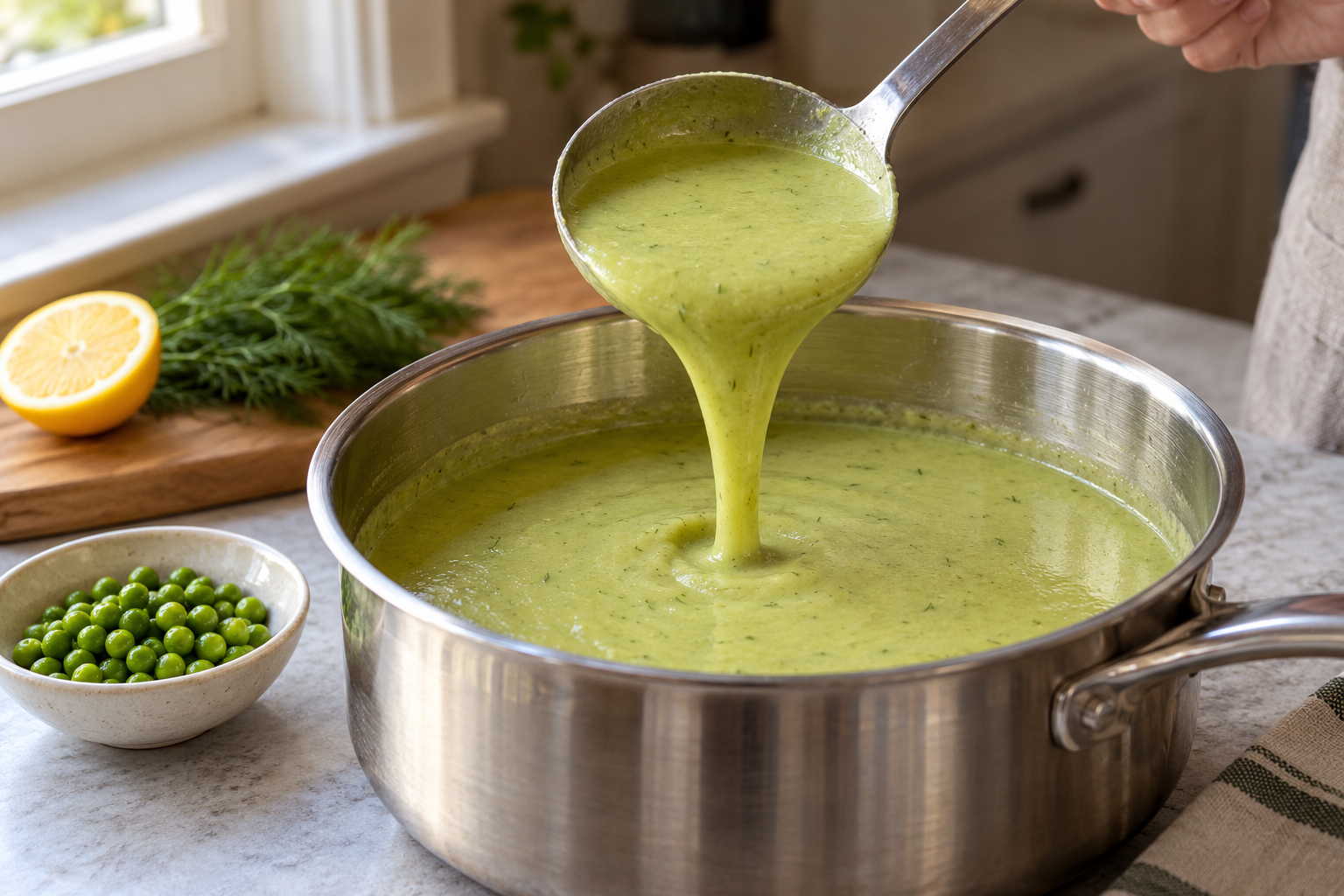
After blending, drag a spoon across the bottom of the saucepan. The trail should close slowly rather than remain sharply divided. If the soup sits like mashed potatoes, add broth. If it runs like plain broth, simmer uncovered for 2–4 minutes, stirring frequently, before making another adjustment. For more ideas, see the site’s guide to thickening soup without flour or cornstarch.
Judge the purée separately from the optional reserved peas. Those whole peas are meant to interrupt the smooth texture; their presence is not a reason to keep blending. Lift a spoonful containing mostly soup and let it run back into the pan. Look for an even flow rather than searching for a completely featureless bowl. If you see a firm pale piece, use the vegetable-tenderness check before reaching for more broth.
Adjust the thickness before adding extra seasoning. More broth dilutes the lemon, herbs, and salt as well as the soup itself. Stir thoroughly, taste a cooled spoonful, and make one change at a time. If you are serving salty toast alongside it, taste the two together before seasoning the entire pot again.
Checkpoint 3: pea color and texture
The peas should be hot and tender but still taste fresh, not wrinkled or starchy. Once the peas have completed their full package-directed cooking, avoid unnecessary additional simmering to help preserve their color. A longer pea simmer may be safe, but it can dull the color and make the soup taste flatter. The cauliflower, not prolonged pea cooking, should provide most of the base.
Troubleshooting by symptom
| What you notice | Likely cause | Practical adjustment |
|---|---|---|
| Soup is pasty or too thick | Large potato, evaporation, or too little broth | Stir in warm broth 2 tablespoons at a time over low heat. |
| Soup is thin | Small potato, watery vegetables, or extra broth | If already smooth, simmer uncovered briefly and stir before reassessing. Blend again only if soft vegetable pieces remain; extra blending is not a dependable way to thicken a fully smooth soup. |
| Small firm pieces remain | Potato or cauliflower was undercooked | Return to a gentle simmer until fully tender, then blend again. |
| Color looks dull | Peas simmered too long | Do not add more peas raw. On the next batch, avoid extra simmering after the peas have completed their full package-directed cooking. |
| Flavor is flat | Not enough salt, acid, or herb | Adjust salt first, then lemon in 1-teaspoon increments, then dill and pepper. |
| Flavor is too sharp | Too much lemon | Add broth a few tablespoons at a time and recheck salt; do not try to hide it with sugar. |
| Soup splatters while blending | Blender head lifted or vessel overfilled | Stop immediately, lower the head beneath the liquid, and resume in short bursts. |
Ingredient swaps and what changes
Frozen broccoli: Replace no more than 1 cup of the cauliflower with frozen broccoli. It will make the soup greener and more assertive. Do not assume the same flavor balance; add lemon only after tasting.
Fresh cauliflower: Use the same measured volume, cut into small florets, but begin checking tenderness a few minutes early because fresh pieces may heat differently from frozen.
Fresh peas: Use the same measured amount, adding them after the potato and cauliflower are tender. Cook until tender and hot throughout; young peas and larger, starchier peas will take different amounts of time. The flavor may be less sweet than frozen peas.
No potato: Extra cauliflower makes a lighter, less creamy soup. If you omit the potato, hold back some broth and add it after blending until the texture suits you. For other approaches, use the soup-thickening guide; a changed thickener will change the flavor and consistency.
Herbs: Parsley or chives can replace dill for a different flavor. Use tender herbs after blending so their aroma is not cooked away. For a heartier pea dish with a very different method, the site’s slow-cooker split pea soup without ham explains how dried split peas behave.
This recipe contains no intentionally added dairy, egg, meat, nuts or gluten. That wording does not guarantee an allergen-free bowl. Check the broth and every packaged ingredient for the labels and cross-contact statements relevant to your household.
Serving and small-batch planning
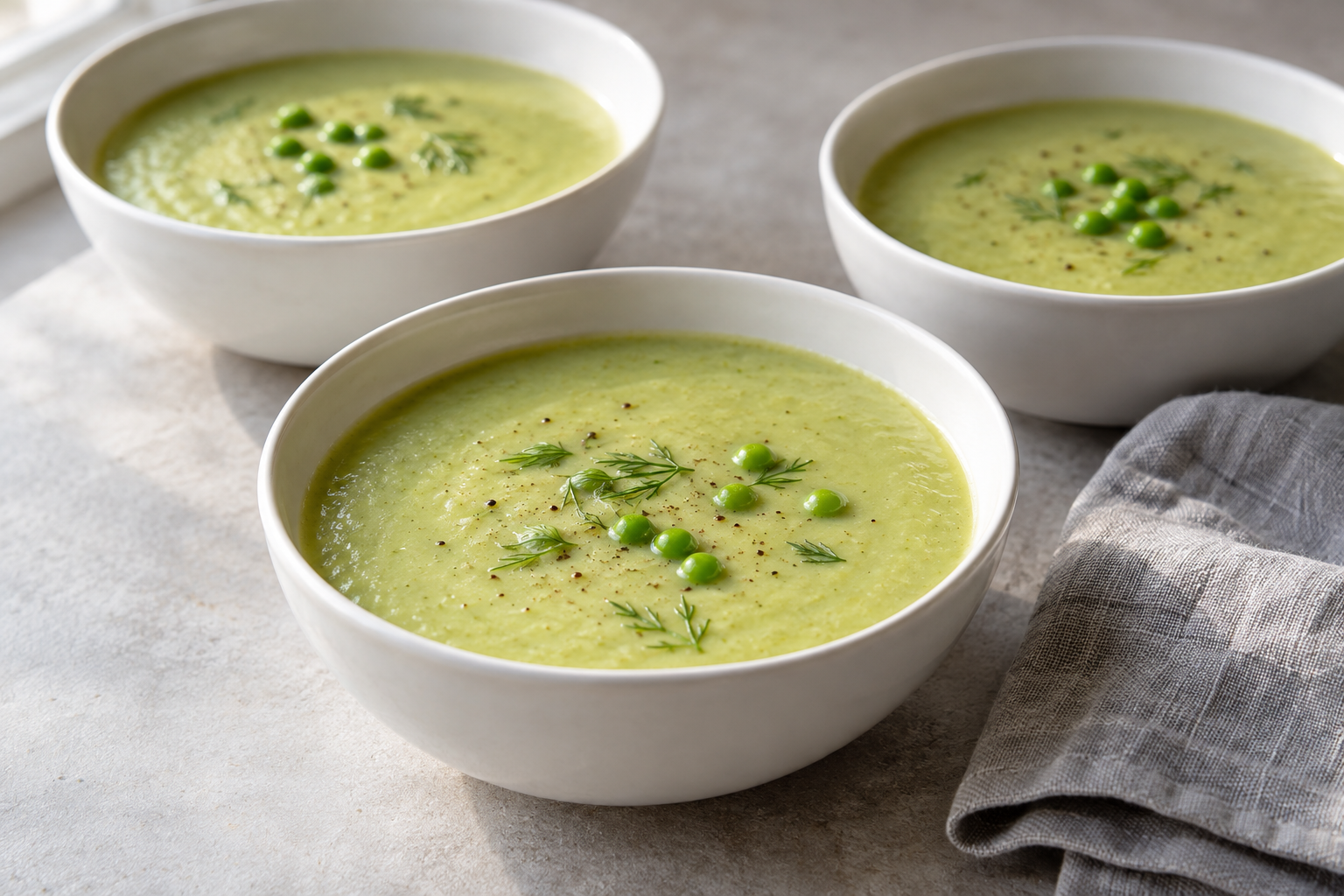
Serve the soup in warmed bowls with a few reserved peas, black pepper and a small pinch of fresh dill or chives. Toast, a grilled vegetable sandwich or a simple bean salad can turn one bowl into a fuller meal. If you add toppings, keep them restrained so the mild cauliflower and pea flavor remains recognizable.
The three-bowl yield remains approximate. Divide the finished soup evenly and use the stated modest portion size as a planning guide, rather than assuming three large dinner bowls.
Cooling, storing and reheating safely
Divide leftovers among shallow containers and refrigerate within 2 hours of cooking, or within 1 hour if the temperature is above 90°F. Keep the refrigerator at 40°F or below and use the soup within 3–4 days. You can refrigerate small portions while still warm; do not leave the whole saucepan on the counter to cool completely. These handling limits follow USDA leftover guidance.
The soup thickens as it chills. Stir in a little broth as it reheats, scraping the bottom of the saucepan to prevent sticking. For leftovers, USDA advises bringing soup to a rolling boil and reheating to 165°F throughout. Stir carefully and check with a food thermometer. In a microwave, use a microwave-safe bowl, cover loosely, stir between intervals, and check more than one spot. Stop heating once thoroughly reheated; prolonged boiling can dull the pea flavor and color.
Make one pot work for dinner and tomorrow’s lunch
Frozen cauliflower pea soup without heavy cream is easy to portion before serving. Set aside the amount you want for lunch, refrigerate it promptly, and keep bread and garnishes separate. That way, tomorrow’s serving keeps its smooth texture without soggy croutons or wilted herbs.
Doubling the recipe without guessing
For about six modest bowls, double every measured ingredient: 2 tablespoons oil, 1 medium onion, 2 small potatoes, 4 cups frozen cauliflower, 5 cups starting broth, 1 1/2 cups frozen peas, 1/2 teaspoon dried dill, 2 tablespoons lemon juice, and up to 1 cup extra broth. Start conservatively with salt because broth brands differ. Use a larger pot, such as a 5- to 6-quart Dutch oven, so there is room to stir and blend safely.
Do not double the simmering time. Keep the potato cubes the same size, allow longer for the larger cold mixture to heat, and use the fork test to decide when the potato and cauliflower are ready. Add the peas only after that point. Blend in short bursts, then add the reserve broth gradually; a larger pot can evaporate differently from the small saucepan.
Choose a finish for each bowl
- For a simple lunch: serve with whole-grain toast and a few fully cooked peas reserved from the pot.
- For crunch: add croutons immediately before eating. Check their ingredients if you need the entire meal to remain dairy-free.
- For a fresh finish: scatter chopped chives or dill over each bowl. Offer lemon wedges at the table so everyone can adjust their own portion.
- For a more filling meal: pair the soup with a bean salad or a toasted sandwich. This keeps the soup’s potato-to-broth balance intact.
If you plan to freeze part of the batch, pack it in individual portions and label the containers with the date. Leave room for expansion and save fresh herbs and crunchy toppings for serving. Potato-based purées may separate or feel slightly grainy after thawing; stir thoroughly during reheating and add a little broth only if needed.
Questions about the cauliflower and pea soup
Do I need to thaw the cauliflower?
The reference ingredients use frozen florets. Keep them frozen unless the package instructs otherwise, separate loose pieces and give the potato and thick stems their full tenderness check. Do not force a knife through a frozen block. Large connected pieces can be separated once softened in the cooking liquid.
Can I make the soup without a blender?
A fork or potato masher can break down the vegetables, but it produces a different, more uneven texture. The measured recipe is designed as a smooth purée. If using the specified immersion blender, keep its head submerged while running and stop it before lifting it from the soup.
Why are there small gritty pieces after blending?
Check whether the potato or a thick cauliflower stem was still firm. Extra broth changes thickness but does not immediately finish an undercooked center. Return the soup to a gentle simmer until those pieces soften, then blend again carefully. Use the largest-vegetable check before blending on the next attempt.
Can I use canned peas instead?
Yes, as a variation: drain 3/4 cup canned peas and add them after the potato and cauliflower have softened, then heat through before blending. Canned peas are softer and more muted in color than frozen peas, so the soup will look and taste different. Choose no-salt-added peas or reduce the added salt if needed.
Can frozen cauliflower pea soup without heavy cream be frozen?
Yes. Refrigerate promptly, then freeze portions in freezer-safe containers with room for expansion. Thaw overnight in the refrigerator and follow the reheating instructions above. The potato can make the thawed soup slightly grainier, so stir well before deciding whether it needs extra broth. Freeze a small portion first if you are particular about a silky texture.
How do I make one bowl into a fuller lunch?
Keep the soup’s modest portion and add toast, a sandwich or a separately prepared bean salad. Increasing the potato alone changes the thickness of the whole pot. If making a larger batch, scale all measured ingredients and use a pot with enough room for safe stirring and blending.
Handling references: FDA refrigerated storage guidance and FoodSafety.gov reheating temperatures.
Ready to cook? Frozen cauliflower pea soup without heavy cream comes together best when you soften the base first, cook the peas fully, and adjust the broth at the end. Use the printable card below to keep the measurements and steps beside your stove.
Frozen cauliflower pea soup recipe card
Frozen Cauliflower Pea Soup Without Heavy Cream
Ingredients
Equipment
Method
- Chop the onion and cut the peeled potato into even 1/2-inch cubes. Separate loose frozen cauliflower pieces by hand; do not force a knife through a solid frozen block.
- Warm the olive oil in the saucepan over medium heat. Add the onion and cook for 4–5 minutes, stirring often, until softened and translucent but not deeply browned.
- Add the potato, frozen cauliflower and 2 1/2 cups broth. Stir and increase the heat to medium-high. Allow about 5–7 minutes for the cold mixture to reach an active simmer; do not count this heating period as part of the tenderizing time.
- Reduce the heat to maintain steady bubbles, partly cover and cook for 13–17 minutes. The largest potato cube should yield without resistance, and a thick cauliflower stem should crush easily against the pan.
- Stir in the frozen peas and cook them for their full package-directed time. If the package requires a separate method, cook the measured peas as directed and add them fully cooked and drained. Optionally reserve about 1/4 cup cooked peas before blending.
- Remove the pan from the heat. Keep the immersion-blender head fully submerged and blend in short bursts until mostly smooth. For a countertop blender, first confirm the manufacturer permits hot ingredients in that exact model; follow its temperature, fill and venting instructions, and never put hot or warm soup into a sealed personal blender cup.
- Return the pan to low heat. Stir in the dill, lemon juice, starting salt and pepper. Add the reserved cooked peas if using. Stir in extra broth 2 tablespoons at a time if the soup is too thick, then heat gently until steaming.
- Check salt first, then acidity, pepper and dill. Add no more than 1 teaspoon extra lemon juice at a time. Serve when the seasoning and thickness are even throughout.
Notes
Rate this recipe
Made this soup? Leave a star rating and tell us how you served it. Notes about your broth, potato size, or favorite topping can help the next home cook.