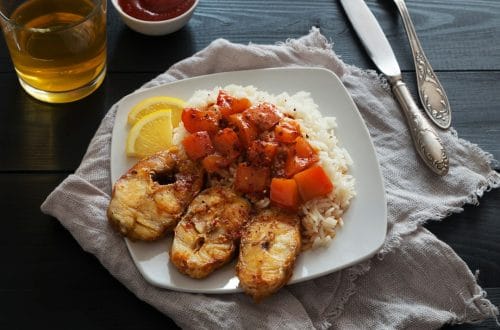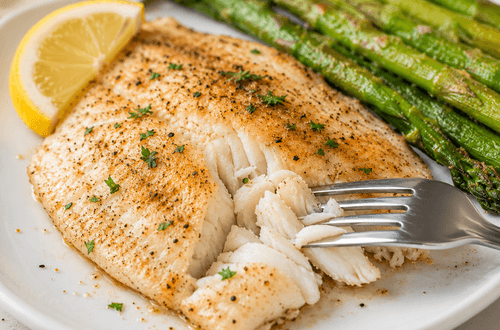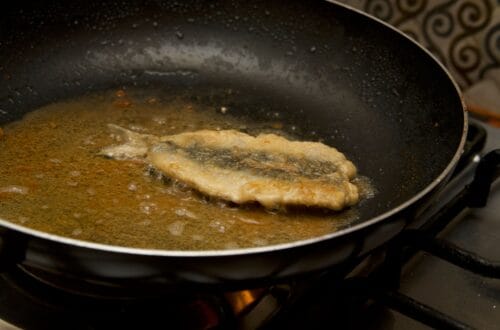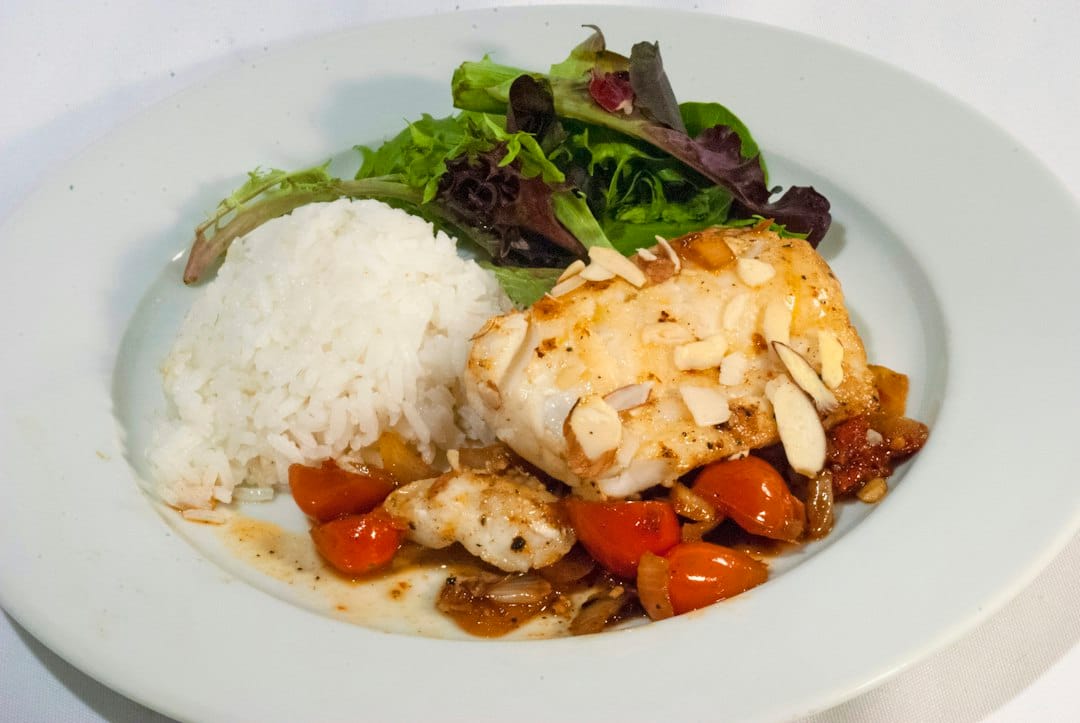
Keep cod fillets from falling apart by drying the surface, letting the first side cook without repeated movement, and supporting the whole piece when you turn or serve it. Cod naturally separates into flakes as it cooks; an intact-looking fillet is a handling goal, not a doneness test.
Jump to pan handling or lifting and serving. Confirm 145°F in the thickest center before serving. For a full explanation of doneness cues, see our cod doneness guide.
Start with a fillet you can lift in one piece
Choose similarly thick portions that fit on your spatula. A long fillet with a thin tail is harder to turn intact; cut it into serving portions while raw if needed. Pat each portion dry with paper towels immediately before seasoning, and keep it chilled until preparation.
Thaw frozen cod in the refrigerator so the center is no longer icy before using a thawed-fillet recipe. Follow vacuum-package removal instructions; do not leave fish sealed in reduced-oxygen packaging while thawing. Handle it gently when unwrapping and blot excess liquid rather than pressing or wringing the meat.
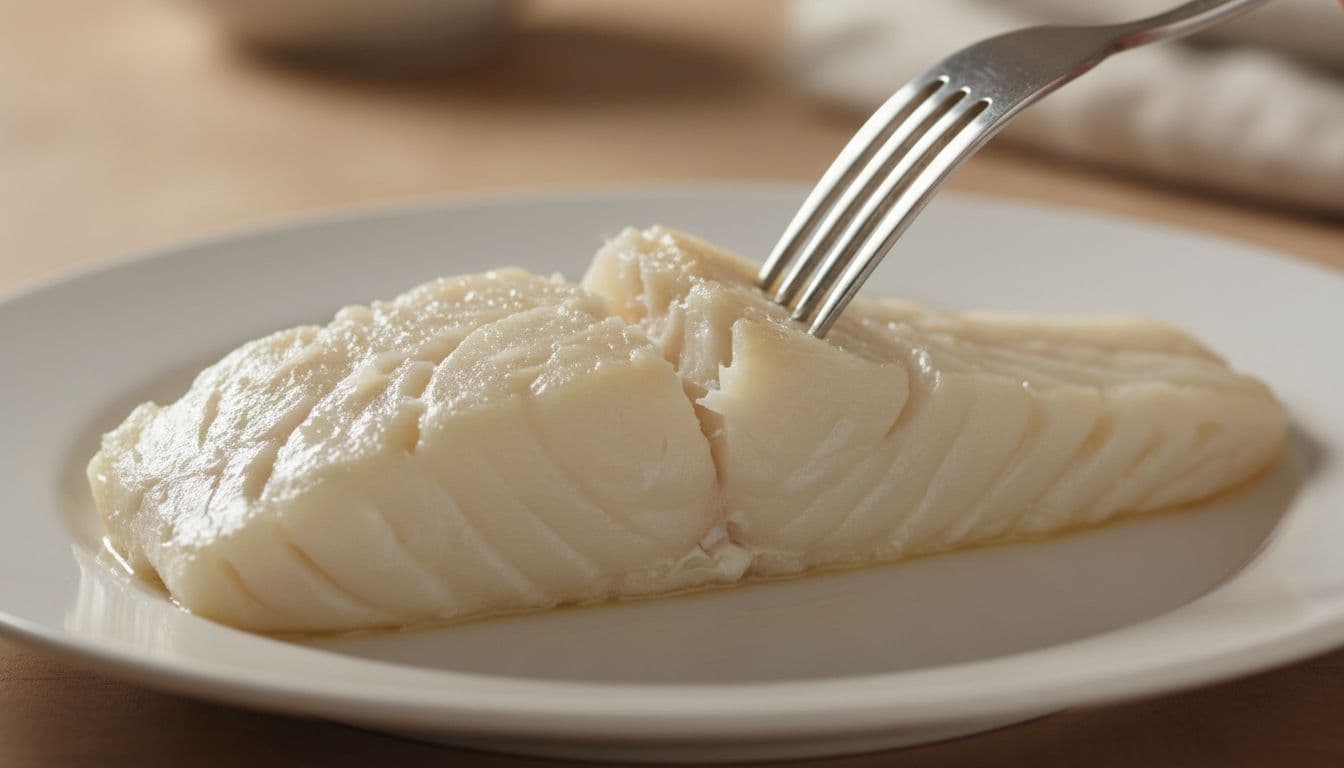
Match the fix to where the fillet breaks
| What happens | What to check | Practical change |
|---|---|---|
| Surface tears during turning | Spatula cannot slide beneath the first side | Pause briefly; slide a thin spatula under gently instead of pulling from above |
| Fillet bends and splits during lifting | Only a small section is supported | Use a wide spatula, or two spatulas for a long piece |
| Thin end crumbles first | Uneven thickness or repeated turning | Use more even portions and turn only once when pan cooking |
| Cooked flakes separate on the plate | Natural flaking or rough serving | Lift from underneath; do not treat breakage alone as proof of overcooking |
Check temperature without repeatedly breaking the flesh
Insert an instant-read probe from the side into the thickest center while the fillet remains supported in the pan or baking dish. Confirm 145°F (63°C), following FDA seafood guidance. Avoid repeatedly poking the same piece with a fork to see whether it flakes. Do not remove underdone fish and assume resting will finish it.
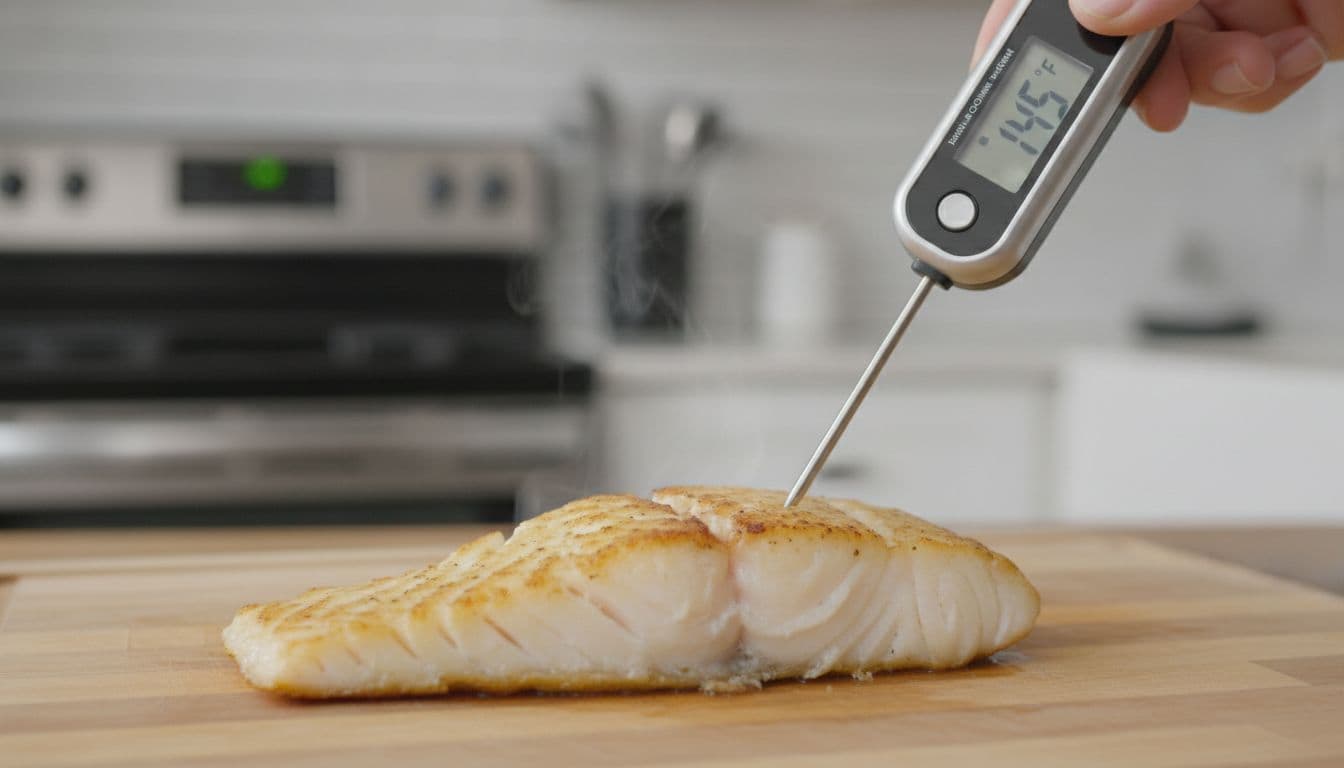
Check each fillet because thickness and starting temperature can differ within a batch. Learning how cooked cod looks helps you decide when to probe, but experience does not replace the temperature or a complete center doneness check.
How to turn cod without tearing it
Cod’s delicate texture is why people love it, but that same texture can make cooking feel risky. Most breakage starts before the fish is even done. Too much moisture, a cool pan, or flipping too early can tear the fillet long before serving.
For pan cooking, a few habits make a big difference:
- Pat the fillet dry: Wet fish sticks and steams.
- Oil the pan well: A thin, even film helps release the fish.
- Let the pan get hot first: Not smoking, but fully heated.
- Leave the fish alone: It will release more easily once a crust forms.
If the first side sticks before it is ready to turn, give it a brief additional interval. If the fish has already reached 145°F, loosen the stuck patch with a spatula instead of extending cooking just to force a crust. Forcing it is how you lose that golden surface. A thin fish spatula helps, because it slides under the cod without tearing it.
For a simple oven method, arrange thawed, similarly thick cod fillets in a lightly oiled baking dish. Brush with oil, season, and bake at 400°F. For pieces about 1 inch thick, begin checking around 10 minutes; the thickest center should reach 145°F before removal. Remove thinner finished pieces separately. This time estimate does not apply automatically to frozen fillets.
Plan the path from pan to plate
A fillet is most vulnerable when part of it hangs unsupported between the pan and serving plate. Set the clean plate beside the cooking area before the fish finishes, with the vegetables or starch already arranged. That shortens the transfer and avoids holding a delicate piece in the air while deciding where it should go.
Choose the support before you need it
Check whether your spatula can reach beneath most of the portion. A thin, broad blade can slide under the fish more easily than a short, blunt turner. Use a utensil compatible with the pan’s coating; a metal edge that is appropriate for stainless steel may scratch a nonstick surface.
For a long portion, place a second spatula beneath the unsupported end before lifting. Raise both ends together and keep the fish close to level. Do not grip the top with tongs to compensate for a spatula that is too small, because that concentrates pressure on the cooked flakes.
Release the fillet before trying to lift it
Work the blade gently along the pan surface, not down through the fish. If one patch remains attached, lower the supported portion and free that patch rather than pulling harder on the rest. The goal is to separate fish from pan without using the fillet itself as leverage.
After the temperature check confirms the fish is ready, transfer it directly to its serving position and slide the blade out gently. Add sauce around or lightly over the portion instead of repeatedly moving the fish to decorate the plate. An attractive presentation should not require extra handling after the delicate flakes have set.
Lift and serve with full support
Slide a wide spatula fully under the cooked portion before lifting it. Support a long piece with a second spatula rather than gripping it with tongs. Keep the serving plate close and lower the fish gently, then slide the spatula out without pressing on top.
Refrigerate leftovers within 2 hours, or within 1 hour above 90°F, keep at 40°F or below, and use within 3–4 days. Reheat leftovers to 165°F. Reheated cod may flake more readily, so lift it from underneath and serve in portions rather than trying to preserve a long fillet.
For the temperature, visual cues, and moisture questions, continue to our cod doneness guide.