BUTTER BEANS / BROWNED MUSHROOMS / THYME
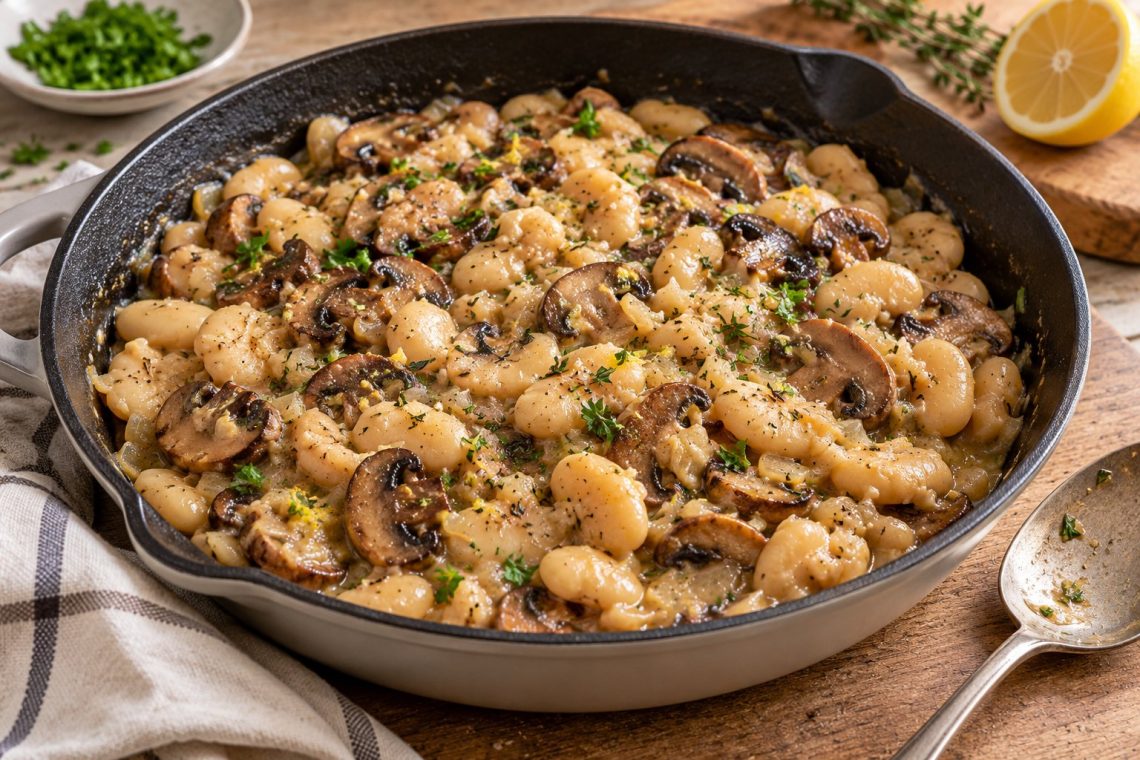
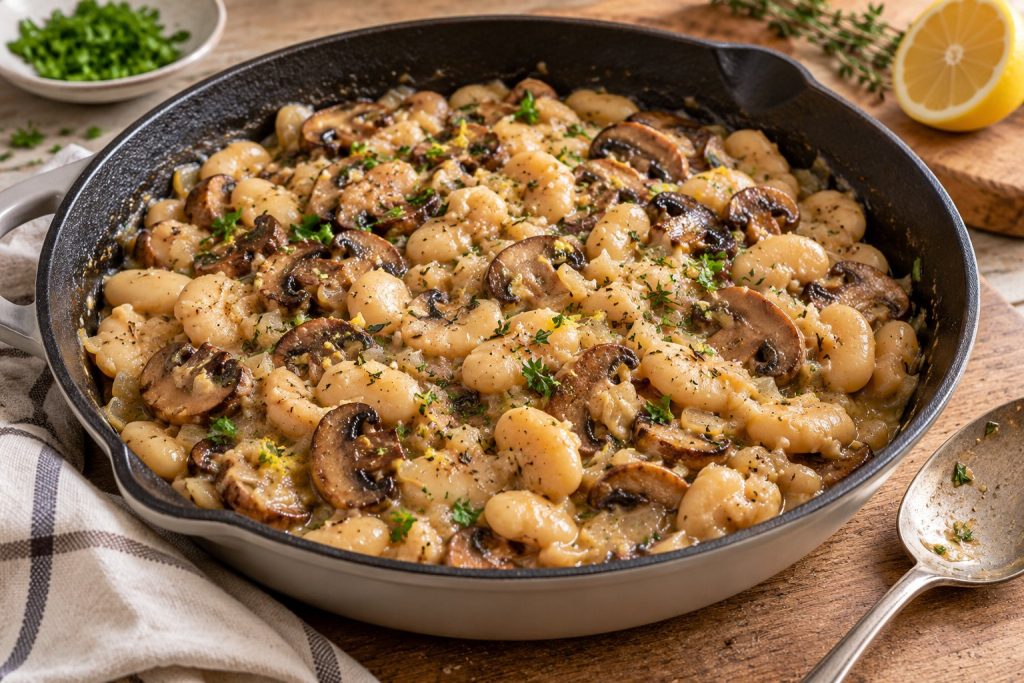
This butter bean mushroom skillet without cream combines browned cremini mushrooms with tender beans in a savory, spoon-coating sauce. A portion of the beans is mashed with broth to give the sauce body, while thyme, Dijon mustard, and lemon keep the flavor lively. Serve it over toast, rice, or mashed potatoes for four modest main-dish portions with an accompaniment.
The key is to cook the mushrooms before building the sauce. Let their released liquid evaporate, add oil to brown them, then move them to a plate while the onion and beans cook. Returning the mushrooms near the end keeps the pieces distinct and gives you more control over the final thickness.
Recipe at a glance
- Yield
- 4 servings with toast, rice, potatoes, or another accompaniment
- Prep
- About 15 minutes
- Cook
- About 35 minutes, including heating and finishing
- Total
- About 50 minutes
- Pan
- A heavy 12-inch skillet or wide 4-quart sauté pan
Use well-seasoned cast iron or heavy stainless steel suitable for brief dry heating, following its care instructions. Have a colander, measuring tools, small bowl, fork or masher, spatula, and plate ready. Times are estimates; wet mushrooms may need longer to lose their liquid.
Ingredients and measured broth
- 16 ounces cremini mushrooms, about 450 grams, cleaned and sliced ¼ inch thick
- 2 cans butter beans, 15 ounces or 425 grams each including liquid, drained and rinsed; about 3 cups beans after draining
- 2 tablespoons extra-virgin olive oil, divided
- 1 yellow onion, about 6 ounces or 170 grams, finely diced
- 3 medium garlic cloves, minced
- 1 teaspoon dried thyme leaves or 1 tablespoon fresh thyme leaves
- ½ teaspoon fine salt, divided, plus more to taste
- ½ teaspoon ground black pepper, divided
- 1 cup low-sodium vegetable broth, divided, plus up to ¼ cup extra as needed
- 2 teaspoons Dijon mustard
- 1 tablespoon fresh lemon juice
- ½ teaspoon finely grated lemon zest
- 2 tablespoons chopped parsley, optional
- 1 small pinch red pepper flakes per serving, optional
Understand the can size
The two 15-ounce labels describe the contents of the cans before draining, including their liquid. Use the drained beans from both cans; do not weigh out 30 ounces of drained beans. Camellia’s bean conversion uses about 1½ cups drained cooked beans per 15-ounce can, so two cans give roughly 3 cups. Brands vary, which is why the can count is the main measure here.
Choose plain canned butter beans. Drain, rinse gently, and let the excess water run off before measuring the ¾ cup that will be mashed. The rest stay whole. For beans cooked from dry, use about 3 cups fully cooked, drained beans; they should already be tender enough to eat before entering this short skillet method.
Prepare the mushrooms for even cooking
Cremini mushrooms are also sold as baby bella or brown mushrooms. Trim any dry stem ends and slice the caps and tender stems about ¼ inch thick. Very thin slices can disappear into the sauce, while thick pieces take longer to soften.
The Mushroom Council’s handling guidance allows either wiping away debris or briefly rinsing and patting mushrooms dry. You do not need to peel them. If you rinse them, avoid leaving a lot of surface water on the slices; that water has to evaporate in the pan.
What to watch for while browning mushrooms
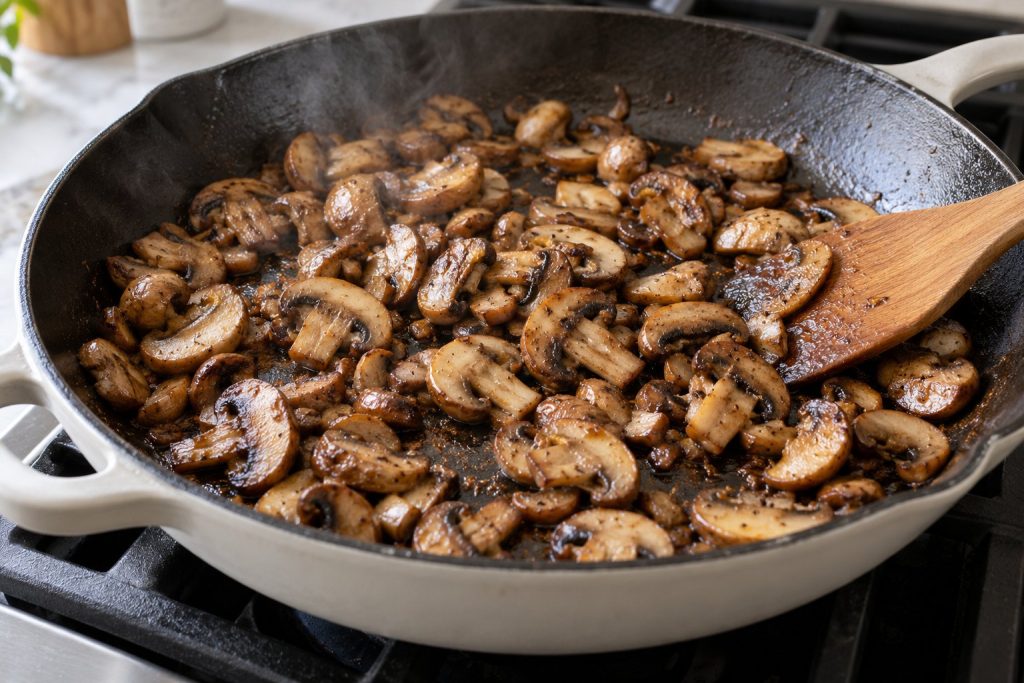
The pan will look full at first, but the mushrooms shrink as they cook. The initial liquid is expected. Keep the skillet uncovered and stir enough to expose different slices to the hot surface. If liquid is still pooling after the estimated time, let it evaporate before moving to the oil and browning stage.
This initial dry-cooking approach follows the technique described in Elise Bauer’s guide to dry-sautéing mushrooms: mushrooms release their own liquid as they heat. Here, oil is added for the next browning stage, once the released water has evaporated.
After adding the oil, give the slices short periods of contact with the pan rather than stirring continuously. Look for browned patches, not uniformly dark or crisp mushrooms. They will soften again in the bean sauce, but the browned flavor remains useful.
How to cook a butter bean mushroom skillet without cream
- Prepare the beans and broth. Clean and slice the mushrooms, dice the onion, and mince the garlic. Drain and rinse the beans. Mash ¾ cup of the drained beans with ¼ cup of the measured 1 cup broth until mostly smooth. Keep the remaining whole beans, the remaining ¾ cup base broth, and the optional extra ¼ cup broth separate.
- Cook off the mushroom liquid. Heat the heavy skillet over medium-high heat for about 1 minute. Add the mushrooms without oil. Cook for about 6–10 minutes, stirring regularly, until they soften, shrink, and release liquid that then mostly evaporates. Lower the heat if they stick or darken before releasing their moisture. Wait until the pan sounds more like a sizzle than a watery simmer.
- Brown the mushrooms. Add 1 tablespoon oil, ¼ teaspoon salt, and ¼ teaspoon pepper. Spread the mushrooms across the pan and cook for about 3–5 minutes, turning occasionally, until they develop golden-brown patches. Transfer them to a plate, keeping any juices that collect there.
- Soften the onion and seasonings. Lower the heat to medium. Add the remaining 1 tablespoon oil and the onion; cook for about 5 minutes, stirring, until softened. If the browned bits on the pan threaten to scorch, loosen them with 1 tablespoon taken from the measured ¾ cup base broth. Stir in the garlic and thyme for about 30 seconds, until fragrant.
- Build the bean sauce. Add the mashed bean mixture, the remaining whole beans, and all the remaining base broth from the measuring cup. Add the remaining ¼ teaspoon salt and ¼ teaspoon pepper. Scrape up the browned bits, bring to a gentle simmer, and cook uncovered for about 5 minutes, folding gently so the whole beans keep their shape.
- Return the mushrooms. Add the mushrooms and their plate juices. Simmer gently for 2–4 minutes, until everything is hot and the sauce coats the beans. If it is too thick, add the optional extra broth 1 tablespoon at a time, using up to ¼ cup. Stop when the sauce is slightly looser than you want to serve; it will thicken as it stands.
- Finish off the heat. Stir in the Dijon, lemon juice, and lemon zest. Taste and adjust salt if needed. Divide into four servings with your chosen accompaniment, adding the optional parsley and a small pinch of red pepper flakes to each serving if desired.
Choose a sauce thickness for your meal
For toast, use only the base 1 cup broth unless the pan is drying out. The finished mixture should sit on the bread with enough sauce to moisten it, without running off immediately. A spatula drawn across the pan should leave a brief trail that slowly fills back in.
For rice, mashed potatoes, or another absorbent accompaniment, you may prefer some or all of the extra ¼ cup broth. Add it after returning the mushrooms, since their plate juices also contribute liquid. Stir before deciding whether you need another spoonful.
If you want a thicker result without reducing the liquid much further, mash a few more beans against the side of the skillet and stir them into the sauce. The guide to thickening with ingredients already in the pot explores the same practical idea.
Troubleshooting the skillet
| Problem | What helps |
|---|---|
| Pale mushrooms in a wet pan | Keep cooking uncovered before adding the oil. A narrower pan or very wet mushrooms can extend this stage. Use the evaporation cue. |
| Mushrooms sticking or scorching | Lower the heat and stir more frequently. If the pan is dry but the mushrooms are already tender, move to the oil stage rather than continuing to heat them dry. |
| A thin, brothy sauce | Simmer uncovered a little longer, stirring gently, or mash a few additional beans. Hold back the optional broth. |
| A stiff, paste-like sauce | Add the optional broth a tablespoon at a time. Gentle stirring and a small amount of liquid will usually restore a spoonable sauce. |
| Many beans breaking apart | Reduce the bubbling and fold gently with a wide spoon. Canned beans vary in softness; some broken beans are useful for thickening. |
On a small screen, scroll the table sideways to see every column.
Substitutions that keep the method useful
White button mushrooms can replace cremini in the same weight. Portobello mushrooms also work when cut into similar-size pieces; their dark gills may deepen the sauce’s color. Removing the gills is a preference for appearance, not a requirement for this recipe.
Cannellini or great northern beans can replace butter beans, using two comparable cans or about 3 cups cooked and drained. The pieces will be smaller, and a soft batch may break apart more readily. Keep the measured mashed portion and gentle simmer as your starting point.
The thyme options follow the standard fresh-to-dried herb conversion: 1 tablespoon fresh leaves, 1 teaspoon dried leaves, or ½ teaspoon ground thyme. Vegetable broth keeps the base plant-based; chicken broth is an option if that suits the meal.
For a half batch, use one can of beans, 8 ounces mushrooms, and half the other ingredients in a 10-inch skillet. Mash ⅜ cup beans—6 tablespoons—with 2 tablespoons broth. The remaining base broth is 6 tablespoons, with up to 2 more tablespoons available if needed. Use the same visual cues; cooking time will not necessarily halve.
What to serve with creamy butter beans and mushrooms
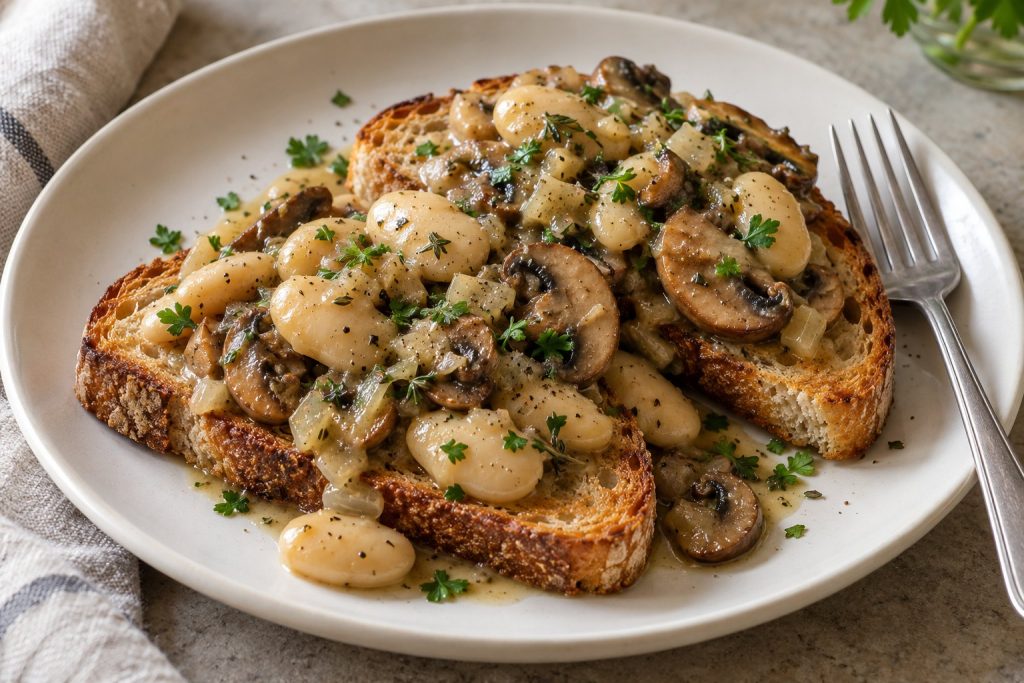
Toast gives the quickest serving base. Spoon the hot beans over it immediately before eating so the bread keeps some crispness. Rice or mashed potatoes catch more sauce, while a sharp green salad offers contrast alongside the soft beans.
For another meal built around the same pantry beans, see butter bean toast without tomatoes. If you would rather use mushrooms in a broth-based meal, the small-batch mushroom barley soup without wine takes them in a different direction.
For toast, serve the butter bean mushroom skillet without cream just before eating, leaving some crisp bread around the edges. Spoon on enough sauce to coat the beans without soaking the whole slice; keep any remaining bread separate until you are ready for another serving.
Storing and reheating leftovers
Transfer leftovers to shallow containers and refrigerate promptly. Keep them at 40°F (4°C) or below and use within 3–4 days. Follow FDA storage guidance by refrigerating within 2 hours, or within 1 hour when the temperature is above 90°F (32°C).
Reheat a portion in a small skillet with a splash of broth or water, stirring gently, until it reaches 165°F (74°C). For the microwave, use a covered, vented microwave-safe container and stir during heating. Nebraska Extension’s leftover guidance explains safe cooling and reheating. Store bread or rice separately so you can adjust the bean sauce as it heats.
You can freeze cooled portions in freezer-safe containers with room for expansion, then thaw in the refrigerator. Expect the beans to be softer and the sauce to need stirring and a little liquid after thawing. For the most distinct mushroom and bean texture, serve the dish freshly cooked or refrigerated.
Frequently asked questions
How does the sauce become creamy without cream?
The mashed beans disperse through the broth to make a thick sauce. Start by mashing the measured ¾ cup; keeping the remaining beans whole gives the dish both a creamy base and recognizable pieces.
Can I use the liquid from the bean cans?
This recipe measures broth separately and starts with drained, rinsed beans. Can liquid varies in salt and thickness, so adding it would make the sauce harder to control. Save it for another use if you wish.
Can I use a smaller skillet?
A smaller pan holds the mushrooms in a deeper layer and can extend the evaporation stage. For the full recipe, use the wide pan listed. A 10-inch skillet is more suitable for the half batch described above.
Do I have to remove the mushrooms?
Moving them to a plate gives the onion direct contact with the pan and makes it easier to stir the bean sauce without repeatedly handling the mushrooms. Return both the mushrooms and their collected juices near the end.
Can I leave out the Dijon?
Yes. Keep the listed lemon juice, then taste before adding more. The mustard contributes tang, but the sauce gets its thickness from the mashed beans, so it will still have body without it.
THE COMPLETE RECIPE
Butter Bean Mushroom Skillet Without Cream
Yield: 4 servings with an accompaniment
Ingredients
- 16 ounces cremini mushrooms about 450 g; cleaned and sliced 1/4 inch thick
- 2 15-ounce cans butter beans 425 g per can including liquid; drain and rinse; about 3 cups drained
- 2 tablespoons extra-virgin olive oil divided
- 1 yellow onion about 6 ounces / 170 g; finely diced
- 3 medium garlic cloves minced
- 1 teaspoon dried thyme leaves or 1 tablespoon fresh thyme leaves
- 1/2 teaspoon fine salt divided, plus more to taste
- 1/2 teaspoon ground black pepper divided
- 1 cup low-sodium vegetable broth divided, plus up to 1/4 cup extra only if needed
- 2 teaspoons Dijon mustard
- 1 tablespoon fresh lemon juice
- 1/2 teaspoon finely grated lemon zest
- 2 tablespoons chopped parsley optional
- red pepper flakes optional; a small pinch per serving
Instructions
- Prepare the beans and broth Clean and slice the mushrooms, dice the onion, and mince the garlic. Drain and rinse the beans. Mash ¾ cup of the drained beans with ¼ cup of the measured 1 cup broth until mostly smooth. Keep the remaining whole beans, the remaining ¾ cup base broth, and the optional extra ¼ cup broth separate.
- Cook off the mushroom liquid Heat the heavy skillet over medium-high heat for about 1 minute. Add the mushrooms without oil. Cook for about 6–10 minutes, stirring regularly, until they soften, shrink, and release liquid that then mostly evaporates. Lower the heat if they stick or darken before releasing their moisture. Wait until the pan sounds more like a sizzle than a watery simmer.
- Brown the mushrooms Add 1 tablespoon oil, ¼ teaspoon salt, and ¼ teaspoon pepper. Spread the mushrooms across the pan and cook for about 3–5 minutes, turning occasionally, until they develop golden-brown patches. Transfer them to a plate, keeping any juices that collect there.
- Soften the onion and seasonings Lower the heat to medium. Add the remaining 1 tablespoon oil and the onion; cook for about 5 minutes, stirring, until softened. If the browned bits on the pan threaten to scorch, loosen them with 1 tablespoon taken from the measured ¾ cup base broth. Stir in the garlic and thyme for about 30 seconds, until fragrant.
- Build the bean sauce Add the mashed bean mixture, the remaining whole beans, and all the remaining base broth from the measuring cup. Add the remaining ¼ teaspoon salt and ¼ teaspoon pepper. Scrape up the browned bits, bring to a gentle simmer, and cook uncovered for about 5 minutes, folding gently so the whole beans keep their shape.
- Return the mushrooms Add the mushrooms and their plate juices. Simmer gently for 2–4 minutes, until everything is hot and the sauce coats the beans. If it is too thick, add the optional extra broth 1 tablespoon at a time, using up to ¼ cup. Stop when the sauce is slightly looser than you want to serve; it will thicken as it stands.
- Finish off the heat Stir in the Dijon, lemon juice, and lemon zest. Taste and adjust salt if needed. Divide into four servings with your chosen accompaniment, adding the optional parsley and a small pinch of red pepper flakes to each serving if desired.
Notes
Rate This Recipe
Made this recipe? Choose a star rating in the comment form and share how it turned out. Your cooking time and any ingredient changes can help the next reader.
Rate This Recipe