SMALL CARROT DICE / SPLIT RED LENTILS / ONE BROTH RESERVE
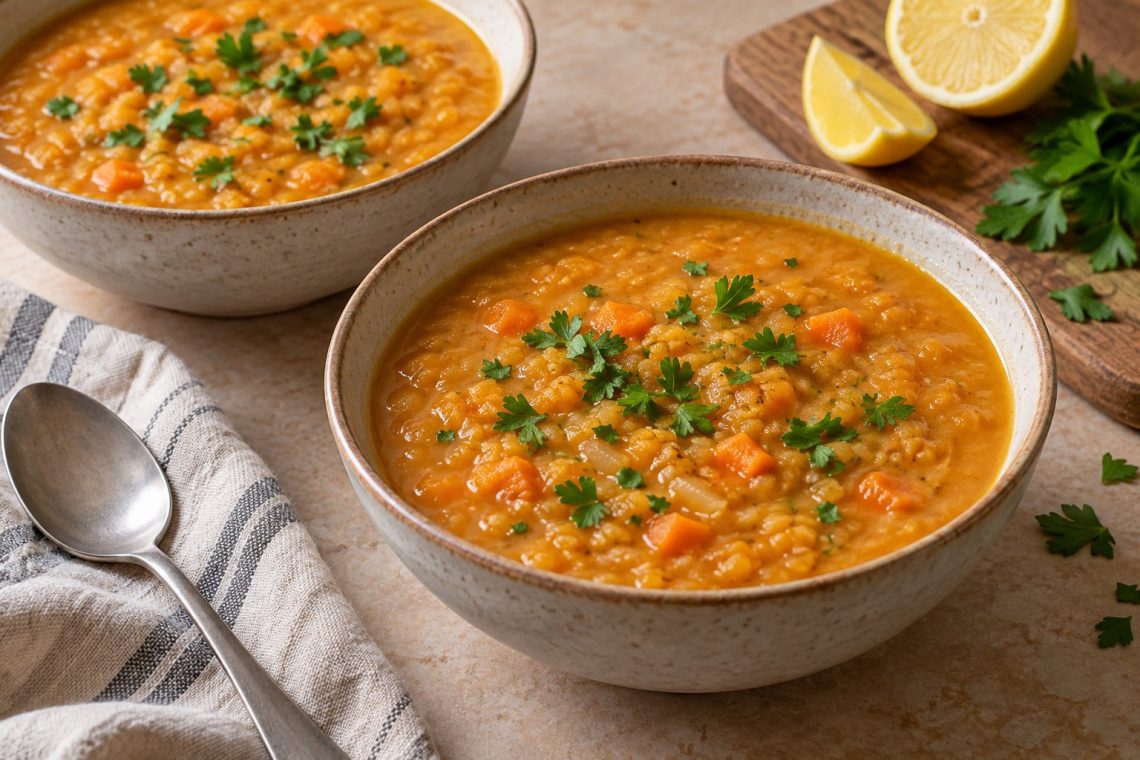
This red lentil carrot soup without coconut milk makes two generous bowls of thick, gently spiced soup. Small pieces of carrot soften alongside split red lentils, which break down into the broth and give it body. Cumin, coriander, and garlic supply a savory base, while lemon added at the end balances the carrots’ sweetness.
The texture is deliberately flexible: leave soft carrot pieces in the soup, mash some against the pot, or blend for a smoother finish. Start with the measured broth, cook until both the carrots and lentils are tender, and make the final consistency adjustment afterward. There is no need for cream, coconut milk, flour, or a separate thickening mixture.
Recipe at a glance
- Yield
- 2 generous lunch servings
- Prep
- About 10 minutes
- Cook
- About 40 minutes, including heating and finishing
- Total
- About 50 minutes
- Equipment
- A 2–3-quart saucepan with a lid; a fork or potato masher is optional
Cooking time is an estimate. The main simmer is usually 20–25 minutes; heating the broth, softening the onion, and finishing the soup also take time. Use the carrot and lentil checks in the method if your pot needs longer. The final volume varies with evaporation and the extra broth you choose to add.
Ingredients for a small batch
- 1 tablespoon olive oil
- ½ medium yellow onion, finely diced, about ½ cup
- 8 ounces carrots, about 225 grams after trimming, peeled if desired and cut into ¼-inch dice
- 2 small garlic cloves, minced
- ½ teaspoon ground cumin
- ¼ teaspoon ground coriander
- ½ cup dry split red lentils, about 100 grams, picked over and rinsed
- 2½ cups low-sodium vegetable broth, plus up to ½ cup extra as needed during cooking or finishing
- ⅛ teaspoon fine salt, plus more to taste
- ⅛ teaspoon ground black pepper
- 2 teaspoons fresh lemon juice, plus more to taste
- 1 tablespoon chopped parsley, optional, for serving
Use dry split red lentils
Look for the small orange or coral-colored split lentils sold as red lentils. They soften and lose their shape as they cook, which is useful here: the lentils become part of the soup’s thick base. Lentils.org explains that split lentils cook faster than whole lentils and do not need soaking. Rinse them in a fine-mesh strainer after checking for small stones or debris.
Whole brown or green lentils hold their shape differently and may need more time and liquid. Canned lentils are already cooked, so replacing the dry lentils cup for cup would also change the formula. If canned lentils are what you have, the canned lentil rice skillet is a more direct use for them.
Cut the carrots small and evenly
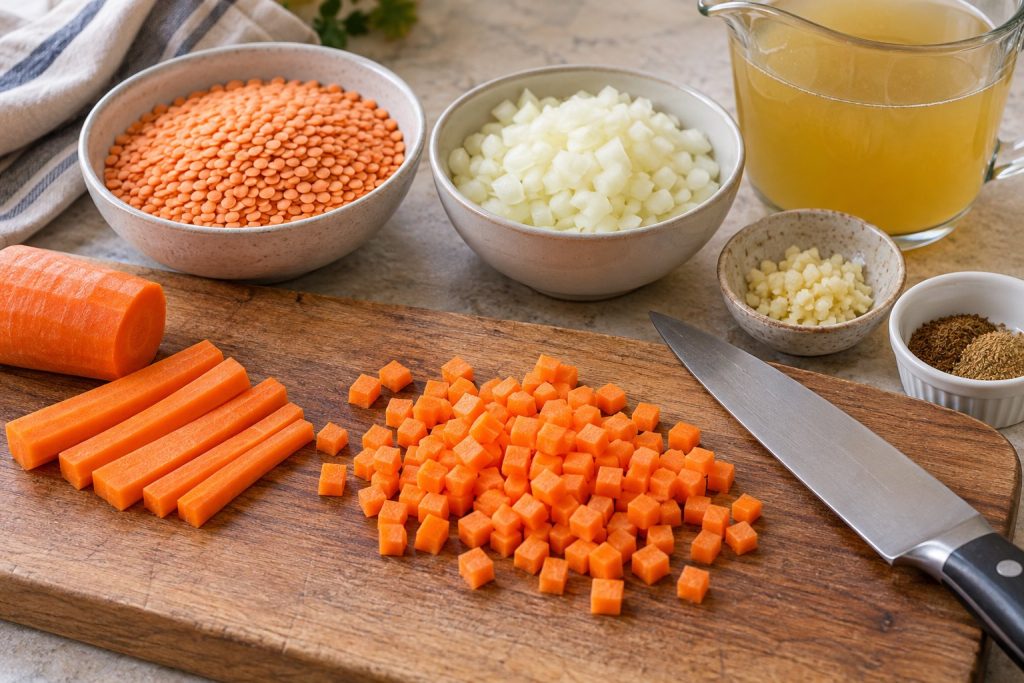
The carrots are the ingredient most likely to need extra time. Cut them into roughly ¼-inch sticks, then across into small dice. Large coins or thick chunks can stay firm after the lentils have already softened. If the carrots vary widely in thickness, work in smaller sections so you can keep the pieces similar in size.
The weight is more reliable than a carrot count: 8 ounces may be two large carrots or several smaller ones. Trimming and measuring the amount first keeps the balance between carrot, lentil, and broth close to the intended recipe.
Keep the extra broth separate
Add 2½ cups to start and hold the extra ½ cup for adjustments. Pouring all 3 cups in immediately makes it harder to choose a thicker finish later. If using bouillon or a broth concentrate, prepare the measured liquid according to its label. Begin with the listed small amount of salt, then taste after cooking, because prepared broths vary considerably in seasoning.
How to make red lentil carrot soup without coconut milk
- Prepare the vegetables and lentils. Wash and trim the carrots, measure 8 ounces, and cut them into ¼-inch dice. Dice the onion and mince the garlic. Pick over the lentils, rinse in a fine-mesh strainer, and drain. Measure the cumin and coriander so they are ready for the hot pan.
- Soften the onion. Heat the oil in a 2–3-quart saucepan over medium heat. Add the onion, carrots, and ⅛ teaspoon salt. Cook for about 6 minutes, stirring, until the onion is softened and translucent. The carrots will still be firm. Reduce the heat if the onion begins to brown deeply.
- Add the aromatics. Stir in the garlic, cumin, and coriander. Cook for about 30 seconds, stirring, just until fragrant, then move straight to adding the lentils and broth.
- Simmer until both ingredients are tender. Add the lentils, 2½ cups broth, and black pepper. Scrape the bottom, bring to a gentle simmer, and lower the heat. Set the lid slightly ajar and simmer for about 20–25 minutes, beginning to check after 15 minutes. Stir along the base regularly, especially as the soup thickens. The lentils should be soft without a gritty center, and a carrot piece should crush easily with a fork. If the mixture becomes too thick before the carrots are ready, add 2 tablespoons of the extra broth and continue cooking.
- Choose the texture. Take the pot off the heat. Leave the soup rustic, or mash some of the tender carrots and lentils against the side with a fork or potato masher. Stir in more of the remaining extra broth, 2 tablespoons at a time, if you want a looser soup. Count any broth added during simmering toward the same extra ½ cup, keeping the total adjustment within that amount.
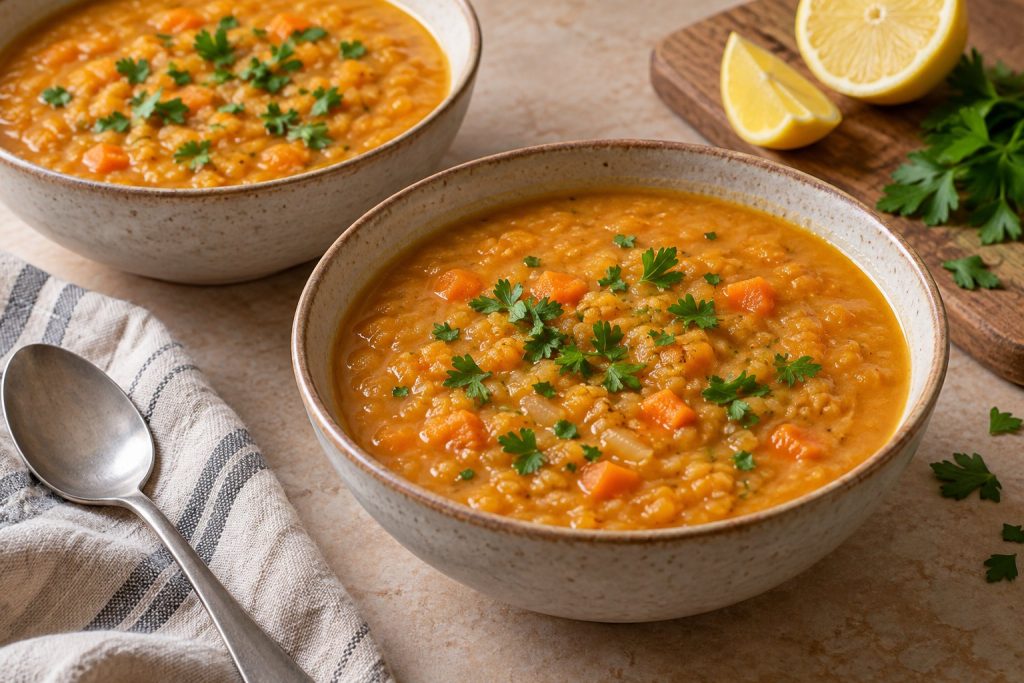
- Finish with lemon. Stir in 2 teaspoons lemon juice. Taste a cooled spoonful, then adjust salt, pepper, or lemon a little at a time. Divide between two bowls and add the optional parsley. If finishing has cooled the soup more than you like, return it briefly to gentle heat before serving.
Three textures from the same saucepan
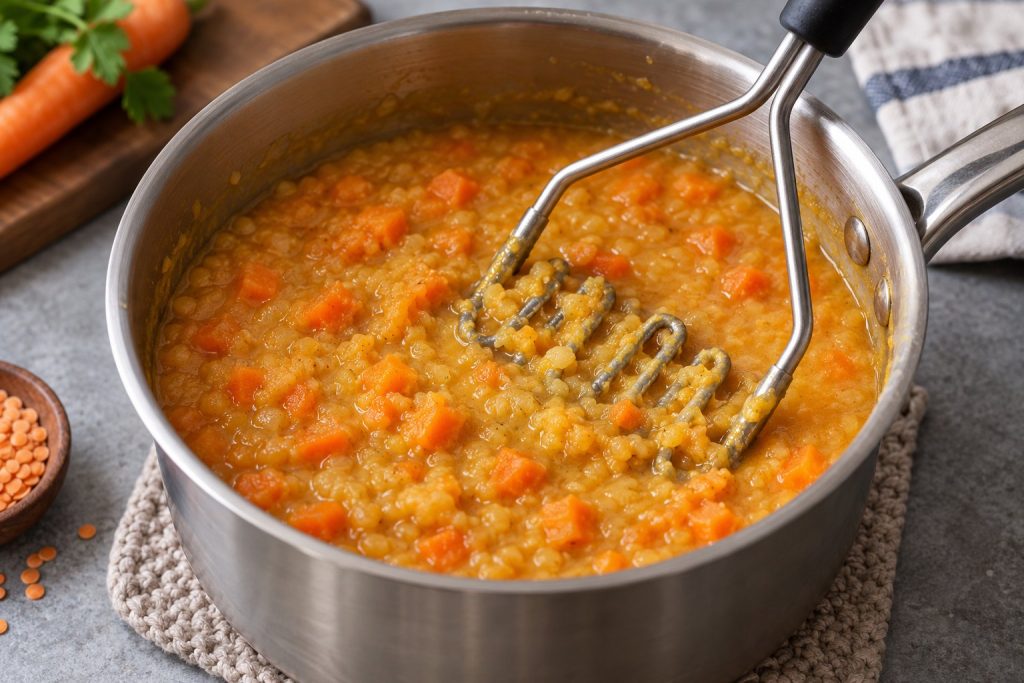
For a rustic carrot and red lentil soup, stir well and leave the tender carrot pieces intact. The surrounding broth should already be thickened by the softened lentils. This version gives you a little vegetable texture in each spoonful without another piece of equipment.
For a thicker, more uniform bowl, use the masher briefly after cooking. Stop while some carrot pieces are still visible if you like contrast. The soup will continue to thicken as it stands, so leave it slightly looser in the pot than you want it in the bowl.
For a smoother finish, take the pot off the heat and use an immersion blender according to its instructions for hot liquids, keeping the blade head submerged. Blend only after the carrots are fully tender. Add the extra broth gradually; it is easier to loosen a smooth soup than to remove excess liquid without further cooking.
If you often need to adjust a pot of soup, the guide to thickening soup without flour or cornstarch explains other ways to use the ingredients already in the pot.
Troubleshooting texture and flavor
| Problem | Practical fix |
|---|---|
| The carrots are firm | Continue the gentle simmer with the lid ajar. Add a little of the extra broth if needed to keep the base from sticking. Check a carrot from the pot rather than relying on the clock. |
| The soup is too thick | Stir in the extra broth 2 tablespoons at a time. Scrape gently across the bottom so the added liquid reaches the thickest part. |
| The soup is too thin | First confirm that the lentils are fully soft. If they are, mash some of the contents or simmer uncovered for a few minutes, stirring frequently. |
| The flavor is flat | Taste before adding anything. Add a small pinch of salt if it tastes underseasoned, or a little lemon if it needs brightness. Stir and taste between additions. |
| The base has caught | Stop stirring into the scorched layer. Transfer the unburned soup to a clean pot without scraping the bottom, then taste. More lemon or spice will not remove a burnt flavor. |
On a small screen, scroll the table sideways to see every column.
Useful substitutions and scaling
Vegetable broth keeps the recipe suitable for a plant-based meal. Chicken broth can replace it in the same amount if that suits your table. Check the label if you need the whole meal to avoid dairy or coconut ingredients; the named omission alone does not describe every possible broth or topping.
If you do not have ground coriander, omit the ¼ teaspoon rather than increasing the cumin automatically. For an herb-led variation, replace the cumin with ½ teaspoon dried thyme and omit the coriander. Keep the lemon finish and the same lentil, carrot, and broth quantities.
To make four servings, double every ingredient and use a saucepan of about 4 quarts. That means 1 cup dry lentils, 1 pound carrots, and 5 cups broth to start, with up to 1 additional cup available. The broth will take longer to heat, but the simmer time does not simply double. Keep the carrot dice the same size and use the same tenderness checks.
Serving this small-batch red lentil soup
Serve the two bowls with toast, flatbread, or a small green salad. Add parsley at the table so its fresh flavor is easy to notice. If serving with rice or another grain, cook it separately and spoon it into each bowl; simmering uncooked grain in this measured soup would change its liquid needs.
For another soup that gets its body from beans and vegetables, try the pumpkin white bean soup with sage. Its whole beans and pumpkin make a useful change from the softer lentil texture here.
Portion the soup for another lunch
For a meal away from home, pack red lentil carrot soup without coconut milk in a container with a secure lid, keeping any bread or cooked grain separate. The stated yield is two generous servings, not a guaranteed number of cups: evaporation and the final broth adjustment change the volume. Stir the saucepan, then divide the finished soup evenly if you want matching portions.
Use shallow containers for cooling, following the storage guidance above, and chill the soup before transport. For the journey, an insulated lunch bag with at least two cold sources follows USDA’s packed-lunch guidance. Refrigerate it on arrival when possible. A tightly closed ordinary food container prevents spills but does not keep soup safely hot or cold by itself.
If reheating in a microwave, transfer the soup to a microwave-safe bowl with room above the surface. Add a spoonful of water if it has set very thick, cover with a suitable vented cover, and pause to stir thoroughly as it heats. Keep the container vented; do not microwave a sealed travel lid. Follow the boiling and temperature checks above rather than relying on a fixed microwave time. After heating, stir and check the texture again before adding more liquid, then add the separate grain or bread at the table.
Storing, freezing, and reheating
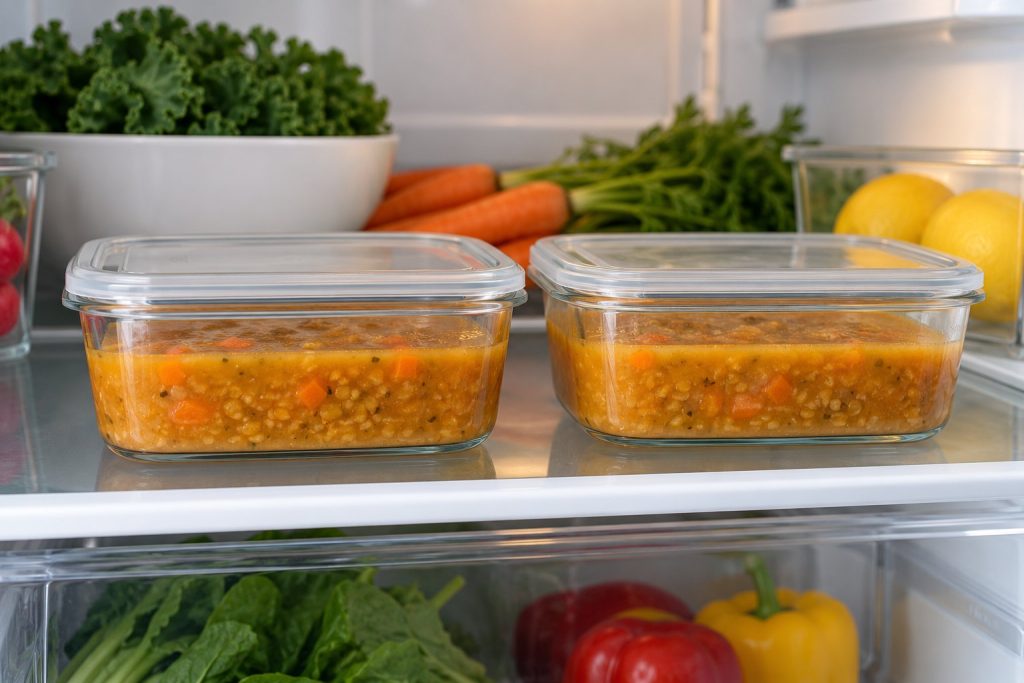
Following FDA food-handling guidance, divide leftovers into shallow containers and refrigerate at 40°F (4°C) or below within 2 hours, or 1 hour above 90°F (32°C). Do not wait for the saucepan to become completely cold. Refrigerate for 3–4 days; FoodSafety.gov’s storage chart gives that refrigerator window for soups and a freezer quality window of 2–3 months.
Freeze cooled portions in suitable containers with room for expansion. Thaw in the refrigerator. To reheat, add a small splash of broth or water and stir frequently as the thick soup heats. Bring it to a rolling boil and check that it reaches 165°F (74°C), following Nebraska Extension’s leftover guidance. Taste for lemon after reheating.
Frequently asked questions
Do I need to soak the red lentils?
No. Pick them over, rinse, and drain before adding them to the saucepan. Use dry split red lentils for the stated method; soaking is not part of the preparation time.
Why did the lentils lose their bright orange color?
Expect a softer orange or golden soup after cooking. Red lentils lose their distinct shape and vivid dry color as they soften. Judge doneness by tenderness and the absence of a gritty center.
Can I make it without a blender?
Yes. The main recipe needs only stirring and, if you want, a fork or potato masher. A completely smooth texture is optional; small, fully softened carrot pieces belong in the rustic version.
Can I add the lemon at the beginning?
The recipe saves it for the end so you can judge the finished soup’s sweetness, salt, and thickness before adjusting the acidity. Start with the listed 2 teaspoons after cooking, then add more only if you want it.
Will it become too thick overnight?
It will usually thicken as it cools. That is easy to adjust: reheat the portion with a little broth or water, stir until evenly combined, and add more liquid only as needed. Make the seasoning adjustment after it is hot.
Yield: 2 generous lunch servings
MIX, MEASURE & KEEP
Small-Batch Red Lentil Carrot Soup Without Coconut Milk
Ingredients
- 1 tablespoon olive oil
- 1/2 medium yellow onion finely diced; about 1/2 cup
- 8 ounces carrots about 225 g after trimming; peel if desired and cut into 1/4-inch dice
- 2 small garlic cloves minced
- 1/2 teaspoon ground cumin
- 1/4 teaspoon ground coriander
- 1/2 cup dry split red lentils about 100 g; pick over and rinse
- 2 1/2 cups low-sodium vegetable broth plus up to 1/2 cup extra as needed during cooking or finishing
- 1/8 teaspoon fine salt plus more to taste
- 1/8 teaspoon ground black pepper
- 2 teaspoons fresh lemon juice plus more to taste
- 1 tablespoon chopped parsley optional, for serving
Instructions
- Prepare the vegetables and lentils Wash and trim the carrots, measure 8 ounces, and cut them into ¼-inch dice. Dice the onion and mince the garlic. Pick over the lentils, rinse in a fine-mesh strainer, and drain. Measure the cumin and coriander so they are ready for the hot pan.
- Soften the onion Heat the oil in a 2–3-quart saucepan over medium heat. Add the onion, carrots, and ⅛ teaspoon salt. Cook for about 6 minutes, stirring, until the onion is softened and translucent. The carrots will still be firm. Reduce the heat if the onion begins to brown deeply.
- Add the aromatics Stir in the garlic, cumin, and coriander. Cook for about 30 seconds, stirring, just until fragrant, then move straight to adding the lentils and broth.
- Simmer until both ingredients are tender Add the lentils, 2½ cups broth, and black pepper. Scrape the bottom, bring to a gentle simmer, and lower the heat. Set the lid slightly ajar and simmer for about 20–25 minutes, beginning to check after 15 minutes. Stir along the base regularly, especially as the soup thickens. The lentils should be soft without a gritty center, and a carrot piece should crush easily with a fork. If the mixture becomes too thick before the carrots are ready, add 2 tablespoons of the extra broth and continue cooking.
- Choose the texture Take the pot off the heat. Leave the soup rustic, or mash some of the tender carrots and lentils against the side with a fork or potato masher. Stir in more of the remaining extra broth, 2 tablespoons at a time, if you want a looser soup. Count any broth added during simmering toward the same extra ½ cup, keeping the total adjustment within that amount.
- Finish with lemon Stir in 2 teaspoons lemon juice. Taste a cooled spoonful, then adjust salt, pepper, or lemon a little at a time. Divide between two bowls and add the optional parsley. If finishing has cooled the soup more than you like, return it briefly to gentle heat before serving.
Equipment
- 2- to 3-quart saucepan with lid
- Fine-mesh strainer
- Knife and cutting board
- Measuring tools
- Fork or potato masher, optional
- Food thermometer for reheating
Notes
Rate This Recipe
Made this recipe? Choose a star rating in the comment form and share how it turned out. Your cooking time and any ingredient changes can help the next reader.
Rate This Recipe