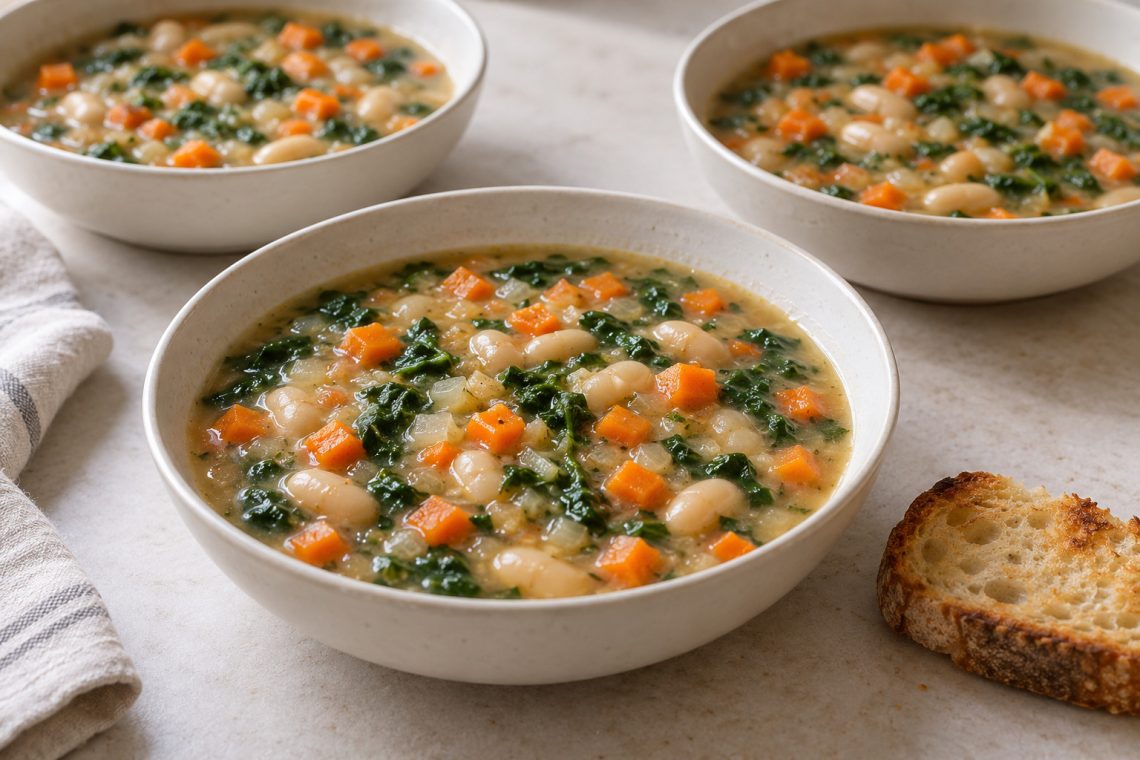
A spoonful of carrot white bean soup with frozen spinach without cream should contain tender orange carrot pieces, creamy cannellini beans and loose green spinach in a lightly thickened broth. Mashing part of the beans gives the liquid body while leaving enough whole beans for a satisfying texture. Thyme seasons the base, and a measured teaspoon of lemon finishes the pot.
This is a three-bowl recipe with a short ingredient list. The useful work is in the sequence: soften the roots, simmer until their centers are tender, mash some beans, then add fully cooked and drained spinach. The carrots set the pace. A soft bean or a hot-looking surface cannot tell you whether the largest carrot piece has finished cooking.
Find what you need: overview · ingredients · numbered method · FAQs.
Build a creamy texture without adding dairy
| Ingredient | Its job | Best timing |
|---|---|---|
| Carrots | Supply sweetness and color. | Cook the small carrot pieces until a fork enters their centers easily; leave them recognizable in the soup. |
| White beans | Add body and a mild, creamy finish. | Mash roughly one-third of the drained beans with a spoon; leave the rest whole. |
| Frozen spinach | Add an earthy green note. | Cook it fully according to its package, drain it, then stir it into the soup for the final warming. |
Texture check: after mashing some beans, stir thoroughly before judging the broth. It should have a little body while the carrots and most beans remain intact. If too thick, add warm broth a few tablespoons at a time; if too thin, mash a few more beans already in the pot.
Add the measured lemon juice off the heat, then taste the combined soup before making the final salt adjustment. Taste carrot, bean, spinach and broth together so the seasoning reflects a complete spoonful.
The three-bowl plan
Yield: 3 bowls. Preparation: about 10 minutes. Cooking: about 20–25 minutes, with the spinach prepared alongside the soup. Estimated total: about 30–35 minutes; allow any extra time required by the spinach package. Use a medium saucepan with comfortable stirring room, a broad spoon, cutting board, sharp knife, measuring cups and spoons, a colander and a fork.
Measured ingredients
- 1 tablespoon olive oil
- 1 small onion, finely diced
- 2 medium carrots, diced small
- 1 garlic clove, minced
- 1/2 teaspoon dried thyme
- 1 can (15 ounces) cannellini beans, drained and rinsed
- 2 1/2 cups low-sodium vegetable broth
- 3/4 cup frozen chopped spinach, cooked according to its package directions and then well drained
- 1 teaspoon lemon juice
- Salt and pepper, to taste
Let the beans provide the body
Plain cannellini beans give you a mild base that is easy to mash. Rinse away their packing liquid and let the colander drain while you prepare the onion. The can’s 15-ounce size includes liquid, so do not expect 15 ounces of drained beans. You are using one whole drained can, then mashing roughly one-third of those beans in the soup.
Cut the carrots for a short simmer
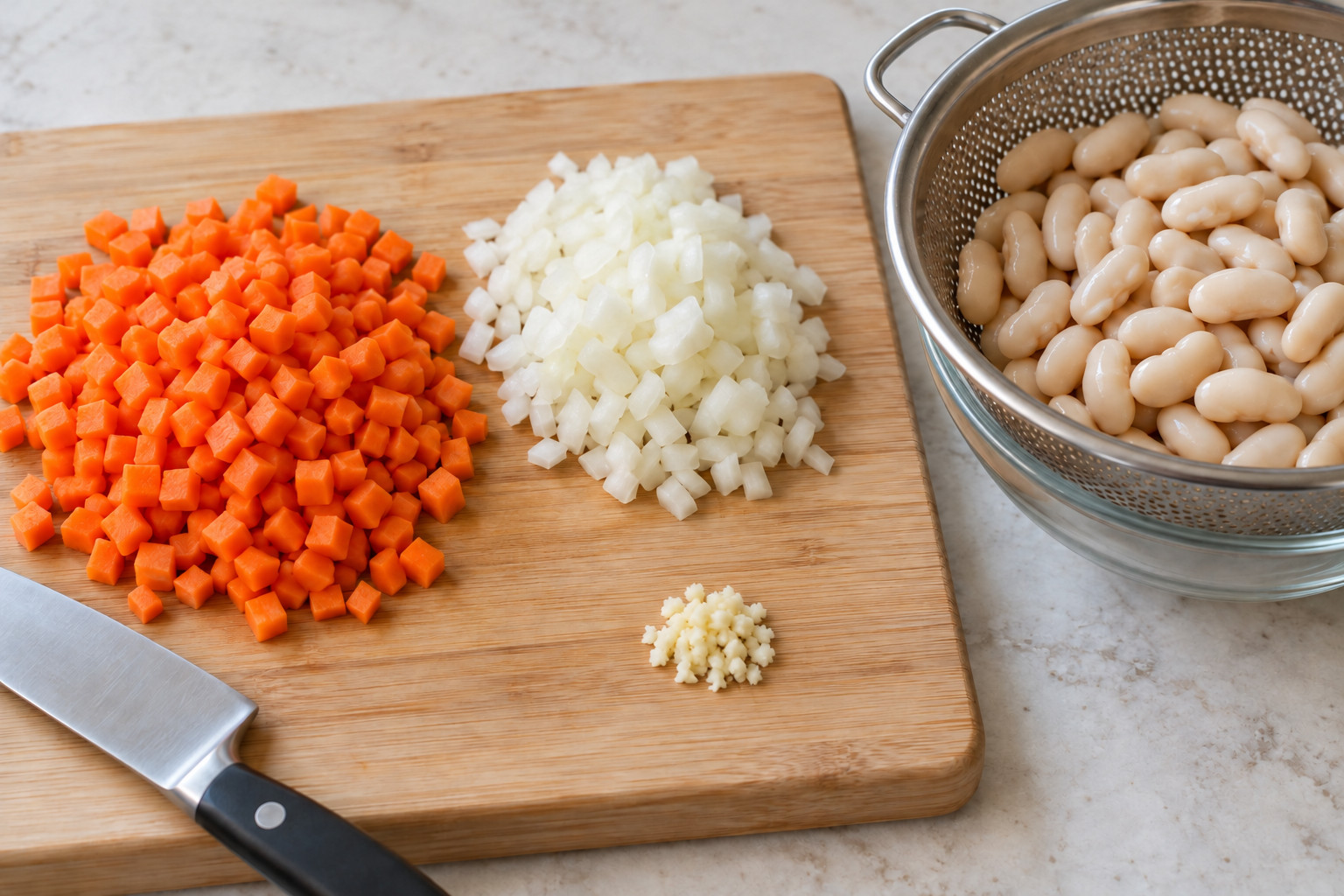
Wash the carrots, trim their ends and peel if desired. Cut them into small, similar pieces, about 1/4 inch across. Large diagonal slices look attractive but would need a different tenderness schedule. Finely dice the onion and keep the garlic separate so it can enter after the onion has softened. The thyme should be loose leaves, without woody stems.
Prepare the spinach as a separate component
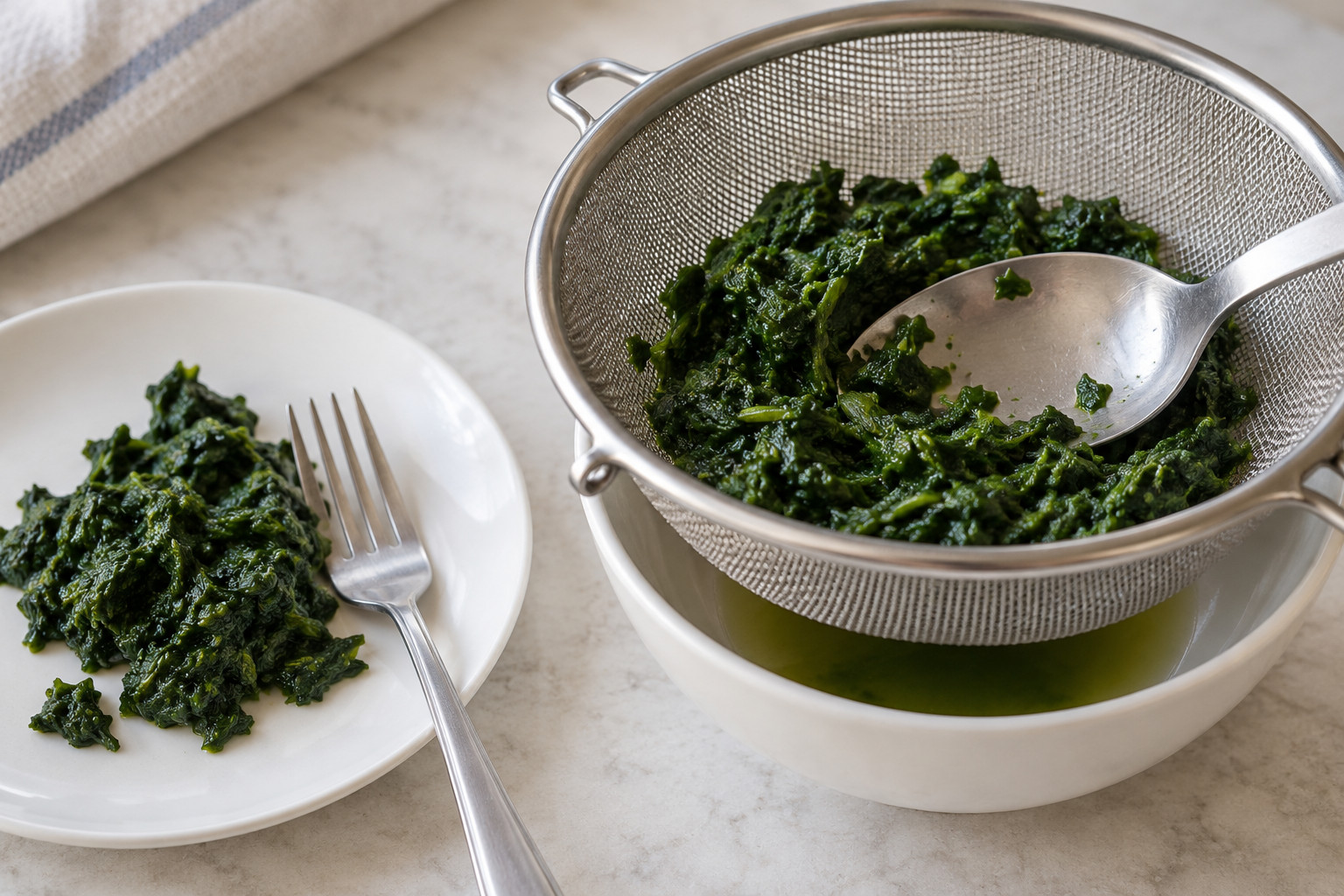
Measure the original 3/4 cup of frozen chopped spinach before cooking; the volume will change after draining. Follow the product’s full cooking instructions, then let the steam clear before pressing out excess water with a spoon in a colander. Loosen the drained leaves with a fork. This makes them easier to distribute than a tightly squeezed lump.
The Food Standards Agency’s frozen-vegetable guidance calls for thorough cooking. Thawing alone is not the cooking step here. Preparing the spinach separately gives its package method enough time without forcing the finished carrots and beans through a longer simmer. If you cook a larger package, measure this recipe’s starting portion separately or divide the cooked result in the same proportion; do not substitute a packed 3/4 cup of cooked spinach for the smaller frozen measure.
Cook carrot white bean soup with frozen spinach without cream
- Prepare the work area. Drain the beans, cut the vegetables and start the spinach according to its package. Set the broth and lemon beside the stove. Keep a fork and small plate nearby for checking a carrot cube without leaning over the hot saucepan.
- Soften the onion and carrot. Warm the oil over medium heat. Add the onion and carrot and cook for 6–8 minutes, stirring along the bottom and corners. The onion should look translucent around its edges and the carrot should begin to yield. Lower the heat if the onion browns before the carrot begins to soften.
- Add the aromatics and broth. Stir in garlic and thyme for about 30 seconds. Pour in the measured broth and add the drained beans. Bring the liquid to a gentle simmer, then reduce the burner so small bubbles rise steadily without tossing the beans.
- Check the roots before thickening. Simmer for about 8 minutes. Lift one of the larger carrot pieces onto the plate and press it with a fork. It should yield easily through the center. If it resists, continue the gentle simmer and check again; do not move on because the estimated time has passed.
- Mash a portion of the beans. Press roughly one-third of the beans against the pot with the broad spoon, then stir the mash through the liquid. Work in several small areas so you do not crush all the carrots while chasing a single bean. The broth should gain body without becoming a purée.
- Fold in the cooked spinach. Add the loosened, well-drained leaves. Simmer for 2–3 minutes to combine and heat the prepared spinach through. This final warming follows its full package-directed cooking. Sweep the spoon through the pot to separate any green clumps.
- Finish and portion. Take the saucepan off the heat and add the teaspoon of lemon juice. Taste a cooled spoonful with carrot, bean and broth before adding salt and pepper. Divide solids between three bowls, then distribute the remaining broth.
Adjust the texture before the seasoning
| What you notice | What to do |
|---|---|
| Thin broth around tender vegetables | Mash a few more beans and stir before deciding to reduce the soup further. |
| A thick, bean-heavy base | Add warm broth a spoonful at a time; stop while pieces remain comfortably suspended. |
| Firm carrot centers | Continue a gentle simmer with sufficient liquid. Lemon and extra seasoning cannot tenderize an unfinished piece immediately. |
| Clumps of spinach | Separate them against the spoon and fold through. Check the colander preparation next time. |
Make the liquid adjustment before the final salt adjustment. Adding broth changes the concentration of the whole pot. Taste a small sample after stirring from the bottom, rather than judging a layer of liquid skimmed from the surface.
Serve three complete bowls
Toasted bread is a useful partner for the soft beans and broth. Offer cracked pepper or a little washed lemon zest separately so each diner can choose a stronger finish. A crisp cucumber side or a small salad gives the meal a different texture without changing the soup formula.
If two people are eating now and one portion is for lunch, fill the lunch container before serving the first two bowls. Share carrot and beans as evenly as the broth. A container that receives only the final liquid will reheat safely but will not be the same meal as the portions served at dinner.
Cool and reheat the portion you need
Refrigerate the soup in shallow covered containers within 2 hours, or within 1 hour when the surrounding temperature exceeds 90°F. Store at 40°F or below and use within 3–4 days. When reheating, bring the soup to a rolling boil, stir thoroughly, and check that it reaches 165°F throughout. These handling limits follow the sources linked below.
The mashed beans can make chilled soup look thicker. Add a little broth during reheating, then judge the texture once the portion is hot. Reheat only the amount needed for that meal and include any earlier storage time for beans or spinach that were already opened or cooked.
Questions about this carrot and bean soup
Can frozen spinach go straight into the pot?
Only if the soup cooking method and duration fully meet that product’s directions. The reference method cooks it separately and drains it first, which is easier to coordinate and keeps excess water out of the measured broth. A quick thaw followed by brief warming is not the instruction.
Can I use great northern beans?
They are a reasonable suggested variation in the same one-can quantity. They may feel firmer and need more deliberate mashing. Keep the amount of broth unchanged initially, then adjust the finished body. The substitution has not been kitchen validated for this formula.
Would kale work instead of spinach?
Kale has a different stem texture and cooking schedule. Use tender chopped leaves and cook them fully before the final combine, following package directions for frozen kale. Expect a more substantial bite. Do not assume the spinach’s brief final warming will tenderize raw kale.
Do I need a blender?
No. The recipe deliberately uses the back of a spoon to mash a portion of the beans. Blending everything would also smooth the carrot and spinach, removing the distinct pieces. A fork can help crush a few beans in a small bowl if that feels easier.
Can I double the recipe?
Use a larger saucepan with room for stirring and double the measured ingredients. The pot will take longer to reach a simmer, but the carrot cubes should stay the same small size. Check their centers rather than doubling the simmering time automatically.
Can I freeze carrot white bean soup with frozen spinach without cream?
You can freeze a promptly cooled portion in a suitable container, leaving room for expansion. Expect softer carrots and a slightly thicker bean base after thawing. Thaw in the refrigerator and reheat thoroughly, then loosen with broth. The exact frozen-and-reheated texture still needs a kitchen check.
Food handling references: USDA leftovers guidance, FDA refrigerated storage advice and FoodSafety.gov reheating temperatures.
Build a satisfying soup lunch from the same pot
For a lunch with distinct textures, serve the soup beside a small toasted sandwich or a slice of firm bread. Keep the bread on a separate plate until you are ready to eat. Crumbling it into the whole pot absorbs broth and makes the remaining portions thicker, while dipping one piece at a time keeps the original soup easy to portion.
If you are packing one bowl for later, stir before ladling and share the carrots, beans, and spinach between containers first. Then distribute the broth. Otherwise, the first container can receive mostly liquid and the last mostly beans. Use containers that leave enough room to stir during reheating, and keep any bread separate.
Choose the finished thickness with the serving temperature in mind. A spoonful straight from a simmering pot flows more freely than a bowl that has stood for a few minutes. Before mashing more beans, let one small tasting portion cool enough to eat. If it already feels pleasantly full, stop mashing; the remaining whole beans are part of the soup's texture.
Carrot size is the useful preparation detail to record. Small, even dice soften predictably alongside the onion and during the simmer. Thick coins need a different amount of time, and trying to compensate with a hard boil can break the beans before the carrots are ready. Cut a few of the largest pieces smaller at the start rather than relying on extra simmering later.
Prepare the details for carrot white bean soup with frozen spinach without cream
The small ingredient list in carrot white bean soup with frozen spinach without cream makes preparation differences easy to notice. A coarse carrot dice, gritty thyme stem or concentrated spoonful of stock can stand out in an otherwise gentle broth. Use the following preparation checks before starting the main method. They explain how to handle the listed ingredients without adding a new thickener or changing the balance of the soup.
Turn tapered carrots into an even dice
A carrot is thicker at the top than at the tip, so cutting the whole length into identical slices does not create identical pieces. Divide each trimmed carrot into a few manageable lengths first. Put a flat cut surface against the board, slice the thick sections into narrow slabs, stack only what feels stable, and cut those slabs into strips and then small cubes. The thin tip may need fewer cuts. Gather the finished pieces into a loose pile and look for any thick blocks before moving them to the saucepan. Correcting those pieces now is easier than finding them among the beans later.
Measure prepared broth, not concentrate
If your vegetable broth comes from a paste, cube or powder, mix it with water according to that product before measuring the soup quantity. A spoonful of concentrate is not interchangeable with a spoonful of prepared broth. Stir until the concentrate dissolves rather than letting a dense lump settle unnoticed at the bottom of the measuring jug. Pour the measured broth into the pot and scrape the jug only if the mixture is uniform. Keep any extra prepared broth in a separate jug so an adjustment remains deliberate instead of becoming an accidental second pour.
Make the bean mash easier to control
If pressing beans against the saucepan feels awkward, lift a few onto a small heatproof plate with a slotted spoon. Let them stop steaming fiercely, then press with a fork. You should see their interiors spread while some skin remains visible. Stir that paste back into the broth and repeat until approximately the intended fraction of beans has been mashed. This gives you a view of the amount you are crushing. It also avoids repeatedly pushing through the carrot pieces. The goal is a dispersed bean paste, not a completely smooth purée or a separate lump sitting at the bottom.
Check the herbs and spinach before combining
Rub the dried thyme between your fingertips over a small dish and remove any obvious woody pieces before measuring it into the recipe. After the cooked spinach has drained, spread it loosely on a plate and pull apart any ropes of leaves with two forks. Chopped spinach can still compress into a dense green plug when pressed in a colander. Dividing that plug before it reaches the soup means you can fold gently instead of stirring hard enough to break the white beans. Keep the spinach cooking treatment exactly as directed on its package.
Use a small tasting plate for a clearer answer
Place a spoonful of soup on a small plate and separate one carrot cube and one whole bean from the broth. Check each after it cools enough to taste. A tender carrot with a firm bean calls for a different judgment than a soft bean surrounding an unfinished carrot. Return to the relevant cooking check in the method rather than correcting every problem with extra mashing. When both solids are pleasant, taste a mixed spoonful with spinach and broth for the final seasoning. This short sequence distinguishes texture from flavor without changing the measured ingredients.
More recipes for your table
Choose a companion dish or another recipe for the ingredients you have. Each link opens its own instructions and printable recipe.

A warm bean sandwich to serve beside a bowl of soup.
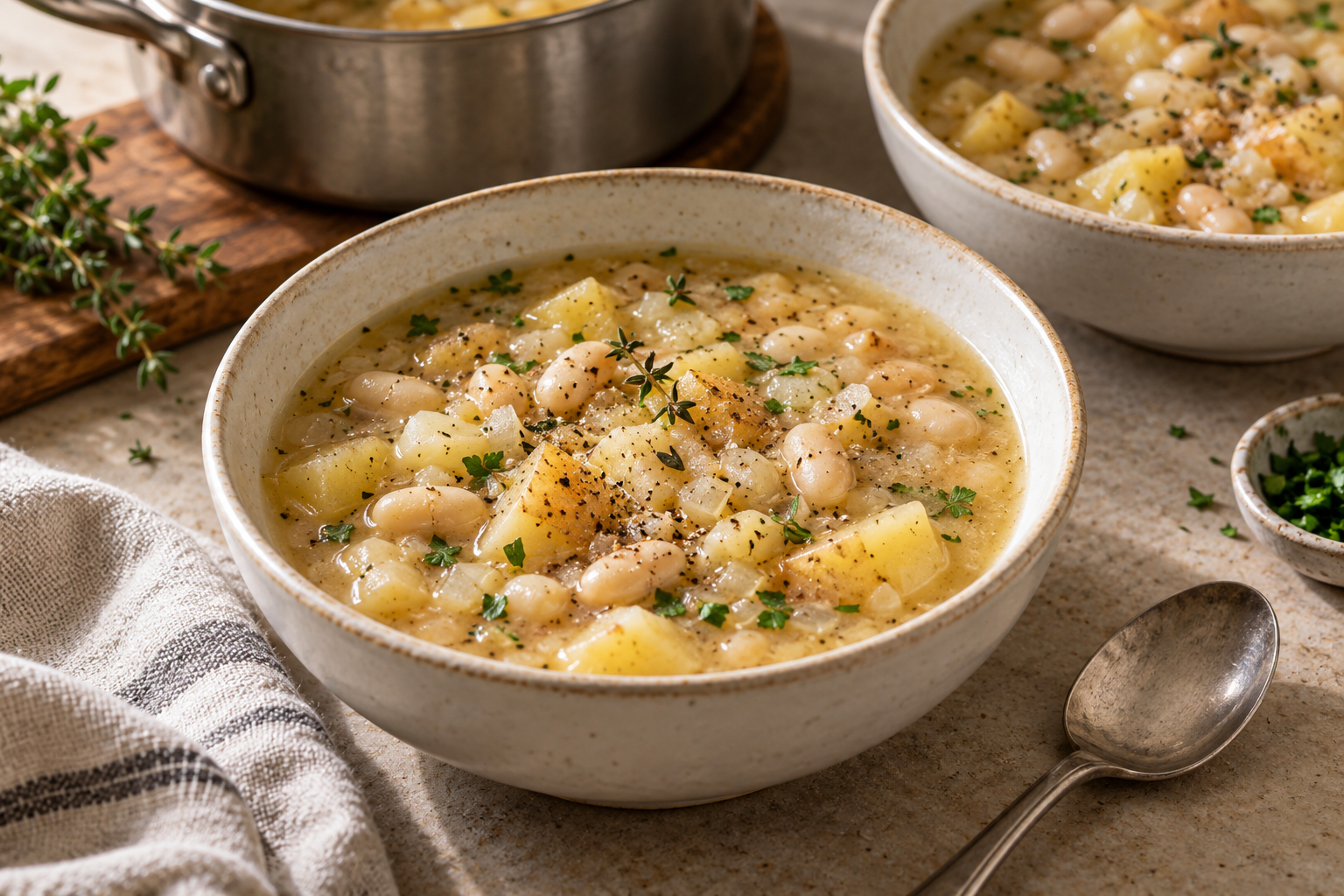
A second approach to building a creamy soup texture without cream.
Equipment for this recipe
Affiliate disclosure: As an Amazon Associate I earn from qualifying purchases.
Use the tools you already have when they match the method. If you need an item, these links open matching Amazon search results.
- Medium saucepan with lid on Amazon — Leave enough room to stir the soup without splashing.
- Fine-mesh kitchen strainer on Amazon — Drain or strain ingredients without losing small pieces.
Check the size, material, and manufacturer’s use instructions against the recipe before choosing.
Useful kitchen references
- USDA frozen-food preparation guidance — Use alongside the directions on your product.
- FoodSafety.gov leftover guidance — A practical reference for chilling and reheating.
Printable recipe
Use the recipe card’s Print control for a kitchen copy. Follow the ingredient quantities and cooking checks in the card when preparing the dish.
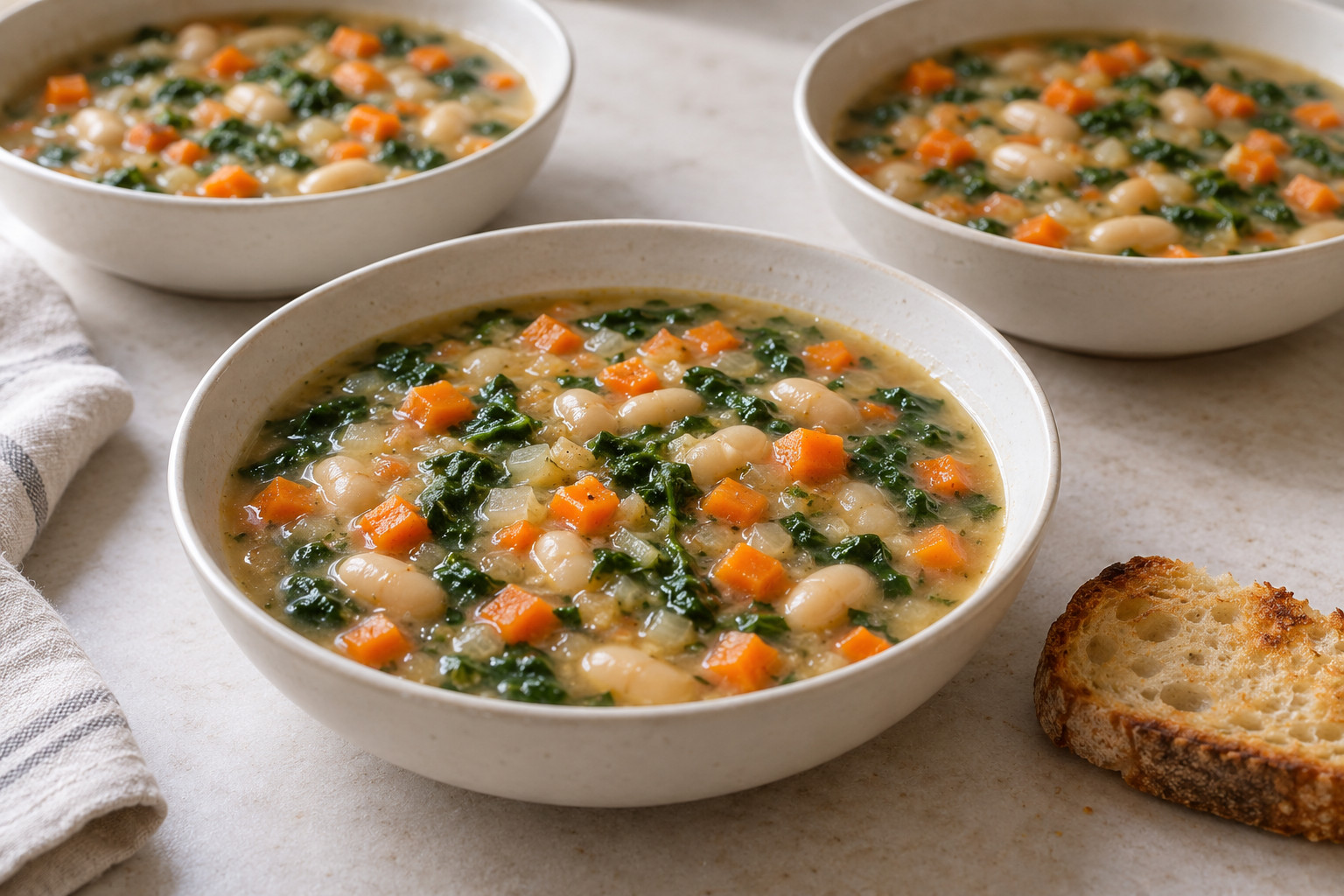
Carrot White Bean Soup With Frozen Spinach Without Cream
Ingredients
Equipment
Method
- Prepare the work area. Drain the beans, cut the vegetables and start the spinach according to its package. Set the broth and lemon beside the stove. Keep a fork and small plate nearby for checking a carrot cube without leaning over the hot saucepan.
- Soften the onion and carrot. Warm the oil over medium heat. Add the onion and carrot and cook for 6–8 minutes, stirring along the bottom and corners. The onion should look translucent around its edges and the carrot should begin to yield. Lower the heat if the onion browns before the carrot begins to soften.
- Add the aromatics and broth. Stir in garlic and thyme for about 30 seconds. Pour in the measured broth and add the drained beans. Bring the liquid to a gentle simmer, then reduce the burner so small bubbles rise steadily without tossing the beans.
- Check the roots before thickening. Simmer for about 8 minutes. Lift one of the larger carrot pieces onto the plate and press it with a fork. It should yield easily through the center. If it resists, continue the gentle simmer and check again; do not move on because the estimated time has passed.
- Mash a portion of the beans. Press roughly one-third of the beans against the pot with the broad spoon, then stir the mash through the liquid. Work in several small areas so you do not crush all the carrots while chasing a single bean. The broth should gain body without becoming a purée.
- Fold in the cooked spinach. Add the loosened, well-drained leaves. Simmer for 2–3 minutes to combine and heat the prepared spinach through. This final warming follows its full package-directed cooking. Sweep the spoon through the pot to separate any green clumps.
- Finish and portion. Take the saucepan off the heat and add the teaspoon of lemon juice. Taste a cooled spoonful with carrot, bean and broth before adding salt and pepper. Divide solids between three bowls, then distribute the remaining broth.