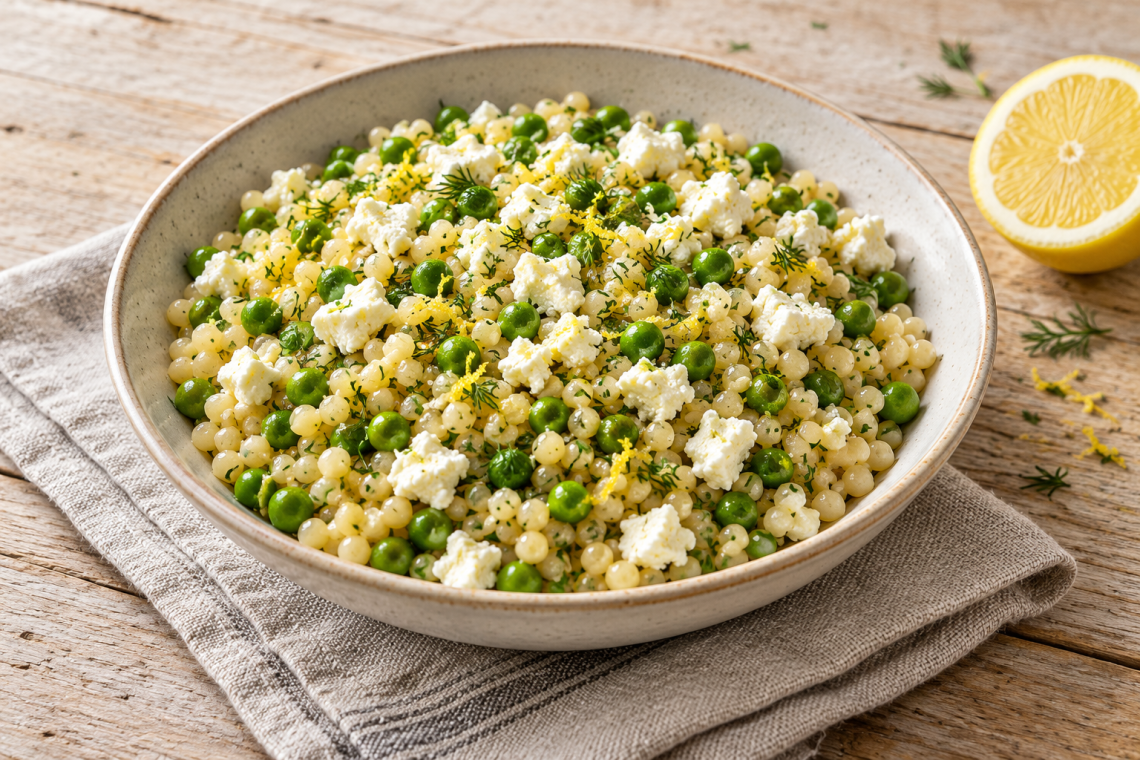
A bag of peas and a small piece of feta can turn a cup of pasta into a bright, substantial bowl. This pearl couscous with frozen peas and feta is served warm, with a lemon dressing that settles around the pasta and little pockets of salty cheese. It suits a simple lunch for two or a side dish for four alongside fish, chicken or a platter of roasted vegetables.
The useful distinction here is the cooking method. The couscous boils in plenty of water, so you can judge tenderness directly instead of hoping a particular brand absorbs an exact amount of broth. Frozen peas join the pot near the end. Meanwhile, a shallot softens in olive oil to make a mellow base for the dressing. Save a little pasta water before draining: it is the easiest way to loosen the finished bowl without flooding it with oil.
Jump to: recipe card · ingredients · cooking method · texture fixes.
Keep pearl couscous, peas, feta and lemon in balance
Boil and drain the couscous
This recipe cooks the pearls in four cups of water and drains them. Taste for a tender center, then save half a cup of cooking water before draining.
Give peas their full cooking treatment
Follow all package cooking directions, including temperature and standing time. Use the shared pot only when that method fits; otherwise cook the peas separately and fold them in.
Finish off heat
Fold in feta and lemon after the burner is off so the cheese stays in soft pieces and the citrus remains fresh.
Keep enough water in the pot for a gentle boil; this is a drain-style method, not an absorption method. At serving time the bowl should be moist but not soupy, with the pearls moving freely around the vegetables.
The warm bowl at a glance
- Yield: 2 generous lunch portions or 4 side portions.
- Timing: about 10 minutes preparation and 20 minutes cooking, 30 minutes total.
- Equipment: medium saucepan, fine colander, small skillet, citrus grater, measuring cups and a large mixing bowl.
- Serving temperature: warm, with the feta added after the strongest heat has subsided.
Measured ingredients
For the pot
- 1 cup dry pearl couscous, approximately 170 g
- 4 cups water, plus more if needed for boiling
- 1 teaspoon fine salt for the cooking water
- 2 cups plain frozen peas, approximately 280 g
For the lemon and shallot dressing
- 2 tablespoons olive oil
- 1 small shallot, finely diced, approximately 45 g
- 1 garlic clove, finely minced
- 1 teaspoon finely grated lemon zest
- 2 tablespoons fresh lemon juice, plus a little more to taste
- 1/4 teaspoon freshly ground black pepper
For the final fold
- 3 ounces feta, approximately 85 g, broken into small chunks
- 2 tablespoons chopped fresh dill or parsley
- Up to 1/4 teaspoon additional fine salt, only if needed
Block feta gives you control over the size of the pieces. Small crumbles disappear into the dressing; slightly larger pieces stay distinct. Lemon zest supplies fragrance, while the juice supplies acidity. Keep both: adding more juice to compensate for missing zest can make the bowl unnecessarily sharp. Dill gives a soft herbal finish; parsley is a quieter option if the main dish already has strong seasoning.
Before the water boils
Check that your package says pearl or Israeli couscous. The tiny couscous used for quick steaming is a different product and needs a different method. Look at the package cooking time, too. Pearl sizes vary, so the final bite is a more useful guide than a rigid timer. The center should be tender with a little spring, with no dry, chalky point.
Choose plain frozen peas, not peas in a sauce. They can go into the water directly from the freezer. Read their package directions and give them the full cooking time specified; if that is longer than the final few minutes of the couscous, cook them separately as directed and fold them in afterward. This keeps convenience from becoming a reason to undercook a frozen product.
Choose the pea timing before you start
Two cups of frozen peas are a substantial addition to one cup of dry couscous. Use a saucepan with enough headroom for the water to return to a controlled boil after the peas go in. Extra pot space makes stirring and judging the boil easier; it does not change the measured four cups of water in this drain-style method.
Compare both packages before setting a timer. This recipe keeps its measured four cups of water and boil-and-drain couscous method even when a couscous package describes absorption cooking. Use the same-pot option only when the pea package calls for a compatible stovetop boiling or simmering treatment. Microwave-only and steam-in-bag peas should be prepared separately as directed. Birds Eye likewise advises following the individual package because frozen-vegetable directions vary by product. Neither ingredient is automatically finished because the other one’s timer has sounded. See the manufacturer’s frozen-vegetable guidance.
| What the packages tell you | Best route for this bowl |
|---|---|
| The peas’ full cooking treatment fits within the couscous’s remaining time. | Add them to the shared pot, restore the cooking condition on the package, and check both ingredients before draining. |
| The couscous is nearly tender, or the peas require a different cooking method. | Cook the peas separately as directed, using any additional water their method requires, then drain and fold them into the dressed couscous. |
| Adding frozen peas stops the bubbling. | Let the pot return to a controlled boil, then keep tasting the couscous instead of extending it by a fixed number of minutes. |
Park the shallot oil off the heat
The shallot mixture can finish first. After the garlic’s brief cooking, take the skillet off the active burner and scrape the oil, shallot and garlic into the heatproof mixing bowl. This limits carryover cooking while you reserve pasta water and drain. Measure the lemon and pepper beside that bowl; keep the feta refrigerated until the final fold.
Give the finish a little attention
Wash the lemon under running water and dry it before zesting; soap is unnecessary. This follows the FDA guidance for preparing produce. Turn the lemon after each short pass over the grater. Stop when you expose the pale layer beneath the yellow surface, then move to a fresh patch. Collect the measured zest before cutting the fruit so the softened halves are easier to juice.
Use a bowl wide enough to turn the couscous with a broad spoon. A narrow cereal bowl encourages stirring in circles, which can mash the peas while leaving dressing at the bottom. Wash and dry the herbs, remove any tough stems, and chop them shortly before the final fold. Wet herbs bring water with them; finely crushed herbs can become difficult to distribute without repeated mixing.
How to make pearl couscous with frozen peas and feta
Prepare the two work areas
- Prepare the finish first. Zest the washed lemon, then juice it. Dice the shallot, mince the garlic and chop the herbs. Put the feta back in the refrigerator while the pasta cooks. Set a heatproof measuring cup beside the stove so you remember to save cooking water.
Cook the pearls and peas
- Start the couscous. Bring the 4 cups water and 1 teaspoon salt to a boil. Stir in the couscous. Keep it at a steady, gentle boil, stirring occasionally so the pearls separate. Begin tasting about 2 minutes before the package’s suggested finishing time.
- Soften the shallot. While the pasta cooks, warm the olive oil in the small skillet over medium-low heat. Add the shallot and cook for 4 to 6 minutes, stirring, until translucent and soft. Add the garlic and cook for about 30 seconds. Take the skillet off the heat before the garlic darkens.
- Cook the peas. Add the frozen peas to the couscous when enough cooking time remains to meet the peas’ package directions, generally the last 3 to 5 minutes. Return the water to a gentle boil. Taste the couscous again; the peas should be hot and tender, and the pasta should have no hard center.
Drain, dress and finish
- Reserve, then drain. Scoop out 1/2 cup cooking water. Drain the couscous and peas well without rinsing. Tip them into the large bowl and add the warm shallot oil, lemon zest, lemon juice and pepper. Toss with 1 tablespoon reserved water to distribute the dressing.
- Finish gently. Let the bowl stand for about a minute, then fold in the feta and herbs. Taste a spoonful that includes cheese before adding extra salt. If the pasta looks tight or sticky, add reserved water a teaspoon at a time. Serve while warm and loose enough to scoop easily.
Three final checks before serving
Check the drain. Water trapped under the pasta dilutes the lemon dressing. Let the colander drain briefly and shake it gently before transferring everything to the bowl. You want control over the moisture, which is why the reserved water goes back in by the spoonful.
Check the cheese temperature. Feta can soften into a very hot bowl. That is pleasant if you want a creamy coating, but adding it after a short pause preserves separate pieces. Do not leave the meal sitting out to cool completely; a brief rest is enough.
Check the balance with a full bite. Peas are sweet and feta is salty. Taste them together with the couscous before changing the seasoning. A bowl that needs brightness may need a teaspoon of lemon juice, not another large pinch of salt. A bowl that tastes sharp may need a little more pasta water to spread the dressing.
If something goes wrong
| Problem | Likely cause | Adjustment |
|---|---|---|
| The pasta clumps | It drained too long or needs more moisture | Toss with warm reserved water a teaspoon at a time. |
| The dressing tastes harsh | The lemon is particularly acidic or the shallot is undercooked | Add a teaspoon of olive oil and a little water; give the shallot more time next batch. |
| The peas look dull and soft | They cooked longer than necessary | They can still be used if handled safely; next time align their cooking time with the pasta. |
| The bowl is too salty | Salty feta plus extra seasoning | Fold in more separately cooked, unsalted couscous or peas if available. |
Plan the portions before you dress the bowl
| Meal | How to divide it | Keep alongside |
|---|---|---|
| Lunch for two | Divide the finished pasta and peas between two broad bowls, checking that each receives feta. | Put any cucumber or tomato in a separate small dish until the meal begins. |
| A side for four | Spread it across a shallow serving bowl and provide a broad spoon so peas do not all collect at the bottom. | Serve the accompanying main dish separately so its cooking juices do not change the dressing. |
If only one lunch portion is needed immediately, set out a shallow storage container before cooking. Once everything is dressed, divide the batch rather than repeatedly serving from a large warm bowl. This also gives you a more even share of the cheese. Keep a small amount of reserved cooking water only for the immediate final adjustment; a future lunch can be loosened with fresh water as described below.
Ways to serve it and sensible changes
For lunch, add sliced cucumber and tomatoes on the side so their juices do not thin the warm dressing. For dinner, spoon it beside a simply seasoned protein and let the lemon and herbs connect the plate. A handful of toasted sunflower seeds provides crunch, but add them at the table so they stay crisp.
If you want a dairy-free version, omit the feta and finish with a tablespoon of rinsed, chopped olives plus another teaspoon of olive oil. The result will be briny rather than creamy. Small pasta such as ditalini could replace the couscous by weight, using its own package timing. These are suggested variations, not verified equivalent results. Avoid swapping tiny couscous straight into the boiling method.
Keeping leftovers pleasant
Transfer leftovers to shallow, covered containers and refrigerate within 2 hours, or within 1 hour if the surroundings are above 90°F. Keep the refrigerator at 40°F or below. Plan to eat this bowl within 3 days. For reheating, add a splash of water, cover loosely and microwave in short intervals, stirring, until the center reaches 165°F. The feta will soften more on reheating. Add a little fresh herb afterward if available.
Frequently asked questions
Can I make this ahead for lunch?
Yes. Cook, dress and promptly chill it in a shallow container. Keep any cucumber or fresh tomato separate until serving. The pasta will absorb dressing as it stands, so loosen the chilled portion with a teaspoon of water and a few drops of lemon juice if needed.
Should I thaw the peas first?
No thawing is needed for the main method. Add them from frozen and follow their package cooking directions. Thawed peas can be used, but they may finish sooner; do not assume they are ready to eat simply because they have thawed.
Can I use broth instead of water?
You can boil the couscous in broth, but much of it will be drained. Water is a practical choice here because the shallot oil, feta and lemon provide the seasoning. If using salty broth, omit the cooking-water salt and season the finished bowl carefully.
Does this need to be served as a salad?
No. This version is designed as a warm side or lunch bowl. The light dressing coats warm pasta well, and the peas and feta remain distinct. It also works chilled after proper refrigeration, with a small splash of water to refresh the texture.
How do I double pearl couscous with frozen peas and feta?
Double the ingredients and use a larger pot with enough water for the pasta to move freely. The water may take longer to return to a boil after adding the peas. Judge the pasta by its bite and the peas by their package instructions rather than automatically doubling the cooking time.
For another way to use the rest of a bag of peas, try bow tie pasta with peas and lemon tahini. If you have the smaller type of couscous instead, our couscous with canned lentils and frozen spinach offers a different pantry meal.
Food handling references: FDA storage guidance and FoodSafety.gov reheating temperatures.
Rate this recipe
Made this warm pearl couscous bowl? Choose a star rating in the comment form and share whether you cooked the peas in the same pot or separately.
Pack the components for a better lunch
For a planned cold lunch, cool and refrigerate the cooked components promptly in shallow containers. Keep an extra portion of feta separate if you want distinct crumbles at serving. Fold the chilled couscous gently before deciding whether it needs another small amount of dressing; adding more liquid automatically can leave a puddle at the bottom.
Use a broad, shallow serving bowl when eating the couscous warm. It gives you room to lift and fold the pearls without repeatedly pressing them against the side of a narrow container. Divide with a spoon that reaches the bottom so the first portion does not collect all the peas and feta from the top.
The finished bowl should show round pasta, green peas, and separate white cheese crumbles. These visual cues help with portioning, but the pasta's tenderness and the peas' package-directed cooking remain the important cooking checks. A picture cannot establish doneness or replace those steps.
Handle the finishing ingredients for pearl couscous with frozen peas and feta
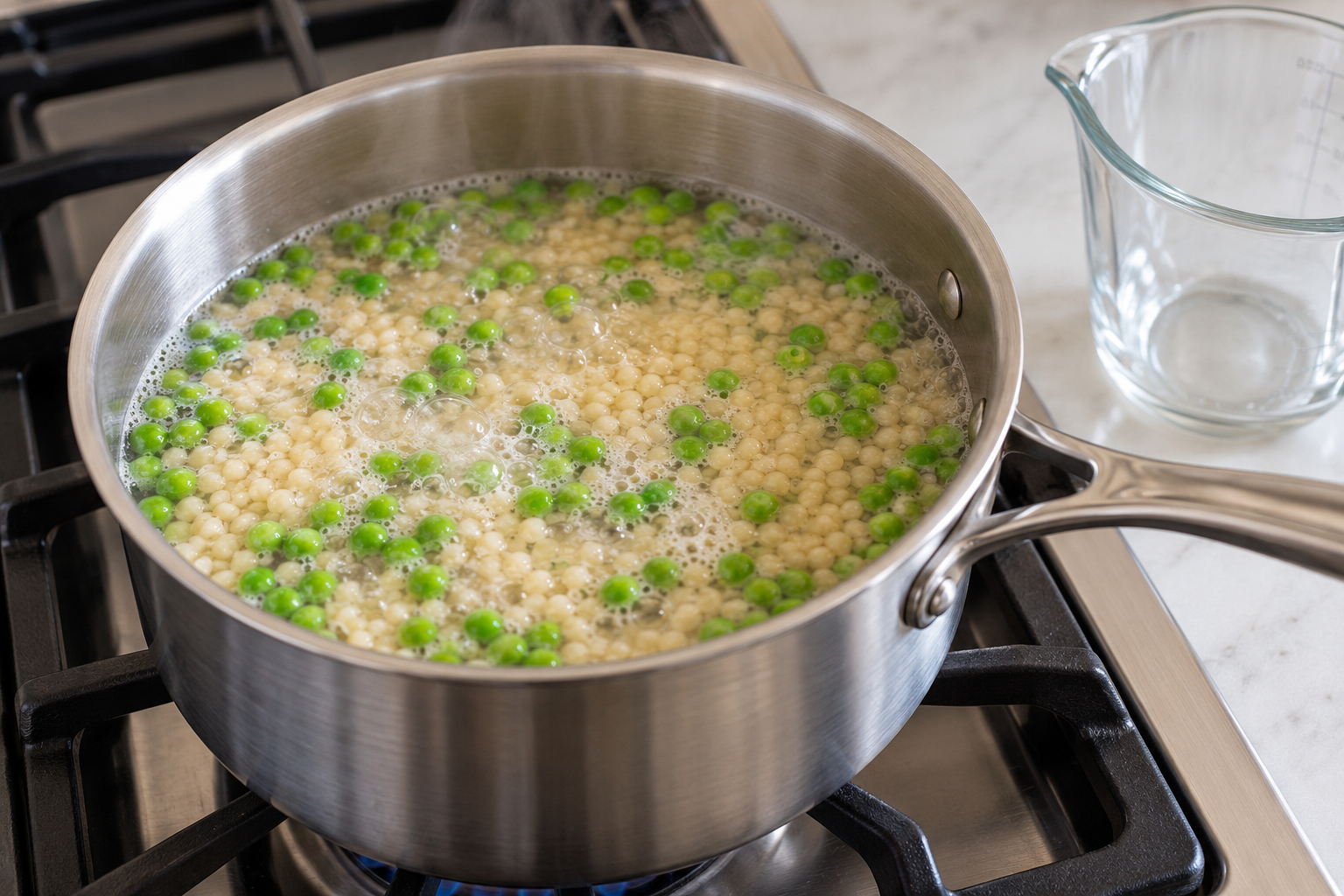
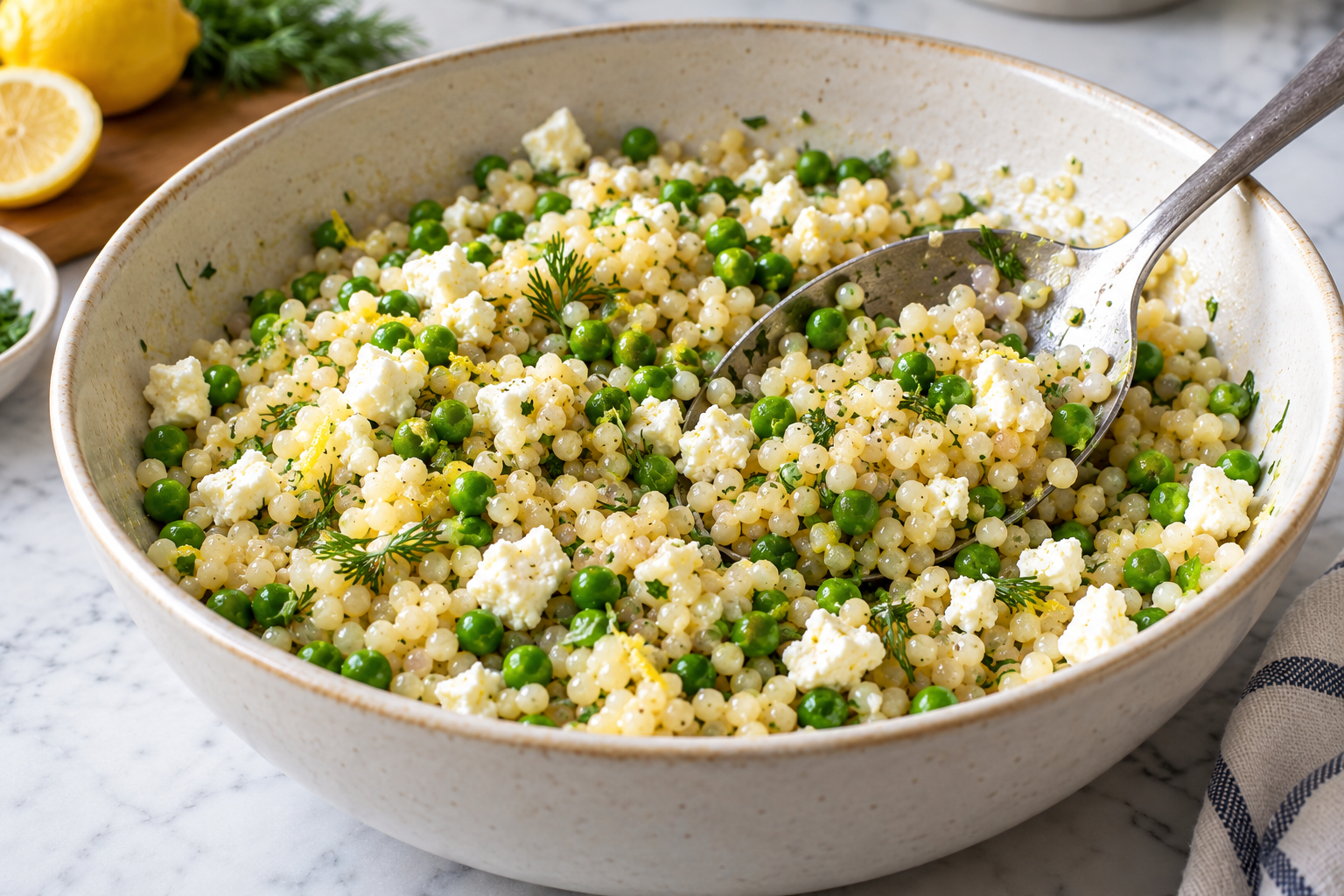
The final bowl of pearl couscous with frozen peas and feta depends on several small transfers: pasta from pot to colander, shallot oil from skillet to bowl, and cheese from its container into the warm mixture. Organize those transfers before the pasta finishes.
Weigh the cheese without its packing liquid
When feta comes in brine, lift the piece out and let the loose liquid drip away before weighing the cheese portion. Put a small plate on the scale and tare it first. Measure the cheese itself rather than a plateful of cheese and brine. Break the portion with your fingers or two forks into uneven small pieces; avoid rubbing it into powder. Keep the remaining block in its original storage arrangement according to the package. If your feta is already crumbled, loosen any large compressed clusters before the final fold instead of pressing them apart in the couscous.
Prepare shallot pieces that soften together
Halve the peeled shallot lengthwise and place a flat side on the board. Make closely spaced cuts, then cut across them to form a fine dice. Separate any thick connected pieces with the knife tip. Small, similar pieces are easier to soften gently without finding a raw center in the finished dressing. Keep the minced garlic in a different small dish because it enters later. If the shallot releases moisture in the pan, let that moisture cook away gradually; do not compensate by adding the garlic early or raising the heat until the smallest pieces darken.
Match the strainer to the pasta
Look at the holes in your colander before the pot is ready to drain. The small cooked pearls should stay inside it when water passes through. Set it over a stable heatproof bowl or securely in the sink, leaving enough room for the draining water to escape. Have the reserved-water cup ready beforehand. Save that water from the pot while the pasta is still safely supported, rather than trying to recover it from a heavy saucepan halfway through pouring.
Transfer the seasoning with a spoon
Use a flexible spatula to collect the softened shallot, garlic and measured oil from the skillet. Small pieces often remain around rivets or where the base meets the side. Add these to the mixing bowl so the entire dressing can reach the pasta. After the lemon is mixed in, scrape the bowl once around its lower edge before folding again. This helps reveal whether an oily pocket remains underneath while the top appears dry. Lift and turn the pasta from the base rather than only moving the visible upper layer.
Cut the herbs for even distribution
For dill, pull the soft fronds from coarse stems and gather them into a loose pile. For parsley, remove tough stems and chop the leaves with a controlled rocking motion. Stop when the pieces are small enough to scatter easily; repeatedly chopping until the herbs become a damp paste makes them harder to distribute. Measure the chopped quantity after preparing it. Scatter it across the surface in two passes while folding, rather than dropping the whole measure into one spot. This gives both lunch portions a share of the chosen herb without requiring vigorous mixing.
Make a complete forkful before adjusting
For the final taste, deliberately collect one or two peas, several pearls, a little shallot and a piece of feta. A forkful made only from pasta may seem underseasoned beside the salty cheese. If you adjust the bowl, fold once and collect the same mixture again before making a second change. This is especially useful when serving the bowl beside another seasoned dish, where additional salt or acidity may already arrive on the plate.
More recipes for your table
Choose a companion dish or another recipe for the ingredients you have. Each link opens its own instructions and printable recipe.
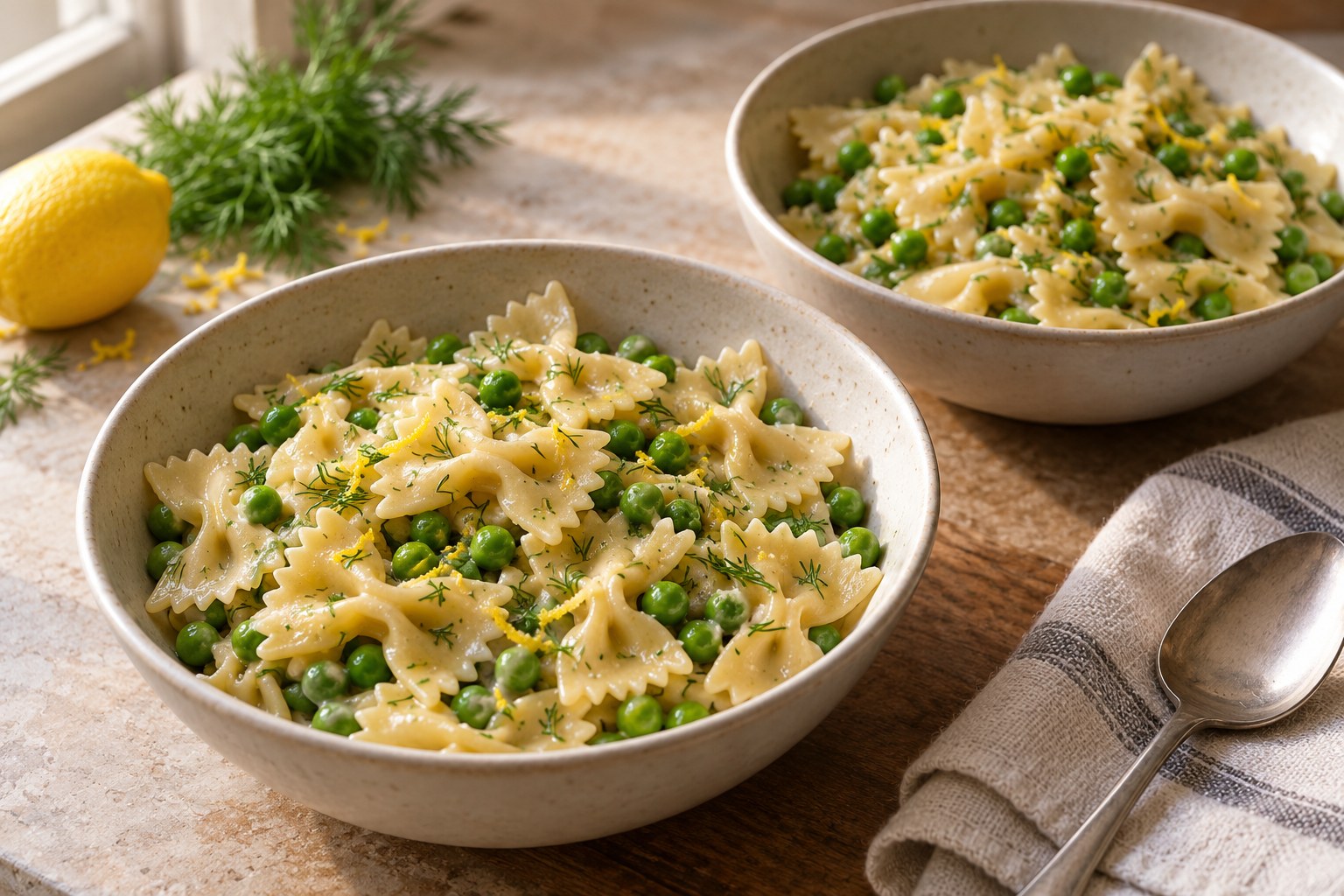
A pasta dish with peas and a lemon-tahini finish.
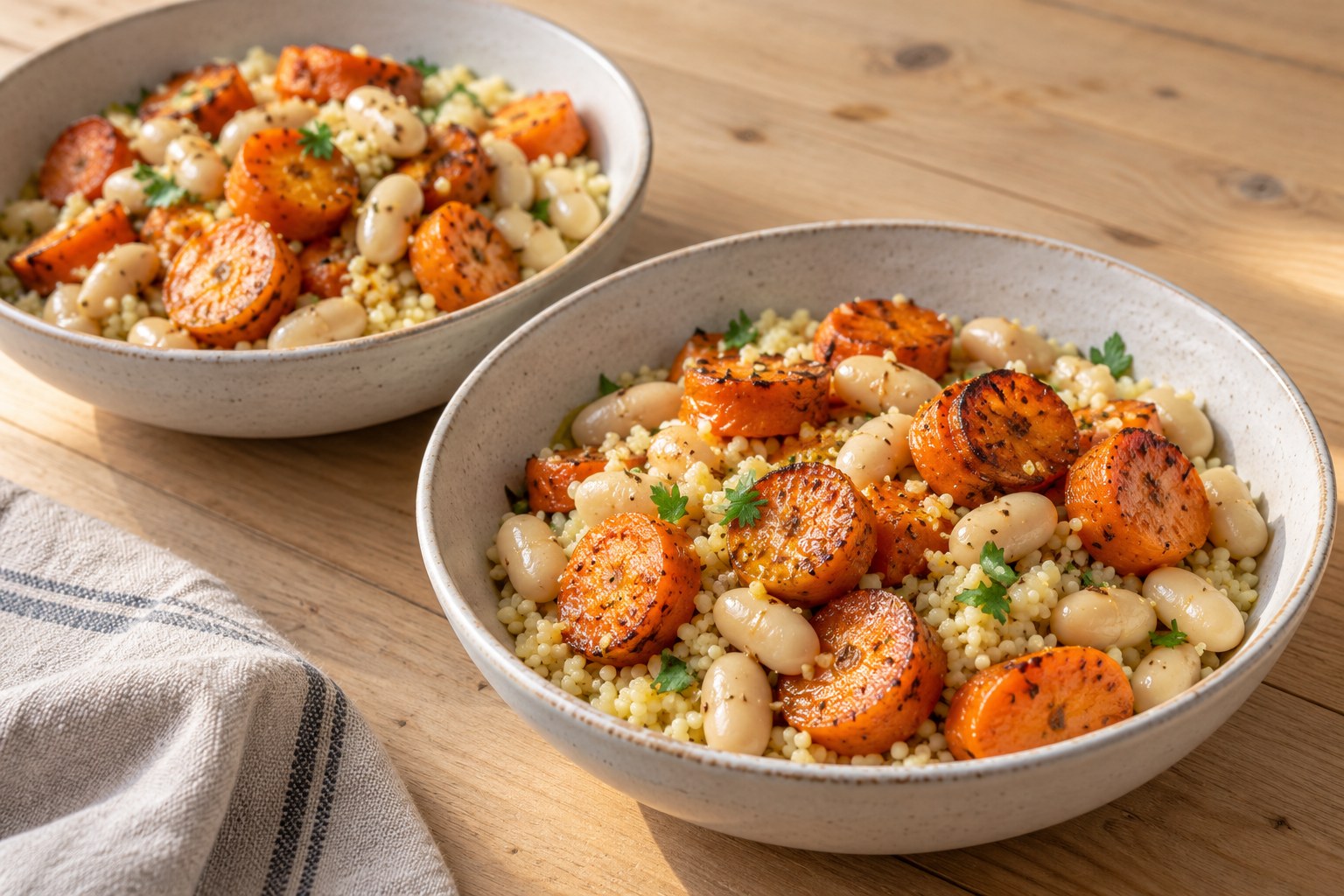
A couscous bowl with roasted carrots and white beans.
Equipment for this recipe
Affiliate disclosure: As an Amazon Associate I earn from qualifying purchases.
Use the tools you already have when they match the method. If you need an item, these links open matching Amazon search results.
- Fine-mesh kitchen strainer on Amazon — Drain or strain ingredients without losing small pieces.
- Fine citrus grater on Amazon — Remove a thin layer of colored zest for the recipe’s citrus finish.
Check the size, material, and manufacturer’s use instructions against the recipe before choosing.
Useful kitchen references
- USDA frozen-food preparation guidance — Use alongside the directions on your product.
- FoodSafety.gov leftover guidance — A practical reference for chilling and reheating.
Printable recipe
Use the recipe card’s Print control for a kitchen copy. Follow the ingredient quantities and cooking checks in the card when preparing the dish.
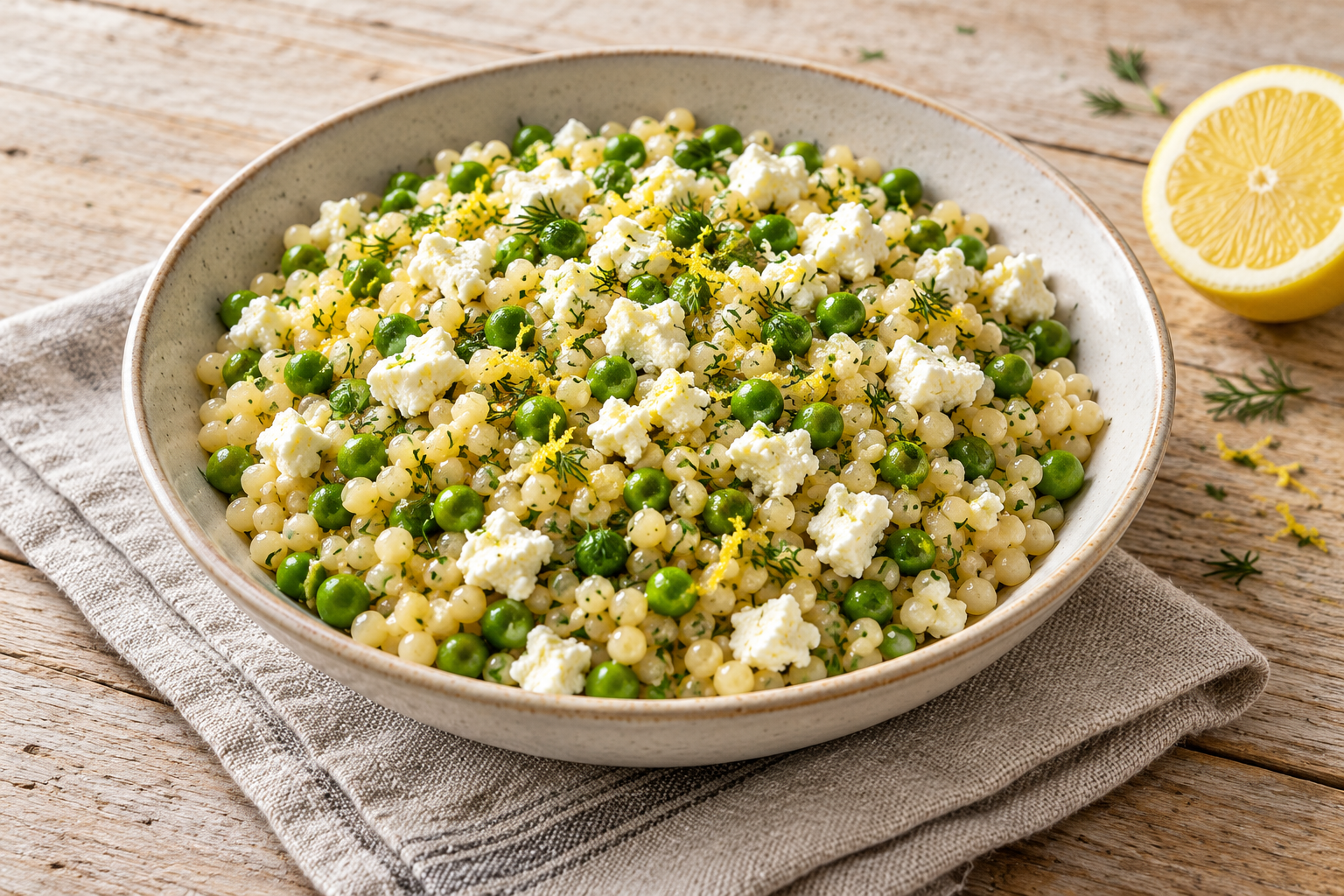
Pearl Couscous With Frozen Peas, Feta and Lemon
Ingredients
Equipment
Method
- Wash and dry the lemon, then zest and juice it. Dice the shallot, mince the garlic and chop the herbs. Keep the feta refrigerated while the pasta cooks. Set a heatproof measuring cup beside the stove.
- Bring 4 cups water and 1 teaspoon salt to a boil in the saucepan. Stir in the couscous. Keep it at a steady, gentle boil, stirring occasionally. Begin tasting about 2 minutes before the package's suggested finishing time.
- While the pasta cooks, warm the olive oil in the skillet over medium-low heat. Add the shallot and cook for 4 to 6 minutes, stirring, until translucent and soft. Add the garlic and cook for about 30 seconds. Remove from the heat before the garlic darkens.
- Read the peas' package directions before starting. If the package permits boiling and the couscous has enough cooking time remaining, add the peas, return the water to the boil, then complete the full package-directed cooking time. Otherwise, cook the peas separately by their full package method, drain, and combine them with the cooked couscous. The peas should be fully cooked and hot; the couscous should have no hard center.
- Scoop out 1/2 cup cooking water. Drain the couscous and peas well without rinsing. Transfer them to the mixing bowl and add the warm shallot oil, lemon zest, lemon juice and pepper. Toss with 1 tablespoon reserved water.
- Let the bowl stand for about 1 minute, then fold in the feta and herbs. Taste a spoonful that includes cheese before adding extra salt. If the pasta looks tight or sticky, add reserved water a teaspoon at a time. Serve warm.