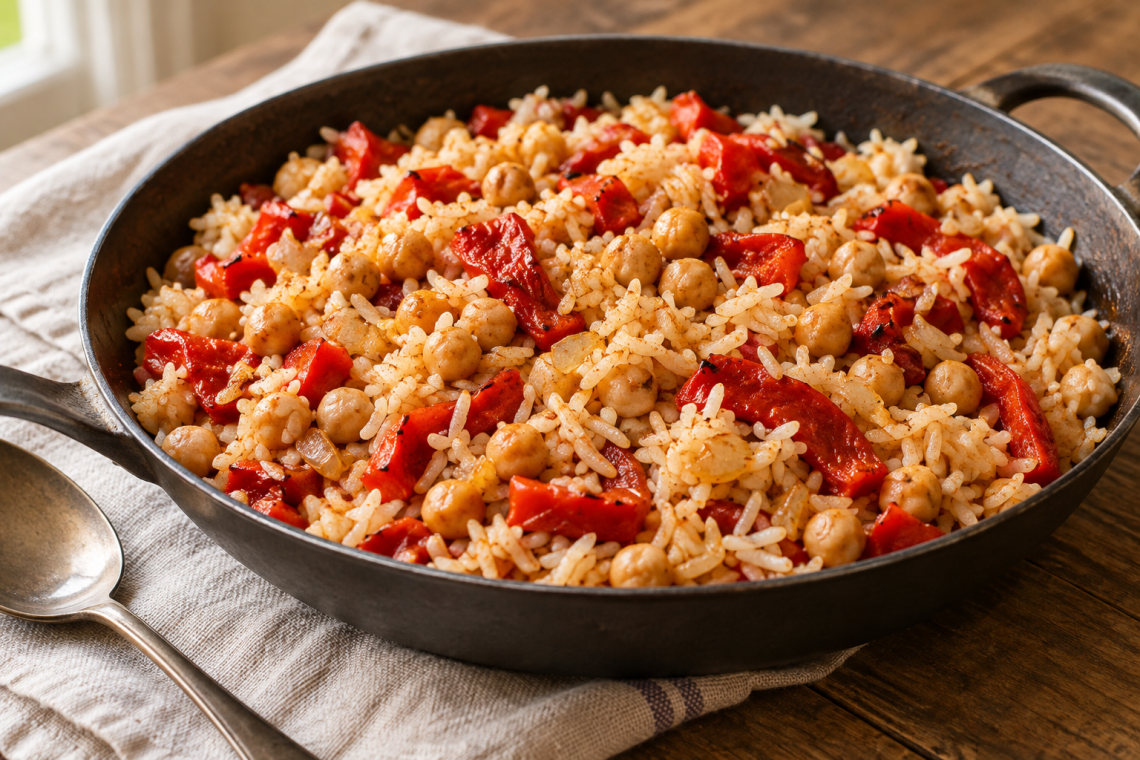
This roasted pepper chickpea rice skillet turns safely refrigerated cooked rice into a warm meal with jarred red peppers, chickpeas and smoked paprika. A measured splash of water or broth loosens the grains, and a covered stage heats them through. Drain the pepper packing liquid, finish with lemon, and serve a colorful skillet without cheese.
The rice is already cooked, so this is a reheating recipe rather than an absorption method for dry grains. The important finish is rice that is hot throughout, including the center of every former clump, without a puddle of liquid beneath it. A thermometer confirms the reheating temperature after the clumps have been separated.
Keep the rice distinct in a cheese-free skillet
Drain the peppers
Jarred peppers bring flavorful liquid, but too much can make cooked rice soggy. Drain the peppers before measuring them, and use the measured lemon juice for acidity at the end.
Warm chickpeas gently
Add them after the aromatics are ready. They need flavor and heat, not a long fry that dries their skins or turns the rice mixture chalky.
Finish for richness
Olive oil and toasted spices give the skillet flavor without cheese. Finish with the measured lemon juice, and use water or broth in small additions if the rice needs loosening.
Pan test: lift a spoonful and let it fall back. The grains should separate while the chickpeas and pepper pieces remain evenly distributed. If the mixture clumps, fold in a tablespoon of warm water and loosen it over low heat rather than stirring aggressively.
Start with the rice storage check
Use rice that was cooled promptly and kept refrigerated at 40°F or below. Rice left on the counter overnight is not suitable for this skillet. The new cooking session does not erase an uncertain storage history. Keep the rice chilled while you chop the onion and peppers, then bring it out when the pan is nearly ready.
Count the rice’s earlier refrigerated days when planning any remaining portions. For example, turning previously cooked rice into this dinner does not begin a fresh three-to-four-day period. If the rice is already near the end of its storage window, make only the amount you intend to eat promptly.
The small-household plan
Yield: approximately 2–3 servings. Preparation: about 10–12 minutes. Estimated cooking: 18–30 minutes. Total: about 28–42 minutes. Use a wide skillet with a lid, broad spatula, knife, cutting board, colander, measuring tools and a food thermometer.
Plan two fuller bowls or three smaller portions with an accompaniment. Have the cucumber or other side ready before starting the covered rice stage. Once the skillet has reached the reheating temperature and its excess moisture is gone, it is ready to serve rather than remain on the burner while the rest of dinner is prepared.
Ingredients
For the onion and pepper base
- 1 tablespoon olive oil
- 1/2 yellow onion, diced
- 1 garlic clove, minced
- 1/2 teaspoon smoked paprika
- 1 cup jarred roasted red peppers, measured after draining, then chopped
For the rice skillet
- 1 can (15 ounces) chickpeas, drained and rinsed
- 2 cups previously cooked rice, cooled promptly and kept refrigerated
- 1/3 cup water or vegetable broth
To finish
- 1 teaspoon lemon juice
- Salt and black pepper, to taste
Use cooked rice, not dry rice. The measured liquid loosens and reheats the grains; it is not enough to cook raw rice.
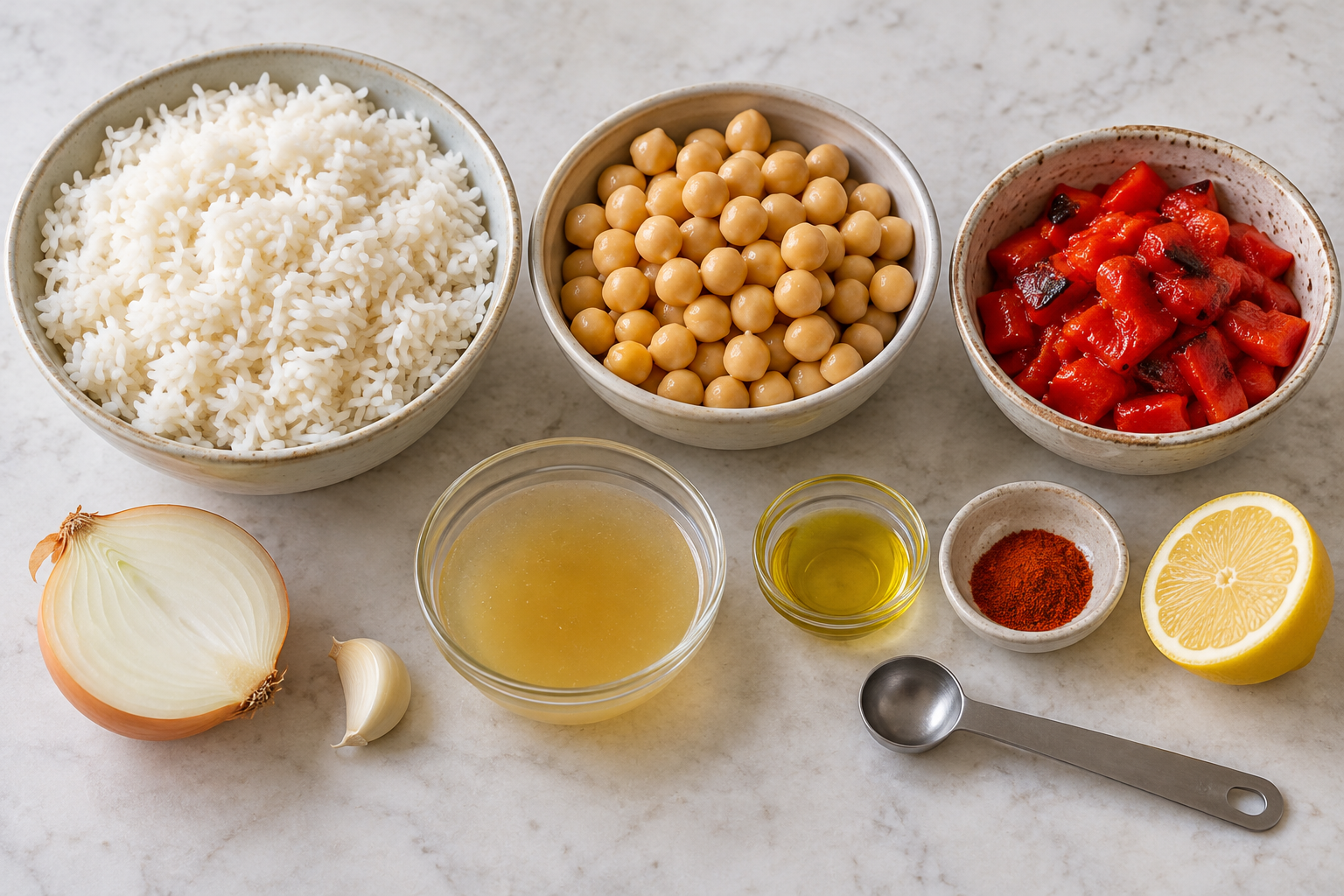
Prepare peppers and rice for even mixing
Drain the roasted red peppers before measuring the cup. Cut them into bite-size pieces so one large slippery strip does not pull several chickpeas out of a forkful. Let obvious liquid drain again after chopping. Use plain roasted peppers rather than a strongly seasoned relish, because added sugar, vinegar or oil changes the flavor of this simple skillet.
Rinse and drain the chickpeas separately. The measured third cup of broth or water is the deliberate added liquid; it is easier to judge that amount when neither canned packing liquid nor pepper brine is pouring in as well. Keep the lemon juice separate for the final off-heat step.
Look through the cold rice with a fork and loosen the largest clumps without crushing the grains. Some compact pieces may need the warm liquid in the pan to separate. Do not use the back of a heavy spoon to grind them into paste. The goal is exposed grains that can heat evenly, not perfectly fluffy rice at the expense of its structure.
Build the roasted pepper chickpea rice skillet
- Soften the onion. Heat the oil over medium heat in the wide skillet. Add the diced onion and cook for about 4 minutes, stirring, until it begins to soften. Continue briefly if thick pieces are still quite firm. Keep the heat low enough that the onion does not develop a black edge.
- Warm the seasonings. Add the garlic and smoked paprika and stir for about 30 seconds. Have the peppers ready so the paprika does not sit against a dry hot pan while you search for the next ingredient.
- Add the peppers and chickpeas. Fold them through the onion base, scraping up any light golden residue. Distribute the pepper pieces across the skillet. This brief step starts their warming while protecting the already-cooked chickpeas from a long separate simmer.
- Add rice and measured liquid. Tip in the refrigerated rice and the 1/3 cup of water or broth. Slide the spatula under the clumps and lift them apart as the liquid loosens them. Spread the mixture in an even layer, then cover and cook for about 4–6 minutes.
- Check the whole pan. Remove the lid away from your face. Stir from the bottom, bringing rice from the outer edge into the center. Break any remaining clump, then check several areas with the thermometer, keeping its tip away from the hot pan surface. The rice mixture must reach 165°F throughout. Continue heating if any area is cooler, adding a little water only if it is drying out.
- Clear excess moisture. Once hot throughout, leave uncovered briefly if liquid pools underneath. Turn the rice gently so moisture can escape without repeatedly mashing the grains. Stop while the mixture remains pleasantly moist.
- Finish and serve. Turn off the heat, stir in the teaspoon of lemon juice and taste before adding salt and pepper. Share the peppers and chickpeas evenly as you portion the rice. Serve promptly.
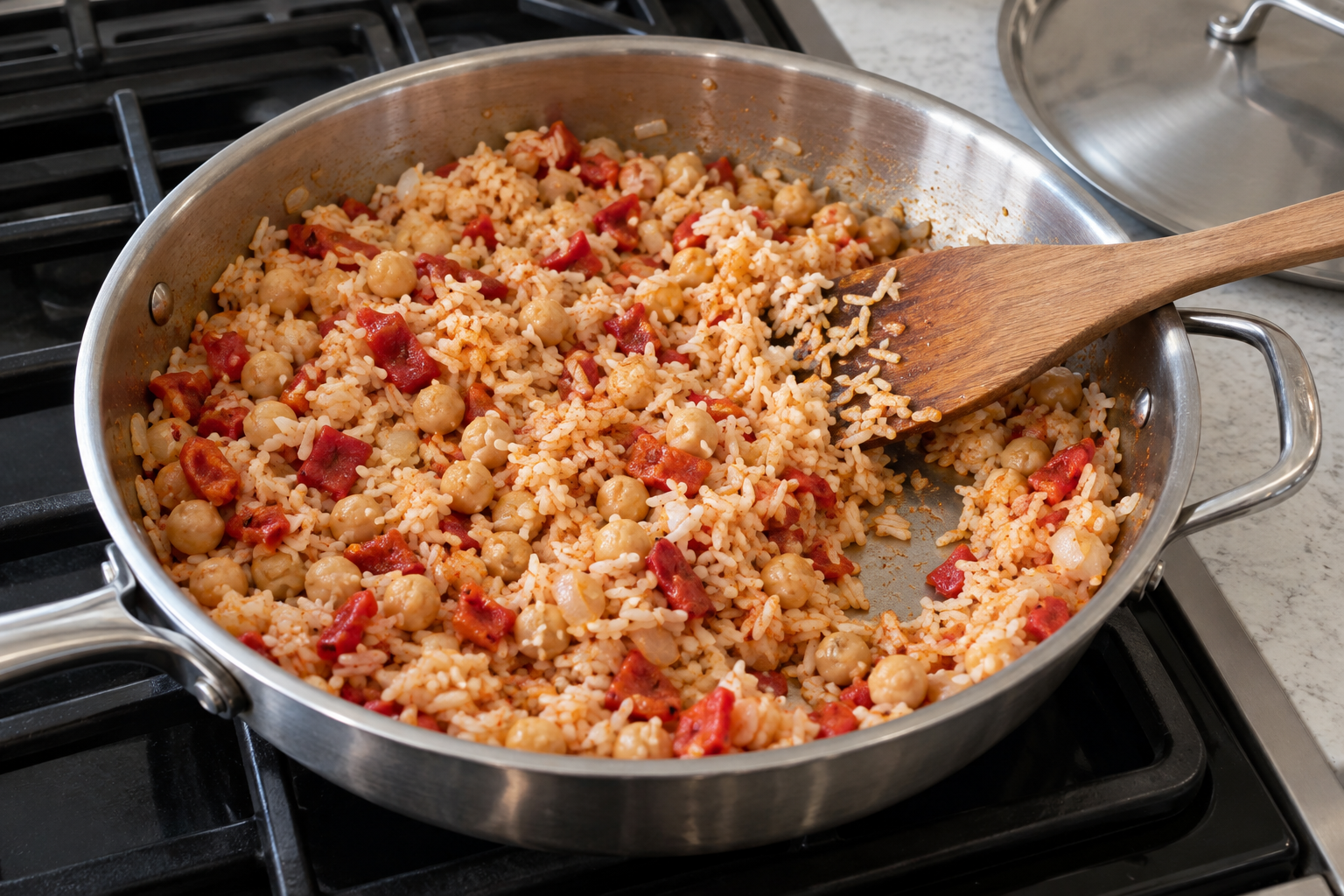
Separate temperature from texture
| What you find | What it means | Next step |
|---|---|---|
| Cool rice inside a warm clump | The reheating stage is unfinished. | Break the clump, stir and continue heating to 165°F throughout. |
| Hot rice with a dry base | Moisture is evaporating quickly. | Add water by the tablespoon and fold gently. |
| Hot rice above a small puddle | The skillet needs a short uncovered finish. | Let steam escape, then reassess before continuing. |
| Soft grains sticking together | The rice may have been soft before refrigeration. | Handle gently; do not keep frying in pursuit of a different original grain texture. |
Steam helps you notice warming, but it does not replace the thermometer check. A spoonful from the edge can be much hotter than a clump in the center. Stirring and checking several points make the method more useful than judging the surface alone.
Serve with a cool, crisp side
Cucumber slices, a simple salad or another crisp vegetable balances the warm rice. Chopped parsley is an optional serving garnish from the original idea; the measured formula does not depend on it. Keep extra lemon at the table rather than squeezing it over the entire pan without tasting.
For two people, divide the chickpeas first if they have collected under a layer of rice. For three smaller portions, pair the skillet with another component rather than calling a light serving a large dinner. Do not add uncooked rice to increase the yield: the recipe has neither the liquid nor the cooking time for it.
Rice skillet questions
Can I use rice straight from the refrigerator?
Yes, when it was cooled and stored safely. That is the reference starting point. Keep it chilled until needed, break up the clumps and reheat the mixture to 165°F throughout. Do not leave it on the counter to soften before beginning.
Can I use freshly cooked rice?
Hot freshly cooked rice is a possible variation, but it may be softer and need less added moisture. Start with rice that has completed its own cooking process. Keep the reference ingredient amounts in mind and add liquid carefully rather than assuming the cold-rice texture will be identical.
Does brown rice work?
Previously cooked brown rice can be tried in the same two-cup amount if safely stored. It gives a firmer bite and may loosen differently. Reheat it thoroughly and use the final moisture check. The method does not convert dry brown rice into cooked rice.
Should I add the pepper brine?
No. The measured version uses drained peppers and a separate teaspoon of lemon juice. Brines vary in salt, acid and sweetness, making an unmeasured pour difficult to control. Drain the peppers so the listed liquid amount remains meaningful.
Can cannellini beans replace chickpeas?
They are a plausible one-can variation but are usually more delicate during folding. Drain well and lift the rice gently from underneath. Expect softer beans and a different bite; this substitution has not been kitchen validated with the rice formula.
Can I save a portion of this rice skillet?
Only with prompt refrigeration and within the remaining storage life of the original rice. Use shallow covered containers, refrigerate within 2 hours or within 1 hour above 90°F, and keep at 40°F or below. Count the original rice cooking date rather than restarting its clock.
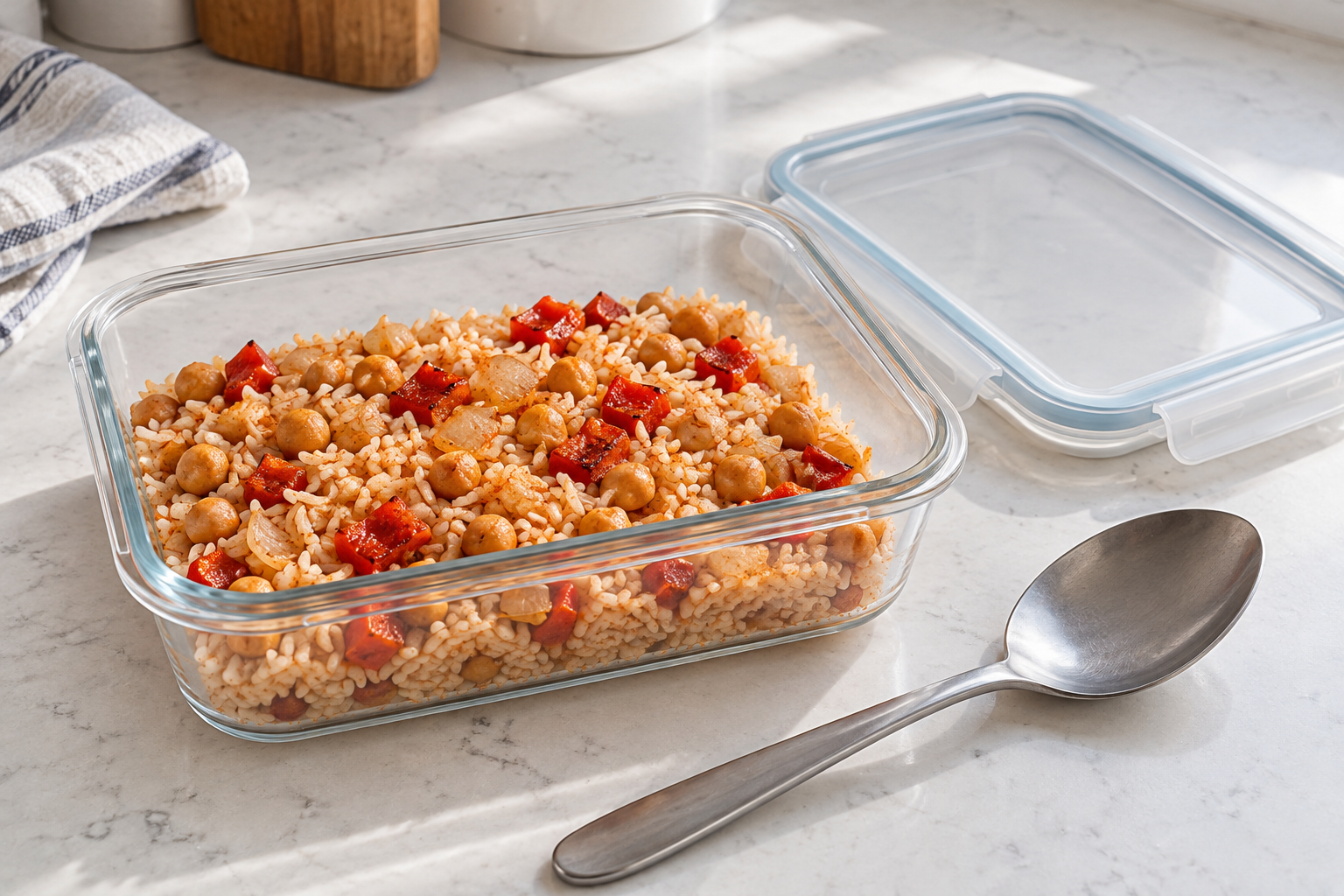
Reheat a planned portion carefully
Keep the total refrigerated storage within the original 3–4-day leftovers window and use a shorter remaining period when older rice was used. Add a little water, cover loosely and stir during reheating until the center reaches 165°F. A small portion may heat unevenly if it remains in one compact mound, so separate it as it warms.
For future meals, chilling cooked rice in shallow portions makes both storage and this skillet preparation easier. Label the date and keep the container covered in the refrigerator. Choose a different meal if the rice’s history is uncertain rather than trying to compensate with extra frying.
Food handling references: USDA leftovers guidance, FDA refrigerated storage advice and FoodSafety.gov reheating temperatures.
Turn the rice skillet into a planned pantry meal
Check how much cooked rice you actually have before opening the chickpeas. The recipe uses two cups cooked rice; two cups dry would make a very different quantity. Break up compact refrigerated rice with a fork while it is still cold, then let the measured liquid help loosen it in the covered skillet.
Drain the peppers over a bowl before chopping. Their packing liquid can vary from mild to sharply acidic, so do not assume it is interchangeable with the measured water or broth. Cut pepper strips into pieces that fit comfortably on a spoon with the rice and chickpeas.
Keep the temperature check separate from the texture check. First make sure the entire rice mixture is thoroughly reheated. Then uncover briefly if there is excess liquid. Drying the skillet before the center is hot can leave you with browned rice at the bottom and cool clumps elsewhere.
For serving, a crisp cucumber or cabbage side provides contrast without changing the skillet. If packing lunch, keep the side in a separate container so its dressing does not soak into the rice. Label the portion with the original rice cooking date, since that remains relevant to storage.
To vary the meal next time, change one seasoning or garnish while keeping the rice, liquid, and bean quantities steady. Adding several extra vegetables at once changes moisture and pan crowding, which makes it harder to identify why the finished dish turned wetter or drier.
More recipes for your table
Choose a companion dish or another recipe for the ingredients you have. Each link opens its own instructions and printable recipe.
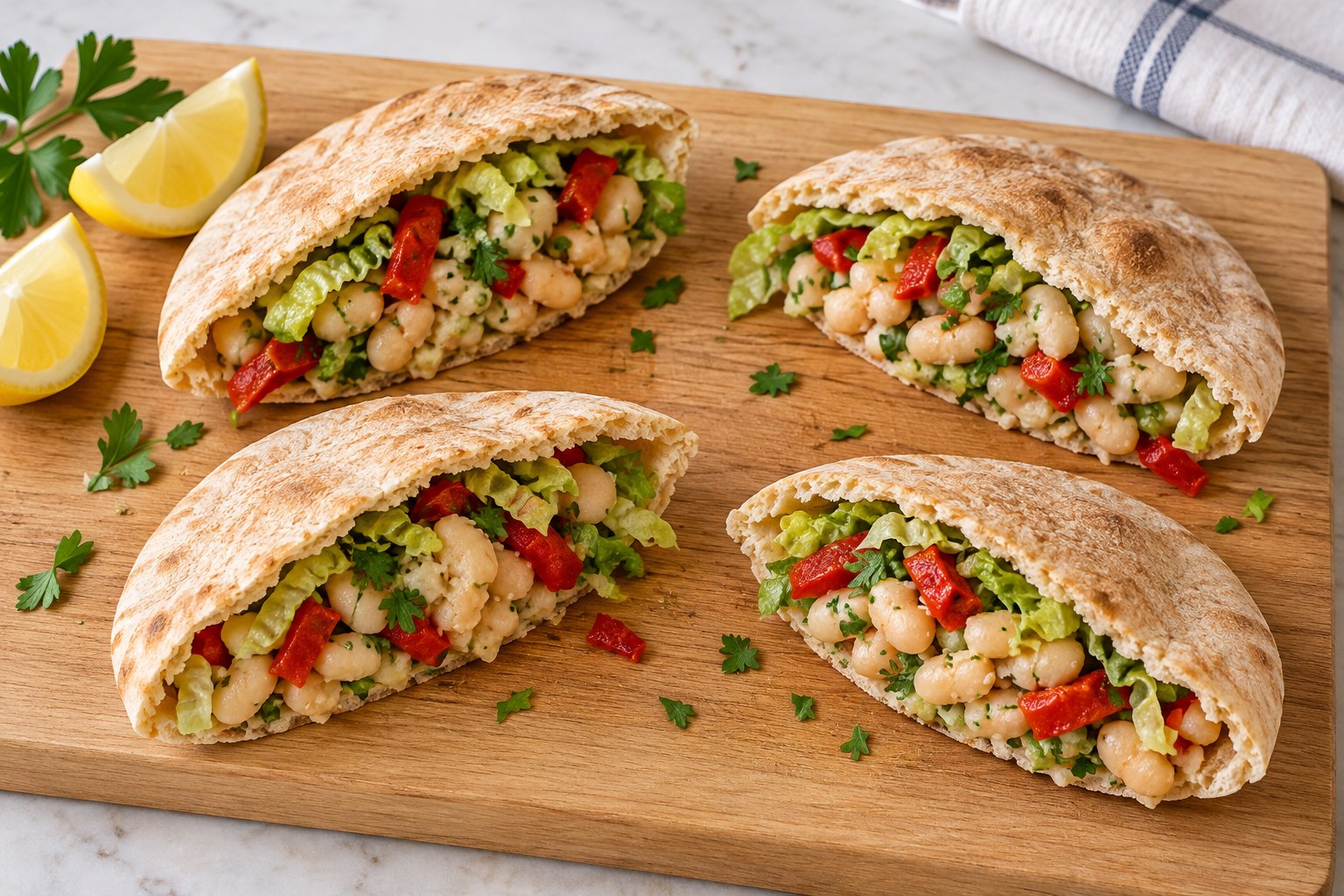
A pita filling that uses jarred roasted peppers.
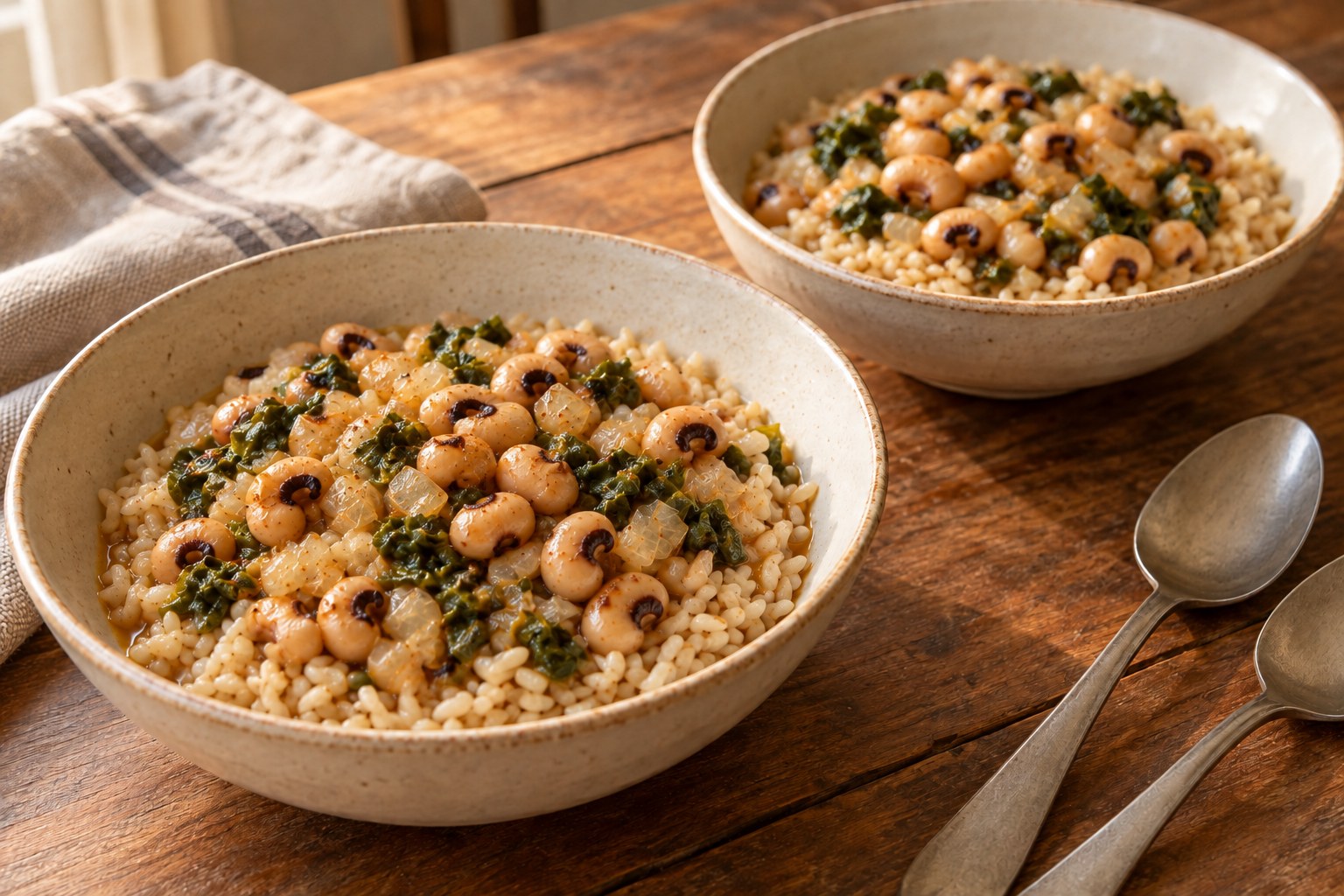
A rice bowl with black-eyed peas and greens.
Equipment for this recipe
Affiliate disclosure: As an Amazon Associate I earn from qualifying purchases.
Use the tools you already have when they match the method. If you need an item, these links open matching Amazon search results.
- 12-inch skillet on Amazon — Match the recipe’s pan width and use a lid when the method calls for one.
- Instant-read food thermometer on Amazon — Check the center temperature using the target in the recipe.
Check the size, material, and manufacturer’s use instructions against the recipe before choosing.
Useful kitchen references
- FoodSafety.gov leftover guidance — A practical reference for chilling and reheating.
Finish while the rice is hot and moist
This roasted pepper chickpea rice skillet depends on safely stored cooked rice, well-drained peppers and a thorough reheating check. Once the whole pan reaches 165°F, let any excess liquid evaporate briefly, add the lemon and serve. Keep the original rice cooking date in mind when planning any remaining portion.
Printable recipe
Use the recipe card’s Print control for a kitchen copy. Follow the ingredient quantities and cooking checks in the card when preparing the dish.
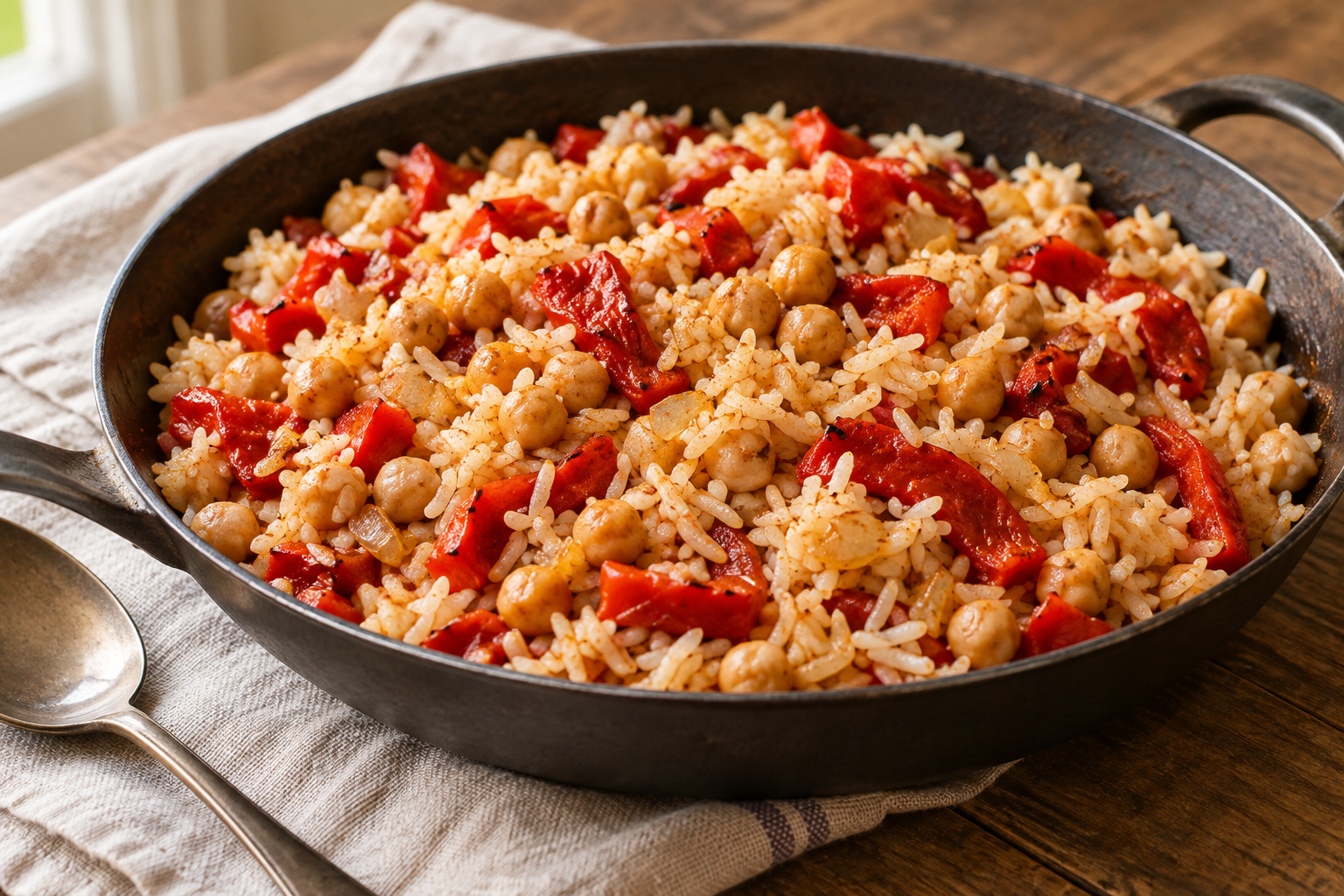
Roasted Pepper Chickpea Rice Skillet Without Cheese
Ingredients
Equipment
Method
- Soften the onion. Heat the oil over medium heat in the wide skillet. Add the diced onion and cook for about 4 minutes, stirring, until it begins to soften. Continue briefly if thick pieces are still quite firm. Keep the heat low enough that the onion does not develop a black edge.
- Warm the seasonings. Add the garlic and smoked paprika and stir for about 30 seconds. Have the peppers ready so the paprika does not sit against a dry hot pan while you search for the next ingredient.
- Add the peppers and chickpeas. Fold them through the onion base, scraping up any light golden residue. Distribute the pepper pieces across the skillet. This brief step starts their warming while protecting the already-cooked chickpeas from a long separate simmer.
- Add rice and measured liquid. Tip in the refrigerated rice and the 1/3 cup of water or broth. Slide the spatula under the clumps and lift them apart as the liquid loosens them. Spread the mixture in an even layer, then cover and cook for about 4–6 minutes.
- Check the whole pan. Remove the lid away from your face. Stir from the bottom, bringing rice from the outer edge into the center. Break any remaining clump, then check several areas with the thermometer, keeping its tip away from the hot pan surface. The rice mixture must reach 165°F throughout. Continue heating if any area is cooler, adding a little water only if it is drying out.
- Clear excess moisture. Once hot throughout, leave uncovered briefly if liquid pools underneath. Turn the rice gently so moisture can escape without repeatedly mashing the grains. Stop while the mixture remains pleasantly moist.
- Finish and serve. Turn off the heat, stir in the teaspoon of lemon juice and taste before adding salt and pepper. Share the peppers and chickpeas evenly as you portion the rice. Serve promptly.