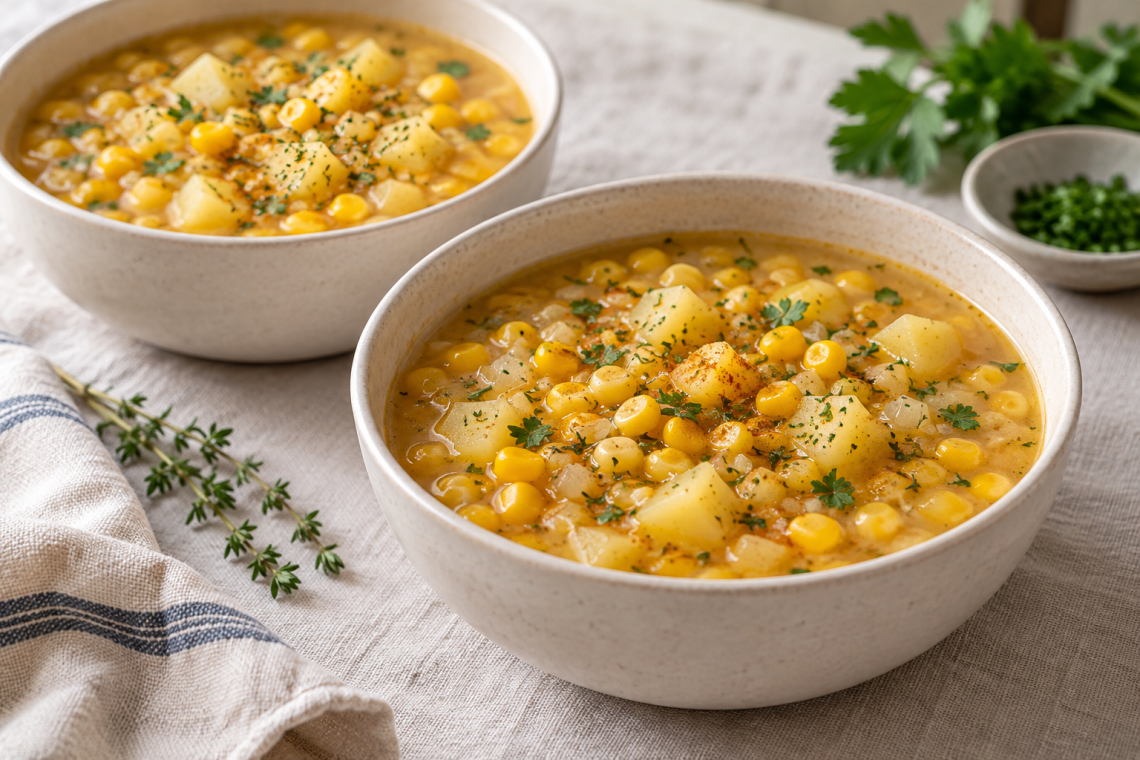
Corn potato chowder for two without cream relies on tender potato and sweet corn for a comforting two-bowl meal. Part of the potato is mashed into the broth while a reserved scoop of vegetables returns at the end. The result should feel fuller than a clear soup without becoming a smooth purée or a stiff bowl of mashed potato.
The small pot suits a lunch for two or one dinner with a planned leftover. It uses the same measured ingredients from beginning to end: there is no flour slurry to mix and no cream to add. The potato’s tenderness and the amount you mash determine the body, so those are the two decisions to make carefully. If you enjoy recipes that make good use of cooked potatoes, these golden mashed potato waffles are another option to save.
Follow the chowder: recipe details · ingredients · method · texture guide.
Let potatoes create the chowder body
Use two potato textures
Reserve about one-quarter of the cooked potato and corn, then gently mash some of the potato left in the pot. Return the reserved pieces after the broth gains body. This keeps a clear contrast between tender chunks and the thicker base without cream or a flour slurry.
Cook the corn fully before mashing
Cook all the corn according to its package directions, then combine it with the tender potatoes. Reserve about one-quarter of the cooked vegetables before mashing the remaining potato, as described in the method.
A good small-batch chowder should coat the spoon but still settle back into the bowl. It should not stand like mashed potatoes.
If the pot becomes too thick while standing, restore it with warm broth in small additions. Reheat gently and stir along the bottom because potato starch can catch when the burner is too high.
A pot for two
Yield: 2 generous bowls. Preparation: about 10 minutes. Cooking: about 22–28 minutes. Estimated total: about 32–38 minutes, plus any extra time needed by the corn package. Use a medium saucepan, wooden spoon, fork or small masher, a heatproof bowl, slotted spoon, knife and measuring tools.
What to gather
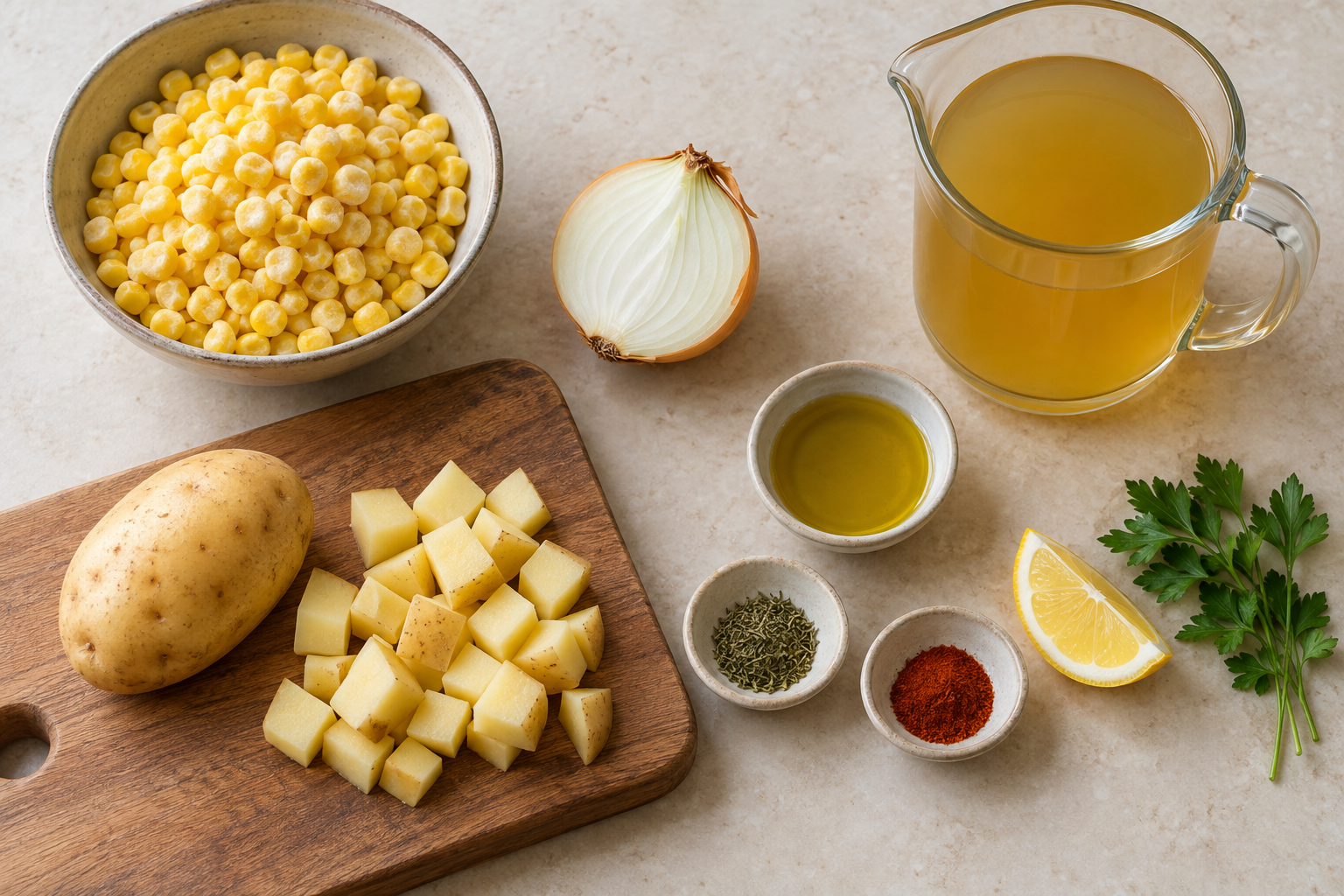
- 1 tablespoon olive oil
- 1/2 small onion, diced
- 1 medium Yukon Gold potato, cut into 1/2-inch cubes
- 1 1/2 cups frozen sweet corn
- 2 cups vegetable broth
- 1/4 teaspoon dried thyme
- 1/4 teaspoon sweet paprika
- 1 teaspoon lemon juice
- 2 tablespoons chopped parsley, optional
- Salt and pepper
Choose a potato you can mash and still recognize
The reference recipe uses one medium Yukon Gold potato, cut into 1/2-inch cubes. Keep the pieces similar so there is no need to choose between a hard large cube and collapsing small scraps. Wash the potato before cutting. Peeling gives a more uniform appearance, while well-cleaned thin skin can remain if you like its texture.
A medium potato is still an estimated produce size, so the final thickness needs a visual check. Do not compensate for a small potato by adding flour at the start. First cook it fully, mash the prescribed portion and see how it changes the broth. A much larger baking potato can overwhelm this modest two-cup broth quantity.
Understand the seasoning
Sweet paprika contributes mild pepper flavor and color; it is not the same as smoked paprika. The stated quarter teaspoon should support the corn without dominating it. Thyme seasons the warm base, while lemon is added off the heat. Taste the broth before deciding how much salt is needed, especially if it is a strongly seasoned brand.
Read the corn directions before the potato simmers
Keep the corn frozen until its cooking stage unless the package directs otherwise. The Food Standards Agency advises thorough cooking of frozen vegetables. Use the full method and time on the bag, even when that takes longer than a brief final warming. If its instructions call for a separate microwave or steaming method, cook the measured corn that way, drain any excess water and add it to the soup fully cooked.
This keeps the potato simmer and the corn preparation coordinated without guessing. Have the heatproof bowl and slotted spoon ready before combining. They are used to reserve some visible potato and corn before the remaining potato is mashed.
Make corn potato chowder for two without cream
- Prepare the small pieces. Dice the onion and cut the potato into even half-inch cubes. Measure the broth, corn and seasonings. Check the corn’s cooking directions and prepare any separate equipment it requires.
- Soften the onion. Warm the oil over medium heat. Cook the onion for about 5 minutes, stirring, until translucent and soft. It should not have a dark crust. Lower the burner if the small pan dries quickly.
- Simmer the potato. Add the potato, thyme, sweet paprika and broth. Bring to a gentle simmer, then cook for roughly 12–15 minutes. Stir occasionally and check the center of a large cube with a fork. It should crush easily. Continue gently if there is still a hard center.
- Cook and add the corn. Add frozen corn directly only when this method meets its package instructions, and simmer for the full stated cooking time. The original 3–4-minute estimate is sufficient only for a product whose directions permit it. Otherwise, fold in separately cooked and drained corn and heat the combined soup through.
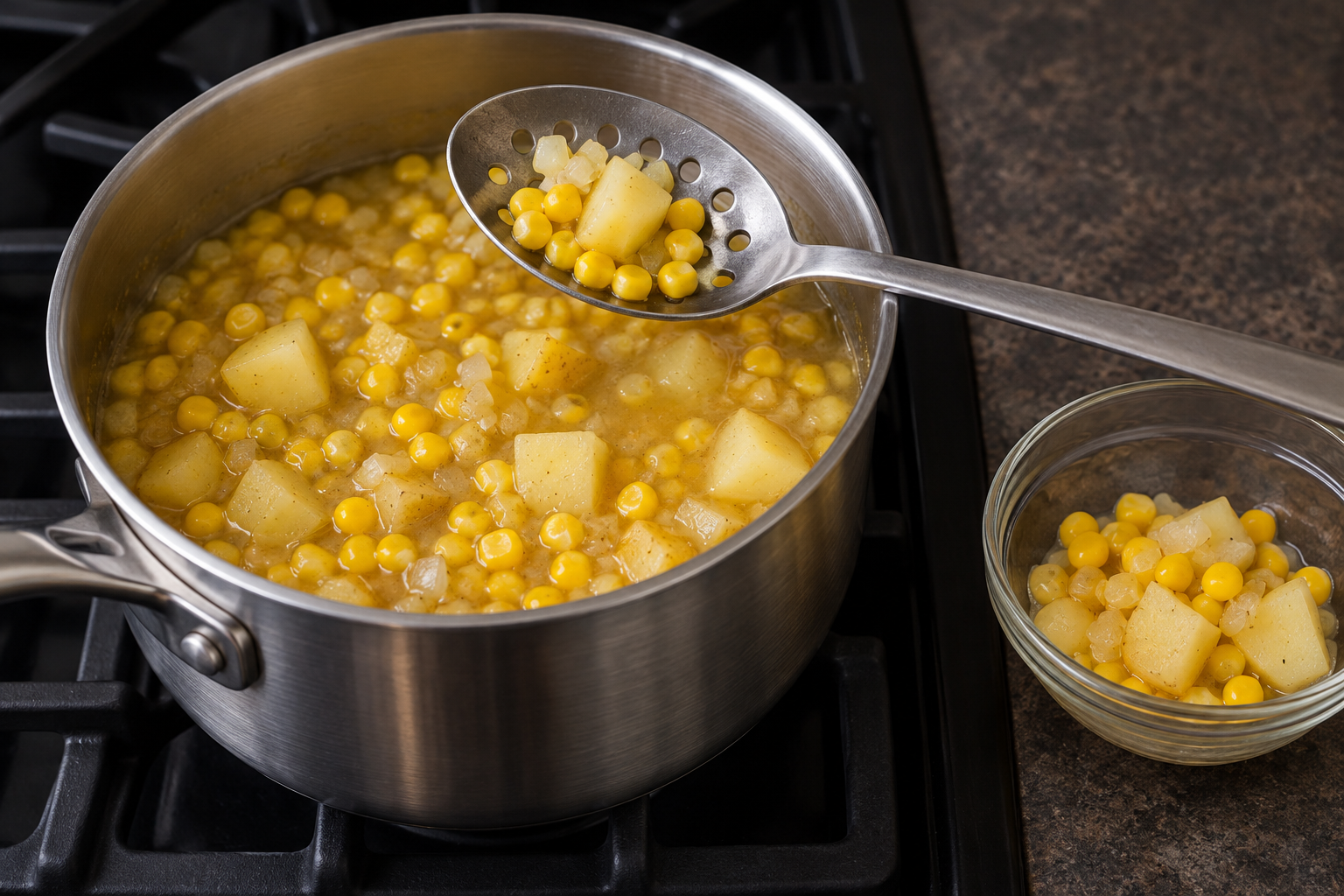
- Reserve a scoop of texture. Lift roughly one-quarter of the potato and corn pieces into the heatproof bowl with the slotted spoon. Let most broth drain back into the pot. Keep this reserved mixture nearby for the brief mashing step, rather than taking it away to cool.
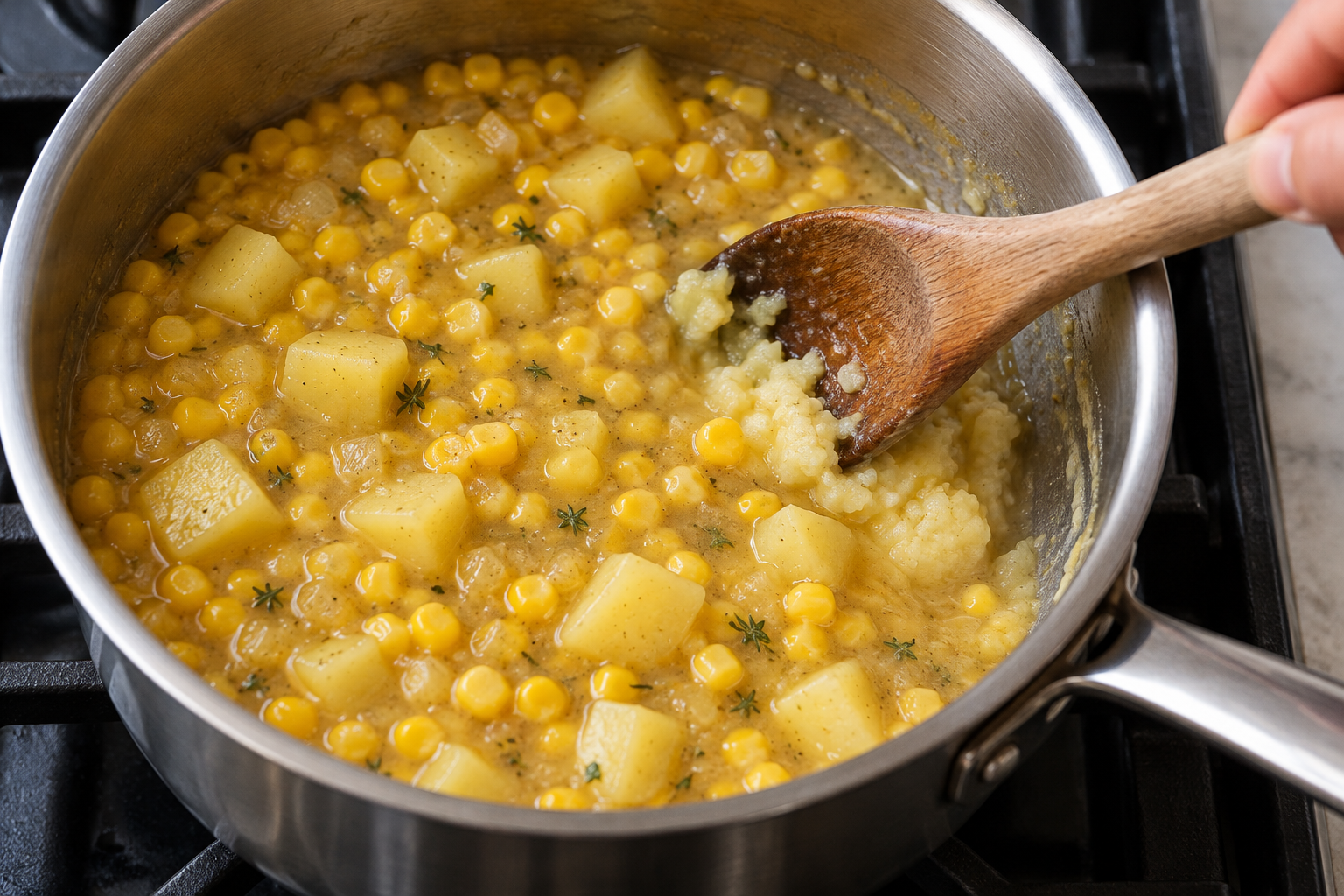
- Mash the remaining potato lightly. Press the soft potato against the saucepan with the spoon or use a small masher gently. Stop when the broth has gained body; some corn kernels will remain whole. There is no need to crush every piece or work toward a completely smooth base.
- Return, season and serve. Fold the reserved vegetables back in and ensure the soup is evenly hot. Remove from the heat, stir in the lemon and optional parsley, and taste before adding salt and pepper. Share the visible chunks between two bowls, then ladle the remaining chowder around them.
Reserve the pieces you want to see
The reserved quarter of the vegetables gives you control over how chunky the finished chowder remains. Choose a representative scoop with both potato and corn, not a bowl containing only kernels. After it returns to the pot, most spoonfuls should contain a little soft potato, several corn kernels and thickened broth.
If you mash with a fork, work against the side of the pot rather than stabbing around the hot liquid. A spoon can hold a potato cube in place while the fork presses it. Keep your other hand on a stable pan handle and use modest movements. A countertop blender is unnecessary for the reference texture.
Make one consistency adjustment at a time
| Chowder condition | Next action |
|---|---|
| Tender pieces in a very thin broth | Mash a little more potato and stir before extending the simmer. |
| A heavy mound with little flowing broth | Add warm broth by the spoonful until the chowder moves around the spoon. |
| Firm or chalky potato flecks | Continue gentle cooking with enough liquid before mashing further. |
| Plenty of body but a flat finish | Check salt and pepper after the measured lemon has dispersed. |
The bowl will thicken as it waits. Pause briefly after stirring in an adjustment and look again before adding more. A little movement in the pot is preferable to a perfectly stiff appearance that becomes pasty at the table.
Serving and planning the second bowl
Offer toast, a small sandwich or a crisp green salad alongside. A few scallion slices are an optional fresh garnish; they are not needed to make the base work. Keep toppings light so the corn stays the main flavor. The recipe contains no legumes, so the visible texture comes entirely from its potato and corn.
If saving corn potato chowder for two without cream for tomorrow, portion the second bowl into a shallow container before dinner. Refrigerate within 2 hours, or within 1 hour above 90°F. Store at 40°F or below and use within 3–4 days. Reheat to 165°F, stirring and checking the center, with broth added gradually to loosen the potato base.
Chowder questions
Can I use canned corn?
Yes as a suggested variation. Drain it well and use the same 1 1/2-cup amount. It needs warming in the soup rather than the frozen product’s cooking process. Its texture and salt level may differ, so taste before seasoning. The exact comparison has not been kitchen tested.
Can I blend the whole soup?
You can make a different smooth soup, but it removes the corn-and-potato contrast. The intended method mashes potato and reserves some pieces. If experimenting with blending, follow the blender manufacturer’s hot-liquid directions and keep the change separate from this chunky reference recipe.
Would milk improve the base?
The measured formula is complete without milk. An unmeasured splash would change both the quantity and flavor, so first make the potato-thickened version as written. Broth is the stated thinning liquid. A dairy variation needs its own amount and texture check.
Does more sweet paprika make it smoky?
No. Sweet and smoked paprika are different products. Keep the listed sweet paprika amount for this version. A small smoked-paprika variation could be developed separately, but simply increasing a mild sweet powder does not reproduce bacon or smoke.
Why is my potato still firm?
The cubes may be larger than half an inch, or the broth may not have maintained a steady simmer. Check the largest piece and continue cooking until it crushes easily. Mashing before that stage leaves hard flecks that extra broth cannot immediately fix.
Can this chowder be frozen?
A promptly cooled portion can be frozen, but the potato texture may change after thawing. Use a freezer-safe container with expansion room and thaw in the refrigerator. Reheat with stirring and a little broth as needed. Fresh and refrigerated bowls are the reference texture until freezing is kitchen validated.
Food handling references: USDA leftovers guidance, FDA refrigerated storage advice and FoodSafety.gov reheating temperatures.
Choose how chunky to leave the chowder
The potato does two jobs: some pieces remain visible, while others soften into the broth. Reserve the scoop of vegetables before mashing so you can choose the final balance deliberately. If you mash first and decide later that you wanted more chunks, you cannot restore their original shape.
Use a fork to check a larger potato cube before thickening. A firm center will not mash smoothly even when the outside looks soft. Continue the gentle simmer until the pieces yield, then mash a few at a time. A small saucepan does not need an electric blender to gain body.
Frozen corn packages differ, so plan its cooking before the potato is ready. If your product requires a method that does not fit the soup pot, cook and drain it separately. Fold it through after the potato has softened, then continue with the written thickening steps. This keeps the corn's required cooking separate from the visual question of whether the chowder looks finished.
After returning the reserved vegetables to the pot, stir gently so the potato and corn are evenly distributed. Ladle into two bowls that leave room to stir, sharing the chunks and broth between them. A small piece of bread or a separate salad can round out the meal.
When preparing the second serving for later, portion it before adding a table garnish. Parsley can be refreshed after reheating, and crisp toppings are best kept dry until eating. If the chilled chowder has thickened, loosen it gradually while reheating instead of trying to thin it to its hot consistency while still cold.
Sweet paprika supplies warmth and color, while smoked paprika gives a distinctly different flavor. Choose intentionally rather than assuming that adding more sweet paprika will reproduce a smoky taste. Keep any change small for this two-bowl batch and taste after the chowder is fully cooked.
More recipes for your table
Choose a companion dish or another recipe for the ingredients you have. Each link opens its own instructions and printable recipe.
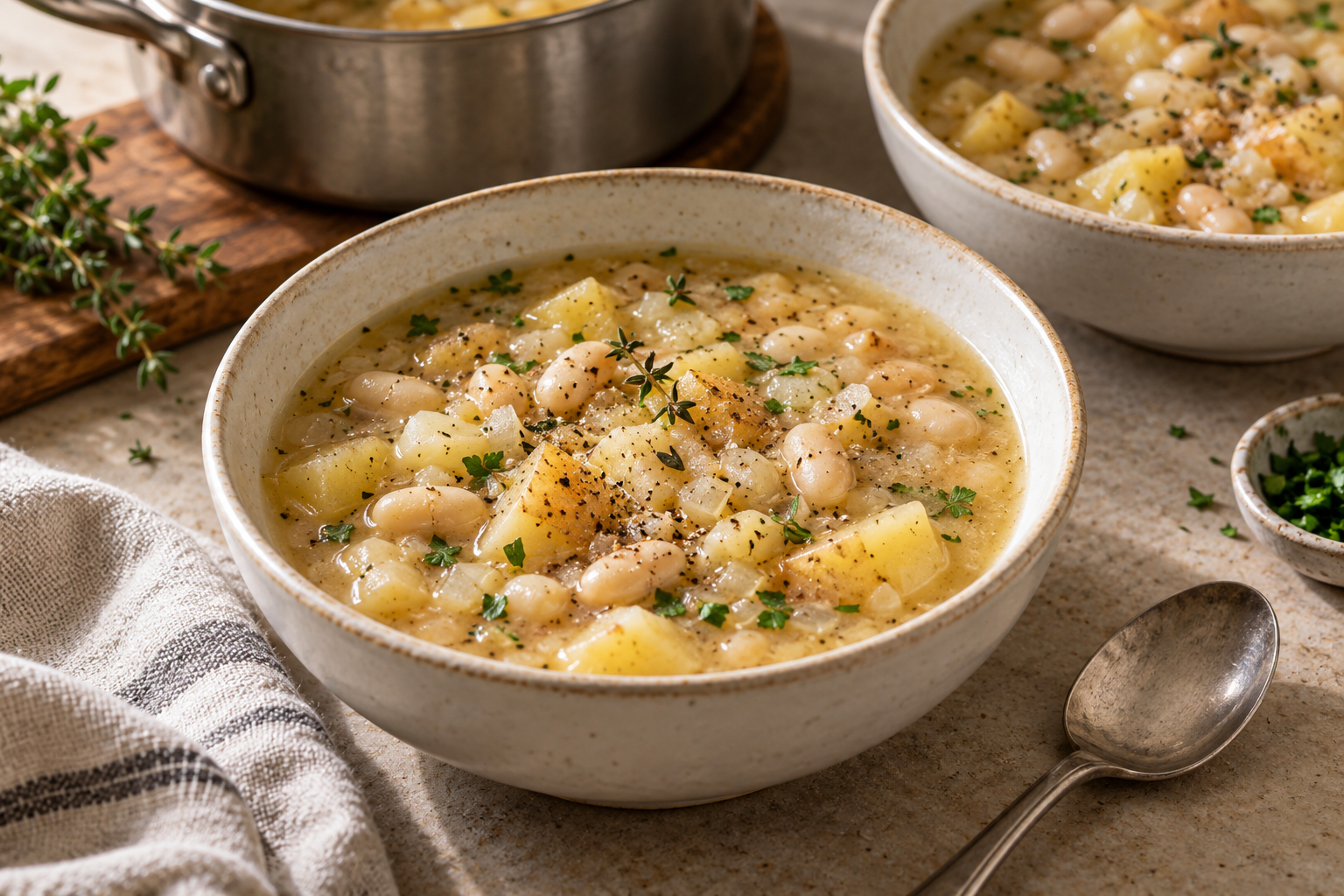
A second approach to building a creamy soup texture without cream.
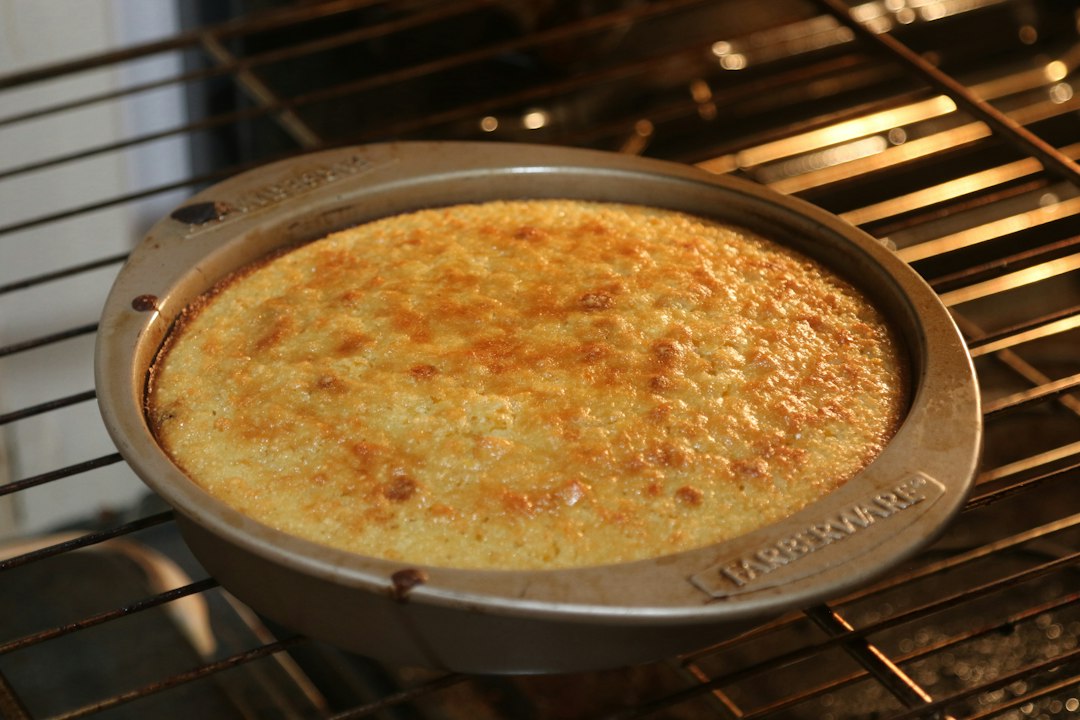
A small cornbread to serve alongside chowder.
Equipment for this recipe
Affiliate disclosure: As an Amazon Associate I earn from qualifying purchases.
Use the tools you already have when they match the method. If you need an item, these links open matching Amazon search results.
- Medium saucepan with lid on Amazon — Leave enough room to stir the soup without splashing.
- Small potato masher on Amazon — Mash a portion of the tender potato to give the chowder body.
Check the size, material, and manufacturer’s use instructions against the recipe before choosing.
Useful kitchen references
- USDA frozen-food preparation guidance — Use alongside the directions on your product.
- FoodSafety.gov leftover guidance — A practical reference for chilling and reheating.
For small batch corn potato chowder without cream or bacon, the useful checks are simple: fully tender potato, corn cooked according to its package, and broth that flows around the spoon. Reserve a little texture before mashing, then stop as soon as the base has the body you want.
Prepare corn potato chowder for two without cream
For corn potato chowder for two without cream, prepare the cutting board and saucepan before the onion begins to soften. Keep the ingredient list unchanged while making the work easier: cut the potato evenly, use a pot with comfortable stirring access, and set out a heatproof bowl for the reserved vegetable scoop. If your corn needs separate cooking, have its cooking dish and strainer ready too. These details support the written sequence without adding another thickening ingredient.
Choose the potato surface you want to eat
Thin clean potato skin can remain, but peeling creates a more uniform pale base when some potato is mashed. Decide before cutting rather than trying to remove skins from hot cubes. Trim away damaged sections and cut a thin slice from one side if the potato rolls on the board. Rest it on that flat surface, slice into half-inch slabs, cut strips, then dice. Inspect the curved end pieces: they need not be perfectly square, but a large rounded end should be cut again so its center does not lag behind the smaller cubes.
Keep the onion fine enough for a spoonful
Because part of the potato disappears into the broth, large onion pieces become more noticeable. Use the measured half of a small peeled onion, put its flat face down and make a fine dice. Separate joined layers before they reach the oil. During softening, use the spoon to spread the pieces across the bottom instead of leaving a mound in the middle. A few pale translucent edges do not mean a thick central cluster has softened. Turn and inspect several pieces while keeping the heat gentle enough to avoid darkening the smallest ones.
Measure loose frozen corn
If corn kernels are frozen together, loosen the bag as directed by its packaging before measuring the required volume. Do not interpret a measuring cup containing one large icy cluster as a precise cup of kernels. Use plain corn and keep any included sauce or seasoning mix out of the measured formula. Have the equipment needed for its full package cooking method ready before the potato approaches tenderness. When corn is cooked separately, drain it in a fine strainer that holds the kernels rather than a colander with large openings.
Make the reserved scoop representative
Before removing the reserved vegetables, stir the soup once from the bottom so the potato and corn are distributed. Lift several small spoonfuls from different parts of the saucepan instead of taking one large scoop from the surface. Look at the bowl: it should include both ingredients. Let loose broth drain back into the pan, but do not squeeze the reserved pieces dry. They are being protected from mashing, not prepared as a separate salad. Keep the bowl beside the stove so returning its contents is an obvious next step.
Mash with a clear target
Move the saucepan off the active heat briefly if you need a steadier view of the potato pieces. Press a soft cube against the side with the back of the spoon and stir the released potato into the liquid. Then look for another cube instead of grinding the spoon blindly through the whole pot. Corn skins will remain visible even when the potato is smooth, so trying to eliminate every small fleck would take the texture away from the intended chowder. Return to gentle heat and the main method after the brief mashing step.
Compare the pot with the bowl
For the final check, place a small spoonful in a shallow dish and let it become comfortable to taste. Watch whether the broth settles around the visible vegetables. A heavy spoonful that keeps the exact shape of the spoon may need the gradual broth adjustment already described. Make that decision before ladling both servings, because correcting one bowl after the other makes it harder to keep their consistency alike.
Printable recipe
Use the recipe card’s Print control for a kitchen copy. Follow the ingredient quantities and cooking checks in the card when preparing the dish.
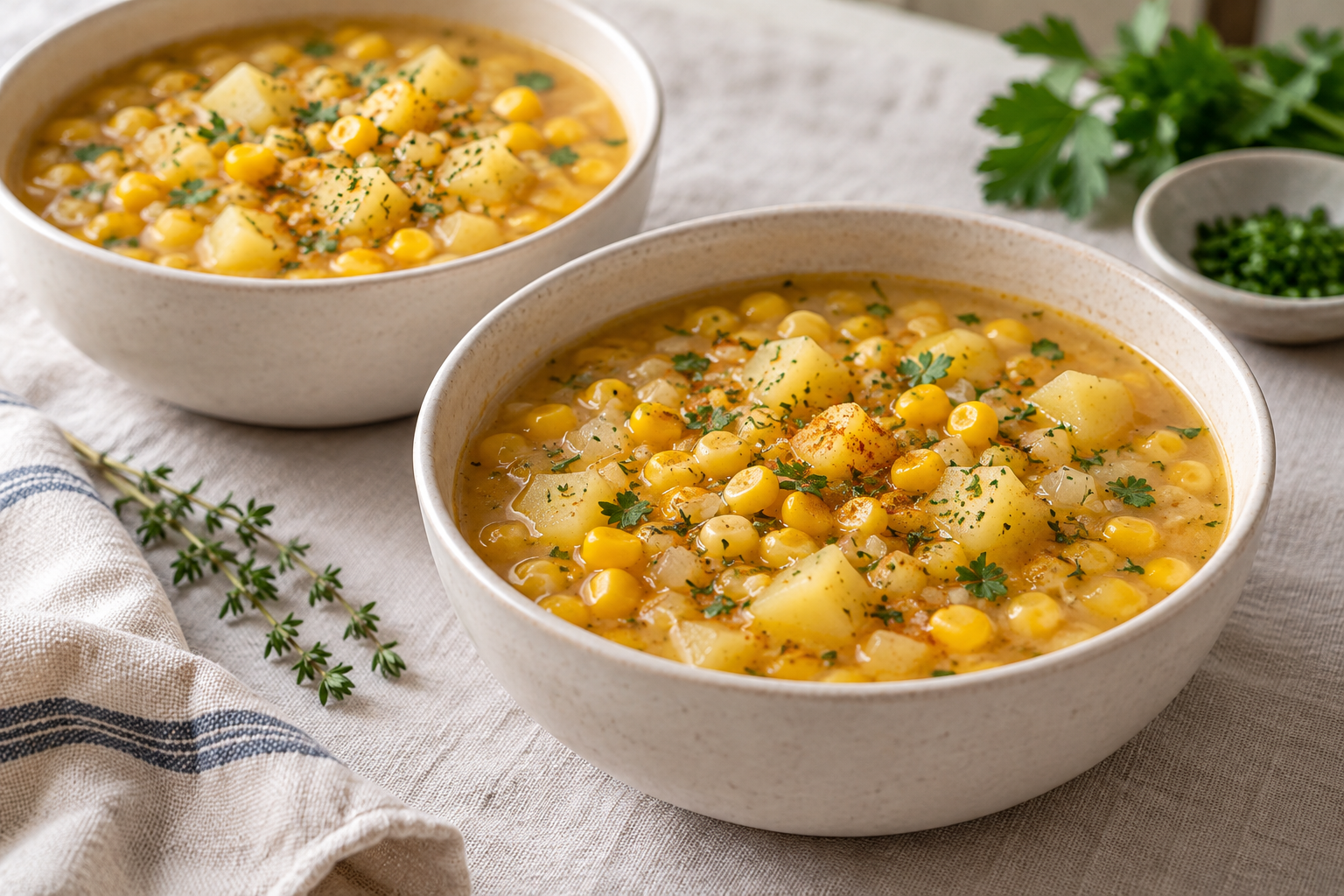
Corn Potato Chowder for Two Without Cream or Bacon
Ingredients
Equipment
Method
- Prepare the small pieces. Dice the onion and cut the potato into even half-inch cubes. Measure the broth, corn and seasonings. Check the corn's cooking directions and prepare any separate equipment it requires.
- Soften the onion. Warm the oil over medium heat. Cook the onion for about 5 minutes, stirring, until translucent and soft. It should not have a dark crust. Lower the burner if the small pan dries quickly.
- Simmer the potato. Add the potato, thyme, sweet paprika and broth. Bring to a gentle simmer, then cook for roughly 12–15 minutes. Stir occasionally and check the center of a large cube with a fork. It should crush easily. Continue gently if there is still a hard center.
- Cook and add the corn. Add frozen corn directly only when this method meets its package instructions, and simmer for the full stated cooking time. The original 3–4-minute estimate is sufficient only for a product whose directions permit it. Otherwise, fold in separately cooked and drained corn and heat the combined soup through.
- Reserve a scoop of texture. Lift roughly one-quarter of the potato and corn pieces into the heatproof bowl with the slotted spoon. Let most broth drain back into the pot. Keep this reserved mixture nearby for the brief mashing step, rather than taking it away to cool.
- Mash the remaining potato lightly. Press the soft potato against the saucepan with the spoon or use a small masher gently. Stop when the broth has gained body; some corn kernels will remain whole. There is no need to crush every piece or work toward a completely smooth base.
- Return, season and serve. Fold the reserved vegetables back in and ensure the soup is evenly hot. Remove from the heat, stir in the lemon and optional parsley, and taste before adding salt and pepper. Share the visible chunks between two bowls, then ladle the remaining chowder around them.