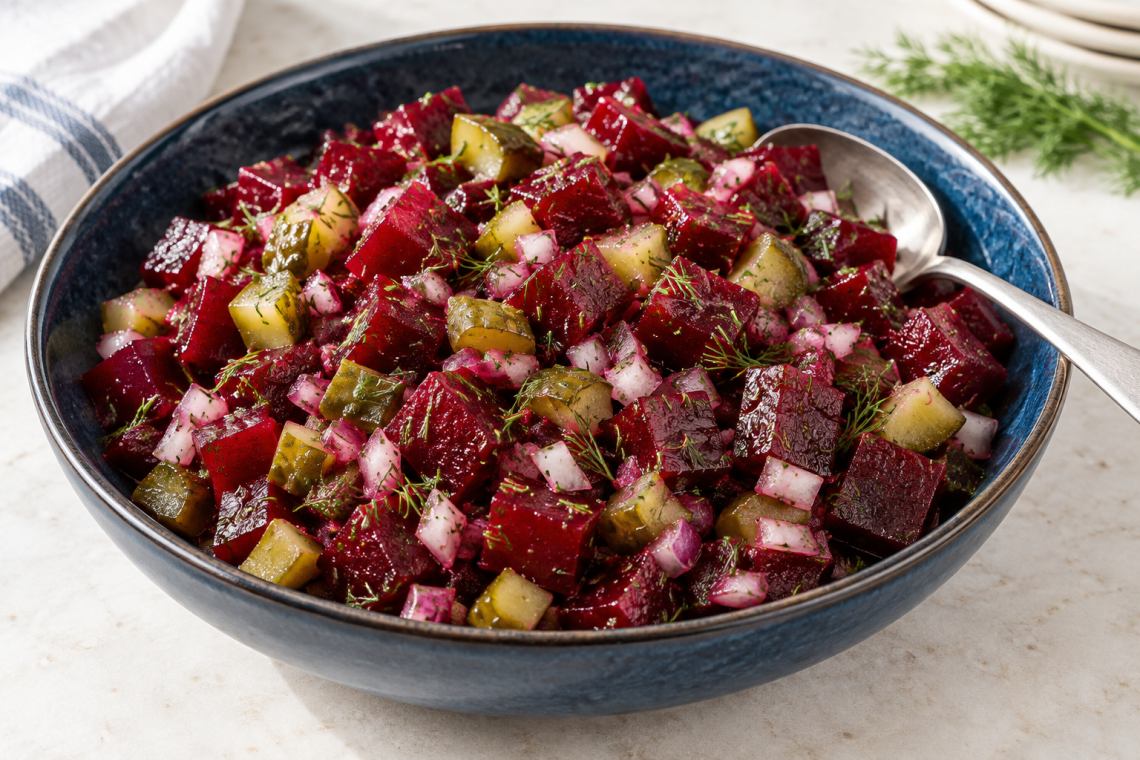
Canned beet and dill pickle salad is a quick, tangy side made from two already-prepared ingredients. Sweet, earthy plain beets are cut into small cubes, while the pickles are chopped a little finer so their sharpness reaches several bites without taking over the bowl. A little oil, fresh dill, and finely chopped onion complete the salad.
The recipe works best when you begin with plain canned beets and ordinary dill pickles. Pickled beets and sweet relish bring different amounts of sugar, salt, and vinegar, so they need a different seasoning decision. With the plain ingredients below, you can taste first and add only the small amount of extra vinegar or brine the bowl actually needs.
Jump to recipe · Ingredients · Method · Balance the brine · Storage
Drain, cut and season in three stages
Drain separately
Drain and pat the beets and pickles dry. Discard the beet packing liquid; reserve only a little pickle brine for the final seasoning check.
Use two cut sizes
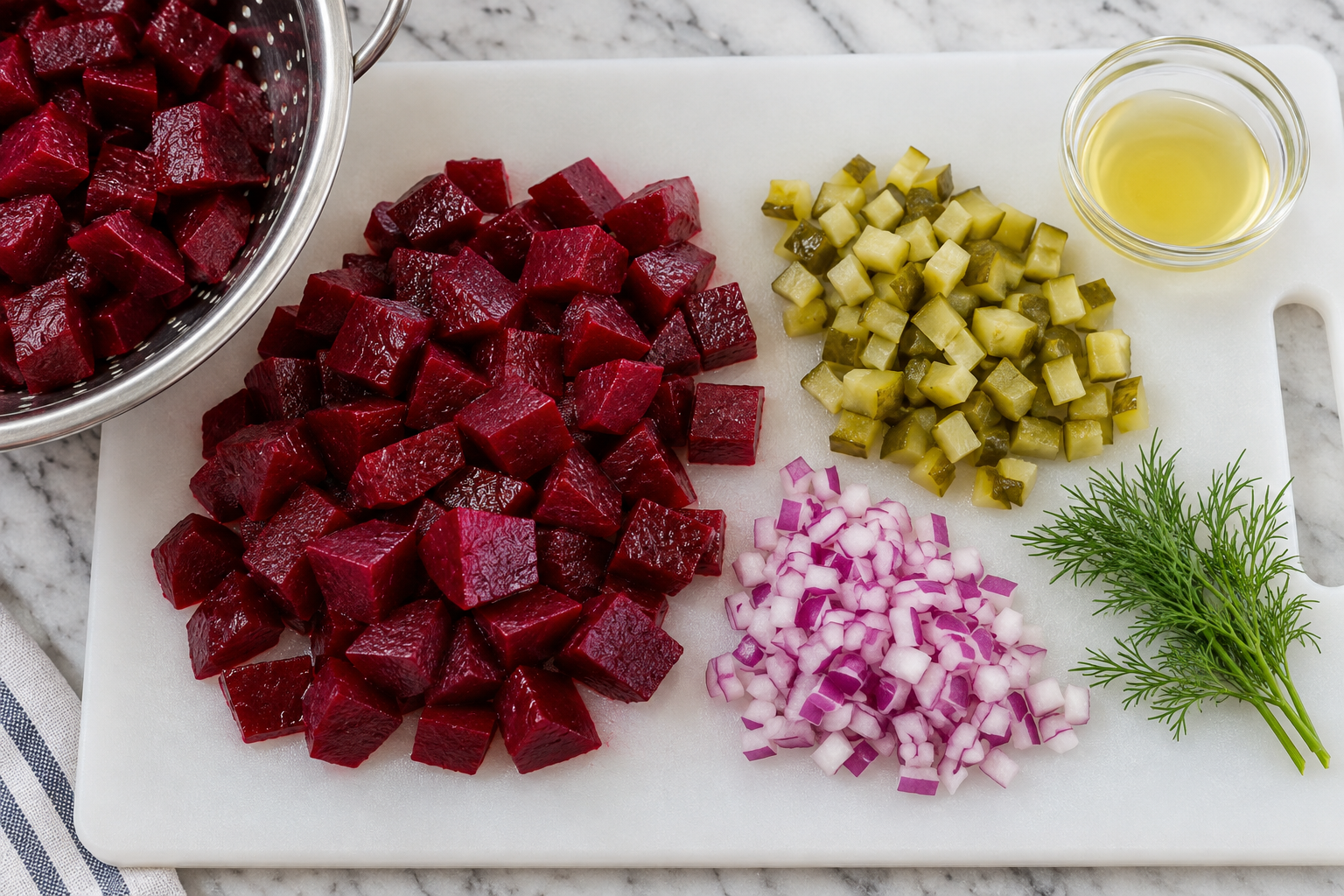
Cut beets into 1/2-inch cubes and pickles into smaller 1/4-inch pieces so the sharper pickle flavor reaches more bites.
Season after chilling
Fold in the measured dill, chill for 15 minutes, then taste both vegetables together before adding optional brine or salt.
Gentle folding preserves the soft beet edges and keeps the salad easy to scoop.
Set up the board before opening the cans
Use a board that can handle beet stains and keep a damp cloth nearby for drips. Drain the beets in a colander over the sink, then let surface liquid run off while you prepare the remaining ingredients. A brief drain makes a cleaner salad than pouring packing liquid into the dressing.
The pickles need draining too. Lift them out of their jar and pat away the surface brine before chopping. Reserve a teaspoon or two of brine separately so you can add it deliberately at the end. That small step keeps the finished salt level from depending on how wet the pickles happened to be.
Canned beet and dill pickle salad
Yield: 3 side servings. Prep: 15 minutes. Chill: 15 minutes. Total: 30 minutes. Cooking: none.
Equipment
Affiliate disclosure: As an Amazon Associate I earn from qualifying purchases. Paid links open Amazon search results.
Use a colander (paid link), cutting board, sharp knife, measuring spoons, and a medium bowl with a cover. A kitchen scale (paid link) is helpful because the weight printed on a beet can includes its liquid. A spoon or flexible spatula is enough for folding the salad.
Measured ingredients
- 9 ounces (250 g) drained plain canned beets, cut into 1/2-inch cubes
- 1/2 cup (75 g) drained dill pickles, cut into 1/4-inch pieces
- 2 tablespoons finely chopped red onion, about 20 g
- 1 tablespoon olive oil or neutral oil
- 1 tablespoon finely chopped fresh dill
- 1 teaspoon cider vinegar, plus 1/2 teaspoon more only if needed
- 1/8 teaspoon freshly ground black pepper
- 1–2 teaspoons reserved dill pickle brine, only if needed after tasting
- A small pinch of fine salt, only if needed
Step-by-step method
- Drain the beets. Drain the canned beets in a colander for about 5 minutes. Pat away excess liquid, then cut into 1/2-inch cubes. If using sliced beets, cut the slices into similar bite-size pieces rather than trying to make perfect cubes.
- Prepare the pickles and onion. Pat the pickles dry and chop into 1/4-inch pieces. Finely chop the onion. If its raw flavor is particularly strong, rinse the chopped onion in a fine sieve under cold water, then drain and dry well.
- Make the light dressing. Stir the oil, 1 teaspoon cider vinegar, and pepper together in the bowl. Do not add the optional brine or salt yet. The pickles may provide all the salt the salad needs.
- Fold the salad. Add the beets, pickles, onion, and dill. Fold gently until coated, lifting from the bottom so the smaller pickle pieces spread through the beets.
- Chill briefly. Cover and refrigerate for 15 minutes. Fold once more and taste a spoonful containing both beet and pickle. Add 1 teaspoon reserved brine only if the bowl needs more pickle flavor and salt. Add the second teaspoon only after retasting.
- Adjust and serve. If the salt level is right but the salad needs more acidity, use the optional extra 1/2 teaspoon cider vinegar instead of more brine. Add a small pinch of salt only if still needed. Serve cold, with a slotted spoon if liquid has collected below.
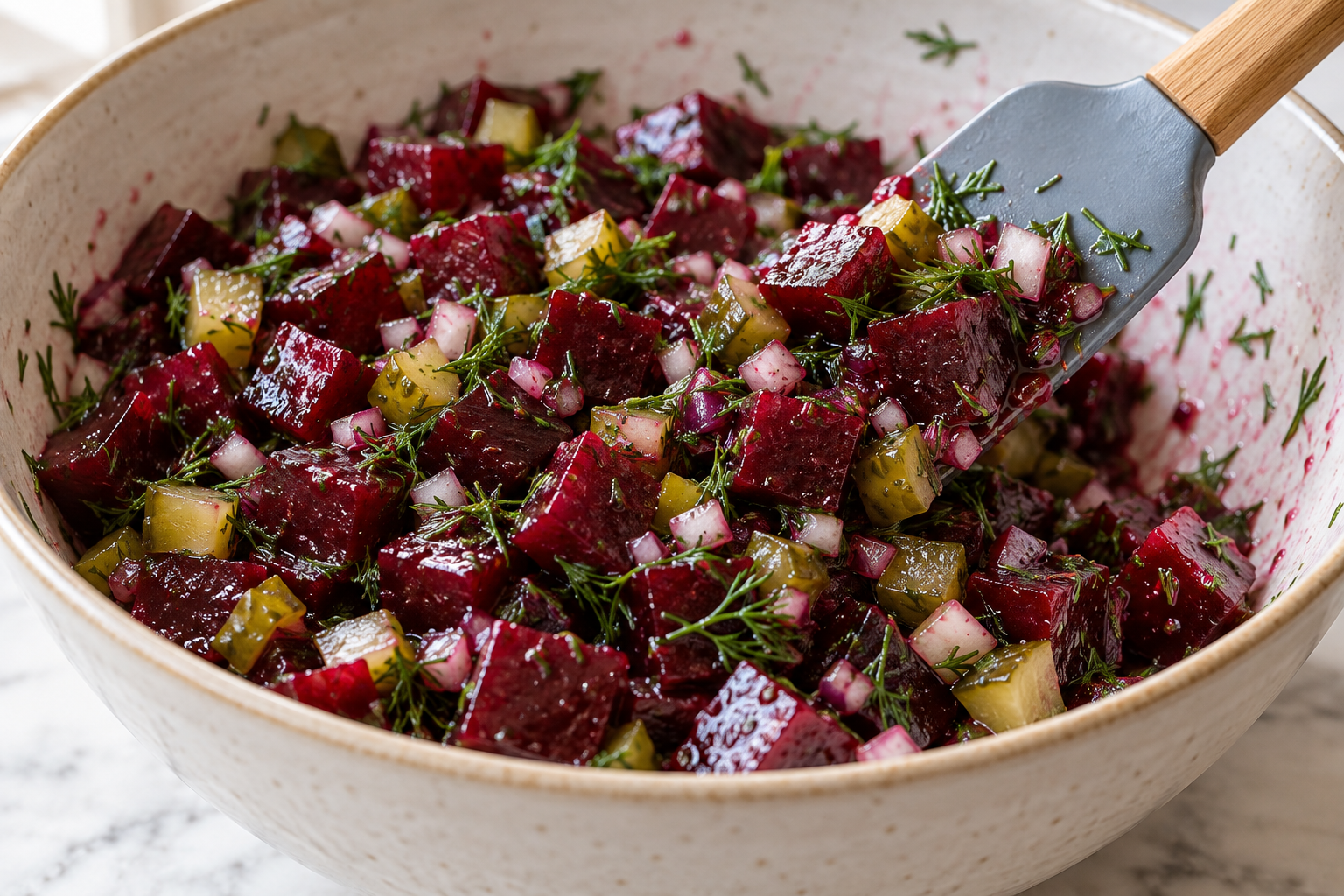
Choose the right beets for canned beet and dill pickle salad
Whole, sliced, and diced canned beets can all work as long as they are plain and already cooked. A product labeled pickled beets has a seasoned liquid that changes the dressing. You can make a salad with it, but start without the vinegar and optional brine and recognize that it will be a sweeter, sharper variation.
If you have plain refrigerated cooked beets instead of canned ones, use the same drained weight and cut size. Keep track of when those beets were originally cooked and how they were stored. The convenience of mixing a new salad does not erase the storage history of an ingredient that was already a leftover.
Let the pickle decide the last seasoning
| What the mixed salad needs | Add a small amount of | Avoid automatically adding |
|---|---|---|
| More tang, but enough salt already | Cider vinegar | Extra pickle brine |
| More pickle flavor and a little salt | Reserved dill pickle brine | A large pinch of salt at the same time |
| A gentler finish | A teaspoon of oil, then retaste | Sugar before checking the beet-to-pickle balance |
| Less overall salt | Additional plain drained beet, if available | More vinegar as a supposed salt remover |
Pickle brines vary considerably, which is why the recipe holds them back until the end. A teaspoon can be useful; a casual splash may contribute much more salt than expected. Taste a complete spoonful instead of just the liquid at the bottom, since the beets soften the overall impression when eaten together.
The oil is not intended to form a thick dressing. It gives the cut surfaces a light coating and rounds the sharp edge of the vinegar. If you prefer a drier salad, keep the oil at the stated tablespoon and serve with a slotted spoon instead of adding ingredients to absorb excess liquid.
Cut the pickles smaller than the beets
The different cuts are deliberate. A large pickle chunk can dominate a mild beet cube, while tiny minced beets can turn the salad into a loose relish. Half-inch beet pieces and quarter-inch pickle pieces provide a useful middle ground that is easy to scoop beside a main dish.
Canned beets may be softer than freshly cooked ones. Use a sharp knife and gentle downward cuts rather than sawing repeatedly. Stir only enough to distribute the dressing; a vigorous toss can roughen the edges and create more beet-colored liquid. The finished salad will still stain the onion and pickles pink, which is normal for this combination.
Changes that keep the pantry idea simple
- No red onion: Use 1 tablespoon finely sliced scallion or leave it out. The salad remains useful with only beets, pickles, dill, and dressing.
- Dried dill: Start with 1 teaspoon dried dill weed and add it to the dressing before folding. The refrigerated rest gives it time to moisten. Dill seed has a different texture and is not the same swap.
- No cider vinegar: Use 1 teaspoon white wine vinegar or fresh lemon juice, then taste. Keep the optional brine decision separate from the acid substitution.
- Extra crunch: Fold in 2 tablespoons finely chopped celery if you have it. Treat this as an optional addition and taste again, since extra vegetable slightly dilutes the dressing.
A useful side for warm bread or a mild main
Serve a small scoop beside white bean quesadillas or use it to brighten a plate with carefully cooked cod. The salad already brings acidity, so start with less lemon or vinegar elsewhere on the plate. Its color and tang make a modest portion feel noticeable without needing a large serving.
For a bread-based lunch, spoon the salad alongside warm toast and plain cooked beans. Keep it beside the bread until eating; the beet liquid can soak through a sandwich quickly. If packing lunch, use a separate small container rather than layering the salad against bread hours in advance.
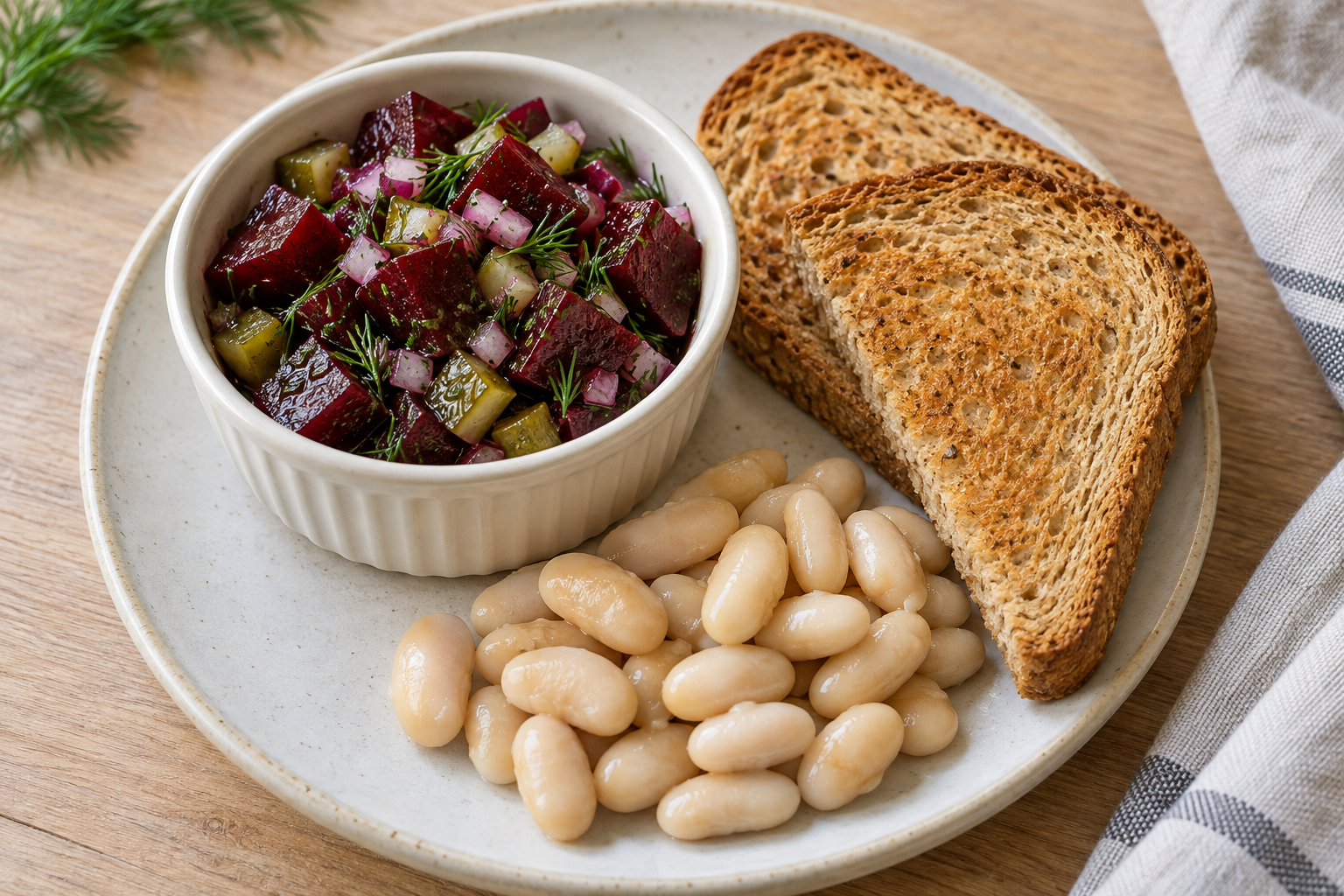
Store it cold and keep the quality window short
Refrigerate the prepared salad at 40°F or below and use it within 3 days for the best texture. Do not leave it out for more than 2 hours, or more than 1 hour if the temperature is above 90°F. These handling limits are consistent with USDA leftover guidance. Pickle brine in a mixed salad does not make it suitable for room-temperature storage.
Wash the fresh dill and onion before preparing them, and use a clean knife and board. The FDA produce preparation guidance recommends running water and clean preparation surfaces. Keep serving utensils clean as well, especially when taking a small portion from a container you plan to return to the refrigerator.
Questions about this canned-beet side
Can I use sweet pickles instead?
Yes, but the salad will be sweeter and the seasoning balance will change. Start without extra pickle brine and taste before adding vinegar. This dill-pickle version is intended to be tangy and savory.
Should I rinse the canned beets?
Usually draining well is enough for plain canned beets. If their packing liquid tastes unusually salty, a brief rinse can help, followed by thorough draining. Do not add rinse water directly to the mixing bowl.
Can canned beet and dill pickle salad be made the night before?
Yes. Refrigerate promptly in a covered container, then fold gently and taste before serving. Expect the pickle and onion pieces to take on more beet color and the bowl to collect a little additional liquid.
Can I freeze the finished salad?
Freezing is not a useful choice for preserving the intended crisp pickle and onion texture. Make a smaller batch and keep it refrigerated instead. Plain extra beets can be saved separately according to their package instructions and storage history.
Does the salad need mayonnaise?
No. The measured oil and vinegar lightly coat the vegetables. Adding mayonnaise would create a different dressing and does not solve excess liquid from poorly drained beets or pickles.
How do I double the batch?
Double the vegetables, oil, dill, and initial vinegar. Hold back the optional brine and salt until the doubled bowl has chilled and been tasted. Use a larger bowl so you can fold without crushing the softer beet pieces.
A bright side with distinct bites
A good bowl of canned beet and dill pickle salad keeps the beets tender, the pickle pieces small, and the seasoning deliberate. Drain both ingredients, fold gently, and taste after the short refrigerated rest. Add brine only when the complete bite needs both extra pickle flavor and salt.
Prepare the cuts for canned beet and dill pickle salad
Canned beet and dill pickle salad benefits from organizing the board before the ingredients are combined. Keep a small dish for optional pickle brine, a bowl for drained beets, and a clear area for the finely chopped onion and dill. This arrangement makes the final seasoning deliberate and keeps the different cuts visible until you can fold them together without crushing the tender beet pieces.
Account for the drained beet portion
Drain the plain canned beets for the stated time, then measure the usable quantity after surface liquid has been removed. If the product comes as slices, work with that shape instead of pressing soft slices together to imitate a whole beet. Stack only a few stable slices at a time and cut them into practical bite-size pieces. Keep the total drained weight consistent. The goal is a portion that can be folded gently, with enough surface for the light dressing, rather than perfect cubes made at the cost of broken, mashed edges.
Cut pickles to carry seasoning through the bowl
Pat the pickles before chopping so brine does not collect around them on the board and enter the salad unmeasured. Cut them into the smaller pieces specified, using lengthwise strips followed by crosswise cuts when that suits their shape. Check for a few oversized end pieces and shorten them. The smaller pickle cut is deliberate: it allows the stronger flavor to appear beside several beet bites. Keep the reserved brine separate from any liquid left on the cutting board, since that board liquid may also contain beet juice or rinse water.
Keep onion and dill dry enough to scatter
Finely chop the red onion so a small measured quantity spreads through the salad. If using the optional rinse for a particularly sharp onion, drain it thoroughly and blot away excess water before adding it. Wash and dry the dill, then chop the tender leaves finely enough to distribute without long stems wrapping around the spoon. Place the measured amount near the dressing bowl so it is not forgotten during the gentle final folds. Wet herbs tend to enter as a compact clump, which requires more stirring to separate among soft beets.
Coat with a lifting motion
Stir the initial oil, vinegar, and pepper in the empty bowl before adding the vegetables. Slide the spoon or spatula down the side and underneath the beets, then lift toward the center while turning the bowl. Bring smaller pickle and onion pieces up from the bottom instead of pushing downward through the beets. A few careful folds should distribute the light dressing. Stop once the mixture looks evenly coated; continued stirring will not preserve the original colors, and it can release more beet-colored liquid as the tender surfaces become rougher.
Choose the adjustment after a complete bite
After the refrigerated rest, fold once and taste a spoonful with both beet and pickle, plus a little onion and dressing. Decide whether the missing quality is saltiness, pickle flavor, or acidity before selecting the optional addition. Use the measured brine by the teaspoon only when its salt and flavor are useful; choose the small vinegar allowance when acidity is needed without more brine. Stir and retaste after a single change. Divide into three side portions with both vegetables present, using a slotted spoon if the bowl has collected liquid rather than adding an unplanned ingredient to absorb it.
Recipe card: Canned beet and dill pickle salad
The card below brings the measured ingredients, method and storage notes together for printing.
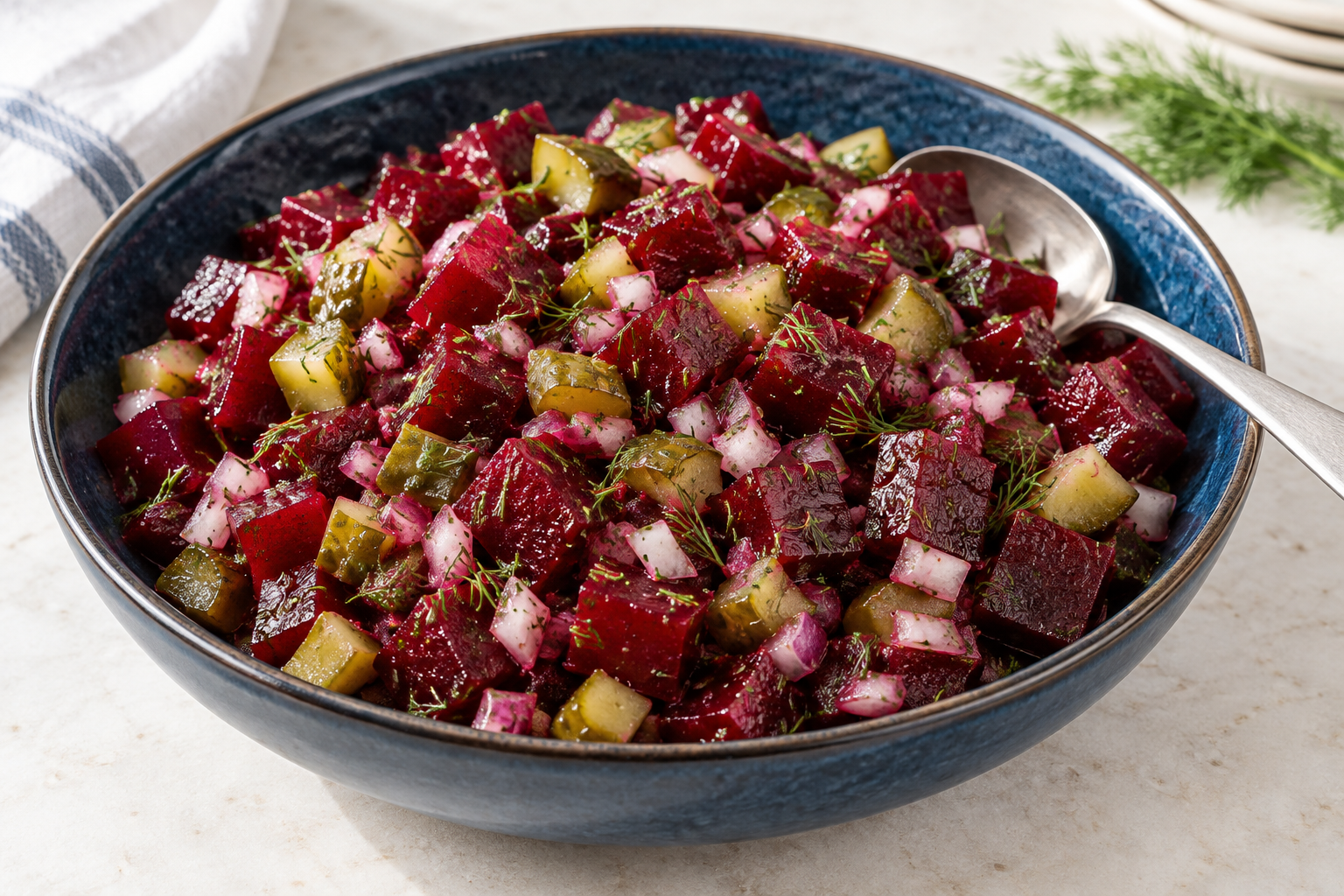
Canned Beet and Dill Pickle Salad
Ingredients
Method
- Drain canned plain beets for about 5 minutes in a colander. Pat dry and cut into 1/2-inch cubes.
- Drain and pat the dill pickles dry, chop into 1/4-inch pieces, and finely chop the red onion.
- In a serving bowl, stir the oil, the first 1 teaspoon cider vinegar, and black pepper. Hold back the optional salt and brine.
- Gently fold the beets, pickles, red onion, and fresh dill into the dressing without crushing the beet cubes.
- Cover and chill for 15 minutes. Taste a complete bite; add 1 teaspoon of reserved pickle brine only if it needs more tang or saltiness. Taste again before adding more.
- If needed, add up to 1/2 teaspoon more vinegar for acidity without extra salt. Salt sparingly, only after tasting, and serve cold.
Notes
- Use plain cooked canned beets, not sweet pickled beets. Measure the drained weight and pat both beets and pickles dry.
- Keep beet pieces about 1/2 inch and pickle pieces about 1/4 inch. Fold gently to preserve the beets.
- Hold optional brine and salt until after the 15-minute refrigerated rest. Extra brine adds both acidity and salt.
- Refrigerate covered at 40°F (4°C) or below; use within 3 days for best texture. Refrigerate within 2 hours, or 1 hour above 90°F (32°C). Mixing a new salad does not extend the storage time of previously cooked ingredients.