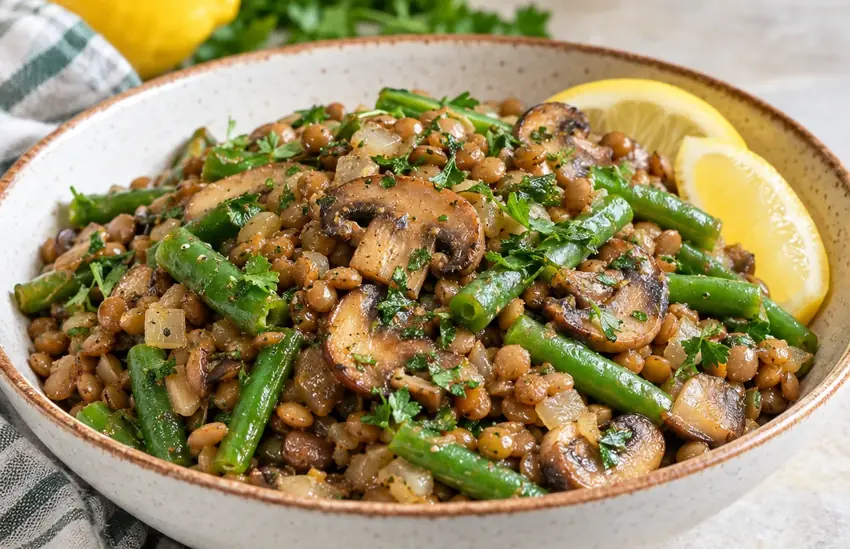
Three ingredients need three different treatments in this canned lentil mushroom green bean skillet without cream. Fresh mushrooms brown first, fresh green beans soften in a small amount of broth, and already-cooked lentils enter at the end. Dijon and lemon finish a light pan sauce that coats the vegetables without a heavy cream base. Jump to Recipe · Rate this recipe
Affiliate disclosure: As an Amazon Associate I earn from qualifying purchases. These paid links open Amazon search results so you can compare suitable tools.
A wide skillet (paid link) gives the mushrooms room for their browning stage, while a flexible cooking spatula (paid link) helps fold in the cooked lentils without crushing them.
Keeping those jobs separate makes the skillet easier to control. A tender canned lentil should not have to withstand all the cooking needed by a raw green bean. Likewise, adding broth before the mushrooms lose their surface water would replace the browning stage with a simmer. Read the pan in that order, and the ingredients can keep their individual textures.
Protect the texture of every main ingredient
- Brown the mushrooms first. Give them time to release and evaporate their water before the pan becomes crowded. Once liquid is added, they will soften but will not develop the same roasted flavor.
- Cook the green beans to their actual size. Thick whole beans need longer than small cut pieces. Check a representative piece rather than relying only on the timer.
- Add canned lentils near the finish. Fold them in gently so they warm through without breaking apart or thickening the skillet more than intended.
Consistency cue: the final sauce should lightly coat the mushrooms and beans with no large puddle underneath. If it is thin, simmer uncovered before seasoning again. If it is too thick, add warm broth one tablespoon at a time and fold rather than stir hard.
A small off-heat finish—lemon, herbs or black pepper—adds contrast without cream. Add it only after the lentils are hot so you can judge the completed skillet rather than the broth alone.
A sequence for three textures
| Ingredient | Its job in the pan | Ready to move on when |
|---|---|---|
| Cremini mushrooms | Lose moisture and develop some golden edges. | No obvious puddle remains beneath the slices. |
| Fresh green beans | Cook under the lid with measured broth. | A piece bites easily without a tough raw center. |
| Canned lentils | Warm gently with the Dijon. | The skillet is evenly hot and the lentils remain recognizable. |
Yield: 2 hearty servings or 3 lighter portions. Preparation: about 12 minutes. Cooking: about 30 minutes. Total: about 42 minutes, with some variation for green-bean thickness and skillet heat. Use a wide lidded skillet, broad spatula, knife, cutting board, fine colander, measuring tools and a small tasting plate.
Kitchen guide: ingredients · preparation · method · FAQs.
Ingredients
- 1 tablespoon olive oil
- 8 ounces cremini mushrooms, sliced
- 1/2 onion, chopped
- 1 garlic clove, minced
- 8 ounces fresh green beans, cut into 1-inch pieces
- 1 can (15 ounces) cooked lentils, rinsed and drained
- 1/3 cup vegetable broth
- 1 teaspoon Dijon mustard
- 1 teaspoon lemon juice
- Black pepper and salt
Trim the beans for a spoon-sized skillet
Wash the fresh green beans and remove the tough stem ends. Cut them into roughly 1-inch lengths. Similar pieces are easier to stir among the lentils than a mixture of whole beans and tiny scraps. If a mature bean has a tough string along its side, remove it while trimming.
Choose representative pieces for the later tenderness check, including a thicker bean rather than only a slender tip. The stated four-to-six-minute covered stage is an estimate. Thick, mature beans can need longer, and the lentils should remain outside the pan while you make that adjustment.
Prepare the mushrooms without crowding the first stage
Clean the cremini mushrooms, trim dry ends and slice the caps and edible stems evenly. A broad bowl makes them easier to scatter across the skillet in one pass. Keep the chopped onion and minced garlic separate from the mushrooms so their timing remains clear.
Drain the rinsed lentils in a fine colander. Use plain cooked brown or green lentils, without a ready-made sauce. Let excess water drip away rather than pressing them dry. Their delicate texture is the reason for the late addition and the broad folding movement at the end.
Measure a small sauce, not a pot of broth
The 1/3 cup of broth provides moisture for the covered green-bean stage and becomes part of the light finish. It is not intended to cover all the vegetables deeply. Have the teaspoon of Dijon ready, then keep the lemon separate until the burner is off. This small amount of mustard should spread through the pan rather than remain in one concentrated pocket.
Broth and canned lentils can both contribute salt. Add the final salt after the Dijon and lemon are incorporated, tasting a spoonful with vegetables and lentils together. More broth during cooking should be a response to a drying pan, not an automatic addition before seeing how the beans soften.
Cook canned lentil mushroom green bean skillet without cream
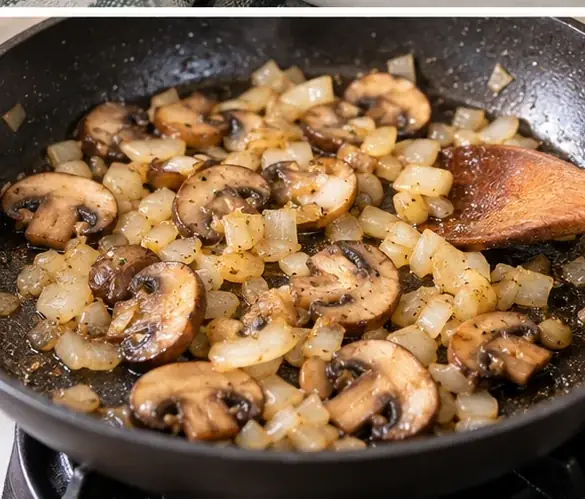
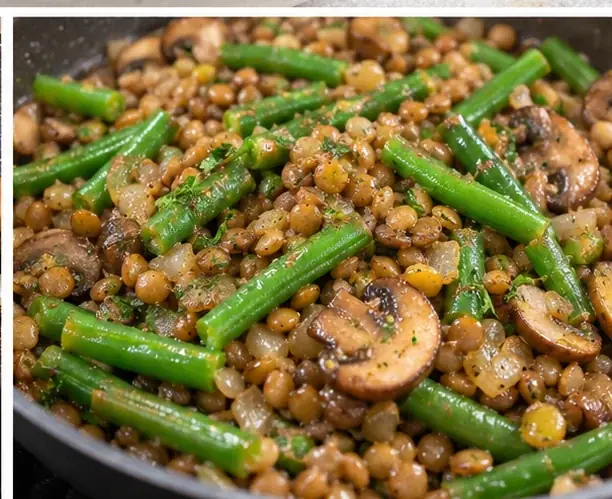
Two cooking-stage illustrations: compare the mushroom browning stage with the gentle final lentil fold as you follow the steps below.
Brown the mushrooms and soften the aromatics
- Start the mushroom layer. Heat the oil over medium to medium-high heat in the broad skillet. Add the sliced mushrooms and spread them across the base. Cook for about 5–6 minutes, leaving them briefly between turns so some surfaces can color. Allow released moisture to evaporate before stirring constantly.
- Add onion, then garlic. Stir in the onion and cook for about 3 minutes, until the pieces begin to soften. Add the garlic and stir briefly until aromatic. Lower the heat if the garlic starts coloring immediately; it should not become a dark coating on the pan.
Cook the fresh beans before adding lentils
- Add the bean-cooking liquid. Fold in the 1-inch green-bean pieces and pour in the measured broth. Scrape light golden residue from the bottom with the spatula. Bring the small amount of liquid to a gentle simmer and cover the skillet.
- Check a thicker bean. Cook covered for about 4–6 minutes, then lift the lid away from your face. Transfer a representative piece to the small plate and let it cool enough to bite. It should be tender with some bite remaining. Continue cooking if it is hard, adding water by the tablespoon only if the pan dries out.
- Clear excess liquid. If the beans are ready but broth pools beneath them, cook uncovered briefly before the lentils enter. The pan should stay moist enough to coat the ingredients. Do not reduce it until the bottom is completely dry and the garlic sticks.
Warm and season gently
- Fold in the lentils and Dijon. Add the drained lentils and teaspoon of mustard. Warm gently for 2–3 minutes, lifting from the bottom to distribute the mustard. Avoid vigorous circular stirring. If a cool center remains, continue gently until the entire skillet is hot.
- Finish off the heat. Remove from the burner, stir in the teaspoon of lemon juice and taste before adding salt and pepper. Divide the mushrooms and green beans among the portions, then add the lentils and light pan juices.
Read the final pan juices
A small amount of glossy moisture should cling to the ingredients. A deep puddle dilutes the seasoning and turns the meal into a different, brothier dish. If that happens, use a short uncovered simmer before the lentils are added whenever possible. Once the lentils are in, handle the pan gently and stop as soon as the mixture is hot.
If the pan seems dry but the lentils are breaking down, add a spoonful of water and use a brief covered warming rather than more forceful stirring. The lid can help distribute heat during that short correction. Remove it afterward so you can inspect the consistency before serving.
Choose a base or serve it as a side
Warm couscous, rice or toast can catch the modest pan juices. Prepare that accompaniment separately using its own cooking method, and have it ready before the lentils enter the skillet. This keeps the final warming short and avoids leaving tender lentils on the burner while waiting for a grain to finish. For a different grain-based meal using the same pantry lentils, see our couscous with canned lentils and frozen spinach recipe.
For two light main portions, divide the full pan evenly over the chosen base. For three sides, give each plate some of the larger mushroom and bean pieces. A larger group needs more skillet surface or a separate accompaniment; piling twice the ingredients into the same pan makes the first browning stage harder to achieve.
Lentil and green-bean questions
Can I use white button mushrooms?
Yes as a suggested variation in the same 8-ounce amount. Slice them evenly and let released liquid evaporate before adding the broth. Their flavor is milder than cremini, but the pan sequence is the same. The exact comparison has not been kitchen validated.
Can frozen green beans replace fresh?
Follow their full package cooking directions, then drain excess moisture before combining if a separate method is required. Frozen pieces may soften sooner or release more water. Do not rely only on the fresh-bean four-to-six-minute estimate for a different product.
What if my canned lentils are very soft?
Drain them carefully and make sure the green beans are fully ready first. Fold the lentils through only for their final warming. A broad spatula is easier to control than a narrow spoon pressed repeatedly through the mixture. Some breakdown may be unavoidable with a very soft brand.
Can I start with dry lentils?
Cook them separately until tender and drain them before using. The skillet’s third cup of broth and short finishing stage cannot cook dry lentils. Keep them as a separate prepared component so the fresh green beans do not overcook while waiting.
Do I need cream to make a sauce?
No. The measured broth and Dijon create a light coating, and a little lentil starch may add body. This is not intended to resemble a thick dairy sauce. Adding cream would change the formula and is unnecessary for the specified finish.
Can canned lentil mushroom green bean skillet without cream be packed for lunch?
Yes, after prompt refrigeration. Keep any toast separate and label the skillet portion with its cooking date. Reheat with a small splash of water and gentle folds; expect the green beans to be softer than in the first serving.
Storage and gentle reheating
Refrigerate leftovers in shallow covered containers within 2 hours, or within 1 hour above 90°F. Keep at 40°F or below and use within 3–4 days. Reheat to 165°F, checking the center after stirring. The vegetables may soften further, so add only enough liquid to prevent sticking and avoid repeatedly crushing the lentils.
If lentils were opened or cooked before this meal, include their earlier storage time. Reheating the combination does not restart that clock. A portion destined for tomorrow should go into its shallow container before the serving pan spends a long time on the table.
Food handling references: USDA leftovers guidance, FDA refrigerated storage advice and FoodSafety.gov reheating temperatures.
Canned Lentil Mushroom Green Bean Skillet Without Cream
Ingredients
Equipment
Method
- Start the mushroom layer. Heat the oil over medium to medium-high heat in the broad skillet. Add the sliced mushrooms and spread them across the base. Cook for about 5–6 minutes, leaving them briefly between turns so some surfaces can color. Allow released moisture to evaporate before stirring constantly.
- Add onion, then garlic. Stir in the onion and cook for about 3 minutes, until the pieces begin to soften. Add the garlic and stir briefly until aromatic. Lower the heat if the garlic starts coloring immediately; it should not become a dark coating on the pan.
- Add the bean-cooking liquid. Fold in the 1-inch green-bean pieces and pour in the measured broth. Scrape light golden residue from the bottom with the spatula. Bring the small amount of liquid to a gentle simmer and cover the skillet.
- Check a thicker bean. Cook covered for about 4–6 minutes, then lift the lid away from your face. Transfer a representative piece to the small plate and let it cool enough to bite. It should be tender with some bite remaining. Continue cooking if it is hard, adding water by the tablespoon only if the pan dries out.
- Clear excess liquid. If the beans are ready but broth pools beneath them, cook uncovered briefly before the lentils enter. The pan should stay moist enough to coat the ingredients. Do not reduce it until the bottom is completely dry and the garlic sticks.
- Fold in the lentils and Dijon. Add the drained lentils and teaspoon of mustard. Warm gently for 2–3 minutes, lifting from the bottom to distribute the mustard. Avoid vigorous circular stirring. If a cool center remains, continue gently until the entire skillet is hot.
- Finish off the heat. Remove from the burner, stir in the teaspoon of lemon juice and taste before adding salt and pepper. Divide the mushrooms and green beans among the portions, then add the lentils and light pan juices.