COOKED RICE / PEAS / SHARP CHEDDAR
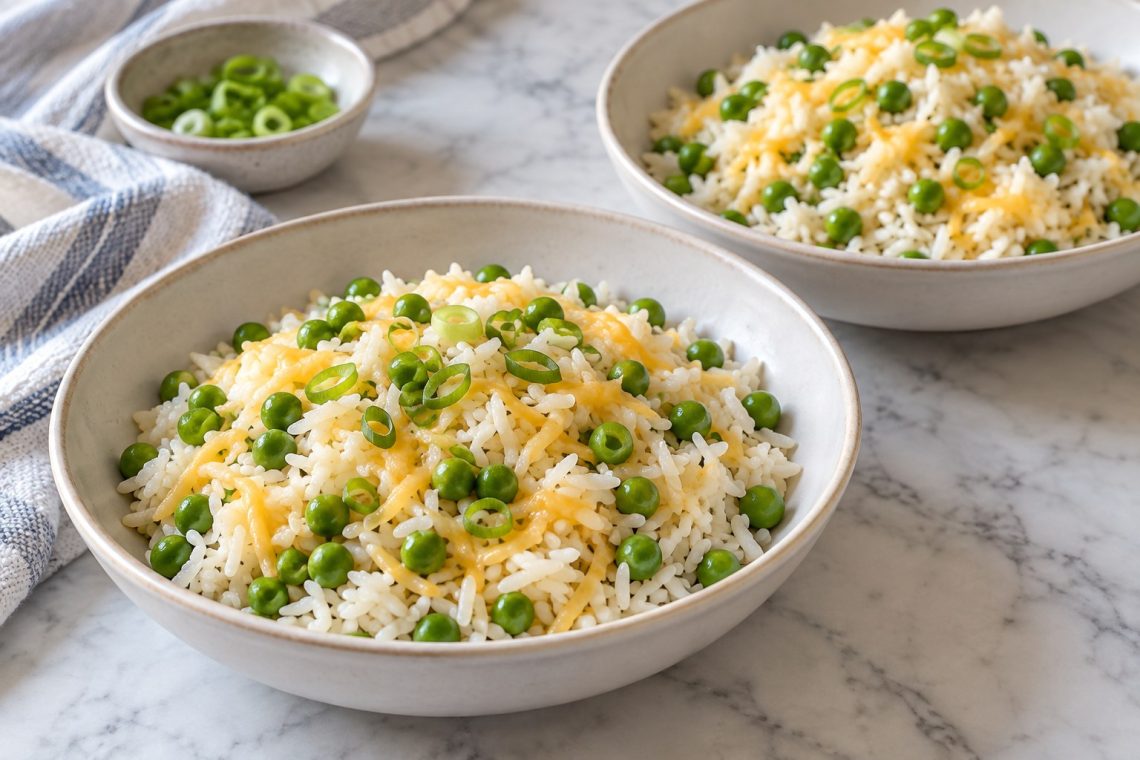
This breakfast rice without eggs turns cooked rice into a warm savory bowl with sweet peas, sharp cheddar, and scallion. A small splash of water loosens the grains while they heat, and the cheese melts in after the pan comes off the burner. The result is soft, separate rice with a little richness and plenty of green peas.
Start with freshly cooked rice or leftovers that were cooled promptly and kept refrigerated. Cook the frozen peas fully according to their package, then combine them with the rice. For leftover rice, check the temperature throughout the skillet rather than relying on a few steaming spots near the bottom.
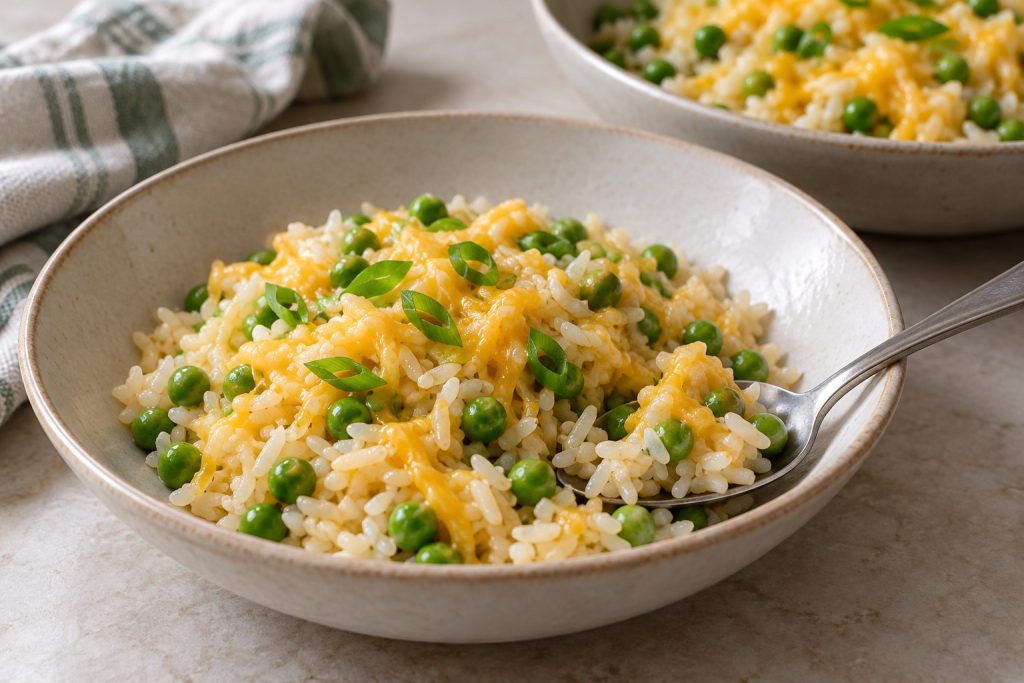
Use just enough water to separate the grains
Cold rice often comes out of its container in a solid-looking block. Break it into smaller pieces before or just after it enters the pan, then let the covered steam loosen it. Trying to crush a cold block by force can break grains while leaving the center cold.
The two tablespoons of water are a starting amount for this small skillet batch. Very dry rice may need a little more, while freshly cooked rice may need less. Add water in teaspoons once cooking begins so you do not turn the bowl soupy.
Stir from the bottom with a flexible spatula and move the rice around the pan. Once it is evenly hot, uncover briefly if a little excess moisture remains. For more help with texture problems, see why rice becomes gummy and what to change.
Breakfast rice without eggs: skillet recipe overview
- Prep
- 5 minutes
- Cook
- About 15 minutes
- Additional time
- 0 minutes
- Total
- About 20 minutes
- Yield
- 2 light breakfast portions
The estimate starts with rice that is already cooked. Preparing rice from dry takes additional time. Use a 10-inch skillet with a lid, a small saucepan or suitable microwave container for the peas, spatula, grater, knife, and food thermometer. Allow the full pea-package cooking time if it is longer than expected.
Ingredients for the pea and cheddar rice
- 1 1/2 cups cooked long-grain rice, safely refrigerated if using leftovers
- 3/4 cup plain frozen peas
- 1/4 cup shredded sharp cheddar, about 28 g
- 1 teaspoon olive oil
- 1 small scallion, washed and thinly sliced, white and green parts separated
- 2 tablespoons water for the rice, plus the package-required water for cooking the peas
- 1/4 teaspoon garlic powder
- Freshly ground black pepper to taste
- Fine salt only if needed after tasting
Choose cooked rice with a known storage history
Long-grain white rice, including jasmine, is convenient because the grains separate fairly easily after reheating. Cooked brown rice works too, with a firmer chew. Short-grain rice produces a more cohesive bowl, which is fine if that is the texture you prefer.
For leftovers, use rice that was cooled in shallow portions and refrigerated promptly, not rice left on the counter overnight. If you do not know how it was handled, choose a fresh batch instead. Reheating is not a dependable way to rescue improperly stored food.
The guide to rice types and cooking methods helps if you are starting from dry rice. Cook it separately, then measure the finished amount for this recipe. Do not put dry rice directly into the skillet with just two tablespoons of water.

Fully cook the frozen peas before they join the rice
Choose plain frozen peas so the cheese and scallion provide the main seasoning. Follow the directions on your actual bag, including any required temperature or standing time. The Birds Eye preparation guide makes clear that the cooking instructions vary by product and that peas should be thoroughly cooked.
A brief thaw or warm-through is not the same as completing those directions. Preparing the peas separately also lets you drain them thoroughly, which keeps extra water from making the rice wet. They will join the skillet near the end rather than cooking for the entire rice-reheating period.
Warm the rice thoroughly, then melt the cheddar
- Cook and drain the peas. Prepare the frozen peas in a separate small saucepan or microwave-safe container using the package’s complete cooking directions, water quantity, and any standing time. Drain well. Meanwhile, grate the cheddar and slice the washed scallion.
- Soften the scallion whites. Warm the olive oil in the 10-inch skillet over medium heat. Add the white scallion pieces and cook for about 30 seconds, stirring, until fragrant. Keep the green pieces for finishing.
- Loosen and heat the rice. Add the cooked rice, 2 tablespoons water, garlic powder, and a little pepper. Break large clumps apart with the spatula. Cover and cook over medium-low heat for about 4 minutes, stirring halfway through and moving rice from the edges into the center.
- Add peas and check the heat. Fold in the cooked, drained peas. Cover and continue heating for about 1–3 minutes, stirring as needed. When using leftover rice, check several places with a food thermometer and continue until the mixture reaches 165°F throughout. Add water a teaspoon at a time if the skillet dries before it is hot enough.
- Melt the cheese off the heat. Remove the pan from the burner and fold in the shredded cheddar until it melts through the hot rice. Taste before adding salt, since the cheese may provide enough. Scatter the scallion greens over the mixture.
- Portion and serve. Divide between two bowls and serve promptly. The grains should be soft and evenly hot, the peas tender, and the cheese distributed in a light coating rather than gathered in a single clump.
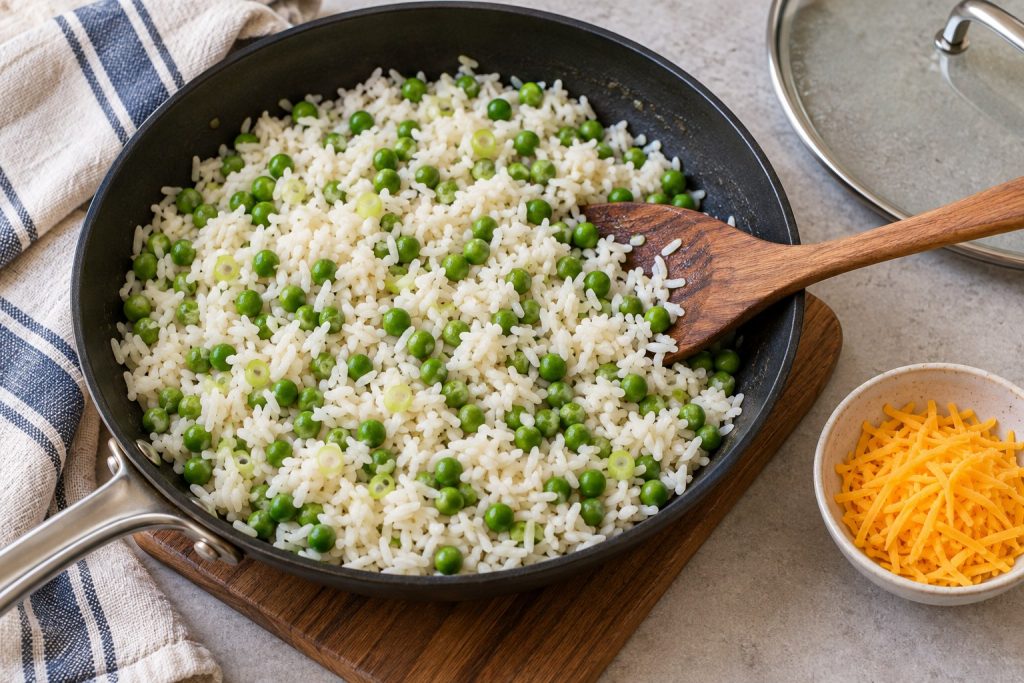
Let residual heat melt the cheese
Sharp cheddar adds plenty of flavor in a small quantity. Grate it finely enough to distribute easily, and add it only after the rice has been heated thoroughly. The hot mixture can melt the shreds without prolonged direct heat.
Large pieces of cheese take longer to melt and can gather into rubbery clumps. A finely grated quarter cup spreads more evenly. If using a pre-shredded product, stir patiently off the heat; it may melt a little differently from cheese grated from a block.
This is a lightly cheesy rice bowl. If you add much more cheese, it becomes stickier and heavier, so start with the stated amount and taste before changing it. Fresh scallion greens at the end provide a sharper contrast to the melted cheddar.
Fix cold pockets, dry rice, and clumped cheese
| Problem | What helps |
|---|---|
| The center is cooler than the edges | Break up clumps, stir thoroughly, cover, and continue heating before adding the cheese. |
| Rice sticks before it heats through | Lower the heat and add a teaspoon or two of water. Scrape gently with the spatula. |
| The mixture is watery | Cook briefly uncovered, stirring, before the cheese goes in. Drain peas thoroughly next time. |
| Cheese collects in one spot | Fold off the heat until distributed. Use smaller shreds rather than a few large pieces. |
| Peas are shriveled or dull | Cook them according to their package, then add near the end so they do not spend extra time in the skillet. |
On a small screen, scroll the table sideways to see every column.
Simple swaps while keeping the breakfast egg-free
Monterey Jack can replace cheddar in the same shredded quantity for a milder flavor. A mix of the two also works. Taste the finished bowl before adding salt because cheeses differ in saltiness.
Frozen corn makes a sweeter variation. Cook it fully according to its own package and drain before adding it, just as you would the peas. A small amount of cooked diced carrot can add color, but use an already tender vegetable rather than expecting raw pieces to cook during reheating.
For a stronger scallion flavor, add a few more sliced greens at the table. A little hot sauce is another optional finish. Keep wet toppings separate from leftovers so the rice does not sit in extra liquid.
Serve two light savory breakfasts
Breakfast rice without eggs works well when you want something warm and savory instead of a sweet cereal. Serve each portion in a shallow bowl so it cools comfortably for eating. Fruit or a few crisp cucumber slices can go alongside if desired.
The pea-and-cheddar combination also works in savory oatmeal without eggs. If preparing only one breakfast, halve the ingredients and use a smaller skillet; check the rice temperature rather than assuming the reduced quantity needs exactly half the heating time.
Track the rice’s original storage time
Follow USDA leftover guidance: refrigerate perishable food within 2 hours, or 1 hour above 90°F, at 40°F or below; use within 3–4 days and reheat leftovers to 165°F.
Count that storage window from the rice’s original cooking, not from the day you add peas and cheese. For example, rice that was already two days old when you made breakfast is still two days into its storage time. Make only the portion you plan to eat when practical.
If saving an extra portion, move it into a shallow container and refrigerate promptly. For reheating, add a little water, cover loosely, and stir between short microwave intervals. Check several places with a thermometer. The cheese may be less smooth after reheating, but gentle warming limits drying.
For lunch away from home, chill the portion before transport and keep it cold in an insulated bag with cold packs until reheating. Do not pack a warm bowl and let it sit at room temperature until later.
Questions about pea and cheddar breakfast rice
Can I use rice from yesterday?
Yes, if it was cooled promptly and refrigerated properly. Break up clumps and reheat to 165°F throughout before adding the cheese.
Can I use freshly cooked rice?
Yes. Let strong steam escape and measure 1 1/2 cups. It may need less added water because it has not dried during refrigeration; add only what is needed to keep the skillet mixture loose.
Can frozen peas go straight into the rice?
Cook them separately according to the package first. That ensures the peas receive their required cooking and keeps their extra water out of the rice.
Does brown rice work?
Yes, when already fully cooked. Use the same cooked volume and expect a chewier bowl. It may need a little extra water to loosen during reheating.
Why is there no fixed salt amount?
The rice may already be salted, and cheddar contributes seasoning. Taste after the cheese melts and add only a small pinch if needed.
THE COMPLETE RECIPE
Pea and Cheddar Breakfast Rice Without Eggs
Yield: 2 light breakfast portions
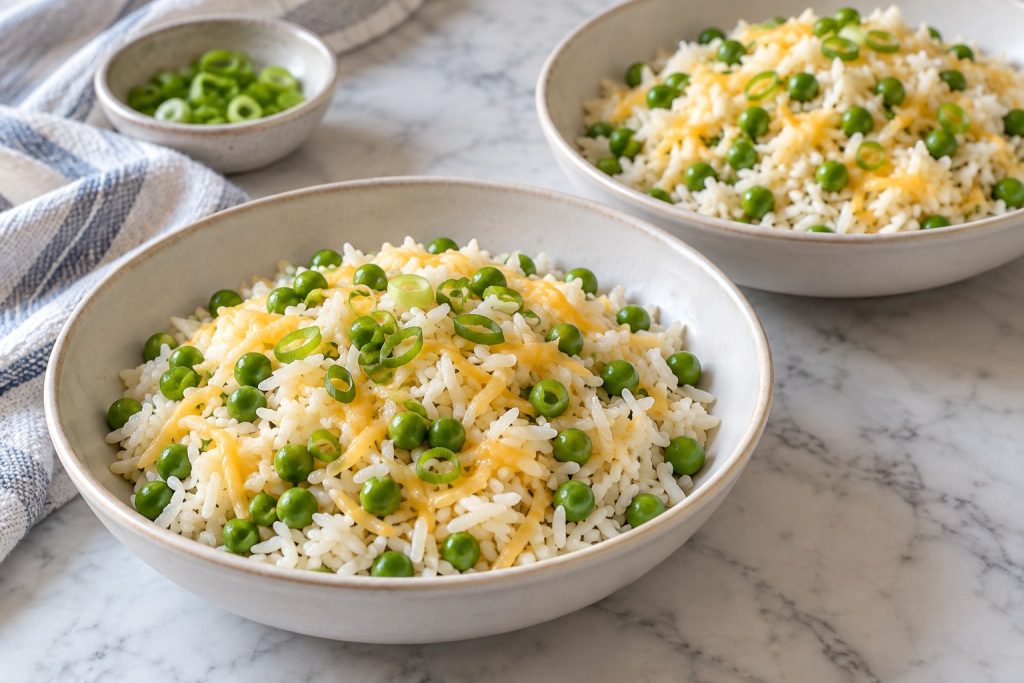
Ingredients
- 1 1/2 cups cooked long-grain rice safely refrigerated if using leftovers; this is not a dry-rice amount
- 3/4 cup plain frozen peas cook by the package directions, then drain
- 1/4 cup shredded sharp cheddar about 28 g; finely grate for easier melting
- 1 teaspoon olive oil
- 1 small scallion washed and thinly sliced; separate white and green parts
- 2 tablespoons water for the rice, plus the package-required water for cooking the peas
- 1/4 teaspoon garlic powder
- freshly ground black pepper to taste
- fine salt only if needed after tasting
Equipment
- 10-inch skillet with a lid
- Small saucepan or microwave-safe container for the peas
- Spatula
- Cheese grater
- Knife and chopping board
- Measuring cups and spoons
- Food thermometer
Instructions
- Cook and drain the peas Prepare the frozen peas in a separate small saucepan or microwave-safe container using the package's complete cooking directions, water quantity, and any standing time. Drain well. Meanwhile, grate the cheddar and slice the washed scallion.
- Soften the scallion whites Warm the olive oil in the 10-inch skillet over medium heat. Add the white scallion pieces and cook for about 30 seconds, stirring, until fragrant. Keep the green pieces for finishing.
- Loosen and heat the rice Add the cooked rice, 2 tablespoons water, garlic powder, and a little pepper. Break large clumps apart with the spatula. Cover and cook over medium-low heat for about 4 minutes, stirring halfway through and moving rice from the edges into the center.
- Add peas and check the heat Fold in the cooked, drained peas. Cover and continue heating for about 1–3 minutes, stirring as needed. When using leftover rice, check several places with a food thermometer and continue until the mixture reaches 165°F throughout. Add water a teaspoon at a time if the skillet dries before it is hot enough.
- Melt the cheese off the heat Remove the pan from the burner and fold in the shredded cheddar until it melts through the hot rice. Taste before adding salt, since the cheese may provide enough. Scatter the scallion greens over the mixture.
- Portion and serve Divide between two bowls and serve promptly. The grains should be soft and evenly hot, the peas tender, and the cheese distributed in a light coating rather than gathered in a single clump.
Notes
Rate This Recipe
Made this recipe? Choose a star rating in the comment form and share how it turned out. Your cooking time and any ingredient changes can help the next reader.
Rate This Recipe