Pantry recipe / A savory bowl in one saucepan
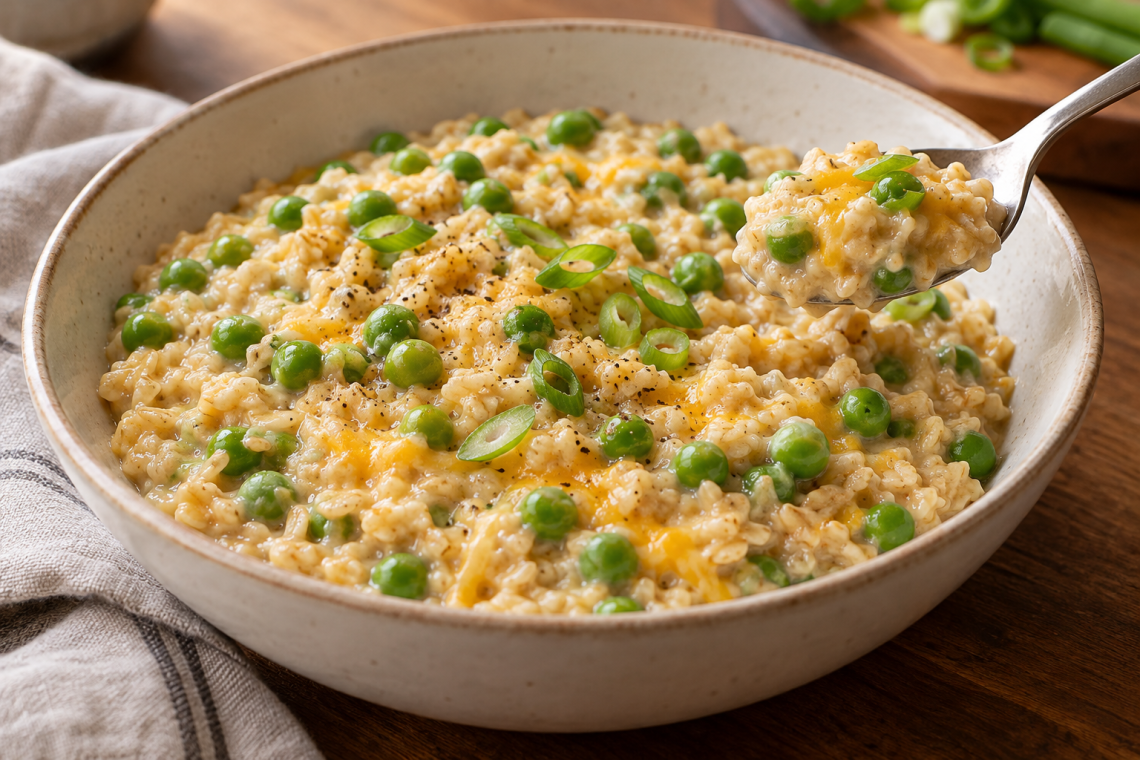
Oats do not need sugar to make a comforting bowl. This savory oatmeal with frozen peas cooks plain rolled oats in broth, adds peas for a little sweetness, and finishes with cheddar and black pepper. It makes two soft, spoonable portions for breakfast or a light lunch, with extra broth used to adjust the texture.
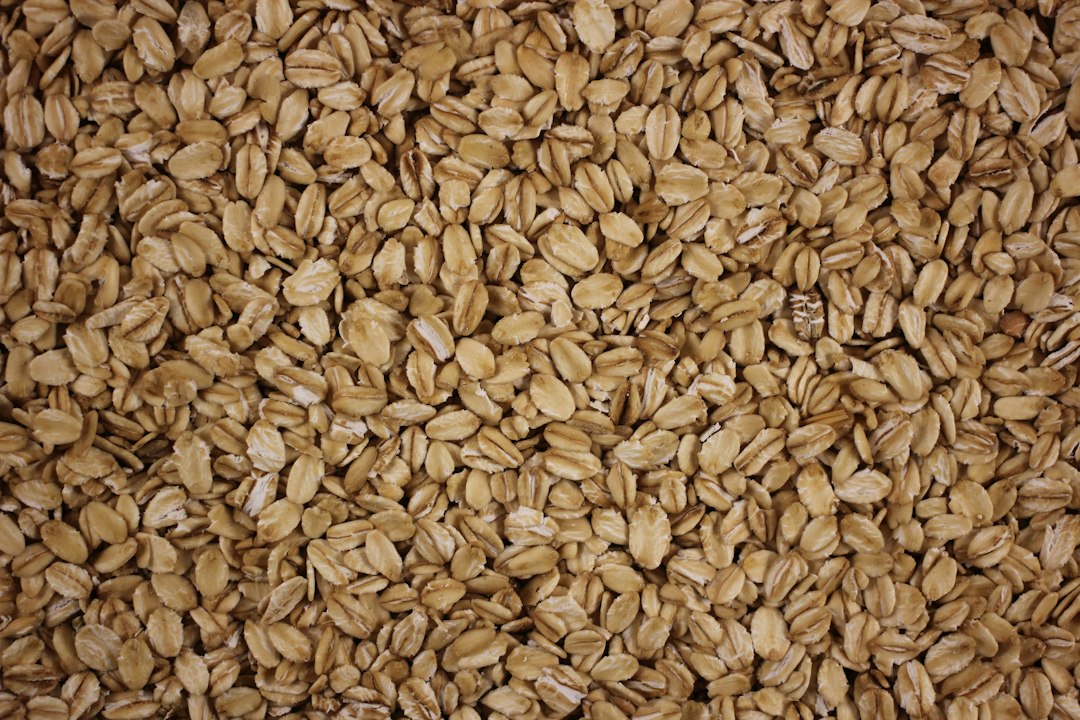
Start with plain old-fashioned rolled oats. Flavored instant packets can bring unwanted sweetness, and steel-cut oats need a different amount of liquid and a much longer cook. With rolled oats, you can focus on keeping the texture soft and spoonable while the peas heat through.
Recipe status: Cooking times are estimates. This editorial update is not a documented kitchen test; use the product directions and texture checks below.
Savory oatmeal with frozen peas: recipe
- Yield: 2 servings
- Estimated prep: 5 minutes
- Estimated cooking: 10–15 minutes
- Estimated total: 16–21 minutes, including the 1-minute stand
- Equipment: medium saucepan, spoon, measuring cups
Ingredients
- 1 cup plain old-fashioned rolled oats
- 2 cups low-sodium vegetable broth, plus up to 1/2 cup extra as needed
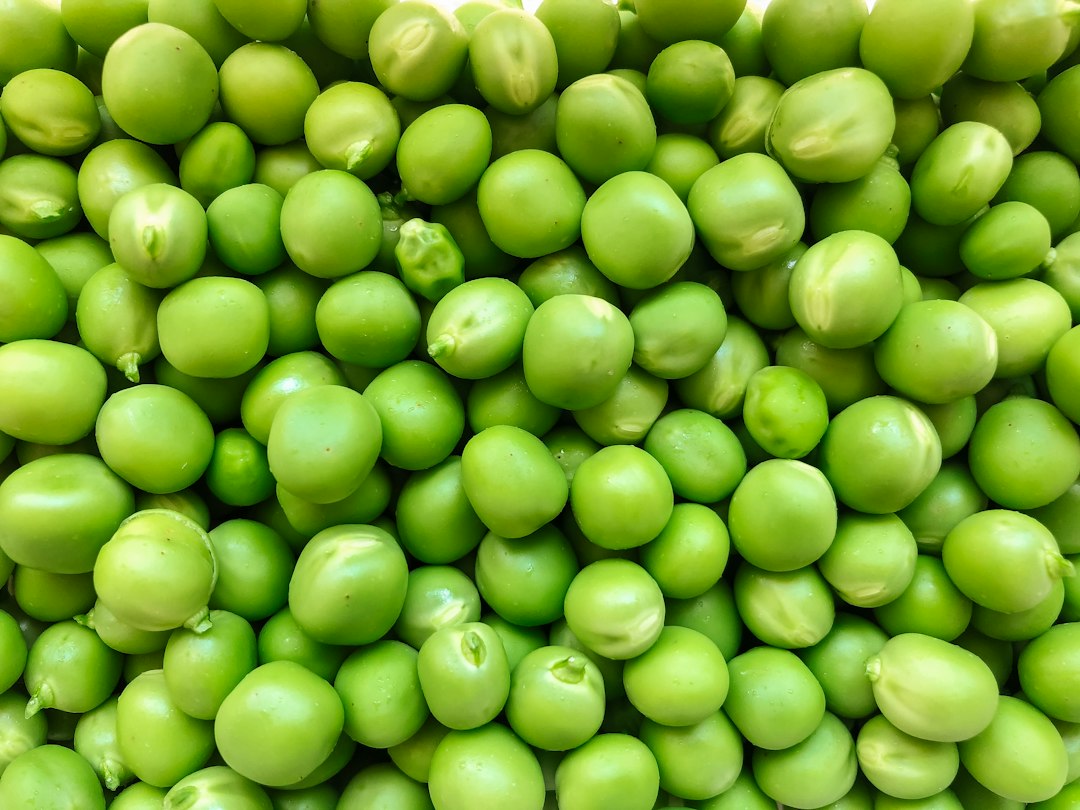
- 1 cup frozen peas
- 1/2 teaspoon onion powder
- 1/4 teaspoon garlic powder
- 1/4 teaspoon black pepper
- 1/2 cup loosely packed shredded cheddar, about 2 ounces
- 1 teaspoon butter or olive oil
- Salt to taste, after adding cheese
- Optional: sliced scallions or chopped parsley for serving
Method
- Heat the broth. Bring 2 cups broth to a gentle boil in the saucepan. Stir in the onion powder, garlic powder, and pepper.
- Add the oats. Stir in rolled oats and reduce to a steady simmer. Cook about 4–5 minutes, stirring occasionally so the bottom does not catch.
- Cook the peas. Add the frozen peas and bring the mixture back to a simmer. Cook another 3–5 minutes, or until the peas are thoroughly hot and tender and the oats have softened. Follow any longer cooking requirement on the pea package. Add extra broth in small splashes if the mixture thickens before the peas are ready.
- Finish gently. Remove the pan from the heat. Stir in butter or oil, then add cheddar a little at a time until melted. Taste before adding salt because both broth and cheese contribute seasoning.
- Adjust and serve. Let stand 1 minute. If the oats have become too stiff, stir in a little hot broth or water. Divide into bowls and add optional herbs.
Set up the pot before the oats start thickening
This breakfast moves quickly once the oats go in. Measure the peas, grate the cheddar, and place the serving bowls nearby before heating the broth. Keep the extra liquid separate from the first two cups so you can add it deliberately instead of starting with an unnecessarily thin mixture.
Choose a saucepan with headroom above the ingredients. Oats and broth can bubble up as the mixture returns to a simmer, especially after the frozen peas cool it down and you increase the burner. Watch that return to bubbling, then lower the heat again rather than walking away with the burner on high.
Use the cheese weight for consistency
The ingredient list allows about two ounces of cheddar, described as a loosely packed half cup when shredded. The volume depends on how finely you grate it and how firmly you fill the cup. Weighing the cheese makes the result easier to repeat without accidentally adding a dense, compressed cupful.
Have the shreds ready in a small bowl, then add them gradually off the heat. A large cold clump takes longer to disperse than several small additions. Stir until each addition melts into the oats before deciding whether the pot needs more liquid.
Finish one balanced bite before seasoning the whole pan
Taste a spoonful with oats, a pea, and some melted cheese together. Broth alone can taste seasoned while the finished mixture tastes mild, or a salty cheddar can supply more seasoning than expected. Add pepper, herbs, or salt only after that combined taste check. Scallions bring a sharper contrast, while parsley gives a gentler fresh finish; keep either optional topping separate for diners who prefer a plain bowl.
The right texture
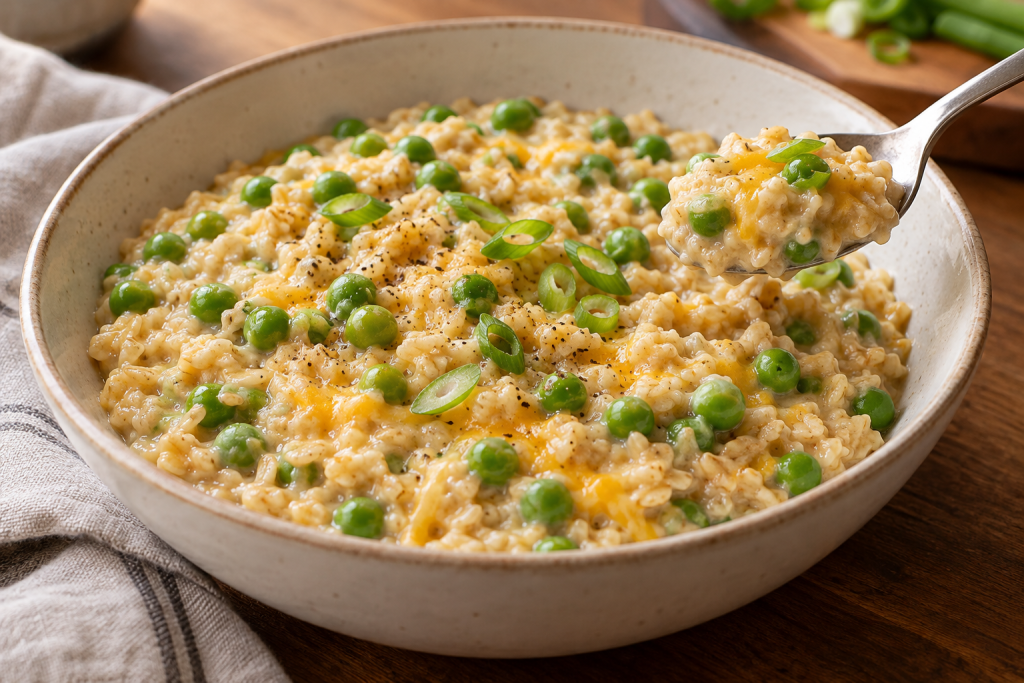
The finished oatmeal should slide off a spoon slowly rather than sit in a dry mound. Oats keep absorbing liquid after cooking, so a bowl that looks slightly loose in the saucepan may be just right by the time it reaches the table. Keep a little hot liquid available for the final adjustment.
Stir occasionally during simmering, with a little more attention near the end. Constant vigorous stirring can make the texture overly gluey. A heavy-bottomed pan and moderate heat help prevent scorching without needing nonstop stirring.
Why add cheese after cooking?
Cheddar melts into the hot oats without needing a rolling boil. Adding it off the heat reduces the chance of an oily or grainy finish. Finely shredded cheese melts faster than thick chunks. If you use pre-shredded cheese, its anti-caking ingredients may give a slightly different texture.
Use sharp cheddar if you want the cheese flavor to stand out, or mild cheddar for a gentler bowl. Both work here. Taste after the cheese has melted before reaching for the salt, especially if your broth is already well seasoned.
Allergens and label checks
The standard recipe contains milk from cheddar and butter. For someone avoiding eggs, check broth and topping labels as well as the ingredients themselves. If gluten avoidance is necessary, use oats labeled gluten-free and check the broth; ordinary oats may have cross-contact during processing. Use separate clean utensils when preparing food for someone with an allergy.
Variations and ingredient swaps
For a version without dairy ingredients, leave out cheddar and butter, use olive oil, and add 1–2 tablespoons nutritional yeast to taste. It will have a different flavor and will not behave like melted cheese. Check the broth label as well.
To add greens, stir a small handful of finely chopped fresh spinach into the oats with the peas and cook until wilted. Cooked mushrooms also make a good topping, but sauté them separately so their moisture does not dilute the oatmeal. Keep spicy toppings at the table so each person can choose their own heat level.
Quick oats can work with shorter cooking, but cook the peas separately according to the package and stir them into the finished oats. Steel-cut oats are not a direct swap for this method.
Common problems and simple fixes
- Too thick: stir in hot broth or water a tablespoon at a time.
- Too thin: simmer briefly before adding cheese, then let stand.
- Bland: taste for salt first; then add pepper or a little extra sharp cheddar.
- Bottom scorches: lower the heat and use a heavier pan. Transfer the unburned portion without scraping the scorched layer into it.
Make ahead and storage
Savory oatmeal with frozen peas is best freshly made, but leftovers can be reheated with extra liquid. Refrigerate in shallow covered containers within 2 hours, or within 1 hour above 90°F. Keep at 40°F or below and use within 3–4 days. Reheat in a saucepan over moderate heat, stirring and adding water or broth until the texture loosens. Reach 165°F throughout before serving, checking with a food thermometer. These handling limits follow USDA guidance on leftovers and food safety.
More simple meals from the pantry
For another meal using frozen peas, try pasta with canned chickpeas and frozen peas. If you are planning a breakfast rotation, our make-ahead breakfast quesadillas without eggs offer a different texture and serving style.
Serving the second bowl a few minutes later? Leave that portion in the pan off the heat and stir in a splash of hot broth when you’re ready. The oats will keep thickening as they stand, so adjust each portion just before serving. For a meal saved until later, refrigerate it within the storage limits above.
Printable recipe
Print the measured ingredients and step-by-step instructions using the recipe card below.
THE COMPLETE RECIPE
Savory Oatmeal with Frozen Peas and Cheddar, Without Eggs
Yield: 2 servings
Ingredients
- 1 cup plain old-fashioned rolled oats Not flavored instant packets or steel-cut oats.
- 2 cups low-sodium vegetable broth Plus up to 1/2 cup extra as needed to adjust texture.
- 1 cup frozen peas
- 1/2 teaspoon onion powder
- 1/4 teaspoon garlic powder
- 1/4 teaspoon black pepper
- 1/2 cup loosely packed shredded cheddar About 2 ounces; weighing is more consistent than packing the cup.
- 1 teaspoon butter or olive oil
- salt To taste, after adding the cheese.
- sliced scallions or chopped parsley Optional, for serving.
Equipment
- 1 medium saucepan with room for bubbling
- 1 Spoon
- 1 Measuring cups and spoons
Instructions
- Heat the broth. Measure the peas and shred the cheddar before starting. Bring 2 cups broth to a gentle boil in the saucepan. Stir in onion powder, garlic powder, and pepper.
- Simmer the oats. Add the rolled oats and reduce to a steady simmer. Cook for about 4–5 minutes, stirring occasionally to prevent sticking.
- Cook the peas. Add the frozen peas and return the mixture to a simmer. Cook for another 3–5 minutes, until the peas are thoroughly hot and tender and the oats are soft. Follow any longer cooking requirement on the pea package. Add extra broth in small splashes if the oats thicken before the peas are ready.
- Melt in the cheese. Remove the saucepan from the heat. Stir in butter or olive oil, then add cheddar a little at a time, stirring until melted. Taste before adding salt because both cheese and broth contribute seasoning.
- Stand and serve. Let stand for 1 minute. The oats should be soft and spoonable, not a dry mound. If needed, loosen with a little hot broth or water. Divide into bowls and add optional scallions or parsley.
Notes
Rate This Recipe
Made this recipe? Choose a star rating in the comment form and share how it turned out. Your cooking time and any ingredient changes can help the next reader.
Rate This Recipe