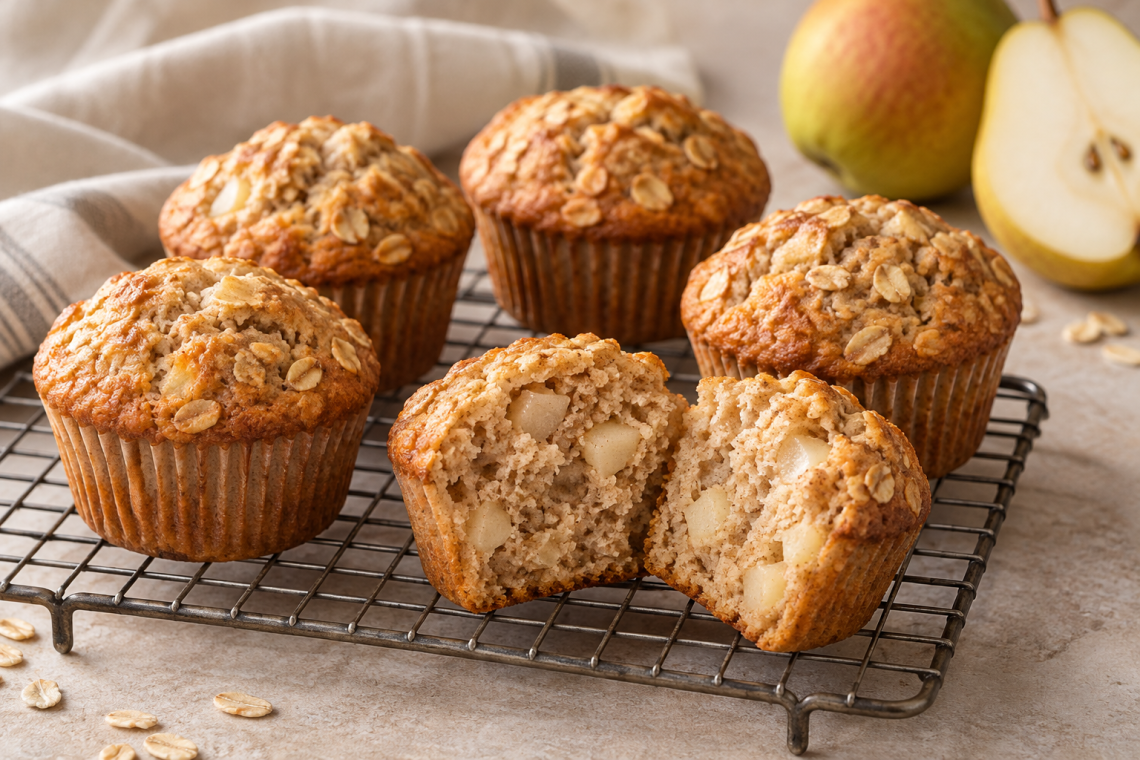
A ripe pear can turn a modest bowl of batter into a useful breakfast bake. These small batch pear oat muffins without yogurt make six muffins with soft pear pieces, a little oat texture and cinnamon. Milk hydrates the oats, while oil keeps the crumb tender without requiring softened butter or a mixer.
The most helpful detail is the fruit size. Small dice distribute through the batter and soften during the short bake; large chunks can leave a damp pocket beside an otherwise cooked crumb. Choose a pear that is ripe enough to taste good but firm enough to cut cleanly. The method below also explains how to recognize properly mixed batter and when to take the muffins out.
Six muffins: time, oven and pan
| Makes | 6 standard muffins. |
|---|---|
| Prep | 20 minutes, including a 10-minute oat soak. |
| Bake | about 22–26 minutes. |
| Cool before serving | 10 minutes; total about 54 minutes. |
| Oven | 375°F / 190°C, conventional setting. |
| Equipment | standard muffin pan, six paper liners, two mixing bowls, a small bowl for the prepared pear, whisk, flexible spatula and a wire rack. |
Use a standard pan with wells that hold roughly ½ cup (120 ml) of water to the rim. Mini muffin and jumbo muffin pans change both the yield and the baking time. If using a 12-well pan, fill six wells with batter; the remaining wells can stay empty unless your pan manufacturer says otherwise.
Measure in three groups
Soak and wet mixture
- ½ cup minus 2 tablespoons (90 ml) milk, whole or 2%
- ⅓ cup (30 g) old-fashioned rolled oats
- 1 large egg
- 3 tablespoons (45 ml) neutral oil, such as canola
- ½ teaspoon vanilla extract
Dry mixture
- 1 cup (120 g) all-purpose flour, spooned into the cup and leveled
- ⅓ cup (65 g) granulated sugar
- 1 teaspoon baking powder
- ½ teaspoon ground cinnamon
- ¼ teaspoon fine salt
Prepared fruit
- 140 g (a scant cup) peeled, cored pear cut into ¼-inch dice; use the prepared weight as your guide
The pear measurement is its prepared weight, after removing the core and peel. One medium-to-large pear usually supplies enough, but the scale is more dependable than fruit count. Flour measurements follow the King Arthur Baking weight reference; scooping a tightly packed cup directly from the bag can add more flour than this batter needs.
Prepare the pear and understand the batter
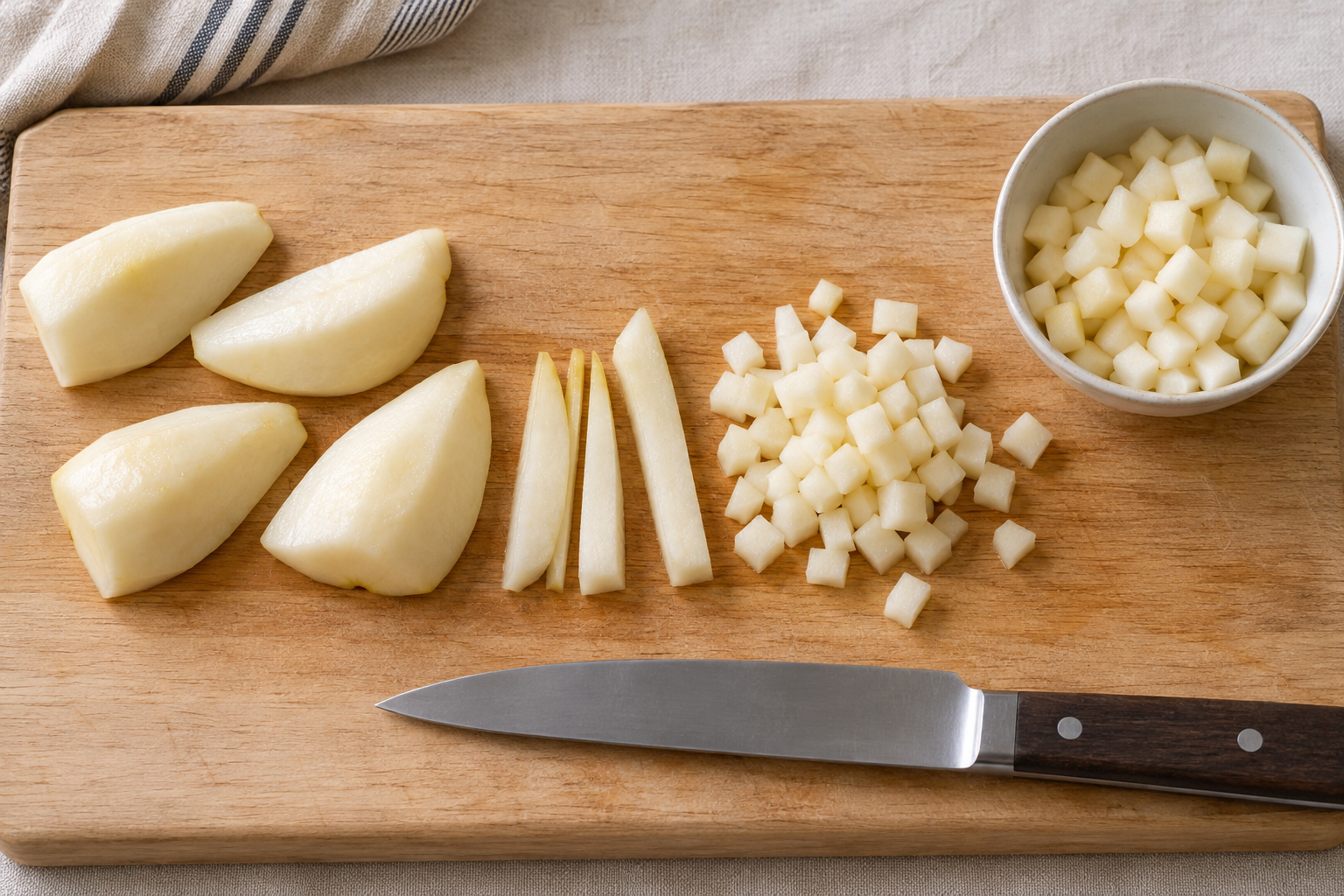
Bosc and Anjou pears are convenient choices because they can stay firm enough to dice after ripening. A Bartlett pear also works when it is ripe but not collapsing. Press gently near the stem: a little give is useful, while a very soft but otherwise sound pear is better suited to a sauce. Taste a small piece before mixing; an astringent, hard pear will not become richly flavored merely because it goes into a muffin.
Rolled oats bring texture, but they need a little advance hydration. Soaking them in the measured milk softens their edges without turning them into cooked porridge. Flour gives the muffins structure, the egg holds the crumb together, and baking powder supplies lift without needing yogurt’s acidity. Sugar contributes tenderness and browning as well as sweetness, so removing most of it changes the result.
Do not add extra pear simply to use the rest of the fruit. More fruit means more moisture and less batter between the pieces. Save any excess for a breakfast bowl or eat it while the muffins bake. If the diced pear is exceptionally juicy, spread it on a clean towel and lightly blot the surface before weighing it.
Set up the fruit before opening the flour. Rinse the pear under running water before peeling, dry it with a clean towel, and cut away bruised areas; discard rotten fruit. Peel the pear, cut it into quarters and remove the firm core from each piece. Rest a quarter on its flat cut face, slice it into narrow strips, then turn the strips and cut across them. A stable flat face is easier to control than a whole pear rolling on the board. Keep the pieces close in size so each muffin has a similar balance of fruit and crumb.
Place the prepared pear in a separate small bowl instead of adding it directly to the wet ingredients. This lets you check the quantity and surface moisture before the batter is involved. If blotting is needed, press lightly rather than squeezing: the goal is to remove loose juice, not crush the pieces into pulp. Juice left on the board is not an extra liquid ingredient for the batter.
How to make small batch pear oat muffins without yogurt
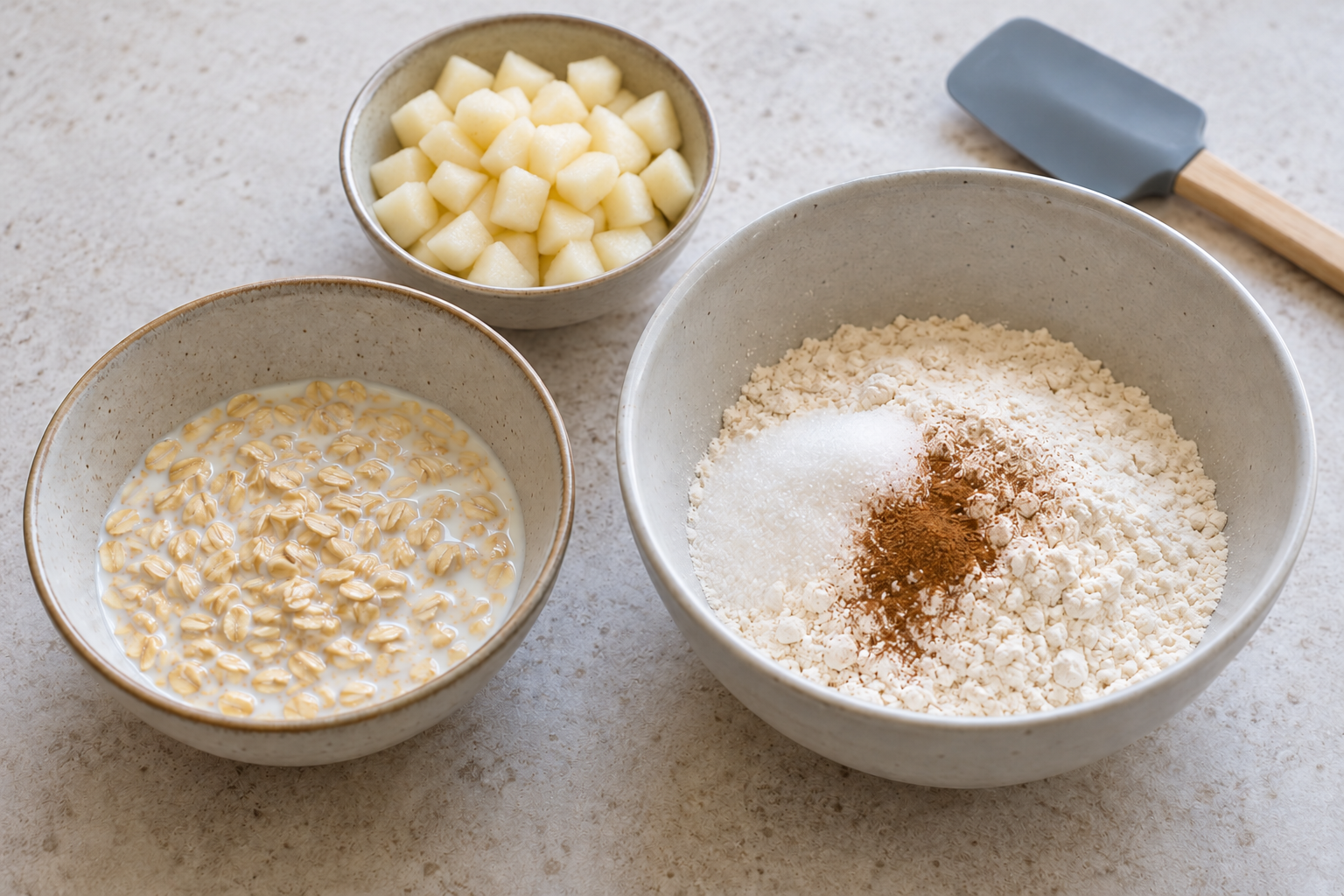
- Prepare the oven and pan. Put a rack in the center of the oven and heat to 375°F / 190°C. Line six standard muffin wells. Set the pan nearby so the finished batter can go straight into it.
- Soak the oats. Combine the milk and rolled oats in the larger bowl. Let stand for 10 minutes while you prepare the pear and dry ingredients. The oats should look damp and slightly softened; they will not dissolve.
- Combine the dry ingredients. Whisk the flour, sugar, baking powder, cinnamon and salt in the second bowl. Break up any visible lumps of baking powder. Even distribution matters because concentrated pockets can taste bitter.
- Finish the wet mixture. Add the egg, oil and vanilla to the soaked oats. Whisk just until the egg disappears into the mixture. Scrape along the bottom of the bowl to bring up any settled oats.
- Fold gently. Add the flour mixture and fold with a spatula until only a few streaks remain. Add the diced pear and fold a few more times. Stop when there is no loose flour. Expect thick, scoopable batter with visible oats and pear, rather than a smooth cake batter.
- Divide and bake. Divide between the six wells, filling each about three-quarters full. Bake for 22–26 minutes. Start checking at 22 minutes: the tops should spring back lightly and a skewer inserted into crumb, avoiding a pear chunk, should have moist crumbs but no wet batter.
- Release the steam. Leave the muffins in the pan for 5 minutes, then lift them onto a rack. Cool another 5 minutes before eating, and longer before storing. Leaving them in the hot pan for an extended period can make the bottoms damp.
Divide the fruit as evenly as the batter
Start with a modest scoop in every lined well, then make a second pass to use the remaining batter. Scrape from different parts of the bowl so the first muffins do not receive all the pear. Compare the surface level across the six wells before baking and move a little batter from a noticeably fuller cup to a lower one. This is more dependable than trying to make every scoop identical while working around pieces of fruit.
Judge the batter, bake and crumb
| Stage | Useful sign | What to avoid |
|---|---|---|
| Prepared fruit | Small, evenly sized pear pieces | Large wedges or watery purée |
| Mixed batter | Lumpy and scoopable, with no dry flour | Prolonged beating to make it smooth |
| Finished muffins | Lightly golden top and set crumb | Judging doneness from color alone |
If the tops brown before the centers finish, place a loose piece of foil over the pan and continue baking in two-minute increments. Check more than one muffin if the oven heats unevenly. A pear-coated skewer can look moist even when the surrounding crumb is done, so choose another spot before deciding the entire batch is underbaked.
Read a cut muffin after the short cooling period
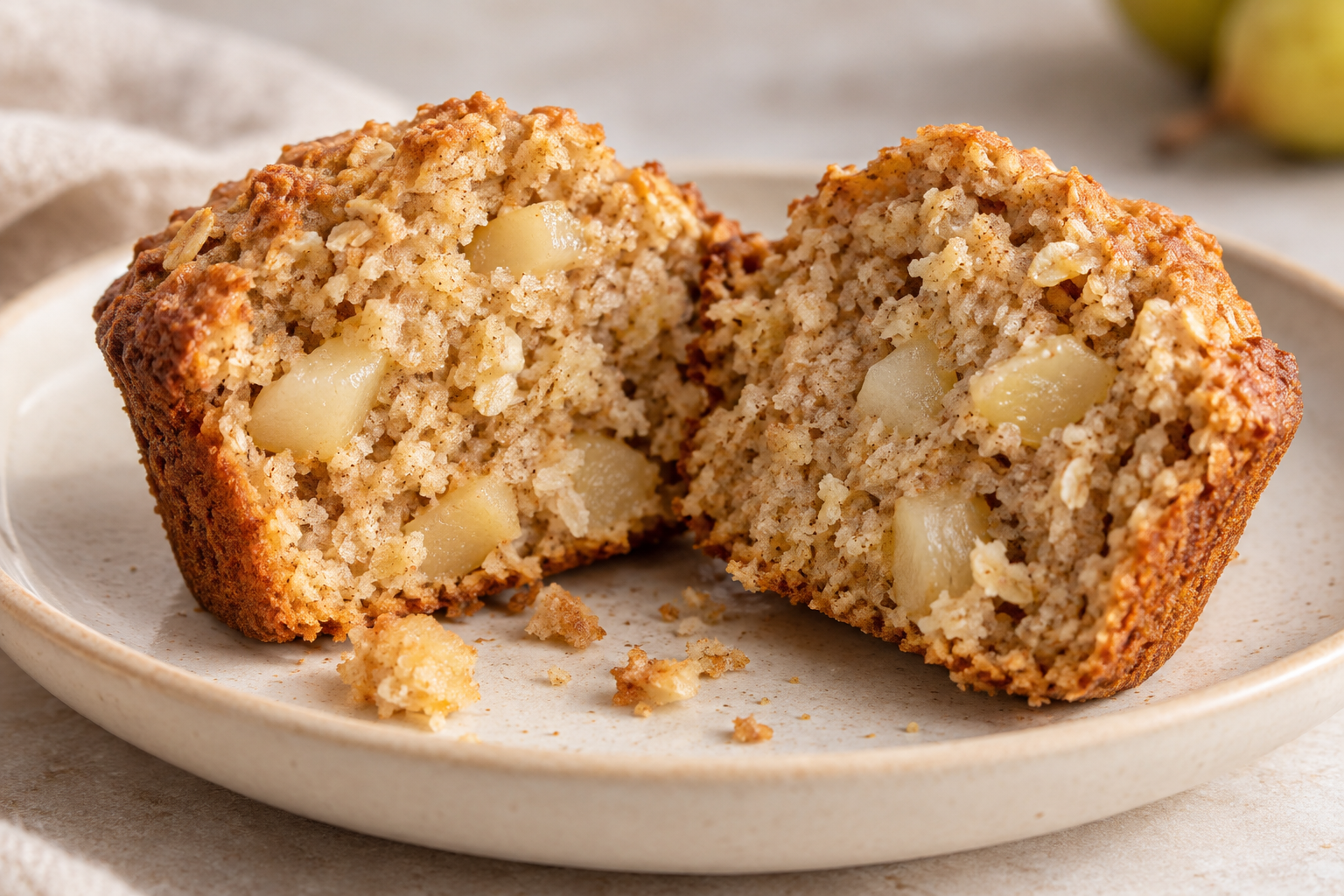
Look at the crumb immediately beside a pear piece as well as the center of the muffin. A cooked piece of fruit can look glossy; the surrounding batter should form a connected, soft crumb rather than a paste. Cutting while the muffin is still very hot can compress that crumb and make it appear heavier. Lift the halves apart gently instead of pressing them flat with the knife.
If the muffins need troubleshooting
Dense muffins: Check flour measurement and how long you stirred. Extra flour or vigorous mixing can make the crumb heavy. Old baking powder is another possibility. Keep the next batch to a few deliberate folds once flour is wet.
Wet patches around the fruit: The pear may have been too soft, too large or above the listed quantity. Dice consistently and check doneness in the crumb between pieces. Let the muffins cool enough for that crumb to settle before cutting them.
Dry edges: A dark pan can brown quickly, and an oven running hot can exaggerate the effect. Check early and use the middle rack. If the batch is already dry, serve the muffins split with a thin layer of butter or alongside yogurt, rather than baking them again.
Ingredient changes and their limits
You can use 3 tablespoons of melted, cooled butter instead of the oil for a more buttery flavor. Stir it into the wet mixture before adding flour. The crumb may feel firmer after chilling. A neutral, unsweetened plant drink is a reasonable milk alternative to investigate, but brands vary and that substitution has not been kitchen validated here.
Quick oats soften more readily and produce a less distinct oat texture; steel-cut oats are unsuitable for this short soak and bake. Do not replace all-purpose flour with the same weight of almond or coconut flour. Those flours change the structure and liquid balance enough to need a separately developed recipe. Likewise, omitting the egg is not a simple one-ingredient adjustment.
Serve now and save the other muffins
Serve one or two muffins with scrambled eggs, fruit or a bowl of yogurt for a more substantial breakfast. For a snack, split a muffin and add a thin spread of apple butter. The gentle pear flavor also pairs with tea; a heavy glaze can cover it up.
Because these are moist fruit muffins, refrigerate them in a covered container after cooling, keeping the refrigerator at 40°F / 4°C or below. As a conservative storage approach, chill within two hours (one hour if the room is above 90°F / 32°C) and use within 3–4 days. Freeze individually wrapped muffins for up to two months for best quality. Thaw overnight in the refrigerator. Warm gently in a microwave in short bursts so the pear does not become scalding. USDA leftover guidance explains prompt chilling and safe refrigerator storage.
For another small fruit bake, try the cranberry orange muffins. If you are planning around an egg-free batter, the applesauce muffins without yogurt use their own ingredient balance.
Frequently asked questions
Can I use canned pears?
Possibly, but drain, blot and weigh them after chopping. Canned fruit is already soft and may leave wetter pockets. Choose pears in juice, not heavy syrup, and keep to 140 g. This variation needs its own kitchen check.
Do I have to peel the pear?
Peeling gives the most even texture. Thin, tender skin can be left on if washed well, although the pieces may remain visible in the crumb. Remove tough skin and any bruised flesh.
Can I mix the batter the night before?
Prepare the dry ingredients and measure the milk separately instead. Refrigerating fully mixed batter changes oat hydration and can reduce lift. Chop the pear shortly before baking for the cleanest result.
Why is there no baking soda?
Baking powder provides the leavening for this milk-based recipe. Baking soda is not an equal replacement, and adding it unnecessarily can affect flavor and browning.
Can I double the recipe?
Doubling the listed ingredients is a reasonable way to fill 12 standard wells. Keep the oven temperature the same and start checking at the original time. Pan placement and oven loading can alter the final timing.
Are these dairy-free?
As written, small batch pear oat muffins without yogurt still contain milk. Avoiding yogurt does not make a recipe dairy-free; use an appropriate separately checked milk substitution if needed.
The six-muffin recipe
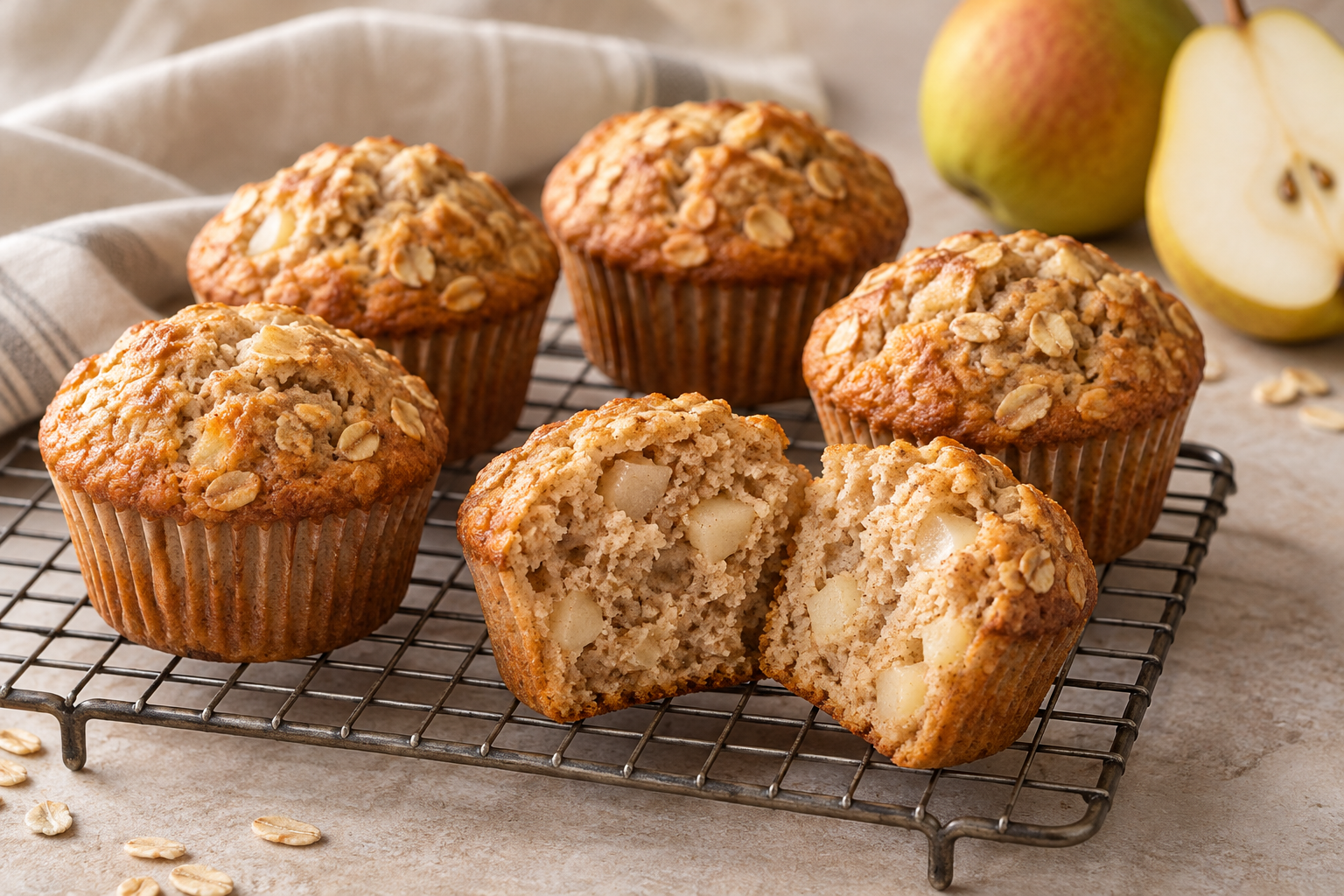
Small-Batch Pear Oat Muffins Without Yogurt
Ingredients
Equipment
Method
- Set a rack in the center of the oven and preheat to 375°F / 190°C on the conventional setting. Line six standard muffin wells with paper liners. Keep the pan ready so the mixed batter can go straight into it.
- Combine the milk and rolled oats in the larger mixing bowl. Let stand for 10 minutes while you prepare the pear and dry ingredients. The oats should become damp and slightly softened.
- Rinse the pear under running water and dry it before peeling. Cut away bruised areas; discard rotten fruit. Peel, quarter and core it, then cut into even ¼-inch dice. Weigh 140 g of prepared fruit, approximately a scant cup, and set it in the small bowl. If the cut fruit is very juicy, lightly blot its surface before weighing; do not add loose juice.
- In the second mixing bowl, whisk the flour, sugar, baking powder, cinnamon and salt until evenly combined. Break up visible lumps of baking powder.
- After the oat soak, add the egg, oil and vanilla to the oats and milk. Whisk just until combined, bringing up any oats that have settled at the bottom.
- Add the dry mixture to the wet mixture. Fold gently with a spatula until only a few flour streaks remain, then add the diced pear and fold just until no loose flour remains. The batter should be thick and scoopable, with visible oats and pear. Do not beat it smooth or taste the raw batter.
- Divide the batter evenly among the six lined wells, filling each about three-quarters full and distributing the pear pieces evenly. Bake for approximately 22–26 minutes; begin checking at 22 minutes. The tops should spring back lightly, and a skewer inserted into the crumb, avoiding a pear piece, should have moist crumbs but no wet batter. Check more than one muffin if your oven heats unevenly.
- Leave the muffins in the pan for 5 minutes, then transfer to a wire rack for another 5 minutes before serving. Let them cool further before covering for storage, while following the prompt refrigeration limits in the notes.
Notes
Rate this recipe
Made these pear oat muffins? Choose a star rating and share how your batch turned out in the comment form below.