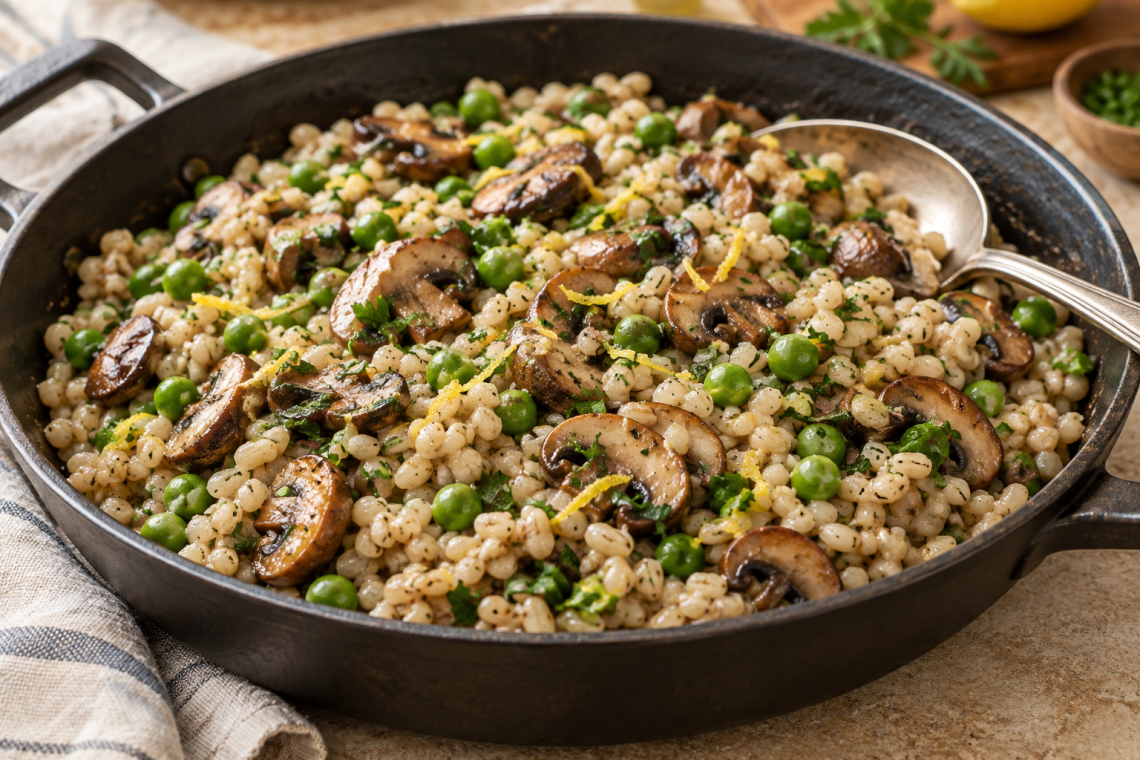
This quick cooking barley with mushrooms and peas gives a pantry grain a clear role at dinner: tender, pleasantly chewy barley catches the juices from browned mushrooms, while peas and a small amount of lemon keep the bowl from tasting heavy. Serve it as a generous side or a simple main dish with a crisp salad.
The quick barley cooks in a saucepan while the mushrooms brown in a skillet. Keeping those tasks separate is useful. Mushrooms need room and relatively dry heat to develop color, while barley needs a covered simmer. Combining them only after each is properly cooked gives better control over the texture of the finished dish.
Match each ingredient to its cooking window
- Start the quick barley: use the package ratio and keep the covered simmer gentle so the grains cook evenly.
- Brown the mushrooms alongside: use a separate wide skillet and cook until released moisture evaporates and browned edges appear.
- Cooked peas last: prepare the frozen peas separately according to their complete package directions, then fold them into the barley for the final warm-through.
Let the pot stand covered briefly before serving. If the barley remains firm after absorbing the liquid, add hot water in small amounts rather than flooding the pan and washing out the mushroom flavor.
Make sure the box says quick
Quick-cooking barley is not interchangeable with ordinary pearl barley on this schedule. For example, Quaker’s quick barley instructions use a short covered simmer followed by a rest. Conventional pearl barley takes longer. Always check the package you bought, because brands can differ.
The recipe below uses 1 cup quick barley and 2 cups liquid as its base. If your package specifies another ratio, use the package’s ratio for that 1 cup of barley and keep the mushroom ingredients unchanged. The skillet finishing stage works best with cooked grains that are tender and drained of any excess water.
The dinner timeline
Preparation: 10 minutes. Cooking: about 25 minutes, with the barley and mushrooms cooked at the same time. Total: about 35 minutes. Yield: 4 side servings or 2 generous main servings.
- Put the barley liquid on to heat while you slice the mushrooms.
- Cover the simmering barley, then begin browning the mushrooms.
- Cook the peas according to their package during the final part of the barley cooking.
- Combine the cooked components and finish with lemon, parsley and a small amount of butter.
You will need a 2-quart saucepan with a lid, a 12-inch skillet, a 1-quart microwave-safe bowl or small pan for the peas, a knife, a fine colander and a fork. A wide skillet is especially helpful for the mushrooms. If using a smaller pan, cook them in two batches and allow a few extra minutes.
Ingredients
- 1 cup quick-cooking barley
- 2 cups low-sodium vegetable broth, or the liquid amount required by the barley package
- 12 ounces cremini or white mushrooms, approximately 340 g, sliced 1/4 inch thick
- 1 small shallot, approximately 45 g, finely chopped
- 1 cup plain frozen peas, approximately 140 g
- 1 1/2 tablespoons olive oil
- 1 tablespoon unsalted butter
- 1 garlic clove, minced
- 1/2 teaspoon dried thyme
- 1/4 teaspoon fine salt, plus more to taste
- 1/4 teaspoon ground black pepper
- 1 teaspoon finely grated lemon zest
- 1 tablespoon fresh lemon juice
- 2 tablespoons chopped fresh parsley
- 2 to 4 tablespoons hot water, only if needed at the finish
The mushrooms provide the main savory flavor, so use enough of them and give them time in the skillet. Thin, even slices cook more consistently than a mix of tiny fragments and large chunks. A small amount of butter at the end rounds out the grains; the olive oil handles the initial browning.
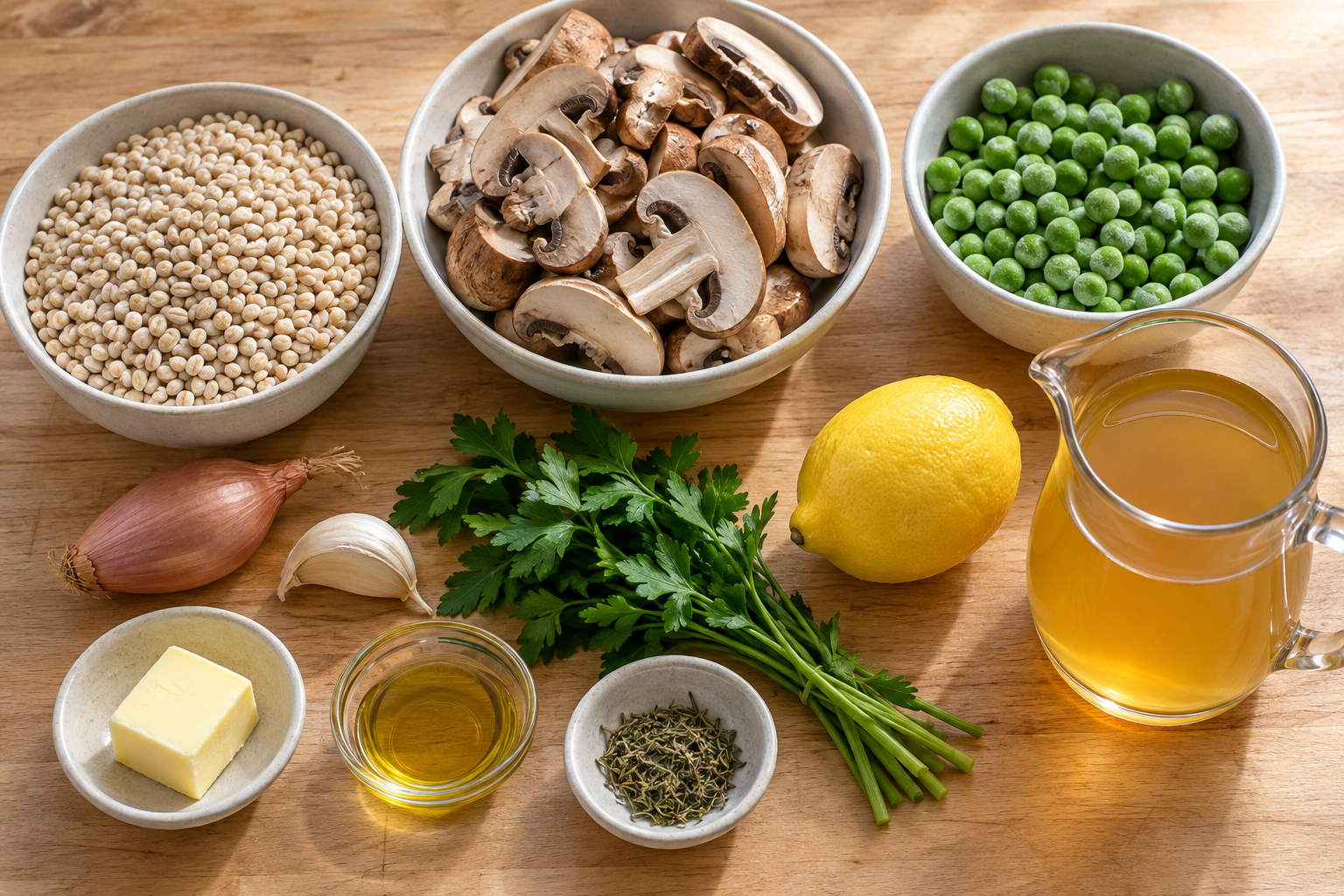
Cook the barley, mushrooms and peas
- Start the grain. Bring the broth to a boil in the saucepan. Stir in the barley, cover and reduce the heat. Simmer according to the package, generally 10 to 12 minutes for quick barley, until tender. Remove from the heat and let stand covered for about 5 minutes if directed. Drain any excess liquid and fluff with a fork.
- Brown the mushrooms. While the barley cooks, heat the oil in the skillet over medium-high heat. Add the mushrooms in an even layer. Leave them undisturbed for about 2 minutes, then stir. Continue cooking for 7 to 9 minutes, stirring occasionally, until their released liquid evaporates and some edges turn golden.
- Add the aromatics. Lower the heat to medium. Stir in the shallot, salt and thyme and cook for 3 to 4 minutes, until the shallot softens. Add the garlic and cook for 30 seconds. If the pan gets too dry, add a tablespoon of water rather than letting the garlic scorch.
- Cook the peas. Prepare the frozen peas according to their package directions, using a microwave-safe bowl or small pan. Drain well. They should be hot and tender before joining the skillet, not simply thawed.
- Bring the components together. Add the cooked barley and peas to the mushrooms. Fold over medium-low heat for about 2 minutes, adding 1 or 2 tablespoons hot water if the grains look dry. The mixture should be moist enough to scoop but should not have liquid pooling underneath.
- Finish off the heat. Stir in the butter, lemon zest, lemon juice, pepper and parsley. Taste and adjust salt if needed. Serve while warm, using a broad spoon so the mushrooms remain evenly distributed.
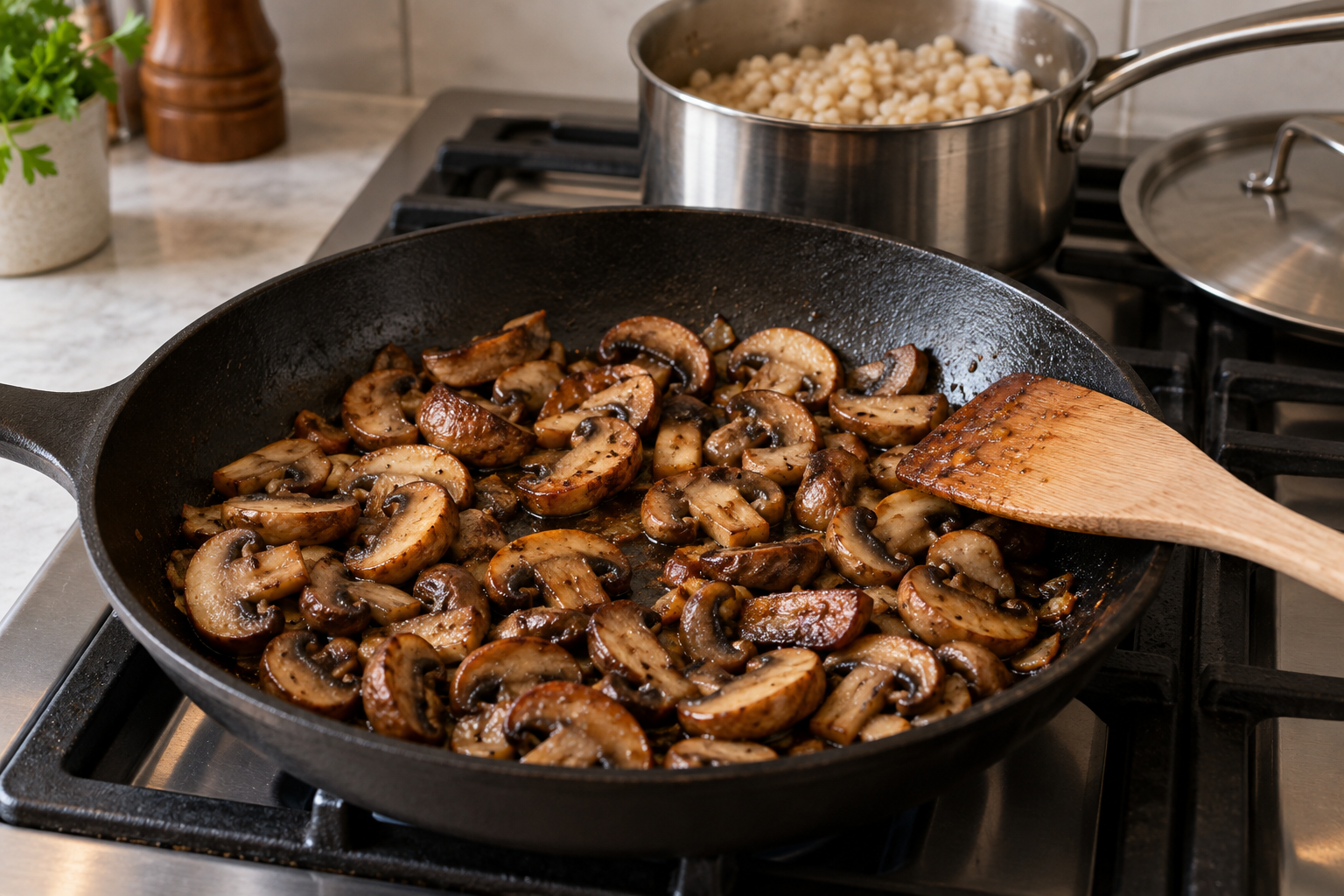
Give the mushrooms time to brown
Mushrooms often release water before they gain color. That stage does not mean the recipe has failed. Let the liquid evaporate while stirring only occasionally, then watch for golden patches to develop. If you add the barley while the skillet is still full of mushroom liquid, the result will be more like a soft grain stew than the intended side dish.
A little dark golden residue on the skillet can be loosened with the finishing water. Black, bitter residue should not be scraped into the food. Adjust the heat to suit the pan: a thin skillet may need a lower setting than a heavy one. The point is a steady sizzle, not smoking oil.
Texture fixes
- Barley is firm: return it to the saucepan with a splash of water and cook longer before combining.
- Barley is waterlogged: drain it well and let steam escape briefly, then fluff gently.
- The finished skillet is dry: add hot water a tablespoon at a time before adding more fat.
- The mushrooms taste bland: check browning and salt, then add lemon in small amounts rather than increasing every seasoning at once.
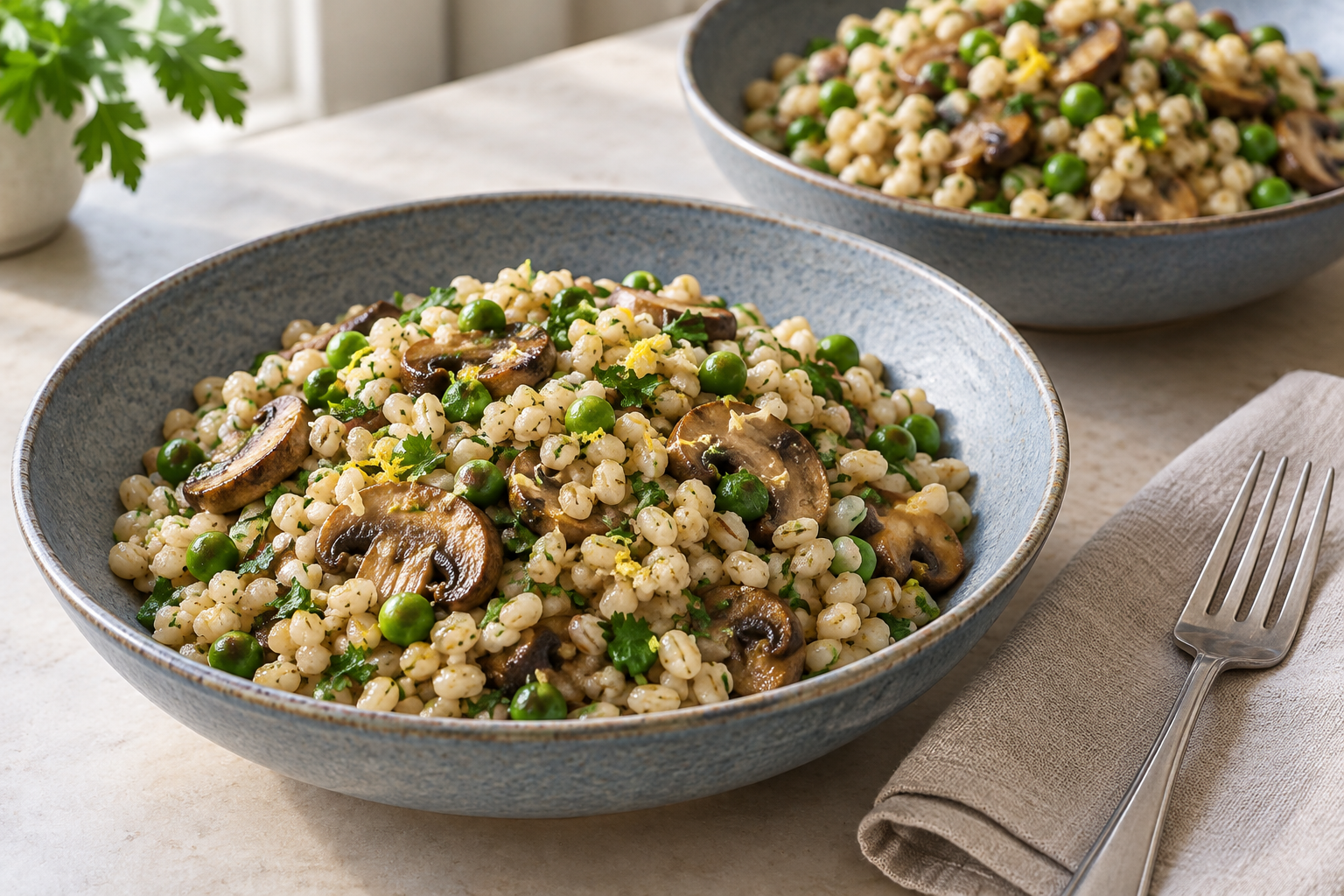
Serving and changing the skillet
Serve beside roasted chicken, baked fish or a plate of roasted carrots. For a meatless meal, add a crisp salad and a small handful of toasted nuts or seeds at the table. Keep crunchy toppings separate until serving so they do not soften in the warm grains.
For a dairy-free version, replace the tablespoon of butter with 2 teaspoons olive oil. Chopped parsley can be replaced with chives for a milder finish. A few cooked green beans, cut small, could stand in for peas. Cut the cooked green beans into 1-inch pieces and drain them well. Avoid adding uncooked vegetables at the final combining stage.
If you only have regular pearl barley, cook it separately according to its package and use about 3 cups cooked grain. The finished skillet can still follow the same sequence, but the overall recipe will take longer. Barley contains gluten, so it is not suitable for a gluten-free substitution plan.
Frequently asked questions
Can I use canned mushrooms?
You can, but they will not brown or taste exactly like fresh mushrooms. Drain and dry them well, then warm them with the shallot. The main recipe relies on fresh mushroom browning for flavor, so the canned version should be treated as a different variation.
Can I cook the barley ahead?
Yes. Cool and refrigerate it promptly, then add it to the skillet with a little water. Because it is a leftover, heat the finished mixture to 165°F. Previously cooked barley’s original storage time still counts after it is combined with fresh ingredients.
Do I need to wash mushrooms?
Remove visible dirt with a brief rinse or a damp towel, then dry them well before slicing. Avoid leaving them soaking in water. Dry surfaces help the mushrooms move through the wet stage and begin browning more efficiently.
Why does the recipe use two pans?
The barley needs water and a lid; the mushrooms benefit from a broad, uncovered skillet. Cooking them separately lets both reach the intended texture. Their cooking times overlap, so the extra pan does not automatically make dinner slower.
Can quick cooking barley with mushrooms and peas be served cold?
It can be chilled promptly and eaten cold, but the butter firms and the grains absorb moisture. For a planned cold version, use olive oil instead of butter and add a little fresh lemon at serving. That variation needs its own seasoning adjustment.
How should I store leftovers?
Refrigerate in shallow containers within 2 hours, or within 1 hour above 90°F. Keep at 40°F or below and use within 3 days. Reheat with a splash of water until the center reaches 165°F. The peas will be softer after reheating.
For a broth-based use of barley and mushrooms, try small-batch mushroom barley soup without wine. Our pearl barley, white bean and cucumber bowls use a different style of barley preparation for a cooler meal.
Food handling references: FDA storage guidance and FoodSafety.gov reheating temperatures.
Choose the right barley for the time available
Read the front and back of the barley package before planning the meal. Quick-cooking barley is the shortcut in this recipe; the mushrooms still need their own browning time. If you only have ordinary pearl barley, cook it by its package directions first and treat the skillet as a separate finishing step. Do not try to force the slower grain into a short schedule by turning the heat higher.
Measure the dry barley into a bowl before starting. If your package uses a different liquid ratio, write down the amount for the one cup you are cooking so you do not accidentally combine two sets of instructions. The mushroom mixture can stay the same. Drain excess cooking water before combining if the package method produces it.
Use the waiting time deliberately. Slice mushrooms while the barley liquid heats, prepare the shallot and garlic before the skillet needs them, and keep the lemon and parsley aside for the final stage. Put the peas' cooking dish near the microwave or burner you will use. This arrangement avoids leaving garlic in hot oil while you search for another ingredient.
For a side dish, divide the finished batch among four plates before adding a separate protein. For two larger meatless portions, serve it with a salad or another vegetable so the meal has a contrast to the warm grains. Nuts or seeds, if suitable for your household, are best added to individual portions just before eating rather than mixed into leftovers.
When making a larger quantity, scale the barley saucepan and mushroom skillet separately. A pot can hold more grain, but a crowded skillet may struggle to brown twice as many mushrooms. Two mushroom batches can give you more control than a single deep pile. The combined dish should stay loose enough to fold without crushing the peas.
If you want to use the same ingredients in another format, the related barley bowl and soup recipes below offer different methods. Follow the chosen recipe's liquid amounts and timing rather than turning this pilaf into soup by guessing at extra broth. Each format uses the grain's moisture differently.
More recipes for your table
Choose a companion dish or another recipe for the ingredients you have. Each link opens its own instructions and printable recipe.
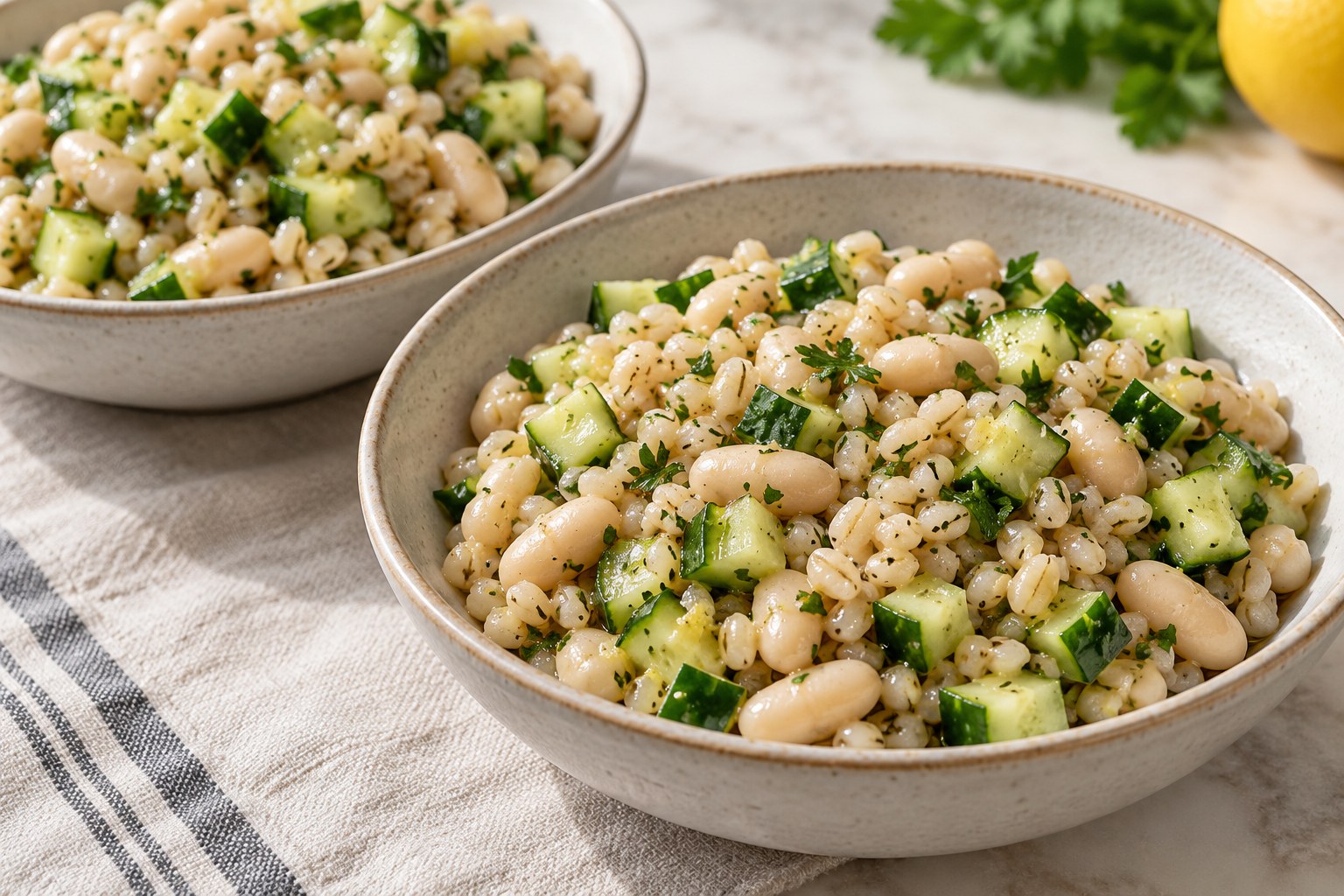
A barley bowl with a cool cucumber contrast.
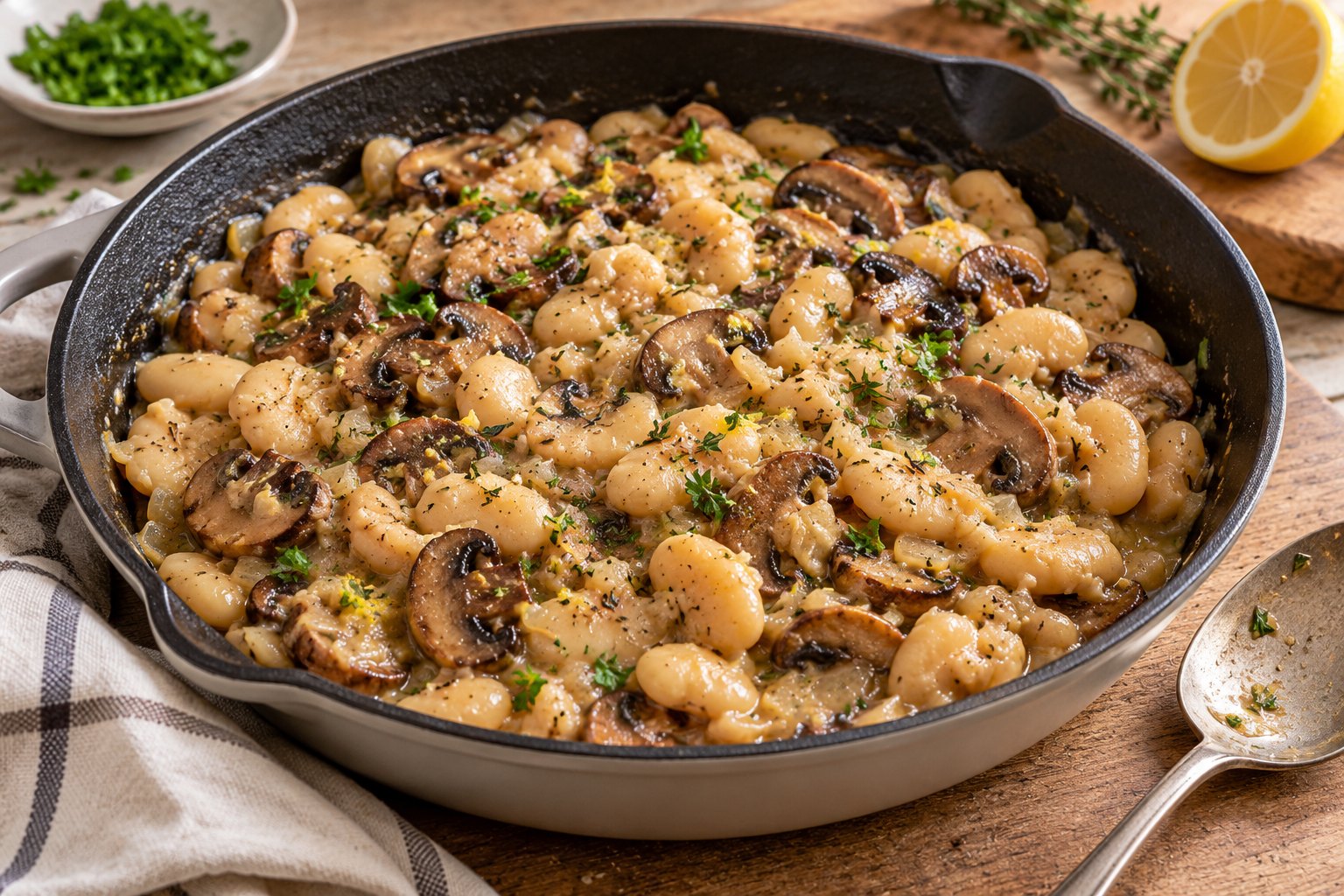
A bean skillet that makes useful use of mushrooms.
Equipment for this recipe
Affiliate disclosure: As an Amazon Associate I earn from qualifying purchases.
Use the tools you already have when they match the method. If you need an item, these links open matching Amazon search results.
- Heavy 2-quart saucepan on Amazon — Match the recipe’s small-batch saucepan size and use the lid where directed.
- 12-inch skillet on Amazon — Match the recipe’s pan width and use a lid when the method calls for one.
Check the size, material, and manufacturer’s use instructions against the recipe before choosing.
Useful kitchen references
- USDA frozen-food preparation guidance — Use alongside the directions on your product.
- FoodSafety.gov leftover guidance — A practical reference for chilling and reheating.
Quick cooking barley with mushrooms and peas works best when each component finishes cooking before they meet: tender, drained grain; mushrooms with browned edges; and fully cooked peas. Fold them together gently, then add the lemon and parsley off the heat so the finished skillet stays loose and fresh-tasting.
Printable recipe
Use the recipe card’s Print control for a kitchen copy. Follow the ingredient quantities and cooking checks in the card when preparing the dish.
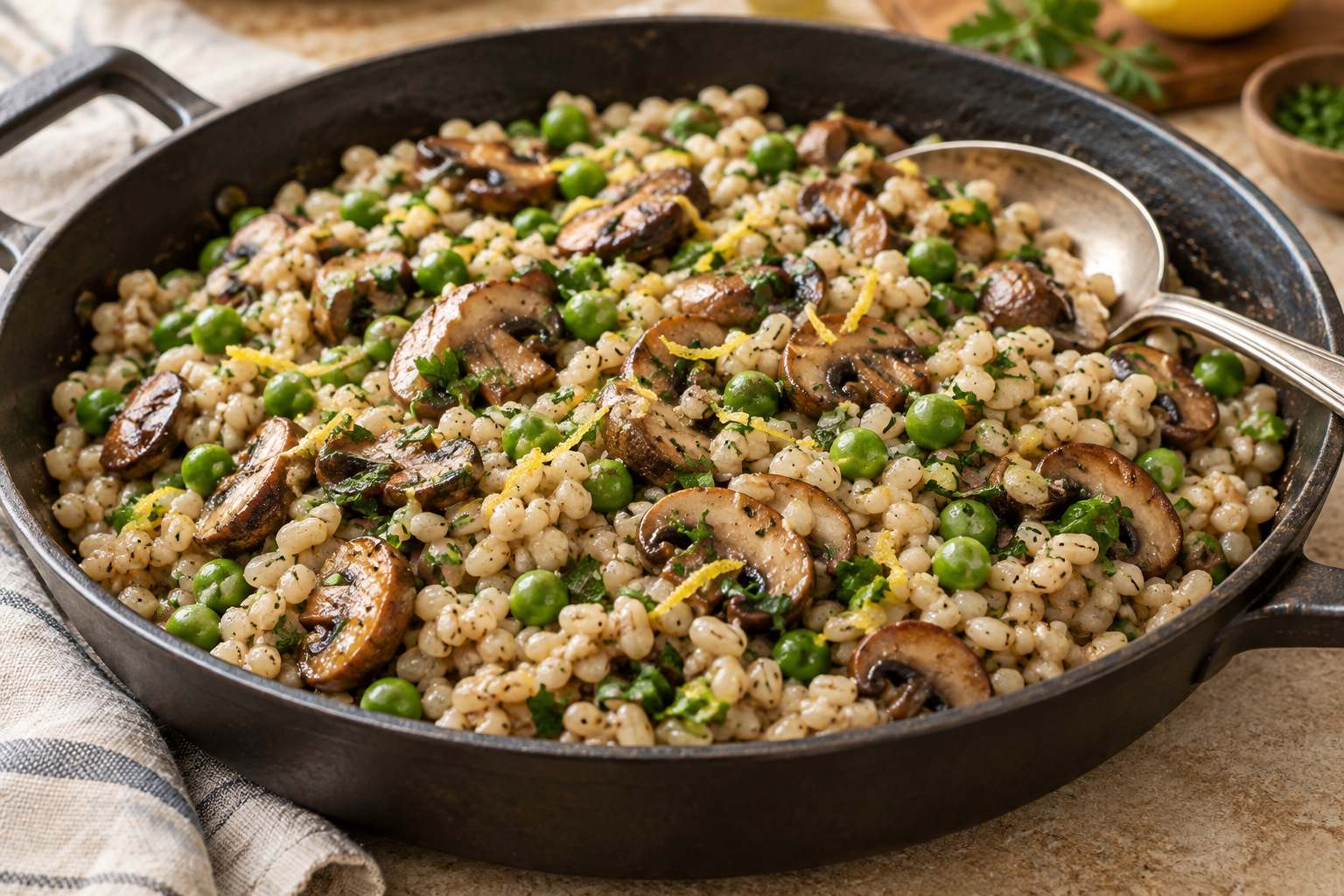
Quick-Cooking Barley With Mushrooms and Peas
Ingredients
Equipment
Method
- Start the grain. Bring the broth to a boil in the saucepan. Stir in the barley, cover and reduce the heat. Simmer according to the package, generally 10 to 12 minutes for quick barley, until tender. Remove from the heat and let stand covered for about 5 minutes if directed. Drain any excess liquid and fluff with a fork.
- Brown the mushrooms. While the barley cooks, heat the oil in the skillet over medium-high heat. Add the mushrooms in an even layer. Leave them undisturbed for about 2 minutes, then stir. Continue cooking for 7 to 9 minutes, stirring occasionally, until their released liquid evaporates and some edges turn golden.
- Add the aromatics. Lower the heat to medium. Stir in the shallot, salt and thyme and cook for 3 to 4 minutes, until the shallot softens. Add the garlic and cook for 30 seconds. If the pan gets too dry, add a tablespoon of water rather than letting the garlic scorch.
- Cook the peas. Prepare the frozen peas according to their package directions, using a microwave-safe bowl or small pan. Drain well. They should be hot and tender before joining the skillet, not simply thawed.
- Bring the components together. Add the cooked barley and peas to the mushrooms. Fold over medium-low heat for about 2 minutes, adding 1 or 2 tablespoons hot water if the grains look dry. The mixture should be moist enough to scoop but should not have liquid pooling underneath.
- Finish off the heat. Stir in the butter, lemon zest, lemon juice, pepper and parsley. Taste and adjust salt if needed. Serve while warm, using a broad spoon so the mushrooms remain evenly distributed.