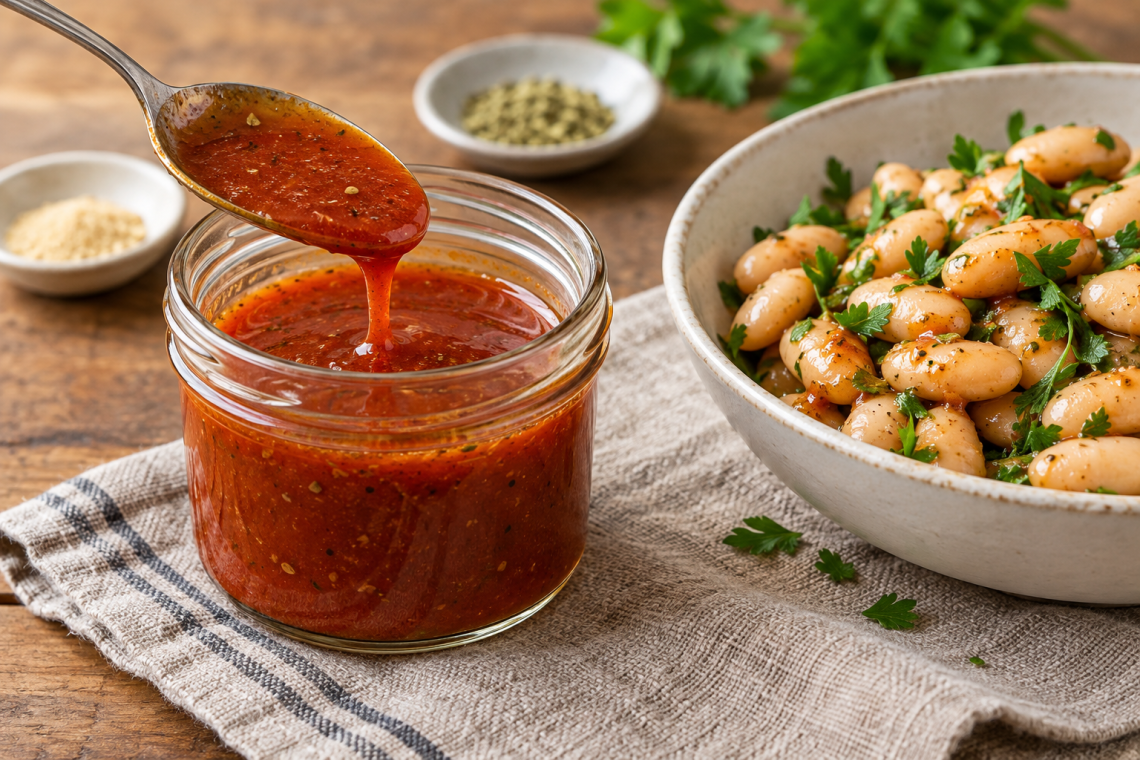
Tomato paste vinaigrette for bean salad gives plain canned beans a savory red dressing using a small amount of a pantry ingredient. The paste is whisked with vinegar and water before the oil goes in, which helps prevent dense tomato streaks. Dijon, dried oregano, and a little garlic powder finish the dressing without needing a blender or a long ingredient list.
Affiliate disclosure: As an Amazon Associate I earn from qualifying purchases. These paid links open Amazon search results for comparing equipment.
Use a small whisk (paid link) to loosen the tomato paste with the measured vinegar and water. A flexible spatula (paid link) helps scrape the thick paste from the measuring spoon.
This is a measured dressing recipe with a practical bean-salad use below. One batch makes about 1/2 cup. Start with 2 tablespoons per cup of drained beans, let the dressed beans rest briefly in the refrigerator, and taste before adding more. That approach keeps a small bowl from becoming a container of beans swimming in sauce.
Jump to recipe · Ingredients · Method · Dressing amounts · Bean bowl
Dissolve tomato paste before adding the oil
- Whisk tomato paste with vinegar, water and seasonings until no dense streaks remain.
- Add oil gradually while whisking so the dressing becomes glossy rather than separating immediately.
- Thin by the teaspoon until it coats a bean without sitting in a heavy mound.
- Toss with warm or room-temperature beans, then let the salad rest before judging the final seasoning.
Beans absorb dressing as they stand. Reserve a small portion for refreshing the salad just before serving instead of pouring everything in at once.
How much tomato paste vinaigrette to use for bean salad
| Drained cooked beans | Dressing to start with | Next step |
|---|---|---|
| 1 cup | 2 tablespoons | Rest briefly, then add a teaspoon more only if needed. |
| 2 cups | 1/4 cup | Fold gently and check for a light coating. |
| 3 cups | 6 tablespoons | Reserve the remainder until after tasting. |
| 4 cups | About the full batch | Add gradually; very soft beans need gentle handling. |
These are starting amounts for plain beans without a large quantity of other ingredients. Tomatoes, cucumbers, or other juicy vegetables can add liquid to the bowl. Cooked grains and diced potatoes change how much dressing the salad seems to need. Add those ingredients first, then make the final dressing adjustment.
Tomato paste vinaigrette for bean salad
Yield: about 1/2 cup (125 ml), enough to start dressing 4 cups of beans. Prep: 5 minutes. Rest: 10 minutes. Total: 15 minutes. Cooking: none.
Equipment
Use a small bowl, whisk, measuring spoons, and a jar or covered container for storage. A flexible spatula helps scrape the thick paste from the measuring spoon. Whisking in a bowl first is easier than trying to break up a clump of tomato paste after it sticks to the bottom of a narrow jar.
Measured ingredients
- 2 tablespoons plain tomato paste, about 32 g
- 2 tablespoons red wine vinegar
- 1 tablespoon water, plus 1 teaspoon at a time only if needed to loosen
- 1 teaspoon Dijon mustard
- 1/2 teaspoon dried oregano
- 1/8 teaspoon garlic powder
- 1/4 teaspoon fine salt, using less if the beans or paste are already salty
- 1/8 teaspoon freshly ground black pepper
- 3 tablespoons olive oil
Step-by-step method
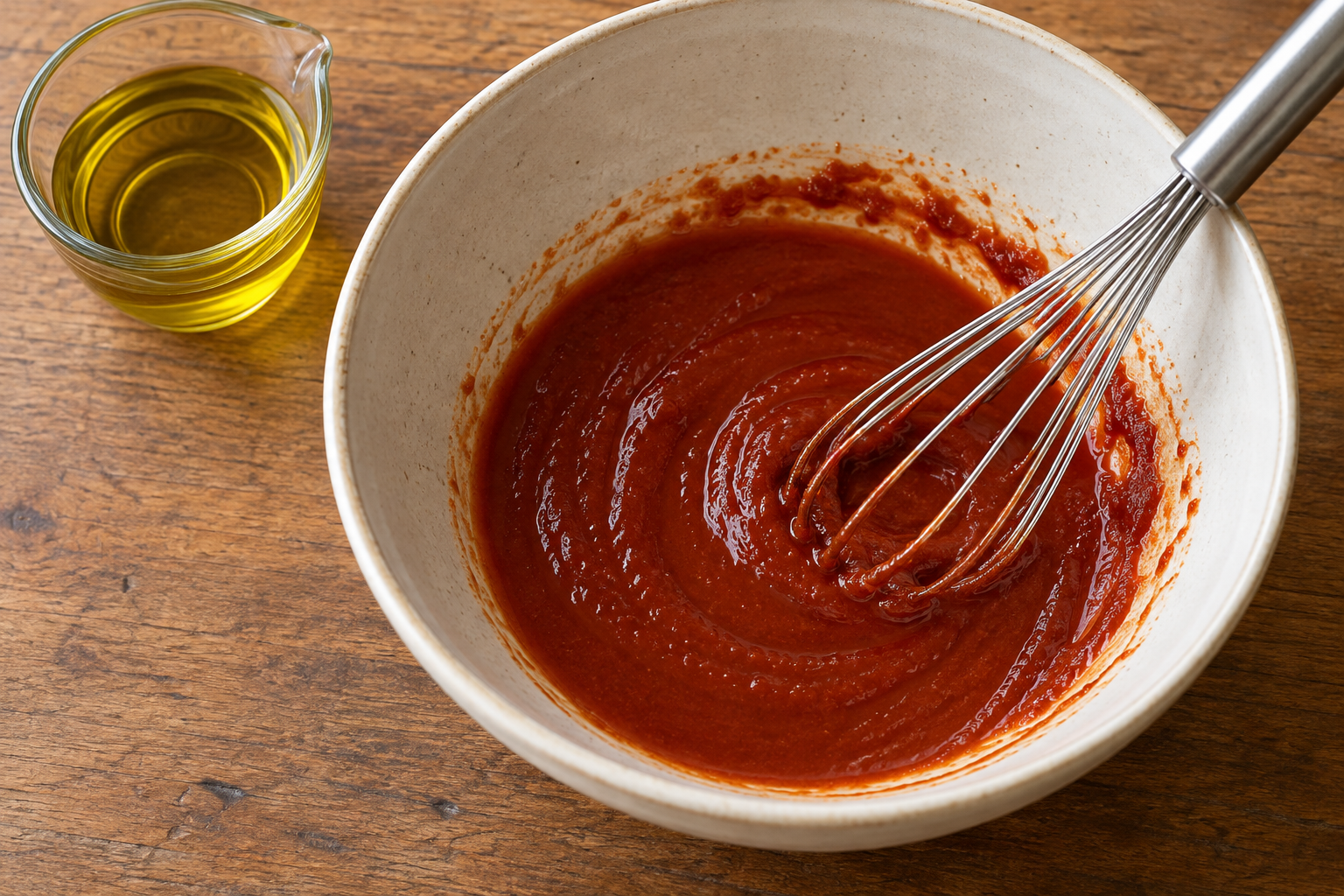
- Loosen the paste. Put the tomato paste in the bowl. Add the vinegar a little at a time, whisking until the mixture has no dense streaks. Whisk in the tablespoon of water. Scrape the bottom and sides so no paste remains stuck below the liquid.
- Add the seasonings. Whisk in the Dijon, oregano, garlic powder, salt, and pepper. If the tomato paste is concentrated or particularly firm, work the mixture with the whisk until evenly combined before moving on.
- Whisk in the oil. Add the olive oil in two or three additions, whisking after each. The dressing should become evenly red and lightly thick, with a pourable consistency. It does not need to be perfectly uniform forever; a little separation during storage is manageable.
- Let the herbs moisten. Cover and refrigerate for 10 minutes. Stir again. If too thick to drizzle from a spoon, add water 1 teaspoon at a time, usually no more than 1–2 teaspoons, whisking after each addition.
- Taste on a bean. Coat a plain cooked bean or a small spoonful of the intended salad. Adjust salt only after tasting the dressing with the food it will season. A dressing tasted alone can seem stronger than the finished bowl.
- Use or store. Toss with drained, cooked beans using the amounts in the guide. Refrigerate the unused dressing promptly in a covered container and stir before the next use.
Use paste, not a larger quantity of sauce
Plain tomato paste is thick enough to bring concentrated tomato flavor in just two tablespoons. Tomato sauce and crushed tomatoes carry more liquid and do not behave the same way in the measured dressing. If you replace the paste with a much larger amount of sauce, the oil, vinegar, and yield will all need rebalancing.
Tube and canned paste can both work. Taste the specific product, especially if it includes salt or additional herbs. A very firm double-concentrated paste may need an extra teaspoon of water to reach the same pourable texture. Add that water after the initial mix rather than assuming every package requires it.
The base recipe uses commercially packaged tomato paste directly and follows a no-cook mixing method. If the package gives different preparation instructions, follow those. A cooked tomato-paste dressing is a separate variation: cooking changes its flavor and requires cooling before the oil-and-vinegar mixture is stored with a cold salad.
Mix a simple bowl of beans
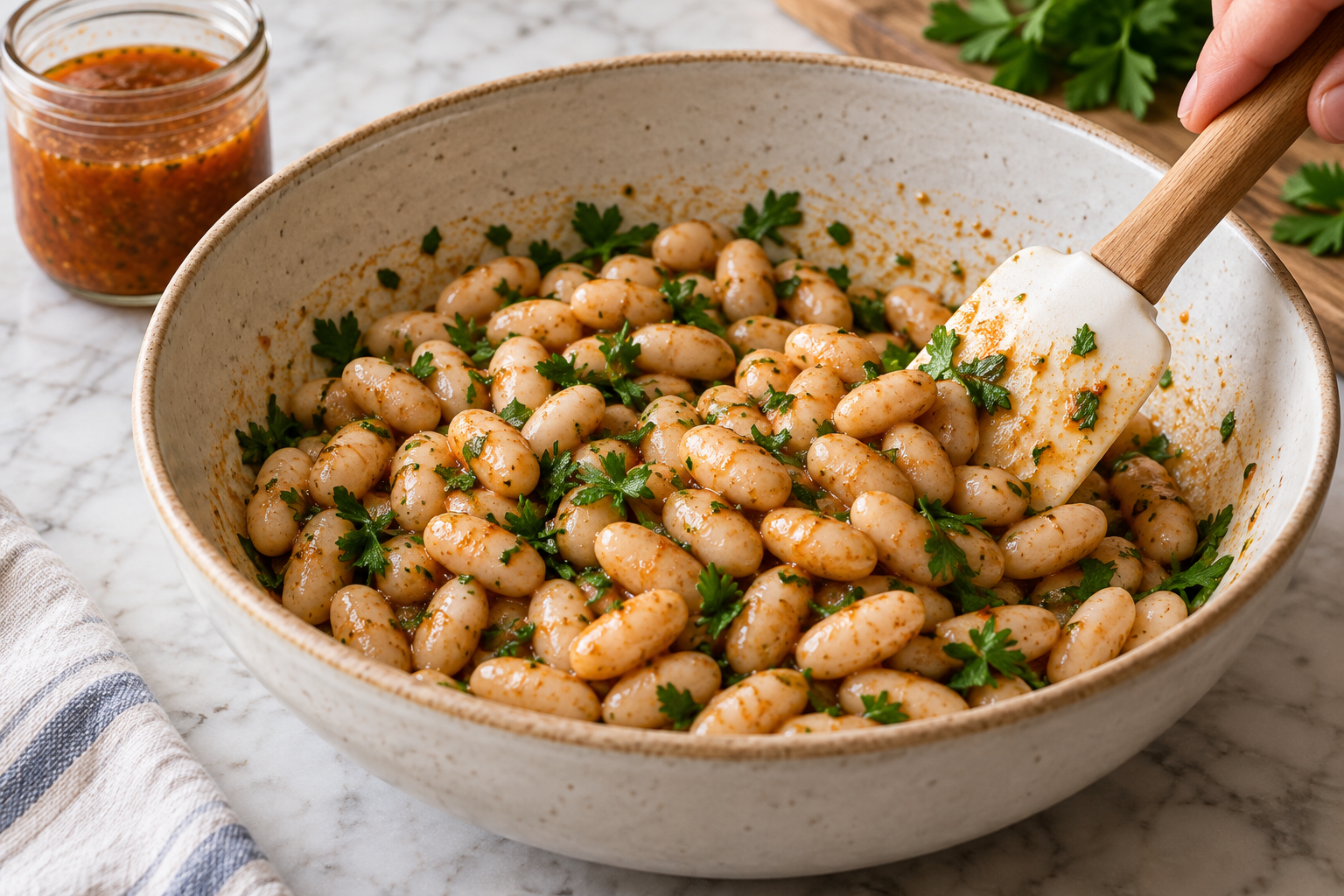
For a straightforward side, use 3 cups drained cooked cannellini beans, 6 tablespoons of the dressing, and 2 tablespoons chopped flat-leaf parsley. If using canned beans, drain and rinse them, then let excess water run off thoroughly. Fold the dressing through the beans and parsley, cover, and refrigerate for 15 minutes before tasting.
This makes about 4 side portions, depending on the size of the rest of the meal. Reserve the remaining dressing instead of pouring it in automatically. If the beans are already well coated after the rest, save that small amount for another bowl. If they seem dry, add a teaspoon at a time and fold gently.
Warm cooked beans can also be dressed, but they should not sit on the counter for an extended marinating period. Use a shallow container and refrigerate promptly. Keep track of the original cooking date if the beans were already leftovers; combining them with a new dressing does not create a new storage window.
Make one adjustment at a time
| What you notice | A useful correction |
|---|---|
| Too thick to pour | Whisk in water 1 teaspoon at a time. |
| Too sharp on the dressed beans | Add 1 teaspoon olive oil, fold, and retaste. |
| Flat after chilling | Check salt first, then a few drops of vinegar if needed. |
| Too salty | Use less dressing or add more plain beans; vinegar does not remove salt. |
| Dense tomato streaks | Whisk the dressing more thoroughly before adding more oil. |
Do not confuse thickness with intensity. Water loosens the dressing, while extra oil changes its richness and the balance of acidity. A little of either can be helpful, but pouring in both without tasting makes the final amount difficult to predict. Use the same spoonful of beans as your tasting reference each time.
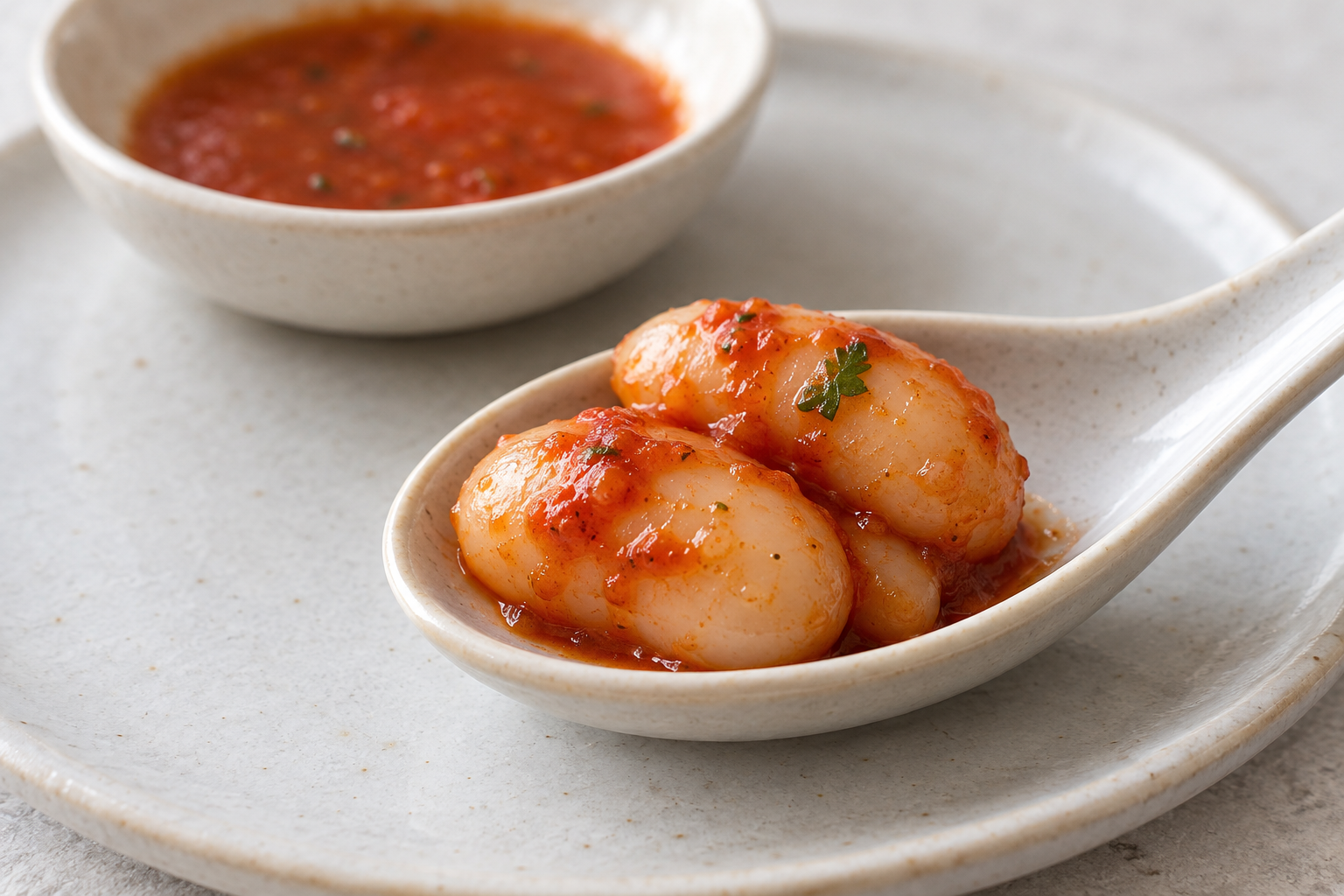
Substitutions that stay close to the formula
- White wine vinegar: Use the same initial amount in place of red wine vinegar, then taste. Avoid substituting an equal amount of a very sweet balsamic glaze.
- No Dijon: Leave it out and whisk well before each use. The dressing may separate more readily, but the tomato paste still contributes body.
- Fresh herbs: Replace the dried oregano with 1 tablespoon finely chopped parsley or basil, stirred in after mixing. The flavor becomes different and fresher; keep the same short refrigerator storage plan.
- No garlic powder: Omit it for a simpler dressing. A large raw garlic clove would make a stronger sauce and is not needed to replace a small pinch of powder.
Serve the dressed beans in a useful way
For more ideas built around this pantry staple, see simple bean and lentil meals. The dressed beans can sit beside toast, cooked vegetables, or a modest portion of rice. Start with plain accompaniments so the tomato vinaigrette supplies the main seasoning instead of competing with another strongly dressed side.
The dressing also offers a tomato-flavored variation alongside potato, green bean, and white bean salad. If applying it to a different finished recipe, replace its original dressing rather than adding a full second dressing on top. Taste the combined vegetables to decide how much of this batch is useful.
Store both the dressing and the salad promptly
Keep the dressing in a covered container at 40°F or below and use within 3–4 days. Refrigerate dressed beans within 2 hours, or within 1 hour above 90°F, following USDA leftover handling guidance. Use the earlier limit if any bean-salad ingredient was cooked before the dressing was made.
If adding fresh herbs or raw vegetables, wash them under running water and prepare them on clean surfaces, following FDA produce guidance. Stir the dressing before using it again. Cold olive oil can make it look thicker; a brief stir and a teaspoon of water, if needed, are more useful than assuming it has to pour exactly as it did when first mixed.
Questions about this pantry dressing
Can tomato paste vinaigrette for bean salad be made in a jar?
Yes. Stir the paste with vinegar and water first, then add the remaining ingredients and shake with the lid securely closed. Check the bottom afterward for any paste that has not mixed in. A small whisk and bowl are often easier.
Will kidney beans or chickpeas work?
Yes, if they are fully cooked, drained, and ready to eat. Begin with the same dressing amount per cup and taste after resting. Firmer chickpeas can handle more tossing than delicate white beans.
Does it need sugar?
The base recipe does not include sugar. Taste it with the beans before deciding it needs sweetness. If your tomato paste and vinegar combination seems especially sharp, first try the small oil adjustment described above.
Can I use it on lettuce?
You can, but start with less than you would use for beans. The thick tomato dressing clings readily to leaves. Toss a small portion first and thin the dressing with a little water if needed.
Can I freeze the extra dressing?
For this small batch, refrigeration and prompt use are simpler. Freezing can change how the oil mixture looks after thawing, and the recipe has not been developed around that storage method. Make half a batch if you need only a small salad.
How do I make half a batch?
Halve the measured ingredients and use a small bowl. For tiny amounts of garlic powder and pepper, use a light pinch rather than trying to heap a measuring spoon. Taste on a bean before adding the final salt.
Finish with a light coating
For tomato paste vinaigrette for bean salad, the useful final check is a coated bean, not a spoonful of dressing on its own. Whisk the paste smooth, start with the measured dressing-to-bean ratio, and keep a little dressing back. The finished salad should be evenly seasoned with very little sauce pooling beneath it.
Use a small test bowl for tomato paste vinaigrette for bean salad
Tomato paste vinaigrette for bean salad is concentrated enough that a small test portion can guide the whole bowl. Begin with the recipe’s dressing allowance for one cup of drained beans, then assess the coating after the short refrigerated rest. This is particularly useful when changing bean brands or adding vegetables, because their moisture and firmness affect how much dressing feels appropriate.
Make the paste mixture uniform first
Place the measured tomato paste in a bowl with room for the whisk to reach the bottom. Add vinegar gradually and scrape the spoon clean so the full measured paste enters the mixture. A dense streak hidden below the liquid can survive later oil additions. Resolve those streaks now rather than trying to break them apart after the dressing is already on delicate beans.
Whisk in the water and seasonings before the oil, paying attention to mustard caught along the bowl’s edge. Add the oil in the stated portions and work each one through. The dressing should look consistently red before its short rest. It does not need to remain permanently emulsified in storage; a later stir is part of using this simple homemade vinaigrette.
Measure beans after draining
For the dressing guide, the cup measure refers to cooked, drained beans rather than beans plus their packing liquid. Let rinsed canned beans finish draining before transferring them to the bowl. Shake the strainer gently instead of pressing the beans dry. Loose rinse water can thin the dressing, while rough handling can break soft white beans before you have begun mixing.
If the salad includes cucumber, tomato, or other prepared ingredients, add those before the final dressing decision. Their weight and moisture change the complete bite. Keep the initial test simple when learning the vinaigrette: plain beans and the specified amount provide a clear reference. Then you can see whether an additional ingredient creates a need for more coating or simply adds liquid already.
Judge a coating rather than a puddle
Fold the dressing through with a broad spoon, lifting from underneath. Check a bean near the bottom as well as one on top. They should both carry a light coating, with no dense tomato lump clinging to one section. If the mixture is stiff, evaluate the dressing’s consistency separately before pouring more oil over the salad.
After the refrigerated rest, taste a whole bean with its dressing. A strong taste from an isolated drop of vinaigrette is not the same as the complete salad. Add a teaspoon more dressing only if the beans need it. If they already taste balanced, keep the remaining portion refrigerated for another use instead of treating an empty dressing jar as the goal.
Keep a useful reserve for serving
Store any unused dressing in a small covered container with the preparation date. Stir before measuring a later portion, since oil and tomato mixture can separate. When using it with previously cooked beans, retain those beans’ earlier storage history as well. A new dressing does not make older ingredients newly prepared, and a bright acidic taste does not establish shelf stability.
At the table, offer the dressed beans with plain toast, a cooked vegetable, or another lightly seasoned accompaniment. A small serving spoon helps distribute beans without collecting every drop from the bottom first. For a larger mixed salad, start with part of the dressing and keep the same taste-and-rest approach. Controlled additions preserve the tomato flavor without turning a simple bean side into a bowl dominated by sauce.
Printable recipe
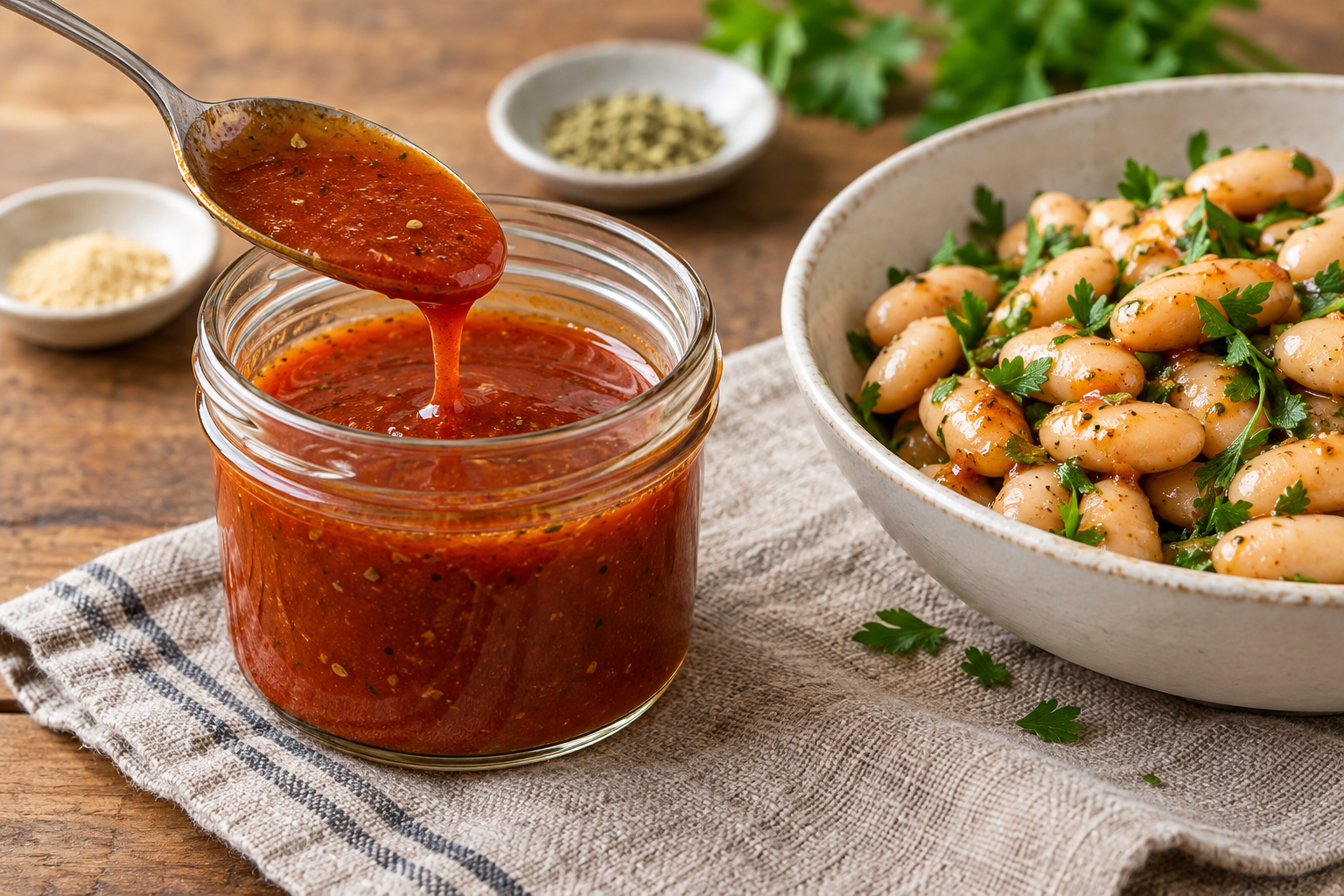
Tomato Paste Vinaigrette for Bean Salad
Ingredients
Equipment
Method
- Loosen the paste. Put the tomato paste in the bowl. Add the vinegar a little at a time, whisking until the mixture has no dense streaks. Whisk in the tablespoon of water. Scrape the bottom and sides so no paste remains stuck below the liquid.
- Add the seasonings. Whisk in the Dijon, oregano, garlic powder, salt, and pepper. If the tomato paste is concentrated or particularly firm, work the mixture with the whisk until evenly combined before moving on.
- Whisk in the oil. Add the olive oil in two or three additions, whisking after each. The dressing should become evenly red and lightly thick, with a pourable consistency. It does not need to be perfectly uniform forever; a little separation during storage is manageable.
- Let the herbs moisten. Cover and refrigerate for 10 minutes. Stir again. If too thick to drizzle from a spoon, add water 1 teaspoon at a time, usually no more than 1–2 teaspoons, whisking after each addition.
- Taste on a bean. Coat a plain cooked bean or a small spoonful of the intended salad. Adjust salt only after tasting the dressing with the food it will season. A dressing tasted alone can seem stronger than the finished bowl.
- Use or store. Toss with drained, cooked beans using the amounts in the guide. Refrigerate the unused dressing promptly in a covered container and stir before the next use.
Notes
- Paste: Use plain tomato paste, not tomato sauce. Loosen it with vinegar and water before whisking in the oil.
- Bean ratio: Start with 2 tablespoons dressing per cup of drained, fully cooked beans. Rest in the refrigerator, then add more only if needed. The full batch makes about 1/2 cup.
- Texture: Stir before using. Add extra water by the teaspoon if needed; taste the dressing on a bean before adjusting salt.
- Storage: Refrigerate covered at 40°F (4°C) or below and use within 3–4 days. Refrigerate perishable food within 2 hours, or 1 hour above 90°F (32°C). Use an earlier deadline when any salad ingredient was already a leftover. See USDA leftover guidance.