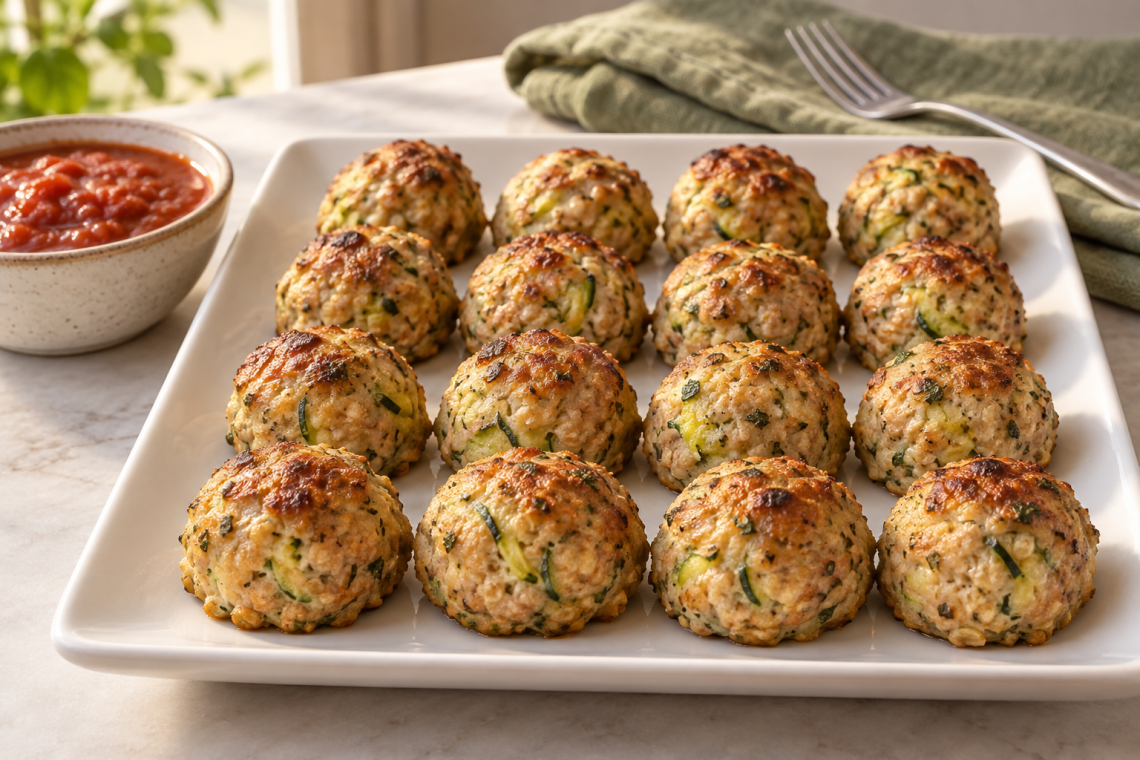
Zucchini can add moisture to turkey meatballs, but it needs to be measured after the excess water is squeezed away. These baked turkey zucchini meatballs without eggs use quick oats, thick plain yogurt, and Parmesan to help a gently mixed turkey mixture hold its shape. The result is a soft, savory meatball suited to pasta, a rice bowl, or a simple dipping sauce.
The missing egg does not mean the mixture should be loose. Give the oats a short rest to absorb moisture, keep the turkey cold, and shape equal portions with light pressure. This recipe contains dairy and may contain gluten depending on the oats and other ingredients. If avoiding eggs because of an allergy, check every packaged ingredient label as well as the recipe ingredient list.
Jump to recipe · Print Recipe · Rate this recipe
Remove zucchini water before shaping the meatballs
| Zucchini | Grate on the medium holes, squeeze until the shreds stop dripping freely, then loosely measure ½ cup. Add the recipe’s measured salt with the binder; do not pre-salt the zucchini. |
| Binder | Allow the egg-free binder time to absorb moisture before deciding the mixture is too soft. |
| Shaping | Use equal portions and damp hands; compress only enough for each ball to hold together. |
Bake with space between the meatballs and check the largest one for doneness. A short rest helps them firm before moving, especially while the zucchini is still releasing steam.
Recipe details before mixing
Yield: 16 meatballs; 4 servings of 4. Prep: 20 minutes plus 15 minutes resting. Cook: 18–24 minutes. Stand after baking: 3 minutes. Total: about 62 minutes. Oven: 400°F / 200°C. Use a medium bowl, box grater, clean towel, 18-by-13-inch rimmed baking sheet, a scoop or tablespoon, and a thin-tip thermometer.
Ground turkey around 93 percent lean is a practical starting point. Extremely lean turkey breast can produce a drier meatball even with zucchini and yogurt. The package weight should be 1 pound; if using a larger package, scale all ingredients instead of adding extra meat to the original measured binder.
Plan the three short waits
- First rest: 10 minutes. Refrigerate the oats, yogurt, zucchini, cheese, and seasonings before adding turkey. Meanwhile, line the pan and start heating the oven.
- Second rest: 5 minutes. After mixing in the cold turkey, refrigerate the complete mixture. Set out the portioning tools while it rests.
- After baking: 3 minutes. Once several centers measure at least 165°F / 74°C, let the cooked meatballs stand on the sheet before lifting or coating with sauce.
The schedule uses about 20 minutes of active prep, plus 15 minutes of refrigerated rests, 18–24 minutes of baking, and a 3-minute stand. That is about 56–62 minutes elapsed. The recipe card lists 62 minutes because it uses the upper 24-minute baking estimate; begin checking at 15 minutes and rely on the 165°F / 74°C center temperature. Keep the two refrigerated rests separate because the bowl contains different ingredients at each stage. The final stand happens only after the meatballs are fully cooked.
Ingredients
- 1 pound ground turkey, thawed and kept cold
- ½ cup grated zucchini after squeezing, from approximately 1 small zucchini
- ⅓ cup quick oats, crushed lightly or pulsed briefly
- ¼ cup thick plain Greek yogurt
- ¼ cup finely grated Parmesan, about 25 grams
- 1 teaspoon dried Italian herb blend
- ½ teaspoon garlic powder
- ½ teaspoon onion powder
- ½ teaspoon fine salt
- ¼ teaspoon black pepper
- 1 teaspoon olive oil for the pan or parchment
- 1½ cups prepared tomato sauce, optional, warmed separately for serving
Measure zucchini after squeezing because a loose cup of freshly grated zucchini can carry a substantial amount of water. You want a damp, fluffy pile, not a dripping mass. The oats absorb some remaining moisture; crushing them reduces obvious large flakes without turning the whole mixture into flour.
Thick yogurt contributes moisture and tang while Parmesan adds savory flavor and some structure. Plain yogurt is essential; flavored or sweetened yogurt would change the meatballs. Finely grated cheese distributes more evenly than large shreds. Keep the seasoning mild at first and offer a stronger sauce alongside.
What holds the mixture together?
The ground turkey supplies its own structure as it cooks. Oats absorb moisture, while yogurt and cheese help create a cohesive mixture with a soft bite. Their combined effect is different from adding an egg, so it is important to keep the proportions rather than assuming any wet or dry ingredient can be substituted freely.
The two brief rests help the mixture become easier to shape. If it remains very wet, check whether the zucchini was squeezed and measured correctly. Adding large handfuls of oats at that stage can turn the meatballs heavy. Shape a small trial portion and cook it to 165°F if you need to assess the texture before committing the whole batch.
Break up the squeezed zucchini
After squeezing, grated zucchini often holds the shape of the towel or your fist. Pull that bundle apart with your fingertips before loosely measuring the half cup. Long, compact strands are harder to distribute through a soft turkey mixture than a loose pile of short shreds. The aim is to remove dripping water and separate the vegetable, not grind it into a paste.
Measure the quick oats before lightly crushing them. Keep some small flakes visible rather than turning the entire measure into flour. Mix the binder ingredients thoroughly during the first stage, when there is no meat in the bowl; this helps spread the zucchini and seasonings without requiring extra stirring after the turkey is added.
Make baked turkey zucchini meatballs without eggs
- Prepare the zucchini. Wash and trim it, then grate on the medium holes of a box grater. Wrap in a clean towel and squeeze firmly over the sink until it stops dripping freely. Fluff the squeezed shreds and measure ½ cup without packing them into a dense block.
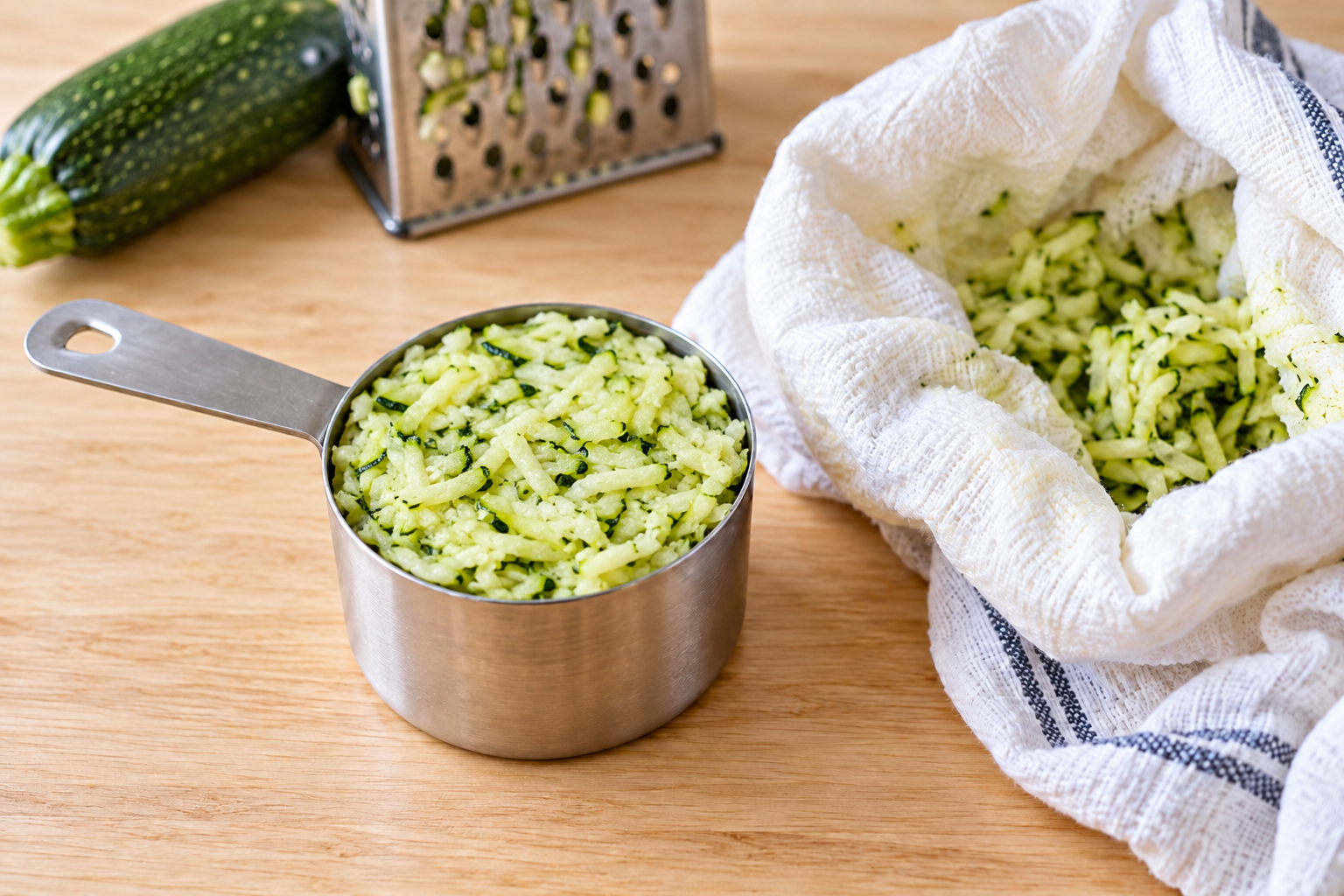
- Hydrate the oats. In a medium bowl, stir together oats, yogurt, Parmesan, zucchini, herbs, garlic powder, onion powder, salt, and pepper. Let stand for 10 minutes in the refrigerator. The mixture should thicken slightly as the oats take up moisture.
- Heat the oven and line the sheet. Heat to 400°F with a rack in the center. Line the rimmed sheet with parchment rated for the temperature and brush lightly with 1 teaspoon oil. A rimmed sheet is necessary to contain juices released during baking.
- Add the turkey gently. Fold the cold turkey into the zucchini mixture using a fork or clean hands. Mix only until the ingredients are evenly distributed. Avoid kneading the mixture vigorously, which makes shaping easier at the expense of a denser cooked texture.
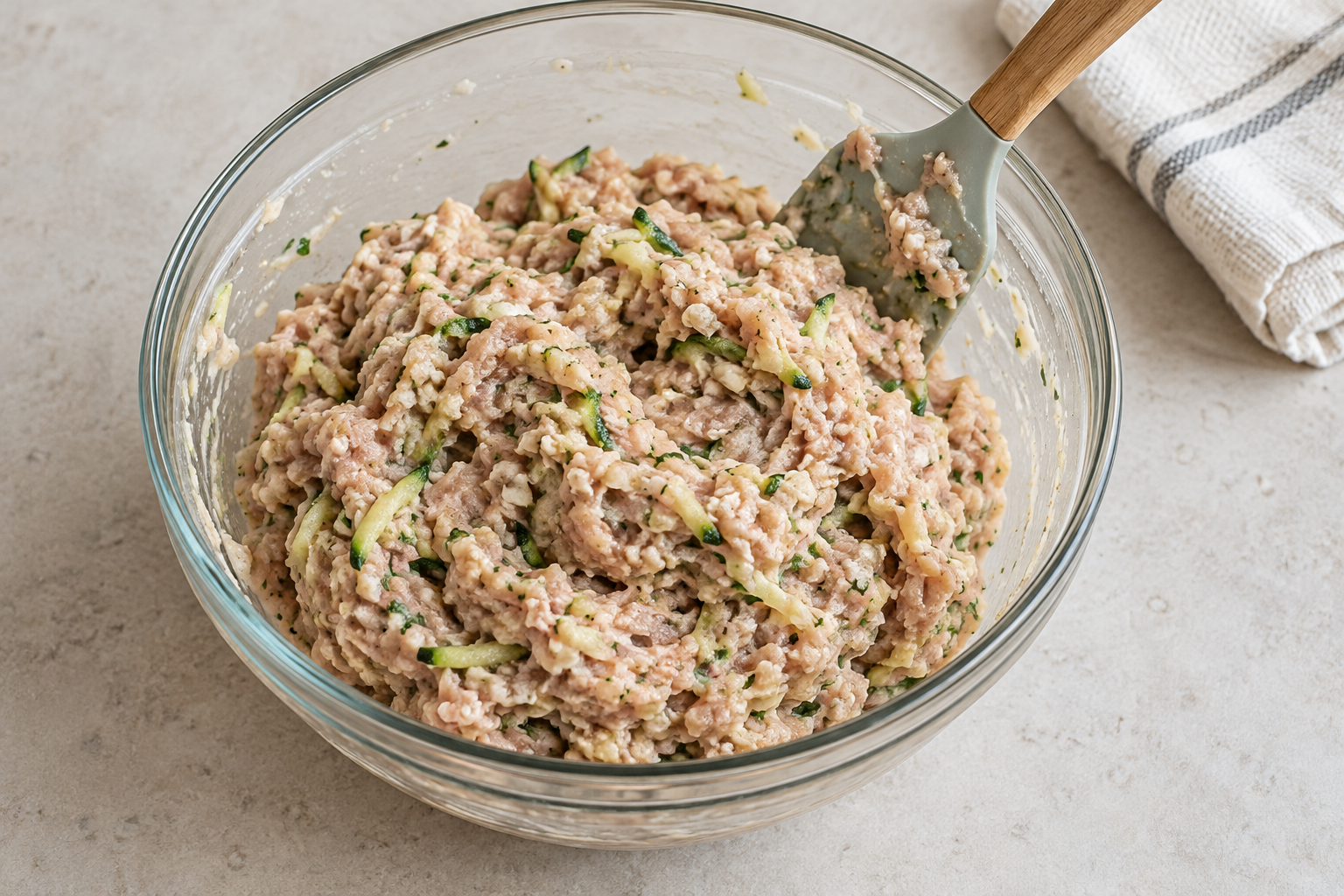
- Rest and portion. Refrigerate the mixed turkey for another 5 minutes. Divide into 16 equal portions, about 38–40 g each depending on the zucchini’s moisture. With lightly damp hands, shape rounded balls about 1½–1¾ inches across. Leave at least 1 inch between them on the sheet.
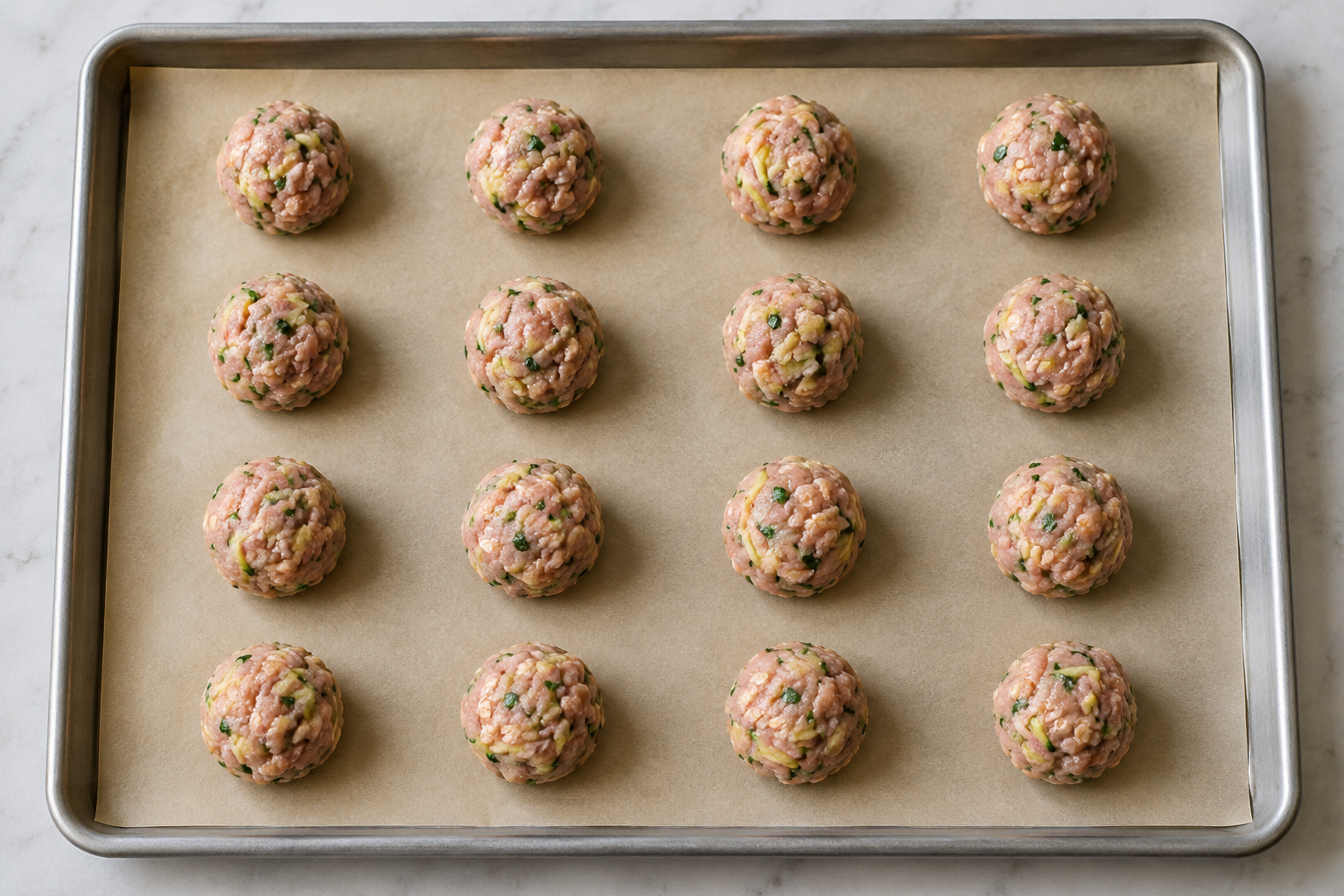
- Bake and start checking. Bake for 15 minutes, then check several centers with a thin thermometer inserted from the side. Continue in 2–3-minute intervals until the centers reach at least 165°F / 74°C. Total baking may be around 18–24 minutes, depending on size and oven behavior.
- Warm optional sauce separately. If using tomato sauce, heat it in a saucepan while the meatballs bake. Keep it hot and wait until the cooked meatballs have stood on the sheet for 3 minutes before gently coating them in the sauce. Avoid a hard boil that could break the soft meatballs apart.
- Serve or cool promptly. Let meatballs stand on the sheet for 3 minutes before moving with a thin spatula. Serve four per portion with pasta, rice, or vegetables. If storing, divide into shallow containers and refrigerate promptly rather than leaving the whole sheet out until completely cold.
Use four groups to make sixteen portions
If using a kitchen scale, weigh the empty mixing bowl before starting. After the turkey is fully mixed and the second 5-minute chill is complete, weigh the same bowl with the mixture; leave out any cover or utensil. Subtract the empty-bowl weight and divide the mixture weight by 16. That result—not a fixed gram target—is the most accurate portion guide for this batch. Use all of the mixture, making small corrections before rolling.
Without a scale, divide the mixture roughly into four equal groups and make four meatballs from each group. Compare the unrolled portions side by side before shaping so the last group does not end up noticeably smaller.
Lightly dampen your hands if the mixture sticks; small visible pieces of oats and zucchini are normal. If the portions slump instead of holding their shape, revisit the squeezed-zucchini measurement and both refrigerated rests before adding more binder.
Watch these details in the oven
| Detail | What to do |
|---|---|
| Uneven meatball sizes | Portion before rolling and check the largest pieces first. |
| Pale surface | Check temperature; do not add a long bake solely for color. |
| Soft bottoms | Let the cooked meatballs stand briefly, then lift with a thin spatula. |
| One area of the sheet browns faster | Rotate the sheet and inspect several meatballs from different positions. |
All ground poultry must reach 165°F according to the FoodSafety.gov safe-temperature chart. The absence of pink color does not verify safety, and a browned bottom does not tell you the center temperature. Use a thin probe so you can reach the middle of a small meatball accurately.
Flavor changes and substitution limits
For a lemon-herb version, add ½ teaspoon lemon zest and replace the Italian herbs with dried dill at ½ teaspoon. Serve with a lemon yogurt sauce instead of tomato sauce. For a smoky version, add ½ teaspoon smoked paprika. Keep extra liquid seasonings out of the raw mixture unless you deliberately adjust the moisture balance.
Ground chicken can replace turkey by weight, with the same 165°F endpoint, but its fat content affects the finished texture. Old-fashioned oats need more crushing and may remain more noticeable; steel-cut oats are not suitable because they will not soften properly during this short method.
To avoid gluten, choose certified gluten-free oats and verify packaged seasonings, yogurt, cheese, and sauce as needed. For a dairy-free recipe, both yogurt and Parmesan require a different formulation. Simply omitting them is not a tested or reliable substitution in the recipe given.
Serving options for different appetites
A tomato-sauce version fits naturally over spaghetti or a small pasta shape. For a lighter meal, pair meatballs with roasted vegetables and a little rice. To make lunch wraps, slice fully cooked meatballs in half and tuck them into flatbread with lettuce and a modest amount of sauce.
For a family with mixed preferences, keep the meatballs plain and put two sauces on the table. This makes it easier to serve someone who dislikes tomato without preparing an entirely separate main. Keep meatballs warm safely while finishing side dishes rather than leaving them at room temperature for a long period.
Refrigeration and freezing
Refrigerate leftovers in shallow containers within 2 hours, or within 1 hour above 90°F. Keep at 40°F or below and use within 3–4 days, following USDA leftover guidance. Reheat leftovers to 165°F, preferably with a little sauce or covered moisture so the turkey does not dry out.
For freezing, chill cooked meatballs promptly, then freeze in a single layer and transfer to a labeled freezer container. Use within 2 months for a practical quality target. Thaw in the refrigerator before reheating. Store sauce separately if you want the flexibility to use the meatballs in different meals.
For additional help with probe placement and texture, see how to know when meatballs are done. Ground turkey must reach the 165°F endpoint specified here.
Frequently asked questions
Do I peel the zucchini?
No. Wash it well and trim the ends. The thin skin produces small green flecks and does not need removal. Very large zucchini may have watery seed centers; use a smaller one for easier moisture control.
Can I skip squeezing?
Do not skip it in this formulation. The measured half cup refers to squeezed zucchini. Uncontrolled water can make the mixture slump and can create excess liquid on the baking sheet.
Will the meatballs taste like oats?
The modest quantity is mainly there to absorb moisture. Crushing quick oats helps them blend in, although a few small flakes may remain visible. The herbs, cheese, and turkey provide most of the flavor.
Can I cook them in sauce from raw?
That requires a separate cooking method. These soft meatballs are formulated to set on a baking sheet before being moved into sauce. Simmering them from raw could change their shape and needs its own temperature and handling checks.
Can I shape them ahead?
Yes, up to one day ahead, provided this still fits within the turkey’s original 1–2-day refrigerated storage window. Keep the covered meatballs at 40°F / 4°C or below, separate from ready-to-eat foods. Shaping does not restart the storage clock. Bake directly from the refrigerator and verify 165°F / 74°C, following the FoodSafety.gov storage chart.
What prevents them from drying out?
For baked turkey zucchini meatballs without eggs, use the measured moist ingredients, handle the mixture lightly, and start checking temperature early. Continuing long past 165°F to get darker tops is a common reason a lean meatball becomes dry.
Rate this recipe
Made these egg-free turkey zucchini meatballs? Choose a star rating in the comment form and share how you served them.
Baked Turkey Zucchini Meatballs Recipe Card
A final handling guide for baked turkey zucchini meatballs without eggs
Once the mixture is portioned, the most useful remaining work is gentle handling and accurate checking. Avoid chasing a darker crust at the expense of the tender center. These meatballs contain zucchini and dairy, so their color and surface moisture can look different from an all-meat mixture.
Check a meatball without touching the hot sheet
Use a thin-tip thermometer and approach from the side, aiming for the center of the meatball. Keep the probe away from the metal pan. Check several pieces from different areas, including the largest. If one reading is below 165°F, continue cooking and check again rather than assuming the rest of the tray represents that piece.
Keep a clean spatula and serving plate ready before you start checking. The utensils used to mix raw turkey should be washed before they touch cooked food. A browned underside or a clear-looking juice cannot substitute for checking the middle with the thermometer.
Lift first, sauce second
After the fully cooked meatballs have stood on the sheet for three minutes, slide a thin spatula under each one. Tongs can squeeze a soft meatball apart. If a piece sticks to the liner, work the spatula underneath gently instead of pulling upward by its top.
Warm the optional tomato sauce separately, then lower the heat before adding the cooked meatballs. Spoon sauce over the tops or gently move the pan to coat them. Repeated stirring and a hard boil can break a properly baked meatball. Serve four per person and divide the sauce after the portions are set.
Can I use a mini muffin pan?
The written method uses a spaced rimmed sheet. Muffin wells change contact, airflow, and where released juices collect, so the same browning and timing are not established. Keep the sheet-pan method for this version and use the center temperature to judge doneness.
What if the mixture sticks to the scoop?
Lightly dampen the scoop or your clean hands, then portion with gentle pressure. Keep extra water out of the mixing bowl. If the mixture is slumping rather than merely sticking, review the squeezed-zucchini measurement and both refrigerated rests before adding dry binder.
For packed lunches, portion the cooked batch into shallow containers promptly. Add a little sauce to each portion for reheating, keep within the storage window above, and verify 165°F in the reheated centers. The printable card follows, including all three short waiting periods.
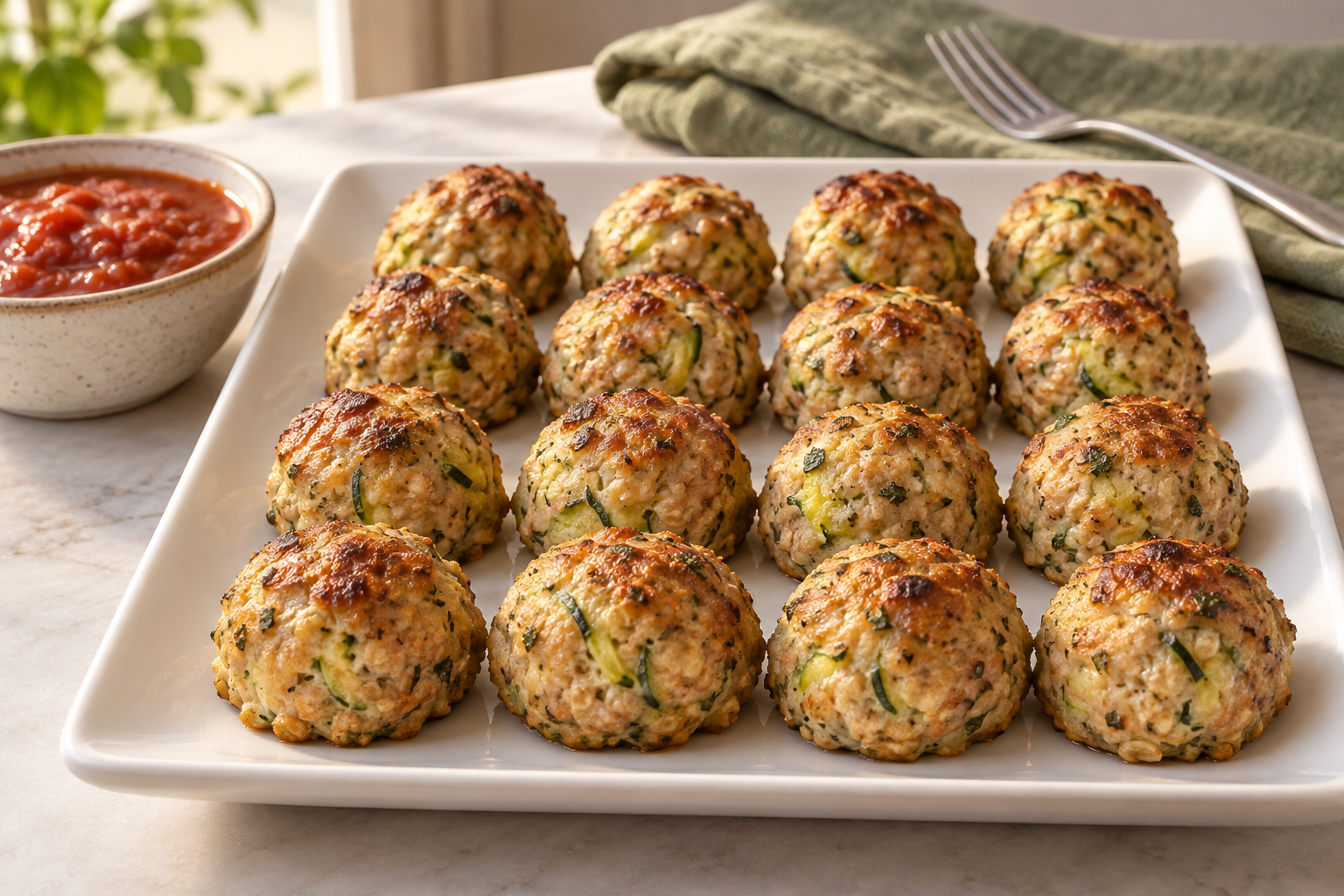
Baked Turkey Zucchini Meatballs Without Eggs
Ingredients
Equipment
Method
- Wash and trim the zucchini, grate it on the medium holes of a box grater, then wrap it in a clean towel and squeeze until it no longer drips freely. Fluff the shreds and measure 1/2 cup without packing.
- In a medium bowl, combine the zucchini, quick oats, yogurt, Parmesan, Italian herbs, garlic powder, onion powder, salt, and pepper. Refrigerate for 10 minutes so the oats can absorb moisture.
- Heat the oven to 400°F / 200°C with a rack in the center. Line a rimmed baking sheet with temperature-rated parchment and brush it with the olive oil.
- Fold the cold ground turkey into the chilled binder mixture just until evenly combined. Do not knead.
- Refrigerate the complete raw mixture for 5 minutes. Divide into 16 equal portions, approximately 38–40 g each as a shaping guide, and form 1 1/2- to 1 3/4-inch meatballs. Space them at least 1 inch apart.
- Bake for 15 minutes, then check several centers with a thin thermometer inserted from the side. Continue in 2–3-minute intervals until every checked center reaches at least 165°F / 74°C, about 18–24 minutes total.
- If using tomato sauce, warm it separately while the meatballs bake. Keep the sauce hot and wait until the fully cooked meatballs have stood on the sheet for 3 minutes before gently coating them. Avoid a hard boil that could break the soft meatballs apart.
- Let the cooked meatballs stand on the sheet for 3 minutes, then lift with a thin spatula. Serve four meatballs per portion. Refrigerate leftovers promptly in shallow containers.