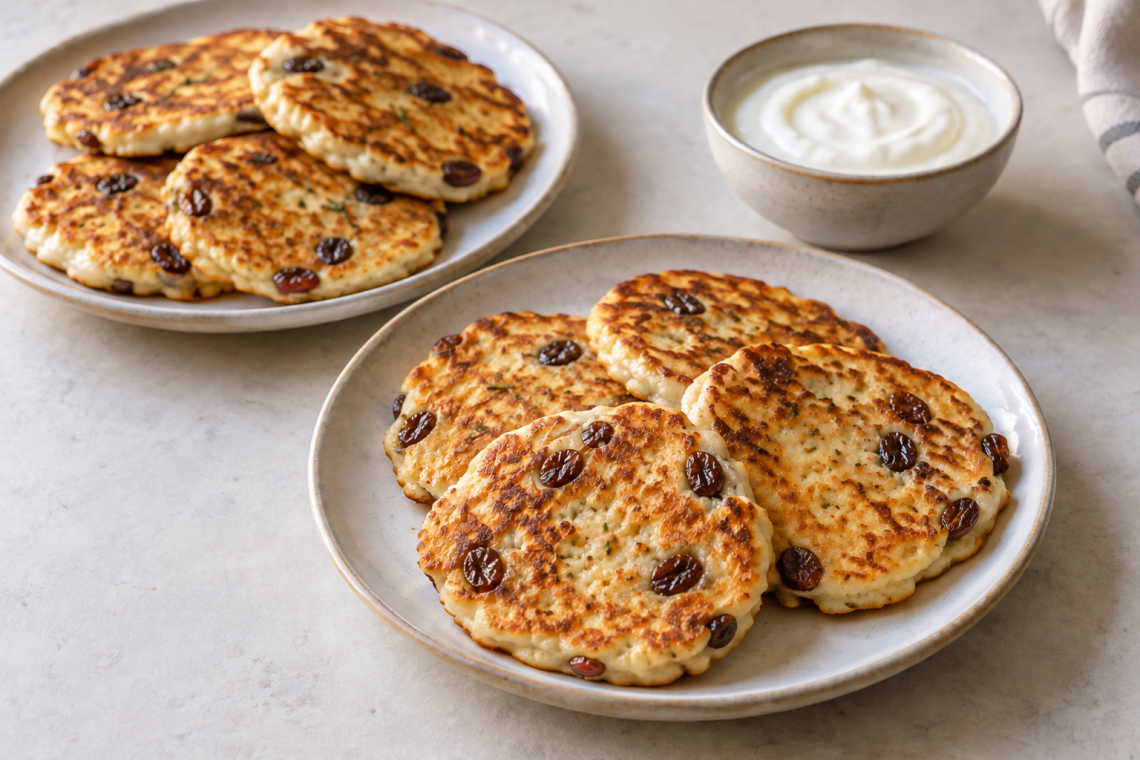
Rosemary raisin cottage cheese pancakes combine a mild, tender base with small sweet pockets and a restrained herbal aroma. The raisins supply sweetness without sugar in the batter. Fresh rosemary gives the pancakes a savory direction, especially when served with plain yogurt instead of a sweet topping.
Keep the rosemary finely chopped and carefully measured. Its role is a light accent, not a leafy filling. The other important detail is the cheese: a spoonable cottage cheese with excess liquid drained away produces a more manageable batter than a watery scoop straight from the tub.
Two small preparations improve the batter
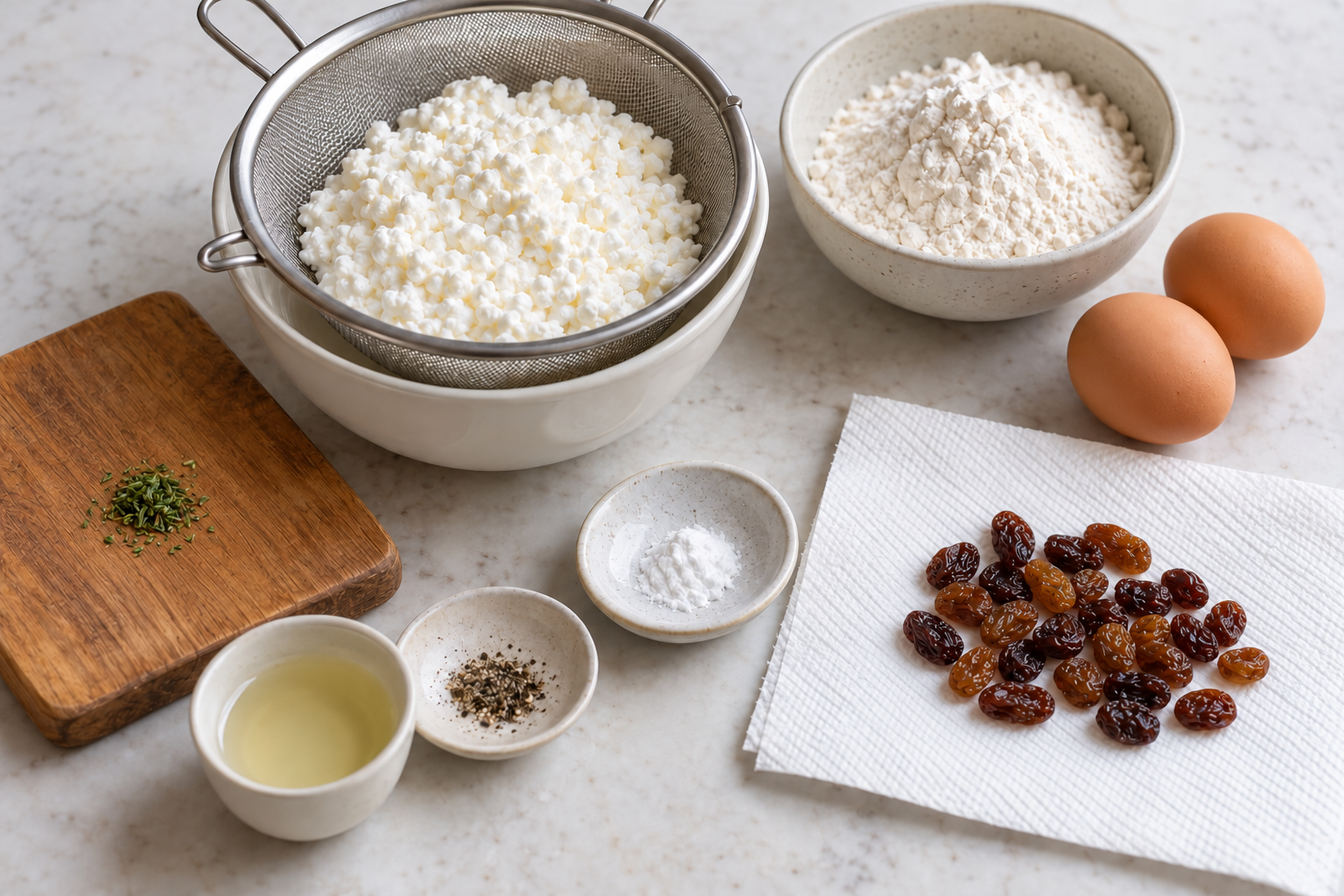
Soften and dry the raisins
Put the measured raisins in a small bowl and cover with the quarter cup of hot water. Leave for ten minutes, then drain and pat them dry. This gives firm raisins a chance to soften before the short pancake cook. The soaking water is not a batter ingredient and should be discarded.
If your raisins are particularly large, cut them in half after draining. Large pieces can protrude from a thin pancake, where they may darken against the pan. Smaller pieces distribute more evenly and let you taste both the cheese and the fruit in the same bite.
Remove free liquid from the cheese
While the raisins soak, place the cottage cheese in a fine-mesh strainer and let any freely pooling liquid drain. Measure one cup, or 225 grams, after draining. This simple order makes the ingredient amount more useful than measuring a mixture of curds and loose liquid.
Small-curd cottage cheese is convenient, but larger curds can be broken up with a fork.
Balancing rosemary raisin cottage cheese pancakes
Strip the rosemary leaves from their woody stems and chop them very finely. Measure half a teaspoon of chopped leaves for the entire batch. A long needle caught in one pancake feels very different from a small amount of finely distributed herb. More is not automatically better when the other ingredients are mild.
The raisins and cheese give enough contrast without adding vanilla or cinnamon. Black pepper reinforces the savory side in a small amount. The recipe does not include extra salt because cottage cheese brands vary; taste a cooked pancake before deciding whether any finishing seasoning is needed.
These are spooned pancakes with flour and eggs in the batter. They should be moist and tender inside, with a browned outside. They are not intended as a stiff dough to roll and cut, so avoid adding flour until the mixture becomes firm enough to knead.
The spoon test before cooking
After the cheese and eggs are combined, fold in the flour mixed with baking powder, followed by the raisins, rosemary, and pepper. Stop when no pockets of dry flour remain. Let the batter rest for five minutes while you prepare the skillet and serving plates.
Lift a spoonful. It should drop as a thick mound and need a gentle nudge to spread. If it runs like crepe batter, the cheese probably carried more liquid than expected. Fold in one tablespoon flour and wait two more minutes before checking again. Do not add a large handful at once, which can make the pancakes heavy.
If the mixture seems a little lumpy but holds together, leave it alone. Cottage cheese batter does not need to look perfectly smooth. The more useful question is whether a small scoop can remain together long enough for its base to set in the pan.
Cook eight small pancakes in two batches
- Warm the pan gently. Put a twelve-inch nonstick skillet over medium-low heat and add one tablespoon oil. Let the oil spread into a thin film without smoking.
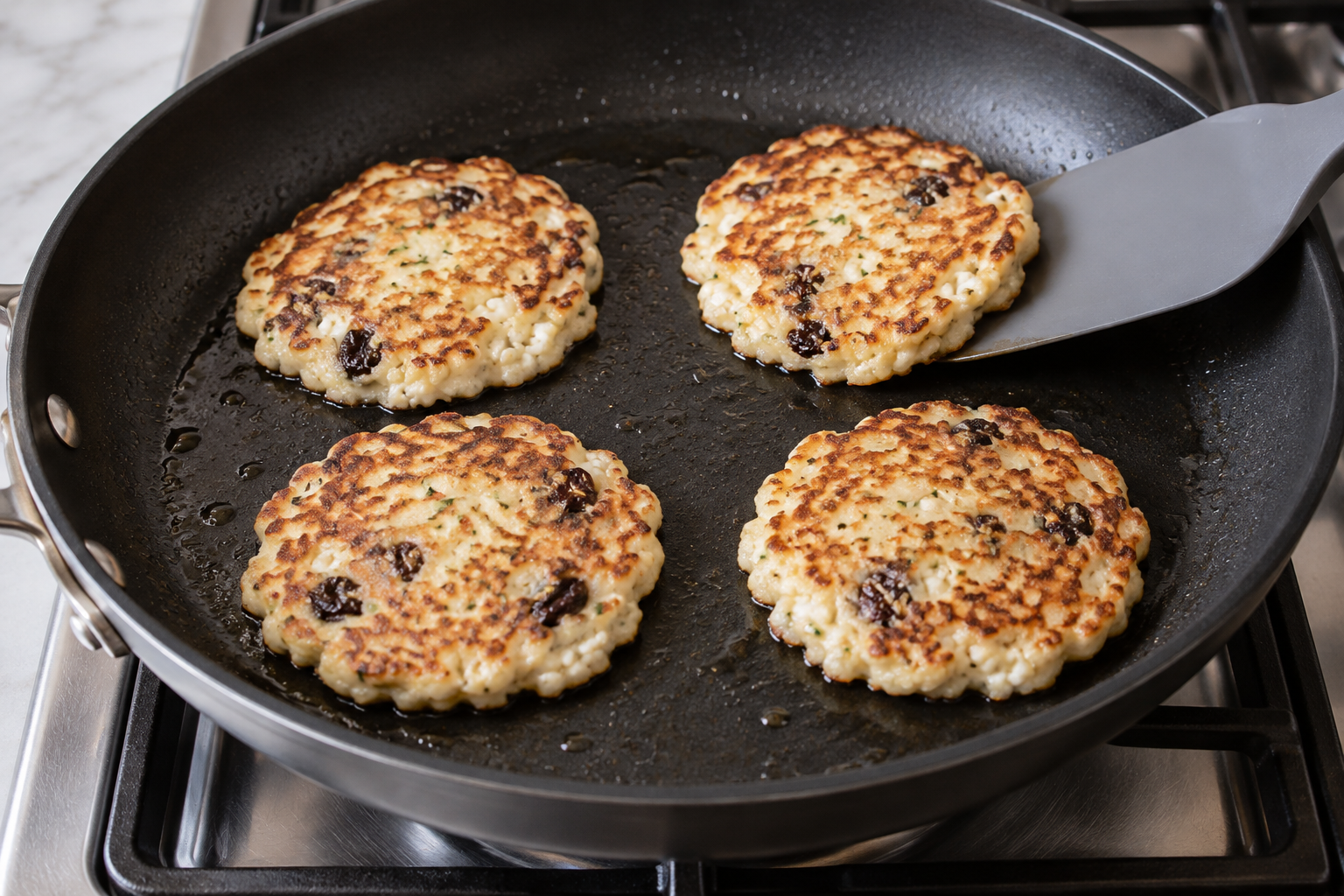
- Portion consistently. Spoon in four scant quarter-cup mounds. Spread each to about three and a half inches across and one-third inch thick, leaving space for a spatula between them.
- Let the first side set. Cook for about four minutes. Look for edges that are no longer loose and a base that lifts as one piece. Early nudging can tear the soft centers.
- Turn with full support. Slide a broad spatula beneath the whole pancake and flip gently. Cook the second side for about four minutes, reducing the heat if raisins or edges darken too quickly.
- Check the center. Insert a thermometer from the side into the thickest part and look for 160°F/71°C, the FoodSafety.gov target for egg dishes. Repeat with the remaining oil and batter.
What different textures mean
- The outside is dark before the center sets.
- Reduce the heat and keep the pancakes at the stated thickness. A darker crust does not compensate for a wet center.
- The pancake tears during the flip.
- Give the base more time and use a wider spatula. Check that large raisins are not catching under the edge.
- The center is dense and floury.
- The batter may contain too much extra flour or need more cooking. Correct wet cheese before mixing instead of repeatedly adding flour afterward.
- Rosemary overwhelms the bite.
- Serve with plain yogurt and use a smaller, finer measure of herb on the next batch. Large pieces concentrate the flavor.
Serving and sensible variations
Put yogurt on the side so the browned surfaces stay uncovered. A few slices of ripe pear or a simple tomato salad can make the plate feel more complete, depending on whether you want breakfast or lunch. Keep the accompaniments mild enough to let the rosemary remain recognizable.
Finely chopped dried apricot can replace the raisins for a different fruit note, but soften and dry it in the same way. Fresh thyme is a possible herb variation; start with a small amount rather than assuming that a larger spoonful is needed. Dried rosemary is more concentrated and woody, so it is not a direct equal-volume replacement.
Make-ahead questions
Can I make the batter the night before?
This version is designed for a short rest followed by cooking. For a simpler morning, measure the flour and baking powder ahead and prepare the remaining ingredients near cooking time.
Can I use fat-free cottage cheese?
It changes the texture and may contain more or less free liquid than your usual brand. Drain as described and use the spoon test. The stated version is easiest to judge with regular small-curd cottage cheese.
Do the pancakes need syrup?
No. The raisins bring sweetness in small pockets, and the rosemary gives a savory accent. Taste them with plain yogurt first before adding a sweet topping.
How do I store cooked pancakes?
Refrigerate promptly at 40°F/4°C or below, within two hours or one hour above 90°F/32°C. Use within three days and reheat to 165°F/74°C. These handling limits follow USDA leftover guidance. Store yogurt separately.
The character of rosemary raisin cottage cheese pancakes comes from small contrasts: tender curds, soft fruit, and a quiet herb finish. Drain carefully, portion evenly, and give each side time to set.
A skillet guide for tender centers and tidy flips
Cottage cheese pancakes behave differently from a thin pouring batter. Small curds make the surface uneven, raisins can interrupt contact with the skillet, and the thick center needs time to set. Keep the pancakes modest in size so you can support each one with a spatula and reach its center with a thin thermometer.
Organize the soaking and draining jobs together
Start the raisins in their measured hot water, then put the cottage cheese into the fine-mesh strainer. The cheese only needs freely pooling liquid drained away; the method does not call for squeezing the curds into a dry block. Measure the stated amount after draining, and keep the raisin water out of the batter.
Pat the soaked raisins dry before folding them in. If they still drip when lifted, they can undo some of the moisture control gained from draining the cheese. Chop unusually large raisins so they distribute among the small pancakes instead of leaving one large sweet pocket in each.
Check the batter with one deliberate adjustment
After the five-minute rest, lift a spoonful and let it fall back into the bowl. It should form a thick mound that slowly settles. A lumpy appearance is expected from cottage cheese; lumps alone are not a reason to blend the entire mixture smooth or add more flour.
If it runs, fold in the single tablespoon of flour described in the recipe, then wait the additional two minutes before judging again. Adding flour repeatedly without waiting can produce a heavy pancake once the flour absorbs the available moisture. Record any adjustment if you are learning how a particular cheese brand behaves.
Use the first pancake as a heat checkpoint
The first portion tells you whether the skillet is too hot for this batter. It should sizzle gently and develop color while the edge firms. If the base turns dark almost immediately, lower the burner and let the pan settle before filling the remaining spaces. Do not compensate for an overheated pan by making the other pancakes much thicker.
Keep enough space for a broad spatula to approach from the side. Four small portions suit the specified skillet; if yours is smaller, cook fewer at once and allow a longer total time. Crowding makes turning harder and encourages accidental contact between portions that have not yet set.
Turn with support, then check the center
Slide the spatula fully underneath a pancake. If the batter stretches or tears at the edge, give the first side more time instead of repeatedly lifting it. Once supported, turn in one controlled motion close to the skillet surface. A high toss can scatter oil and break a tender pancake.
After the second side cooks, insert a thin thermometer horizontally from the side, aiming for the center rather than touching the skillet. Check more than one pancake, especially if one is thicker. A browned exterior can surround a center that still needs cooking; the 160°F checkpoint belongs to the center of the egg-containing batter.
Reset the pan before batch two
Transfer fully cooked pancakes to a clean plate or rack. Look for loose raisin pieces or dark crumbs in the pan and remove them carefully with a suitable utensil. Those scraps can burn under the second batch and make it taste scorched even when the new pancakes are cooked properly.
Add the remaining measured oil and reassess the heat. A skillet that has been over the burner for several minutes may brown the second batch faster than the first. Keep the portions the same size, and do not increase the burner merely because you want both batches on the table sooner.
Serve without trapping all the steam
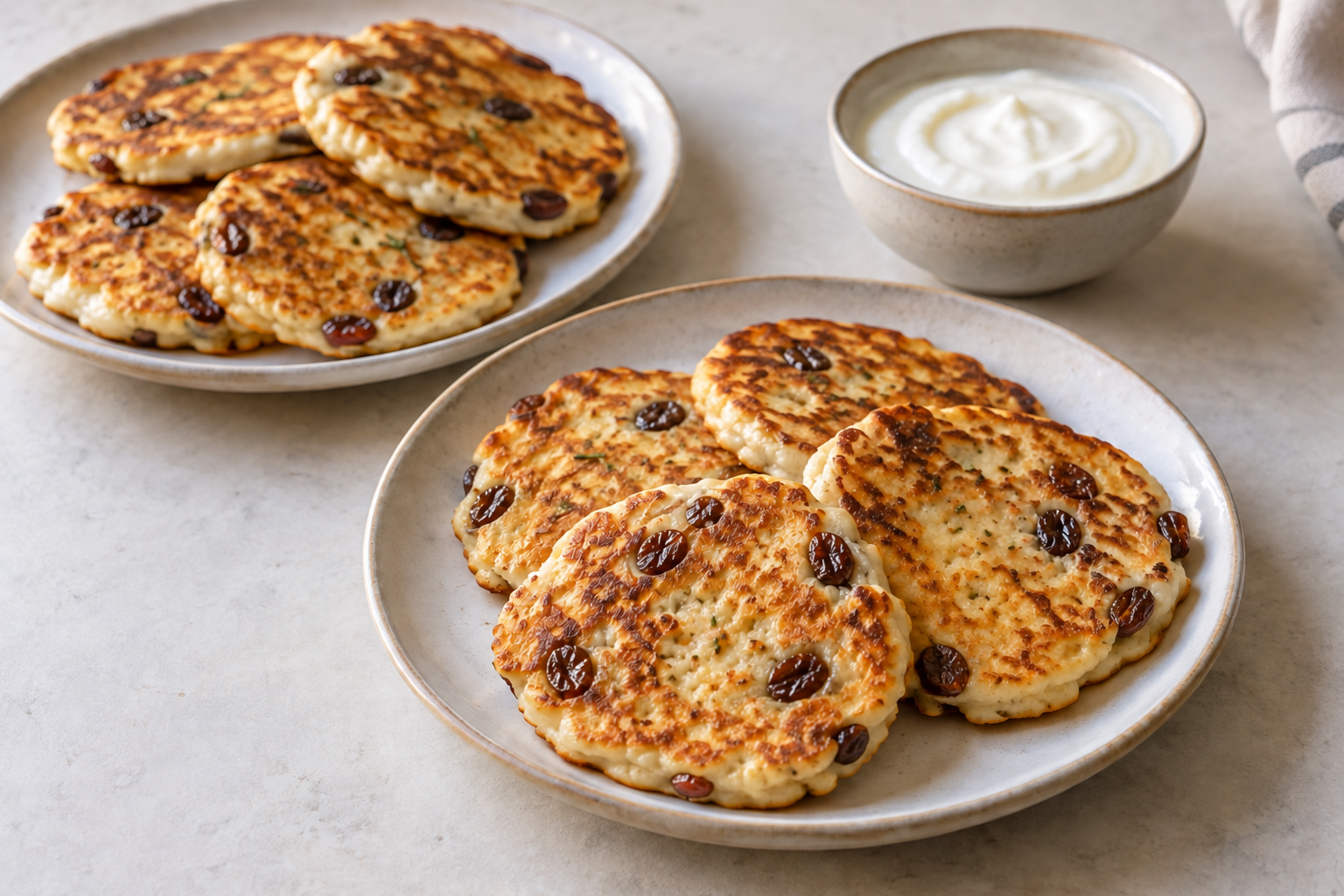
Arrange the pancakes slightly overlapped rather than in one tall stack. Place the optional yogurt alongside so the browned surfaces are not immediately covered. The raisins already supply sweetness, so taste the complete combination before adding syrup. Fresh fruit or a mild salad can sit on a separate part of the plate.
If serving in stages, bring the first batch to the table promptly or use appropriate hot-holding equipment. Do not leave a large cooked batch sitting out through an extended breakfast. Refrigerate leftovers promptly, with the yogurt in its own container, and follow the storage guidance above.
More FAQs about rosemary raisin cottage cheese pancakes
Can I blend the cottage cheese first?
Blending changes the curd texture and may make the batter behave differently. The written method uses a fork to break larger curds and a spoon test after resting. Try that approach before changing both the cheese texture and flour amount at once.
Can I make one large pancake instead?
A large thick pancake would need a different cooking and turning plan. The small portions help the middle cook before the outside gets too dark. Keep the stated size and make another batch if you need more servings.
Can I omit the raisins?
Omitting them removes the sweet pockets and leaves a more savory cheese-and-herb pancake. Keep the soaking water out as usual. Do not replace the missing raisins with an equal volume of liquid sweetener, which would change the batter’s moisture and cooking behavior.
For rosemary raisin cottage cheese pancakes, control the moisture before heating the skillet and keep the portions consistent once cooking begins. The printable recipe below keeps the two batches and their divided oil easy to follow.
Rosemary Raisin Cottage Cheese Pancakes
Ingredients
Equipment
Method
- Soak the raisins in the hot water for 10 minutes. Meanwhile, drain freely pooling liquid from the cottage cheese in a fine-mesh strainer; measure 1 cup or 225 g after draining. Strip the rosemary leaves from the stems and chop very finely.
- Drain the raisins and pat them dry. Cut unusually large raisins in half. Discard the soaking water.
- Mash the cottage cheese with a fork to break up the larger curds, then beat in the eggs. Whisk the flour and baking powder separately and fold into the cheese mixture with the rosemary, pepper, and raisins.
- Rest the batter for 5 minutes. It should be thick and spoonable, not pour like a thin crepe batter. If it runs, fold in 1 tablespoon flour and wait another 2 minutes; additional correction time is outside the base estimate.
- Heat a 12-inch nonstick skillet over medium-low heat and add 1 tablespoon oil. Spoon in four scant 1/4-cup portions. Spread gently to about 3 1/2 inches across and 1/3 inch thick.
- Cook about 4 minutes on the first side, until golden and set around the edges. Flip carefully and cook about 4 minutes more. Check from the side with a food thermometer; the centers should reach 160°F/71°C.
- Transfer to plates or a rack. Repeat with the remaining tablespoon oil and batter to make 8 pancakes. Serve with plain yogurt, if using.