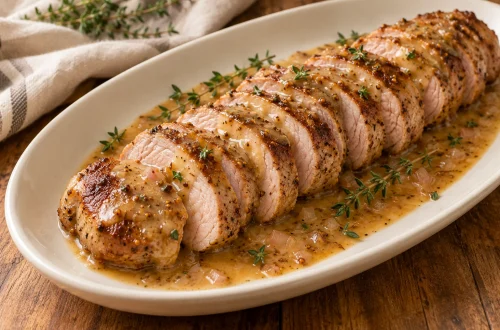
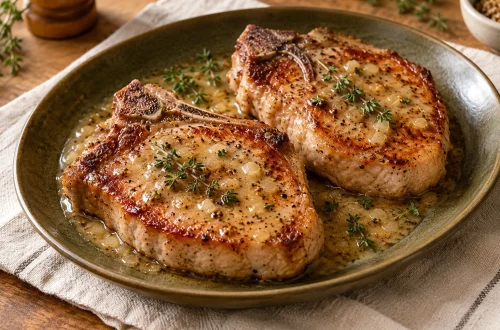
These pork medallions with applesauce pan sauce use a pantry staple to make a savory dinner with a gently fruity finish. Unsweetened applesauce thickens the sauce naturally, Dijon adds a little bite, and chicken broth carries the browned flavor from the skillet. The pork cooks in small, evenly sized rounds, so there is no need to roast a whole tenderloin and wait to discover whether the center is ready.
Affiliate disclosure: As an Amazon Associate I earn from qualifying purchases. These paid links open Amazon search results so you can compare suitable tools.
Set out a thin-tip instant-read thermometer (paid link) before searing the pork medallions, then use kitchen tongs (paid link) to turn the pieces while keeping their surfaces intact. Follow the temperature checks in the recipe.
Jump to recipe ingredients and steps or open the printable recipe. The important decisions happen before the pan gets hot: choose pork tenderloin rather than pork loin, cut consistent pieces, and set a thermometer nearby. Those details matter more than chasing an exact number of minutes on each side.
Build the pan sauce after the pork rests
Even medallions
Cut to similar thickness and pat dry so each piece browns and reaches doneness at roughly the same time.
Preserve the fond
Use moderate heat and avoid burning the browned bits; they become the savory base for the applesauce mixture.
Return briefly
Add rested pork only long enough to coat and warm through so the lean meat does not overcook in the sauce.
If the sauce is too sweet, correct it with mustard, acid or pepper before adding more salt. If it is thick, loosen with broth a tablespoon at a time.
Choosing and cutting the pork
Tenderloin is the long, narrow cut that commonly comes as one or two pieces in a package. Pork loin is much thicker and does not behave like tenderloin when cut into these small rounds. Check the package name instead of relying on appearance alone.
Look for plain meat when possible. A pre-seasoned or solution-enhanced tenderloin may contain enough salt that the full amount in this recipe tastes excessive. If using one, reduce added salt initially and check the sauce before finishing it. Flavored marinades can also clash with applesauce and mustard.
Even thickness is helpful, but there is no need to hammer the rounds into thin cutlets. If a piece is unusually tall, press it gently to approximately the same thickness as its neighbors. Thin pieces cook quickly and need earlier temperature checks; thick pieces need more time at moderate heat.
Keep track of the tenderloin’s narrow end
Lay the trimmed tenderloin on the board before slicing and identify where it tapers. Group the thick center rounds together and keep the smaller tail portion easy to recognize. They can cook in the same skillet when there is space, but that does not mean they should all leave at the same moment.
Set out a clean plate for the finished medallions before searing. Arrange pieces as they finish so you can keep track of which have completed the required three-minute rest. Do not use the plate that held raw seasoned pork as the resting plate unless it has been thoroughly washed.
A quick sauce with a savory balance
Applesauce is already cooked and finely broken down, which makes it useful when you want apple flavor without peeling and softening fresh fruit. Choose plain unsweetened applesauce with no cinnamon or dessert spices. A smooth sauce gives the neatest finish; a chunky style works too, but leaves visible pieces of apple.
The sauce needs acidity and salt as well as fruit. Dijon and a small amount of cider vinegar provide that balance. Start with the measured quantities before adding more. Applesauce brands differ in tartness, and a heavily reduced sauce can taste sharper than it did at the start.
This is a spoonable pan sauce, not a sticky glaze. Keeping it loose helps coat the meat without adding a long second cooking period. If you can draw a spoon through the skillet and the sauce slowly flows back into the track, it is usually ready.
Read the applesauce on the spoon
| Starting applesauce | What to watch in the skillet |
|---|---|
| Smooth and thick | Stir at the edges and use the listed optional water only if the sauce becomes pasty. |
| Looser homemade sauce | Let the gentle simmer reduce it to a coating texture before serving. |
| Chunky unsweetened sauce | Expect visible apple pieces; the liquid around them should still flow when spooned. |
Measure the half cup before adding it rather than using the whole jar or pouch. The broth, mustard and vinegar quantities were chosen for that amount of apple. Keep the butter separate until the pan is off the heat, as the method directs; its final role is to smooth a sauce that already has the right amount of moisture.
Pork medallions with applesauce pan sauce
Serves: 4. Preparation: about 15 minutes. Cooking: about 20 minutes. Total: about 35 minutes, including a minimum 3-minute rest. Equipment: 12-inch skillet, sharp knife, cutting board, tongs, whisk or spoon, plate, and instant-read thermometer.
Ingredients
- 1 pork tenderloin, about 1 1/4 pounds, trimmed
- 3/4 teaspoon fine salt, divided
- 1/4 teaspoon black pepper
- 1 tablespoon olive oil, plus 1 teaspoon for a second batch if needed
- 1 small shallot, finely minced, about 3 tablespoons
- 1/2 cup reduced-sodium chicken broth
- 1/2 cup plain unsweetened applesauce
- 2 teaspoons Dijon mustard
- 1 teaspoon apple cider vinegar
- 1/2 teaspoon dried thyme
- 1 tablespoon unsalted butter
- 1 tablespoon chopped parsley, optional
- 2–4 tablespoons water, only if needed to loosen the sauce
Step-by-step method
- Trim and portion. Remove the silvery membrane from the tenderloin by sliding a sharp knife just beneath it, angling the blade toward the membrane. Cut the meat across the grain into rounds about 1 inch thick. Fold the narrow tail end onto itself or keep it as a smaller piece that will finish sooner. Pat the surfaces dry, then season with 1/2 teaspoon salt and the pepper.
- Sear with space around each piece. Heat 1 tablespoon oil in the skillet over medium-high heat. When it shimmers, add the pork in a single layer. Cook for about 2–3 minutes per side to develop golden patches, turning once. Work in two batches if the pieces touch tightly; use the additional teaspoon oil if the second batch needs it. Reduce heat if the browned bits start turning black.
- Check the centers. Insert the thermometer from the side into the middle of a thick medallion. Continue cooking over medium heat, turning as needed, until every piece reaches at least 145°F before leaving the pan. Check several pieces because the tail and thicker rounds cook differently. Transfer the finished pork to a clean plate and rest for at least 3 minutes. The USDA temperature chart specifies 145°F plus a 3-minute rest for whole cuts of pork.
- Lift the flavor from the pan. Turn the heat to medium-low. Add the shallot and cook for 1 minute, stirring. Pour in the broth and scrape up brown bits with a wooden spoon. If the skillet contains black, bitter residue, wipe that out before making the sauce rather than incorporating it.
- Simmer the applesauce mixture. Stir in the applesauce, mustard, vinegar, thyme, and remaining 1/4 teaspoon salt. Simmer gently for 3–5 minutes. Stir often, especially around the edges, until the sauce coats a spoon. Add water 1 tablespoon at a time if it becomes pasty.
- Finish off the heat. Remove the pan from the burner and stir in the butter until it melts. Taste the sauce. Spoon it over the rested pork or return the medallions briefly to coat them without restarting a long simmer. Scatter over parsley, if using, and serve.
What to do when the pan behaves differently
The pork sticks when you try to turn it: give it another 20–30 seconds and try again with a thin spatula. A developing crust often releases more readily after it sets. If the oil smells burnt, lower the heat immediately rather than waiting for release at the same temperature.
The outside browns before the middle reaches 145°F: reduce the heat and turn the medallions every minute or so until they finish. A tablespoon of water and a loosely fitted lid can soften the heat, though the crust will become less crisp.
The sauce seems too sweet: first check whether the applesauce was sweetened. Add another 1/4 teaspoon cider vinegar, stir, and taste. More mustard may help, but it also increases salt and sharpness. Do not pour in a large splash of vinegar all at once.
The sauce looks dull or thick: add a little broth or water before adding more butter. Moisture corrects concentration; fat alone does not fix a sauce that has reduced too far.
Build a plate around the sauce
Mashed potatoes, plain rice, or buttered noodles give the sauce somewhere to go. Keep those sides lightly seasoned until you taste everything together. A crisp green vegetable or tangy cabbage adds contrast to the tender meat and smooth applesauce.
The site’s small-batch braised red cabbage fits especially well with this dinner. For a closer look at checking the meat, the pork tenderloin temperature guide explains thermometer placement and resting.
Spoon sauce across, not under, every medallion
Arrange the rested pork on the plates or a warm serving platter, then spoon the sauce over the top and let a little run onto the accompanying starch. Keep part of the browned meat visible so the plate has both textures. Serve remaining sauce separately instead of returning safely cooked pork to a long simmer simply to empty the skillet.
Storage without drying out the medallions
Pack the pork with its sauce in shallow containers and refrigerate promptly, within 2 hours or 1 hour above 90°F. Use within 3–4 days at 40°F or below. For reheating, add a small splash of water, cover, and use gentle heat until the meat reaches 165°F throughout. These storage and reheating limits follow USDA leftover guidance.
Reheat only the portions you intend to eat. A covered microwave dish at moderate power, with pauses to turn the meat and stir the sauce, can be easier to control than a very hot skillet. Check the center of the meat after a brief standing time. Color and steam are not reliable temperature measurements.
Frequently asked questions
Can I use homemade applesauce?
Yes, provided it was prepared and stored safely and is plain rather than heavily sweetened or spiced. Thick homemade applesauce may need a little extra broth. Very loose applesauce may need a slightly longer reduction before the pork is served.
Can I use boneless pork chops?
You can use the sauce with pork chops, but follow a cooking method suited to their thickness. The medallion timing does not transfer directly to large chops. They still need to reach 145°F and rest for at least 3 minutes.
Do I have to add butter?
No. Omit it for a lighter finish or stir in a teaspoon of olive oil. The butter smooths the sauce but does not supply its thickness. Applesauce provides most of the body.
Can the sauce be made ahead?
The applesauce, broth, mustard, vinegar, and thyme can be measured together and refrigerated before dinner. Cook the shallot and use the browned skillet bits at serving time for the fullest flavor. Add the butter after the sauce is hot.
Why does the meat still look slightly pink?
Pork color can vary. A properly placed thermometer reading and the required rest determine whether a whole cut is ready, rather than the disappearance of every pink area. Check individual pieces instead of assuming the whole batch matches one reading.
Can I freeze pork medallions with applesauce pan sauce?
Yes. Freeze promptly in a compact container with the sauce covering the meat and aim to use within 2 months for quality. Thaw in the refrigerator and reheat gently to 165°F. The sauce may separate slightly; stirring usually brings it together.
Pork Medallions with Applesauce Pan Sauce
Ingredients
Equipment
Method
- Trim and portion. Remove the silvery membrane from the tenderloin by sliding a sharp knife just beneath it, angling the blade toward the membrane. Cut the meat across the grain into rounds about 1 inch thick. Fold the narrow tail end onto itself or keep it as a smaller piece that will finish sooner. Pat the surfaces dry, then season with 1/2 teaspoon salt and the pepper.
- Sear with space around each piece. Heat 1 tablespoon oil in the skillet over medium-high heat. When it shimmers, add the pork in a single layer. Cook for about 2–3 minutes per side to develop golden patches, turning once. Work in two batches if the pieces touch tightly; use the additional teaspoon oil if the second batch needs it. Reduce heat if the browned bits start turning black.
- Check the centers. Insert the thermometer from the side into the middle of a thick medallion. Continue cooking over medium heat, turning as needed, until every piece reaches at least 145°F before leaving the pan. Check several pieces because the tail and thicker rounds cook differently. Transfer the finished pork to a clean plate and rest for at least 3 minutes. The USDA temperature chart specifies 145°F plus a 3-minute rest for whole cuts of pork.
- Lift the flavor from the pan. Turn the heat to medium-low. Add the shallot and cook for 1 minute, stirring. Pour in the broth and scrape up brown bits with a wooden spoon. If the skillet contains black, bitter residue, wipe that out before making the sauce rather than incorporating it.
- Simmer the applesauce mixture. Stir in the applesauce, mustard, vinegar, thyme, and remaining 1/4 teaspoon salt. Simmer gently for 3–5 minutes. Stir often, especially around the edges, until the sauce coats a spoon. Add water 1 tablespoon at a time if it becomes pasty.
- Finish off the heat. Remove the pan from the burner and stir in the butter until it melts. Taste the sauce. Spoon it over the rested pork or return the medallions briefly to coat them without restarting a long simmer. Scatter over parsley, if using, and serve.