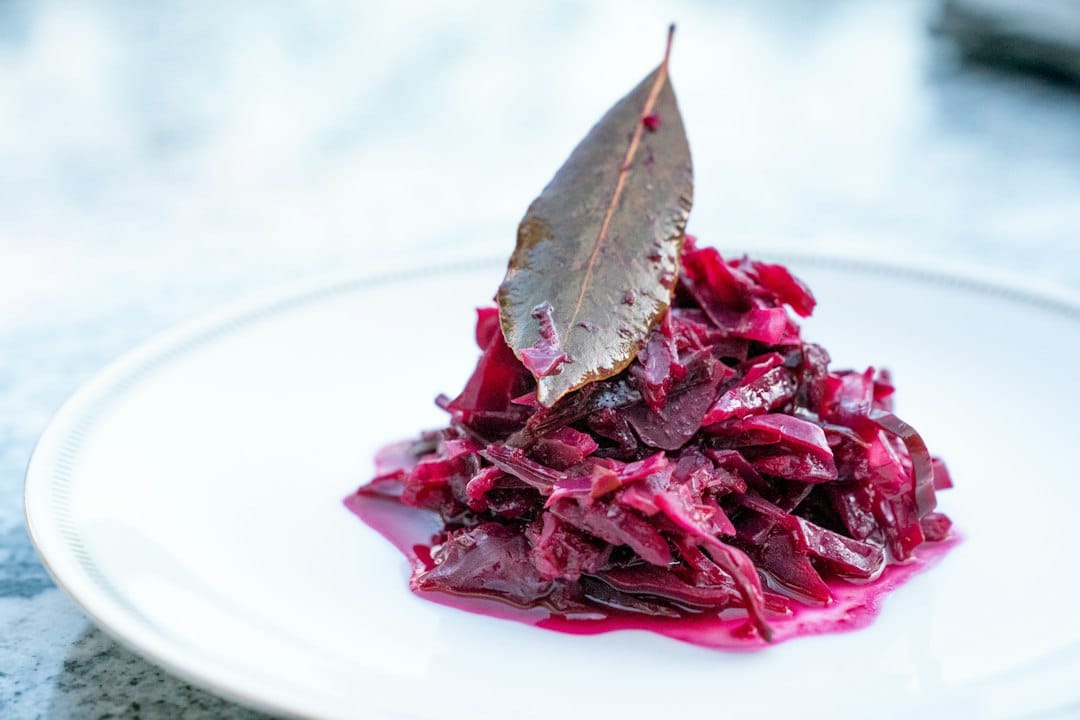
Small-batch braised red cabbage with apple cider vinegar turns half a head of cabbage, one apple, and a few pantry ingredients into four tender, tangy-sweet side servings. Soften onion in a covered pot, add the apple and thinly sliced cabbage, then simmer them with a modest amount of water, vinegar, and maple syrup until the cabbage bends easily but still has some shape. This version uses no wine, calls for a 3- to 4-quart pot, and gives you a way to adjust the final sweet-sour balance without making a full holiday-sized batch.
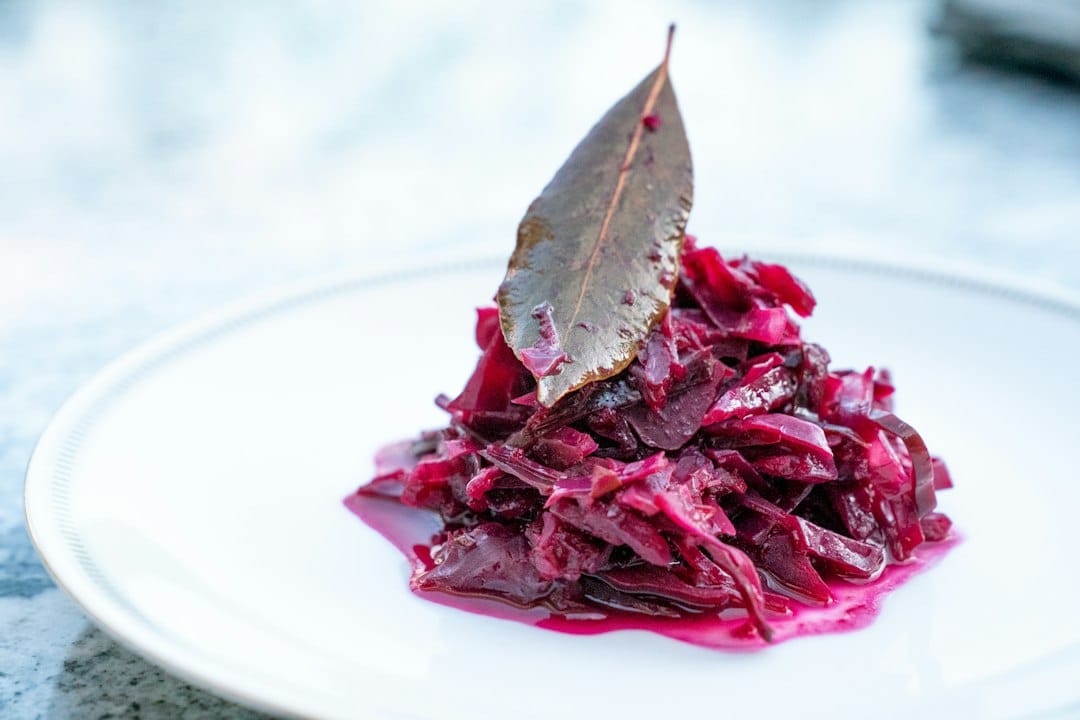
Tender cabbage with a balanced sweet-sour finish
Thin, fairly even slices of cabbage cook at a similar rate. If one handful is cut into fine shreds and another into broad chunks, the shreds can collapse before the chunks soften. A sharp knife and a stable, flat cutting surface are more helpful here than a special shredder. Aim for ribbons about 1/4 inch wide; do not worry about measuring every piece.
The covered pot matters as much as the liquid quantity. Cabbage releases water as it heats, so 1/4 cup of water is a starting amount, not a promise that every stove and lid will retain exactly the same moisture. Stir and check the bottom at intervals. Add water one tablespoon at a time only if the pot is drying out before the cabbage is tender. Conversely, leave the lid off for the final few minutes if the mixture is wetter than you want.
Taste a warm forkful at the end. Add the optional extra vinegar or maple syrup one teaspoon at a time, stirring and tasting between adjustments. The apple contributes sweetness too.
Ingredients for four side servings
Use the trimmed cabbage weight when possible. Heads vary widely, so “half a head” is a shopping shorthand rather than the precise measure.
- 1 tablespoon olive oil (15 ml)
- 1/2 small yellow onion, thinly sliced (about 75 g after trimming)
- 1 small crisp apple, cored and sliced into 1/4-inch pieces (about 140 g after coring; Gala or Fuji is a sensible starting choice)
- 1 pound trimmed red cabbage (about 450 g), cored and sliced into roughly 1/4-inch ribbons
- 2 tablespoons apple cider vinegar (30 ml), plus up to 1 teaspoon more to finish if needed
- 1 tablespoon pure maple syrup (15 ml), plus up to 1 teaspoon more to finish if needed
- 1/4 cup water (60 ml), with a few extra tablespoons available if the pot becomes dry
- 1/2 teaspoon fine salt, then more to taste
- 1/4 teaspoon freshly ground black pepper
- Optional: 1/4 teaspoon caraway seeds for a more savory, aromatic finish
Yield: About four 3/4-cup side servings; cabbage moisture and slicing thickness change final volume.
Prep time: 15 minutes.
Cook time: 35–45 minutes.
Total: 50–60 minutes.
Equipment: A sharp chef’s knife, cutting board, measuring spoons, and a 3- to 4-quart heavy-bottomed pot or deep sauté pan with a well-fitting lid. A wide wooden spoon or heatproof spatula helps lift cabbage off the bottom without shredding the apple.
Do not use apple cider vinegar in place of all the water. The recipe uses vinegar for acidity and water for steam. If your cider vinegar is especially sharp, begin with the measured 2 tablespoons and wait until the cabbage is fully cooked to decide whether it needs more.
Using pre-shredded cabbage
Use plain raw red cabbage and weigh 450 g. Dressed slaw and pickled cabbage already contain liquid and seasonings. Fine shreds soften sooner than the 1/4-inch ribbons used here, so begin checking before the end of the braising window. Drain wash water well, then add extra water by the tablespoon only if the pot dries out.
Prepare the cabbage and apple
Remove any badly wilted outer leaves. Cut the cabbage through the core, set a flat half cut side down, and cut away the firm white core in a wedge. Weigh out 1 pound of trimmed cabbage if you have a scale. Slice the leaves crosswise into ribbons close to 1/4 inch wide. Rinse if needed and drain; large pools of wash water can dilute the braising liquid.
Core the apple and cut it into slices about the same thickness as the cabbage. Leave the peel on if you like its color and are comfortable with a little skin texture. If the apple has thick or waxy skin, peel it. A firm eating apple is preferable to one that is already soft and mealy; the latter can disappear into the cabbage. Thinly slice the onion so it softens before the long simmer.
Put the vinegar, maple syrup, and 1/4 cup water in a small cup and stir. Having this mixture ready is useful because a crowded pot can take a minute to stir thoroughly after the cabbage goes in. The liquid will look scant against the raw pile; the cabbage will wilt and release moisture under the lid.
If you only have a whole cabbage
Cut and weigh the portion you need, then wrap the remaining raw half and refrigerate it for another meal. You can use it for slaw, another cooked side, or a separate soup. Inspect the cut half before use; its condition and packaging affect how well it keeps. If the half you cut weighs much more than 450 g after trimming, do not crowd it into this small-batch pot. Save the extra cabbage for another use.
Numbered cooking steps
- Soften the onion. Set the pot over medium heat and add the olive oil. When the oil moves easily across the bottom, add the onion and 1/4 teaspoon of the measured salt. Cook about 4–5 minutes, stirring once or twice, until the onion looks translucent and begins to bend. Reduce the heat if it browns rapidly; the aim is a soft base, not dark caramelization.
- Warm the apple. Add the apple slices and cook 2 minutes, stirring gently. Their edges should take on a little heat without falling apart. If the bottom has a few pale onion marks, the liquid added next will loosen them; if you see dark scorching, lower the heat immediately.
- Wilt the cabbage. Add the cabbage in two handfuls, stirring after each. Sprinkle in the remaining 1/4 teaspoon salt and the pepper. Cook uncovered about 3 minutes, just until the top pile settles enough for the lid to fit. The ribbons should still be fairly firm.
- Add the braising liquid. Pour in the mixed vinegar, maple syrup, and water. Add caraway now if using. Scrape the bottom gently, turn the cabbage so the liquid reaches more than one spot, and bring it to a visible simmer. A vigorous boil will evaporate the small amount of water too quickly.
- Cover and simmer. Turn the heat to low, cover, and cook 25–30 minutes. Stir at roughly the 10- and 20-minute marks, lifting from the bottom. The pot should hiss quietly rather than boil hard. If the bottom is dry and the cabbage still feels stiff, add 1 tablespoon water, replace the lid, and continue. Repeat only as needed.
- Judge tenderness, then reduce. Taste a ribbon from the thickest section. It should bend easily and have a tender bite, without a raw, squeaky center; the apple should be soft but recognizable. If the cabbage is still chewy, cover and cook another 5 minutes before tasting again. Once tender, remove the lid and cook 3–5 minutes over medium-low heat, stirring, until the liquid lightly coats the cabbage. Leave a little liquid if you prefer a spoonable side.
- Balance and serve. Turn off the heat. Taste before adding more salt, vinegar, or maple syrup. For brightness, add up to 1 teaspoon more vinegar. For a softer finish, add up to 1 teaspoon more maple syrup. Stir and let stand 2 minutes so the seasoning distributes. Spoon into a warmed bowl and serve with the juices from the pot rather than leaving them behind.
The stated cook time includes the onion, apple, wilting, covered braise, and uncovered reduction. It is a range because cabbage age, slice width, pan diameter, burner strength, and lid fit change the result. The doneness cue takes priority over the clock. If you have a narrow pot that stacks the ribbons deeply, the covered phase may take longer than in a wide sauté pan.
How the finished side should look and taste
The cabbage should be purple-red, glossy, and soft enough to fold around a fork. A few pale apple pieces should remain visible, though some will melt into the juices. It should taste savory first, then gently sweet, with enough acidity to refresh the next bite. The pot should not contain a pool of thin liquid that runs across the plate, and the cabbage should not be sticky with syrup.
Serving temperature is flexible. It is good warm with meatloaf, roast pork, or a vegetarian main. For a dinner plate with meatloaf, the site’s meatloaf with brown gravy offers a richer counterpart to the vinegar in the cabbage. Beside pork tenderloin, use the site’s pork tenderloin temperature guide for the meat’s thermometer check; this cabbage can stay covered off the heat while the pork rests. For a second vegetable, roasted asparagus with Parmesan gives a firmer, greener contrast.
For a simple plate, put the cabbage in a small warm bowl rather than spreading it beneath the meat; the tangy juices will stay with the vegetables. You can also spoon a modest amount alongside potatoes, letting the bright acidity balance a buttery mash.
Troubleshooting while it cooks
The bottom is catching before the cabbage softens
Lower the burner, stir from the base, and add 1 tablespoon water. Check that the lid fits well and that the pot has not been left at a hard boil. Repeat a small splash only when the bottom looks dry; a large addition all at once can leave you with watery cabbage that takes extra time to reduce.
The cabbage is tender but watery
Remove the lid and simmer gently while stirring for several minutes. A broad pan exposes more surface area and reduces faster than a narrow pot. If the liquid is already quite acidic, do not try to fix thinness with more vinegar. Reduce first, then taste. Resist adding flour or cornstarch; neither is needed for a simple vegetable braise, and starch changes its clean texture.
The vinegar tastes too sharp
Give the cabbage its full covered cooking time before making a correction. A warm, cooked forkful tastes different from a spoonful of raw braising liquid. Then try 1 teaspoon maple syrup, mix, and taste. An especially tart apple can make the dish seem sharper as well. Add sweetness conservatively; it is easier to add more than to undo an overly sweet pot.
The apple vanished or the cabbage is mushy
The apple may have been very ripe, sliced thinly, or stirred vigorously. Next time choose a firmer apple and cut it slightly thicker. For mushy cabbage, reduce the covered time and begin checking at 20 minutes when using very fine shreds. You cannot restore a firm bite after overcooking, but the batch can still be used as a soft accompaniment to a rich main.
The cabbage looks dull or tastes flat
Acid helps the final flavor feel lively. Once cooking is complete, add a few drops of vinegar, mix well, and retaste before adding the full optional teaspoon. Check salt too: underseasoned cabbage can seem muted even when the sweet-sour ratio is sound. Use a clean spoon for each taste if you plan to store leftovers.
Substitutions and their limits
Butter instead of oil: One tablespoon unsalted butter can soften the onion. Watch it over medium heat so it does not brown too quickly, and taste for salt at the end. This variation is no longer dairy-free.
Brown sugar instead of maple syrup: Start with 2 teaspoons packed light brown sugar, dissolve it in the vinegar and water, and adjust after cooking. Sugar and maple syrup taste different, so the final forkful is a better guide than a rigid one-for-one exchange.
Another vinegar: Red-wine vinegar can work for acidity, but its flavor differs. Begin with 1 tablespoon and adjust at the end rather than assuming every vinegar has the same sharpness. Do not substitute apple juice for vinegar; juice contributes sweetness without the needed acid.
Green cabbage: It can be braised by the same general method, but the color, moisture release, and flavor differ. Treat that as a new variation that needs its own timing check. Do not promise the same jewel-toned result or use a red-cabbage photograph to depict it.
Skipping caraway: The optional seeds give a distinctive flavor. Leaving them out preserves the basic apple-vinegar profile. Ground cloves or cinnamon would change the dish more strongly; if experimenting, use a very small pinch and record the result before suggesting it as a standard variation.
Make-ahead, storage, and reheating
For a dinner with several dishes, make the cabbage first and leave it covered off the heat briefly while finishing the main. If it needs warming before serving, reheat gently with a tablespoon of water. Check the sweet-sour balance after reheating because the flavor can seem different once the pot has cooled.
For leftovers, transfer the cabbage to a shallow covered container and refrigerate promptly, within 2 hours of cooking. Keep the refrigerator at 40°F (4°C) or below and use refrigerated leftovers within 3–4 days. Reheat a portion thoroughly to 165°F (74°C) if serving it as reheated leftovers. A small skillet with a splash of water gives you better control than a hard boil; stir until the center is hot. If using a microwave, cover loosely and stir partway through so there are no cool pockets.
You can freeze portions after rapid chilling in suitable containers, but texture is likely to soften after thawing. Label the container with the cooking date and thaw in the refrigerator before reheating. If a portion has been sitting out beyond the safe window, do not treat reheating as a way to reset its storage life.
Questions before you start
Can I make it without maple syrup?
Yes, but the result will be noticeably tart if the apple is not very sweet. Cook the measured cabbage, apple, and vinegar, then taste. Add sugar, maple, or another sweetener in small increments only if the finished dish needs it. Do not compensate by removing all the vinegar; the acidity is part of the intended profile.
Do I need a Dutch oven?
No. A 3- to 4-quart saucepan or deep sauté pan with a lid is enough for this quantity. A thin pan is more likely to develop hot spots, so use low heat during the covered simmer and check it a little more often. A shallow skillet without a lid will lose liquid too fast for the specified method.
Can I double the recipe?
Use a larger pot and weigh 900 g trimmed cabbage rather than guessing from two half heads. Double the onion, apple, vinegar, maple, and initial water, but expect the cabbage to take longer to wilt and stir. Check tenderness and moisture rather than assuming the same cooking time; the deeper pile changes how readily steam circulates.
Is this a pickle?
No. The 2 tablespoons of vinegar season a cooked vegetable side; this recipe is not formulated or processed for shelf-stable preservation. Refrigerate the finished cabbage under the leftover guidance above. Never use this recipe as a canning or room-temperature storage method.
Storage reference: USDA guidance on cooling, storing, and reheating leftovers.