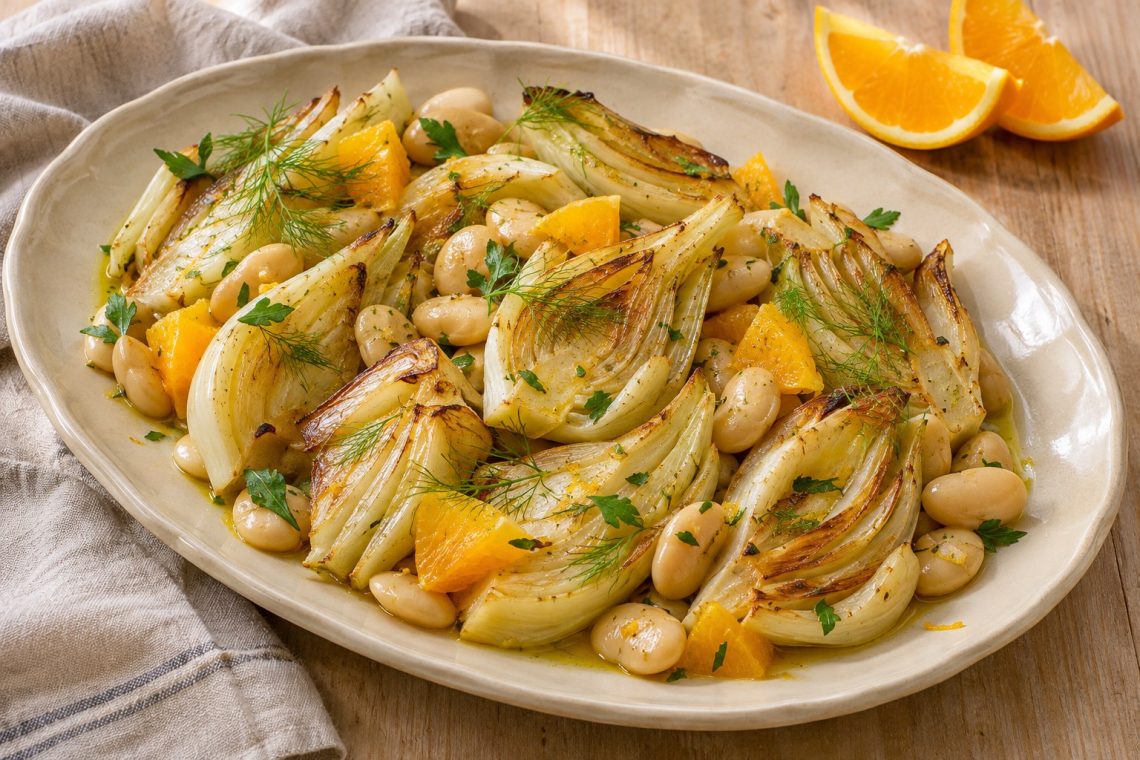
Looking for roasted fennel recipes that turn a simple vegetable into a satisfying meal? This tray of golden fennel, creamy butter beans, and fresh orange delivers sweet edges, tender centers, and a bright citrus finish. The key is timing: roast the fennel first, warm the beans near the end, and add the orange dressing after the pan leaves the oven.
SWEET FENNEL · CREAMY BEANS · FRESH CITRUS
Prep: 15 minutes Cook: 35–45 minutes Total: about 60 minutes
Serves: 4 as a side or 2 as a light main Oven: 425°F / 220°C
Best result: browned cut faces, a knife-tender base, and soft beans. Color alone does not tell you whether the fennel is cooked through.
Serve it with toast to catch the dressing, spoon it over a cooked grain, or bring it to the table as a vegetable side. Orange zest supplies fragrance, juice adds brightness, and a little Dijon and cider vinegar keep the finish balanced. The dish uses 3 tablespoons of olive oil in total: 2 for roasting and 1 for the dressing.
Why this roasting method works
Fennel and canned butter beans need different treatment. Fennel needs sustained heat to soften its layered base and develop browned surfaces. The beans are already cooked, so they need only a brief spell in the oven. Adding both at the beginning can leave the beans dry before the fennel is tender.
- Start with the fennel: set a broad cut face against the pan for direct contact with the hot metal.
- Add beans only near the end: keep their centers creamy instead of chasing a crisp shell.
- Finish off the heat: spoon over the citrus dressing at serving time to retain brighter orange flavor and avoid wetting the pan during browning.
Choose and prepare the right fennel
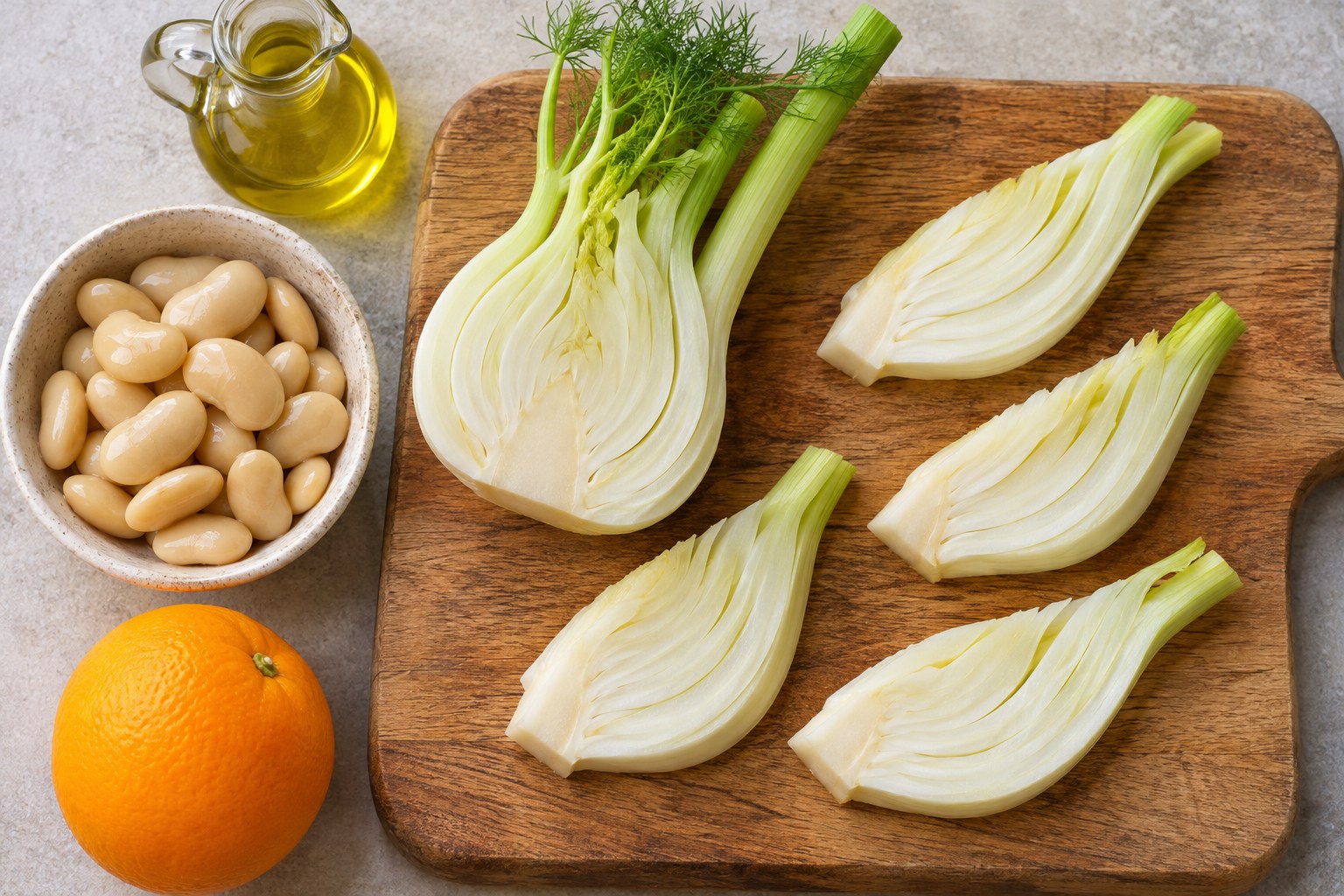
Use fresh bulb fennel, also called Florence fennel or finocchio—the pale, layered bulb beneath the green stalks. Fennel seeds are a seasoning, not a substitute for the vegetable in this dish. Choose firm, heavy bulbs without soft spots or substantial discoloration; fresh fronds should look green. These shopping cues follow Purdue Extension’s fennel guide.
Rinse the bulb under cool running water and check between the outer layers for grit. Remove damaged or leathery outer layers, trim away the stalks, and pat the bulb dry. Halve it through the root, then cut lengthwise wedges about ½ inch thick at their widest part. Trim the hard root tip but leave a small piece of core attached to keep each fan of layers together.
Judge thickness at the dense base, not by the thin leaf tips. Very wide wedges can brown outside while staying hard within. Save tender fronds for the finish and reserve tough stalks for stock; they do not cook at the same rate as the bulb.
Affiliate disclosure: As an Amazon Associate I earn from qualifying purchases. These paid links open Amazon search results for comparing equipment.
Give the fennel room on an 18-by-13-inch rimmed sheet pan (paid link), and use a citrus zester (paid link) to prepare the orange zest for the fresh finish.
Ingredients
- 2 medium fennel bulbs, about 1½ pounds before trimming
- 1 can butter beans, 15 ounces, drained and rinsed
- 2 tablespoons olive oil for roasting, divided
- ½ teaspoon fine salt, divided
- ¼ teaspoon black pepper
- ½ teaspoon dried thyme
- 1 large orange
- 1 tablespoon olive oil for the dressing
- 1 teaspoon Dijon mustard
- 1 teaspoon apple cider vinegar
- 1 tablespoon chopped parsley or tender fennel fronds
- 1–2 tablespoons hot water, only if needed during roasting
- 2 tablespoons chopped toasted almonds, optional, for serving
Butter beans are large, soft white beans, often labeled lima beans. Use canned beans that are already cooked; dried beans need a separate soaking and cooking process. Drain and rinse gently so the skins do not all split before they reach the pan.
One large orange provides zest, a little juice, and a few pieces of fruit for the finish. Zest before peeling or cutting. Avoid the bitter white pith beneath the outer skin. The mustard helps the small dressing blend, while cider vinegar balances oranges that taste particularly sweet.
Roast in two stages
- Heat the oven. Set a rack in the middle and heat to 425°F. Reserve the measured roasting oil for coating the fennel and beans in the following steps. Use a metal sheet with enough room for the fennel to lie in one layer.
- Trim and cut the bulbs. Remove tough stalks and any damaged outer layer. Cut each bulb in half from top to root, then cut each half lengthwise into narrow wedges. Aim for pieces about ½ inch thick at the widest part; the number of wedges will vary with the size and shape of the bulbs. Keep a small section of the core attached so the layers stay together, trimming only the tough protruding root end.
- Season the fennel. Toss wedges with 1½ tablespoons of the roasting oil, ⅜ teaspoon salt, pepper, and thyme. Place a broad cut side against the metal. Keep the wedges separated rather than nested tightly together. Roast for 20 minutes.
- Turn and test. Slide a thin spatula under each wedge and turn it carefully. Roast another 8–10 minutes, then pierce the thick base with a small knife. It should be partly tender. If the edges are dark but the core remains very firm, add 1–2 tablespoons hot water around the fennel and loosely cover for a few minutes.
- Add the beans late. Toss drained butter beans gently with the remaining ½ tablespoon roasting oil and ⅛ teaspoon salt. Scatter around the fennel, avoiding deep piles. Return uncovered to the oven for 8–12 minutes, until the beans are hot and the fennel centers are tender.
- Prepare the orange. Finely grate 1 teaspoon zest. Cut the orange in half and squeeze 2 tablespoons juice from one half. Peel the other half, remove conspicuous white pith, and cut the fruit into bite-sized pieces, catching and discarding any seeds.
- Make the dressing. Whisk orange juice and zest with 1 tablespoon olive oil, Dijon, and cider vinegar. Taste a spoonful with a cooked bean. The mixture should brighten the vegetables without tasting like a sweet fruit syrup or an overly sharp salad dressing.
- Combine gently and serve. Transfer fennel and beans to a broad warm platter. Spoon over most of the dressing, then add orange pieces and herbs. Scatter optional almonds over individual portions. Offer the remaining dressing separately so the soft beans are not overwhelmed by liquid.
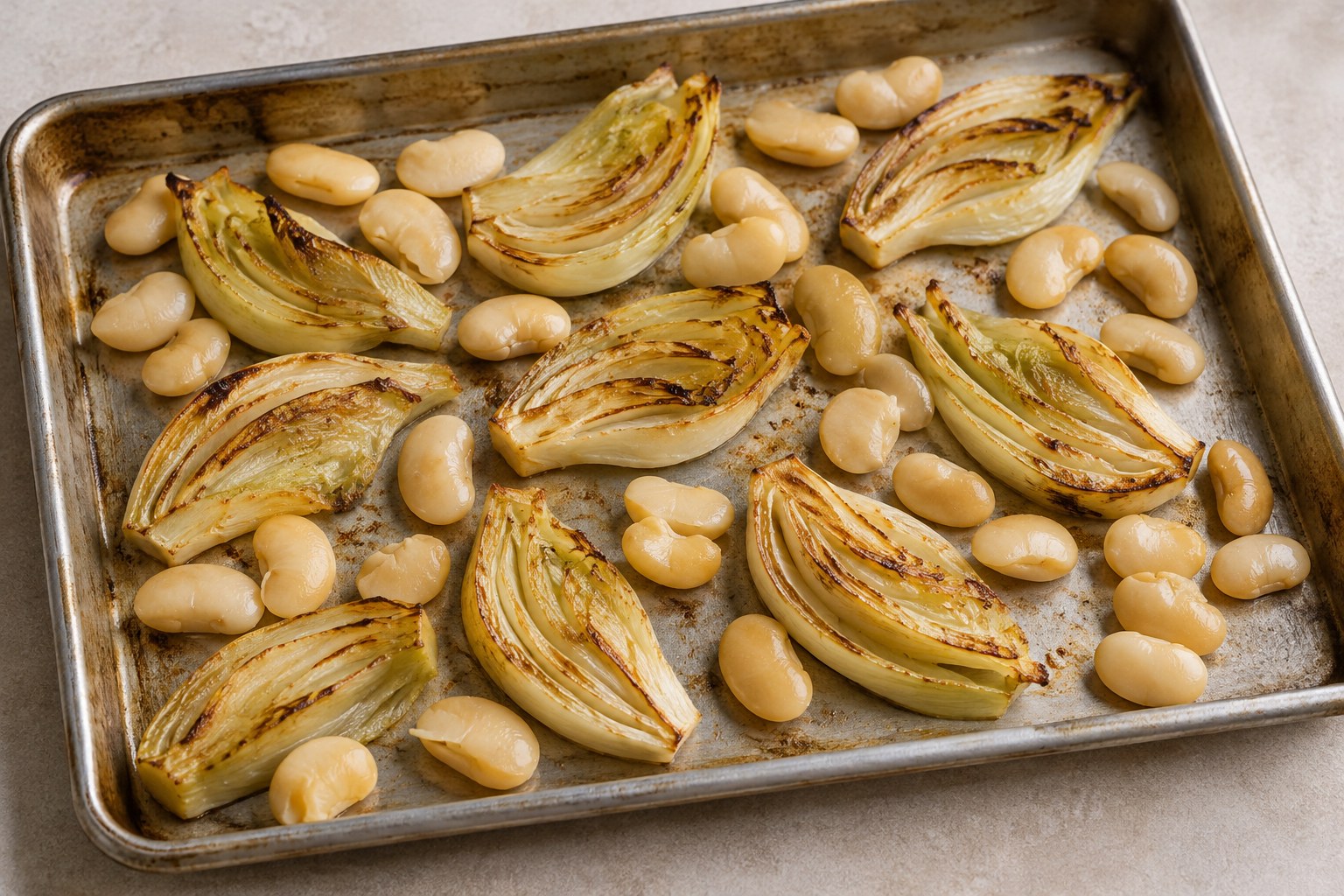
Check doneness: browned outside, tender inside
The fennel’s thick base should yield to a knife without requiring a sawing motion. Its outer leaves may be lightly crisp in places, but the inner layers should be tender. A very dark exterior with a hard center usually means the wedges were too thick or the oven browned the outside faster than the core softened.
Butter beans should stay soft, with a few split skins and lightly dried surfaces. They are not intended to turn into crunchy roasted beans. Their short final roasting stage warms them and lets them share the pan flavors while preserving most of their creamy interior.
Pro tips for better roasted fennel recipes
Dry the surface, then oil it
Water left between the fennel layers has to evaporate before the surface can brown. Pat the cut wedges dry, then coat them lightly and evenly with the measured oil. Blot the drained beans gently too; do not rub them hard enough to remove their skins.
Leave visible space on the pan
Use the specified 18-by-13-inch rimmed metal sheet and keep a little exposed metal between wedges. If large bulbs fill the sheet completely, use a second pan. Crowded vegetables release moisture into one another and tend to soften without developing much color.
Let the first side brown before turning
Frequent stirring breaks up the wedges and reduces contact time with the metal. At the first turn, slide a thin spatula beneath a broad cut face. If it resists and is still pale, give it a few more minutes instead of pulling the layers apart.
Check the base before adding beans
Pierce the thickest part with a small knife. It should already be partly tender before the beans go in. If it is still hard, extend the fennel-only stage; the cooking time is a guide, while the texture decides when to move on.
Rescue dark edges without overcooking the beans
If the exterior is browning too quickly, reduce the oven to 400°F and move the pan away from a strong heat source. Before adding the beans, carefully add 1–2 tablespoons of hot water around the wedges and cover loosely with foil for a few minutes. Uncover for the final stage so moisture can escape. Use oven mitts and keep clear of steam.
Taste the dressing with the food
Orange sweetness, canned-bean salt, and Dijon strength vary. Taste a little dressing on a cooked bean rather than judging it alone. If it tastes too sweet, add vinegar a few drops at a time; if it is too sharp, start with a teaspoon of water. Add extra salt only after tasting the combined dish.
Troubleshooting the fennel
| Situation | Adjustment |
|---|---|
| Wedges fall apart | Retain a little core when cutting and lift with a spatula rather than gripping loose leaves. |
| Core stays tough | Give the fennel more time before adding beans; use a brief covered stage if needed. |
| Beans dry out | Add them later and remove once hot; do not wait for an all-over crust. |
| Dressing tastes too sweet | Add a few drops of vinegar and taste on a bean before adding more. |
If the bulb has very tough outer layers, removing one thin layer before roasting is more effective than trying to soften it indefinitely. Different bulb sizes create different wedge shapes, so focus on thickness at the dense base. The outer leaf tips can be much thinner without causing a problem as long as they are checked during turning.
Ingredient changes that make sense
Cannellini beans can replace butter beans by the same drained quantity. They are smaller and may be slightly firmer, but the late addition still works. Chickpeas produce a different texture and need gentler expectations for how creamy the dish will feel.
Use lemon in place of orange only as a deliberate flavor change. Lemon is sharper, so begin with 1 tablespoon juice and add a teaspoon of water before tasting. You will lose the sweet orange pieces. Grapefruit can be bitter and varies in sweetness, so it is not the most predictable direct swap.
Leave out almonds when serving someone with a nut allergy, or use a suitable seed only if it meets that person’s needs. Their job is extra crunch, not structure. The dish is complete without them. Olives can add a savory note, but use a small amount and reduce salt until you taste the finished plate.
Serving a light main or a side
For two light main portions, serve the fennel and beans over toast or with a piece of crusty bread to catch the dressing. A cooked grain such as barley or rice can make the meal more substantial. Add a green salad if you want something cool and crisp beside the warm vegetables.
As a side, the citrus pairs naturally with baked fish, chicken, or a simply seasoned pork dish. Another tangy vegetable option is small-batch braised red cabbage with apple cider vinegar, useful when fennel is unavailable or you want a different seasonal side.
Advance preparation and leftovers
Trim fennel a day ahead and refrigerate it covered. Drain beans shortly before cooking or keep them refrigerated after opening. Mix the dressing and refrigerate separately, adding fresh orange pieces and herbs close to serving. Holding the dressed dish for a long time softens its edges and changes the citrus flavor.
Refrigerate cooked leftovers in shallow containers within 2 hours, or within 1 hour above 90°F. Store at 40°F or below for 3–4 days following USDA guidance. Reheat the cooked portion to 165°F. Add fresh orange pieces afterward when possible; reheated citrus fruit becomes softer.
To reheat gently: place the fennel and beans in a covered oven-safe dish with a small splash of water at 350°F, or microwave covered in short intervals, stirring gently between them. Heat leftovers to 165°F throughout, checking several spots with a food thermometer. Add fresh orange, herbs, and any almonds afterward. The beans should remain moist; prolonged uncovered reheating can toughen their skins.
Roasted fennel recipes: frequently asked questions
Does roasted fennel taste like licorice?
It keeps a gentle anise-like note, but roasting softens the sharp raw flavor and brings out sweetness. Orange, olive oil, and creamy beans round out the dish. Roasting changes the intensity rather than making the fennel flavor disappear.
Do I need to boil fennel before roasting it?
Not for these ½-inch wedges. They can roast directly on the sheet. If an older bulb has especially firm centers, use the brief covered stage described in the method, then uncover to finish. Boiling first would change the timing and add moisture that needs to evaporate.
Should I remove the fennel core?
Remove the hard protruding root tip and any obviously woody portion, but retain a small section that holds the layers together. Check that section with a knife before serving. If it stays hard while the outer layers are tender, give the fennel more time before adding the beans.
Why is my fennel soft but not browned?
A crowded pan, wet wedges, or insufficient contact with the metal are common causes. Spread the pieces apart, set a cut side down, and allow them to roast without constant stirring. If the beans are already hot, lift them out before extending the fennel’s roasting time.
Can I use parchment paper?
Yes, if it is rated for the oven temperature you are using. Lightly oiled bare metal gives more direct contact and may brown the cut surfaces better. With parchment, use the same tenderness cues and allow for differences in browning; keep loose paper edges away from heating elements.
Can I use dried butter beans or a different white bean?
Dried butter beans must be cooked fully and separately first; they cannot soften during the short final roasting stage. For an easy swap, use a drained 15-ounce can of cannellini beans. Smaller beans may heat faster, so check them early and remove the tray when the fennel is tender.
Can I make it ahead?
Prepare the fennel and dressing up to a day ahead and refrigerate them separately. Add orange pieces and herbs near serving time. You can also cook the dish ahead, cool and refrigerate it promptly, then reheat the fennel and beans thoroughly; expect softer edges than a freshly roasted tray.
How do I double the recipe?
Use two large sheet pans instead of crowding twice the food onto one. Position racks in the upper and lower thirds, swap the pans and rotate them front to back at the first turn, and check each pan separately. The two trays may finish at different times. Add the beans to each only when its fennel is ready.
Can I use the stalks and feathery fronds?
Chop fresh, tender fronds for a delicate garnish. The stalks are fibrous and need a different preparation; reserve them for stock rather than scattering thick pieces onto this tray. Trim off tough stems before using the fronds.
Can I freeze the leftovers?
You can freeze the cooked fennel and beans, but thawed fennel will be softer and may release water. Freeze without the fresh orange, herbs, or almonds when possible, thaw in the refrigerator, and reheat thoroughly. For the best texture, plan to eat this dish fresh or within the refrigerated leftover window.
For successful roasted fennel recipes, focus on three things: even wedges, room to brown, and a tenderness check before the beans join the pan. Finish with the orange dressing just before serving, and this simple combination becomes a bright side dish or a comforting light meal.
Printable recipe
Roasted Fennel and Butter Beans with Orange
Ingredients
Equipment
Method
- Heat the oven. Set a rack in the middle and heat to 425°F. Reserve the measured roasting oil for coating the fennel and beans in the following steps. Use a metal sheet with enough room for the fennel to lie in one layer.
- Trim and cut the bulbs. Remove tough stalks and any damaged outer layer. Cut each bulb in half from top to root, then cut each half lengthwise into narrow wedges. Aim for pieces about ½ inch thick at the widest part; the number of wedges will vary with the size and shape of the bulbs. Keep a small section of the core attached so the layers stay together, trimming only the tough protruding root end.
- Season the fennel. Toss wedges with 1½ tablespoons of the roasting oil, ⅜ teaspoon salt, pepper, and thyme. Place a broad cut side against the metal. Keep the wedges separated rather than nested tightly together. Roast for 20 minutes.
- Turn and test. Slide a thin spatula under each wedge and turn it carefully. Roast another 8–10 minutes, then pierce the thick base with a small knife. It should be partly tender. If the edges are dark but the core remains very firm, add 1–2 tablespoons hot water around the fennel and loosely cover for a few minutes.
- Add the beans late. Toss drained butter beans gently with the remaining ½ tablespoon roasting oil and ⅛ teaspoon salt. Scatter around the fennel, avoiding deep piles. Return uncovered to the oven for 8–12 minutes, until the beans are hot and the fennel centers are tender.
- Prepare the orange. Finely grate 1 teaspoon zest. Cut the orange in half and squeeze 2 tablespoons juice from one half. Peel the other half, remove conspicuous white pith, and cut the fruit into bite-sized pieces, catching and discarding any seeds.
- Make the dressing. Whisk orange juice and zest with 1 tablespoon olive oil, Dijon, and cider vinegar. Taste a spoonful with a cooked bean. The mixture should brighten the vegetables without tasting like a sweet fruit syrup or an overly sharp salad dressing.
- Combine gently and serve. Transfer fennel and beans to a broad warm platter. Spoon over most of the dressing, then add orange pieces and herbs. Scatter optional almonds over individual portions. Offer the remaining dressing separately so the soft beans are not overwhelmed by liquid.
Notes
| Situation | Adjustment |
|---|---|
| Wedges fall apart | Retain a little core when cutting and lift with a spatula rather than gripping loose leaves. |
| Core stays tough | Give the fennel more time before adding beans; use a brief covered stage if needed. |
| Beans dry out | Add them later and remove once hot; do not wait for an all-over crust. |
| Dressing tastes too sweet | Add a few drops of vinegar and taste on a bean before adding more. |