This pollock with potatoes and leeks is a gentle stovetop fish dinner with a clear, savory broth. Thin potato pieces simmer first, then thawed pollock fillets cook under a lid once the vegetables are nearly ready. Lemon and parsley finish the pan. The sequence keeps the fish from spending the whole potato-cooking time on the heat.
Jump to the recipe. The broth should lightly surround the potatoes rather than bury everything in a deep soup. A wide, shallow pan makes it easier to lift tender fish onto plates without breaking it into tiny flakes.
Keep pollock with potatoes and leeks in a light broth delicate
| Leeks | Separate and rinse the layers thoroughly, then soften them without deep browning. |
| Potatoes | Simmer first until almost tender because they need much longer than the fish. |
| Pollock | Nestle into a gentle simmer only for the final stage and avoid vigorous stirring. |
The fish is ready when the thickest piece separates into moist flakes. If the broth needs reducing, remove the pollock first so it does not dry while the liquid concentrates.
Prepare the leeks thoroughly
Leeks can trap grit between their layers. Trim away the root and tough dark green leaves, keeping the white and pale green portion. Cut it lengthwise, fan the layers under running water, then slice across into thin half-moons. If you see dirt between the pieces, rinse again and drain well.
A large leek should give roughly 1 1/2 cups sliced. The exact volume need not be perfect, but avoid adding a large mass of tough dark greens and expecting them to soften in the same short cooking time. Those parts suit a different, longer preparation.
Leeks bring a mild onion flavor that fits the delicate fish. They need to soften before the broth is added. High heat is unnecessary; a pale, tender leek base is appropriate, and browned or scorched edges can make the broth taste bitter.
Pollock with potatoes and leeks
Affiliate disclosure: As an Amazon Associate I earn from qualifying purchases. Paid links open Amazon search results.
Yield: 4 lighter servings or 3 generous servings. Preparation: about 15 minutes. Cooking: about 30 minutes. Total: about 45 minutes. Equipment: wide 12-inch skillet (paid link) or shallow pot with a lid, cutting board, slotted spatula (paid link), measuring jug, and instant-read thermometer (paid link).
Ingredients
- 1 tablespoon olive oil
- 1 large leek, white and pale green parts cleaned and thinly sliced, about 1 1/2 cups
- 1 garlic clove, minced
- 1 pound Yukon Gold potatoes, cut into 1/2-inch pieces
- 2 cups reduced-sodium vegetable or seafood broth, plus up to 1/2 cup water if needed
- 1/2 teaspoon dried thyme
- 1/2 teaspoon fine salt, divided
- 1/4 teaspoon black pepper
- 1 pound thawed pollock fillets, cut into 4 portions
- 1 tablespoon lemon juice
- 2 tablespoons chopped parsley
- 1 teaspoon finely grated lemon zest, optional
Cook the vegetables before adding the fish
- Soften the leeks. Heat the oil over medium-low heat. Add the cleaned leeks and cook for 5–6 minutes, stirring, until soft. Add a tablespoon of broth if they begin to catch. Stir in the garlic for the final 30 seconds.
- Simmer the potatoes. Add the potatoes, broth, thyme, 1/4 teaspoon salt, and pepper. Bring to a gentle simmer, cover, and cook for about 12–18 minutes until the potatoes are almost tender. Stir once or twice and check that liquid remains underneath. Add water in small amounts if evaporation exposes a dry bottom.
- Prepare the pollock. Pat the thawed fillets dry and check carefully for bones. Remove any you find. Season with the remaining 1/4 teaspoon salt. If a tail end is very thin, fold it underneath itself so the portion has a more even thickness.
- Nestle and cover. Lay the fish on top of the potatoes, with some broth reaching the lower surfaces. Cover the pan and maintain a very gentle simmer. Begin checking after 4–5 minutes for thin fillets; thicker pieces may take 7–10 minutes or longer. Avoid stirring the fish around the pan.
- Check each portion. Insert the thermometer from the side into the thickest center. Cook until the fish reaches 145°F. It should also look opaque and separate into flakes with light pressure. Transfer pieces that finish early to warm plates while thicker ones continue cooking. FDA seafood guidance provides the 145°F endpoint.
- Finish the broth. Once all fish is ready, stir the lemon juice and parsley into the broth around it, or remove the fish first if that is easier. Taste a potato with a spoonful of broth before adding salt. Divide the vegetables and liquid among shallow bowls, add the fish, and finish with optional zest.
Thaw fish with the packaging in mind
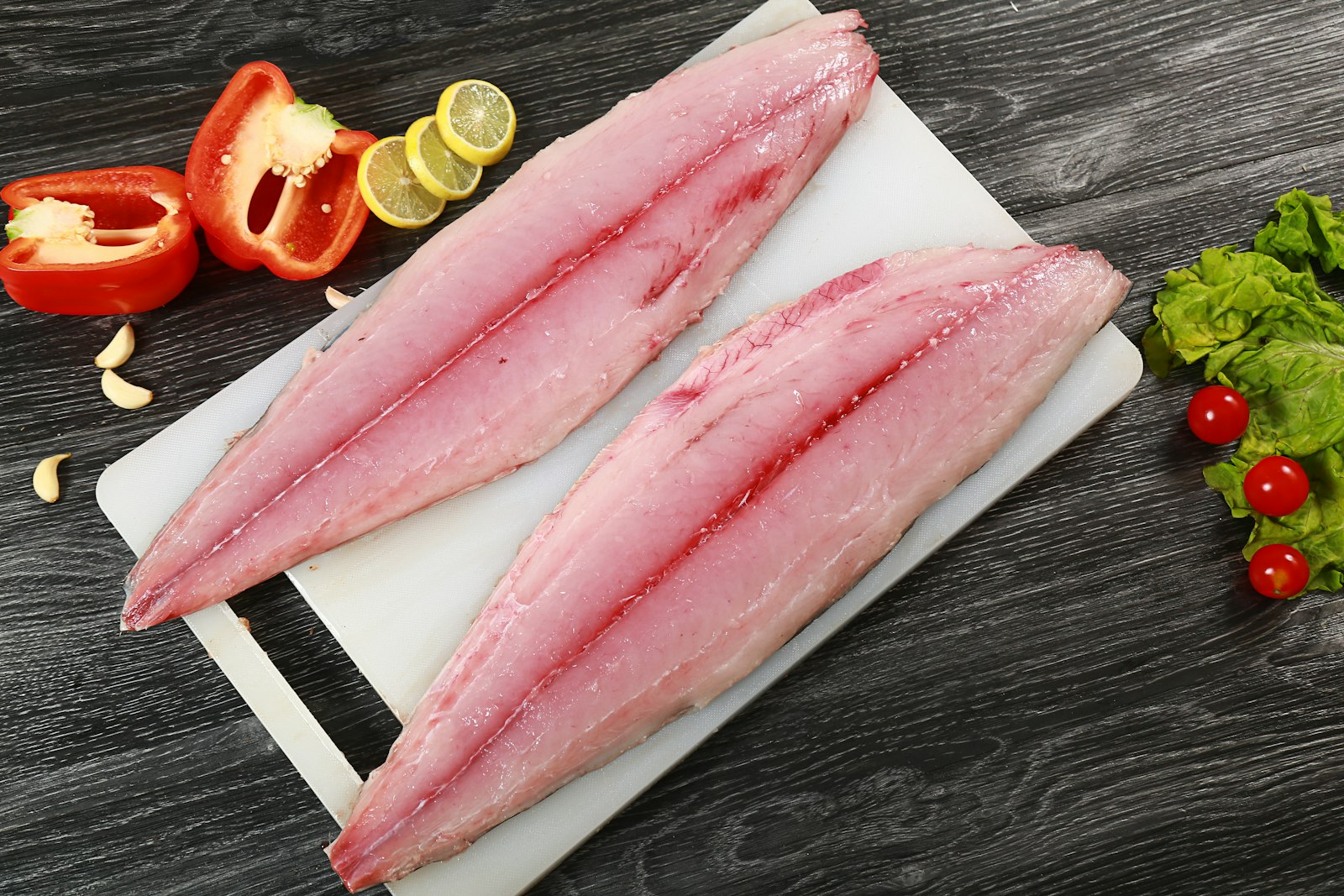
Thaw frozen pollock in the refrigerator and follow the package instructions, including directions about opening or removing any vacuum packaging. Do not leave fish on the counter to thaw. Keep it cold until you are ready to cook, and place it where drips cannot reach ready-to-eat food.
Patting thawed fish dry keeps excess thawing liquid from diluting the broth. If the fillets seem uneven, divide them into similarly thick portions and check the thinner ones first. Four portions do not necessarily mean four identical cooking times.
This recipe is written for thawed fish. Adding a frozen block changes the amount of water, the cooking time, and how evenly the fillets heat. Thawing first is the clearest route for a gentle broth dinner with controlled vegetable texture.
Keep the broth light but flavorful
Reduced-sodium broth gives you more room to adjust seasoning. Seafood broth emphasizes the fish, while vegetable broth makes a milder base. A strongly flavored stock can overwhelm pollock, so taste it before adding the full salt amount.
The potatoes release a little starch as they simmer. This gives the broth a modest body without cream. If you want it slightly thicker, mash two or three cooked potato pieces against the side of the pan before adding the fish. There is no need to puree the whole dish.
Lemon is added after cooking so its brightness stays easy to judge. Too much early acidity can dominate a small quantity of broth. Begin with the measured tablespoon, then let people add a wedge at the table if they prefer a sharper bowl.
What to change and what to keep
Cod or haddock can replace pollock in a similar amount. Their thickness may differ, so keep the 145°F endpoint and adjust the time. The site’s guide to keeping cod fillets intact is useful if you choose cod for this meal.
Use thinly sliced yellow onion if leeks are unavailable. Cook it until soft before adding potatoes. It has a stronger flavor, so start with about 1 cup rather than replacing an unusually large leek by volume.
For extra vegetables, add a handful of baby spinach after the fish is cooked and let it wilt in the hot broth. Frozen vegetables need the cooking directions on their package, which may not fit the final brief warming stage. Prepare those separately when necessary.
Serving and troubleshooting
Serve with crusty bread if you want to catch the broth. A simple salad or lemon-zest roasted asparagus makes a fresh side. Avoid an additional heavy sauce; the broth is part of the intended meal.
Hard potatoes, finished fish: remove the cooked fish to a warm plate, cover loosely, and continue simmering the potatoes. Next time, make sure a knife almost passes through the potato centers before adding the fillets.
Fish breaking into pieces: stop stirring and lift it with a broad slotted spatula. A hard boil and repeated movement both encourage flaking. The meal is still usable if the fish becomes smaller pieces, but gentler heat improves presentation.
Too much broth: serve it as a brothy bowl or remove the fish and reduce the liquid briefly. Do not keep fully cooked fish boiling while trying to evaporate several extra cups of liquid.
Leftover storage
Refrigerate fish, vegetables, and broth in shallow containers within 2 hours, or within 1 hour above 90°F. Keep at 40°F or below and use within 3–4 days. For the most pleasant fish texture, plan to eat leftovers sooner. These storage limits follow USDA leftover guidance.
Reheat gently, covered, until the fish and potatoes reach 165°F. Bring the broth to a boil as part of reheating, then reduce heat to avoid breaking up the fillets. A small splash of water may be needed because potatoes absorb broth while stored.
Frequently Asked Questions
Is pollock a good substitute for cod here?
It works well in a gentle broth, though fillets may be thinner and more delicate. Check early, handle with a broad spatula, and use temperature rather than copying a thick cod fillet’s timing.
Do I need to peel the potatoes?
No, thin clean Yukon Gold skins can remain. Peel if preferred and keep the pieces similar in size. Very large chunks take too long for the stated sequence.
Can I use milk instead of broth?
That would create a different, dairy-based dish and needs gentler handling, especially with lemon. Use broth for this clear, light version. Do not boil milk aggressively and assume it will remain smooth.
Can I prepare the vegetables ahead?
Yes. Clean and slice the leeks ahead and refrigerate them. Potatoes can be cut shortly before cooking; if holding them in cold water, refrigerate and drain well before use. Keep raw fish separate.
How much should the fish be submerged?
The lower surface can sit in broth while the covered pan steams the top. It does not need to disappear under a deep layer of liquid. A tight lid and gentle simmer are the useful conditions.
Can pollock with potatoes and leeks be frozen?
It can, but the fish may break up and the potatoes may become softer after thawing. Freeze promptly in portions with broth, thaw in the refrigerator, and reheat to 165°F. Freshly cooked portions give the clearest texture.
Pollock with Potatoes and Leeks in a Light Broth
Ingredients
Equipment
Method
- Soften the leeks. Heat the oil over medium-low heat. Add the cleaned leeks and cook for 5–6 minutes, stirring, until soft. Add a tablespoon of broth if they begin to catch. Stir in the garlic for the final 30 seconds.
- Simmer the potatoes. Add the potatoes, broth, thyme, 1/4 teaspoon salt, and pepper. Bring to a gentle simmer, cover, and cook for about 12–18 minutes until the potatoes are almost tender. Stir once or twice and check that liquid remains underneath. Add water in small amounts if evaporation exposes a dry bottom.
- Prepare the pollock. Pat the thawed fillets dry and check carefully for bones. Remove any you find. Season with the remaining 1/4 teaspoon salt. If a tail end is very thin, fold it underneath itself so the portion has a more even thickness.
- Nestle and cover. Lay the fish on top of the potatoes, with some broth reaching the lower surfaces. Cover the pan and maintain a very gentle simmer. Begin checking after 4–5 minutes for thin fillets; thicker pieces may take 7–10 minutes or longer. Avoid stirring the fish around the pan.
- Check each portion. Insert the thermometer from the side into the thickest center. Cook until the fish reaches 145°F. It should also look opaque and separate into flakes with light pressure. Transfer pieces that finish early to warm plates while thicker ones continue cooking. FDA seafood guidance provides the 145°F endpoint.
- Finish the broth. Once all fish is ready, stir the lemon juice and parsley into the broth around it, or remove the fish first if that is easier. Taste a potato with a spoonful of broth before adding salt. Divide the vegetables and liquid among shallow bowls, add the fish, and finish with optional zest.