The lemon & greens roasting guide
Roast first. Add the lemon last.
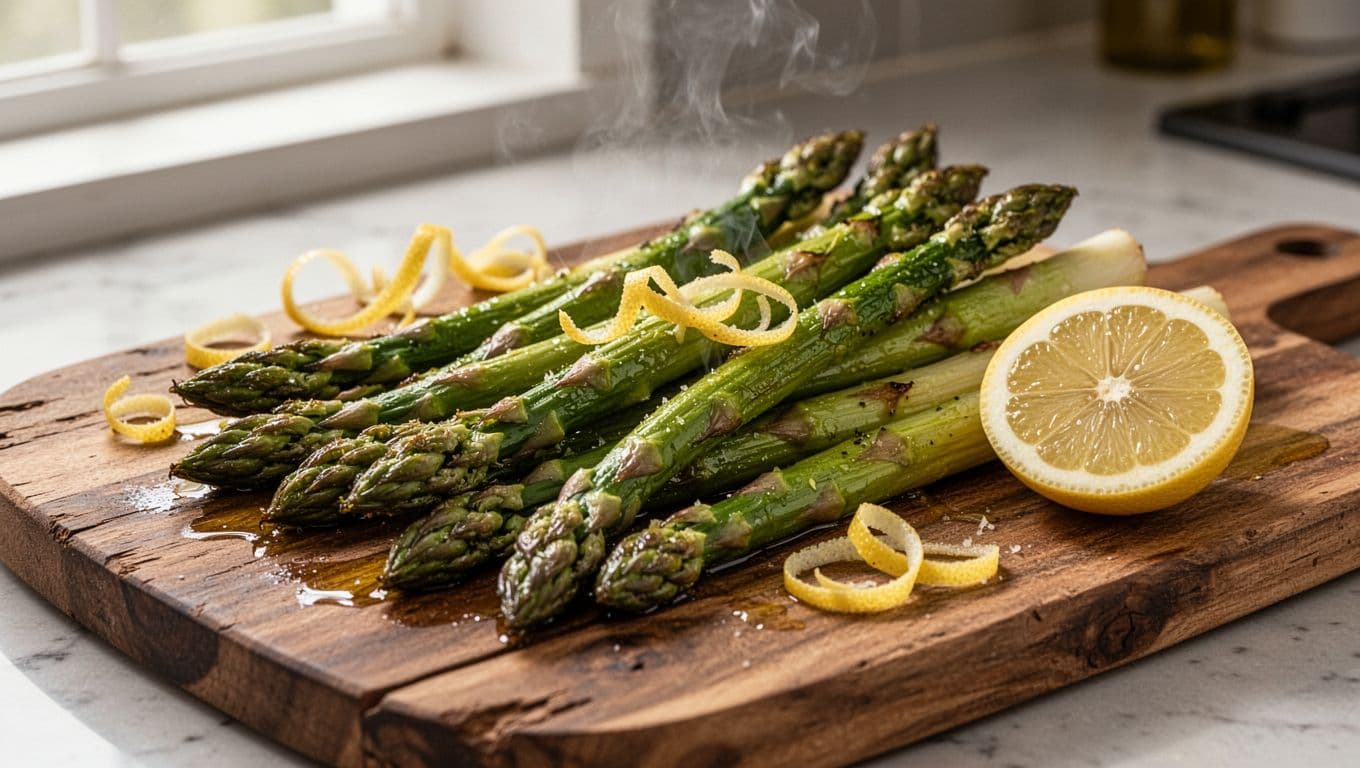
Roasted asparagus with lemon zest works best when the spears roast in a single layer at 425°F and the lemon is added after they leave the oven. The high heat browns the dry, oil-coated asparagus; the fresh zest and measured juice keep the finish bright instead of turning bitter or dull during roasting.
Drythe spears well
Spacethem on the pan
Finishwith fresh lemon
This version uses one pound of asparagus and makes four side-dish servings. Plan on 10 minutes of preparation and 7 to 15 minutes in the oven, depending on spear thickness. Start checking early: the best endpoint is browned in spots and easily pierced near the base, while the tips still hold their shape.
Recipe at a glance
| Yield | 4 side-dish servings |
|---|---|
| Prep time | 10 minutes |
| Roast time | 7–15 minutes |
| Total time | 17–25 minutes |
| Oven temperature | 425°F (220°C) |
| Pan | Large rimmed sheet pan |
Why the lemon goes on after roasting
Lemon zest contains aromatic oils in the colored outer peel. Adding it to hot asparagus after roasting preserves that fresh aroma. The juice supplies acidity, which balances the vegetable’s sweetness and the richness of the olive oil. If the juice goes onto the raw asparagus, the extra surface moisture can slow browning; if finely grated zest roasts for the full cooking time, its delicate edges can scorch.
Measure both parts rather than squeezing a whole lemon over the pan. One teaspoon of zest and one tablespoon of juice brighten a pound of asparagus without overwhelming it. Keep the white pith under the yellow peel out of the zest because it tastes bitter.
Ingredients
- 1 pound fresh asparagus, tough ends trimmed
- 1 tablespoon extra-virgin olive oil
- 1/2 teaspoon kosher salt
- 1/4 teaspoon freshly ground black pepper
- 1 large lemon, scrubbed and dried (use 1 teaspoon finely grated zest and 1 tablespoon juice)
- Optional: 1 small garlic clove, very finely minced, for the last 2 minutes of roasting
The tablespoon of oil is enough to give one pound of spears a thin, even coating. More oil can pool on the pan and make the finished side feel greasy. If using fine table salt instead of kosher salt, begin with 1/4 teaspoon, then adjust after roasting.
Equipment
- Large rimmed sheet pan, about 13 by 18 inches
- Clean kitchen towel or paper towels
- Microplane or fine grater
- Measuring spoons
- Tongs or a thin spatula
How to make roasted asparagus with lemon zest
1. Heat the oven and prepare the pan
Set a rack in the center of the oven and heat to 425°F. Use a large sheet pan so the spears can lie in one layer with a little space between them. A crowded pan traps steam and produces softer, paler asparagus.
2. Wash, dry, and trim the asparagus
Rinse and dry the asparagus thoroughly. Cut away the pale, dry, or visibly fibrous portion at the base. For very thick stalks, peel the lower portion if it remains tough after trimming.
3. Season in a thin, even coat
Put the dry spears on the pan. Drizzle with the olive oil and sprinkle with the salt and pepper. Toss until the stalks and tips are lightly coated, then spread them into one layer. Turn most of the spears so the widest side touches the metal; direct pan contact encourages browning.
4. Roast according to thickness
Roast without covering. Begin checking thin spears at 7 minutes, medium spears at 9 minutes, and thick spears at 12 minutes. Most batches finish within 7 to 15 minutes. If using the optional garlic, scatter it over the pan for only the final 2 minutes so it becomes fragrant without burning.
The asparagus is ready when it has browned spots, the tip of a paring knife slides into the thick end with little resistance, and the stalk bends without collapsing. Color alone is not enough: very thin tips can brown before a thick base is tender.
5. Finish with measured lemon
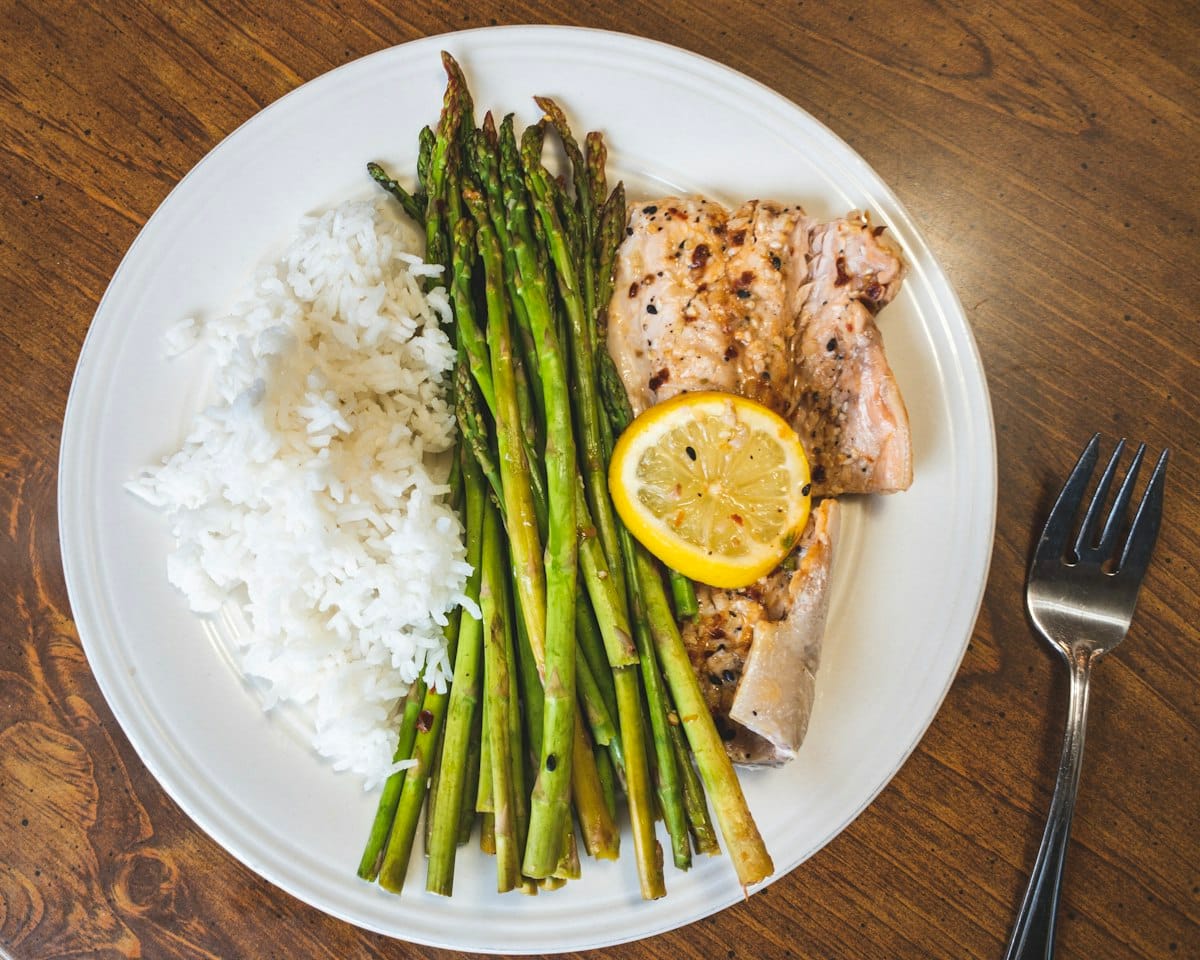
Remove the pan from the oven. Sprinkle 1 teaspoon lemon zest over the hot spears, drizzle with 1 tablespoon lemon juice, and toss gently. Taste one spear before adding more salt or acid. Serve promptly for the strongest lemon aroma and the best contrast between tender stalks and intact tips.
Timing by spear thickness
| Spear size at the base | When to start checking | Likely range | Doneness cue |
|---|---|---|---|
| Thin, about pencil-width | 7 minutes | 7–9 minutes | Tips lightly browned; stalk bends but does not shrivel |
| Medium, about 1/2 inch | 9 minutes | 9–12 minutes | Knife enters the base easily; browned in spots |
| Thick, 3/4 inch or more | 12 minutes | 12–15 minutes | Base is tender through the center; tip still holds together |
These times are decision points, not guarantees. Pan material, oven calibration, starting temperature, and the amount of water left on the spears all affect the result. A dark metal pan usually browns faster than glass or ceramic.
Troubleshooting
The asparagus is pale or watery
The spears were probably wet, crowded, or placed on a pan that was too small. Dry the next batch thoroughly and leave space between the stalks. If liquid collects halfway through roasting, carefully drain it and return the pan to the oven.
The tips burned before the bases softened
This often happens with thick spears whose feathery tips are very dry. Move the pan one rack lower, start checking sooner, and loosely shield only the tips with a narrow strip of foil if they darken quickly. Do not cover the whole pan.
The finished asparagus is limp
It roasted past the tender stage or sat on the hot pan too long. Remove it as soon as a knife enters the base easily, then transfer it to a serving dish. Thinner spears can cross from crisp-tender to limp in a minute or two.
The lemon tastes harsh
White pith in the zest or too much juice can make the finish bitter or sour. Grate only the colored peel and measure the juice. If the batch is already too sharp, toss it with another teaspoon of olive oil rather than adding sugar.
Variations without changing the method
- Parmesan: For a cheese-focused version with a measured finish, use the separate roasted asparagus with Parmesan recipe rather than adding an unmeasured handful here.
- Toasted almonds: Add 2 tablespoons sliced toasted almonds after the lemon. Add them at serving time so they stay crisp.
- Red pepper: Add 1/8 teaspoon crushed red pepper with the salt. This gives gentle heat without obscuring the lemon.
- Grill method: Roasting and grilling need different timing. Use the asparagus grilling guide for thickness-based grill times and turning cues.
Storage and reheating
Refrigerate leftovers in a shallow, covered container within 2 hours of cooking, or within 1 hour when the surrounding temperature is above 90°F. Keep the refrigerator at 40°F or below and use leftovers within 3 to 4 days. These limits follow USDA guidance for cooked leftovers.
For the best texture, spread the asparagus on a sheet pan and reheat at 350°F for about 5 to 8 minutes, or warm it in a skillet over medium heat. When reheating stored leftovers for food safety, heat them to 165°F. Add a small pinch of fresh zest after reheating if the lemon aroma has faded; avoid adding more juice until after tasting.
Before you put the pan in the oven
Can I prepare this ahead?
Wash, dry and trim the asparagus a day ahead, then refrigerate it in a covered container. Store the measured lemon zest and juice separately in small covered containers. Toss the spears with oil and seasoning just before roasting, and add the lemon after cooking. Freshly roasted asparagus has firmer tips than a reheated batch.
Can I double the recipe?
Yes. Double the ingredients and divide the asparagus between two large sheet pans with room between the spears. If using two oven racks, rotate the pans between racks during roasting. Check each tray separately: two crowded pans may cook less evenly and take longer than one.
What if the bunch has mixed sizes?
Group the spears by thickness before cooking. Place thinner ones together so you can remove them as soon as they are tender while the thicker stalks finish. The table gives checking times, so use the texture at the base as the final guide.
Can I skip the zest or use bottled juice?
You can make a lemon-flavored side with juice alone, but it will lack the peel’s fragrance. Start with the measured tablespoon and taste before adding more. Bottled juice varies in flavor; the same measured starting amount is more reliable than a free pour. Keep either type of juice off the pan until after roasting.
Method and food-safety references
- Illinois Extension’s asparagus roasting method supports a 425°F oven, a one-pound asparagus-to-one-tablespoon-oil ratio, and an 8–12 minute starting range.
- USDA Food Safety and Inspection Service leftovers guidance supports prompt refrigeration, a 3–4 day refrigerated storage window and reheating leftovers to 165°F.
Print the lemon asparagus recipe
Keep the quantities and five steps together while you cook. After serving, use the rating section at the bottom of the card.
THE COMPLETE RECIPE
Roasted Asparagus with Lemon Zest

Yield: 4 side-dish servings
Ingredients
- 1 pound fresh asparagus Tough ends trimmed.
- 1 tablespoon extra-virgin olive oil
- 1/2 teaspoon kosher salt Use ¼ teaspoon if substituting fine table salt; adjust to taste.
- 1/4 teaspoon black pepper
- 1 teaspoon finely grated lemon zest From a scrubbed, dried lemon; yellow peel only.
- 1 tablespoon fresh lemon juice
- 1 small garlic clove Optional; very finely minced and added only for the last 2 minutes.
Instructions
- Preheat. Heat the oven to 425°F / 220°C with a rack in the center. Have a large rimmed sheet pan ready.
- Dry and trim. Rinse the asparagus and dry it thoroughly with a clean towel. Cut away the tough, fibrous ends. Peel the lower part of very thick stalks if needed.
- Coat and spread. Toss the asparagus on the pan with the oil, salt and pepper. Arrange in a single layer with space between the spears. Leave the lemon off the pan for now.
- Roast and check. Roast uncovered for about 12 minutes for medium spears. Start checking thin spears at 7 minutes, medium at 9, and thick at 12. Remove when browned in spots and a paring knife enters the base easily; the tips should still hold together. If using garlic, add it during the final 2 minutes.
- Add the lemon. Transfer to a serving dish. Toss the hot asparagus with the measured zest and juice, taste, and adjust seasoning. Serve promptly.
Notes
Rate This Recipe
Made this recipe? Choose a star rating in the comment form and share how it turned out. Your cooking time and any ingredient changes can help the next reader.
Rate This Recipe