
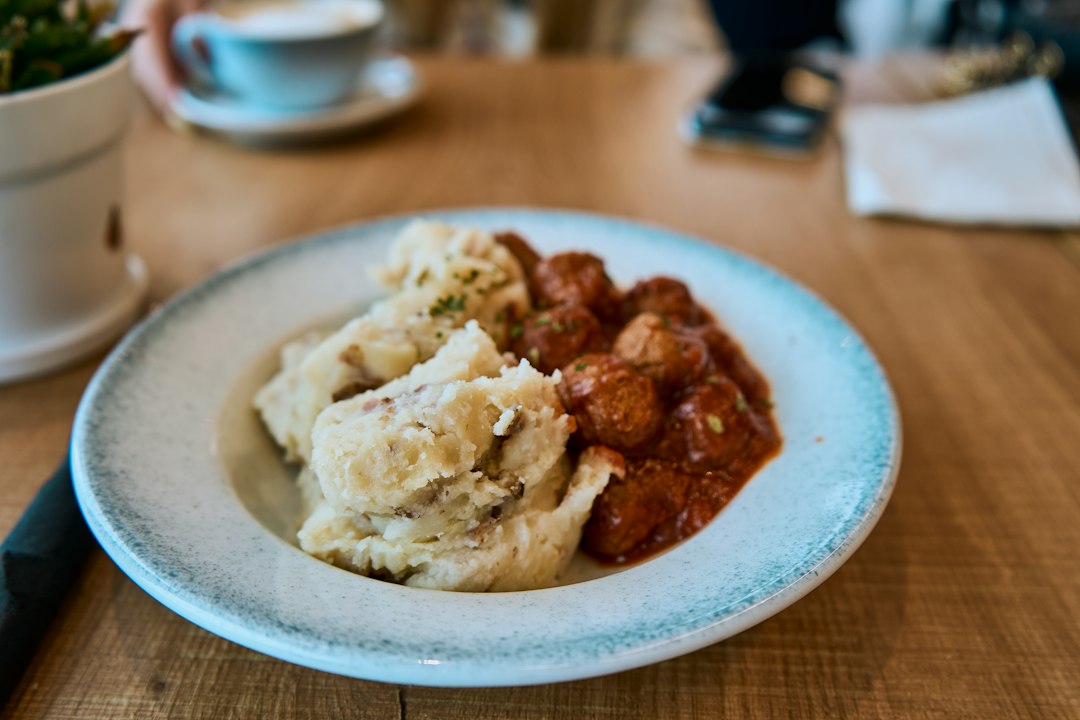
These turkey meatballs with saltine crackers use a familiar pantry cracker as the binder, then finish in a light skillet gravy. The crushed crackers soften in milk before they meet the turkey, helping distribute moisture through the mixture. A brief browning stage adds flavor, while the covered gravy simmer brings the centers to a safe temperature.
Jump to the recipe. Saltines already contain salt, so the added seasoning is restrained. Weighing the crackers is the clearest way to measure because cracker size and how finely they are crushed both affect a cup measurement.
Keep turkey meatballs with saltine crackers tender before skillet gravy
- Soften crushed crackers with the measured liquid before adding turkey.
- Mix only until combined and shape equal portions without packing them tightly.
- Brown the meatballs, then move them out while the skillet gravy is prepared from the fond.
- Return them for the final gentle simmer so they finish cooking without becoming firm.
If the gravy thickens too quickly, add broth gradually. Let the meatballs rest briefly before serving so their centers settle and retain moisture.
Make a soft cracker mixture first
Crush plain saltines into small crumbs, leaving no large sharp pieces. A zip-top bag and rolling pin work, or place the crackers in a bowl and press with the bottom of a sturdy cup. A few fine flakes are normal; the goal is a mixture that absorbs milk evenly.
Combine the crumbs and milk, then let them stand for 5 minutes. This creates a soft base before the egg, onion, and seasonings are added. The mixture should be moist rather than swimming in liquid. Do not add more milk simply because you can still see a few crumbs at the start of the rest.
The recipe uses about 40 grams of crackers, roughly 12–14 standard saltines depending on the brand. Flavored crackers can bring extra salt, fat, or sugar, so plain ones make the result easier to judge.
Turkey meatballs with saltine crackers and skillet gravy
Affiliate disclosure: As an Amazon Associate I earn from qualifying purchases. Paid links open Amazon search results.
Yield: about 16 meatballs, 4 servings. Preparation: about 20 minutes, including cracker soaking. Cooking: about 25 minutes. Total: about 45 minutes. Equipment: mixing bowl, scale or cracker count, small scoop, 12-inch skillet with lid (paid link), whisk, tongs, and instant-read thermometer (paid link).
For the meatballs
- 40 grams plain saltine crackers, about 12–14, finely crushed
- 1/4 cup milk
- 1 pound ground turkey, preferably 93% lean
- 1 large egg
- 2 tablespoons finely grated onion
- 1/4 teaspoon fine salt
- 1/4 teaspoon black pepper
- 1/2 teaspoon dried rubbed sage
- 1 tablespoon olive oil
For the gravy
- 1 tablespoon unsalted butter
- 2 tablespoons all-purpose flour
- 1 1/2 cups reduced-sodium chicken broth
- 1/4 teaspoon dried thyme
- 1 teaspoon Worcestershire sauce, optional
- 2 tablespoons chopped parsley
- 2–4 tablespoons water, only if needed to loosen the gravy
Shape, brown, and finish gently
- Soak the cracker crumbs. Combine the crushed saltines and milk in a bowl. Let stand for 5 minutes. Meanwhile, grate the onion and measure the gravy ingredients so the cooking sequence can continue without a long pause.
- Mix the meatballs. Beat the egg into the softened crackers. Add onion, salt, pepper, and sage, then fold in the turkey. Mix only until the ingredients are evenly distributed. The mixture should feel soft and slightly tacky, not dry. Do not taste it raw.
- Divide evenly. Shape approximately 16 meatballs, about 1 1/2 inches across, using lightly damp hands. A small scoop helps keep them similar in size. If the mixture is difficult to handle, refrigerate briefly rather than immediately adding a large amount of extra cracker crumbs.
- Brown the surfaces. Heat the oil in the skillet over medium heat. Add the meatballs in one layer and cook for about 6–8 minutes, turning carefully to brown two or three sides. They do not need to be fully cooked yet. Transfer them temporarily to a plate and immediately continue making the gravy in the same cooking session.
- Whisk the gravy. Add the butter to the skillet. When melted, stir in the flour and cook for about 1 minute, scraping brown bits and stirring continuously. Gradually whisk in the broth, adding a small amount first to make a smooth paste before adding the rest. Stir in thyme and optional Worcestershire sauce, then bring to a gentle simmer.
- Finish the centers. Return the meatballs and any juices from their plate to the gravy. Cover and simmer gently for about 10–12 minutes, turning once or twice, until the centers of several larger meatballs reach 165°F. Continue as needed; the temperature is the endpoint. Add water in small amounts if the gravy becomes too thick before the meatballs finish.
- Check and serve. Remove from the heat, stir parsley into the gravy around the meatballs, and taste the sauce before adding any salt. Serve four meatballs per person with a spoonful of gravy and a side such as mashed potatoes, rice, or noodles.
Why the gravy stage matters
Browning creates flavor on the surface but does not ensure the center is cooked. The covered simmer finishes the meatballs while surrounding them with moisture. Keep the bubbles gentle; a hard boil can break fragile pieces and thicken the gravy too quickly.
Ground poultry needs 165°F according to the USDA safe-temperature chart. Check more than one meatball, especially if some are larger or sit farther from the hottest part of the skillet. Insert the probe into the center rather than reading hot gravy on the surface.
The Family Recipe HQ meatball doneness guide offers additional detail. Do not refrigerate the partially browned meatballs for later completion; move directly from browning to the gravy simmer as part of one continuous cooking process.
Keep turkey tender without a loose mixture
A 93% lean blend gives the meatballs some fat while remaining easy to portion. Extra-lean turkey breast can work but may feel firmer after cooking. Avoid compensating by adding a large amount of liquid, which makes shaping difficult and changes the binder balance.
Grated onion disperses moisture and flavor without leaving large pieces that open cracks. Measure the amount and avoid pouring a whole onion’s worth of juice into the bowl. If you prefer chopped onion, mince it very finely so the pieces do not interfere with shaping.
Mixing the wet ingredients before the turkey reduces the amount of handling the meat needs. Fold until combined and stop. Repeated kneading can make the meatballs compact, while very loose mixing leaves pockets of dry cracker and uneven seasoning.
Get a smooth gravy from the skillet
Add broth gradually to the butter-flour mixture. The first small splash forms a paste, which is easier to whisk smooth before it is diluted. Pouring all the broth in at once can leave dry flour lumps that are difficult to break around delicate meatballs.
Reduced-sodium broth is useful because saltines and optional Worcestershire already contribute salt. Wait until the gravy has simmered before adjusting seasoning. Reduction concentrates salt, so an initially mild sauce can become stronger by the time the meatballs finish.
If the gravy gets too thick, add water a tablespoon at a time. If it stays too thin after the meatballs are cooked, remove them to a warm plate and simmer the gravy briefly. Avoid leaving finished turkey boiling while trying to reduce an oversized amount of liquid.
Serving and ingredient alternatives
Mashed potatoes are a familiar base, but plain rice or noodles also catch the gravy. Add a vegetable with a firmer texture, such as roasted broccoli, or serve a crisp salad. Start the side before browning the meatballs so everything finishes close together.
Ground chicken can replace turkey and also needs 165°F. Plain dry breadcrumbs behave differently from saltines, so use a breadcrumb-based recipe if that is your preferred binder rather than assuming identical volume and salt. The purpose of this formula is to make use of the crackers you already have.
Milk can be replaced with a suitable unsweetened alternative, but check its flavor and the other ingredients for dietary needs. Worcestershire is optional and many versions contain fish. The flour and crackers contain wheat unless specifically made otherwise, so this recipe is not automatically gluten-free.
Make-ahead and leftover directions
For advance preparation, fully cook the meatballs and gravy, then refrigerate promptly in shallow containers. Do so within 2 hours, or within 1 hour above 90°F. Keep at 40°F or below and use within 3–4 days, following USDA leftover guidance.
Reheat with a small splash of water. Bring the gravy briefly to a rolling boil while stirring, then reduce the heat, cover, and continue until the meatball centers reach 165°F. Turn the meatballs gently and avoid a prolonged hard boil. For freezing, portion promptly with enough gravy to surround the meat, aim to use within 2–3 months for quality, and thaw in the refrigerator.
Frequently asked questions
Can I use low-sodium saltines?
Yes. Keep the cracker weight the same and taste the finished gravy before adjusting salt. Lower-sodium crackers can be useful when the broth is already well seasoned.
Why did the meatballs flatten in the pan?
The mixture may have been very soft, the pieces too large, or the pan too cool to set the surfaces. Brief chilling and smaller even portions help. Slightly flattened meatballs are still suitable for this skillet meal.
Can I bake them instead?
Baking is a different cooking method and would not leave the same browned flavor in the skillet for gravy. Use the measured stovetop sequence here before adapting it, and always confirm 165°F at the centers.
Do I need sage?
Sage gives a familiar turkey-and-gravy flavor, but dried thyme can replace it in a smaller amount if preferred. Strong herbs should be measured carefully rather than added by a large handful.
Can I make smaller meatballs for children?
Yes. Make them evenly small and begin checking temperature earlier. The total number will increase, but the cooking endpoint remains 165°F. Cut into suitable bite-size pieces when serving as needed.
Can turkey meatballs with saltine crackers be doubled?
Yes, using two skillets or browning in batches and finishing in a wide pot. Keep the meatballs in a manageable layer so gravy circulates and temperature checks are easy. Do not crowd a single small skillet with twice the amount.
Turkey Meatballs with Saltine Crackers and Skillet Gravy
Ingredients
Equipment
Method
- Soak the cracker crumbs. Combine the crushed saltines and milk in a bowl. Let stand for 5 minutes. Meanwhile, grate the onion and measure the gravy ingredients so the cooking sequence can continue without a long pause.
- Mix the meatballs. Beat the egg into the softened crackers. Add onion, salt, pepper, and sage, then fold in the turkey. Mix only until the ingredients are evenly distributed. The mixture should feel soft and slightly tacky, not dry. Do not taste it raw.
- Divide evenly. Shape approximately 16 meatballs, about 1 1/2 inches across, using lightly damp hands. A small scoop helps keep them similar in size. If the mixture is difficult to handle, refrigerate briefly rather than immediately adding a large amount of extra cracker crumbs.
- Brown the surfaces. Heat the oil in the skillet over medium heat. Add the meatballs in one layer and cook for about 6–8 minutes, turning carefully to brown two or three sides. They do not need to be fully cooked yet. Transfer them temporarily to a plate and immediately continue making the gravy in the same cooking session.
- Whisk the gravy. Add the butter to the skillet. When melted, stir in the flour and cook for about 1 minute, scraping brown bits and stirring continuously. Gradually whisk in the broth, adding a small amount first to make a smooth paste before adding the rest. Stir in thyme and optional Worcestershire sauce, then bring to a gentle simmer.
- Finish the centers. Return the meatballs and any juices from their plate to the gravy. Cover and simmer gently for about 10–12 minutes, turning once or twice, until the centers of several larger meatballs reach 165°F. Continue as needed; the temperature is the endpoint. Add water in small amounts if the gravy becomes too thick before the meatballs finish.
- Check and serve. Remove from the heat, stir parsley into the gravy around the meatballs, and taste the sauce before adding any salt. Serve four meatballs per person with a spoonful of gravy and a side such as mashed potatoes, rice, or noodles.




