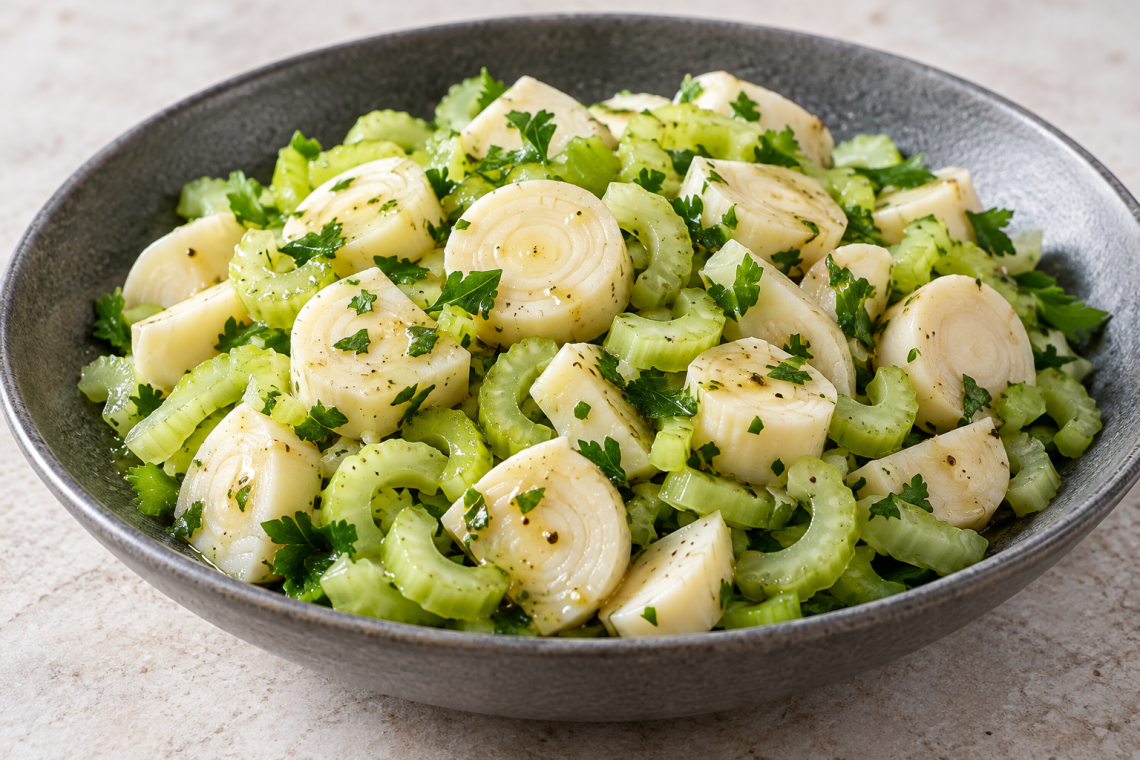
Hearts of palm and celery salad is a cool, crisp side that needs no cooking. Tender hearts of palm bring a mild, slightly tangy bite from their packing liquid, while thin celery slices keep the bowl lively. A small lemon-Dijon dressing coats the vegetables without weighing them down.
Affiliate disclosure: As an Amazon Associate I earn from qualifying purchases. These paid links open Amazon search results for comparing equipment.
Choose a mixing bowl (paid link) large enough for the hearts of palm and celery, then use a flexible spatula (paid link) or large spoon for a light fold rather than vigorous stirring.
The main technique is matching the cuts to the ingredients. Hearts of palm hold together best in substantial pieces; celery is more pleasant here when sliced thinly across its fibers. Drain the jarred vegetable carefully, make the dressing in the serving bowl, and fold just enough to combine. A short refrigerated rest lets the flavors settle without turning this into a long marinating project.
Jump to recipe · Ingredients · Method · Cut sizes · Make ahead
Keep hearts of palm tender and celery crisp
- Drain hearts of palm and blot gently so the dressing is not diluted.
- Slice with a sharp knife to avoid crushing the soft cylinders.
- Cut celery thinly and consistently for crunch without large fibrous bites.
- Toss with dressing shortly before serving, folding rather than stirring hard.
Let the salad stand only long enough for flavors to combine. Taste after resting because the hearts of palm and any brined ingredients may contribute more salt over time.
How to cut and toss hearts of palm and celery salad
| Ingredient | Useful cut | Reason |
|---|---|---|
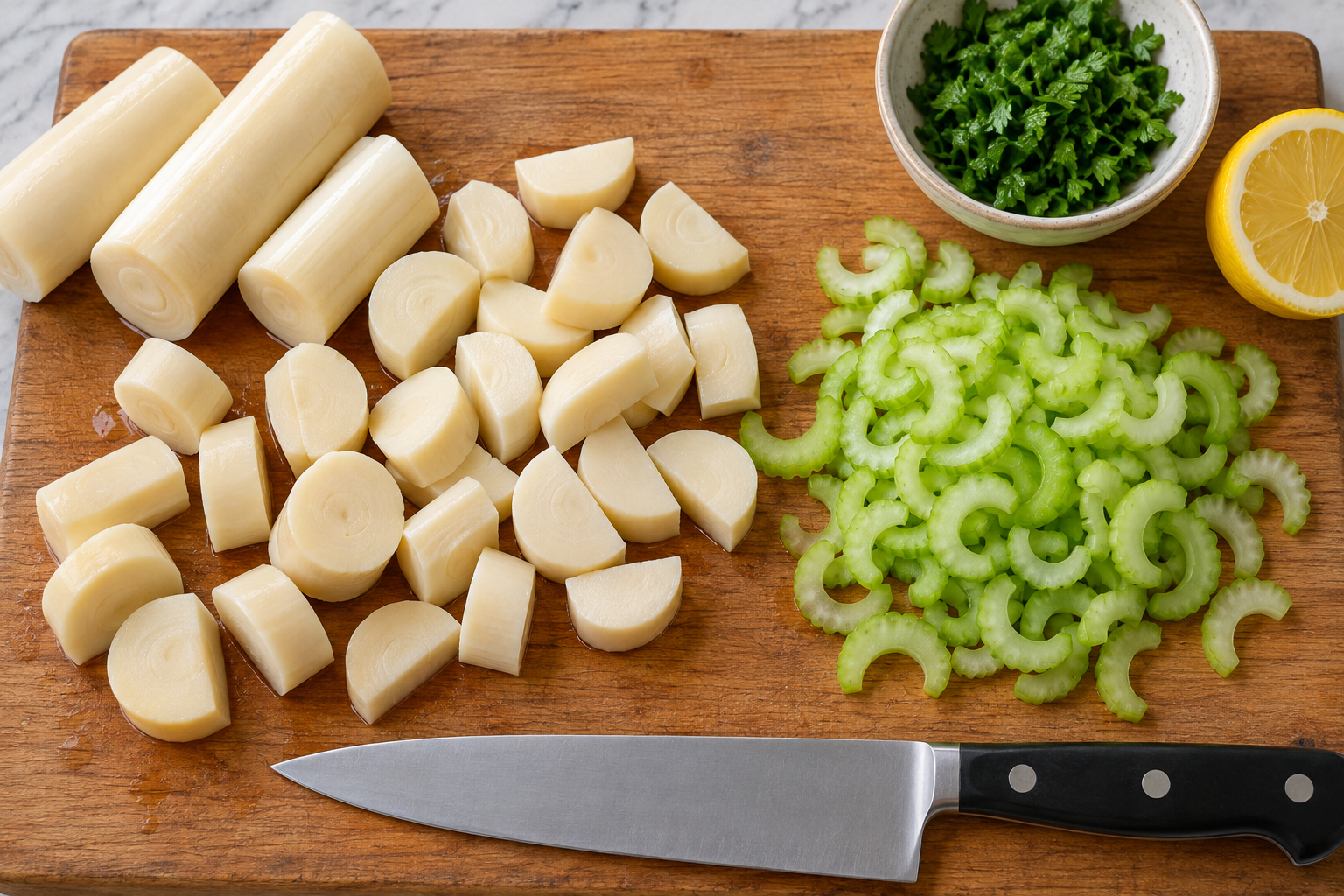
| Hearts of palm | 1/2-inch coins or half-moons | Substantial pieces resist breaking during folding. |
| Celery | Slices about 1/8 inch thick | Thin cuts are easy to eat beside the tender palm pieces. |
| Parsley | Finely chopped leaves and tender stems | Small pieces distribute through the dressing rather than forming leafy clumps. |
If the hearts of palm are especially wide, halve the cylinders lengthwise before slicing. Keep the pieces bite-sized, but do not mince them. Very thin rings can separate into strands when tossed repeatedly. Broken pieces are still usable; fold those in at the end rather than stirring them through every step.
Slice celery across the rib, not into long strips. Peel away obvious tough strings from large outer ribs if they pull away readily. Tender inner ribs are convenient, though either part of a sound celery bunch works. A little celery leaf can replace some parsley if you enjoy its stronger flavor.
Hearts of palm and celery salad
Yield: 4 side servings. Prep: 15 minutes. Rest: 10 minutes in the refrigerator. Total: 25 minutes. Cooking: none.
Equipment
Use a colander, cutting board, sharp knife, measuring spoons, a mixing bowl, and a flexible spatula or large spoon. A vegetable peeler can help remove tough celery strings, but is optional. Choose a bowl large enough to fold the salad without crushing the pieces against the rim.
Measured ingredients
- 9 ounces (250 g) drained plain hearts of palm, from enough jars or cans to reach that drained weight
- 5 ounces (150 g) trimmed celery, about 3 medium ribs, thinly sliced
- 2 tablespoons finely chopped flat-leaf parsley
- 1 1/2 tablespoons olive oil
- 1 tablespoon fresh lemon juice
- 1 teaspoon Dijon mustard
- 1/8 teaspoon fine salt, plus a small pinch only if needed
- 1/8 teaspoon freshly ground black pepper
Step-by-step method
- Drain the hearts of palm. Tip them into a colander and drain for about 5 minutes while preparing the celery. Taste a small piece. If the packing liquid has left it very salty or sharply briny, rinse briefly with cool water, then drain well and pat away surface moisture.
- Prepare the fresh vegetables. Rinse the celery and parsley under running water, then dry them. Trim the celery ends and remove obvious tough strings. Slice the ribs about 1/8 inch thick across their width. Finely chop the parsley.
- Cut the hearts of palm. Slice the drained cylinders into 1/2-inch coins. Halve especially wide cylinders lengthwise first to make half-moons. Set aside any very delicate broken pieces for the final fold.
- Mix the dressing. In the serving bowl, whisk the olive oil, lemon juice, mustard, salt, and pepper until combined. Taste with a celery slice rather than from the spoon alone; the vegetables will dilute the dressing.
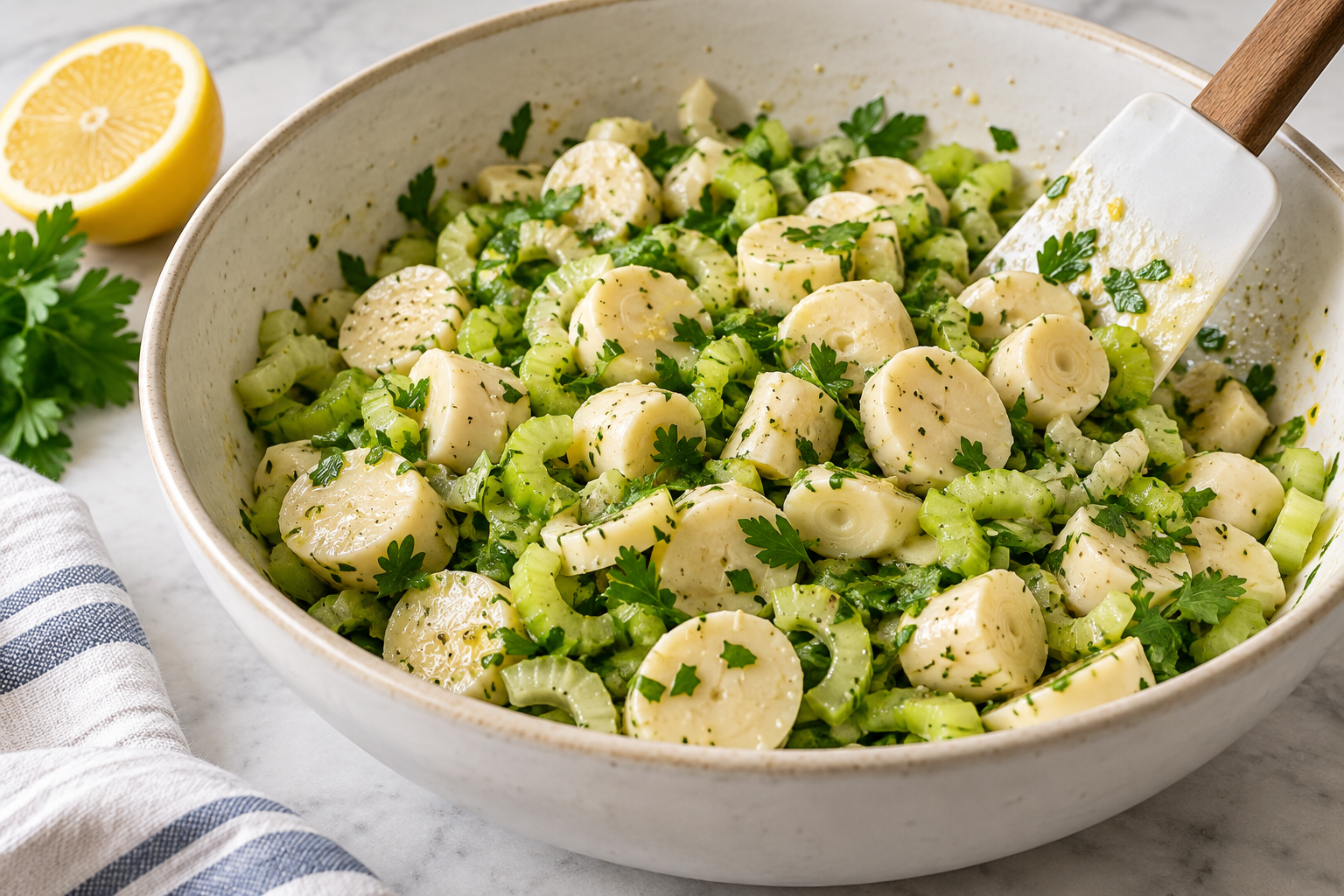
- Fold and rest. Add the celery, hearts of palm, and parsley. Fold gently from the bottom until coated, adding delicate fragments last. Cover and refrigerate for 10 minutes.
- Finish at the table. Fold once more, taste, and add a small pinch of salt only if needed. Serve with a spoon that can lift both vegetables and a little dressing. Keep the remaining salad refrigerated.
Read the label before seasoning
Look for plain hearts of palm in water or brine. Products marinated in oil, herbs, or a strong vinegar mixture already bring a dressing of their own. They can be useful ingredients, but they make the measured lemon and salt in this recipe less predictable. The simplest version starts with an unseasoned product.
Use drained weight when measuring. A 14-ounce jar does not supply 14 ounces of vegetable once its liquid is removed. If the label does not give a drained weight, weigh the drained contents on a kitchen scale. The recipe can be scaled to the amount available rather than requiring an exact number of jars.
A quick taste before mixing prevents most over-salting. Mustard and brined hearts of palm can already contribute noticeable salt. Start with the small measured amount, chill briefly, and taste again after the dressing has spread through the vegetables. Adding salt is easier than removing it from a finished cold salad.
Adjust the dressing to the bowl
The measured dressing should lightly coat the vegetables with little liquid pooling below. If the salad seems wet, first check whether water or brine remained on the hearts of palm. More mustard will thicken the impression but will not remove that extra liquid. Lift the salad with a slotted spoon if a particular jar releases more moisture.
If the salad tastes flat, try a few drops of lemon juice, fold, and retaste. If it tastes sharp, add 1 teaspoon olive oil and fold gently. Make one change at a time. A large extra squeeze of lemon can turn a balanced bowl into something that needs more vegetable to bring it back into proportion.
Three useful ways to vary it
- A milder celery note: Use tender inner ribs and leave out celery leaves. Keep the total trimmed celery weight the same so the balance of dressing stays close.
- A different herb: Replace the parsley with 1 tablespoon chopped fresh dill. Dill is more assertive, so begin with less and taste before adding another spoonful.
- No mustard: Omit the Dijon and whisk the lemon and oil just before adding the vegetables. The dressing will separate more readily; fold again immediately before serving.
For a larger lunch portion, serve the salad beside a scoop of cooked, cooled white beans rather than immediately doubling the dressing. If you decide to mix beans directly into the bowl, add a small amount of extra lemon and oil after tasting. Beans change both the bulk and the amount of dressing needed.
Make ahead by keeping the cuts separate
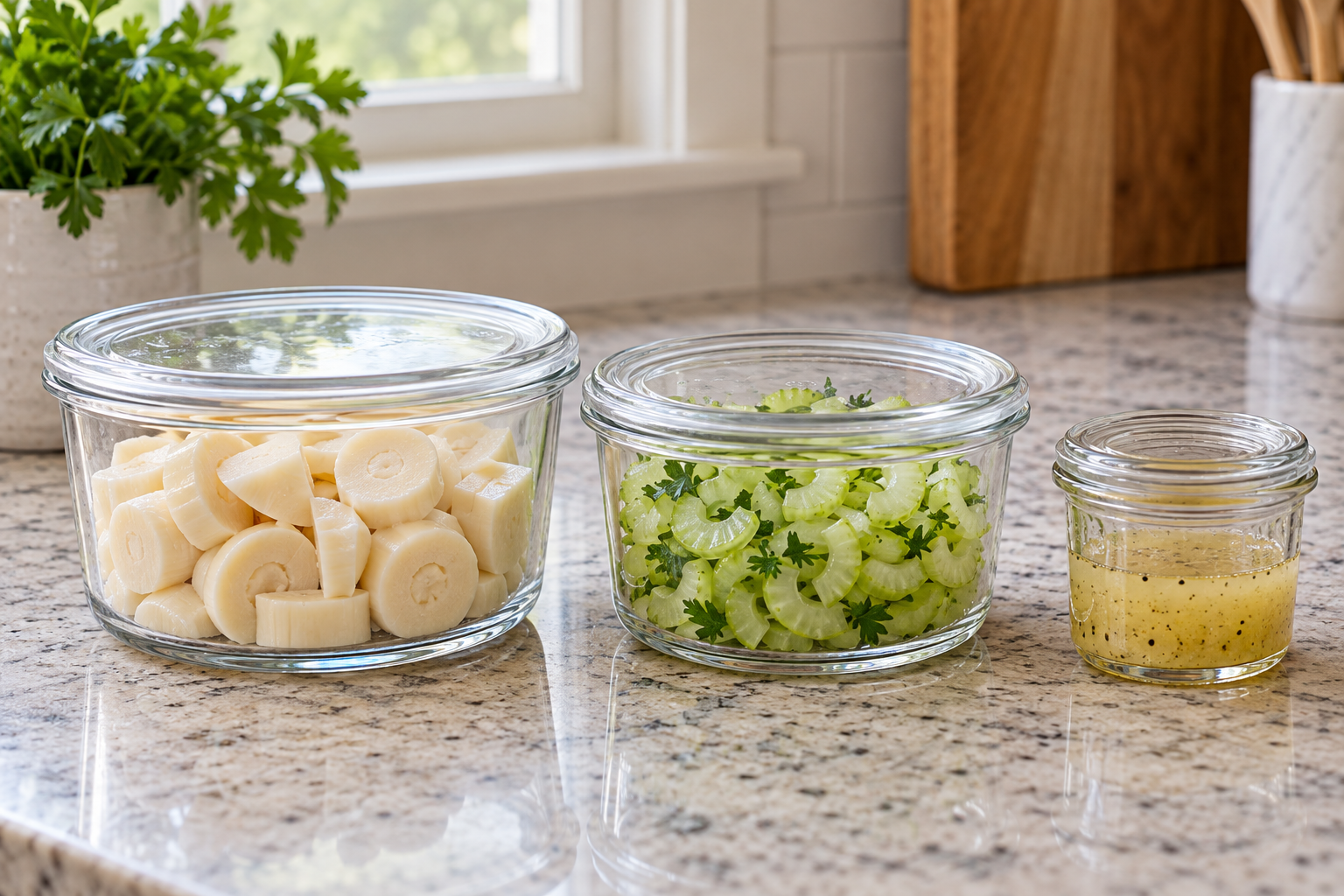
For the best celery crunch, drain and cut the hearts of palm, prepare the celery, and mix the dressing separately up to a day ahead. Keep everything covered in the refrigerator. Combine about 10 minutes before serving. This approach also makes it easier to portion only the amount you need for one meal.
A fully dressed salad is still useful the next day, but the celery becomes less crisp and the palm pieces may release more liquid. A gentle fold is enough before serving. Avoid repeatedly shaking a container to redistribute the dressing, since that can break the hearts of palm into small strands.
Keep the salad cold
Wash the fresh produce under running water and use clean hands, utensils, and cutting surfaces, following FDA produce preparation guidance. Refrigerate the prepared salad promptly at 40°F or below. Do not leave it at room temperature for more than 2 hours, or more than 1 hour if the temperature is above 90°F, consistent with USDA leftover handling advice.
For the best texture, plan to eat the dressed salad within 2 days. That is a quality recommendation for this mixture, not a reason to ignore its temperature history. Pack lunch portions with an ice pack when refrigeration is unavailable, and keep a larger serving container in the refrigerator while you eat.
Put it next to something warm
Serve the cool salad beside pan-seared chicken breast or use it as the crisp side for roasted pepper and white bean pita pockets. Its dressing is already assertive enough to brighten a plate, so you do not need an additional lemon sauce over everything.
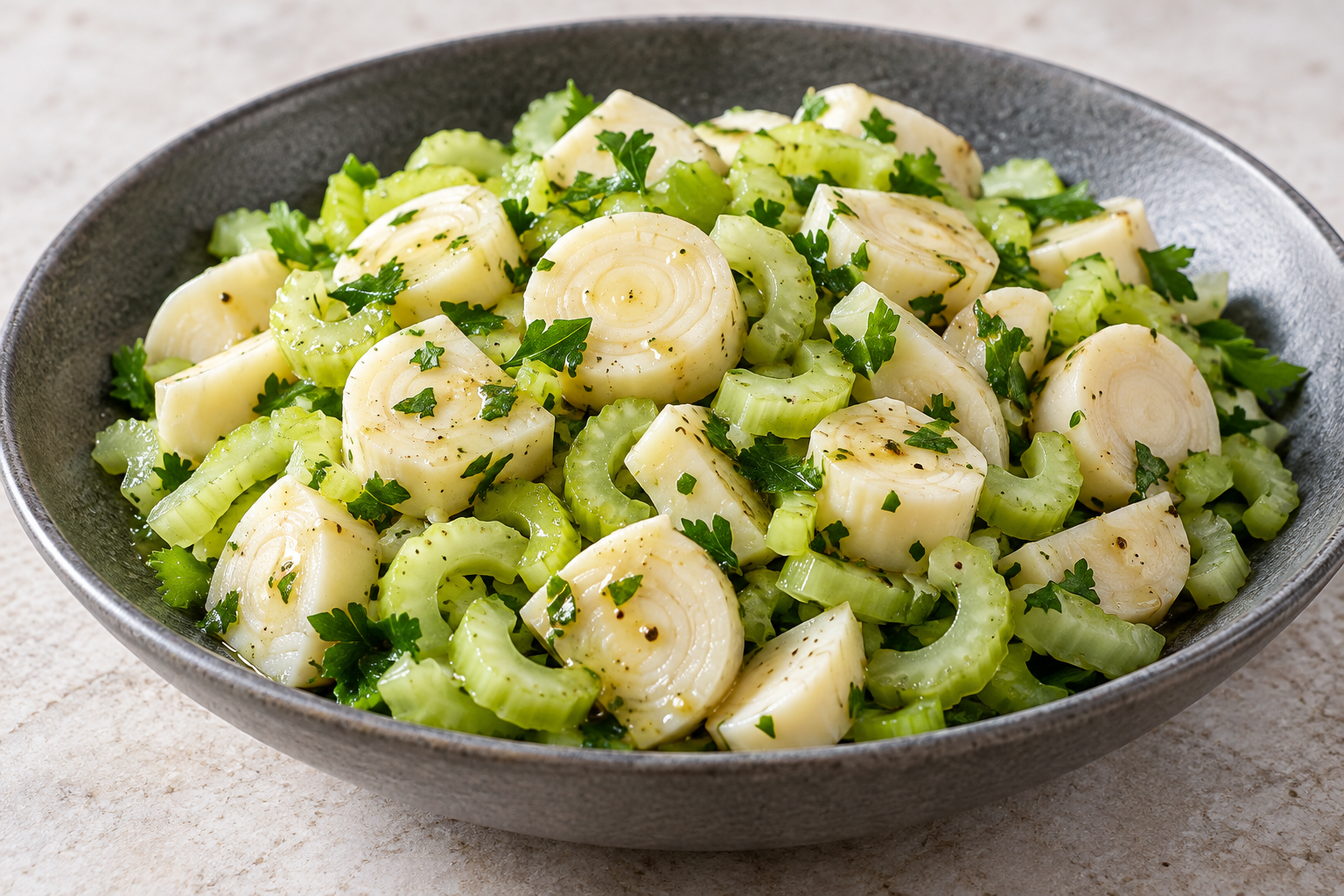
A shallow bowl makes the two vegetables easy to see and keeps the dressing distributed. For a shared meal, set out a serving spoon and offer small portions first. The salad works as a side because its texture and acidity provide contrast; it does not need a long list of toppings to make that contrast useful.
Questions about the no-cook salad
Are canned and jarred hearts of palm interchangeable?
Plain versions can both work. Compare the drained amount and taste the vegetable before seasoning. Packing liquid and firmness vary, so rinse only if needed and fold especially tender pieces gently.
Can I use hearts of palm noodles?
They will create a different salad with a strand-like texture. This recipe is designed around the cylinders that slice into coins or half-moons. The same dressing can season noodles, but the cuts and serving appearance will change.
Do the hearts of palm need cooking?
Use a commercially packaged product labeled ready to eat and follow its package directions. Plain canned or jarred hearts of palm are ordinarily used directly after draining. This recipe is not written for preparing freshly harvested hearts of palm.
Can hearts of palm and celery salad sit overnight?
Yes, if refrigerated promptly and kept cold, though the celery will soften somewhat. For better crunch, keep the vegetables and dressing separate until close to serving. Fold the dressed salad gently rather than shaking it.
What can replace lemon juice?
Use 2 teaspoons white wine vinegar to start, then taste before adding more. Different vinegars vary in sharpness. Do not replace the tablespoon of lemon with an equal amount of a strongly flavored vinegar without checking the result.
Can I make one serving?
Quarter the vegetable amounts and dressing, using a small bowl. A tiny measured amount of salt is awkward, so start with a light pinch and taste after mixing. A portion from the larger batch can also be packed separately for lunch.
Serve the two textures together
For hearts of palm and celery salad, keep the palm pieces substantial and the celery thin. Drain carefully, fold in the lemon-Dijon dressing, and chill for the measured ten minutes. Serve while the celery still has crunch, with just enough dressing to coat the vegetables.
Build an evenly dressed hearts of palm and celery salad
Hearts of palm and celery salad needs only a small dressing, so careful draining and thoughtful folding have a noticeable effect. Before cutting, choose a bowl that leaves space above the vegetables for lifting them from the bottom. Set a separate small dish beside the board for fragile palm fragments. Those pieces can join at the end instead of breaking down while the sturdier celery is coated.
Measure after the packing liquid is gone
Let the hearts of palm drain for the stated interval before weighing the usable pieces. If several containers are needed, combine their drained contents and measure the total rather than assuming that each jar contributes an identical amount. Taste a small piece before deciding whether rinsing is useful. After any rinse, let the new water drain away and blot the surface gently. Avoid pressing hard enough to flatten the cylinders. Keeping liquid out of the measured portion helps the small lemon dressing remain consistent from one brand of hearts of palm to another.
Use a stable position for the palm cylinders
Set a cylinder on the board and hold it gently without squeezing. If it is especially wide, cut it lengthwise first so the flat side can sit on the board for the crosswise slices. Use a clean downward cut instead of forcing a dull knife through with repeated pressure. Move finished coins or half-moons to a broad area where they are not stacked beneath more cutting work. If a piece separates into tender layers, place it with the reserved fragments rather than trying to compress those layers back into a firm coin.
Check celery slices before adding the full amount
Trim the celery, remove obvious tough strings, and slice across the rib at the stated thinness. Look at a few pieces from the thick base end and compare them with slices from the narrower upper section. A very wide rib can be split lengthwise before crosswise cutting if its pieces would otherwise be awkward beside the palm. Keep the final trimmed weight consistent. Dry the washed parsley before chopping so it scatters through the dressing as flecks instead of arriving as a wet clump that is difficult to distribute gently.
Coat from the bottom with a broad fold
Whisk the dressing in the empty serving bowl so the mustard and pepper disperse before vegetables obstruct the whisk. Add the prepared celery, palm pieces, and parsley as directed. Slide the flexible spatula down the side and under the mixture, then lift toward the middle while turning the bowl. Repeat only until the vegetables show a light coating. Add the fragile fragments near the end and fold once or twice more. Avoid pressing the spatula against the bowl wall with palm trapped underneath, which can crush a tender piece even during otherwise gentle mixing.
Taste after the short rest and portion thoughtfully
Once the salad has had its refrigerated rest, take a spoonful containing both celery and hearts of palm before deciding on extra salt. Fold any dressing from the base back through the vegetables without shaking the bowl. For four side portions, share larger palm pieces among the dishes and then add the remaining celery and dressing. A shallow serving dish makes it easier to see whether one area has collected most of the liquid. Keep additions restrained so the finished side retains its two distinct textures and the light lemon-mustard coating described in the recipe.
Printable recipe
Hearts of Palm and Celery Salad
Ingredients
Equipment
Method
- Drain the hearts of palm. Tip them into a colander and drain for about 5 minutes while preparing the celery. Taste a small piece. If the packing liquid has left it very salty or sharply briny, rinse briefly with cool water, then drain well and pat away surface moisture.
- Prepare the fresh vegetables. Rinse the celery and parsley under running water, then dry them. Trim the celery ends and remove obvious tough strings. Slice the ribs about 1/8 inch thick across their width. Finely chop the parsley.
- Cut the hearts of palm. Slice the drained cylinders into 1/2-inch coins. Halve especially wide cylinders lengthwise first to make half-moons. Set aside any very delicate broken pieces for the final fold.
- Mix the dressing. In the serving bowl, whisk the olive oil, lemon juice, mustard, salt, and pepper until combined. Taste with a celery slice rather than from the spoon alone; the vegetables will dilute the dressing.
- Fold and rest. Add the celery, hearts of palm, and parsley. Fold gently from the bottom until coated, adding delicate fragments last. Cover and refrigerate for 10 minutes.
- Finish at the table. Fold once more, taste, and add a small pinch of salt only if needed. Serve with a spoon that can lift both vegetables and a little dressing. Keep the remaining salad refrigerated.
Notes
- Use plain, ready-to-eat canned or jarred hearts of palm. Measure 9 ounces (about 250 g) after draining; the container’s total weight includes its packing liquid.
- Cut hearts of palm into 1/2-inch coins or half-moons and celery into thin 1/8-inch slices. Fold gently; do not shake the finished salad.
- For advance preparation, keep the cut vegetables and dressing separately covered in the refrigerator for up to a day, then combine 10 minutes before serving.
- Refrigerate at 40°F (4°C) or below. Eat the dressed salad within 2 days for best texture. Refrigerate perishable food within 2 hours, or 1 hour above 90°F (32°C); see USDA handling guidance.