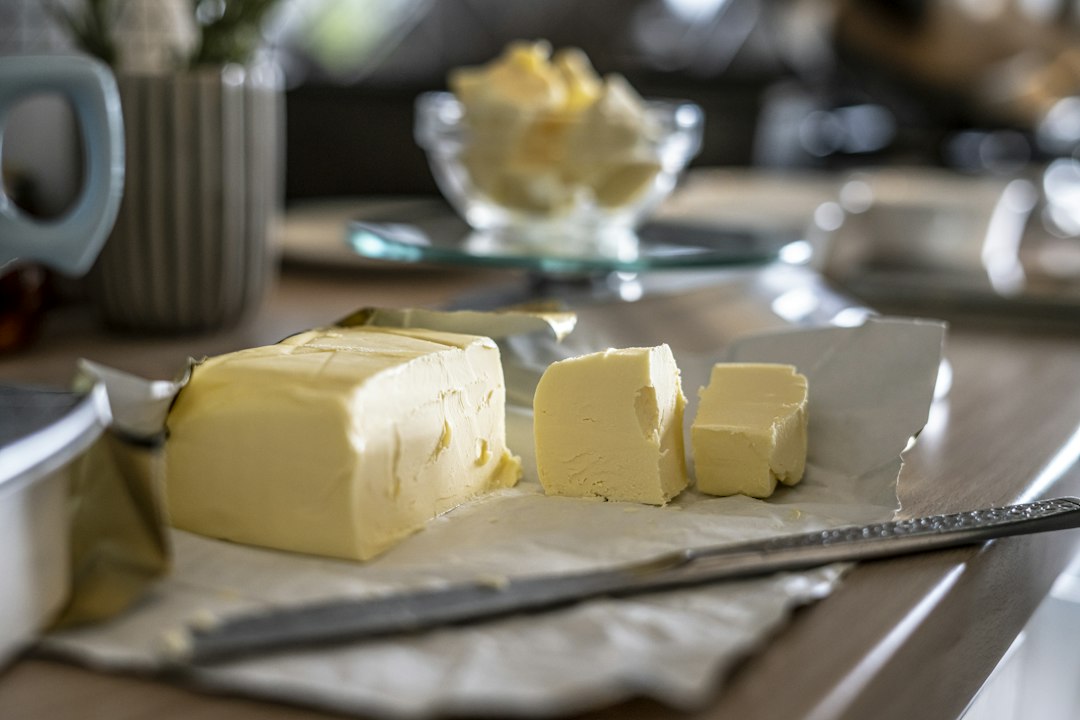
How to soften butter quickly: cut it into 1/2-inch cubes, spread the pieces in one layer, and begin checking after 10 minutes. Keep checking every few minutes; this is an inspection point, not a promised finish time. For creaming, the butter should still feel cool, hold its shape, and take a shallow fingertip dent with gentle resistance.
- Cut into ½-inch pieces
- Check from 10 minutes
- Cool + pliable, never greasy
Room temperature, butter style, and the size of the pieces all change the timing. Use the texture cues below as the deciding test. If the butter looks shiny, greasy, slumped, or liquid around the edges, it is already too warm for recipes that depend on creaming.
Before you soften it: what does the recipe require?
Softened, cold, and melted butter are not interchangeable instructions.
- Softened butter is commonly used for creaming, buttercream, reverse-creamed cakes, and some enriched doughs.
- Cold, solid butter is important in many flaky pie crust, biscuit, scone, puff-pastry, and laminated-dough recipes. Distinct cold pieces create steam and layers as they bake.
- Melted butter belongs in recipes that explicitly call for it. It will not cream with sugar like softened butter.
This distinction is especially important for grated butter. Grating cold butter can help distribute it through pastry dough, but the shreds should stay cold. Do not soften grated butter for pie crust or laminated pastry unless the recipe specifically tells you to.
The fingertip test: too cold, ready, too warm, or melted
| What you see and feel | What it means | What to do |
|---|---|---|
| Hard surface; a finger barely leaves a mark | Too cold for creaming | Cut or flatten it and give it more time |
| Cool and matte; a finger leaves a shallow dent, but the stick keeps its shape | Ready for creaming, buttercream, or a recipe that calls for softened butter | Use it now |
| Soft or beginning to slump, but still matte | Too warm | Chill briefly, then check the texture again |
| Shiny, greasy, or liquid around the edges | Partly melted; the emulsion may be damaged | For creaming or structure, start with fresh butter |
Soft butter matters because creaming butter with sugar creates and holds tiny air pockets. Butter that is too cold will not aerate well; butter that is partly melted cannot hold the same structure. That difference can change the rise and texture of cookies, cakes, and frostings.
Choose the lowest-risk method that fits your time
Most controllable: cut it into cubes or thin pats
This is a dependable method when you can allow the butter to warm gradually. Cut the amount you need into roughly 1/2-inch cubes or thin pats and arrange them in one layer on a plate. The extra surface area lets the butter warm more evenly than a whole stick.
- Unwrap only the amount the recipe needs.
- Cut it into even 1/2-inch pieces.
- Spread the pieces apart on a plate.
- Check at 10 minutes, then every few minutes using the fingertip test.
In a cool kitchen it may take longer; in a warm kitchen it may be ready sooner. A King Arthur Baking comparison found that sliced butter took about 30 minutes in a 73°F kitchen, which is useful context rather than a universal timer.
With a rolling pin: flatten it between parchment
Flattening changes the butter’s shape so it warms faster and more evenly. Place a cold stick between two sheets of parchment or wax paper. Tap it with a rolling pin to make it manageable, then roll it into an even thin sheet. Leave it covered and check it frequently.
For creaming, let the flattened butter warm only until it is cool and pliable. For flaky pastry, pounding or rolling can make cold butter workable without intentionally warming it; follow the pastry recipe’s temperature directions.
For a small amount: grate cold butter
Use the large holes of a box grater and spread the shreds loosely on a plate. For a creaming recipe, check the shreds immediately and frequently, and use them once they bend without feeling greasy. Handle them as little as possible because small shreds can go from cold to oily quickly.
For pastry, grate the butter while it is cold and return it to the refrigerator if it starts to soften. Grating is an incorporation technique in that case, not a reason to bring the butter to room temperature.
Emergency backup: microwave in five-second intervals
A microwave is the fastest option but is easy to overshoot because heating can be uneven. If it is your only practical choice, remove all foil, use the lowest power or defrost setting, and heat for five seconds at a time. Rotate or turn the butter between intervals and stop while it still feels slightly firmer than your target; residual heat continues moving inward.
Microwave wattage and butter size vary, so no single number of seconds is reliable. If any edge turns glossy or liquid, stop immediately.
Why the warm-glass trick is not the first choice
Covering butter with a warmed, dry glass or bowl is popular, but it can soften the outside while leaving the center hard. A published King Arthur Baking comparison found the method inconsistent. Cubing or flattening gives you more control.
If you still use the method, warm the empty vessel with hot tap water, dry it completely, and place it over cut butter rather than a whole thick stick. Check frequently and stop as soon as the pieces pass the fingertip test. Do not pour water directly on the butter.
Rescue map when the texture is wrong
| What happened | How to correct it | Best next use |
|---|---|---|
| The outside is soft but the center is hard | Stop applying heat. Cut or flatten the butter, spread it out, and let the temperature even out. | Use it in the intended recipe once it is cool, pliable, and evenly softened. |
| The butter is very soft but still matte | Refrigerate it briefly, then repeat the fingertip test. | Use it for creaming only when it holds a shallow finger mark without slumping. |
| An edge is shiny, greasy, or partly melted | Stop heating. Cooling makes it solid again but may not restore the original emulsion. | Use it in a recipe written for melted butter; start fresh when reliable creaming structure matters. |
| You only need spreadable butter | Let it soften beyond the creaming stage, but stop before it becomes oily or liquid. | A thin, even layer works for toaster-oven grilled cheese; do not use spreadability alone as a creaming test. |
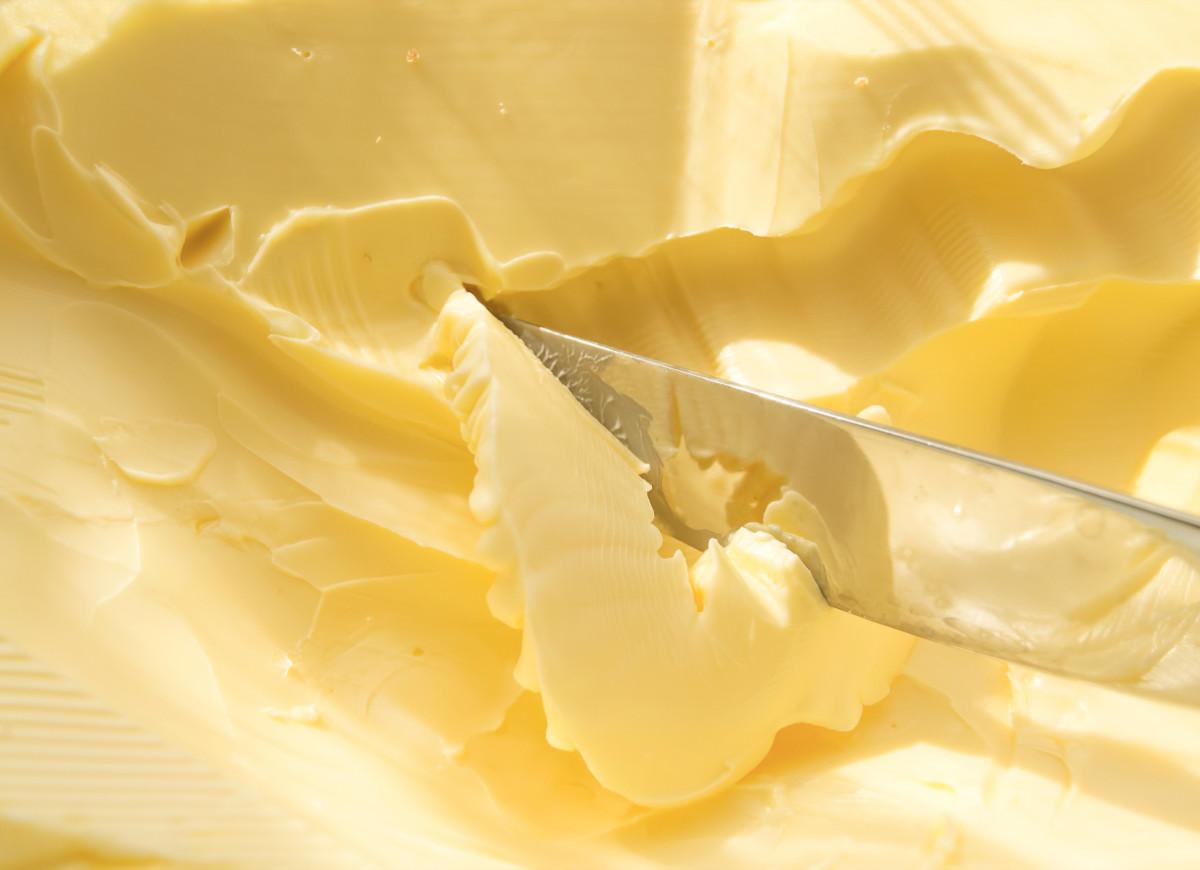
Returning softened butter to the refrigerator
Take out only the amount you need, especially in a warm kitchen. USDA FoodKeeper guidance lists unsalted butter for 1 to 2 days at room temperature. For baking performance, butter that has been out for only a few hours and stayed below 70°F can be returned to the refrigerator, then softened again when needed. Discard butter that develops visible mold, unusual discoloration, or a rancid or otherwise off smell; appearance and smell are spoilage checks, not proof that food is safe.
Sources
- USDA FoodKeeper storage guidance
- King Arthur Baking: Baking trials — how to soften butter quickly
- King Arthur Baking: Why butter temperature matters in pastry
- King Arthur Baking: Creaming butter and sugar
- King Arthur Baking: Can softened butter go back in the fridge?
Use the butter in the right recipe
Cake-style peach cobbler calls for melted butter, so it can use butter that has passed the creaming stage. Toaster-oven grilled cheese needs spreadable butter for a thin, even coating. Match the texture to the instructions before you begin.