FAMILY PASTA BAKE
Baked ziti with cottage cheese and frozen spinach is a budget-friendly family dinner made with one 12-ounce box of pasta, a jar of marinara, a full package of frozen spinach, and three practical cheeses. The pasta is cooked just short of tender, layered in a 9-by-13-inch dish, and baked until the center is hot and the mozzarella bubbles around the edges.
This meatless version serves six generously or eight alongside a salad or bread. Cottage cheese replaces ricotta without requiring a blender, while thoroughly squeezed frozen spinach adds vegetables without the short shelf life of fresh greens. The assembled casserole takes about 35 minutes in the oven and can be prepared a day ahead.
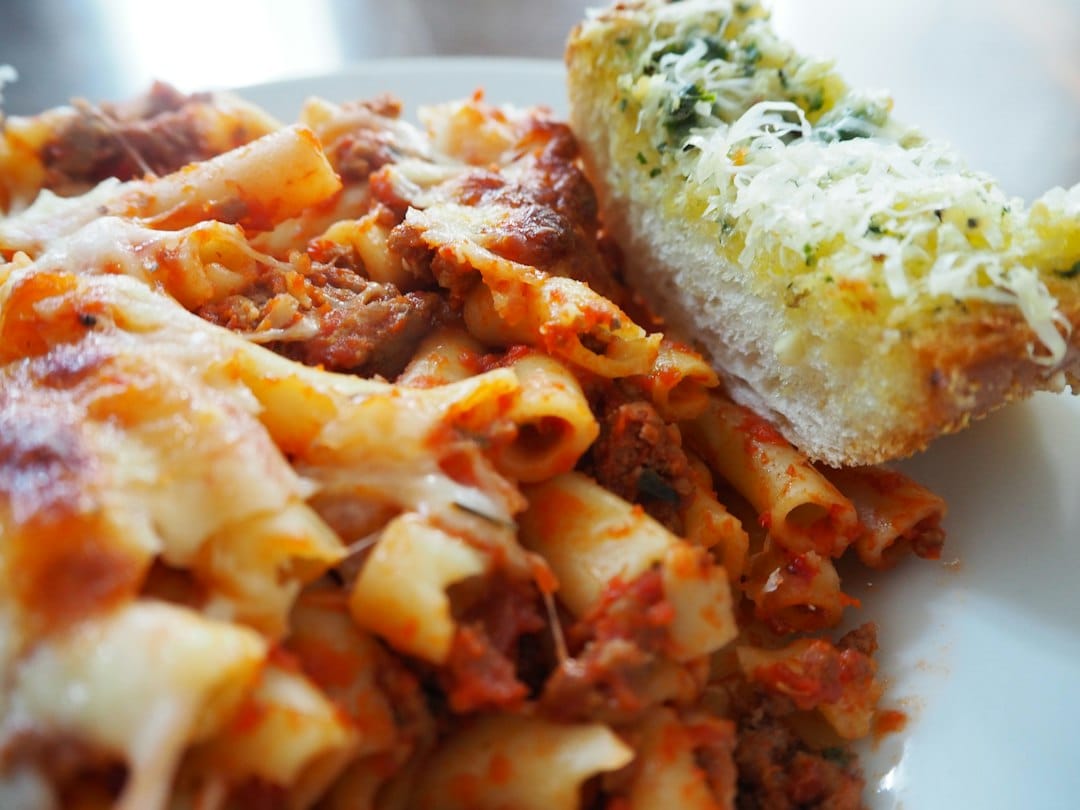
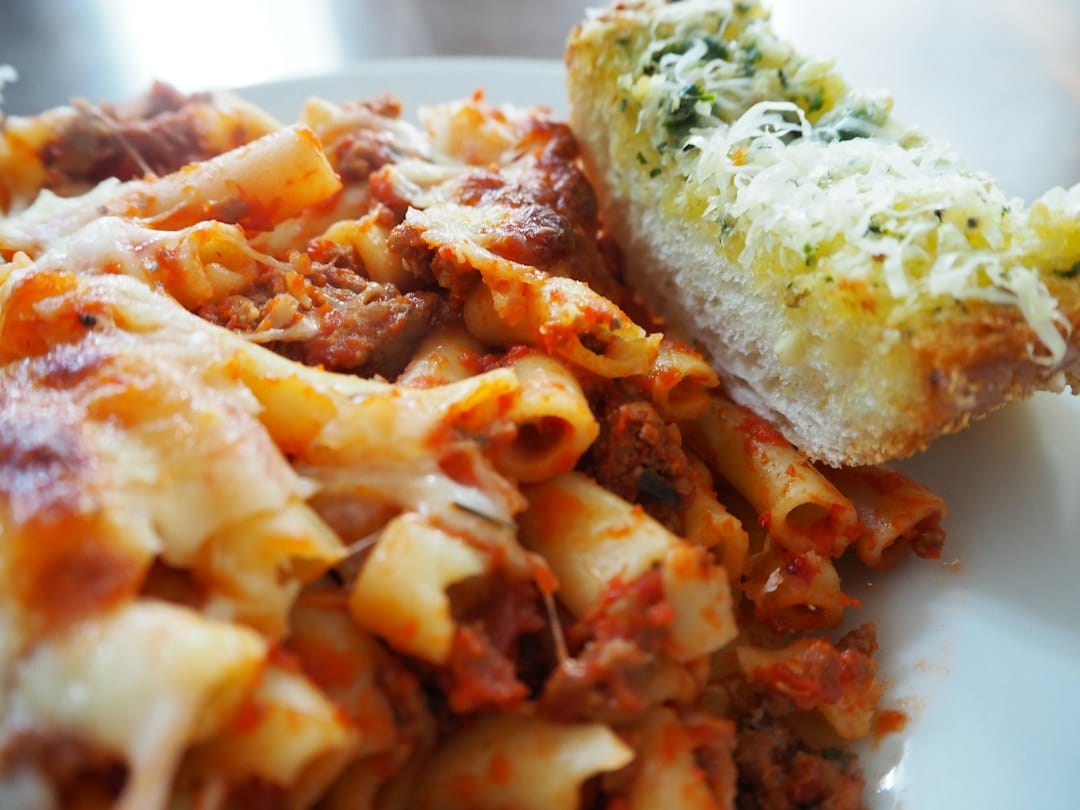
The baked-pasta photo is serving inspiration; it does not show a verified batch of this spinach and cottage-cheese recipe.
Baked ziti with cottage cheese and frozen spinach recipe
This baked ziti with cottage cheese and frozen spinach is written for a 3-quart, 9-by-13-inch baking dish. Do not pack the same quantity into a shallow 8-inch square dish. If you want two smaller casseroles, divide the mixture between two 1 1/2- to 2-quart dishes and begin checking them a few minutes early.
Yield and timing
- Yield: 6 generous servings or 8 smaller servings
- Prep time: 25 minutes
- Bake time: 35 to 40 minutes
- Rest time: 10 minutes
- Total time: about 70 minutes
- Oven temperature: 375°F (191°C)
Equipment
- 3-quart 9-by-13-inch baking dish
- Large stockpot
- Colander
- Large skillet or saucepan
- Large mixing bowl
- Medium mixing bowl
- Wooden spoon or heatproof spatula
- Measuring cups and spoons
- Aluminum foil
- Instant-read thermometer, especially for a refrigerated make-ahead casserole
Ingredients
- 12 ounces dry ziti, penne, or rigatoni
- 1 tablespoon olive oil, plus a small amount for the baking dish
- 1 small yellow onion, about 5 ounces, finely diced
- 3 garlic cloves, minced
- 1 jar (24 ounces) marinara sauce
- 1 teaspoon dried Italian seasoning
- 1/4 teaspoon crushed red pepper flakes, optional
- 1 package (10 ounces) frozen chopped spinach, thawed and squeezed very dry
- 1 container (16 ounces) cottage cheese, preferably 2% or whole-milk
- 2 cups (8 ounces) shredded low-moisture mozzarella, divided
- 1/3 cup finely grated Parmesan cheese
- 1/2 teaspoon fine salt, divided, plus salt for the pasta water
- 1/4 teaspoon black pepper
- Up to 1/2 cup reserved pasta cooking water, as needed
- 2 tablespoons chopped parsley or basil, optional, for serving
Numbered instructions
Heat the oven and prepare the dish. Place a rack in the center of the oven and heat it to 375°F. Lightly oil a 3-quart 9-by-13-inch baking dish. Bring a large pot of water to a boil and salt it according to your normal pasta-cooking practice.
Dry the spinach thoroughly. Put the thawed spinach in a clean kitchen towel or several layers of paper towel and squeeze over the sink until little liquid remains. Break the compacted spinach apart with your fingers so it distributes evenly through the cheese mixture.
Cook the pasta until very firm. Add the ziti to the boiling water and cook it about 2 minutes less than the package’s al dente time. Before draining, scoop out 1/2 cup of the cooking water. Drain the pasta well; do not rinse it.
Build the tomato sauce. While the pasta boils, heat 1 tablespoon olive oil in a large skillet over medium heat. Add the onion and 1/4 teaspoon salt. Cook for 5 to 7 minutes, stirring occasionally, until softened but not deeply browned. Add the garlic, Italian seasoning, and red pepper flakes. Stir for 30 seconds, just until fragrant.
Loosen the marinara. Pour the marinara into the skillet and bring it to a gentle simmer. If the marinara is thick, stir in 1/4 cup reserved pasta water. The sauce should coat a spoon but flow easily; add the remaining pasta water a tablespoon at a time only as needed. If the marinara already flows easily, omit the extra water. Simmer for 2 minutes, then remove from the heat.
Mix the spinach-cheese layer. In a medium bowl, combine the squeezed spinach, cottage cheese, 1 cup mozzarella, Parmesan, remaining 1/4 teaspoon salt, and black pepper. Stir until the spinach is dispersed and no large compressed clumps remain. If liquid is pooled on top of the cottage cheese before measuring, spoon off the obvious excess rather than draining it completely.
Coat the pasta. Put the drained ziti in a large bowl or return it to the empty stockpot. Add about three-quarters of the tomato sauce and fold until every tube is coated. The mixture should look a little saucier than pasta served directly from the pot because the oven will absorb moisture.
Layer the casserole. Spread a thin layer of the reserved tomato sauce across the bottom of the prepared dish. Add half of the sauced pasta. Drop the spinach-cottage-cheese mixture over the pasta in small spoonfuls, then spread it gently without pressing down. Add the remaining pasta, spoon over the remaining sauce, and sprinkle with the remaining 1 cup mozzarella.
Bake covered, then uncover. Cover the dish with foil, tenting it slightly so it does not stick to the cheese. Bake for 25 minutes. Remove the foil and bake for another 10 to 15 minutes, until the sauce bubbles at the edges, the mozzarella is fully melted, and the center reaches 165°F. If the top needs more color, broil for 1 to 2 minutes only in a dish rated by its manufacturer for broiler use. Watch continuously; an oven-safe glass or ceramic dish is not automatically broiler-safe.
Rest before serving. Remove the casserole from the oven and let it stand for 10 minutes. This pause allows the sauce and cheese to settle so servings hold together better. Sprinkle with parsley or basil, if using, and scoop with a wide spatula.
How to remove water from frozen spinach
Thaw the spinach in the refrigerator overnight, in a microwave according to the package directions, or in a fine-mesh strainer under cold running water. If you use the microwave, let the spinach cool enough to handle safely before squeezing.
A clean, lint-free kitchen towel removes water more efficiently than pressing with a spoon. Gather the towel around the spinach and twist firmly over the sink. Open the towel, loosen the spinach, and squeeze once more. The final amount will look surprisingly small; that is expected.
Do not add frozen spinach directly to the cheese mixture. Ice and trapped water melt during baking, which can dilute the sauce and create a watery layer. Also avoid substituting fresh spinach cup for cup. Fresh spinach must be wilted and its moisture cooked off before it can replace the frozen package reliably.
Choosing and measuring cottage cheese
Small-curd cottage cheese spreads most evenly, but large-curd works if that is what you have. Whole-milk cottage cheese gives the richest result; 2% is a practical middle ground. Nonfat cottage cheese can release more water and produce a less creamy layer, so it is not the first choice for this recipe.
Unlike ricotta, cottage cheese has distinct curds. There is no need to blend it unless your family strongly prefers a smooth filling. Stirring it with spinach, mozzarella, and Parmesan distributes the curds through the casserole so they do not sit in one thick layer.
Check the container before adding it. A little whey is normal, but a visible pool can loosen the filling. Spoon off only the excess liquid; fully straining the cottage cheese can make the finished pasta dry.
Follow the layers from the bottom up
Before assembling, put the sauced pasta, spinach-cheese filling, reserved tomato sauce, and topping mozzarella beside the baking dish. The two cups of mozzarella are divided: one cup is already in the filling, and the other cup belongs on top.
| Layer | What goes into the dish |
|---|---|
| Bottom coating | A thin spread of reserved tomato sauce |
| First pasta layer | Half of the sauced pasta |
| Creamy middle | All of the prepared spinach-cottage-cheese mixture |
| Second pasta layer | The remaining half of the sauced pasta |
| Finish | The remaining reserved sauce, then 1 cup mozzarella |
The reserved sauce is the portion left after mixing about three-quarters of the sauce into the noodles. Use a little to coat the dish and keep the rest for the top. Do not empty that entire reserved portion under the first pasta layer, leaving the upper noodles uncovered.
Use small spoonfuls for the middle layer
Drop the filling across several spots rather than putting one large mound in the center. Join the spoonfuls gently with the back of a spoon. This distributes spinach and cheese without pressing the pasta into a dense, compacted layer.
After the upper pasta goes in, check the corners for bare noodles and cover those areas with sauce before adding mozzarella. Tent the foil above the cheese and secure it around the dish. The finished casserole is intended to scoop softly; the ten-minute rest improves serving without turning the filling into a firm, sliceable block.
Troubleshooting baked ziti
| What you notice | What to do |
|---|---|
| The casserole is watery | The spinach may not have been squeezed enough, the cottage cheese may have contained excess whey, or the marinara may have been thin. Let the baked ziti rest for the full 10 minutes before judging it. For the next batch, squeeze the spinach twice and use less reserved pasta water. |
| The pasta is dry | Too little sauce, a long uncovered bake, or exposed noodles are common causes. Confirm the sauce measurement, cover the dish for the first 25 minutes, and spread sauce to the corners. For leftovers, add a spoonful of marinara before reheating. |
| The center is still cool | A refrigerated make-ahead casserole needs more time than one assembled with warm pasta and sauce. Keep it covered and continue baking in 5-minute intervals until the center reaches 165°F. A deep ceramic dish may also heat more slowly than a metal pan. |
| The cheese sticks to the foil | Tent the foil instead of pressing it onto the surface, or lightly oil the side that faces the cheese. If some mozzarella still sticks, remove the foil carefully and add a small handful of fresh cheese before the final uncovered bake. |
| The top browns before the middle is hot | Replace the foil loosely and move the dish to a lower rack. Continue baking until the center is hot. Browning is a presentation cue, not proof that the casserole is heated through. |
| The pasta does not hold a neat shape | Baked ziti is a scoopable casserole, not a firm slice like some lasagnas. Resting improves structure, but the absence of egg keeps the cheese layer soft. Serve with a broad spoon or spatula rather than expecting clean squares. |
Substitutions and practical limits
- Penne or rigatoni for ziti: Use the same 12-ounce weight and cook two minutes short of the package’s al dente time.
- Ricotta for cottage cheese: Substitute 15 ounces of ricotta. It is thicker and may make the filling slightly firmer.
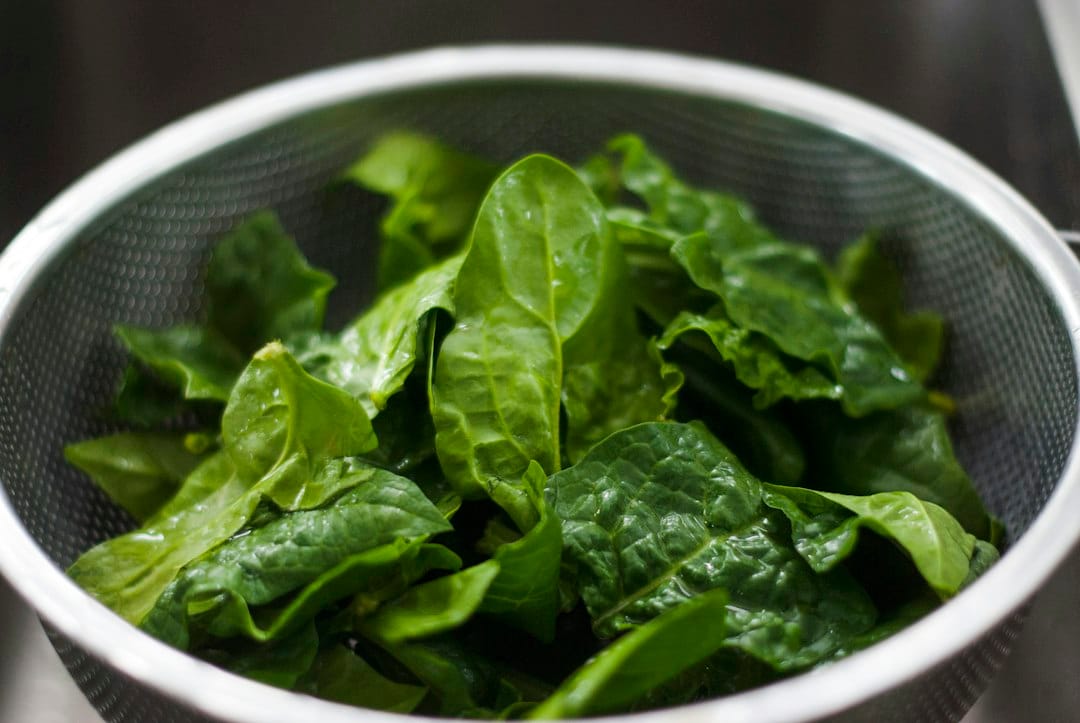
- Fresh spinach: Wilt about 10 ounces in a skillet, cool it, chop it, and squeeze it dry before mixing with the cheeses. Raw spinach should not be layered directly into the casserole.
- Different marinara: Thick sauces may need most of the reserved pasta water; thin sauces may need none. Taste before adding extra salt because sodium varies widely by brand.
- Part-skim mozzarella: It works well and usually releases less oil than whole-milk mozzarella. Use low-moisture cheese rather than fresh mozzarella packed in water.
- No Parmesan: Replace it with another firm grating cheese. Omitting it completely reduces saltiness and savory depth, so taste the filling before assembling.
- Gluten-free pasta: Use a sturdy tube-shaped blend and follow its package timing. Gluten-free pasta can soften or break differently, so the exact bake is unvalidated.
- Adding beans: One drained 15-ounce can of cannellini beans can be folded into the sauced pasta, but the casserole becomes fuller and may need an additional 1/2 cup marinara.
- Adding meat: Cook meat completely and drain excess fat before assembly. Meat changes the cost, volume, and safety considerations, so it should be treated as a separate variation.
Make-ahead and freezer guidance
The casserole can be assembled, covered, and refrigerated for up to one day before baking. Cool the pasta and sauce briefly before adding them to a dish that will go directly into the refrigerator. When ready to bake, keep the dish covered and allow extra time; use a thermometer to verify that the center reaches 165°F.
For freezing, divide the recipe between two smaller freezer-safe dishes or freeze individual cooked portions. Cool cooked ziti promptly, wrap it tightly, label it, and freeze for up to 2 months for best quality. Thaw overnight in the refrigerator rather than on the counter.
A glass baking dish can crack if moved from freezer temperatures into a hot oven. Follow the manufacturer’s instructions and avoid sudden temperature changes. Disposable foil pans are convenient for freezing, but they bend easily and should be supported on a sheet pan.
Storage and reheating
Refrigerate leftovers within two hours of cooking. Use shallow covered containers or cover the baking dish once it has cooled enough to refrigerate. Eat refrigerated portions within 3 to 4 days.
For oven reheating, place a portion in a small covered baking dish, add a spoonful of marinara or water around the edges, and heat at 350°F until the center reaches 165°F. A larger amount may need 20 to 30 minutes; individual portions usually need less.
For the microwave, cover a serving loosely and heat in short intervals, rotating or stirring between intervals. Confirm the center is steaming hot and reaches 165°F. Cheese and sauce can become much hotter than the surrounding pasta, so let the portion stand briefly before eating.
Food-safety reference: USDA guidance for cooling, storing and reheating leftovers. Use the earlier deadline when an ingredient was prepared before this meal.
Serving ideas
Serve baked ziti with a crisp salad, steamed green beans, or roasted asparagus with Parmesan. Garlic bread is useful for larger appetites, but the casserole is already substantial enough to serve without another starch.
For dessert, peach cobbler with self-rising flour offers a fruit-forward finish. On a night when you want a stovetop meal instead of a casserole, taco soup with ranch seasoning is another pantry-oriented family dinner.
Frequently asked questions
Can I make baked ziti without an egg?
Yes. This recipe does not need an egg because it is meant to be creamy and scoopable. Egg can make a ricotta or cottage-cheese layer firmer, but it also adds another ingredient and introduces a raw-egg handling step.
Should I rinse the pasta?
No. Draining without rinsing leaves a little starch on the surface, which helps the sauce cling. Rinsing also cools the pasta rapidly and can introduce excess water.
Why reserve pasta water?
Starchy pasta water loosens a thick jarred sauce and helps it coat the ziti. Add it gradually; the full 1/2 cup is not mandatory. The correct amount depends on the marinara’s consistency.
Can I bake it in two 8-inch dishes?
Yes. Divide all components evenly between two 1 1/2- to 2-quart dishes. Begin checking about 5 minutes early because shallower portions can heat faster. Verify the center of each dish independently.
Is this recipe vegetarian?
It contains no meat, but some Parmesan-style cheeses use animal rennet. Choose cheeses labeled vegetarian if that distinction matters to your household.
Temperature reference: FoodSafety.gov safe minimum internal temperature chart. A thermometer confirms the safe endpoint; recipe times are estimates.