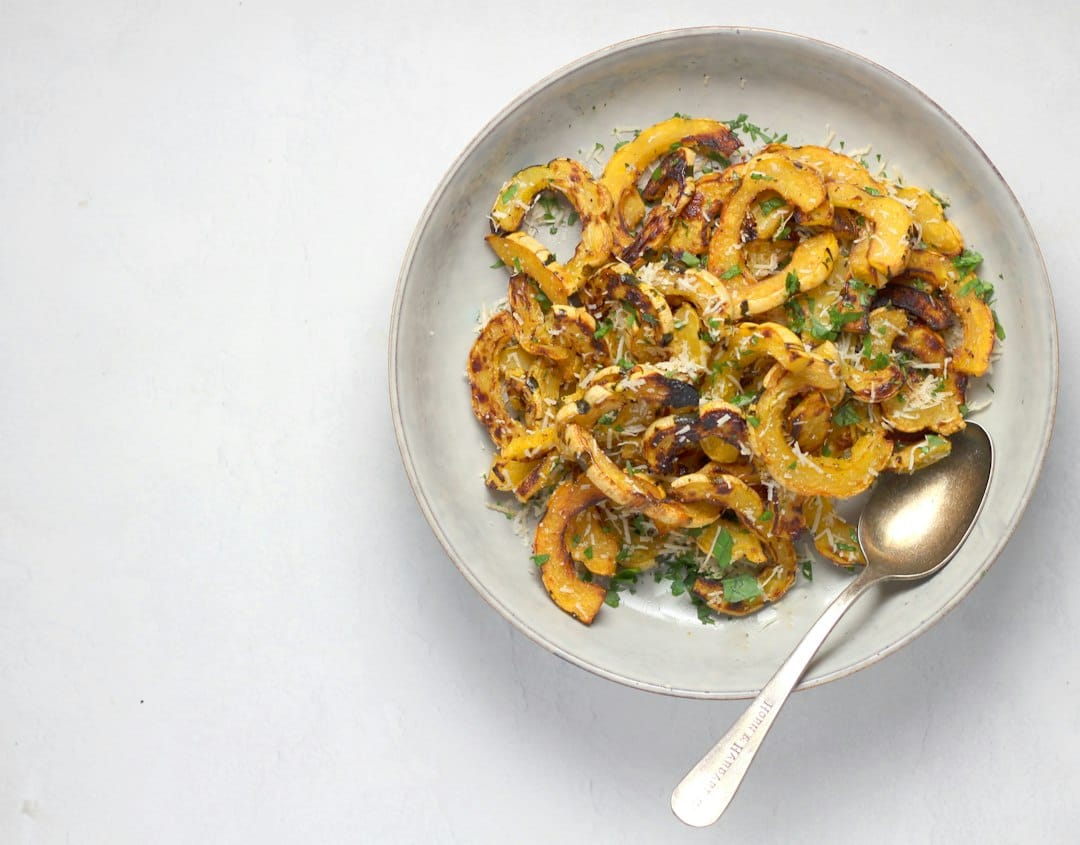
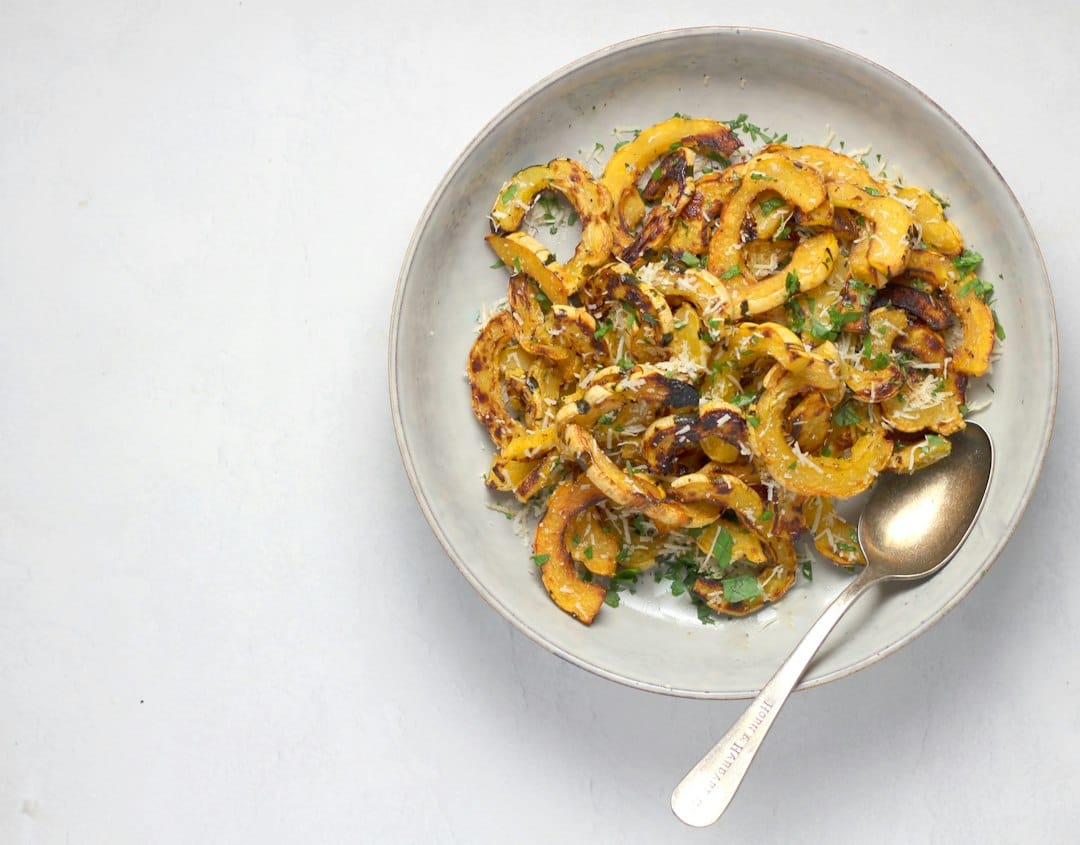
Air fryer delicata squash with Parmesan and sage is a fall side with tender centers and browned edges. Cut two small squash into even 1/2-inch half-moons and cook in batches. Toss the sage with the squash at the start; add Parmesan near the end so it can toast without scorching before the squash is tender.
The thin skin is one of delicata squash’s advantages: after washing it well, you can leave the peel on. The ridged half-moons hold their shape better than peeled cubes, and the edible skin becomes tender as the flesh cooks. Because air fryers vary in wattage, basket shape, and fan strength, the visual and texture cues below matter more than an exact minute.
Recipe at a Glance
- Yield: 4 side-dish servings, about 3/4 cup each
- Prep time: 12 minutes
- Cook time: about 13 to 15 minutes per batch; 26 to 30 minutes for two batches, plus preheating
- Total time: about 41 to 45 minutes with 12 minutes preparation, a 3-minute preheat, and two batches; three batches may take about 54 to 60 minutes
- Air-fryer temperature: 390°F
- Best basket size: 5 to 6 quarts; a smaller basket may require three batches
The cook-time range assumes the air fryer is preheated and each batch sits mostly in one layer. An oven-style air fryer may hold more squash but can brown less evenly across racks, so rotate trays as the manufacturer recommends.
Ingredients
- 2 small to medium delicata squash, 1 1/2 to 1 3/4 pounds total before trimming
- 1 1/2 tablespoons olive oil, divided
- 1/2 teaspoon kosher salt, plus more only after tasting
- 1/2 teaspoon garlic powder
- 1/4 teaspoon freshly ground black pepper
- 1/2 teaspoon rubbed sage or finely crumbled dried sage
- 1/3 cup finely grated Parmesan cheese, about 1 ounce
- 1 teaspoon fresh lemon juice
- 1 tablespoon chopped fresh flat-leaf parsley, optional
Ingredient Notes and Limits
Choose squash that feels firm and heavy for its size. Avoid pieces with soft, wet, deeply sunken, or moldy areas. Delicata squash varies, so the weight is more useful than the number: this recipe is built for roughly 1 1/2 to 1 3/4 pounds before the stem, seeds, and pulp are removed.
Finely grated Parmesan adheres better than wide shreds. Pre-shredded cheese can work, but its anti-caking coating may produce a drier, less even crust. Pecorino Romano is saltier; if you use it, start with 1/4 teaspoon kosher salt and adjust after cooking. Nutritional yeast does not melt like Parmesan, so it should be treated as a different variation rather than a one-for-one crust substitute.
Rubbed sage disperses more evenly than large dried leaves. If you have fresh sage, use 1 tablespoon very finely chopped leaves and add half before cooking and half with the cheese. Do not substitute a tablespoon of ground sage; ground sage is more concentrated and can taste dusty or bitter.
Equipment
- 5- to 6-quart basket air fryer, or an oven-style air fryer
- Stable cutting board
- Sharp chef’s knife
- Sturdy spoon for scraping seeds
- Large mixing bowl
- Measuring spoons and cup
- Tongs or a thin spatula
- Instant-read thermometer, optional for checking reheated leftovers rather than initial vegetable doneness
How to Cut Delicata Squash Safely and Evenly
Rinse the squash under cool running water and scrub the ridges with a clean produce brush. Dry it so it does not slip. Put the squash on its side and trim only the stem and blossom ends. If it rocks, place it in the shallow channel of a folded kitchen towel while cutting, keeping the towel well away from the knife blade.
Cut each squash in half lengthwise. Scrape out the seeds and stringy pulp with a spoon, then place each half cut-side down. Slice crosswise into 1/2-inch half-moons. A few narrower end pieces are fine, but very thin slices will brown before the thicker pieces become tender. Separate unusually small pieces and check them several minutes early.
There is no need to peel delicata squash. The skin should soften enough to bite through when the flesh is properly cooked. If the skin is still tough at serving time, that is a doneness warning: cook the batch a few minutes longer rather than removing every peel after the fact.
How to Make Air Fryer Delicata Squash with Parmesan and Sage
For the most even air fryer delicata squash with parmesan and sage, keep the half-moons close to the same thickness and give the hot air room to circulate.
1. Preheat the air fryer
Preheat to 390°F for 3 minutes, or follow the preheating instructions for your model. If the manufacturer says preheating is unnecessary, begin with its recommendation but expect the first batch to take a little longer.
2. Season the squash
Put the half-moons in a large bowl. Add 1 tablespoon olive oil, the salt, garlic powder, black pepper, and sage. Toss for 30 to 45 seconds, lifting pieces from the bottom so the oil and seasonings coat both cut faces. The squash should look lightly glossy, not wet or dripping.
Reserve the remaining 1/2 tablespoon oil and the Parmesan. Adding all the cheese now can lead to scorched cheese on the basket before the squash is tender.
3. Load the basket without crowding
Arrange roughly half the squash in one layer. A little edge overlap is acceptable, but do not stack several pieces on top of one another. The quantity that fits depends on the basket; divide into three batches if that is what your machine needs.
Air-fry for 7 minutes. Pull out the basket and turn each piece with tongs or a thin spatula. If your model browns aggressively, begin checking the thinnest pieces now.
4. Add Parmesan near the end
Air-fry the turned squash for 3 minutes more. In the mixing bowl, combine the Parmesan with the reserved 1/2 tablespoon oil; the mixture should resemble lightly damp crumbs. Divide the cheese mixture to match the number of squash batches: half for each of two batches or one-third for each of three. Sprinkle the first portion over the first batch, aiming for the cut surfaces rather than the empty basket.
Return the basket to the air fryer for 3 to 5 minutes. The batch is done when a fork or thin knife slides through the thickest piece with little resistance, the skin is tender enough to bite, and several edges are browned. The Parmesan should look melted with scattered golden spots, not dark brown all over.
5. Repeat and finish
Transfer the cooked batch to a serving platter. Repeat the loading, turning, and cheese steps with the remaining squash and Parmesan. If the second batch browns faster because the air fryer is fully heated, reduce the final stage by 1 to 2 minutes.
Drizzle all the squash with the lemon juice and toss gently. Taste one piece before adding more salt. Garnish with parsley if using, and serve while the cheese is warm and the edges are at their crispest.
Doneness Cues That Matter More Than the Clock
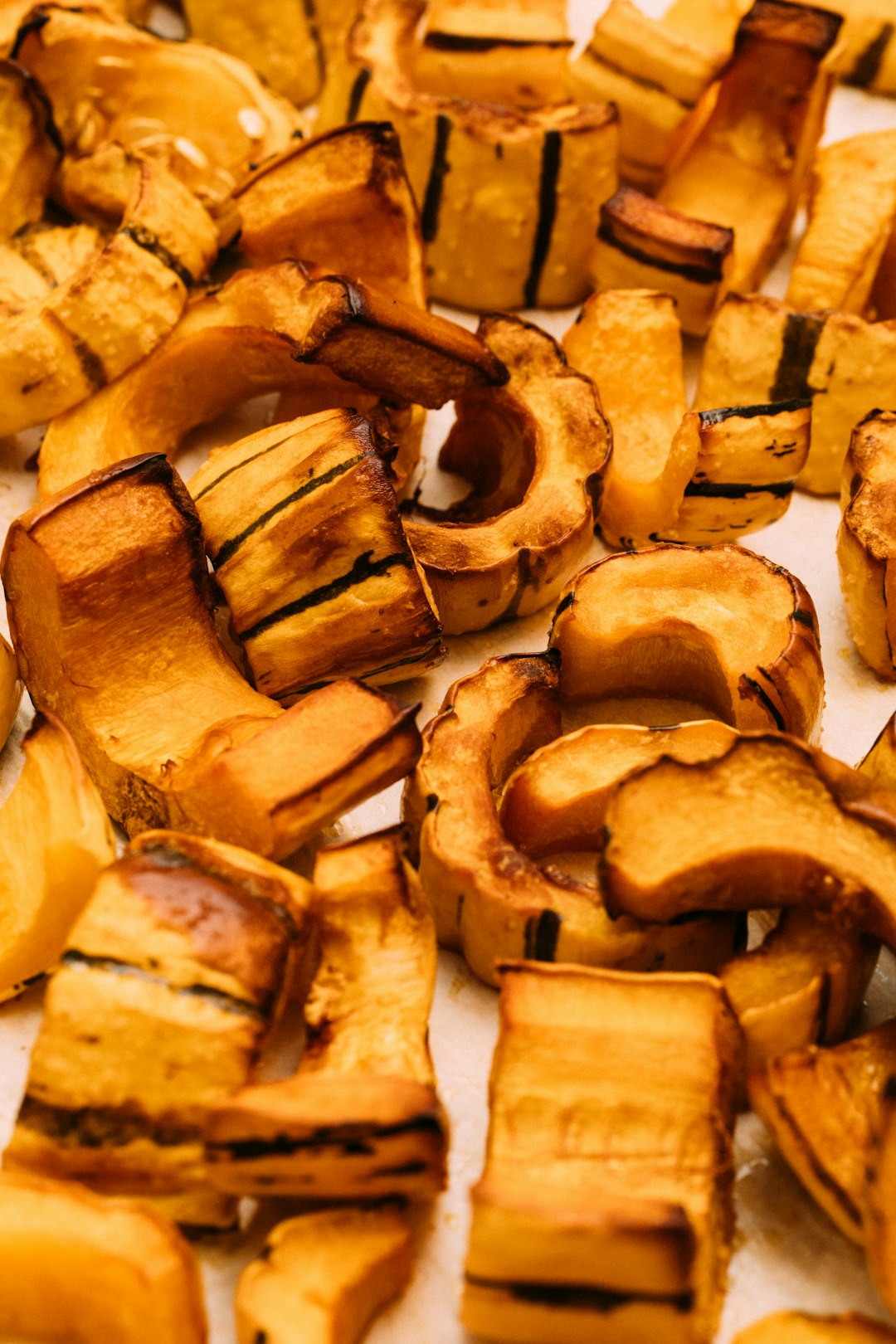
Delicata squash is finished when the flesh is creamy and the skin is tender, not merely when the surface is brown. Test a thick piece from the center of the basket. A fork should pass through without a hard, pale core. When you bend a half-moon with tongs, it should flex but not collapse into mush.
Color is a secondary cue. Expect golden patches on the flesh, deeper browning along some ridges, and toasted spots on the cheese. Pale but tender squash can cook for another 1 to 2 minutes for color. Dark edges paired with a hard center indicate pieces that were cut too thick, a temperature that runs hot, or a basket that was too full.
Unlike meat, this vegetable does not need a food-safety target temperature for initial doneness. Texture is the useful measure. A thermometer is helpful only when reheating leftovers to the USDA’s recommended 165°F.
Troubleshooting
The squash is soft but not browned
The basket was probably crowded or the squash carried excess surface water. Dry the washed squash thoroughly and cook in a single layer. You can add 1 to 2 minutes after tenderness is reached, but watch the Parmesan closely. Do not raise the temperature blindly; some small air fryers already run hotter than their display suggests.
The Parmesan burned before the squash softened
The cheese went in too early, the slices were thicker than 1/2 inch, or the air fryer runs hot. Scrape off bitter black bits, lower the setting to 375°F for the next batch, and wait until the squash has cooked for about 10 minutes before adding cheese. Finely grated cheese browns faster than coarse shreds, so begin checking after 2 minutes.
The pieces are dry or leathery
Overcooking and very thin slices are the usual causes. Keep most pieces close to 1/2 inch and remove narrow end pieces early. The oil should coat every cut face; if the measured oil remains in the bottom of the bowl, toss longer rather than adding much more.
The skin is chewy
First confirm that the squash is actually delicata and that the flesh is fully tender. A mature squash can have slightly firmer skin, but properly cooked delicata should be pleasant to eat. Extend cooking in 2-minute increments. If one particular squash remains unusually tough after the flesh softens, diners can eat around the peel, but do not promise the same result from acorn or butternut squash—their thicker skins and different shapes need a separate method.
The cheese falls through the basket
Mixing Parmesan with the reserved oil helps it cling. Sprinkle it directly onto the squash, not over the basket from a height. A solid air-fryer tray can retain more cheese than an open wire basket. Do not cover the basket with loose parchment unless the appliance manufacturer permits it; unrestricted lightweight paper can lift toward the heating element.
Substitutions and Variations
For a dairy-free version, omit Parmesan and finish with 2 tablespoons toasted pumpkin seeds. That keeps the contrast between creamy squash and a crisp topping, but it is not a direct flavor match. Add the seeds after air-frying so they do not blow around or burn.
Avocado oil can replace olive oil in the same quantity. Melted butter adds good flavor but contains milk solids that brown quickly; use it only for the final cheese mixture and keep oil on the squash during the longer first stage.
Thyme can replace sage at the same 1/2-teaspoon dried quantity. Rosemary is stronger and tougher, so use no more than 1/4 teaspoon very finely crushed dried rosemary. For gentle heat, add 1/8 teaspoon red-pepper flakes with the garlic powder. Avoid a sweet maple finish in the air fryer for this version because sugar can darken before the center becomes tender; drizzle a small amount after cooking if desired.
Do not substitute butternut, acorn, or spaghetti squash without changing the cutting and timing. The recipe depends on delicata’s small diameter and thin edible skin.
Plan for two or three baskets
The stated 13–15 minutes is per batch. Two batches take about 41–45 minutes including preparation and preheating; three can take about 54–60 minutes. Divide the seasoned squash and Parmesan mixture equally between batches. The final teaspoon of lemon belongs to the whole recipe.
Cook an oven or stovetop main while the squash uses the air fryer. Spread finished pieces on a shallow platter; a tightly covered pile traps steam and softens the edges.
Serving Ideas
Serve this squash as a side for roast chicken, pork chops, steak, lentil patties, or a grain bowl. Its sage-Parmesan flavor also suits a holiday table, but the recipe is easiest when the air fryer is not competing with several other dishes.
For a vegetarian bowl, add farro or brown rice, white beans, baby greens, and a lemony vinaigrette. Let the squash cool for 5 minutes before placing it on delicate greens so the leaves do not wilt completely. For children who prefer simpler flavors, reserve a few pieces before adding the final lemon and parsley; the garlic-Parmesan coating is mild on its own.
Storage and Reheating
Cool leftovers promptly and refrigerate them in a shallow airtight container within 2 hours. The USDA says cooked leftovers can generally be refrigerated for 3 to 4 days. For best texture, this vegetable side is at its best within 3 days because the cheese and browned edges soften in storage.
Reheat in a preheated air fryer at 350°F for 3 to 5 minutes, arranging the pieces in one layer. Check early because a small portion warms quickly. For food safety, USDA guidance calls for reheating leftovers to 165°F. A microwave works, but it produces softer squash; cover loosely and heat in short intervals until the center reaches 165°F.
Freezing is safe when the cooked squash is cooled and packed properly, but the texture can become softer and the Parmesan crust loses crispness. If you freeze it, use a freezer-safe container, press out excess air, and plan to reheat from frozen in the air fryer. Treat freezing as a convenience option, not the preferred quality method.
Frequently Asked Questions
Do you peel delicata squash before air frying?
No. Wash and scrub the exterior, then leave the skin on. Its thin skin becomes tender when the squash is cooked through. Keeping it intact also helps the half-moons hold their shape.
Can the seeds be roasted?
Yes, but roast them separately. Rinse away the pulp, dry the seeds thoroughly, season lightly, and use a seed-specific method. They are too small to cook loose alongside the squash in many basket air fryers and may be blown toward the heating element.
Can I cook the whole recipe in one batch?
Only if the pieces fit mostly in one layer with space for air to move. In a typical 5- to 6-quart basket, two batches are more realistic. One overloaded batch can take longer and steam the squash, defeating the reason to use an air fryer.
Why add lemon after cooking?
Lemon juice brightens the sweet squash and rich cheese, but liquid on the raw pieces slows browning. Adding it at the end preserves both flavor and surface texture.
Can I prepare the squash ahead?
You can wash, seed, and slice the squash up to one day ahead. Dry it well and refrigerate in an airtight container with a dry paper towel. Toss with salt and oil just before cooking so surface moisture has less time to collect.
Storage reference: USDA guidance on cooling, storing, and reheating leftovers.
For a main course, see air fryer steak without butter; allow separate basket time for the steak and squash.