
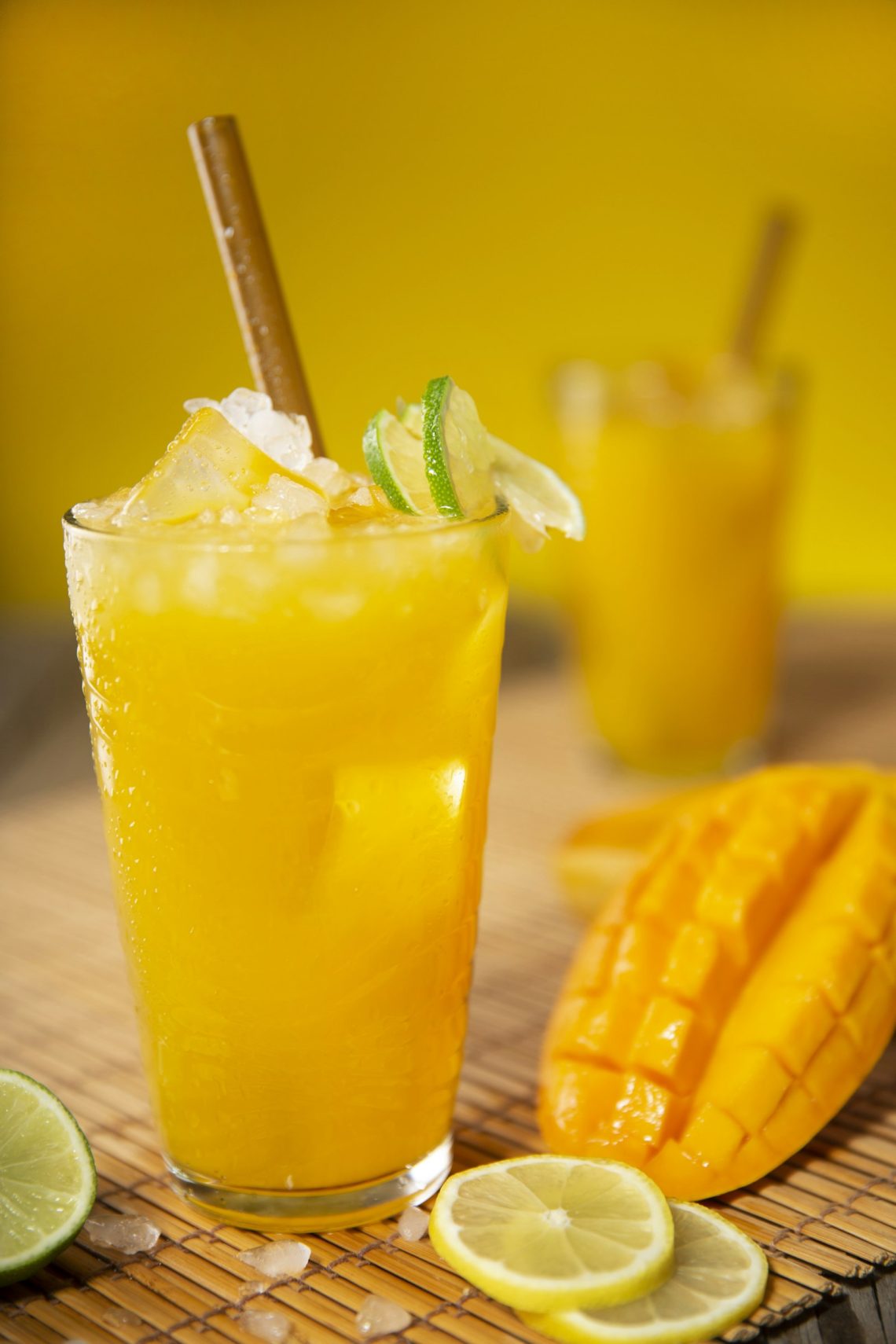
Mango lime agua fresca is a refreshing way to use ripe mango without turning it into a thick smoothie. Water keeps the drink light, lime balances the sweetness, and a small optional amount of sugar helps when the fruit is not especially sweet. It is a drink you can adjust in a pitcher and serve with a simple meal.
The best starting point is good fruit. A bland mango does not become intensely flavored simply because more sugar is added. Choose fragrant, ripe mangoes, measure the flesh after peeling, and reserve the final adjustments until the drink has been diluted. That gives you a consistent process while leaving room for fruit that varies from week to week.
Choose ripe mangoes and measure the flesh
A ripe mango usually yields slightly to gentle pressure and smells fruity near the stem. Skin color alone is unreliable because varieties differ. A hard mango will blend, but it can taste starchy and require more sweetener. An overripe mango with leaking, fermented, or spoiled areas should not be used to make a drink.
Wash the whole fruit before cutting. Mangoes have a wide, flat pit, so slice down each side of it, then remove the remaining flesh around the edges. Peel or scoop the flesh away from the skin and measure 2 cups. The number of mangoes is only an estimate; two large ones may provide more flesh than several smaller ones.
If the mango is very fibrous, plan to strain the drink. Some varieties have smooth, buttery flesh and need little straining, while others leave long fibers even after blending. Straining is a texture choice rather than a requirement to remove every speck of pulp. A little pulp gives the drink body without making it heavy.
The water-to-fruit balance
This recipe starts with 2 cups of diced fruit and 3 cups of water. The finished drink should pour freely and feel lighter than mango nectar. Beginning the blend with only part of the water helps the blades break the fruit down thoroughly; the remaining water is stirred in afterward so you can judge the final strength.
The measured volume of diced mango includes spaces between pieces, so the finished liquid yield is not simply the sum of all the cup measurements. Expect about 4 cups before ice, with small differences depending on the mango and how much pulp you strain out. If you need an exact party volume, measure the completed pitcher rather than relying on fruit count.
A very sweet mango may need no added sugar. A less sweet one may benefit from the full 2 tablespoons. Add sugar to the blender so it dissolves, or dissolve a little extra in a spoonful of water before stirring it into a finished cold pitcher. Undissolved grains at the bottom make the first glass less sweet than the last.
How to make mango lime agua fresca taste balanced
Start with 3 tablespoons of lime juice and taste after diluting. Limes differ in acidity and juice yield, so measure the juice instead of counting fruit. The lime should make the mango taste brighter, not turn the drink into a sharply sour limeade. Add extra juice a teaspoon at a time when the fruit needs it.
A tiny pinch of salt is optional and should never make the drink taste salty. It can round the fruit flavor, especially when served with a savory meal, but the drink works without it. If you are limiting sodium, leave it out rather than trying to measure an extremely small fraction of a teaspoon.
Taste a little drink over ice before serving. A chilled drink tastes different from one at room temperature, and the ice will gradually dilute it. A concentrated pitcher can handle that dilution, but pouring a very weak drink over a full glass of melting ice makes the mango disappear. Keep the pitcher cold so the ice is mainly for serving, not for cooling a warm batch.
Straining and easy variations
Pour the blended fruit through a fine-mesh strainer if you want a smoother finish. Stir gently to encourage the liquid through. Pressing hard forces coarse fibers through as well and defeats the purpose. If straining removes more pulp than expected, taste before adding every drop of the remaining water; a lighter base may need slightly less dilution.
For a sparkling version, blend the fruit with the initial still water and add cold sparkling water to individual glasses instead of storing an already carbonated pitcher. Never run carbonated water in a tightly closed blender. Adding it at serving preserves more bubbles and lets you control the fruit-to-water ratio per glass.
A few mint leaves can be bruised and added to the pitcher just before serving, then removed if the flavor becomes strong. A small piece of peeled ginger gives a different, warmer drink when blended with the fruit. Keep these additions modest so the mango remains recognizable. No dairy is needed for the stated version.
Make ahead and serve with food
Prepare the drink a few hours ahead and refrigerate it in a clean covered pitcher. Stir before pouring because pulp naturally settles. Add the serving ice to glasses, not the storage pitcher, so the drink does not continue to dilute while it waits. If the pitcher is large, a long clean spoon reaches the fruit that collects at the bottom.
Use within 24 hours for the freshest flavor and keep refrigerated at 40°F or below. Wash fruit before cutting and keep it separate from raw meat preparation, following FDA produce-handling advice. Fresh juice and cut-fruit drinks are perishable; acidity and sugar do not make them safe to leave out all afternoon.
For an outdoor meal, bring out a smaller pitcher and keep the refill cold. Discard perishable drink left above refrigeration temperature for more than two hours, or one hour in temperatures above 90°F. These limits are about food safety, not just whether the drink still tastes cold.
Serve it with bean bowls, mild tacos, grilled vegetables, or a simple sandwich. Mango adds sweetness to the meal, so a savory main and a crisp vegetable side provide a useful balance. Use smaller glasses when serving several drinks or a sweet dessert alongside dinner.
Frequently asked questions
Can I use frozen mango?
Yes. Thaw it in the refrigerator, then measure the fruit and include any clean thawing juice. Fully frozen chunks make a slushy drink and can require a stronger blender, which changes the result described here.
Can I skip the added sugar?
Yes. Taste the ripe mango first and start without sugar. Lime can emphasize tartness, so add it gradually if you want an unsweetened version. The natural sweetness depends on the fruit.
Why did my drink separate?
Fruit pulp naturally settles in a water-based drink. Stir before serving. Separation alone does not mean the recipe failed, but it does not extend the refrigeration time either.
Can I freeze the leftovers?
Freeze in ice-pop molds or small freezer-safe containers, leaving expansion space. The thawed texture may separate, so stir or blend after refrigerator thawing. Freezing is more useful than keeping a half pitcher for several days.
More ideas for your table
Pair a glass with salsa rice with black beans and corn, or offer it with a slice from our beginner homemade pizza guide.
Mango Lime Agua Fresca
Ingredients
Equipment
Method
- Wash the whole mangoes and limes before cutting. Peel the mangoes, cut the flesh away from the flat pits, and measure 2 cups of diced flesh.
- Blend the mango with 1 cup of the cold water and the lime juice until smooth. Taste, add the optional sugar and pinch of salt if wanted, and blend again until any sugar dissolves.
- For a smoother drink, pour through a fine-mesh strainer into a pitcher, stirring gently without pressing coarse fibers through. Skip straining if you like the pulp.
- Stir in the remaining 2 cups of cold water. Taste a small serving over a little ice and adjust with lime or a teaspoon of sugar only if needed.
- Serve over the measured ice, keeping extra drink chilled. Stir the pitcher before refilling glasses. Refrigerate leftovers promptly and use within 24 hours for best flavor.
Notes
Keep this mango lime agua fresca recipe handy whenever you want a light fruit drink with an adjustable sweet-tart finish.




