
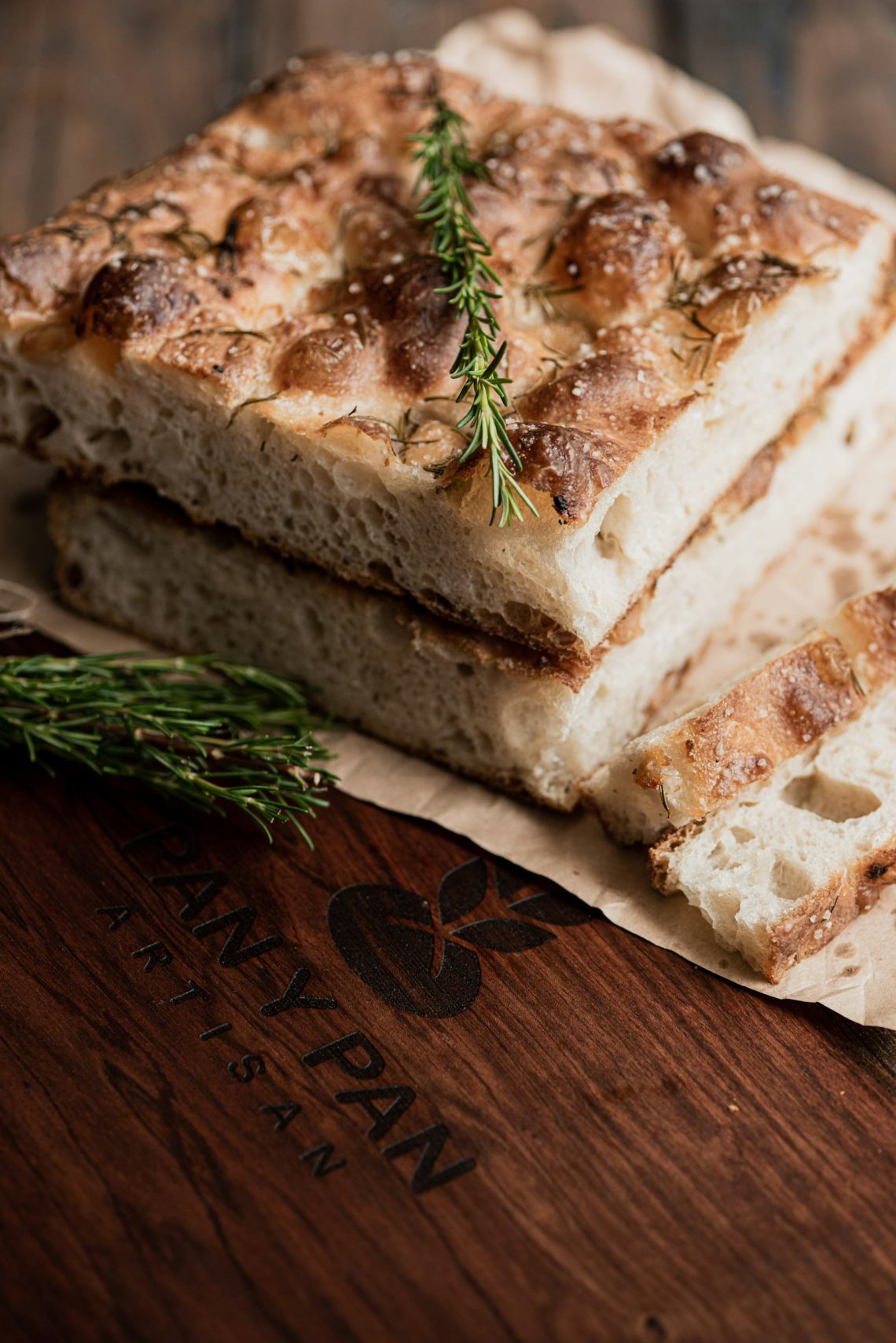
Potato rosemary focaccia has a soft, open bread base, crisp olive-oil edges, and a topping of thin potato slices scented with rosemary. The potatoes are briefly simmered before baking, so they become tender without requiring the bread to stay in the oven too long. Flaky salt and olive oil finish a loaf that works for brunch, soup, or a simple lunch.
This recipe fills one 9-by-13-inch metal pan. The dough is deliberately wet and is strengthened with folds rather than a long session of kneading. Oil your hands, let the dough rest when it resists stretching, and keep the potato layer light enough for the bread to rise around it.
A wet dough is part of the method
The dough contains 300 grams of water for 375 grams of flour, so it will look much softer than a sandwich loaf dough. That moisture helps create a light, irregular crumb. Mixing in extra flour until it becomes easy to roll would change the bread into something denser.
Stir until the flour is fully moistened, then rest the dough for 20 minutes. With damp or lightly oiled hands, lift one side, stretch it upward gently, and fold it across the middle. Repeat around the bowl. Two sets of these folds, separated by a rest, help the dough hold gas while keeping the handling manageable.
Choose the pan and oil it well
A metal 9-by-13-inch pan gives the bottom direct heat and crisp edges. A dark pan browns more quickly, so begin checking early. If using glass or ceramic, follow the dish manufacturer’s temperature guidance and expect a different crust; the recipe timing is based on metal.
Olive oil is not merely a garnish here. Some goes into the dough, some coats the pan, and the rest dresses the potatoes and surface. Spread the pan oil into the corners. When you transfer the dough, turn it once so both sides are lightly coated. Let it relax for 15 minutes if it springs back rather than forcing it to cover the pan in one stretch.
Prepare potatoes that will cook with the bread
Use a waxy potato such as Yukon Gold and slice it about one-eighth inch thick. Keep the slices reasonably uniform. Simmer them for 3–4 minutes, just until they begin to bend, then drain and spread on a clean towel. They should be partially tender but not falling apart.
Pat away surface moisture before tossing with oil, rosemary, and salt. Wet potato slices can steam the top of the focaccia instead of browning. Keep the topping to 200 grams and arrange it in a mostly single layer with small gaps. A dense overlapping blanket weighs down the dough and traps moisture beneath the potatoes.
Proof in the pan until visibly airy
After the bowl rise, move the dough into the prepared pan and coax it toward the corners. Cover loosely and let it rise until it looks puffy, with visible bubbles under the surface. This may take 35–60 minutes depending on the room. It should jiggle slightly when you move the pan.
Oil your fingers and press dimples all the way down toward the base without tearing the dough. This redistributes the bubbles and creates pockets for oil. Lay the dressed potatoes over the top, then press a few of them lightly into the surface so they do not slide off after baking. Do not flatten the whole dough while arranging them.
Bake for a browned underside
Bake at 425°F on a lower-middle rack so the base receives enough heat. Begin checking around 25 minutes. The potatoes should be tender with some browned edges, and the bread should be golden. Lift a corner carefully with a spatula to inspect the underside; a pale, soft base needs more time even if the rosemary has darkened.
If the potato topping is coloring too quickly, cover the top loosely with foil for the final minutes. Transfer the bread out of the pan onto a rack after a short rest so the bottom does not soften in trapped steam. Wait at least 15 minutes before cutting; slicing immediately can compress the airy center.
Serve it simply and store it thoughtfully
Cut into squares for brunch, or split larger pieces horizontally for sandwiches. The potato topping makes the bread satisfying on its own, so a simple soup or salad is often enough alongside it. A small extra drizzle of olive oil at the table can refresh a reheated piece, but the bread should not need to be soaked.
Because this loaf carries cooked potatoes, refrigerate leftovers promptly rather than treating it like an unfilled loaf left on the counter. FoodSafety.gov four steps to food safety advises chilling perishable foods within two hours, or within one hour above 90°F. Reheat pieces in an oven until hot throughout and the base crisps. Freeze individual squares for longer storage, then thaw in the refrigerator before reheating.
Frequently asked questions
Can I use dried rosemary?
Yes, use about 1 teaspoon dried rosemary in place of the tablespoon of fresh leaves. Crush it lightly between your fingers so the pieces are less woody. Keep it mixed with oil and potatoes rather than scattering a large amount dry over the surface.
Can I refrigerate the dough overnight?
Yes. After the folds, cover and refrigerate the dough for 8–18 hours. The next day, transfer it to the oiled pan and allow extra time to warm and become puffy. Cold dough will not follow the same short final-rise schedule.
Why did the dough stick to the pan?
Insufficient oil, a damaged pan surface, or leaving the bread in the pan too long after baking can all contribute. Grease the entire base and corners, loosen the edges with a thin spatula, and transfer it to a rack while still warm.
Can I add cheese?
A little finely grated Parmesan can be sprinkled over the potatoes during the last 5–8 minutes. Avoid a thick cheese layer from the beginning, which can brown before the potatoes and bread finish. Start with the plain version to judge your oven.
More recipes for your table
If you enjoy working with a soft dough, explore How to Prepare Homemade Pizza: Dough, Toppings & Baking Tips Serve warm squares with Small-Batch Mushroom Barley Soup Without Wine
Potato rosemary focaccia is most successful when the dough stays wet, the potatoes are thin and partly cooked, and the final proof is allowed to become airy. A well-oiled metal pan then provides the crisp base that makes each square satisfying.
Potato Rosemary Focaccia
Ingredients
Equipment
Method
- Mix flour, water, yeast, dough salt, and 1½ tablespoons oil until no dry flour remains. Cover and rest 20 minutes.
- With oiled hands, stretch and fold the dough from each side into the center. Rest 20 minutes and repeat. Cover and let rise another 30–45 minutes until noticeably puffy.
- Oil a 9-by-13-inch metal pan with 1½ tablespoons oil. Transfer the dough and gently stretch toward the corners. Rest 15 minutes if it resists, then finish stretching. Cover and proof 35–60 minutes until airy.
- Simmer potato slices in water for 3–4 minutes until beginning to soften. Drain, spread out, and pat dry. Toss with the remaining tablespoon oil, rosemary, and 1/4 teaspoon salt.
- Heat oven to 425°F. Dimple the puffy dough with oiled fingertips. Arrange potatoes in a mostly single layer, leaving gaps, and add optional flaky salt.
- Bake 25–35 minutes until bread and potatoes are golden and the underside is browned. Rest 5 minutes in the pan, then move to a rack and cool at least 15 minutes before cutting.




