
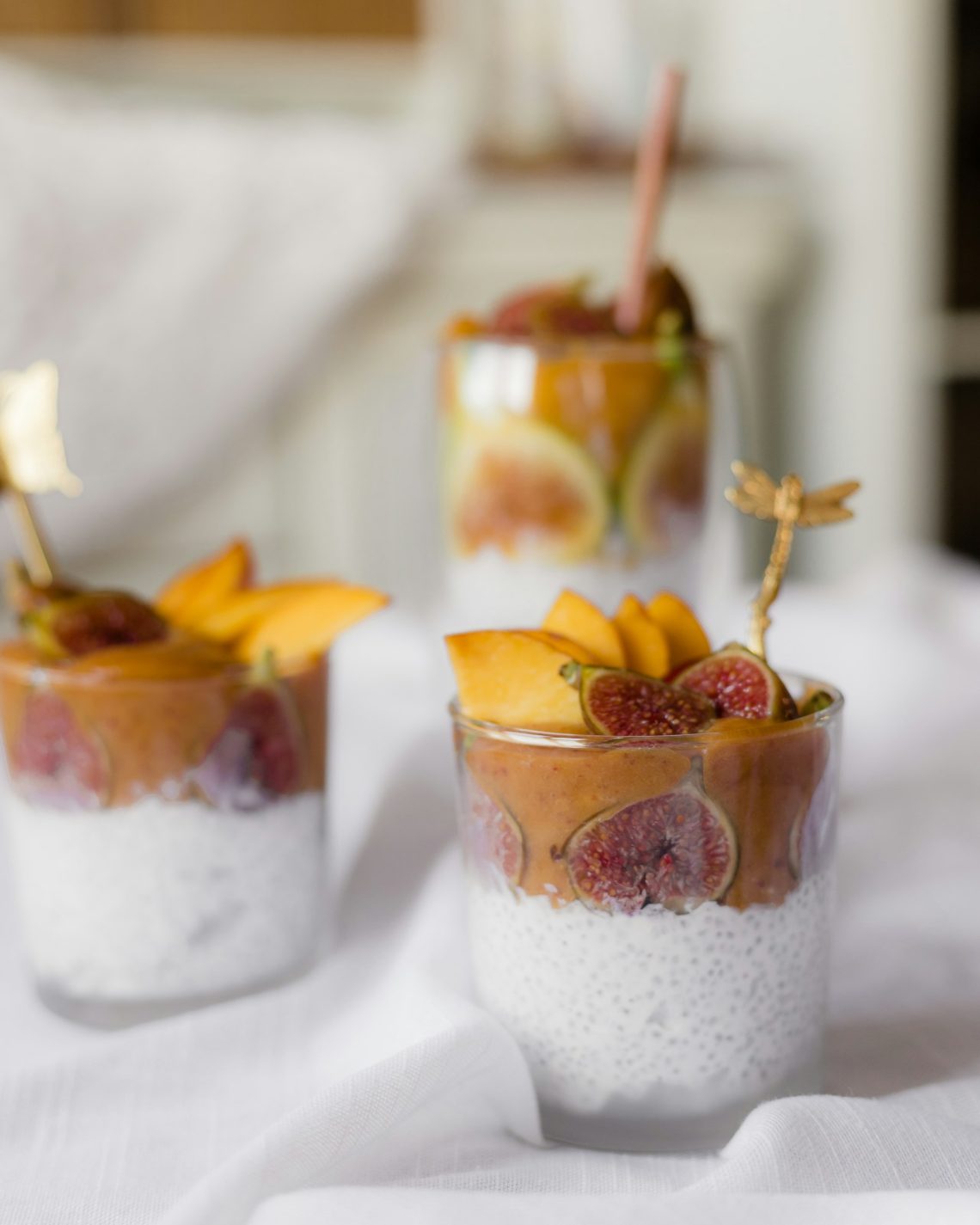
Coconut mango chia breakfast pudding is a chilled breakfast made by letting chia seeds hydrate in a mixture of coconut milk and oat milk. The seeds thicken the liquid into a soft, spoonable pudding while the refrigerator does most of the work. Fresh mango and lime add a bright fruit layer that keeps the coconut flavor from feeling heavy.
This recipe makes four small breakfast jars. It is useful for preparing ahead, but it needs a full chilling period rather than a quick stir just before eating. Mixing twice near the beginning helps prevent a solid clump of seeds at the bottom and a thin layer of milk on top.
Start with a measured seed-to-liquid ratio
The recipe uses 60 grams of chia seeds for 480 milliliters of combined milk. That produces a spoonable pudding after several hours in the refrigerator. Chia brands and seed age can vary slightly in how they thicken, so use the measured amount for the first batch and adjust only after the full rest.
A pudding that looks thin after five minutes is not necessarily a problem. The seeds need time to absorb liquid. Adding extra seeds immediately can make the mixture overly stiff by morning. If it is still loose after four hours, stir in one more teaspoon of seeds, wait again, and note the change for your next batch.
Combine coconut milk before measuring
Canned coconut milk often separates into a thick layer and a thinner liquid. Shake the can well, then stir the contents until uniform before measuring 240 milliliters. If the fat is firm from a cool room, whisk or blend it with the oat milk until smooth before adding the seeds.
Full-fat coconut milk gives a richer pudding; light coconut milk gives a softer, less rich one. Either can be used, but keep the total liquid the same. Unsweetened oat milk is the baseline here so you can control sweetness with maple syrup. Sweetened or flavored milk changes the flavor and may make the pudding sweeter than intended.
Whisk twice to avoid seed clumps
Whisk the milks, maple syrup, vanilla, and a small pinch of salt together, then rain in the chia seeds while whisking. Scrape the sides and bottom of the bowl. Let the mixture stand for five minutes and whisk again, breaking apart any clusters that have begun to gel.
That second stir is more effective than trying to repair a solid lump the next morning. Transfer to four clean jars or keep it in one covered bowl, then refrigerate. If using jars, leave room for the mango topping and for stirring before serving. Do not fill them to the rim with the initial liquid.
Choose ripe mango and add lime at the end
A ripe mango should give slightly when pressed and smell fragrant near the stem. Peel it, cut the flesh away from the flat pit, and dice into small pieces. Measure 300 grams of prepared fruit. Very fibrous mango can be mashed or briefly blended for a smoother topping instead of being left in large chunks.
Toss the mango with lime zest and juice shortly before serving, or store the fruit separately for a day. Adding all the fruit to the seed mixture at the beginning can make the pudding look watery around the mango. Layering it after the chia has set keeps the textures distinct and makes it easier to adjust the fruit amount per jar.
Adjust the texture after chilling
After at least four hours, stir the pudding from the bottom. It should mound softly on a spoon rather than pour like milk or sit in a rubbery block. If it is too thick, add a tablespoon of oat milk to each portion and stir well. If it is too thin, give it more time before adding seeds.
For a smoother texture, blend the fully hydrated pudding briefly before portioning, though the result will look different from whole-seed pudding. Do not blend dry seeds and assume the timing remains identical. Keep the first batch simple so you learn the consistency you prefer, then make small adjustments to the next one.
Make-ahead jars and safe storage
Keep the pudding and cut mango refrigerated at 40°F or below. CDC food poisoning prevention guidance advises chilling dairy, cut fruit, and other perishable foods promptly rather than leaving them at room temperature. Use assembled jars within three days for best quality. If the mango was already cut and stored before you began, its earlier storage time still counts.
Pack a jar with an ice pack if taking it to work or school, and keep crunchy toppings separate until eating. Toasted coconut or chopped nuts can add contrast, but they soften if mixed in overnight. Freezing is possible but can change the pudding and fruit texture, so a small refrigerated batch is usually the more pleasant option.
Frequently asked questions
Can I use dairy milk instead of oat milk?
Yes, use the same amount if dairy suits your household. The coconut milk still provides the main flavor. Keep the milk unsweetened and adjust the maple syrup after the pudding has chilled rather than adding a large amount at the start.
Can I use frozen mango?
Thaw it in the refrigerator, drain excess liquid, and dice or mash it. Frozen mango is often softer than fresh, so a fruit layer or purée can work better than firm cubes. Do not add the thawing liquid automatically to the pudding.
Why are there dry seeds in the middle?
The seeds likely clumped before they could contact enough liquid. Whisk while adding them, scrape the bowl, and stir again after five minutes. A jar that is simply shaken once may leave compact seed clusters at the bottom.
Can I eat it after only twenty minutes?
The texture is usually more evenly hydrated after several hours. Follow the full chilling period for this recipe rather than treating a partly thickened mixture as finished. If you need an immediate breakfast, choose something that does not depend on seed hydration.
More recipes for your table
For another overnight breakfast, try Apple Tahini Overnight Oats Without Yogurt For an optional spoonful of homemade nut spread, see How to Make Homemade Peanut Butter: Texture and Step-by-Step Guide
Coconut mango chia breakfast pudding is a dependable make-ahead option when you measure the liquid, stir twice, and allow enough time to set. Add the lime-dressed mango after chilling for a fresh contrast to the creamy coconut base.
Coconut Mango Chia Breakfast Pudding Recipe
Four chilled chia pudding jars with coconut milk, mango, and lime, prepared ahead for a spoonable breakfast.
Yield: 4 small jars. Prep: 15 minutes. Cook: 0 minutes. Total: 255 minutes (includes at least 4 hours chilling).
Equipment
mixing bowl; whisk; four jars or covered containers; knife; measuring scale
Ingredients
- 240 ml canned coconut milk, stirred until uniform
- 240 ml unsweetened oat milk
- 60 g chia seeds, about 5 tablespoons
- 2 tablespoons maple syrup, 30 ml
- 1 teaspoon vanilla extract
- 1 pinch fine salt
- 300 g ripe mango flesh, diced
- 1 teaspoon finely grated lime zest
- 1 tablespoon lime juice
Instructions
- Whisk the coconut milk and oat milk until smooth. Add maple syrup, vanilla, and salt. Slowly whisk in the chia seeds, scraping the bowl.
- Rest 5 minutes, then whisk again thoroughly to break up clumps. Cover and refrigerate at least 4 hours or overnight.
- Before serving, stir the pudding from the bottom. Add a little oat milk if too thick. Divide into four jars if not already portioned.
- Toss diced mango with lime zest and juice. Spoon over the chilled pudding and serve.
- Keep covered jars refrigerated and use within three days for best quality, accounting for any prior storage time of the cut fruit.
Recipe notes
Use unsweetened milk for the stated sweetness. The seeds need full hydration; do not skip the chilling period. If using frozen mango, thaw in the refrigerator and drain first. Check ingredient labels for dietary or allergy needs.



