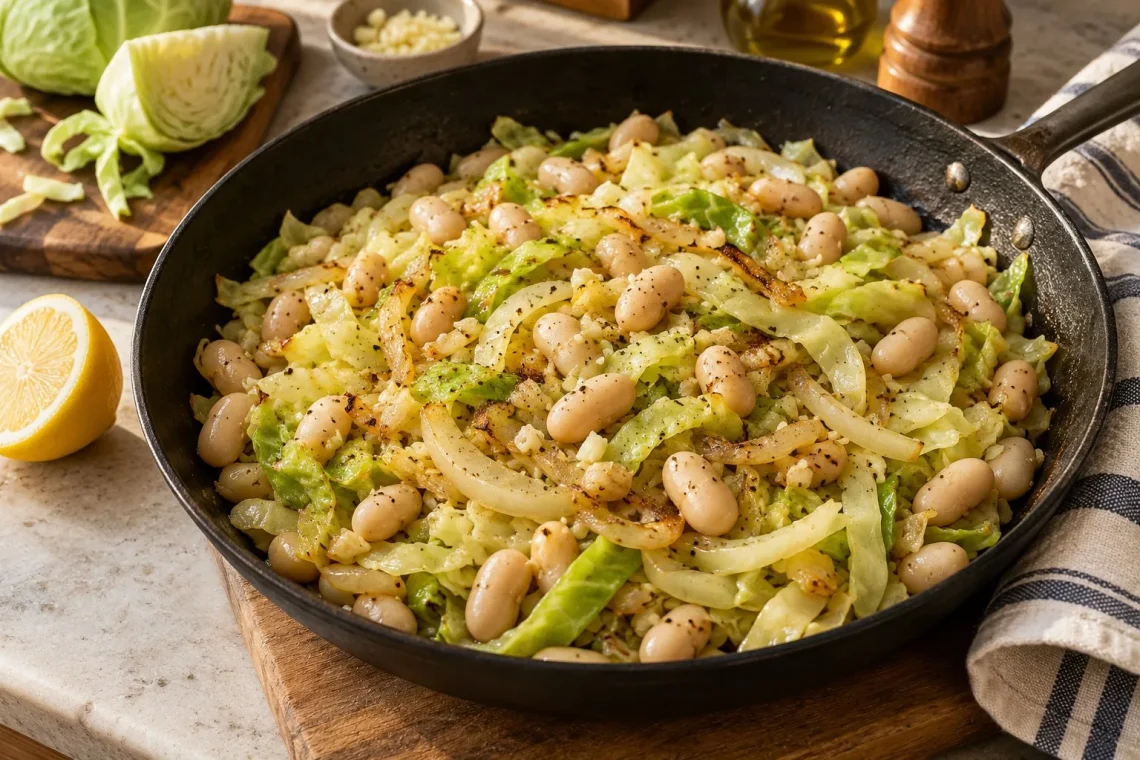
A warm cabbage cannellini bean skillet with lemon mustard without tomatoes brings together lightly browned cabbage, soft white beans and a small lemon-Dijon dressing. The cabbage cooks first so its edges can color before the delicate beans enter. The dressing is folded in off the heat and should leave a light coating rather than a deep sauce.
Affiliate disclosure: As an Amazon Associate I earn from qualifying purchases. These paid links open Amazon search results for comparing equipment.
Use a wide lidded skillet (paid link) to give the cabbage room to cook, then fold in the delicate beans with a broad spatula (paid link).
This recipe is useful when half a small cabbage and one can of beans need a clear plan. Shred the cabbage into pieces that fit a fork, give it room in the skillet and finish only after it bends easily. You should still be able to distinguish a tender strand of cabbage from a creamy whole bean.
Give cabbage, beans and lemon separate timing
| Stage | What to accomplish |
|---|---|
| Dry skillet stage | Let the cabbage lose surface moisture and pick up browned edges before adding water. Browning creates the savory depth that tomatoes would otherwise help provide. |
| Optional covered softening | Add only enough water to soften the thicker cabbage pieces. Keep the simmer controlled so the pan does not turn into soup. |
| Bean stage | Fold in drained cannellini beans gently and heat them through without crushing every bean. |
| Off-heat finish | Stir in mustard and lemon after the strongest heat has passed. This preserves brightness and makes the final seasoning easier to judge. |
Texture target: the cabbage should be tender with a little structure, the beans mostly whole, and the pan juices just thick enough to cling. If the mustard tastes harsh, do not add sugar immediately; give it a minute to mingle with the warm beans and cabbage, then taste again.
Set out the divided oil and small water measure
Yield: approximately 2–3 servings; choose two light main portions or three smaller sides. Preparation: about 10–12 minutes. Estimated cooking: 18–30 minutes depending on the cut and pan. Total: about 28–42 minutes. Use a wide lidded skillet, broad spatula, knife, cutting board, colander, small dressing bowl and measuring spoons.
The ingredient list has two tablespoons of oil, but they do not enter together. One tablespoon cooks the cabbage; the other goes into the lemon-mustard dressing. Keep the two tablespoons of water in another small cup for controlled additions if the pan needs moisture. This avoids using extra oil to solve a cabbage-tenderness problem.
Jump to: printable recipe · rate this recipe · ingredient guidance · method · FAQs.
Ingredients
- 2 tablespoons olive oil, divided
- 1/2 small green cabbage, about 12 ounces, shredded
- 1/2 small onion, sliced
- 1 garlic clove, minced
- 1 can (15 ounces) cannellini beans, drained and rinsed
- 1 teaspoon Dijon mustard
- 1 tablespoon lemon juice
- 2 tablespoons water
- 1/4 teaspoon black pepper
- Salt, to taste
Cut cabbage that fits the pan and fork
Remove damaged outer leaves, rinse the cabbage and trim away the dense core. Place a wedge on a flat cut face and slice across it into thin shreds. Cut especially long strands once across their length so they are easier to lift with a fork. Use roughly 12 ounces of prepared cabbage rather than treating any large half-head as an equal amount.
The thin onion slices can share the bowl with the cabbage because they enter the skillet together. Keep the minced garlic separate. Its small pieces only need the brief final stage, and they can burn if scattered into the pan for the entire cabbage cooking time.
Drain and rinse the cannellini beans, then let them sit in the colander while you slice. Shake the colander gently instead of rubbing or stirring the beans repeatedly. Water carried from the can would soften the browned cabbage and dilute the finishing dressing, so let the main trickle stop before adding them.
Whisk the dressing while the skillet is still clear
Combine the reserved tablespoon of oil with the teaspoon of Dijon and tablespoon of lemon juice. Whisk until no isolated mustard lump remains. It may need another quick whisk before it enters the hot vegetables, which is normal for this small amount of dressing. Keep the black pepper ready for the finish.
Use smooth Dijon for the reference version. Whole-grain mustard would leave visible seeds and may distribute differently. The beans and mustard both contribute seasoning, so the final salt is a tasting decision. A salty mustard brand does not call for the same extra salt as a mild one.
Cook cabbage cannellini bean skillet with lemon mustard without tomatoes
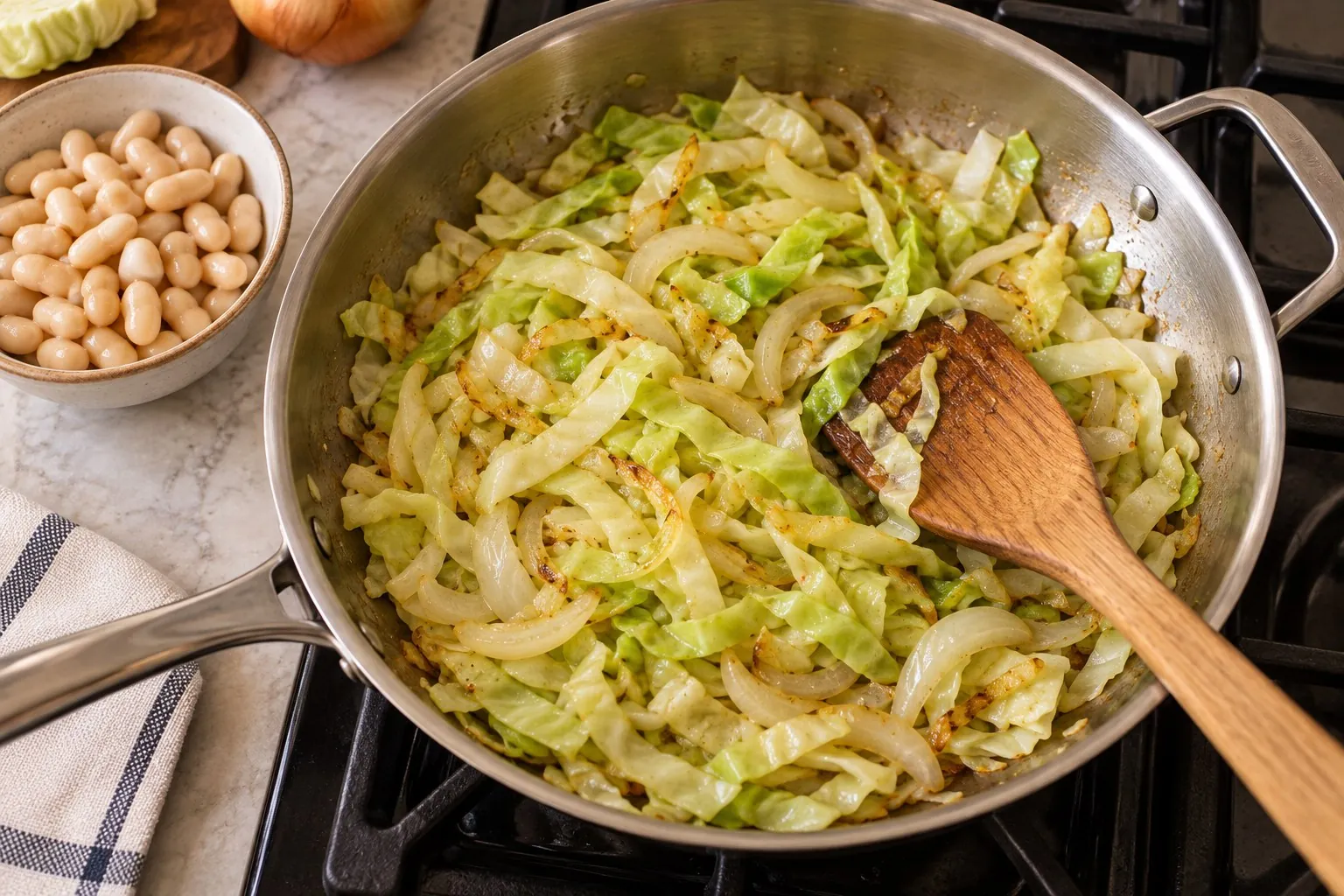
- Warm the cooking oil. Put the wide skillet over medium to medium-high heat and add 1 tablespoon oil. Tilt the pan to coat its base. Add the shredded cabbage and sliced onion in a broad layer rather than a high pile.
- Give the first edges time to color. Leave the vegetables for about 2 minutes before turning. Lift a portion with the spatula and check underneath. A few golden edges are enough; do not wait for dark patches across the whole base.
- Cook the cabbage toward tenderness. Turn and continue for another 6–8 minutes, moving cabbage from the center to the edges and back. If the pan begins to scorch before the cabbage softens, add a spoonful from the measured water. Keep cooking until the strands bend readily with a little bite remaining.
- Resolve moisture before adding beans. If liquid pools at the bottom, leave the skillet uncovered and let it evaporate. If the cabbage is still too firm, use the remaining measured water as needed and give it more time. The listed time is a guide; the cabbage needs to be nearly ready before the beans enter.
- Warm the beans gently. Add the garlic and drained cannellini beans. Cook for 3–4 minutes, folding from below with the broad spatula. The beans should become hot while keeping most of their shape. Avoid pressing them into the pan to imitate the cabbage browning stage.
- Dress off the heat. Turn off the burner. Whisk the dressing once more and pour it across different areas of the skillet. Fold through gently, add the pepper and taste a combined bite before adding salt. Serve while the cabbage is warm and the light dressing still coats it evenly.
Three parts of a finished forkful
| Part | What you want | What to avoid |
|---|---|---|
| Cabbage | Flexible strands with a little bite and some golden edges. | A hard thick core piece hidden among tender leaves. |
| Beans | Hot, creamy centers with mostly whole skins. | A bean paste caused by repeated forceful stirring. |
| Dressing | A light lemon-mustard coating spread through the skillet. | A sharp puddle beneath unseasoned vegetables. |
If the dressing seems to sit in one part of the pan, lift from that area and fold it across the rest. More dressing is not necessarily needed. Let the existing measured amount distribute before deciding the flavor is uneven.
Choose a correction that matches the pan
Pale, wet cabbage usually needs more space or time for moisture to leave. Raising the heat sharply can burn onion strands while the cabbage pile still steams. Spread the vegetables again and cook uncovered. If the skillet was overloaded, use a broader one or cook in batches next time.
If the finish tastes too sharp, a small additional drizzle of oil is a possible adjustment, but taste again before changing the whole pot. Sugar is not part of this formula. If a large core piece remains tough, remove it rather than continuing to cook all the beans until they collapse.
Serve the skillet in a way that suits its texture
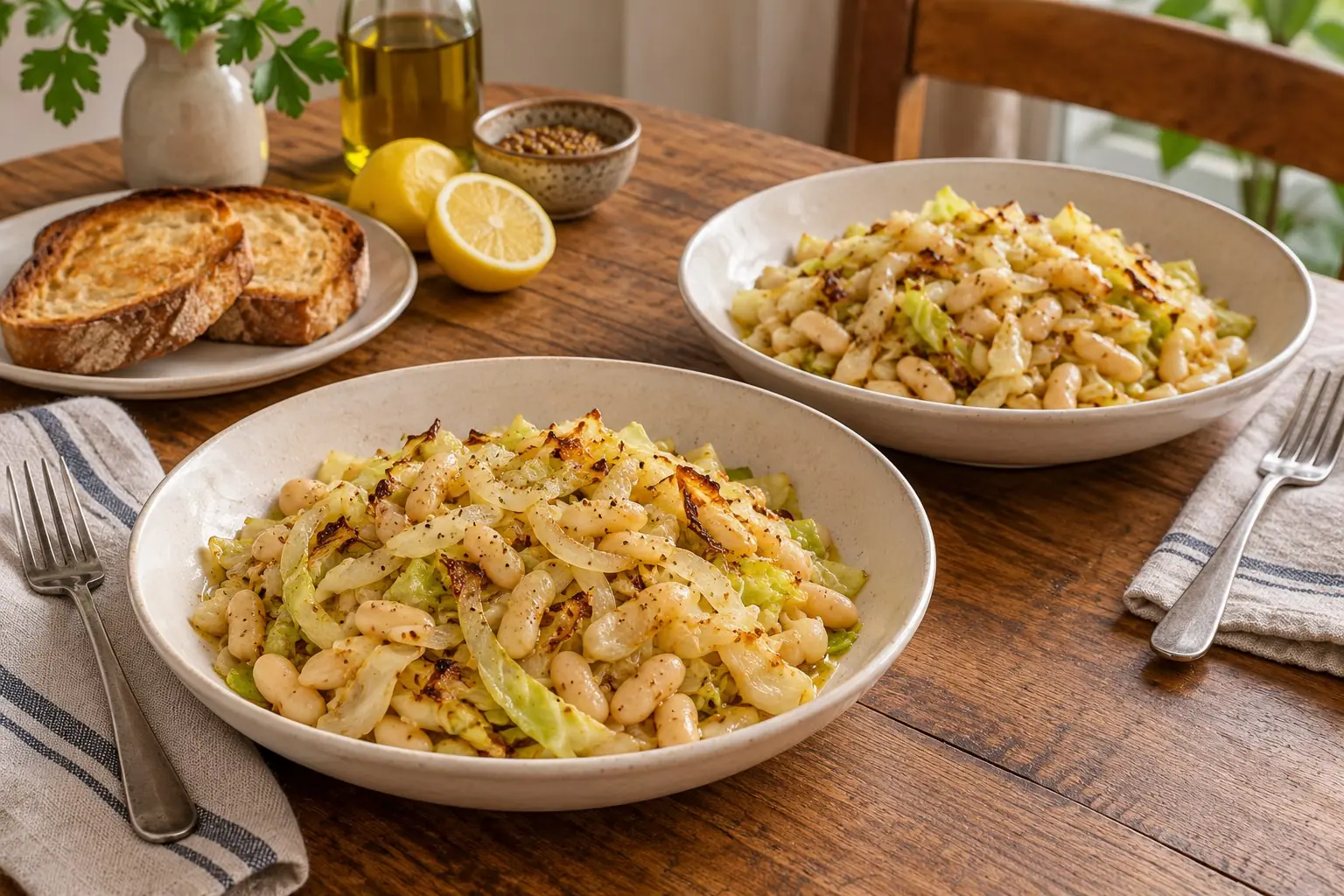
Warm shallow bowls and toast make a straightforward light meal. The cabbage and beans already provide a soft center, so a crisp cucumber side or a few apple slices offer useful contrast. Keep an accompanying salad dressing mild because the skillet already has a measured lemon finish.
For three side portions, divide the beans visibly among the plates before adding the final cabbage strands. To feed more people, add a separate main or grain dish rather than doubling the cabbage in the same crowded skillet. A doubled formula needs more pan surface, not just a longer stirring session.
Cabbage skillet questions
Can I use purple cabbage?
It can be tried, but it colors the white beans and has a different texture. Keep the shreds thin and check tenderness before adding the beans. Expect a visually different skillet, and do not assume the exact timing from green cabbage applies.
What about Savoy cabbage?
Its crinkled leaves can soften sooner than firm green cabbage. Begin checking early, keep the same approximate prepared amount and fold gently to avoid breaking the delicate strands. Add the beans once the cabbage bends easily; use that cue instead of waiting for the full green-cabbage cooking time.
Can I use another white bean?
Great northern beans are a reasonable option in the same can size. Drain and rinse them well, and keep the late addition. Very large butter beans can be more fragile, so handle them gently and expect the bean-to-cabbage distribution to look different.
Do I need to cover the skillet?
The reference browning and finishing stages are uncovered. The lid is available if a brief covered softening is needed for unusually firm cabbage, but trapped steam reduces browning. Uncover and clear excess moisture before the dressing goes in.
Can I leave out the mustard?
The lemon and oil can still coat the vegetables, but the result loses Dijon flavor and may separate more readily. Whisk and fold it through immediately. Treat that as a simpler variation rather than adding an equal spoonful of a much hotter condiment.
Can I prepare cabbage cannellini bean skillet with lemon mustard without tomatoes ahead?
Yes, with prompt chilling and thorough reheating. The cabbage softens and its browned edges lose crispness in storage. Keep the initial dressing modest and do not add more lemon automatically after reheating; taste the hot portion first.
Store with the beans intact
Refrigerate shallow covered portions within 2 hours, or within 1 hour when the room is above 90°F. Keep at 40°F or below and use within 3–4 days. Reheat to 165°F with gentle folds and only enough water to prevent sticking. Check the middle of the portion, not only the edge touching the pan.
Use a broad spoon to transfer leftovers so the beans do not get crushed against a narrow container opening. Label the container with the cooking date. The texture will be softer on reheating, but careful handling preserves recognizable beans among the cabbage strands.
Food handling references: USDA leftovers guidance, FDA refrigerated storage advice and FoodSafety.gov reheating temperatures.
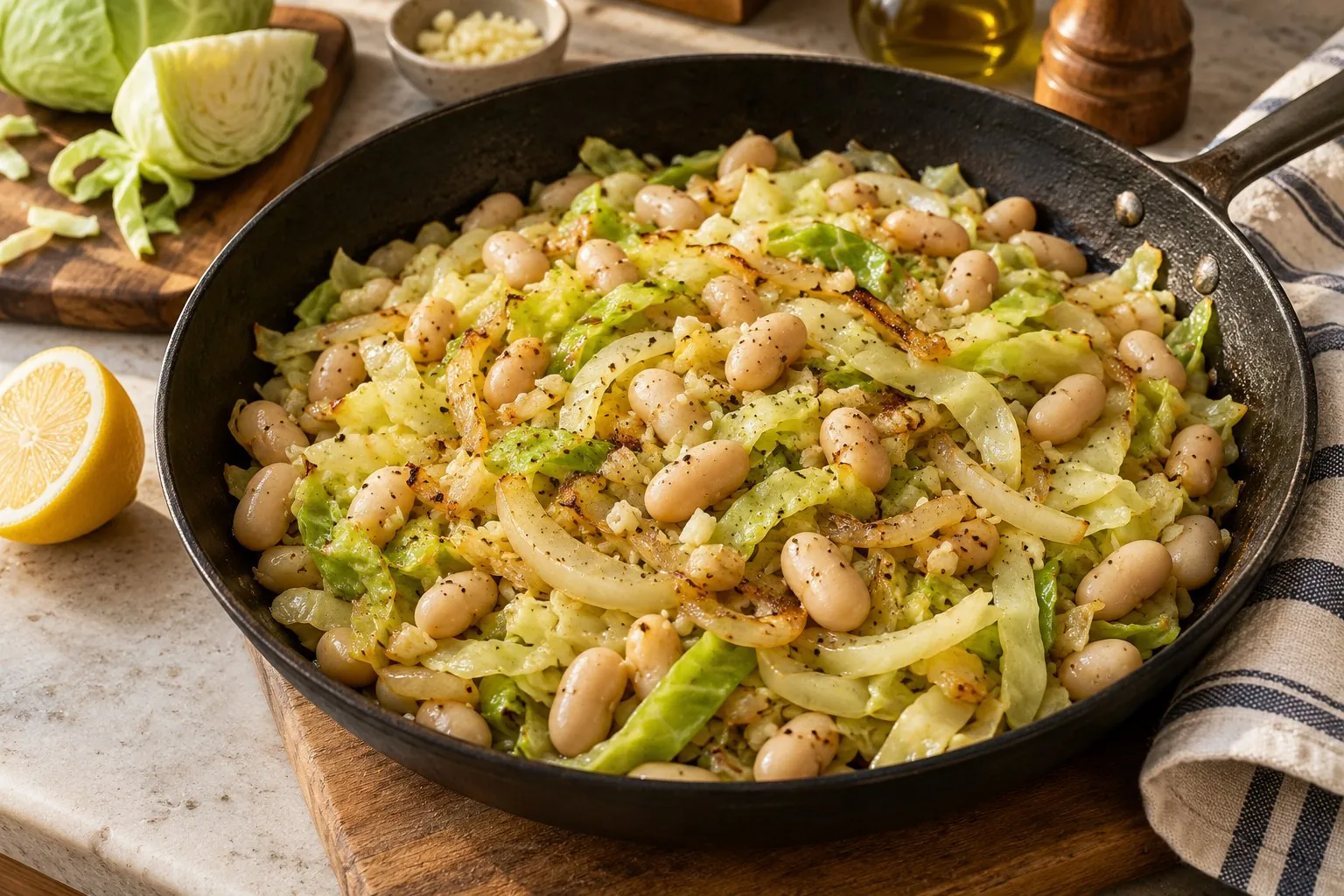
Cabbage Cannellini Bean Skillet With Lemon Mustard Without Tomatoes
Ingredients
Equipment
Method
- Warm the cooking oil. Put the wide skillet over medium to medium-high heat and add 1 tablespoon oil. Tilt the pan to coat its base. Add the shredded cabbage and sliced onion in a broad layer rather than a high pile.
- Give the first edges time to color. Leave the vegetables for about 2 minutes before turning. Lift a portion with the spatula and check underneath. A few golden edges are enough; do not wait for dark patches across the whole base.
- Cook the cabbage toward tenderness. Turn and continue for another 6–8 minutes, moving cabbage from the center to the edges and back. If the pan begins to scorch before the cabbage softens, add a spoonful from the measured water. Keep cooking until the strands bend readily with a little bite remaining.
- Resolve moisture before adding beans. If liquid pools at the bottom, leave the skillet uncovered and let it evaporate. If the cabbage is still too firm, use the remaining measured water as needed and give it more time. The listed time is a guide; the cabbage needs to be nearly ready before the beans enter.
- Warm the beans gently. Add the garlic and drained cannellini beans. Cook for 3–4 minutes, folding from below with the broad spatula. The beans should become hot while keeping most of their shape. Avoid pressing them into the pan to imitate the cabbage browning stage.
- Dress off the heat. Turn off the burner. Whisk the reserved 1 tablespoon olive oil with 1 teaspoon Dijon mustard and 1 tablespoon lemon juice. Pour the dressing across the skillet and fold through gently. Add the black pepper, taste a combined bite before adding salt, and serve warm.
Notes
- Yield and timing: One batch makes 2 light main portions or 3 smaller sides. Allow about 10–12 minutes to prepare and 18–30 minutes to cook; tenderness and moisture determine the finishing time.
- Oil and dressing: Use 1 tablespoon of the oil for the cabbage and reserve the second tablespoon for the Dijon-lemon dressing. Fold the dressing in off heat.
- Texture: Use about 12 ounces of prepared cabbage in thin shreds. Keep browning stages uncovered. If firm cabbage needs brief covered softening, use the measured water, then uncover to clear excess moisture before adding the delicate beans.
- Leftovers: Refrigerate in shallow containers within 2 hours, or 1 hour above 90°F (32°C), at 40°F (4°C) or below. Use within 3–4 days and reheat to 165°F (74°C). FoodSafety.gov storage guidance.