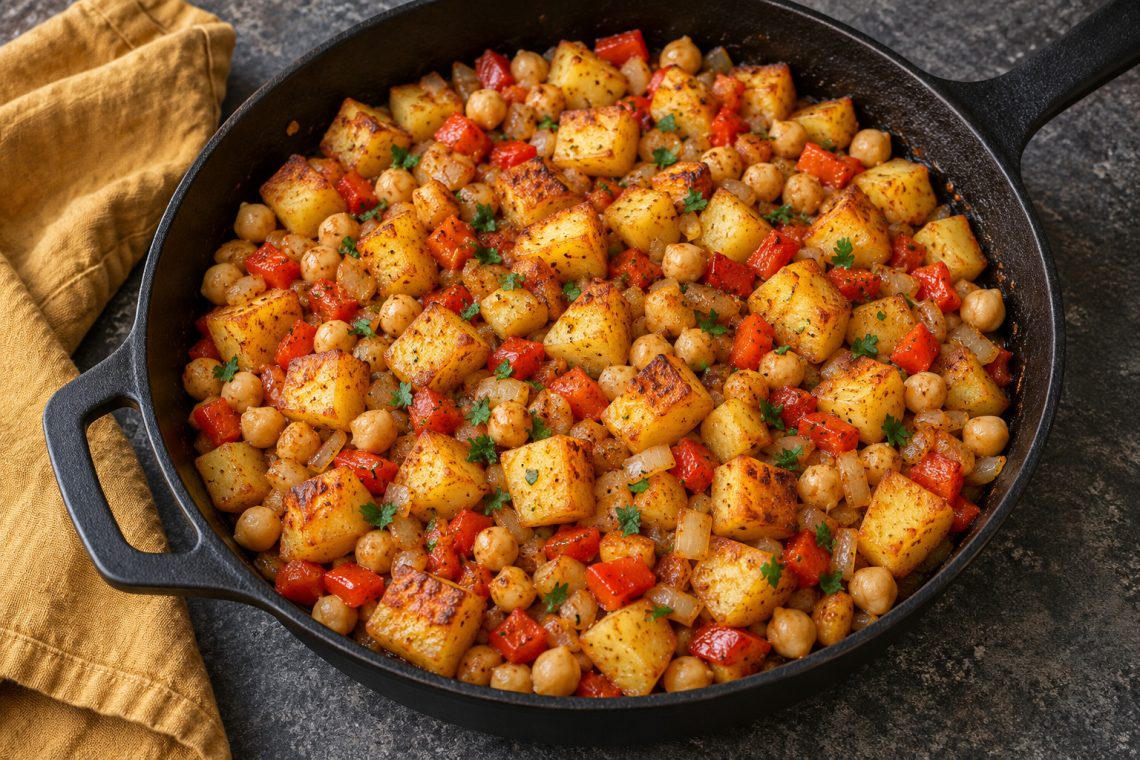
Skillet breakfast potatoes with canned chickpeas make a savory breakfast from a few familiar ingredients. The potatoes cook covered first, then brown after the steam escapes. Chickpeas, onion and bell pepper join them in stages so the vegetables soften without forcing the potatoes to spend the whole time steaming.
The base recipe contains no eggs and makes two generous portions or three smaller ones. You can serve it as it is or add a separately cooked egg. The most useful skill here is controlling moisture: potatoes need some water to become tender, but the pan must become dry enough for their edges to color.
Create crisp potatoes before adding canned chickpeas
- Start the raw potato cubes in the skillet with the measured water, oil and salt; cover until nearly tender, then uncover to evaporate the water before browning.
- Use a wide surface and leave the first side undisturbed long enough to form a crust.
- Drain chickpeas well and add after the potatoes are nearly tender so their skins warm without becoming leathery.
- Finish with herbs or acid after the pan leaves the heat to keep the breakfast flavors fresh.
If the potatoes brown before their centers soften, add a small splash of water and cover briefly, then uncover again to restore the crisp surface.
Four stages in one wide skillet
| Stage | Purpose | What to look for |
|---|---|---|
| Covered potatoes | Soften their centers | A knife enters with only slight resistance. |
| Uncovered browning | Color the surfaces | Water has evaporated and the pan sizzles. |
| Onion and pepper | Develop a softer vegetable base | Onion turns translucent and pepper loses its raw crunch. |
| Chickpeas and seasoning | Warm through and finish flavor | Chickpeas are hot and coated with the seasoning. |
A wide skillet matters. Use a 12-inch skillet with a lid or a similarly wide sauté pan. A crowded small pan holds more steam and makes browning slower. Cast iron, stainless steel and a suitable nonstick pan can all work, but their heat response differs, so follow the visual cues alongside the time ranges.
Ingredients in cooking order
Potatoes and shared cooking basics
- 14 ounces (400 g) yellow potatoes, scrubbed and cut into ½-inch cubes
- 2 tablespoons (30 ml) olive oil, divided
- ½ cup (120 ml) water
- ½ teaspoon fine salt, divided, plus more only after tasting
Vegetables and cooked chickpeas
- 1 can (15 ounces / 425 g) chickpeas, drained and rinsed, about 240 g drained
- ½ medium onion, diced, about 75 g
- 1 small red bell pepper, diced, about 120 g
Seasoning and finish
- 1 teaspoon sweet or smoked paprika
- ¼ teaspoon ground cumin
- ¼ teaspoon black pepper
- 1 small garlic clove, finely minced
- 1 tablespoon lemon juice
- 1 tablespoon chopped parsley, optional
Prep: 10 minutes. Cooking: approximately 35 minutes. Total: about 45 minutes. Have the vegetables chopped and chickpeas drained before starting. You also need a cutting board, knife, sieve, spatula and lid that fits the skillet.
Prepare even cubes and dry chickpeas
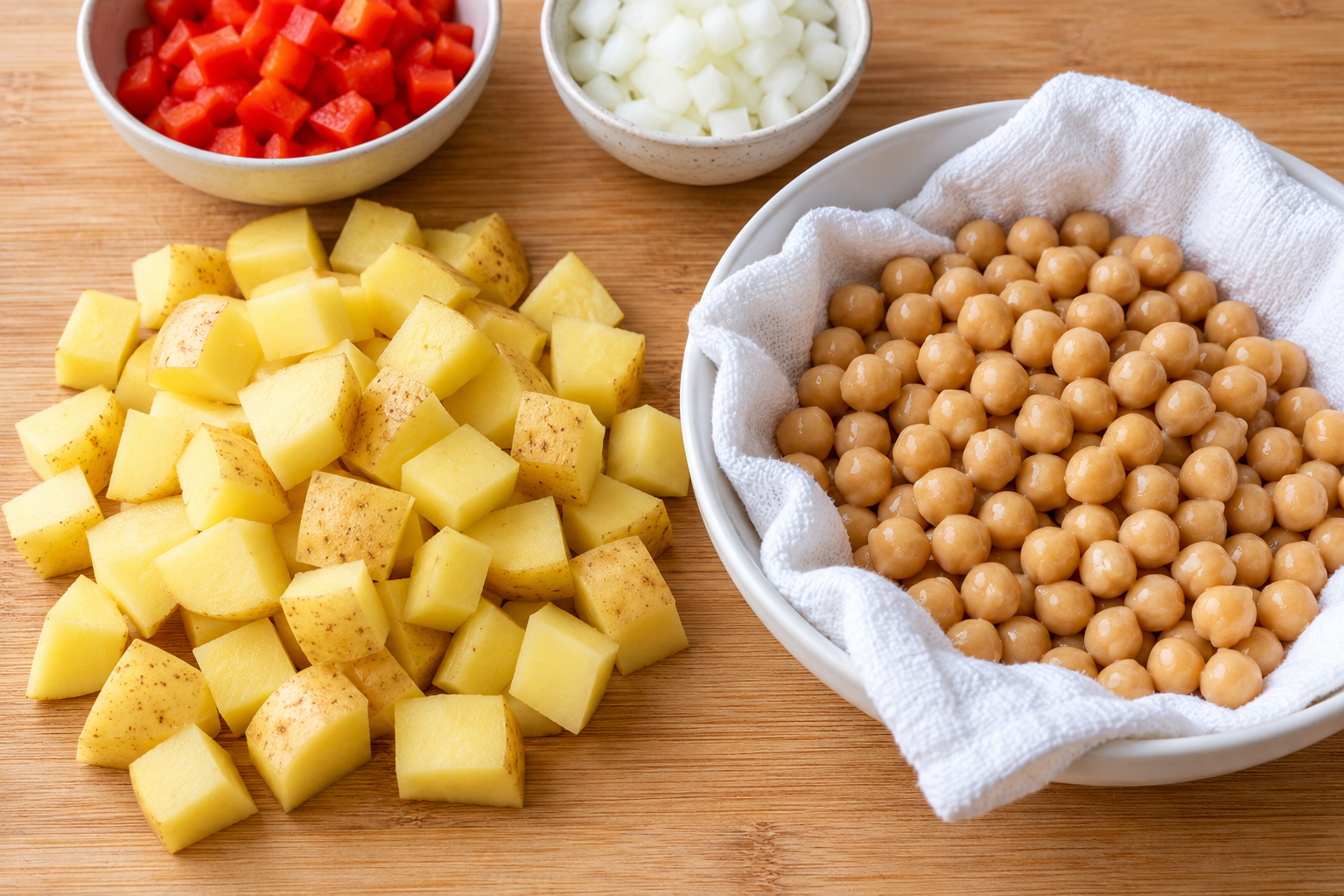
Yellow potatoes hold their shape well enough for small cubes while becoming tender inside. Russet potatoes are another possibility, but their edges can break more readily once cooked. New potatoes work too if cut to a consistent size. Very large pieces delay the covered stage and can leave the onion waiting in a hot pan later.
You can leave clean, thin potato skins on. Remove sprouts, green areas and damaged portions; discard potatoes that are extensively green or deteriorated. Rinse the cut cubes briefly if heavily coated in loose starch, then drain. There is no long soaking step in this method.
Rinse canned chickpeas and let them drain well. Blot them with a clean towel if their surfaces are wet. They are already cooked, so the final stage is about warming and seasoning rather than making them tender from dry. Do not substitute uncooked dried chickpeas directly into this skillet.
The covered stage does not need submerged potatoes
The measured water is a shallow cooking aid, not enough to turn the skillet into a pot of boiled potatoes. Cubes above the water still sit in the covered steam. Resist filling the pan until every piece is submerged, because the extra water would have to evaporate before browning could begin. If a tenderness check shows the potatoes need longer, use the small additions in the method and replace the lid.
Cook skillet breakfast potatoes with canned chickpeas
- Start the potatoes. Put the potatoes, water, 1 tablespoon oil and ¼ teaspoon salt into the skillet. Cover and bring to a gentle simmer over medium heat. Cook for 10–12 minutes, stirring once halfway through.
- Check the center. Test a larger cube with a knife. It should be nearly tender. If it is still hard and the pan is dry, add 1–2 tablespoons water, cover and continue a few minutes. Keep fingers clear when lifting the lid because steam escapes quickly.
- Evaporate and brown. Remove the lid and let any water cook away. Spread the potatoes out and cook for 7–10 minutes, turning every few minutes rather than constantly stirring. Aim for several golden surfaces, not a brown crust on every side.
- Add the vegetables. Push potatoes toward the outer edge. Add the remaining tablespoon oil to the middle, then the onion and pepper. Cook for about 5 minutes, stirring the middle portion, then fold everything together.
- Season and add chickpeas. Add garlic, paprika, cumin, pepper and the remaining ¼ teaspoon salt. Stir for about 30 seconds, then add the drained chickpeas. Cook for 4–6 minutes, turning gently, until the chickpeas are hot throughout.
- Finish off the heat. Add lemon juice and optional parsley. Taste a potato and chickpea together before adding more salt. Serve promptly so the browned edges retain their texture.
Turn a section of potatoes at a time
Slide a broad spatula beneath several cubes, lift slightly and turn that small section together. Work around the skillet instead of pushing the entire batch back and forth from the center. This keeps tender edges from being repeatedly scraped while giving newly turned surfaces a chance to contact the pan. If a cube resists lifting, inspect its underside gently rather than immediately tearing it loose.
Have the chickpeas ready before the spices go in
Measure the paprika, cumin and pepper into a small dish before cooking, and keep the drained chickpeas alongside. Once the garlic and spices reach the hot oil, the next ingredient should be ready to add. There is no benefit to leaving that thin seasoning layer cooking while you open or drain the can. Fold from underneath as the chickpeas enter so the flavored oil reaches them instead of remaining in one concentrated patch on the pan.
Read what the potato surfaces are doing
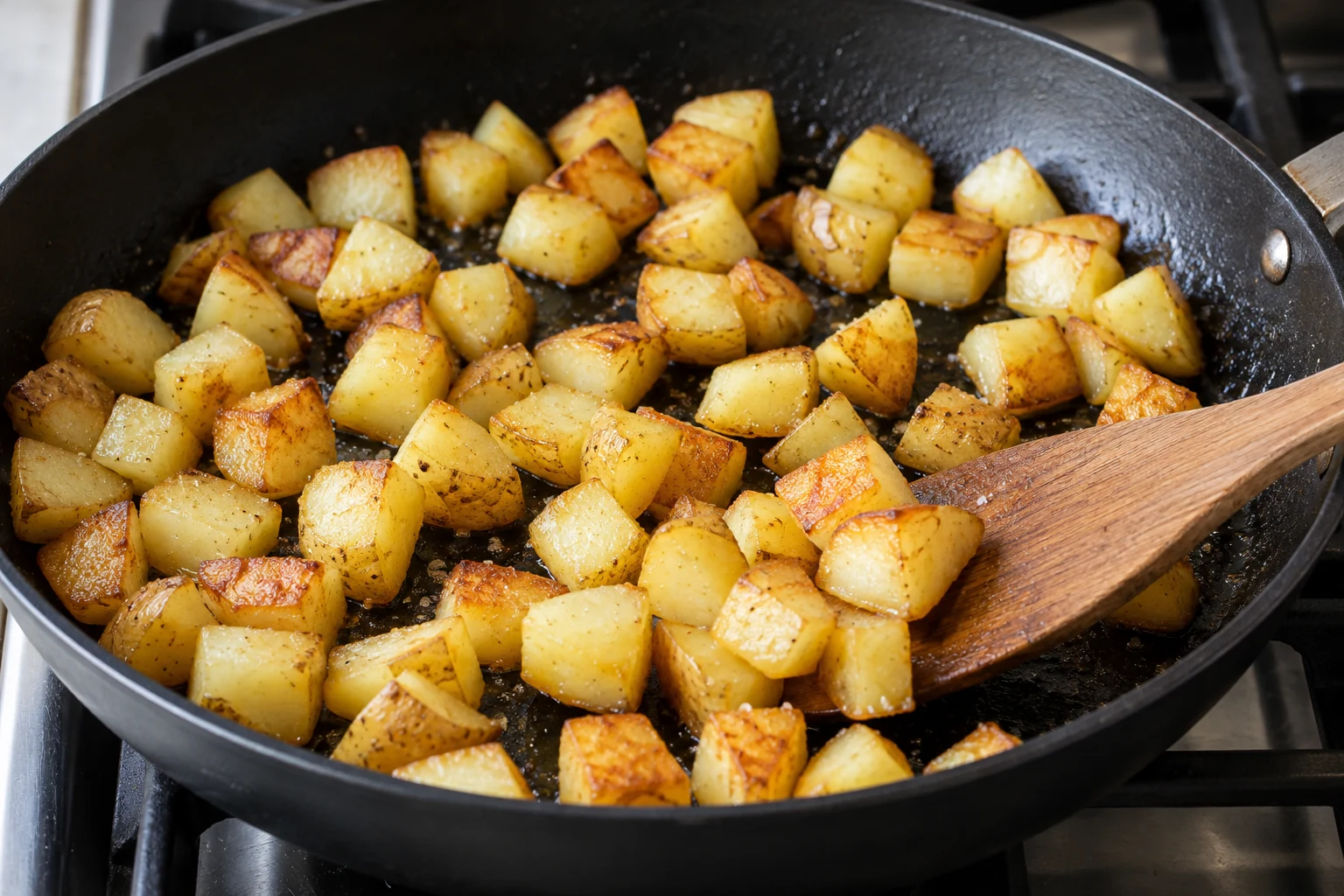
Pale and soft: The pan probably still contains too much moisture or too many ingredients for its area. Let water evaporate with the lid off. A gentle steam cloud is different from the sharper sizzle that signals the surfaces can begin browning.
Stuck to the pan: In stainless steel or cast iron, a developing crust may release more easily after another minute. Use enough oil and avoid scraping constantly. If there is a dark burned layer rather than a golden crust, reduce the heat and turn the food before it becomes bitter.
Falling apart: Potatoes may have cooked too long under the lid, or the cubes may be small and fragile. Fold with a broad spatula rather than vigorously stirring. Broken pieces can still taste good, but the next batch benefits from more even cutting and an earlier tenderness check.
Finish the skillet and divide the portions
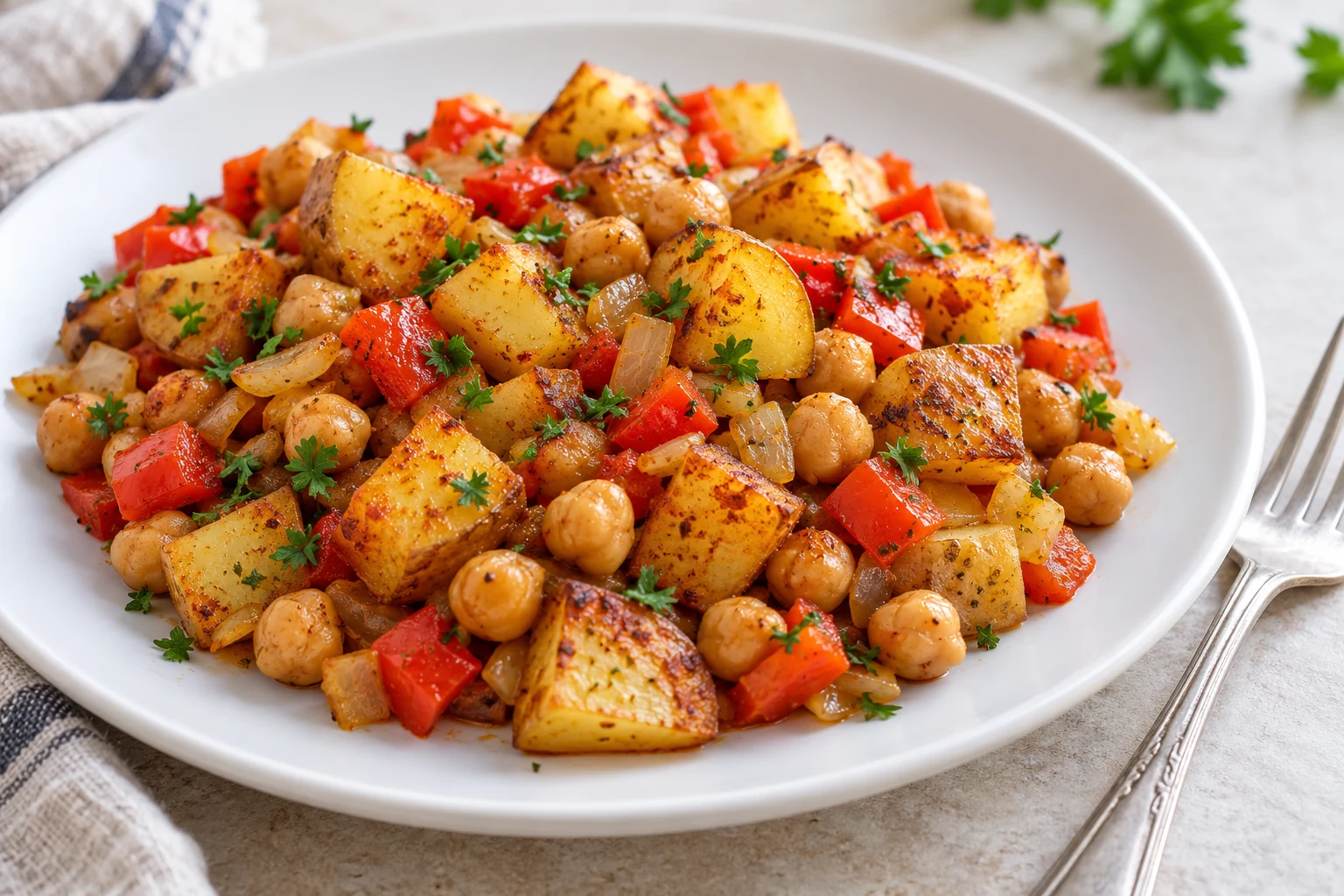
Smoked paprika makes the skillet taste smokier; sweet paprika keeps the flavor mild. A small pinch of chili flakes is optional if everyone enjoys heat. Add spicy toppings at the table if different people prefer different levels. Lemon brightens the finished pan without turning the vegetables into a sauce.
Cooked spinach can be added in a small, well-drained amount near the end, but raw or frozen spinach straight from the bag releases water. For a version built around that ingredient, use the site’s potato spinach breakfast hash. For another savory pantry breakfast, try pea and cheddar breakfast rice.
If adding an egg, cook it separately so you can control doneness without covering and steaming the browned potatoes again. Serve with toast only if you want a larger meal; the potatoes already provide a substantial base. A tomato or cucumber side gives a fresh contrast.
Divide potatoes, beans and vegetables together
Lift portions from different areas of the skillet rather than spooning one person’s serving entirely from the top. Chickpeas can roll into gaps while the larger potato pieces remain exposed, so a broad scoop from the base gives a more balanced share. Keep the finished food in a loose layer on the plate. A deep pile traps steam against the browned surfaces, especially if the plate is covered while waiting for other breakfast dishes.
Leftover strategy
Transfer leftovers to a shallow container and refrigerate within two hours, at 40°F / 4°C or below. Use within 3–4 days. In weather above 90°F / 32°C, the unrefrigerated limit drops to one hour. The FoodSafety.gov chilling guidance explains those limits.
Reheat in a skillet with a little oil or a small splash of water under a lid to warm the center, then uncover to remove moisture. Leftovers should reach 165°F / 74°C. Microwave reheating is convenient but softens the browned edges. Freeze only if you are comfortable with a softer potato texture after thawing; fresh or refrigerated portions are the better texture choice.
Frequently asked questions
Can I use leftover cooked potatoes?
Skip the covered raw-potato stage if they were safely chilled and are already tender. Start by browning them, then follow the vegetable steps. Heat the finished skillet to 165°F / 74°C when using leftover cooked potatoes.
Can I use sweet potatoes?
They soften and brown differently. A sweet-potato version needs its own timing check rather than an automatic substitution at every step.
Will the chickpeas become crunchy?
They may gain a few browned spots but remain mostly tender. Oven-roasted crunchy chickpeas use a drier, longer method than this breakfast skillet.
Can I omit the bell pepper?
Yes. The pan will have fewer vegetables, but the potato and chickpea steps stay similar. Do not replace it with a large amount of watery vegetables without adjusting the cooking sequence.
Why add lemon at the end?
It keeps the final flavor bright and avoids adding water during the browning stage. Taste before adding extra so the potatoes do not become overly sharp.
Can I double it for four?
Use two skillets or cook in batches. Skillet breakfast potatoes with canned chickpeas need pan space, so doubling everything in the same skillet makes browning less effective.
Organize the skillet before you start
Keep the ingredients in cooking order
Set the lid and a broad spatula beside the stove. Put the diced onion and pepper together, keep the garlic with the measured spices, and place the drained chickpeas in a separate bowl. Garlic belongs near the end of the cooking sequence; adding it with the potatoes would leave it against the heat for too long.
Measure the first tablespoon of oil into the potato mixture and reserve the second tablespoon for the onion and pepper. This makes it easier to follow the two stages without accidentally doubling the oil. A thin film is enough to coat the food; visible pools of water must evaporate before the browning stage can begin.
Use the flat base of the pan
The stated diameter usually measures a skillet across its upper rim. The flat cooking surface can be smaller, particularly in a pan with sloping sides. Spread the potato cubes across that flat base and keep the burner centered beneath it. If one side colors faster, rotate the skillet carefully or turn that section first. Constant stirring will make it harder to form browned surfaces.
Blot the chickpeas without crushing them
Line a shallow bowl with a clean towel, add the rinsed chickpeas, and fold the towel over them. Blot gently, then tip the beans into a dry bowl. A few loose skins are normal; there is no need to peel every chickpea. Removing surface water keeps the final addition from undoing the work of drying and browning the pan.
Check the seasoning across the pan
Taste a cooled bite containing potato, chickpea, and pepper before adding salt. If one patch looks much redder with paprika, fold from underneath to distribute the coating first. Serve in a shallow layer so steam can escape, and keep any egg or sauce on individual portions.
More recipes for your table
Choose a companion dish or another recipe for the ingredients you have. Each link opens its own instructions and printable recipe.
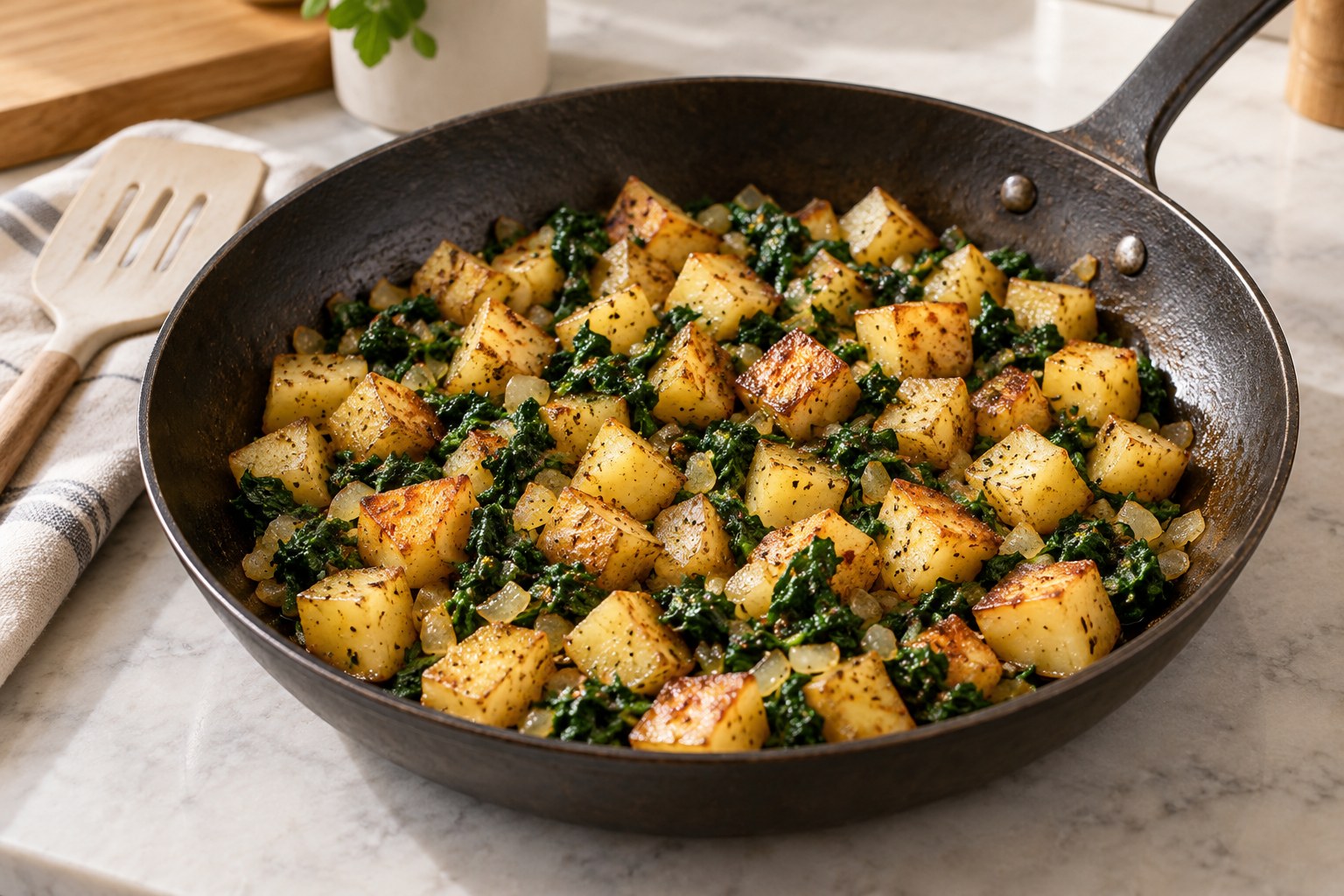
Another potato breakfast skillet, with spinach.
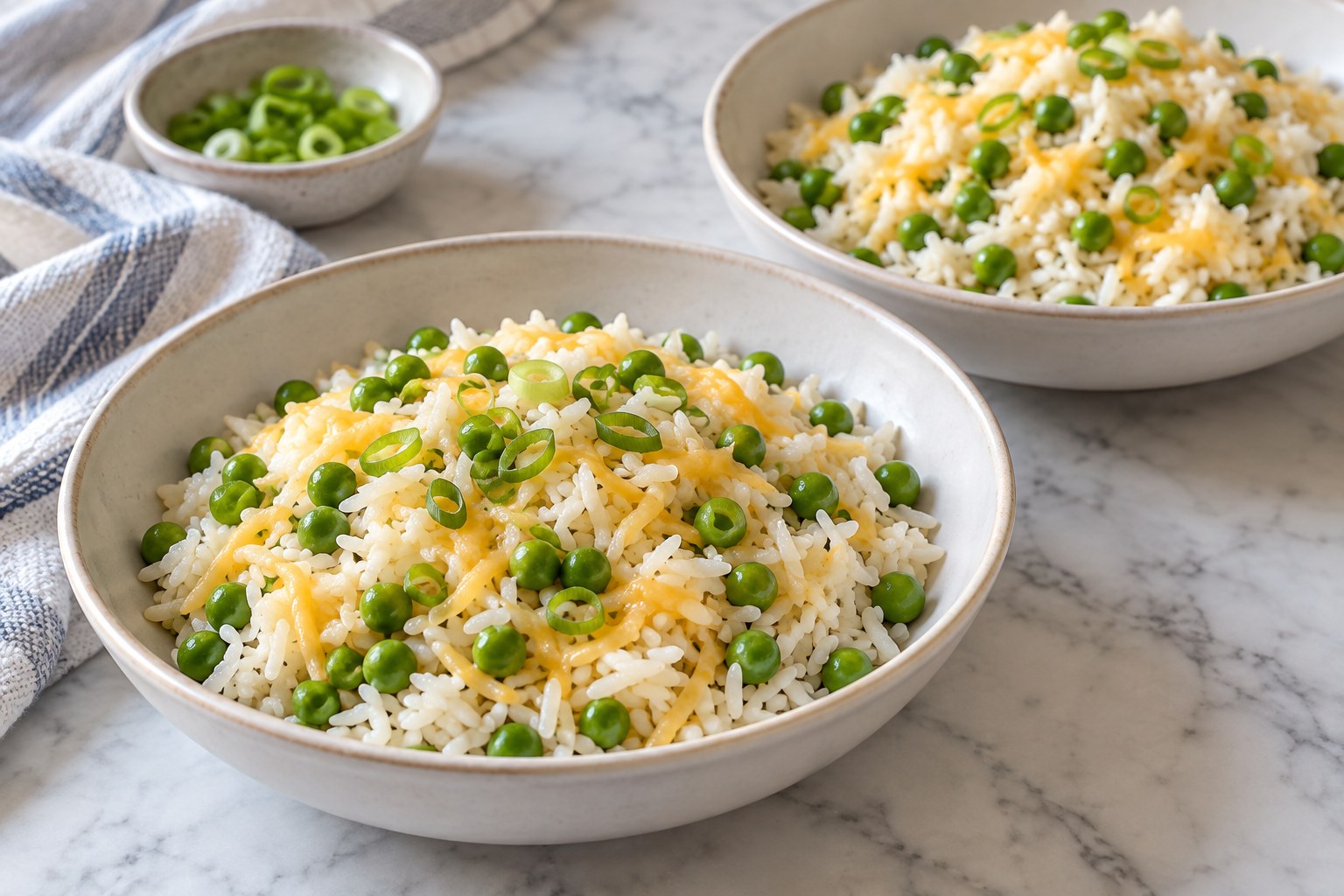
Another savory breakfast built around a familiar grain.
Equipment for this recipe
Affiliate disclosure: As an Amazon Associate I earn from qualifying purchases.
Use the tools you already have when they match the method. If you need an item, these links open matching Amazon search results.
- 12-inch skillet on Amazon — Match the recipe’s pan width and use a lid when the method calls for one.
- Wide spatula or turner on Amazon — Support the food underneath when turning; choose a material suitable for your pan.
Check the size, material, and manufacturer’s use instructions against the recipe before choosing.
Useful kitchen references
- FoodSafety.gov leftover guidance — A practical reference for chilling and reheating.
Printable recipe
Use the recipe card’s Print control for a kitchen copy. Follow the ingredient quantities and cooking checks in the card when preparing the dish.
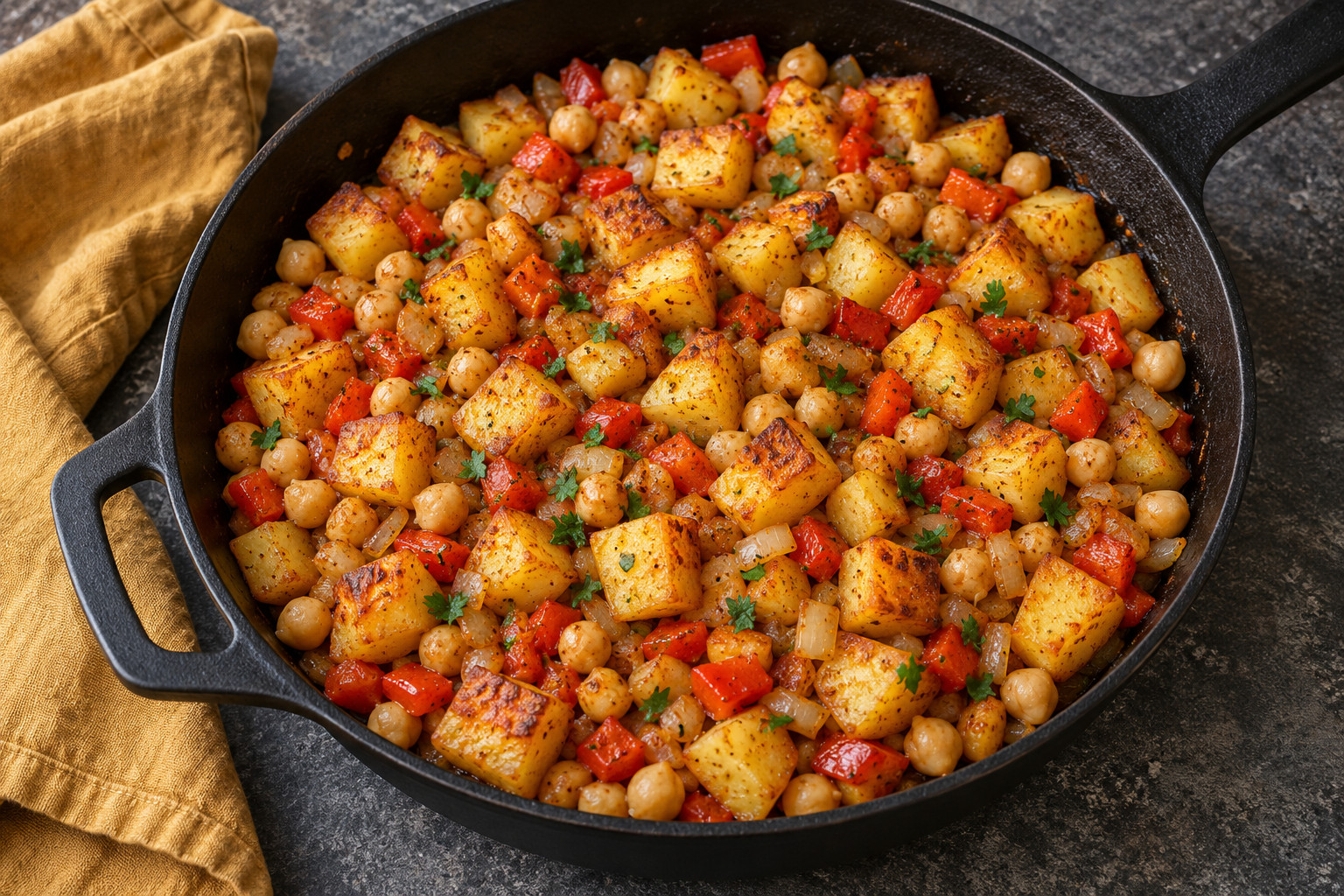
Skillet Breakfast Potatoes with Canned Chickpeas
Ingredients
Equipment
Method
- Start the potatoes. Put the potatoes, water, 1 tablespoon oil and ¼ teaspoon salt into the skillet. Cover and bring to a gentle simmer over medium heat. Cook for 10–12 minutes, stirring once halfway through.
- Check the center. Test a larger cube with a knife. It should be nearly tender. If it is still hard and the pan is dry, add 1–2 tablespoons water, cover and continue a few minutes. Keep fingers clear when lifting the lid because steam escapes quickly.
- Evaporate and brown. Remove the lid and let any water cook away. Spread the potatoes out and cook for 7–10 minutes, turning every few minutes rather than constantly stirring. Aim for several golden surfaces, not a brown crust on every side.
- Add the vegetables. Push potatoes toward the outer edge. Add the remaining tablespoon oil to the middle, then the onion and pepper. Cook for about 5 minutes, stirring the middle portion, then fold everything together.
- Season and add chickpeas. Add garlic, paprika, cumin, pepper and the remaining ¼ teaspoon salt. Stir for about 30 seconds, then add the drained chickpeas. Cook for 4–6 minutes, turning gently, until the chickpeas are hot throughout.
- Finish off the heat. Add lemon juice and optional parsley. Taste a potato and chickpea together before adding more salt. Serve promptly so the browned edges retain their texture.
Notes
- Yield and timing: Makes 2 generous portions or 3 smaller ones. Allow about 10 minutes to prepare and 35 minutes to cook; follow the tenderness and browning cues rather than the clock alone.
- Pan and texture: Use a 12-inch skillet with a lid. Cut potatoes into even ½-inch cubes. Let the water evaporate completely before browning; turn with a broad spatula instead of stirring continuously.
- Chickpeas and seasoning: Use cooked canned chickpeas, rinsed and well drained, not uncooked dried chickpeas. Keep the garlic and spices ready before adding them. The chickpeas should be hot and tender, not crunchy.
- Serving: The base recipe contains no eggs. Add any separately cooked egg to an individual serving. For a doubled batch, use two skillets or cook in batches.
- Leftovers: Refrigerate in a shallow container within 2 hours, or within 1 hour above 90°F (32°C), at 40°F (4°C) or colder. Use within 3–4 days and reheat to 165°F (74°C). See FoodSafety.gov storage and reheating guidance.