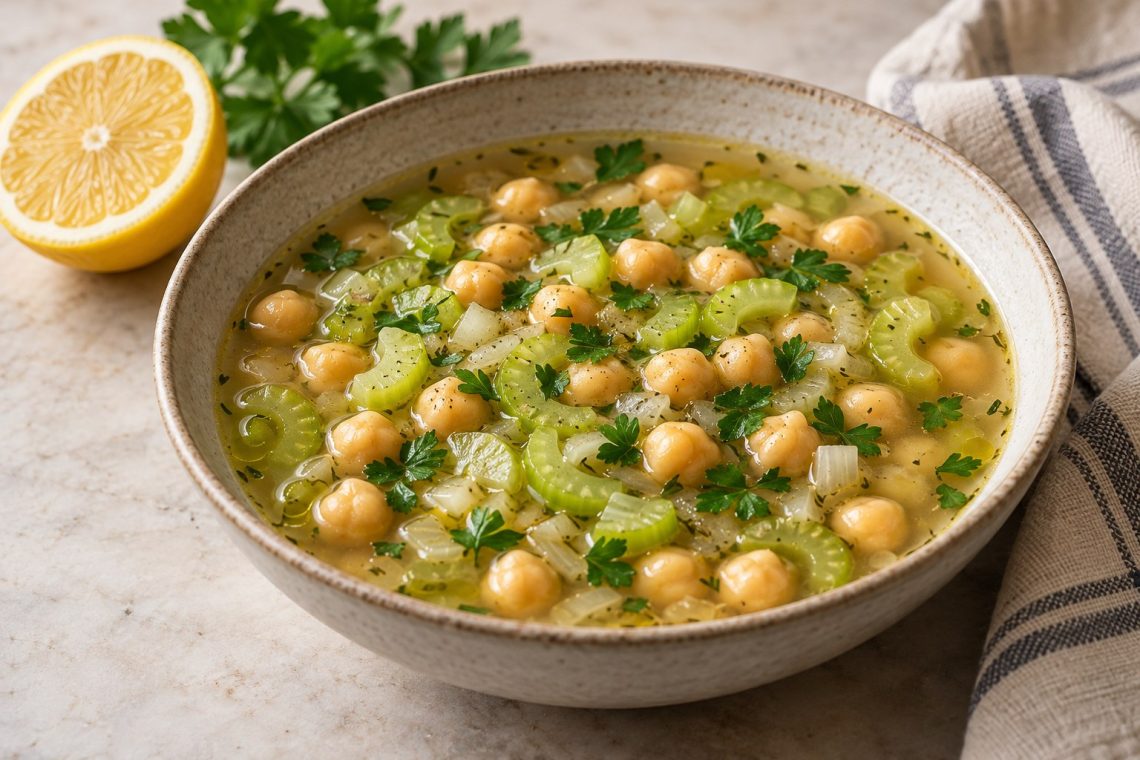
Chickpea lemon soup is a light, savory bowl of canned chickpeas, thinly sliced celery, onion, garlic, and rosemary. Lemon juice and parsley go in at the end, giving the broth a fresh finish while the chickpeas and vegetables stay recognizable.
This version uses one can of chickpeas and makes about three modest bowls. It is a useful choice when you want chickpea soup without tomatoes, with enough broth for dipping toast and no pasta or dairy in the base. Allow about 30–40 minutes, including chopping, bringing the soup to a simmer, and final seasoning.
Recipe note: This research-informed recipe has not yet been kitchen-tested by Family Recipe HQ. Times and serving yield are estimates; check the celery and chickpeas for tenderness before finishing.
Chickpea lemon soup: ingredients and timing
- Estimated yield
- 3 modest bowls
- Preparation
- About 10 minutes
- Cooking and finishing
- About 20–30 minutes
- Total time
- About 30–40 minutes
Equipment: A 3-quart saucepan, cutting board, sharp knife, can opener, measuring cups and spoons, stirring spoon, and ladle. A small heatproof bowl and fork are useful if you want to mash some chickpeas for a fuller broth.
Measured ingredients
- 1 tablespoon olive oil
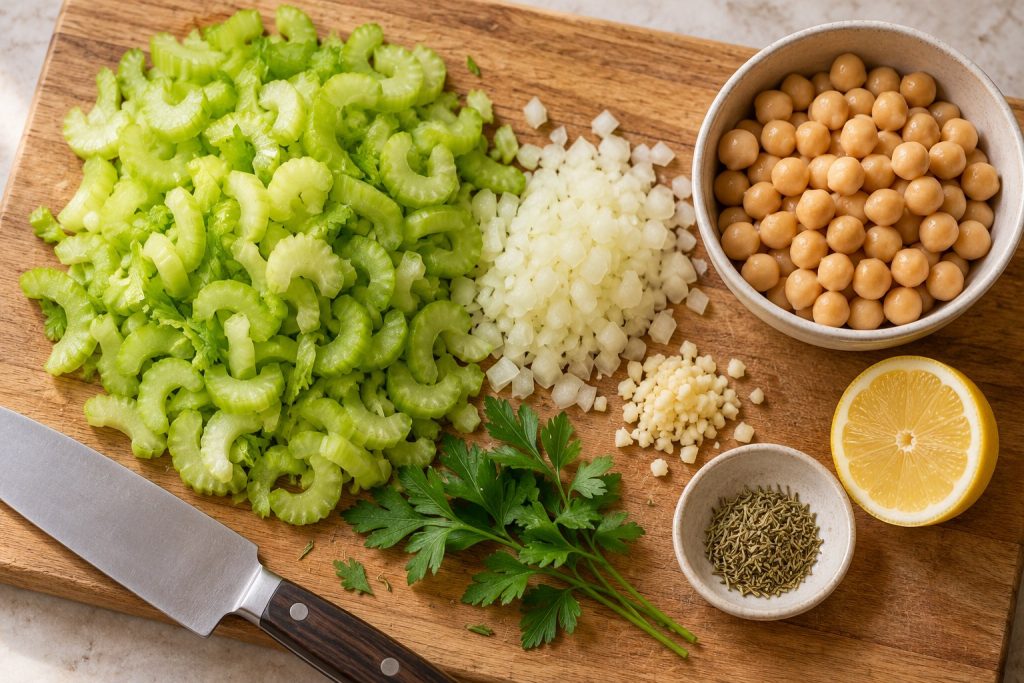
- 1 1/2 cups loosely measured, thinly sliced celery, about 3 medium stalks
- 1/3 cup diced yellow onion, about 1/2 small onion
- 2 medium garlic cloves, minced
- 1/4 teaspoon dried rosemary, lightly crushed between your fingers
- 1 can (15 ounces) chickpeas, drained and rinsed
- 2 1/2 cups vegetable broth, preferably low-sodium
- 1 tablespoon fresh lemon juice, plus more only after tasting
- 1 tablespoon chopped fresh parsley
- 1/8 teaspoon ground black pepper
- Up to 1/4 teaspoon fine salt, only as needed after tasting
Measure after chopping: Celery stalks and onions differ in size, so use the cup measures as the targets. The chickpea can’s 15-ounce weight includes its packing liquid; use one can’s drained contents. Do not weigh out 15 ounces of drained chickpeas or add the can liquid on top of the measured broth.
How to make chickpea and celery soup
- Prepare the vegetables and beans. Wash the celery, trim the ends, and slice crosswise about 1/8 inch thick. Split particularly wide stalks lengthwise first for smaller pieces. Dice the onion finely, mince the garlic, and drain and rinse the chickpeas. Measure the broth and seasonings. Squeeze the lemon into a small bowl so you can remove seeds and measure the juice.
- Warm the oil. Set the saucepan over medium heat. Add the oil and warm for about 1 minute, until it moves easily across the bottom without smoking.
- Soften the celery and onion. Add both vegetables and cook for 6–7 minutes, stirring regularly. The onion should become translucent, and the celery should begin to soften. Lower the heat if the edges brown rapidly; the vegetables will finish becoming tender in the broth.
- Add garlic and rosemary. Stir in the garlic and crushed rosemary for about 30 seconds, just until fragrant. Keep the garlic moving and add the broth before it browns deeply.
- Bring the soup to a simmer. Add the broth, chickpeas, and black pepper. Stir across the bottom to loosen any light golden bits from the vegetables. Allow approximately 3–5 minutes to reach a gentle simmer, adjusting the heat as needed.
- Cook until tender. Simmer uncovered for 8–10 minutes, with small, steady bubbles, stirring once or twice. Test a celery slice and a chickpea. The celery should be tender with a slight bite, and the chickpea should be hot through with a texture you enjoy. Continue simmering if needed, following the checks below.
- Finish off the heat. Turn off the burner and stir in 1 tablespoon lemon juice and the parsley. Taste a cooled spoonful containing broth and solids. Add salt in small pinches, up to the listed 1/4 teaspoon if needed. Add extra lemon only 1 teaspoon at a time, stirring and tasting after each addition.
- Divide evenly. Stir from the bottom before ladling so each of the three portions receives chickpeas, celery, and broth. Serve with toast or another accompaniment, and offer extra lemon separately for anyone who wants a sharper finish.
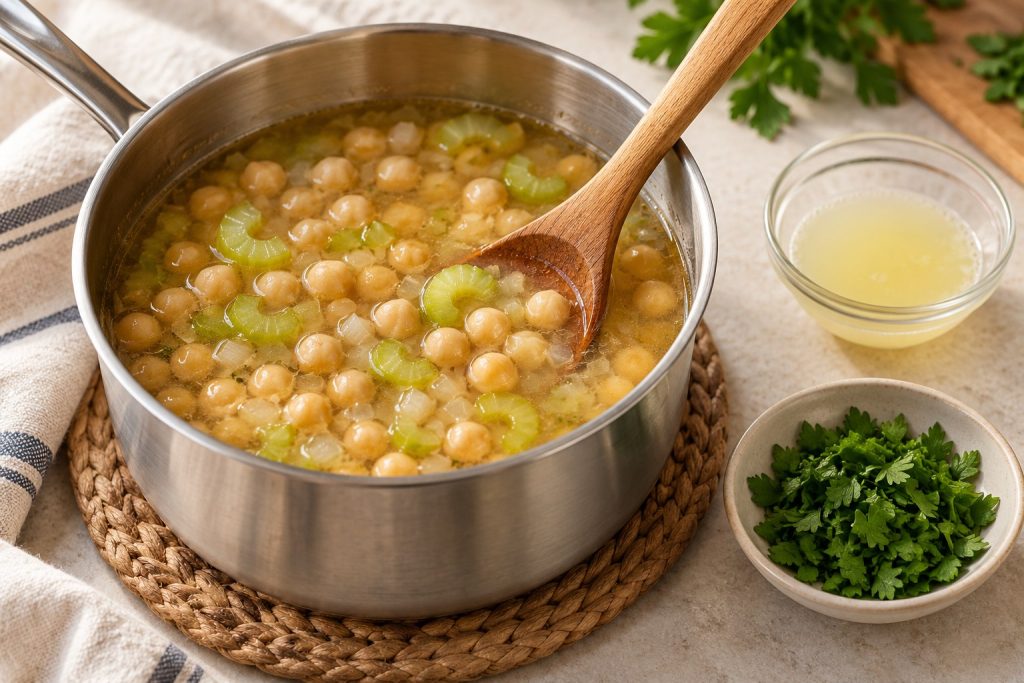
Getting tender celery and chickpeas
Cut the celery for an even bite
Thin crosswise slices are easier to soften consistently than a mixture of thick chunks and fine pieces. If large outer stalks have obvious tough strings, peel those away before slicing. The measured 1 1/2 cups should go into the saucepan after trimming and cutting.
At the end of the simmer, taste one of the larger pieces. It should bend easily and lose its raw crunch while holding its shape. If it is still too firm, simmer in 2-minute increments and check again. The 8–10-minute simmer is a starting estimate, not a reason to stop while the vegetables are still crunchy.
Account for the texture of your canned chickpeas
Canned chickpeas are already cooked, but their firmness varies. Budget Bytes’ chickpea-soup notes describe why firmer brands can need additional simmering before they become easy to purée. For this mostly whole-bean soup, aim for a chickpea that is pleasant to bite, not one that must dissolve into the broth.
If the chickpeas need softening beyond the basic simmer, cook a little longer and check every few minutes. Add broth or water if evaporation leaves too little liquid; this extra cooking increases the total time. A few split skins do not by themselves mean the heat is too high. Judge the bubbling in the pot and reduce the heat if it is boiling vigorously.
A lemon finish with balanced seasoning
Onion, celery, garlic, and rosemary make the savory base. Lemon supplies a finishing contrast. Adding it after the simmer lets you taste the soup at its finished concentration before deciding how much acid it needs.
Measure the first tablespoon instead of squeezing half a lemon straight into the saucepan: lemons vary in juice yield. Then adjust gradually. If a broth is underseasoned, try a small pinch of salt; if it has enough salt but tastes dull, try a little more lemon. Change one thing at a time so you can judge the effect.
Parsley is a finishing herb here. Chop it before you begin or while the soup simmers, and stir it in with the lemon. Avoid adding whole lemon wedges to the pot for a prolonged simmer; serving a wedge alongside gives each person more control over the final flavor.
Troubleshooting broth, flavor, and texture
| What you notice | What to do |
|---|---|
| Celery is still crunchy | Continue simmering in 2-minute increments. Check a larger slice and keep enough liquid in the pot to cook it gently. |
| There is too little broth | Add warm broth in 1/4-cup increments. If it is already salty, use unsalted broth or water. A wide pan or vigorous boil can increase evaporation. |
| The soup tastes too sharp | Stop adding lemon. Dilute a little at a time with unsalted broth or water, then reassess salt. Serve extra lemon separately next time. |
| The soup is too salty | Add unsalted broth or water gradually. This also dilutes the herb and lemon flavors, so taste again. More lemon does not remove salt. |
| The garlic or base tastes burned | Remove the pot from the heat. Transfer unaffected soup to a clean pan without scraping up the scorched layer. If bitterness has spread throughout, further seasoning is unlikely to fix it. |
| You want a fuller broth | Lift about 1/3 cup chickpeas into a heatproof bowl, mash with a fork and a spoonful of soup liquid, and stir back in. Leave most chickpeas whole. |
On a small screen, scroll the table sideways to see every column.
Mashing is optional: the base recipe is meant to be brothy. Firm chickpeas may mash coarsely, so simmer them longer if you want a smoother result. For other methods, see our guide to thickening soup without flour or cornstarch.
Substitutions that keep the soup simple
- Chickpeas cooked from dry: Use approximately 1 1/2 cups fully cooked, drained chickpeas in place of the can. This follows Camellia’s general canned-to-cooked bean conversion. Cook them separately until tender first; dry chickpeas are not a direct addition to this short recipe.
- White beans: One drained 15-ounce can of cannellini or great northern beans is a pantry variation. Softer beans may break down more, so omit optional mashing until you check the texture.
- Rosemary: Try 1/4 teaspoon dried thyme in its place for a different herb flavor. Use one herb at first so it is easier to judge the seasoning.
- Parsley: Omit it if unavailable, or add a small amount of another fresh herb you enjoy at serving. A large spoonful of dried parsley will not give the same finish.
- Broth: Low-sodium vegetable broth gives more room to adjust salt. If keeping the soup tomato-free, check the broth’s ingredient list too. Choose broth and toppings that suit any dietary needs. If using bouillon cubes or paste, prepare 2 1/2 cups of broth according to the label and use that as the measured liquid. Taste after cooking before adding salt.
These variations change the flavor or texture; use the same tenderness and seasoning checks. For more pantry combinations, browse our bean and lentil recipe collection.
Serving and making a larger batch
Serve with crisp toast, a sandwich, or a salad. A little olive oil on each bowl adds richness without changing the whole pot. Put croutons and other crunchy toppings on at the table so they keep their texture.
To stretch the meal with rice or small pasta, cook it separately and add a portion to each bowl. Cooking an unmeasured amount directly in the soup changes the broth needed and the timing, and leftovers may become much thicker.
For about six modest bowls, double the ingredients and use a larger pot: two cans of chickpeas, 3 cups sliced celery, 2/3 cup diced onion, and 5 cups broth, with the remaining ingredients doubled too. Allow extra time to reach a simmer. Keep checking the celery rather than doubling its cooking time, and make the final salt and lemon adjustments gradually.
Cooling, storing, freezing, and reheating
Refrigerate leftovers promptly in shallow containers, within 2 hours of cooking or within 1 hour above 90°F. Keep the refrigerator at 40°F or below, following FDA storage guidance.
Use refrigerated soup within 3–4 days. Freeze portions if keeping them longer, leaving room for expansion in freezer-safe containers. FoodSafety.gov gives soups a general freezer-quality window of 2–3 months. Thaw in the refrigerator; the celery may be softer after freezing.
Add broth or water if needed when reheating. Stir so the solids and liquid heat evenly, reheat to 165°F, and bring soup to a rolling boil, following Nebraska Extension’s reheating advice. Taste after heating before adding fresh parsley or more lemon.
Frequently asked questions
Do I need to soak canned chickpeas?
No. Drain and rinse them, then add them as directed. The longer preparation required for dried chickpeas is separate from this recipe; only fully cooked chickpeas can go straight into the short soup method.
Can I use bottled lemon juice?
It can provide the acid if fresh lemons are unavailable, although the flavor will differ. Check that the product is plain lemon juice. Start with 2 teaspoons, taste, and add more as needed rather than assuming it will taste identical tablespoon for tablespoon.
Can I prepare it ahead?
Yes. Follow the cooling and storage guidance, and pack any toast or toppings separately. If preparing the entire batch for later, you can leave the parsley out until serving. Once reheated, taste a spoonful before deciding whether the lemon needs refreshing.
Is this soup vegan?
The listed base ingredients are plant-based when made with suitable vegetable broth. Check the broth and any toppings to confirm. Cheese, buttered toast, or prepared croutons can change that even though they are optional accompaniments.
Printable recipe
Print the measured ingredients and step-by-step instructions using the recipe card below.
THE COMPLETE RECIPE
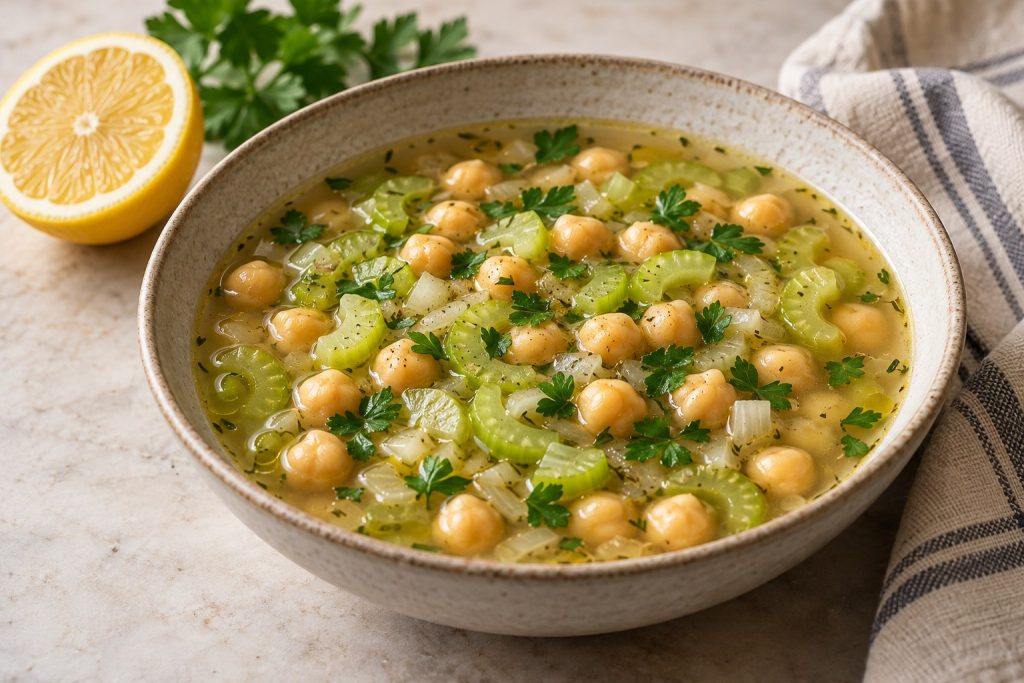
Chickpea Lemon Soup with Celery (No Tomatoes)
Yield: 3 modest bowls (estimated)
Ingredients
- 1 tablespoon olive oil
- 1 1/2 cups celery Loosely measured after thinly slicing, about 3 medium stalks.
- 1/3 cup yellow onion Diced, about 1/2 small onion.
- 2 medium cloves garlic Minced.
- 1/4 teaspoon dried rosemary Lightly crushed between your fingers.
- 1 15-ounce can chickpeas Drained and rinsed.
- 2 1/2 cups vegetable broth Preferably low-sodium; check the label if keeping the soup tomato-free.
- 1 tablespoon fresh lemon juice Plus more only after tasting, in 1-teaspoon additions.
- 1 tablespoon fresh parsley Chopped.
- 1/8 teaspoon ground black pepper
- 1/4 teaspoon fine salt Use up to this amount, only as needed after tasting.
Equipment
- 1 3-quart saucepan
- 1 Knife and cutting board
- 1 can opener
- Measuring cups and spoons
- 1 stirring spoon and ladle
- 1 small heatproof bowl and fork Optional, for mashing some chickpeas.
Instructions
- Prepare the vegetables and beans. Wash the celery, trim the ends, and slice crosswise about 1/8 inch thick. Split particularly wide stalks lengthwise first for smaller pieces. Dice the onion finely, mince the garlic, and drain and rinse the chickpeas. Measure the broth and seasonings. Squeeze the lemon into a small bowl so you can remove seeds and measure the juice.
- Warm the oil. Set the saucepan over medium heat. Add the oil and warm for about 1 minute, until it moves easily across the bottom without smoking.
- Soften the celery and onion. Add both vegetables and cook for 6–7 minutes, stirring regularly. The onion should become translucent, and the celery should begin to soften. Lower the heat if the edges brown rapidly; the vegetables will finish becoming tender in the broth.
- Add garlic and rosemary. Stir in the garlic and crushed rosemary for about 30 seconds, just until fragrant. Keep the garlic moving and add the broth before it browns deeply.
- Bring the soup to a simmer. Add the broth, chickpeas, and black pepper. Stir across the bottom to loosen any light golden bits from the vegetables. Allow approximately 3–5 minutes to reach a gentle simmer, adjusting the heat as needed.
- Cook until tender. Simmer uncovered for 8–10 minutes with small, steady bubbles, stirring once or twice. Test a larger celery slice and a chickpea. The celery should be tender with a slight bite, and the chickpea hot through and pleasant to eat. If the celery is still firm, continue in 2-minute increments. Give firm chickpeas more time as needed, adding broth or water if evaporation leaves too little liquid.
- Finish off the heat. Turn off the burner and stir in 1 tablespoon lemon juice and the parsley. Taste a cooled spoonful containing broth and solids. Add salt in small pinches, up to the listed 1/4 teaspoon if needed. Add extra lemon only 1 teaspoon at a time, stirring and tasting after each addition.
- Divide evenly. Stir from the bottom before ladling so each of the three portions receives chickpeas, celery, and broth. Serve with toast or another accompaniment, and offer extra lemon separately for anyone who wants a sharper finish.
Notes
Rate This Recipe
Made this recipe? Choose a star rating in the comment form and share how it turned out. Your cooking time and any ingredient changes can help the next reader.
Rate This Recipe