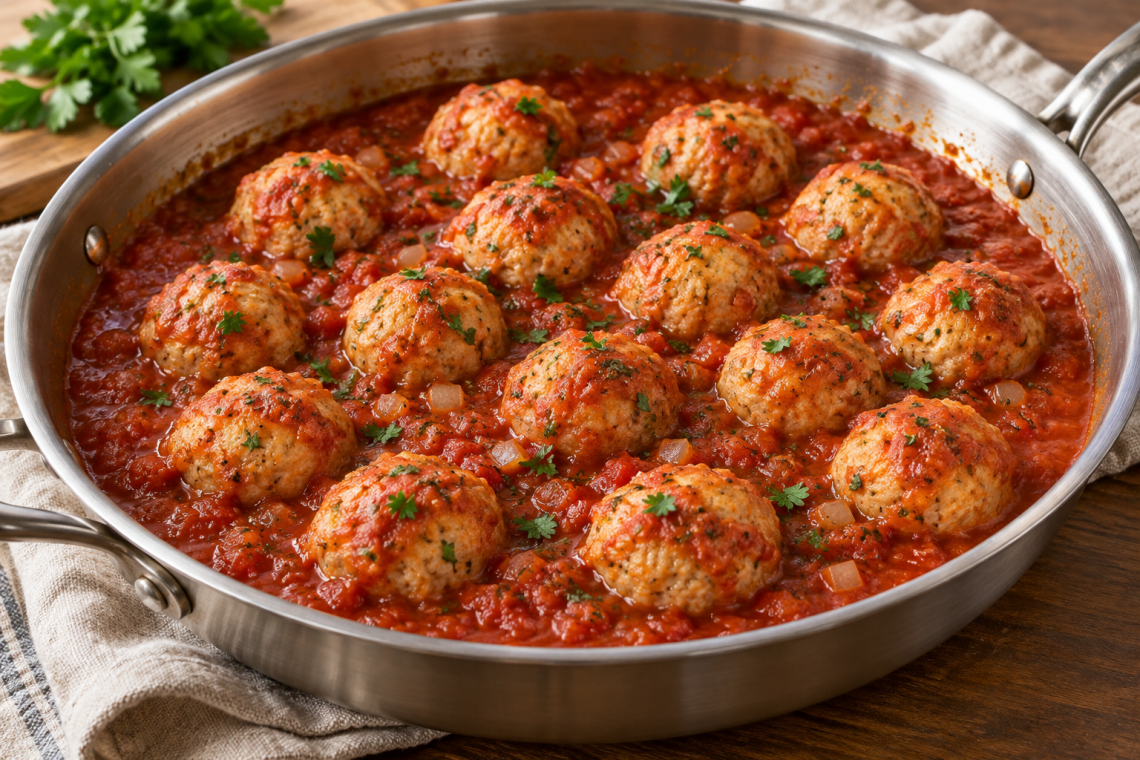
These chicken meatballs with cornmeal simmer gently in tomato sauce, making a pantry-friendly dinner when breadcrumbs are missing. Fine cornmeal absorbs a little milk before it is mixed with the chicken, and an egg helps hold the small meatballs together. The sauce provides a moist cooking environment, so there is no separate frying stage or need to chase a dark crust.
Hydrate cornmeal before shaping the chicken mixture
- Mix cornmeal with the measured moist ingredients and let it stand so the grains soften.
- Combine with chicken gently; overmixing makes lean meatballs firm.
- Shape equal portions with damp hands and keep them loose enough for a tender center.
- Lower the shaped meatballs directly into gently simmering tomato sauce in a single layer; cook until their centers reach 165°F.
If the mixture feels soft, chill it before adding more cornmeal. Too much dry binder can create a gritty, dense result after the sauce is absorbed.
Give the cornmeal time to hydrate
Fine cornmeal is dry and slightly gritty before it absorbs liquid. Combining it with milk first allows the grains to soften before the meat mixture is formed. It does not become a cooked porridge during this rest; the meatballs still need their full simmering time and safe cooking endpoint.
A modest amount is enough: 1/4 cup cornmeal for a pound of chicken. Adding more to make a sticky mixture feel completely dry can produce dense, crumbly meatballs. Ground chicken is often softer than ground beef, so damp hands and gentle scooping are more useful than repeatedly adding dry ingredients.
Choose fine plain cornmeal without added leavening. Cornbread mix contains other ingredients and is not a direct substitute. Masa harina also behaves differently and should not be exchanged cup for cup without developing a separate formula.
Chicken meatballs with cornmeal in tomato sauce
Yield: about 16 meatballs, 4 servings. Preparation: about 20 minutes, including a 10-minute cornmeal rest. Cooking: about 25 minutes. Total: about 45 minutes. Equipment: two bowls, tablespoon or small scoop, wide skillet with lid, spoon, and instant-read thermometer.
For the meatballs
- 1/4 cup finely ground plain cornmeal
- 1/4 cup milk
- 1 pound ground chicken, preferably a blend that is not extra lean
- 1 large egg
- 3 tablespoons finely grated onion, including its juice
- 1 garlic clove, finely grated
- 1/2 teaspoon fine salt
- 1/2 teaspoon dried oregano
- 1/4 teaspoon black pepper
- 2 tablespoons finely chopped parsley
For the sauce
- 1 tablespoon olive oil
- 1 small onion, finely chopped, about 1/2 cup
- 1 garlic clove, minced
- 1 can crushed tomatoes, 28 ounces
- 1/2 cup water, plus more only if needed
- 1/2 teaspoon dried basil
- 1/4 teaspoon fine salt, or less if the tomatoes are salty
- 2 tablespoons chopped parsley for serving, optional
Mix and gently simmer
- Hydrate the cornmeal. Stir the cornmeal and milk together in a bowl. Let stand for 10 minutes while you start the sauce. The mixture will thicken slightly. Do not substitute a much coarser grain and expect the same texture from this short rest.
- Start the tomato sauce. Heat the oil in the skillet over medium heat. Add the chopped onion and cook for 4–5 minutes until soft. Add the minced garlic and cook for 30 seconds. Stir in crushed tomatoes, water, basil, and salt. Bring to a gentle simmer, then lower the heat.
- Combine the meatball ingredients. Beat the egg into the hydrated cornmeal. Add grated onion, grated garlic, salt, oregano, pepper, and parsley. Add the ground chicken and fold gently until evenly combined. Stop when no distinct streaks remain. Do not taste the raw mixture.
- Shape modest portions. With lightly damp hands or a small scoop, form about 16 meatballs, approximately 1 1/2 inches across. The mixture should be soft but hold a rounded shape. If it is very difficult to handle, refrigerate it for 10–15 minutes before shaping rather than adding large amounts of cornmeal.
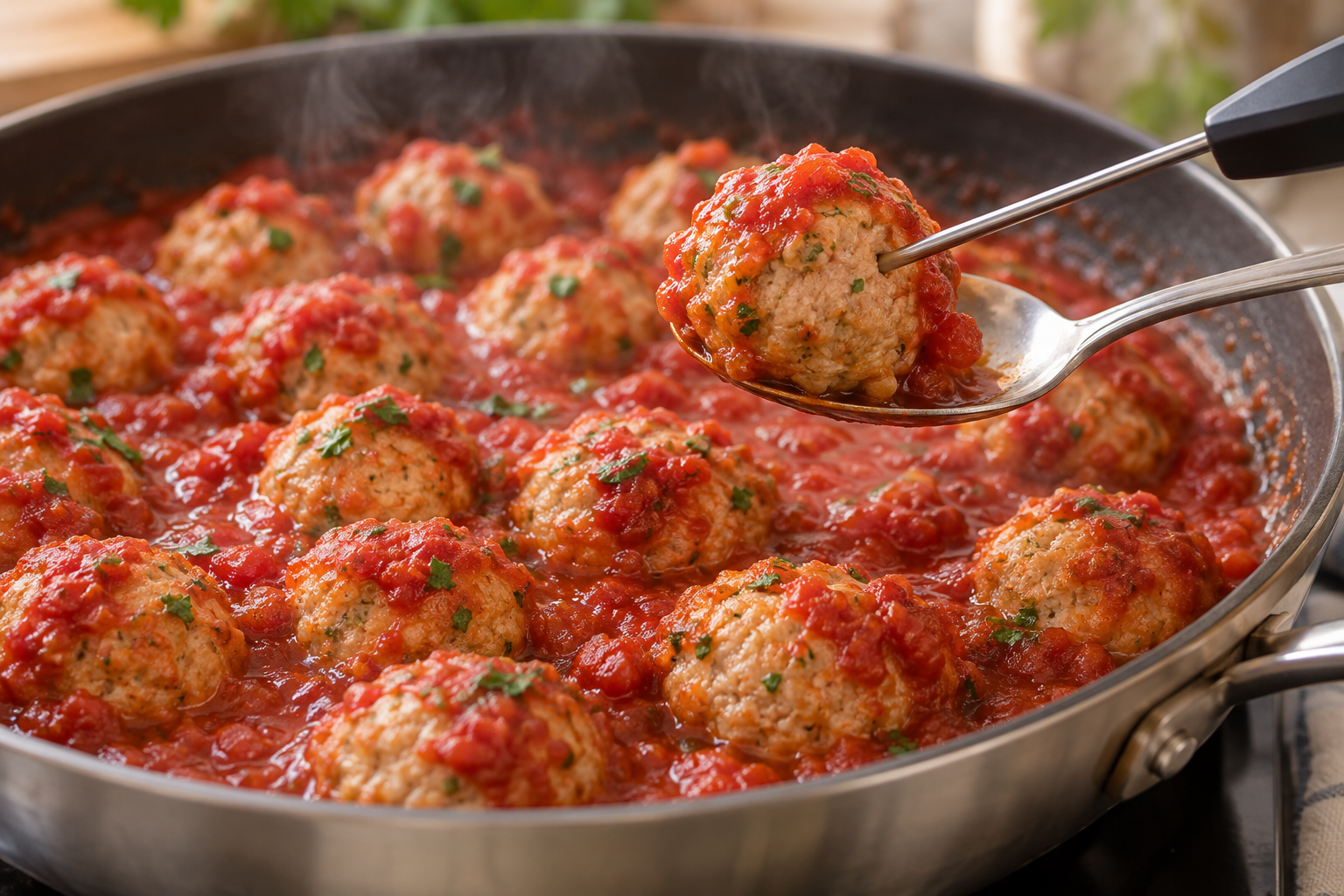
- Add to the simmering sauce. Lower the meatballs into the sauce in a single layer. Spoon a little sauce over the tops, cover, and maintain a gentle simmer for about 15–20 minutes. After the first 5 minutes, gently roll or turn the meatballs so they cook evenly. Avoid vigorous stirring while their surfaces are still setting.
- Verify doneness. Check the centers of several larger meatballs with a thermometer. Continue cooking until all reach 165°F. The sauce should bubble gently and the meatballs should feel set. Add water in small amounts if the sauce thickens too much before the centers are ready.
- Rest briefly and serve. Remove the skillet from the heat and let stand for 3 minutes so the meatballs settle. Sprinkle optional parsley and serve with cooked pasta, rice, or vegetables. Taste the sauce before adding more salt.
Handle soft chicken without overworking it
Ground chicken varies by brand and blend. Extra-lean breast meat can become firm quickly, while a mixture including dark meat often stays more tender. The recipe’s liquid and binder are intended for a typical ground-chicken product, so the exact raw texture may differ slightly between packages.
Mix the flavoring and egg into the cornmeal before adding the meat. This spreads seasoning without requiring a long, forceful mixing session. Once the chicken is added, folding with a fork or spoon is enough. Repeated squeezing and kneading can make the finished meatballs more compact.
Even size matters because all the meatballs share one pan. A scoop helps, but ordinary tablespoons also work if you keep comparing the pieces as you go. A few giant meatballs among small ones create a timing problem that cannot be solved by watching the sauce alone.
Use temperature to finish the centers
Ground poultry needs to reach 165°F according to the USDA safe-temperature chart. Sauce bubbling around the outside does not prove that every center has reached that temperature. Insert the thermometer into the middle of a large meatball and check more than one part of the pan.
For more detail on checking small portions, the site’s meatball doneness guide explains why timing, size, and temperature should work together. Do not deliberately stop early to keep poultry pink or assume carryover cooking will correct an undercooked center.
Fix texture and sauce problems
The raw mixture sticks: dampen your hands lightly and refrigerate briefly. Soft does not automatically mean incorrectly mixed. If water collects under the mixture, recheck ingredient quantities and avoid adding more onion juice or milk.
The meatballs break in the sauce: the simmer may be too vigorous or they may have been moved before setting. Lower the heat and leave them undisturbed for several minutes. Use a spoon to turn them gently instead of stirring through the entire pan.
The finished texture is gritty: the cornmeal may have been too coarse or insufficiently hydrated. Additional gentle simmering with enough sauce may soften it, but the clearest prevention is fine cornmeal and the initial rest.
The sauce tastes too concentrated: stir in water a tablespoon at a time. Tomato products differ in thickness and salt. A thick sauce does not always need more seasoning; it may simply need the moisture that evaporated during cooking.
Substitutions and serving ideas
Ground turkey can replace chicken and also needs 165°F. Water can replace milk if necessary, though the texture and richness change slightly. If avoiding dairy, check every ingredient rather than assuming the whole meal is suitable because the milk was changed.
Finely ground cornmeal is naturally different from wheat breadcrumbs, but a gluten-free claim requires checking product labels and handling as well. Do not assume cornbread mix, flavored cornmeal, or the pasta served beside the meatballs meets a dietary requirement.
Serve four meatballs per person with pasta or rice and a vegetable. Browned roasted broccoli provides a useful contrast to the tender meat and sauce. Spoon extra sauce over the side grain rather than keeping the meatballs on the heat while it finishes cooking.
Make-ahead and leftover handling
Refrigerate cooked meatballs with sauce in shallow containers within 2 hours, or within 1 hour above 90°F. Keep at 40°F or below and use within 3–4 days. Reheat the centers to 165°F, following USDA guidance for leftovers.
The cooked meatballs can be frozen promptly in portions with enough sauce to cover them. Aim to use within 2–3 months for quality. Thaw in the refrigerator, then simmer gently until thoroughly reheated. Keep the sauce loose during reheating so the bottoms do not scorch.
Frequently asked questions
Can I skip soaking the cornmeal?
The rest is part of this formula and helps distribute moisture before shaping. Skipping it can leave a rougher texture. Use the short waiting time to prepare the sauce rather than treating it as idle time.
Can I brown these first?
The soft mixture is designed for gentle simmering. Browning would require extra handling and could cause sticking or breakage. Use this method as written before developing a separate seared version.
Can I leave out the egg?
The egg helps the mixture hold together. Omitting it changes the formula substantially, and a reliable egg-free version needs its own development. Do not simply remove it and expect the same shaping and cooking behavior.
Can I use jarred sauce?
Yes. Use about 3 cups plain tomato-based sauce, thin with water as needed, and adjust added salt. Strongly flavored sauces may dominate the mild chicken, so choose one your household already likes.
How do I keep every meatball the same size?
Divide the mixture into four equal portions, then make four meatballs from each. This is an easy visual approach without special equipment. Check the largest pieces when testing doneness.
Can chicken meatballs with cornmeal be served without pasta?
Yes. Rice, mashed potatoes, or a bowl of cooked vegetables all work. The sauce is already included, so choose a side that can accept a spoonful without making the plate overly heavy.
A clearer prep station for chicken meatballs with cornmeal
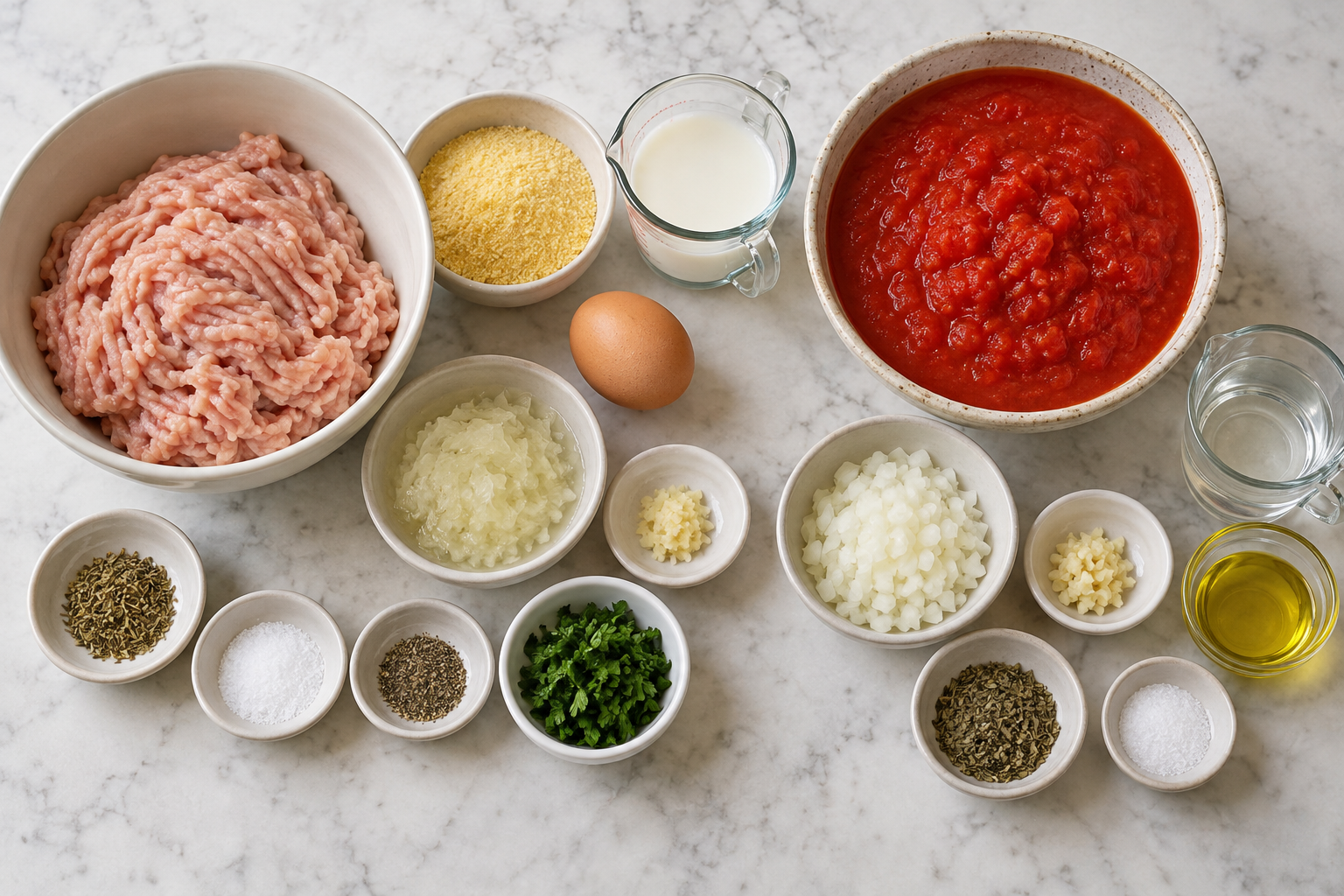
The ingredient list uses onion, garlic, salt, and parsley in two places. Set out the sauce ingredients separately from the meatball ingredients before opening the chicken. This makes it easier to follow the quantities and keeps utensils that have touched raw poultry away from the finished sauce and garnish.
Keep the two onion preparations separate
The meatball mixture needs 3 tablespoons finely grated onion with its juice; the sauce needs about 1/2 cup finely chopped onion. They serve different purposes. Grated onion disappears into the small meatballs, while chopped onion softens in the skillet. Measure the grated portion rather than adding an entire grated onion, which would introduce substantially more moisture than this mixture calls for.
Prepare the garlic the same way: one finely grated clove goes into the meatball bowl, and one minced clove goes into the sauce. Put the optional finishing parsley in a clean small dish. Once the meat is mixed, wash the grater, board, bowl-contact surfaces, and your hands before handling that garnish or arranging cooked food.
Plan around the chicken’s storage time
Keep the ground chicken refrigerated at 40°F or below until it is needed. USDA recommends using or freezing raw ground meat and poultry within 1–2 days of purchase. Mixing it with cornmeal and seasonings does not restart that storage window. If the chicken is already approaching the end of that time, make the meal promptly rather than planning an extra day of raw-meatball storage.
For a make-ahead dinner, cooking the entire batch and storing the finished meatballs with their sauce is easier to manage than holding a soft raw mixture. Follow the chilling and reheating directions above. Keep the cooking date on the container; a sauce that still smells pleasant is not a substitute for tracking how long the cooked food has been refrigerated.
Position the thermometer inside the meat
A small meatball gives a probe little room. Support one of the larger pieces on a clean spoon, lift it clear of the hot sauce, and insert a thin-tip food thermometer from the side toward its center. Keep the sensing area inside the meat rather than poking through into the surrounding sauce. Follow the thermometer manufacturer’s insertion-depth and response-time instructions.
USDA explains why a thin probe is useful for small or thin portions. Check several larger meatballs from different parts of the skillet. If any are below 165°F, return them to the gentle simmer and check again; clean the probe after contact with undercooked poultry. The recipe’s short finishing rest comes after safe doneness has been confirmed.
Once the chicken meatballs with cornmeal are cooked, use a clean serving spoon and plates that have not held the raw mixture. These small preparation choices make the recipe easier to follow without changing its ingredient balance or delicate texture.
More recipes for your table
Choose a companion dish or another recipe for the ingredients you have. Each link opens its own instructions and printable recipe.
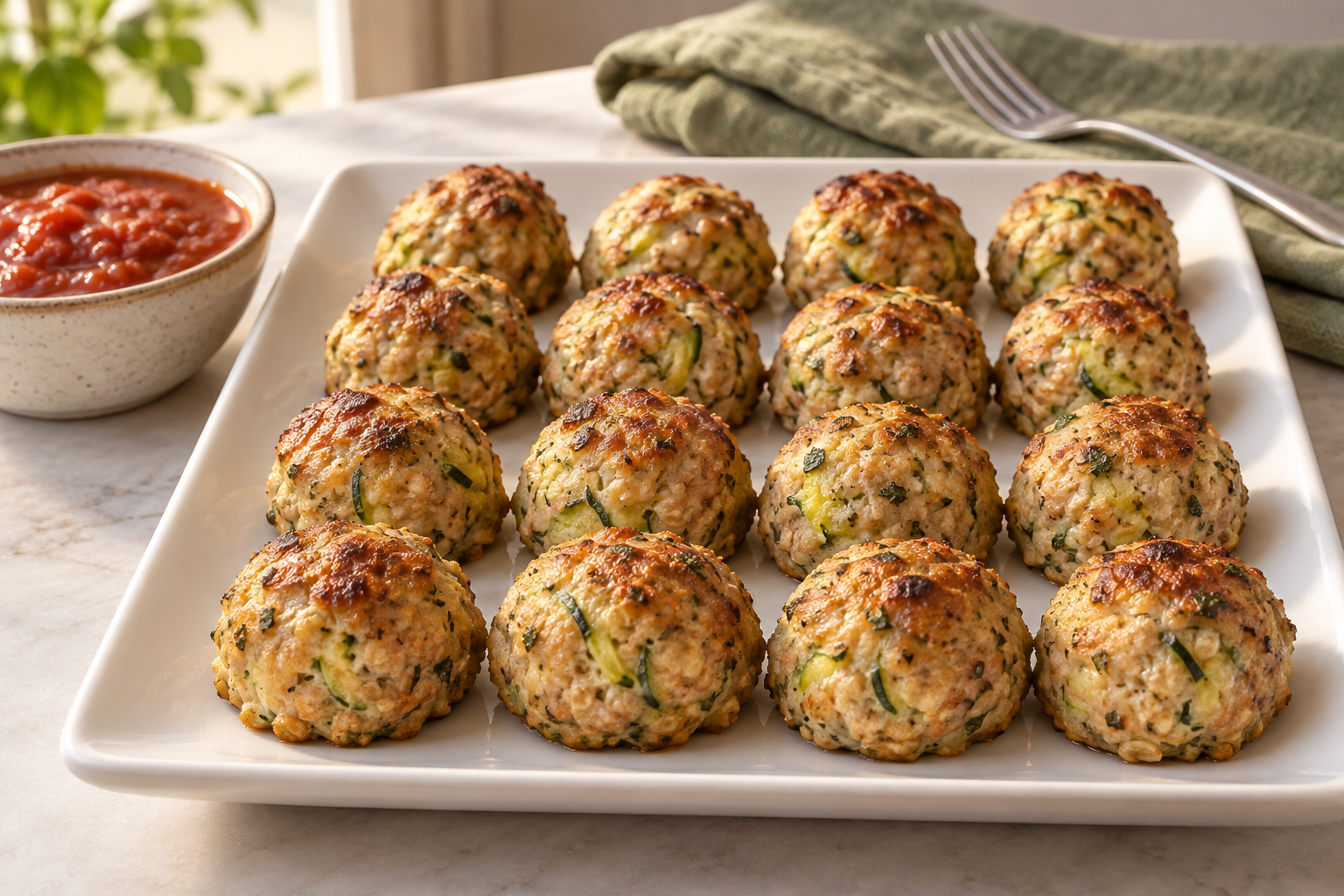
Another meatball method, with zucchini and an egg-free binder.
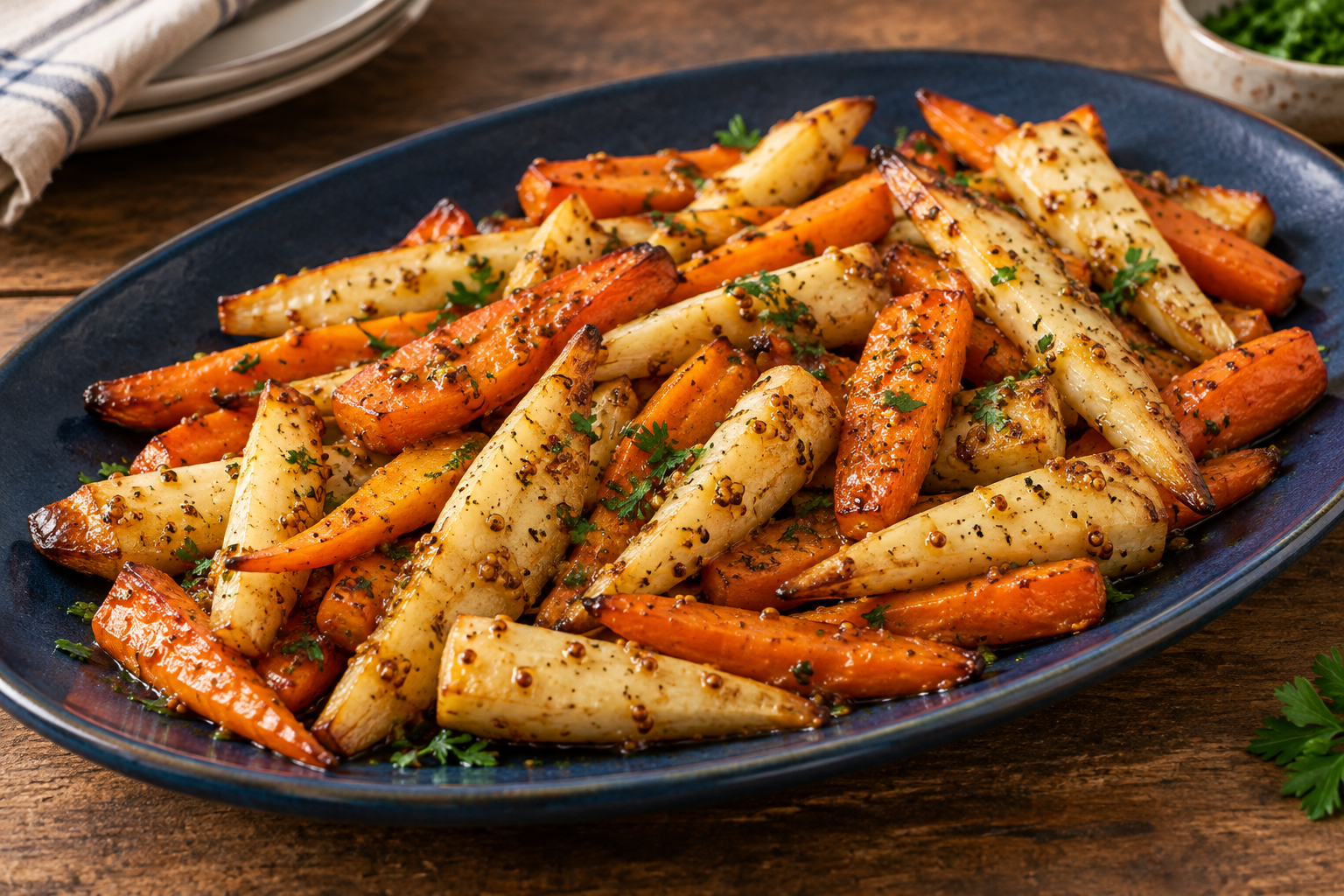
A roasted vegetable side with a bright mustard finish.
Equipment for this recipe
Affiliate disclosure: As an Amazon Associate I earn from qualifying purchases.
Use the tools you already have when they match the method. If you need an item, these links open matching Amazon search results.
- 12-inch skillet on Amazon — Match the recipe’s pan width and use a lid when the method calls for one.
- Instant-read food thermometer on Amazon — Check the center temperature using the target in the recipe.
Check the size, material, and manufacturer’s use instructions against the recipe before choosing.
Useful kitchen references
- FoodSafety.gov temperature chart — Minimum cooking and reheating temperatures.
- FoodSafety.gov leftover guidance — A practical reference for chilling and reheating.
Printable recipe
Use the recipe card’s Print control for a kitchen copy. Follow the ingredient quantities and cooking checks in the card when preparing the dish.
Chicken Meatballs with Cornmeal in Tomato Sauce
Ingredients
Equipment
Method
- Hydrate the cornmeal. Stir the cornmeal and milk together in a bowl. Let stand for 10 minutes while you start the sauce. The mixture will thicken slightly. Do not substitute a much coarser grain and expect the same texture from this short rest.
- Start the tomato sauce. Heat the oil in the skillet over medium heat. Add the chopped onion and cook for 4–5 minutes until soft. Add the minced garlic and cook for 30 seconds. Stir in crushed tomatoes, water, basil, and salt. Bring to a gentle simmer, then lower the heat.
- Combine the meatball ingredients. Beat the egg into the hydrated cornmeal. Add grated onion, grated garlic, salt, oregano, pepper, and parsley. Add the ground chicken and fold gently until evenly combined. Stop when no distinct streaks remain. Do not taste the raw mixture.
- Shape modest portions. With lightly damp hands or a small scoop, form about 16 meatballs, approximately 1 1/2 inches across. The mixture should be soft but hold a rounded shape. If it is very difficult to handle, refrigerate it for 10–15 minutes before shaping rather than adding large amounts of cornmeal.
- Add to the simmering sauce. Lower the meatballs into the sauce in a single layer. Spoon a little sauce over the tops, cover, and maintain a gentle simmer for about 15–20 minutes. After the first 5 minutes, gently roll or turn the meatballs so they cook evenly. Avoid vigorous stirring while their surfaces are still setting.
- Verify doneness. Check the centers of several larger meatballs with a thermometer. Continue cooking until all reach 165°F. The sauce should bubble gently and the meatballs should feel set. Add water in small amounts if the sauce thickens too much before the centers are ready.
- Rest briefly and serve. Remove the skillet from the heat and let stand for 3 minutes so the meatballs settle. Sprinkle optional parsley and serve with cooked pasta, rice, or vegetables. Taste the sauce before adding more salt.