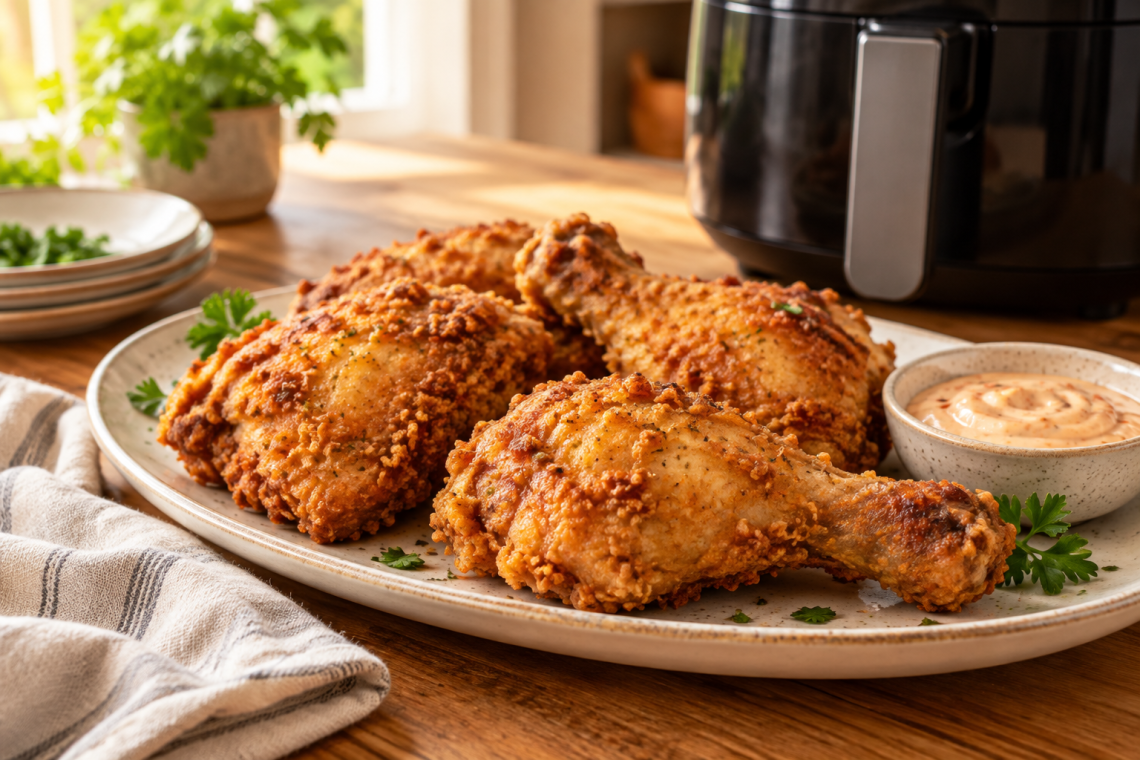
To reheat fried chicken in an air fryer, start with refrigerated, fully cooked chicken at 360°F (182°C), leave space between the pieces, and heat until the thickest meat reaches 165°F (74°C). Turn the chicken gently during reheating and remove smaller pieces as soon as they are ready. That combination gives the coating a chance to crisp without keeping already-hot meat in the fryer unnecessarily.
This guide explains how to reheat fried chicken in an air fryer when you have a mixture of wings, tenders, drumsticks, or larger bone-in pieces. You will find early checking times, thermometer placement, fixes for a dark crust and cool center, and storage advice for the next meal.
The quick method for crispy leftover fried chicken
- Use
- Fully cooked, safely refrigerated fried chicken
- Starting setting
- 360°F / 182°C
- First check
- About 4 minutes for small pieces; 5–6 minutes for larger pieces
- Finish when
- Each piece reaches 165°F / 74°C in the thickest meat
Preheat only as directed by your appliance manual. Arrange the chicken in a single layer, turn with tongs at the first check, then continue in short intervals. Check again after 1–2 minutes when a piece is close to the target. Serve promptly, with sauces alongside.
About the timing: These are planning estimates, not results from testing your particular chicken or air fryer. Foodess and Air Fryer Eats both use a 360°F starting point in their published methods. Piece size, coating, starting temperature, and appliance design change the finishing time.
What you need before you start
- Cooked fried chicken: Take out only the portions you plan to eat. Keep the rest refrigerated.
- An air fryer: Use its clean basket and crisper plate, or the tray arrangement recommended for an oven-style model.
- An instant-read food thermometer: This determines when the center is ready.
- Tongs: Choose a pair that lets you support the chicken without crushing the coating.
- Optional cooking oil: A very thin brushed film can help a dry-looking crust. Most fried chicken already has enough oil in its coating.
Sort the pieces before loading the basket. Thin tenders and a large bone-in breast can require very different amounts of heat. If you cook a mixed batch, put smaller pieces where you can remove them easily without lifting the larger ones over them.
Prepare side dishes and plates first. Chicken piled in a covered serving dish can collect steam and soften again while you finish the rest of dinner.
How to reheat fried chicken in an air fryer, step by step
1. Check the storage history
Use leftovers that were refrigerated promptly and kept cold. FoodSafety.gov lists 3–4 days in the refrigerator for cooked meat and poultry leftovers, at 40°F (4°C) or below. If you bought the chicken already cooked, count from that purchase and refrigerate it promptly.
Discard perishable chicken left out for more than two hours, or one hour when the surrounding temperature is above 90°F (32°C), following FoodSafety.gov’s handling guidance. Reheating is not a way to rescue leftovers that were stored unsafely. There is no need to leave refrigerated chicken on the counter to reach room temperature before this method.
2. Set up the appliance
Select 360°F, approximately 182°C, on the air fry setting. If your model uses rounded temperature increments, choose its nearest suitable setting and check early. Follow the manufacturer’s preheating instructions; a preset labeled “reheat” may use a different temperature, so check the display.
Make sure the crisper plate is properly seated. Use only liners and accessories approved for your model, with the placement and loading its manual requires. A solid covering beneath the chicken can interfere with the airflow that helps its underside dry.
3. Give the chicken room to crisp
Arrange the pieces in one layer with visible gaps. Keep them below the appliance’s maximum fill guidance and away from its heating element. If the pieces overlap or touch across most of their surfaces, cook a smaller batch.
Inspect the coating before adding oil. If it looks pale, dry, and floury, brush on a very thin film. If it is already oily, skip the oil. A heavy spray can make the finish greasy and will not restore moisture to meat that was dry before reheating.
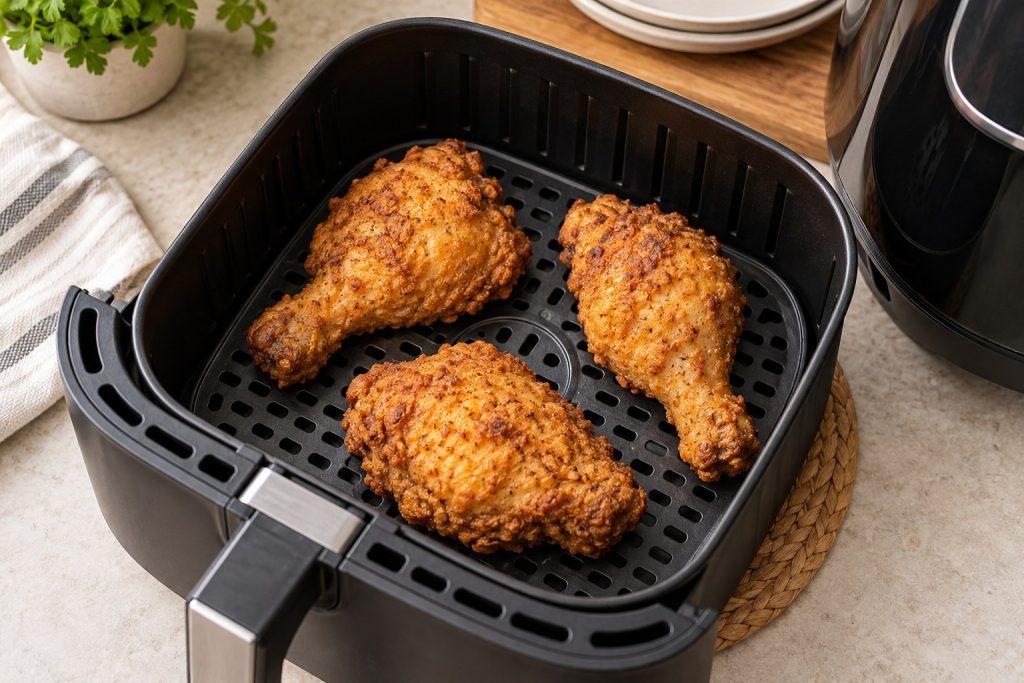
4. Heat, turn, and remove pieces individually
Begin checking small wings or thin tenders after about 4 minutes. Check larger pieces after about 5–6 minutes, even if they will probably need longer. These early checks let you catch a coating that is browning rapidly.
Use tongs to support each piece from underneath and turn it gently. Avoid shaking a basket of heavy bone-in chicken: softened breading can tear away where pieces knock together. Put any soft side where it has better exposure to circulating air.
Measure the center, then continue heating pieces that have not reached 165°F. Use short intervals as they approach the target. Remove finished pieces individually; a wing should not stay in the fryer simply because a thick breast beside it needs more time.
5. Measure the thickest meat before serving
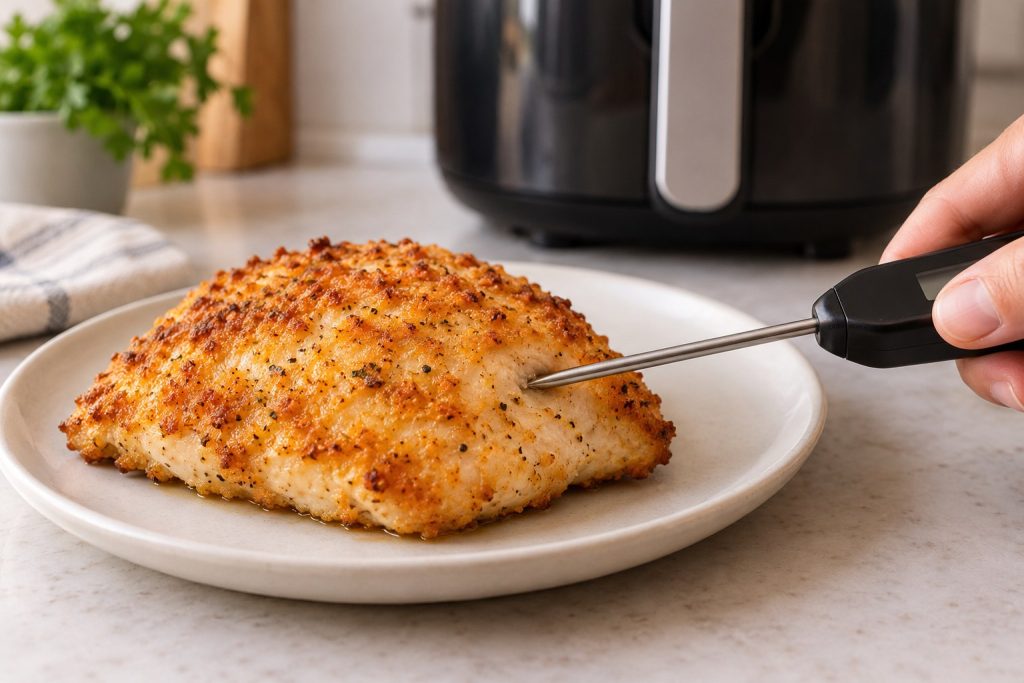
Insert the thermometer into the thickest part of the meat, keeping the sensing area away from bone. For a thin tender, approach from the side so the probe reaches the middle instead of passing straight through. Check more than one thick area on large or unevenly shaped pieces, following FoodSafety.gov’s thermometer-placement advice.
Reheated leftovers need to reach 165°F (74°C), according to the safe minimum internal temperature chart. Wait for the thermometer reading to settle as its manufacturer directs. A brown crust, steam, or hot bone does not tell you the temperature at the center.
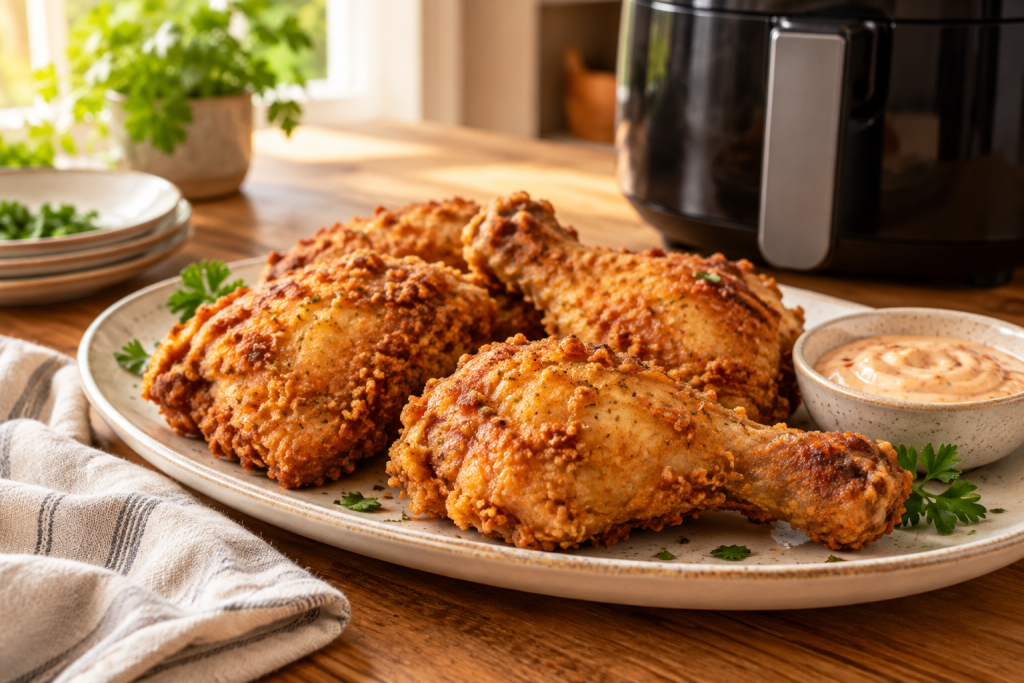
Serve the chicken as soon as it is ready. Keep sauces separate or add a light drizzle at the table so the refreshed coating does not immediately become wet.
Air fryer reheating time by chicken piece
The ranges below are approximate checkpoints for refrigerated, fully cooked chicken at 360°F. A thick coating or a large piece can take longer. Keep heating until the measured center reaches 165°F, even if that falls outside the range.
| Chicken piece | Approximate total time | Start checking |
|---|---|---|
| Small wings | 4–8 minutes | 4 minutes |
| Thin tenders | 4–8 minutes | 4 minutes |
| Drumsticks | 6–12 minutes | 5 minutes |
| Bone-in thighs | 8–15 minutes | 6 minutes |
| Large bone-in breasts | 10–18 minutes or longer | 6 minutes |
On a small screen, scroll the table sideways to see every column.
Published methods give different times, including some shorter estimates in Air Fryer Eats’ cut-by-cut guidance. That variation is why an early check is more useful than treating one timer setting as universal. Check every piece when reheating a mixed batch.
Why the coating softens, and what improves it
During storage, moisture can soften fried chicken’s breading, especially where pieces touch or condensation collects. Circulating hot air helps the surface dry as the meat warms. Gaps between pieces, exposure on both sides, and careful turning all help that process.
Different coatings respond differently. A thin, well-set crust often needs little handling. Thick restaurant breading may have softer pockets underneath, while a sauce-soaked coating may remain soft even when fully reheated. Judge the internal temperature separately from the texture you prefer.
For an oven-style air fryer, use the recommended rack position and rotate the tray if the manual advises it. A piece close to an upper heating element may color faster than one farther away. Check chicken from different areas of the tray.
After your first successful batch, note the cut, approximate size, setting, and time. Those notes give you a useful starting point for similar leftovers in the same appliance. A different portion size or colder starting point still calls for a fresh thermometer check.
Troubleshooting reheated fried chicken
| Problem | What to do now | What to change next time |
|---|---|---|
| Dark crust, cool center | Lower the setting to about 325°F and continue heating, measuring the center regularly. | Group thick pieces together and allow more time at a gentler setting if they brown early. |
| Soft underside | Turn it toward the moving air, separate touching pieces, and check whether a liner is holding moisture beneath them. | Use a smaller batch and follow the manual’s basket or tray setup. |
| Breading falls off | Support the piece underneath with tongs and handle it as little as practical. | Avoid crowding, stacking, or vigorous basket shaking. |
| Dry meat | Serve with sauce alongside or use the chicken in a sandwich with a moist filling. | Check thin pieces earlier and remove each piece when it reaches 165°F. |
| Greasy coating | Skip additional oil and serve promptly once the meat reaches temperature. | Add oil only when the coating looks dry, using a thin brushed film. |
On a small screen, scroll the table sideways to see every column.
If the meat has reached 165°F but you want a little more surface color, watch any additional crisping closely. Extending the cooking time also continues heating and drying the meat. For a piece that was already dry, a sauce or different serving style is more useful than several extra minutes in the fryer.
Storage, freezing, and planning another meal
Refrigerate leftovers promptly in shallow containers instead of leaving a large pile on the counter to cool completely. Keep the refrigerator at 40°F (4°C) or below. FoodSafety.gov recommends shallow containers and prompt refrigeration so food can cool efficiently.
Label the container with the original cooking or purchase date and plan to use refrigerated cooked chicken within 3–4 days. Reheating does not make the leftovers newly cooked for storage planning. Taking out only the portion you need makes it easier to keep the remaining chicken cold.
Freeze portions you will not eat within that refrigerator window. Use freezer-safe packaging, label them as cooked chicken, and keep sauces separate when practical. For the reheating method in this guide, thaw the portion in a covered container in the refrigerator, then follow the refrigerated steps. Do not thaw it on the counter.
Commercial frozen breaded chicken needs its own package instructions. Some products have browned breading while the chicken is still raw. As the FDA advises for packaged frozen foods, follow the cooking directions, including any restrictions on the appliance. The leftover timing chart above is not a cooking method for raw chicken.
Ways to serve crispy leftover fried chicken
- A quick dinner: Pair the chicken with warm vegetables and a cool cucumber or cabbage salad. Get the sides ready before the chicken finishes.
- A sandwich: Reheat a boneless piece first, then add lettuce, pickles, and a little sauce just before eating.
- A grain bowl: Slice the reheated chicken over grains and crisp vegetables. Add dressing around the chicken or serve it separately. Our guide to rinsing quinoa without a fine mesh strainer can help with a quinoa base.
- A lighter portion: Serve one or two pieces with a bowl of chickpea and celery lemon soup.
Frequently asked questions
Can I reheat restaurant fried chicken this way?
Yes, if it is fully cooked and has been handled and refrigerated safely. Sort mixed takeout pieces by size, leave space between them, and check the center of each piece. Thick breading may need a gentler setting if it darkens before the meat is hot.
Should I add water to keep the meat moist?
Do not pour water over the coating; that works against a dry, crisp surface. Limit drying by checking temperature early and removing finished pieces promptly. Follow the appliance manual for any model-specific instructions about liquids in the drawer.
Can I reheat chicken that already has sauce on it?
You can reheat safely stored, fully cooked sauced chicken, but expect a softer coating. Sweet sauces can darken quickly, so check early and lower the heat if necessary while continuing to 165°F inside. For plain leftovers, add sauce after reheating.
Can I use the microwave before the air fryer?
A microwave can warm the center but may soften the breading and heat unevenly. If you begin in the microwave, transfer immediately to the air fryer and check the center before serving. Do not partly reheat the chicken and leave it aside for later.
Does reheating one piece take the same time as a full basket?
It may finish sooner, especially if it is small and has ample airflow. Use the same starting setting, check early, and stop once the thickest meat reaches 165°F. There is no benefit to waiting out a longer estimated time after the piece is ready.
What if I do not have a food thermometer?
A timer and the appearance of the crust cannot verify the center temperature. An instant-read food thermometer is the practical tool for checking that reheated chicken has reached 165°F, particularly with large bone-in pieces.
Printable recipe
Print the measured ingredients and step-by-step instructions using the recipe card below.
THE COMPLETE RECIPE
Reheat Fried Chicken in an Air Fryer
Yield: 1 uncrowded batch
Ingredients
- 1 uncrowded batch refrigerated, fully cooked fried chicken Use only as many pieces as fit in one layer with gaps; remove only the portions you plan to eat. This method is for safely stored leftovers, not raw or partially cooked chicken.
- cooking oil Optional: only a very thin brushed film if the coating looks dry; skip it if already oily.
Equipment
- 1 air fryer Use the basket, crisper plate or tray arrangement approved for your model.
- 1 instant-read food thermometer Place the sensing area in the thickest meat, away from bone.
- 1 pair of tongs Support the chicken without crushing its coating.
- 1 clean serving plate Have it ready before the chicken finishes.
Instructions
- Check the leftovers. Use safely refrigerated, fully cooked fried chicken. Keep the rest cold while taking out only the portions you will eat. Have side dishes and a clean serving plate ready. Do not leave the chicken out to reach room temperature.
- Set up the air fryer. Select 360°F / 182°C on the air-fry setting, or the nearest suitable setting your model permits. Preheat only as directed by its manual. Seat the crisper plate correctly and use only approved accessories and liners.
- Load one uncrowded layer. Arrange the chicken with visible gaps between pieces, below the maximum fill level and away from the heating element. Work in batches when needed. If the crust is dry-looking, brush on a very thin film of oil; otherwise omit it.
- Heat and turn gently. Check small wings or thin tenders after about 4 minutes and larger pieces after about 5–6 minutes. Support each piece underneath with tongs and turn gently. Avoid shaking heavy bone-in chicken, which can tear the coating.
- Measure and finish each piece. Insert the thermometer into the thickest meat, avoiding bone; approach a thin tender from the side. Check multiple thick areas on large pieces. Continue heating any piece below 165°F / 74°C, checking every 1–2 minutes as it nears the target. Remove smaller finished pieces separately. If the crust darkens too quickly, lower the setting to about 325°F / 163°C while the center finishes.
- Serve promptly. Transfer safely reheated chicken to the clean plate and serve promptly, keeping sauces alongside. Do not pile the pieces in a tightly covered dish, where steam can soften the crust. A browned coating or a timer alone does not establish the center temperature.
Notes
Rate This Recipe
Made this recipe? Choose a star rating in the comment form and share how it turned out. Your cooking time and any ingredient changes can help the next reader.
Rate This Recipe