
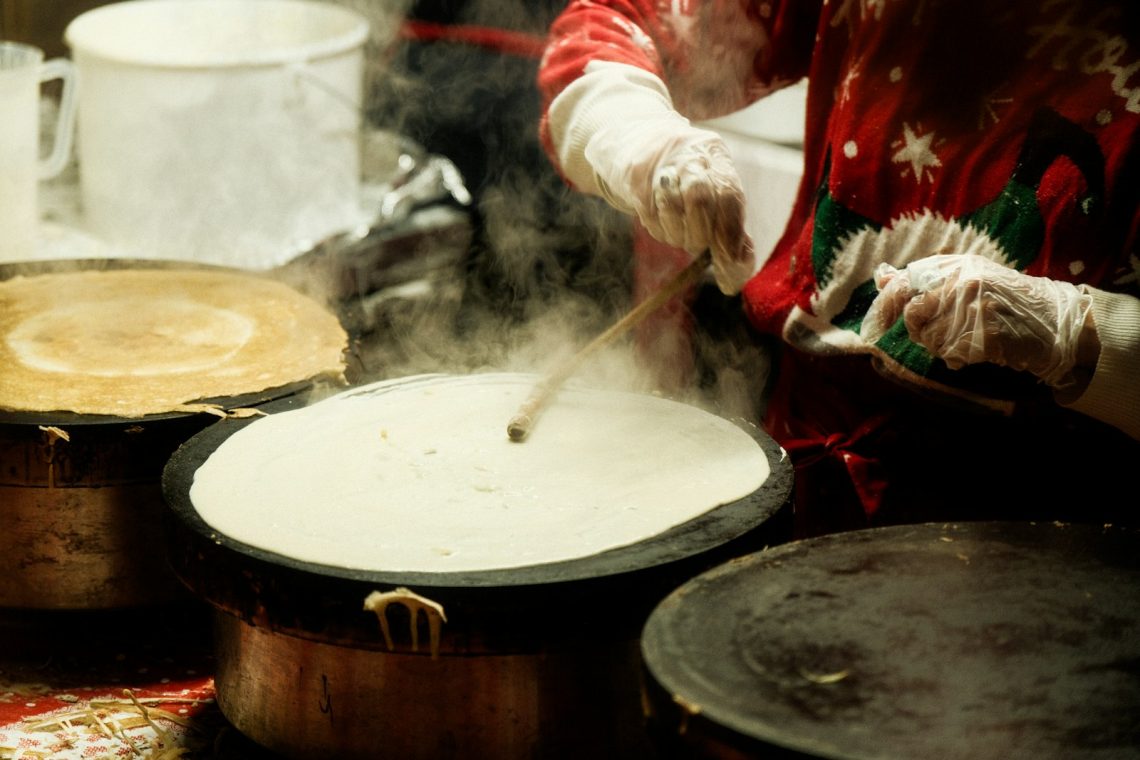
Chickpea flour scallion breakfast crepes are thin, savory pancakes made without eggs or dairy in the batter. Chickpea flour, water, a little olive oil, and finely sliced scallions create a simple mixture that becomes flexible when cooked in a lightly oiled skillet. A short resting period helps the flour hydrate and makes the crepes easier to spread.
This recipe makes six 8-inch crepes. They are good folded around cooked vegetables, served with yogurt on the side if you eat dairy, or eaten with a spoonful of chutney. The important step is cooking both sides fully; raw chickpea flour has a harsh flavor that should not remain in the finished crepe.
Use chickpea flour, not ground cooked chickpeas
Look for plain chickpea flour, sometimes labeled garbanzo bean flour. It is a fine dry flour made from chickpeas and behaves differently from mashed cooked chickpeas or a canned-chickpea batter. Check the ingredient list for added seasonings or leavening if buying a mixed product.
Different grinds absorb water at slightly different rates. Start with the measured ratio, rest the batter, then adjust with a tablespoon of water only if it is too thick to swirl. The batter should flow in a thin stream, not fall in heavy lumps. It will be a little more opaque and textured than a wheat-and-egg crepe batter, which is normal.
Rest the batter and prepare the scallions
Whisk the flour, water, oil, salt, and cumin until smooth. Let the mixture stand for 20 minutes while you wash and slice the scallions. This gives the flour time to absorb water and reduces the chance of a grainy texture. Whisk again before adding the scallions.
Use the white and light green parts, sliced very thinly. Thick rounds can hold the crepe away from the pan and make it tear when you flip. If the green tops are tender, include a little of them for color. Dry the scallions after washing so you do not accidentally thin the batter with extra water.
Choose a pan that releases well
An 8-inch nonstick or well-seasoned skillet makes the first batch easier. A larger pan produces thinner crepes from the same measure of batter and may require a different pouring amount. Heat the pan over medium heat, then brush with a thin film of oil.
Too much oil makes the batter slide instead of coating the surface. Too little heat gives a pale crepe that sticks while you try to move it. The pan should be hot enough that the batter begins setting at the edges within a few seconds, but not so hot that the first side burns before the top loses its wet shine.
Pour, swirl, and wait before flipping
Lift the pan off the heat, pour in about a quarter cup of batter, and tilt quickly to spread it into a thin round. Set the pan back on the burner. If the scallions collect on one side, stir the bowl before the next crepe rather than trying to drag pieces across the setting surface.
Cook until the top looks matte, the edges lift slightly, and the underside has golden spots. Slide a thin spatula around the edge before lifting the center. Flip only when the crepe feels cohesive; forcing a wet crepe usually tears it. Cook the second side for another minute or so, until the surface is cooked and no raw flour flavor remains.
Keep them warm without trapping too much steam
Stack cooked crepes on a plate and cover loosely with a clean towel while you finish the batch. A tight lid traps condensation and can make them gummy. If you prefer crisper edges, keep them in a single layer on a rack in a low oven for a short time.
The first crepe is often a heat check. If it is thick and brittle, the batter may need a little more water or the pan may be too cool. If it is lace-like and difficult to lift, the batter may be too thin. Make small adjustments rather than changing the whole bowl at once. Stir before every pour because flour and scallions can settle.
Fillings, storage, and dietary details
Use cooked, well-drained fillings such as sautéed mushrooms, wilted spinach, or roasted peppers. Watery vegetables soften the crepes quickly. Keep fillings modest so the thin rounds can fold without splitting. A little lemon juice at the table brightens the chickpea flavor without changing the batter.
The batter itself contains no wheat, dairy, or eggs, but ingredient labels and preparation surfaces matter if you are cooking for an allergy or strict dietary need. Chickpeas are legumes and can cause allergic reactions in some people. Refrigerate cooled crepes promptly with parchment between them and use within three days. Reheat in a lightly oiled skillet until hot throughout, or freeze separated crepes for longer storage.
Frequently asked questions
Can I use besan?
Besan is often made from split brown chickpeas and may be finer or more absorbent than flour labeled garbanzo. It can work, but add water cautiously after the resting period until the batter flows thinly. The flavor and color may differ slightly.
Why are the crepes cracking?
They may be too thick, overcooked, or made from batter that did not rest. Add a tablespoon of water if the batter barely spreads, and stop cooking once both sides are done. Fold while warm, when they are more flexible.
Can I prepare the batter ahead?
Yes. Keep the plain batter covered in the refrigerator for several hours, then whisk well and add the scallions before cooking. It may thicken while standing, so loosen it with a little water as needed. Keep it chilled rather than leaving it overnight on the counter.
Can I add cheese to the batter?
For a first batch, keep the batter as written and add a little grated cheese as a filling after flipping. Cheese in the raw batter can stick and interfere with thin spreading. Adding it later gives more control.
More recipes for your table
For a filling idea without eggs, try a small portion of Potato Spinach Breakfast Hash Without Eggs Or fold the crepes around well-drained portions of Butter Bean and Mushroom Skillet Without Cream
Chickpea flour scallion breakfast crepes are a useful savory breakfast when you want a simple batter and flexible serving options. Rest the flour, slice the scallions finely, and let each side cook fully before folding in a dry, flavorful filling.
Chickpea Flour Scallion Breakfast Crepes Recipe
Thin savory chickpea crepes with scallions and cumin, made from an egg-free, dairy-free batter.
Yield: 6 crepes. Prep: 10 minutes. Cook: 25 minutes. Total: 55 minutes (includes 20 minutes batter resting).
Equipment
mixing bowl; whisk; 8-inch skillet; thin spatula; measuring cup
Ingredients
- 1 cup chickpea flour, 120 g
- 1 cup water, 240 ml, plus 1–3 tablespoons if needed after resting
- 1 tablespoon olive oil, for batter
- 1/2 teaspoon fine salt
- 1/4 teaspoon ground cumin
- 2 scallions, about 30 g, very thinly sliced
- 2 teaspoons olive oil, for the pan, as needed
Instructions
- Whisk chickpea flour, water, tablespoon oil, salt, and cumin until smooth. Rest 20 minutes.
- Whisk again and stir in the finely sliced scallions. If the batter is too thick to flow in a thin stream, add water a tablespoon at a time.
- Heat an 8-inch nonstick or well-seasoned skillet over medium heat. Brush with a thin film of oil. Lift the pan, add about 1/4 cup batter, and swirl to coat the base.
- Cook 2–3 minutes until the top is matte, edges loosen, and underside has golden spots. Loosen with a thin spatula and flip carefully. Cook 1–2 minutes more until fully cooked.
- Transfer to a plate and cover loosely with a towel. Stir batter before each pour and repeat, lightly oiling the pan as needed. Serve warm with cooked, drained fillings of your choice.
Recipe notes
Do not taste raw chickpea batter. Pan heat and flour grind affect the amount of water needed. The recipe makes about six 8-inch crepes. Refrigerate leftovers promptly and reheat thoroughly.



