Two-bowl supper · olive-oil mash
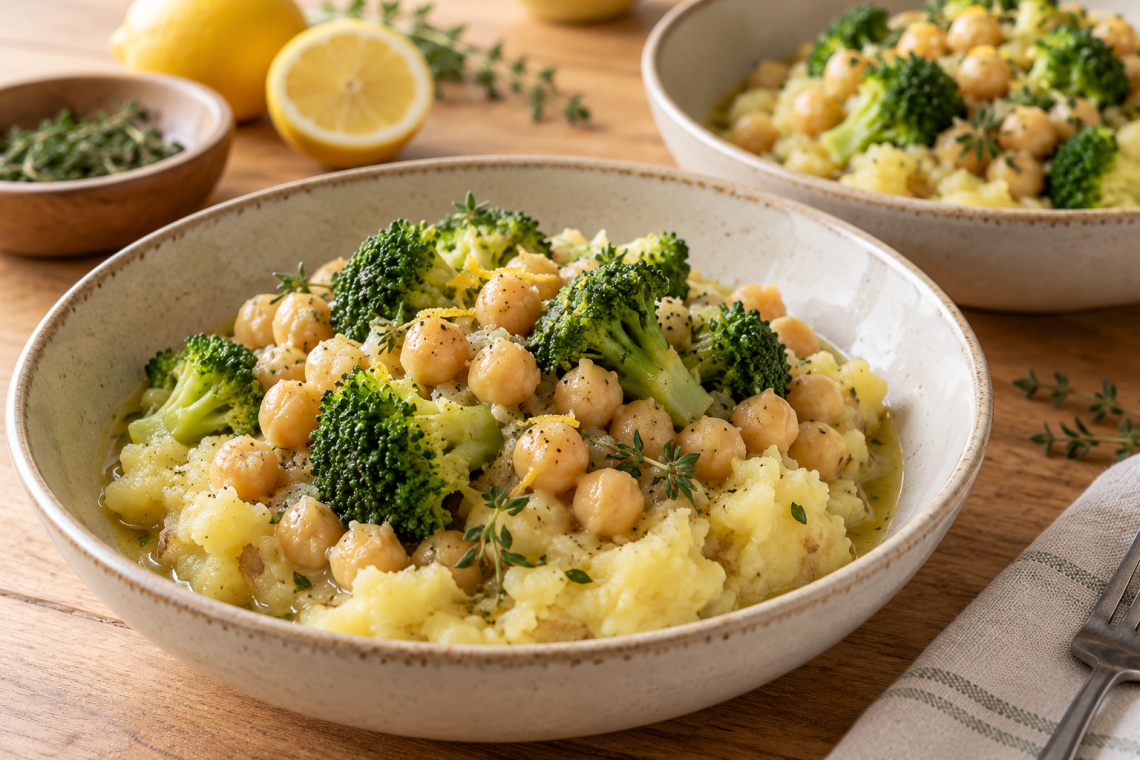
Soft olive-oil mashed potatoes make a generous base for chickpeas and broccoli in a light lemon-garlic sauce. These chickpea mashed potato bowls without milk use reserved potato cooking water to loosen the mash, then a little chickpea broth to bring the bowl together. Keep the vegetables distinct so every forkful has more than one texture.
The chickpeas simmer gently in broth, giving you a light sauce to spoon over the potatoes. Cook the broccoli separately and drain it well before adding it. That small step keeps excess water from washing out the garlic and lemon flavor.
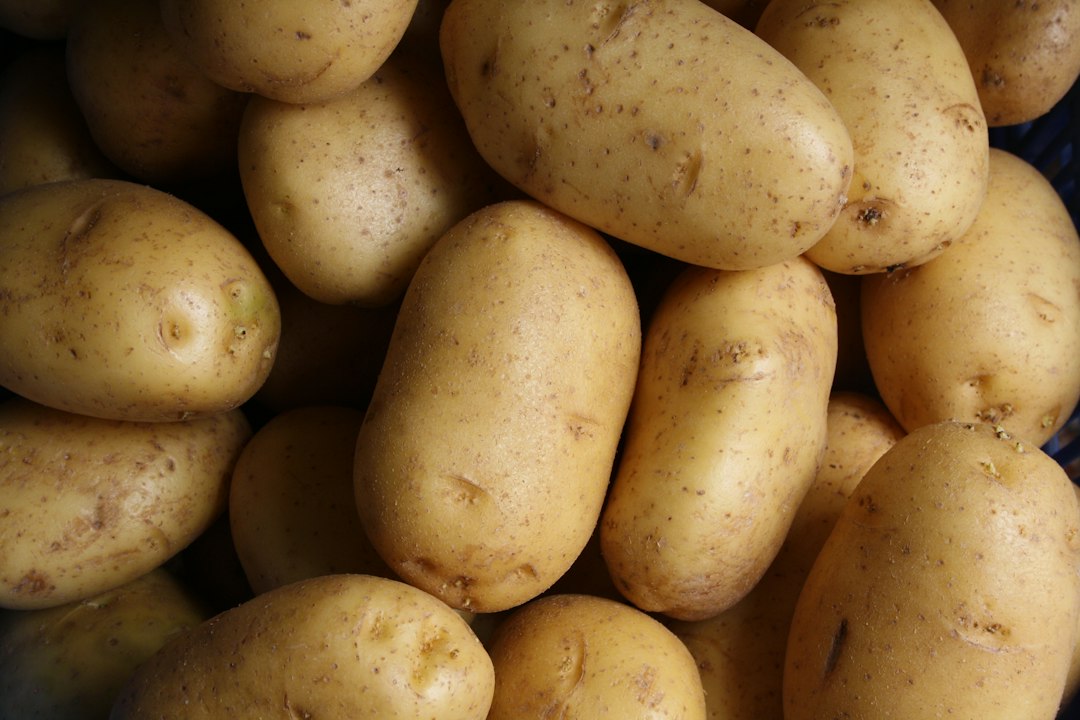
Featured ingredient reference: broccoli and garlic by Louis Hansel on Unsplash. The recipe below uses frozen broccoli; this is not a photograph of the finished bowl.
At a glance
- Yield: 2 generous dinner bowls
- Estimated prep time: 10 minutes
- Estimated cooking time: 25 minutes
- Estimated total time: 35 minutes
- Equipment: medium saucepan, colander, potato masher, small skillet, and a microwave-safe bowl or saucepan for broccoli
Chickpea Mashed Potato Bowls Without Milk
Ingredients
For the mashed potatoes
- 1 pound Yukon Gold potatoes, peeled and cut into roughly 1-inch pieces
- Water to cover the potatoes by 1 inch
- 1/2 teaspoon fine salt for the cooking water
- 2 tablespoons olive oil
- 1/4 cup reserved hot potato cooking water, plus more as needed
- 1/8 teaspoon black pepper
- Additional salt to taste
For the topping
- 1 can (15 ounces) chickpeas, drained and rinsed
- 2 cups frozen broccoli florets
- 1 tablespoon olive oil
- 2 garlic cloves, minced
- 1/2 teaspoon dried thyme
- 1/2 cup low-sodium vegetable broth, plus 1–2 tablespoons if needed
- 1 teaspoon lemon zest
- 2 teaspoons lemon juice
- 1/8 teaspoon black pepper
- Salt to taste
Method
- Cook the potatoes. Put the potato pieces in the saucepan with cold water to cover by 1 inch and the measured salt. Bring to a boil, then reduce to a steady simmer. Cook approximately 12–18 minutes after simmering begins, until a fork passes easily through the center of the largest pieces.
- Prepare the broccoli. While the potatoes cook, cook the frozen florets according to the package using the microwave or stovetop. Drain any liquid thoroughly. Cut large florets into manageable pieces once they are cool enough to handle.
- Warm the topping. Start this step near the end of the potato cooking time so the topping stays hot while you mash. Heat the tablespoon of oil in the skillet over medium-low heat. Stir in garlic for about 30 seconds without browning it. Add thyme, chickpeas, broth, and pepper. Simmer gently for 5–7 minutes. Mash 2 tablespoons of chickpeas against the pan and stir them into the broth to give it a little body.
- Drain and mash. Reserve 1/2 cup potato cooking water before draining. Return the potatoes to the warm saucepan off the heat and let surface moisture evaporate for 1 minute. Mash with the olive oil, 1/4 cup reserved water, and pepper. Add extra reserved water 1 tablespoon at a time until the potatoes are soft enough to scoop. Taste before adding salt.
- Finish the chickpeas. Fold the drained broccoli into the skillet and heat until everything is hot. Remove from the heat. Add lemon zest and juice, then taste for salt. If the pan looks dry, add another tablespoon or two of broth.
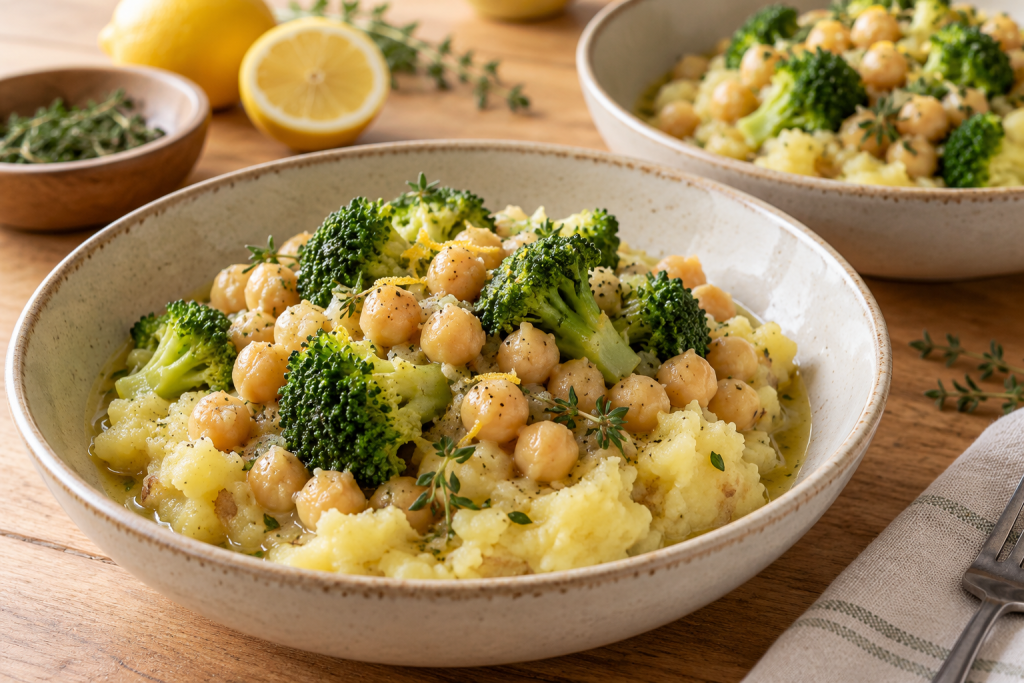
- Serve. Divide the potatoes between two bowls. Spoon chickpeas, broccoli, and their light sauce over the top. Serve promptly.
Keep the two cooking liquids separate
Reserve ½ cup potato water before draining, then use only ¼ cup in the first mash. Add the rest by the tablespoon if needed. The chickpea broth belongs in the topping; it is not a replacement for all of the water in the potatoes.
Cook the frozen broccoli according to its package, check the larger stems, and drain thoroughly. Add the broccoli to the chickpeas without its cooking liquid, then taste a spoonful of topping with the mash before adjusting lemon or salt.
Making a creamy base with no milk
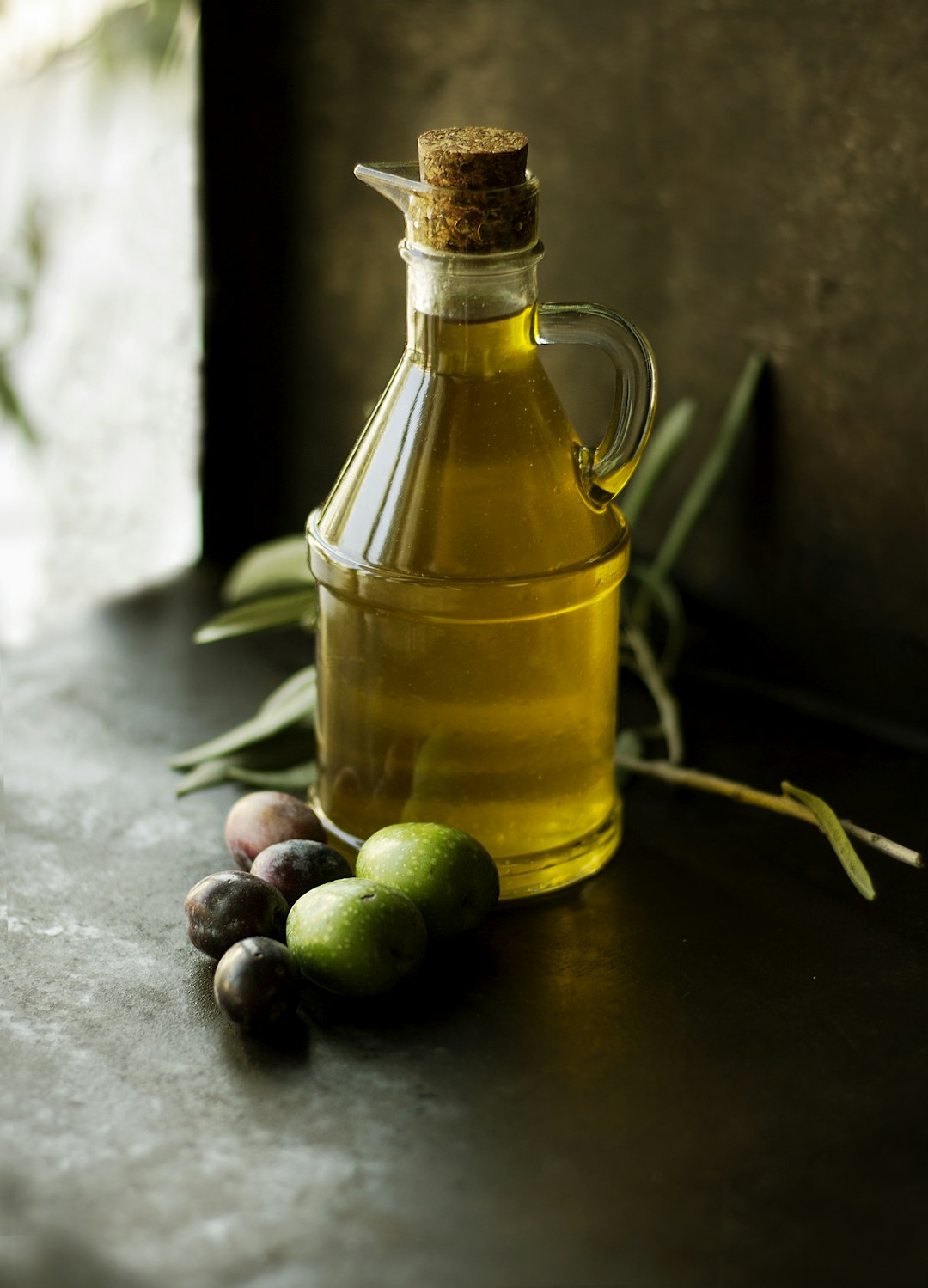
Olive oil provides richness, while a small quantity of warm cooking water loosens the mash. Add water gradually: it is easy to thin stiff potatoes, but difficult to repair a watery bowl. A hand masher gives a rustic texture. Avoid a blender or food processor, which can overwork potatoes and make them gluey.
Easy ingredient swaps
Russet potatoes can replace Yukon Gold potatoes; check tenderness rather than relying on an exact minute count. Canned white beans make a softer alternative to chickpeas. Frozen green beans can replace broccoli if cooked according to their package and drained before adding. Use unsalted broth if you want more control over seasoning.
Omitting milk does not automatically guarantee every packaged ingredient is dairy-free. Check the broth label if that matters for your household. Optional parsley adds freshness, but the recipe does not depend on it.
Troubleshooting
- Potatoes are lumpy: a few rustic lumps are fine; firm chunks indicate they needed more simmering.
- The bowl feels dry: loosen the mash with hot water and keep a little broth with the topping.
- Broccoli makes the sauce watery: drain it before mixing, then simmer the topping briefly without the lid.
- Garlic tastes bitter: lower the heat on the next batch and stop cooking it before it browns.
Storage and reheating
Following USDA leftover guidance, refrigerate in shallow containers within 2 hours, or within 1 hour when temperatures exceed 90°F. Keep the refrigerator at 40°F or below and use leftovers within 3–4 days. Store the mash separately if practical. Reheat both components to 165°F, checking with a thermometer, and add water to the potatoes or broth to the chickpeas as needed.
More pantry dinner ideas
Our canned lentil rice skillet offers another grain-and-bean dinner. Browse easy bean and lentil recipes for more pantry options. For these chickpea mashed potato bowls without milk, keep a little extra broth handy at serving time. A spoonful over the top brings the potatoes and vegetables together.
Printable recipe
Print the measured ingredients and step-by-step instructions using the recipe card below.
THE COMPLETE RECIPE
Chickpea Mashed Potato Bowls Without Milk
Yield: 2 generous dinner bowls
Ingredients
- 1 pound Yukon Gold potatoes For the mash; peeled and cut into roughly 1-inch pieces.
- cold water Enough to cover the potatoes by 1 inch.
- 1/2 teaspoon fine salt For the potato cooking water.
- 2 tablespoons olive oil For the mashed potatoes.
- 1/4 cup reserved hot potato cooking water For the mash, plus more as needed; reserve 1/2 cup before draining.
- 1/8 teaspoon black pepper For the mash.
- additional salt To taste, for the mash and topping.
- 1 15-ounce can chickpeas For the topping; drained and rinsed.
- 2 cups frozen broccoli florets
- 1 tablespoon olive oil For the topping.
- 2 cloves garlic Minced.
- 1/2 teaspoon dried thyme
- 1/2 cup low-sodium vegetable broth Plus 1–2 tablespoons if needed, for the topping.
- 1 teaspoon lemon zest
- 2 teaspoons lemon juice
- 1/8 teaspoon black pepper For the topping.
Equipment
- 1 medium saucepan
- 1 Colander
- 1 potato masher
- 1 small skillet
- 1 microwave-safe bowl or separate saucepan for broccoli
- 1 Measuring cups and spoons
Instructions
- Cook the potatoes. Place the potatoes in a saucepan with cold water to cover by 1 inch and 1/2 teaspoon salt. Bring to a boil, then reduce to a steady simmer. Cook for approximately 12–18 minutes after simmering begins, until a fork passes easily through the centers of the largest pieces.
- Prepare the broccoli. While the potatoes cook, cook the frozen broccoli according to its package directions using a microwave-safe bowl or a separate saucepan. Drain thoroughly. Once safe to handle, cut large florets into manageable pieces.
- Warm the chickpea topping. Near the end of the potato cooking time, heat 1 tablespoon olive oil in the skillet over medium-low heat. Stir in garlic for about 30 seconds without browning. Add thyme, chickpeas, 1/2 cup broth, and 1/8 teaspoon pepper. Simmer gently for 5–7 minutes. Mash about 2 tablespoons of chickpeas against the pan and stir them into the broth to give it a little body.
- Drain and mash. Reserve 1/2 cup potato cooking water, then drain the potatoes. Return them to the warm saucepan off the heat and let surface moisture evaporate for 1 minute. Mash with 2 tablespoons olive oil, 1/4 cup reserved water, and the remaining 1/8 teaspoon pepper. Add more reserved water 1 tablespoon at a time until soft enough to scoop. Taste before adding salt.
- Finish the topping. Fold the drained broccoli into the chickpeas and heat until everything is hot. Remove from the heat and add lemon zest and lemon juice. Taste for salt. If the skillet looks dry, add another 1–2 tablespoons broth.
- Build the bowls. Divide the mashed potatoes between two bowls. Spoon over the chickpeas, broccoli, and their light sauce. Serve promptly.
Notes
Rate This Recipe
Made this recipe? Choose a star rating in the comment form and share how it turned out. Your cooking time and any ingredient changes can help the next reader.
Rate This Recipe