This post contains affiliate links. As an Amazon Associate, Family Recipe HQ earns from qualifying purchases at no extra cost to you.
Gluten free baking has a reputation for being tricky. Many people remember dry, crumbly cakes, bread that tasted like cardboard and cookies that spread into one flat sheet across the tray. The good news is that those days are over. With the right flours, the right binders and a few simple techniques, gluten free baking can produce bread with a crisp crust and soft crumb, tender layer cakes, chewy cookies and flaky pie crusts that nobody at the table will guess are gluten free.
Whether you have celiac disease, a gluten sensitivity, a family member who needs to avoid gluten, or you’re simply curious about baking with different grains, this guide will walk you through everything you need to know. We’ll cover how gluten works and what happens when you take it away, which gluten free flours to use and why, how to build your own all-purpose flour blend, which binders replace gluten’s structure, and how to keep your kitchen safe from cross-contamination. Then we’ll finish with our list of the 25 best gluten free baking recipes, from everyday sandwich bread to celebration cakes and breakfast bakes.
Bookmark this page. It’s designed to be the only gluten free baking reference you’ll need, whether you’re baking your first gluten free muffin or perfecting your tenth loaf of bread.
🌾 Key Takeaways
- Gluten gives structure and stretch; in gluten free baking, a blend of flours plus a binder does that job.
- Weigh your ingredients. Gluten free flours vary hugely in weight per cup.
- Most gluten free batters need more liquid and a rest of 20–30 minutes.
- Bake a little longer and let everything cool fully before slicing.
- Cross-contamination matters as much as ingredients for anyone with celiac disease.
What Is Gluten Free Baking?
Gluten free baking is baking without wheat, barley, rye or any ingredient made from them. Gluten is a group of proteins, mainly glutenin and gliadin, found in these grains. When wheat flour is mixed with water and kneaded, those proteins link together into a stretchy, elastic network. That network traps the gas released by yeast or baking powder, so dough rises, holds its shape and sets into a springy crumb when baked.
Take gluten away and you lose that built-in scaffolding. That’s why simply swapping wheat flour for rice flour, cup for cup, usually fails. The batter has nothing to hold it together, so cakes sink, cookies crumble and bread stays dense. Successful gluten free baking replaces gluten’s jobs one by one: a mix of flours provides flavour and bulk, starches provide lightness and tenderness, binders such as xanthan gum or psyllium husk provide stretch and structure, and eggs, dairy and fats add strength, moisture and richness.
Who bakes gluten free? People with celiac disease, an autoimmune condition in which gluten damages the small intestine, must avoid it completely. Others have non-celiac gluten sensitivity or a wheat allergy. Many more bake gluten free for a family member, a friend, or simply because they enjoy the nutty, varied flavours of grains such as buckwheat, sorghum and teff. Whatever your reason, the principles in this guide apply.
It’s also worth knowing what is naturally gluten free, because your options are wider than you might think. Rice, corn, millet, sorghum, buckwheat (despite its name, it isn’t related to wheat), quinoa, amaranth, teff, certified gluten free oats, nuts, seeds, legumes, potatoes and tapioca are all safe starting points.
The Science of Gluten Free Baking: Why It Behaves Differently
Understanding a little science makes gluten free baking far less mysterious. Once you know why gluten free batters behave the way they do, you can fix almost any problem yourself.
1. Structure
Without a gluten network, gas escapes instead of being trapped. Binders and eggs create a substitute web, and a hotter oven at the start helps set the structure before bubbles collapse.
2. Moisture
Rice and other gluten free flours absorb liquid more slowly and less evenly than wheat. That’s why gluten free batters often look loose at first, then thicken after resting.
3. Grittiness
Coarsely milled rice flour can taste sandy. Superfine flours and a 20–30 minute rest give starches time to hydrate, which smooths the texture.
4. Browning & Staling
Gluten free bakes can brown faster on the outside while staying underdone inside. They also stale quicker, because starches firm up as they cool. Proper storage and freezing help.
There’s one big upside, too. Because there’s no gluten to overdevelop, you can’t make a gluten free cake tough by overmixing. In fact, many gluten free batters benefit from a longer beating, which builds structure through the binder and incorporates air. This is one of the few areas where gluten free baking is genuinely more forgiving than conventional baking.
Another useful principle: gluten free baked goods usually need more liquid than their wheat equivalents. Starches and whole-grain gluten free flours are thirsty, and a slightly wetter batter or dough bakes up softer and stays fresh longer. Bread doughs in particular are often closer to a thick cake batter than the smooth, kneadable dough you may be used to.
Gluten Free Flour Guide: Which Flour Does What?
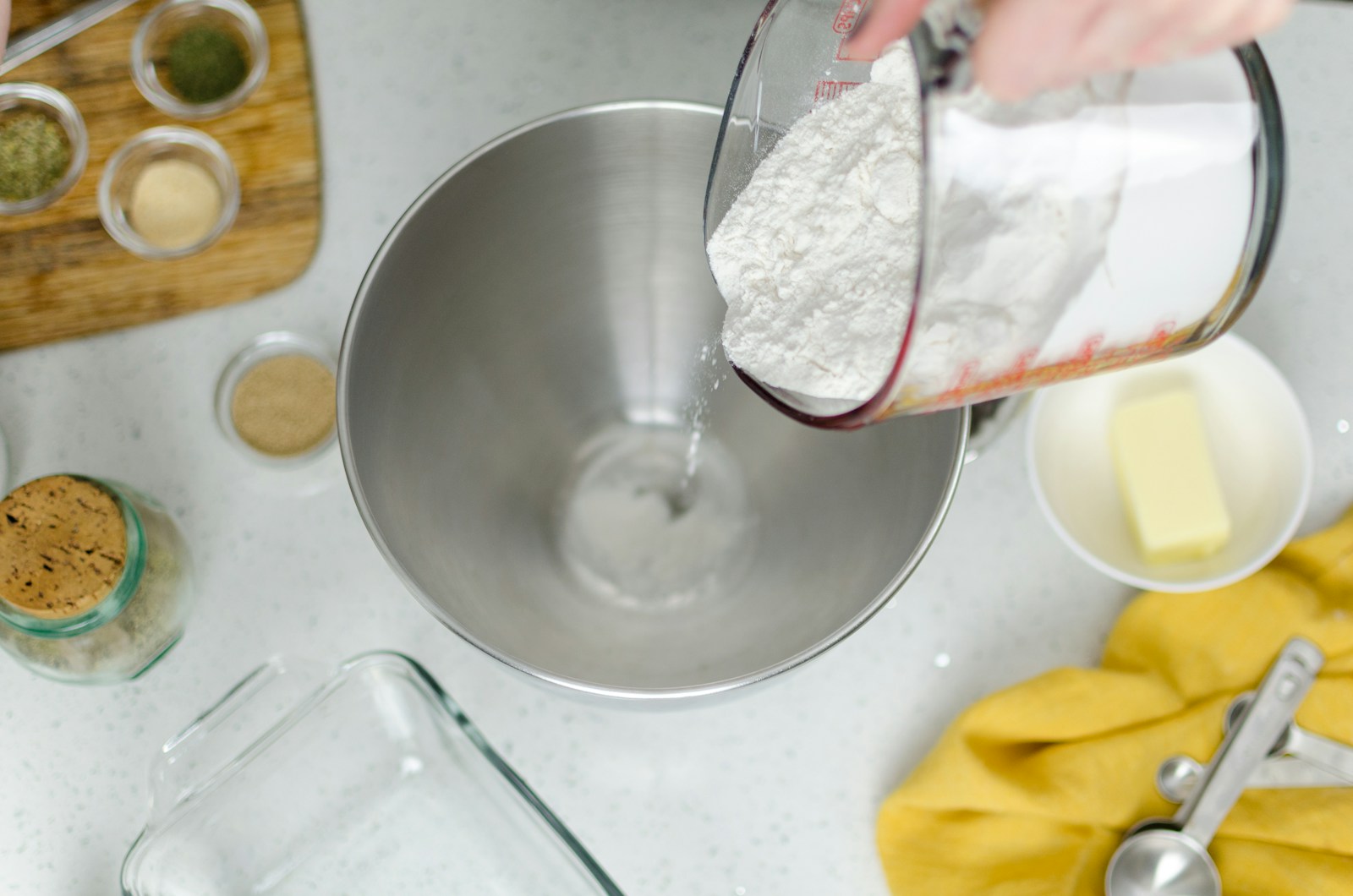
The secret to great gluten free baking is combining flours, because no single gluten free flour behaves like wheat. Think of flours in two groups. Protein and whole-grain flours (brown rice, sorghum, buckwheat, oat, almond, millet, teff) bring flavour, colour, nutrition and structure. Starches (tapioca, potato starch, cornstarch, arrowroot) bring lightness, tenderness and browning. Most recipes use a balance of both.
| Flour | Flavour & Texture | Best For | Pro Tip |
|---|---|---|---|
| White rice flour | Neutral, light, can be gritty | Cakes, shortbread, blends | Choose “superfine” for smooth results. |
| Brown rice flour | Mildly nutty, more fibre | Bread, muffins, all-purpose blends | Store in the fridge; its oils go rancid. |
| Sorghum flour | Sweet, soft, wheat-like | Bread, cookies, pancakes | One of the closest in taste to wheat. |
| Oat flour (certified GF) | Sweet, toasty, tender | Cookies, muffins, crumbles | Blitz certified GF oats in a blender. |
| Buckwheat flour | Earthy, robust, dark | Pancakes, crêpes, rustic bread | Use up to 25% of a blend; it’s strong. |
| Millet flour | Mild, slightly sweet, cake-like crumb | Cakes, quick breads, flatbreads | Gives a lovely golden colour. |
| Teff flour | Malty, chocolatey notes | Brownies, spice cakes, bread | Pairs beautifully with cocoa. |
| Almond flour | Rich, moist, buttery | Cakes, macarons, tart crusts | Blanched, finely ground gives the best texture. |
| Coconut flour | Sweet, very absorbent | Low-carb muffins, pancakes | Never swap 1:1; it soaks up 4× the liquid. |
| Tapioca starch | Neutral, chewy, stretchy | Bread, pizza, cheese bread | Adds chew and helps crusts brown. |
| Potato starch | Neutral, light, moist | Cakes, bread, blends | Not the same as potato flour. |
| Cornstarch / arrowroot | Neutral, tender, crisp | Shortbread, cookies, sponges | Arrowroot is a good corn-free swap. |
A few flours deserve special mention. Sorghum is a quiet hero: mild, slightly sweet and soft, it’s often the flour that makes a gluten free bake taste “normal.” Almond flour brings fat and moisture, which is why almond-based cakes stay soft for days. Buckwheat and teff are full of character, so use them where a bold flavour is welcome, such as chocolate bakes, gingerbread and rustic loaves. And coconut flour is in a class of its own: it’s so absorbent that recipes built around it use far less flour and far more eggs, so it should never be swapped into a recipe that wasn’t designed for it.
If you’d rather not mix your own, a good quality gluten free 1-to-1 baking flour is a reliable shortcut for cookies, muffins and cakes. Check whether it already contains xanthan gum, because that changes how much binder you add.
How to Make Your Own Gluten Free Flour Blend
Making your own blend is cheaper than buying ready-made mixes, and it lets you control the flavour. A dependable rule of thumb is roughly 60% whole-grain or protein flours to 40% starches by weight. More starch gives a lighter, more delicate result for cakes and cookies; more whole-grain flour gives a heartier, more flavourful result for bread and muffins.
All-Purpose Gluten Free Flour
- 300 g superfine brown rice flour
- 300 g superfine white rice flour
- 200 g potato starch
- 200 g tapioca starch
Makes 1 kg. Whisk thoroughly or shake in a sealed tub. Great for cookies, muffins, pancakes and cakes.
Whole-Grain Bread Flour
- 250 g sorghum flour
- 200 g brown rice flour
- 100 g buckwheat or millet flour
- 250 g tapioca starch
- 200 g potato starch
Makes 1 kg. Pair with psyllium husk for sandwich loaves, rolls and pizza dough.
Store blends in an airtight container in a cool, dark cupboard for up to three months, or in the fridge or freezer if they include brown rice or other whole-grain flours. Always whisk or shake before measuring, because heavier flours settle to the bottom over time. Leave binders out of the blend itself and add them recipe by recipe. That way you can use exactly the right amount for cookies versus bread.
Binders: What Replaces Gluten?
Binders are the glue of gluten free baking. They mimic gluten’s ability to hold moisture, trap air and stretch. Use too little and bakes crumble; use too much and they turn gummy. Here’s how the most common options compare.
| Binder | How Much (per 140 g / 1 cup flour) | Best For |
|---|---|---|
| Xanthan gum | ¼ tsp cookies · ½ tsp cakes & muffins · 1 tsp bread | The all-rounder for most sweet bakes. |
| Psyllium husk powder | 1–2 tsp (bread doughs often use more) | Yeasted bread, rolls, pizza; creates real stretch. |
| Ground flaxseed | 1 tbsp + 3 tbsp water (replaces 1 egg) | Muffins, quick breads, egg-free bakes. |
| Chia seeds | 1 tbsp ground + 3 tbsp water (replaces 1 egg) | Dense, moist bakes and seeded breads. |
| Eggs | Often 1 extra egg vs. a wheat recipe | Cakes, brownies, enriched breads. |
Xanthan gum is the most widely used binder. A little goes a long way, so measure carefully with level spoons, and whisk it into the dry ingredients so it doesn’t clump. Psyllium husk is the secret to gluten free bread that you can actually shape. When mixed with water it forms a gel that behaves remarkably like gluten, giving dough stretch and helping it hold a rise. Look for fine psyllium husk powder and note that some brands turn bread a purplish-grey colour, which is harmless. A pack of xanthan gum lasts a long time because you use so little.
Essential Equipment for Gluten Free Baking
You don’t need a specialist kitchen, but a few tools make a big difference:
The single most important tool. A digital kitchen scale removes the guesswork of cup measures.
Many ovens run hot or cold. Gluten free bakes are sensitive to temperature.
The surest way to know bread is baked through: 96–99°C (205–210°F) in the centre.
Gluten free doughs are sticky. Roll pastry between two sheets of parchment.
A thorough beating helps binders work and adds air to batters.
Essential for celiac households. Scratched pans can harbour gluten.
12 Golden Rules for Successful Gluten Free Baking
These are the habits that separate good gluten free baking from great gluten free baking. Follow them and you’ll avoid most common disappointments.
Avoiding Cross-Contamination in a Gluten Free Kitchen
If you’re baking for someone with celiac disease, the ingredients are only half the story. Even a few crumbs of wheat flour can cause a reaction, so how you bake matters just as much as what you bake. In the United States, foods labelled “gluten free” must contain less than 20 parts per million of gluten, which shows how small the safe threshold is.
⚠️ Gluten Free Kitchen Safety Checklist
- Read every label, every time. Baking powder, vanilla, chocolate chips, oats and spice blends can contain gluten or be made on shared lines.
- Buy certified gluten free oats. Regular oats are frequently contaminated with wheat during growing and processing.
- Wheat flour hangs in the air for hours. Don’t bake gluten free on the same day as wheat baking, or bake gluten free first.
- Use separate equipment where possible: toaster, wooden spoons, sieves, rolling pins and scratched non-stick pans can all hold gluten.
- Keep separate butter, jam and spreads so knives don’t carry crumbs between jars.
- Clean surfaces thoroughly before you start, and store gluten free flours on a high shelf above wheat products.
Some people with celiac disease also react to oats, even certified gluten free ones, because of a similar protein called avenin. If you’re baking for someone else, ask before including oats. When in doubt, a quick conversation is always better than a guess.
The 25 Best Gluten Free Baking Recipes
Now for the fun part. These 25 recipes cover everything from daily bread to showstopping desserts. They’re grouped into five categories, each with difficulty, timing, the flours that work best and the one tip that makes the biggest difference. Many are naturally gluten free classics, so they’re a perfect way to build confidence before tackling bread.
🍞 Breads & Savoury Bakes
Medium2 hr 30 minMakes 1 loaf
A soft, sliceable everyday loaf for toast and lunchboxes. Psyllium husk gives the dough real stretch.
You’ll need: 450 g Hearty Blend flour, 20 g (2 tbsp) psyllium husk powder, 7 g (2¼ tsp) instant yeast, 1½ tsp salt, 1 tbsp honey, 2 eggs, 2 tbsp olive oil, 420 ml (1¾ cups) warm water, 1 tsp cider vinegar.
- Whisk the psyllium into the warm water and leave for 5 minutes until it forms a thick gel.
- In a large bowl, whisk the flour, yeast and salt together.
- Add the psyllium gel, honey, eggs, oil and vinegar. Beat with a mixer for 3 minutes until smooth and sticky.
- With wet hands, shape the dough into a log and place it in an oiled 900 g (2 lb) loaf tin.
- Cover and leave somewhere warm for 45–60 minutes, until risen just above the rim.
- Heat the oven to 200°C (400°F). Bake for 50–60 minutes, until deep golden and the centre reads 96–99°C (205–210°F).
- Turn out onto a rack and cool completely (at least 2 hours) before slicing.
💡 Tip: Slicing warm bread makes the crumb gummy, so be patient.
Easy35 minMakes 20
Naturally gluten free, puffy cheese rolls that are crisp outside and chewy inside.
You’ll need: 240 ml (1 cup) milk, 120 ml (½ cup) vegetable oil, 1 tsp salt, 250 g (2 cups) tapioca starch, 2 eggs, 150 g (1½ cups) grated cheese (half Parmesan, half mozzarella).
- Heat the oven to 200°C (400°F) and line a baking tray with parchment.
- Bring the milk, oil and salt to a simmer in a saucepan.
- Pour the hot liquid over the tapioca starch and stir until it forms a sticky, stretchy dough.
- Let it cool for 10 minutes, then beat in the eggs one at a time.
- Stir in the cheese.
- Scoop tablespoon-sized balls onto the tray, about 5 cm (2 in) apart.
- Bake for 20–25 minutes until puffed and golden. Serve warm.
💡 Tip: Freeze unbaked balls on a tray, then bake from frozen with 5 extra minutes.
Medium1 hr 15 minMakes 2 bases
A crisp-bottomed, chewy-edged crust that holds its toppings.
You’ll need: 300 g GF flour blend, 100 g tapioca starch, 15 g (1½ tbsp) psyllium husk powder, 7 g (2¼ tsp) instant yeast, 1 tsp sugar, 1½ tsp salt, 330 ml (1⅓ cups) warm water, 2 tbsp olive oil.
- Whisk the flour, tapioca, psyllium, yeast, sugar and salt in a bowl.
- Add the warm water and oil and mix for 2 minutes into a soft, sticky dough.
- Cover and rest for 30 minutes in a warm place.
- Heat the oven to 230°C (450°F) with a tray or pizza stone inside.
- Divide the dough in two. On oiled parchment, press each half into a 30 cm (12 in) circle with oiled hands.
- Slide onto the hot tray and par-bake for 8–10 minutes.
- Add sauce and toppings and bake for another 10–12 minutes until bubbling.
💡 Tip: Keep the sauce thin; too much makes the centre soggy.
Easy35 minServes 8
Golden, buttery cornbread with crunchy edges from a hot cast-iron skillet.
You’ll need: 150 g (1 cup) gluten free cornmeal, 120 g (1 cup) GF flour blend, 2 tbsp sugar, 2 tsp baking powder, ½ tsp baking soda, 1 tsp salt, 2 eggs, 300 ml (1¼ cups) buttermilk, 75 g (5 tbsp) butter.
- Put 1 tbsp of the butter in a 25 cm (10 in) cast-iron skillet and heat it in the oven as it preheats to 220°C (425°F).
- Melt the rest of the butter.
- Whisk the cornmeal, flour, sugar, baking powder, baking soda and salt in a bowl.
- In another bowl, whisk the eggs, buttermilk and melted butter.
- Pour the wet into the dry and stir just until combined.
- Carefully take out the hot skillet, swirl the butter, and pour in the batter. It should sizzle.
- Bake for 20–25 minutes until golden and a skewer comes out clean.
💡 Tip: Check your cornmeal is labelled gluten free; it’s often milled with wheat.
Medium1 hr 45 minServes 12
Airy, olive-oil-rich bread with a crisp golden base, topped with rosemary and flaky salt.
You’ll need: 400 g Hearty Blend flour, 15 g (1½ tbsp) psyllium husk powder, 7 g (2¼ tsp) instant yeast, 1 tsp sugar, 1½ tsp salt, 450 ml (scant 2 cups) warm water, 80 ml (⅓ cup) olive oil plus extra, fresh rosemary, flaky salt.
- Whisk the flour, psyllium, yeast, sugar and salt.
- Add the warm water and 3 tbsp of the oil. Beat for 3 minutes; the dough will be very soft.
- Pour 3 tbsp oil into a 23 x 33 cm (9 x 13 in) tin and tip in the dough. Spread it to the corners with oiled hands.
- Cover and rise in a warm place for 45–60 minutes until puffy.
- Heat the oven to 220°C (425°F).
- Drizzle with the remaining oil, press deep dimples all over with your fingertips, then add rosemary and flaky salt.
- Bake for 25–30 minutes until deep golden. Cool for 15 minutes before cutting.
💡 Tip: Be generous with oil in the tin; it fries the base until crisp.
🎂 Cakes & Celebration Bakes
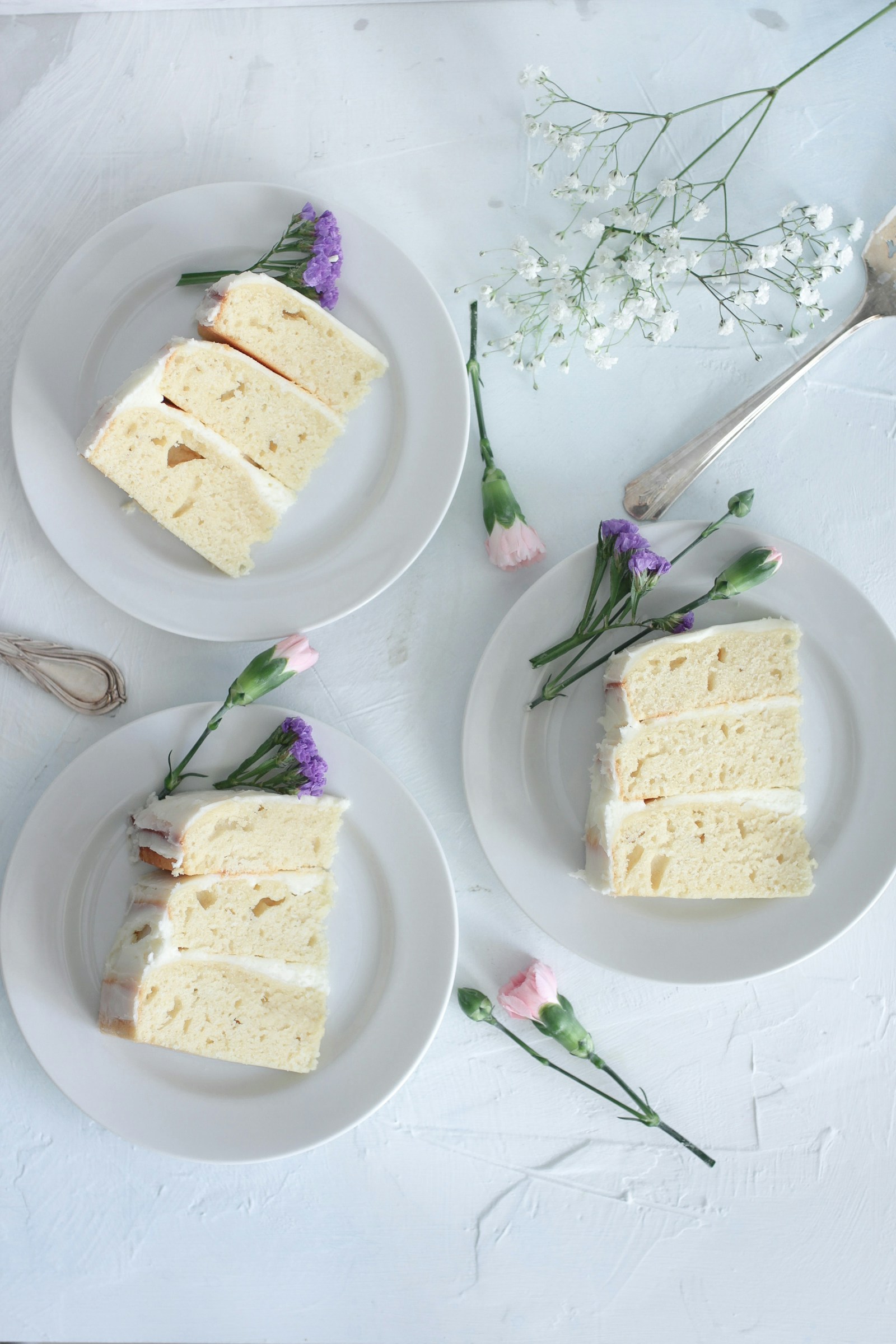
Medium1 hr 15 min + coolingServes 12
A fluffy, moist birthday cake with a fine crumb.
You’ll need: 340 g (2½ cups) GF flour blend, 1½ tsp xanthan gum (skip if in your blend), 1 tbsp baking powder, ½ tsp salt, 225 g (1 cup) soft butter, 300 g (1½ cups) sugar, 3 eggs + 1 yolk, 2 tsp vanilla, 300 ml (1¼ cups) buttermilk. Frosting of your choice.
- Heat the oven to 180°C (350°F). Grease and line two 20 cm (8 in) round tins.
- Whisk the flour, xanthan gum, baking powder and salt.
- Beat the butter and sugar for 3–4 minutes until pale and fluffy.
- Beat in the eggs and yolk one at a time, then the vanilla.
- Add the dry ingredients in three parts, alternating with the buttermilk, mixing until smooth.
- Divide between the tins and rest the batter for 20 minutes.
- Bake for 28–32 minutes until a skewer comes out clean. Cool 10 minutes, then turn out.
- Chill the cooled layers for 30 minutes before frosting.
💡 Tip: Room-temperature eggs and buttermilk give the lightest crumb.
Easy50 minServes 10
Dense, fudgy and intensely chocolatey. Naturally gluten free.
You’ll need: 225 g (8 oz) dark chocolate, 115 g (½ cup) butter, 4 eggs, 150 g (¾ cup) sugar, 25 g (¼ cup) cocoa powder, pinch of salt, 1 tsp vanilla.
- Heat the oven to 175°C (350°F). Grease and line a 20 cm (8 in) springform tin.
- Melt the chocolate and butter together over low heat or in short bursts in the microwave. Cool slightly.
- Whisk the eggs, sugar, salt and vanilla for 2 minutes until slightly thickened.
- Stir in the chocolate mixture, then sift in the cocoa and fold gently.
- Pour into the tin and bake for 25–30 minutes. The edges should be set and the centre should still wobble slightly.
- Cool completely in the tin, then dust with cocoa or icing sugar.
💡 Tip: It will sink and crack as it cools. That’s normal and part of its charm.
Easy55 minServes 8
Bright, citrusy and incredibly moist thanks to almond flour and olive oil.
You’ll need: 3 eggs, 150 g (¾ cup) sugar, zest of 2 lemons, 120 ml (½ cup) olive oil, 200 g (2 cups) almond flour, 1 tsp baking powder, pinch of salt. Syrup: juice of 2 lemons + 50 g (¼ cup) sugar.
- Heat the oven to 175°C (350°F). Grease and line a 20 cm (8 in) round tin.
- Whisk the eggs, sugar and lemon zest for 3 minutes until pale and thick.
- Slowly whisk in the olive oil.
- Fold in the almond flour, baking powder and salt.
- Pour into the tin and bake for 35–40 minutes until golden and springy.
- Meanwhile, heat the lemon juice and sugar until the sugar dissolves.
- Poke holes all over the warm cake with a skewer and spoon the syrup over. Cool in the tin.
💡 Tip: It’s even better the next day once the syrup has soaked in.
Easy1 hr 20 min + coolingServes 12
Spiced, tender and packed with carrots, walnuts and raisins.
You’ll need: 280 g (2 cups) GF flour blend, 1 tsp xanthan gum (skip if in your blend), 2 tsp baking powder, 1 tsp baking soda, 2 tsp cinnamon, ½ tsp nutmeg, ½ tsp salt, 4 eggs, 300 g (1½ cups) brown sugar, 240 ml (1 cup) oil, 300 g (3 cups) finely grated carrots, 75 g (¾ cup) walnuts, 75 g (½ cup) raisins. Frosting: 225 g (8 oz) cream cheese, 115 g (½ cup) butter, 300 g (2½ cups) icing sugar, 1 tsp vanilla.
- Heat the oven to 175°C (350°F). Grease and line two 20 cm (8 in) round tins.
- Whisk the flour, xanthan gum, baking powder, baking soda, spices and salt.
- In a large bowl, whisk the eggs, brown sugar and oil until smooth.
- Stir in the dry ingredients, then fold in the carrots, walnuts and raisins.
- Divide between the tins and bake for 30–35 minutes until a skewer comes out clean. Cool completely.
- For the frosting, beat the cream cheese and butter until smooth, then beat in the icing sugar and vanilla.
- Sandwich and top the layers with frosting.
💡 Tip: Use cold cream cheese straight from the fridge so the frosting stays firm.
Medium1 hr 30 min + overnightServes 12
Silky New York-style cheesecake on a buttery gluten free biscuit base.
You’ll need: 200 g (2 cups) gluten free biscuit or graham cracker crumbs, 85 g (6 tbsp) melted butter, 900 g (32 oz) cream cheese at room temperature, 200 g (1 cup) sugar, 1 tbsp cornstarch, 2 tsp vanilla, 4 eggs, 240 ml (1 cup) sour cream.
- Heat the oven to 160°C (325°F). Line the base of a 23 cm (9 in) springform tin.
- Mix the crumbs and melted butter, press firmly into the tin and bake for 10 minutes.
- Beat the cream cheese, sugar and cornstarch on low speed until completely smooth.
- Beat in the vanilla, then the eggs one at a time on low speed. Stir in the sour cream.
- Pour over the base and bake for 60–70 minutes, until the edges are set but the centre still wobbles.
- Turn off the oven, prop the door open and leave the cheesecake inside for 1 hour.
- Chill overnight before slicing.
💡 Tip: Mix on low speed to avoid air bubbles, which cause cracks.
🍪 Cookies, Bars & Brownies
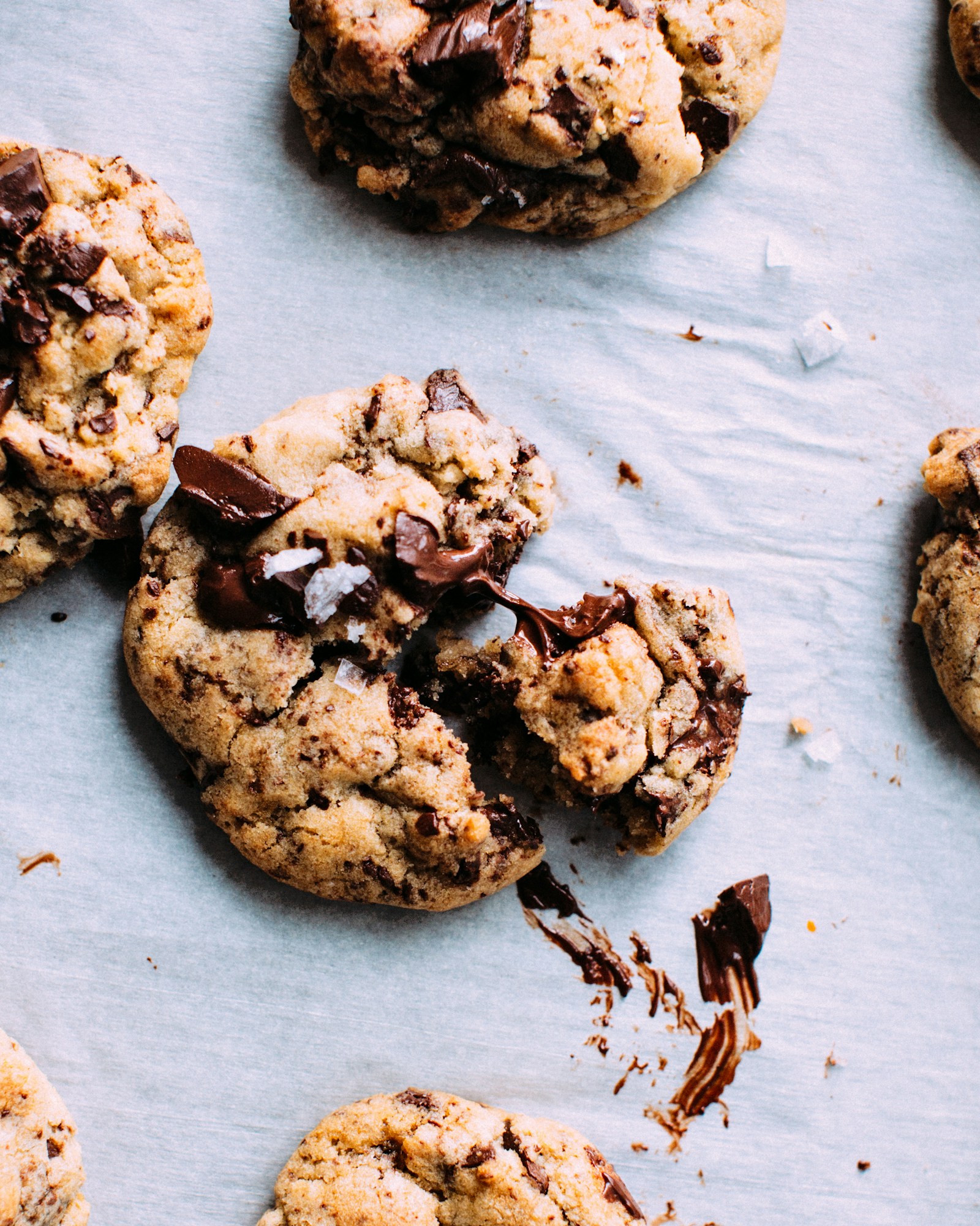
Easy30 min + 1 hr chillingMakes 18
Crisp edges, soft centres and pools of melted chocolate.
You’ll need: 170 g (¾ cup) butter, 150 g (¾ cup) brown sugar, 100 g (½ cup) white sugar, 1 egg + 1 yolk, 2 tsp vanilla, 280 g (2 cups) GF flour blend, ½ tsp xanthan gum (skip if in your blend), 1 tsp baking soda, ½ tsp salt, 250 g (1½ cups) chocolate chips.
- Melt the butter and let it cool for 5 minutes.
- Whisk the butter with both sugars until smooth, then whisk in the egg, yolk and vanilla.
- Stir in the flour, xanthan gum, baking soda and salt, then fold in the chocolate chips.
- Cover and chill the dough for at least 1 hour.
- Heat the oven to 180°C (350°F) and line two trays with parchment.
- Scoop 2-tablespoon balls onto the trays, 7 cm (3 in) apart.
- Bake for 10–12 minutes until golden at the edges but soft in the middle. Cool on the tray for 10 minutes.
💡 Tip: Check your chocolate chips are labelled gluten free.
Easy45 minMakes 16
Rich, chewy brownies with a shiny, crackly top.
You’ll need: 115 g (½ cup) butter, 170 g (6 oz) dark chocolate, 200 g (1 cup) sugar, 3 eggs, 1 tsp vanilla, 70 g (½ cup) GF flour blend or teff flour, 25 g (¼ cup) cocoa powder, ½ tsp salt.
- Heat the oven to 175°C (350°F). Line a 20 cm (8 in) square tin with parchment.
- Melt the butter and chocolate together and let cool slightly.
- Whisk the sugar, eggs and vanilla hard for 1 minute until pale and glossy.
- Whisk in the chocolate mixture.
- Fold in the flour, cocoa and salt until just combined.
- Spread into the tin and bake for 25–30 minutes. A skewer should come out with moist crumbs.
- Cool completely in the tin before cutting into squares.
💡 Tip: For neat squares, chill for 30 minutes and cut with a hot knife.
Very easy20 minMakes 16
Just three ingredients. Soft, rich and perfect for beginners.
You’ll need: 250 g (1 cup) smooth peanut butter, 150 g (¾ cup) sugar, 1 egg.
- Heat the oven to 175°C (350°F) and line a tray with parchment.
- Mix the peanut butter, sugar and egg until smooth.
- Roll into 16 walnut-sized balls and place on the tray.
- Press each one flat with a fork, then press again in the other direction to make a criss-cross.
- Bake for 10–12 minutes until just set at the edges.
- Cool on the tray for 5 minutes, then move to a rack.
💡 Tip: They’re fragile when hot but firm up as they cool.
Easy1 hrMakes 16
Melt-in-the-mouth shortbread with a classic sandy snap.
You’ll need: 225 g (1 cup) soft butter, 100 g (½ cup) sugar plus extra for sprinkling, 250 g (1⅔ cups) superfine white rice flour, 75 g (½ cup) cornstarch, pinch of salt.
- Heat the oven to 160°C (325°F). Line a 20 cm (8 in) square tin.
- Beat the butter and sugar until creamy.
- Mix in the rice flour, cornstarch and salt until it comes together into a soft dough.
- Press evenly into the tin and prick all over with a fork.
- Chill for 20 minutes.
- Bake for 35–40 minutes until pale golden.
- Sprinkle with sugar and cut into fingers while warm, then cool completely in the tin.
💡 Tip: Use superfine rice flour to avoid a gritty texture.
Very easy35 minMakes 18
Golden, chewy coconut mounds dipped in dark chocolate.
You’ll need: 2 egg whites, 100 g (½ cup) sugar, 1 tsp vanilla, pinch of salt, 200 g (2½ cups) sweetened shredded coconut, 100 g (3½ oz) dark chocolate (optional).
- Heat the oven to 165°C (325°F) and line a tray with parchment.
- Whisk the egg whites, sugar, vanilla and salt until frothy.
- Stir in the coconut until evenly coated.
- With wet hands, shape heaped tablespoons into mounds on the tray.
- Bake for 18–22 minutes until golden on the edges. Cool completely.
- Melt the chocolate, dip the bases and leave on parchment to set.
💡 Tip: They keep for up to a week in an airtight tin.
🥞 Breakfast & Brunch Bakes
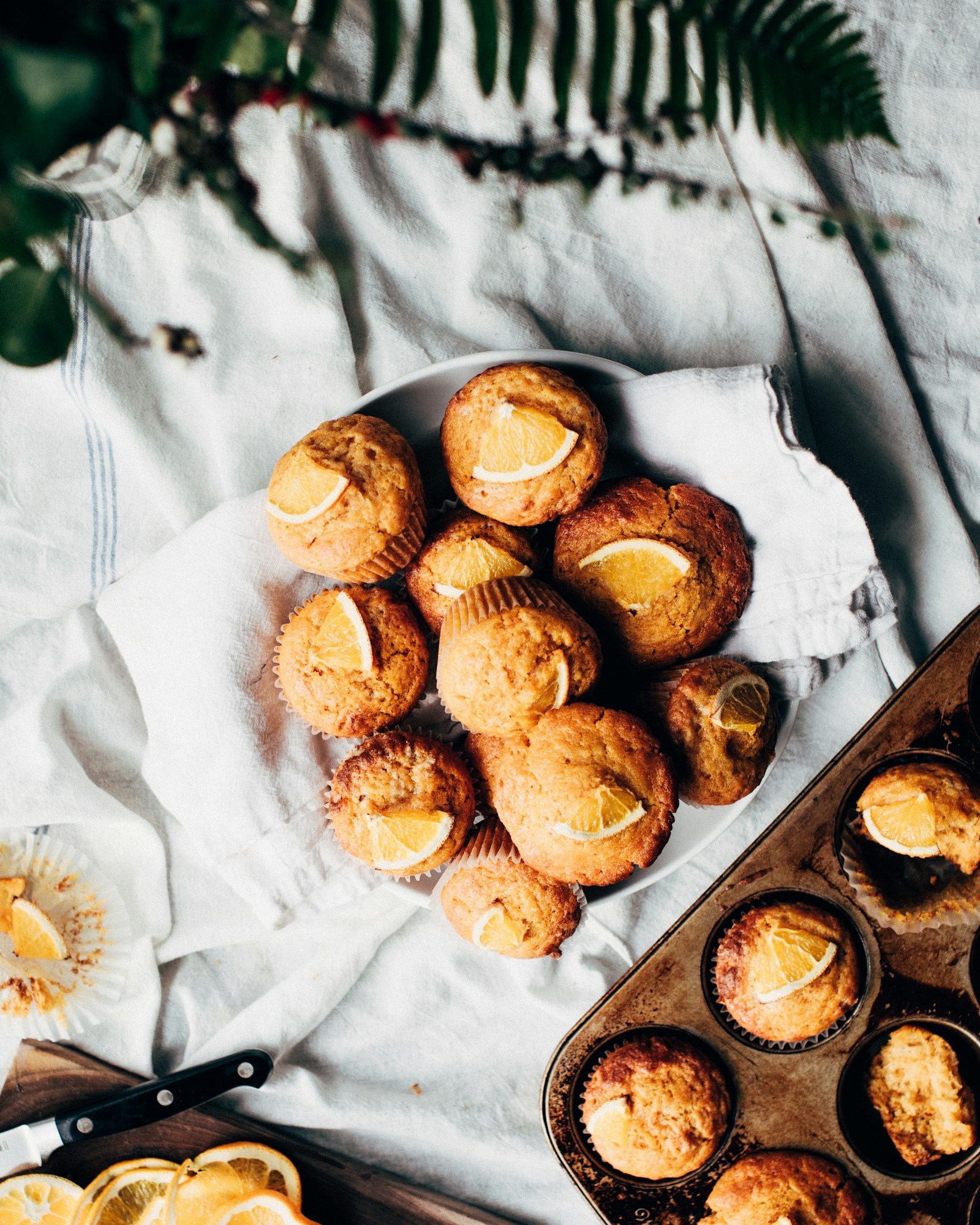
Easy40 minMakes 12
Tall, domed muffins bursting with berries and a crunchy sugar top.
You’ll need: 280 g (2 cups) GF flour blend, ¾ tsp xanthan gum (skip if in your blend), 2 tsp baking powder, ½ tsp salt, 150 g (¾ cup) sugar, 2 eggs, 180 g (¾ cup) plain yogurt, 80 ml (⅓ cup) oil, 60 ml (¼ cup) milk, 1 tsp vanilla, 200 g (1½ cups) blueberries, 2 tbsp coarse sugar.
- Line a 12-hole muffin tin with paper cases.
- Whisk the flour, xanthan gum, baking powder, salt and sugar in a bowl.
- In another bowl, whisk the eggs, yogurt, oil, milk and vanilla.
- Stir the wet into the dry until just combined, then rest the batter for 15 minutes.
- Meanwhile, heat the oven to 220°C (425°F).
- Fold in the blueberries, fill the cases to the top and sprinkle with coarse sugar.
- Bake for 5 minutes, then lower the oven to 180°C (350°F) and bake for 15–18 minutes more, until golden and a skewer comes out clean.
💡 Tip: Toss frozen berries in a spoonful of flour so they don’t sink or bleed.
Easy1 hr 15 minMakes 1 loaf
A fragrant, tender loaf made with very ripe bananas.
You’ll need: 3 large very ripe bananas, 2 eggs, 85 g (6 tbsp) melted butter, 150 g (¾ cup) brown sugar, 1 tsp vanilla, 220 g (1¾ cups) sorghum flour or certified GF oat flour, ½ tsp xanthan gum, 1 tsp baking soda, 1 tsp cinnamon, ½ tsp salt.
- Heat the oven to 175°C (350°F). Grease and line a 900 g (2 lb) loaf tin.
- Mash the bananas in a large bowl until mostly smooth.
- Whisk in the eggs, melted butter, brown sugar and vanilla.
- Add the flour, xanthan gum, baking soda, cinnamon and salt and stir until combined.
- Pour into the tin and bake for 55–65 minutes. Cover loosely with foil after 35 minutes if it’s browning fast.
- A skewer in the centre should come out clean. Cool in the tin for 15 minutes, then on a rack.
💡 Tip: The browner the bananas, the sweeter and moister the loaf.
Easy25 minMakes 10
Thick, golden, diner-style pancakes.
You’ll need: 210 g (1½ cups) GF flour blend, 2 tbsp sugar, 1½ tsp baking powder, ½ tsp baking soda, ½ tsp salt, 360 ml (1½ cups) buttermilk, 1 egg, 3 tbsp melted butter plus extra for the pan.
- Whisk the flour, sugar, baking powder, baking soda and salt.
- In a jug, whisk the buttermilk, egg and melted butter.
- Pour into the dry ingredients and stir until just combined. A few lumps are fine.
- Rest the batter for 10 minutes while you heat a frying pan over medium heat.
- Brush the pan with butter and pour in about 60 ml (¼ cup) of batter per pancake.
- Cook for 2–3 minutes until bubbles appear on top, then flip and cook for 1–2 minutes more.
💡 Tip: Keep cooked pancakes warm in a low oven while you finish the batch.
Advanced2 hr 30 minMakes 9
Soft swirled rolls with cinnamon sugar and cream cheese icing.
You’ll need: Dough: 240 ml (1 cup) warm milk, 50 g (¼ cup) sugar, 7 g (2¼ tsp) instant yeast, 400 g (3 cups) GF flour blend, 15 g (1½ tbsp) psyllium husk powder, 1 tsp salt, 2 eggs, 60 g (¼ cup) soft butter. Filling: 60 g (¼ cup) soft butter, 100 g (½ cup) brown sugar, 1 tbsp cinnamon. Icing: 115 g (4 oz) cream cheese, 120 g (1 cup) icing sugar, 2 tbsp milk.
- Stir the warm milk, sugar and yeast together and leave for 5 minutes until foamy.
- In a mixer, combine the flour, psyllium and salt. Add the yeast mixture, eggs and butter, and beat for 4 minutes into a soft, sticky dough.
- Cover and rest for 30 minutes.
- Place the dough between two sheets of parchment and roll into a 30 x 40 cm (12 x 16 in) rectangle.
- Remove the top sheet. Spread with soft butter and sprinkle with the brown sugar and cinnamon.
- Use the bottom parchment to help you roll the dough into a tight log from the long side.
- Cut into 9 rolls and place in a greased 23 cm (9 in) square tin. Cover and rise for 45–60 minutes.
- Bake at 180°C (350°F) for 25–30 minutes until golden. Beat the icing ingredients together and spread over the warm rolls.
💡 Tip: Use dental floss to cut the log for clean, unsquashed rolls.
Easy30 minMakes 8
No rolling or cutting. Just drop and bake.
You’ll need: 280 g (2 cups) GF flour blend, ½ tsp xanthan gum (skip if in your blend), 1 tbsp baking powder, ½ tsp baking soda, 1 tsp sugar, 1 tsp salt, 115 g (½ cup) frozen butter, 300 ml (1¼ cups) cold buttermilk.
- Heat the oven to 220°C (425°F) and line a tray with parchment.
- Whisk the flour, xanthan gum, baking powder, baking soda, sugar and salt.
- Grate the frozen butter into the bowl and toss to coat in flour.
- Stir in the cold buttermilk until just combined. The dough will be thick and shaggy.
- Drop 8 large spoonfuls onto the tray.
- Bake for 15–18 minutes until tall and golden. Brush with melted butter if you like.
💡 Tip: Keep everything cold; the butter pieces create the fluffy layers.
🥧 Pies, Pastry & Desserts
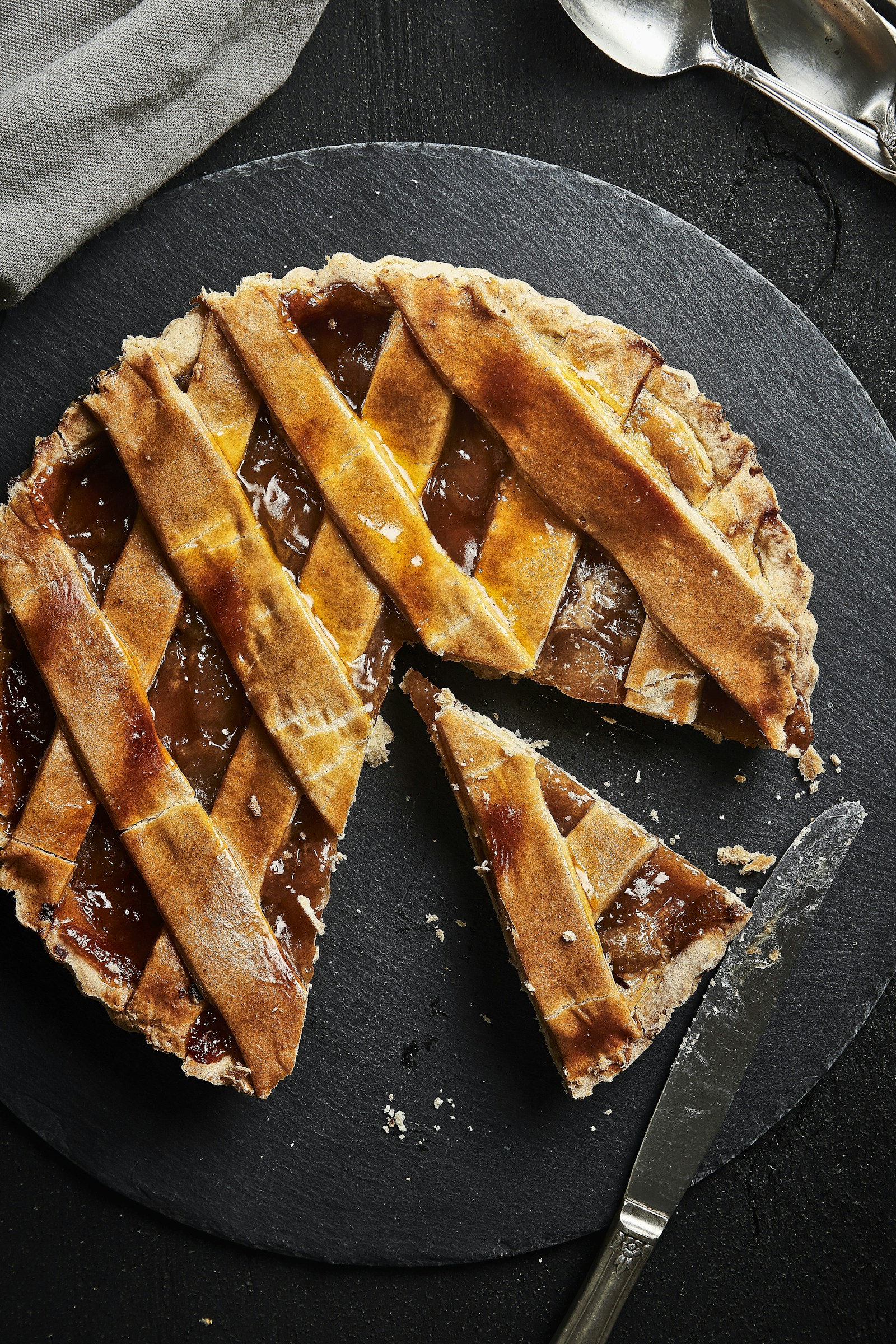
Medium30 min + 1 hr chillingOne 23 cm (9 in) crust
A tender, flaky crust for apple, pumpkin or pecan pie.
You’ll need: 210 g (1½ cups) GF flour blend, ¾ tsp xanthan gum (skip if in your blend), 1 tbsp sugar, ½ tsp salt, 115 g (½ cup) very cold butter in cubes, 2 tbsp sour cream, 3–5 tbsp ice water.
- Whisk the flour, xanthan gum, sugar and salt.
- Rub or cut in the cold butter until the pieces are the size of peas.
- Stir in the sour cream, then add ice water a tablespoon at a time until the dough holds together when squeezed.
- Shape into a disc, wrap and chill for 1 hour.
- Roll out between two sheets of cling film to about 30 cm (12 in) wide.
- Peel off the top sheet, flip the pastry into your pie dish and peel away the second sheet. Patch any cracks with your fingers and crimp the edge.
- Chill for 15 minutes, then fill and bake as your pie recipe directs. To blind bake, line with parchment and baking beans and bake at 200°C (400°F) for 15 minutes, then remove the beans and bake 8–10 minutes more.
💡 Tip: If the dough cracks while rolling, let it warm for 5 minutes and try again.
Very easy55 minServes 6
Cinnamon apples under a golden, crunchy oat and almond topping.
You’ll need: 1 kg (2 lb) apples, 50 g (¼ cup) sugar, 1 tsp cinnamon, 1 tbsp lemon juice, 1 tbsp cornstarch. Topping: 90 g (1 cup) certified GF oats, 100 g (1 cup) almond flour, 100 g (½ cup) brown sugar, pinch of salt, 100 g (7 tbsp) cold butter.
- Heat the oven to 180°C (350°F).
- Peel, core and slice the apples. Toss with the sugar, cinnamon, lemon juice and cornstarch, and spread in a baking dish.
- For the topping, mix the oats, almond flour, brown sugar and salt.
- Rub in the cold butter with your fingertips until it forms clumps.
- Scatter the topping evenly over the apples.
- Bake for 35–40 minutes until golden and bubbling at the edges. Rest for 10 minutes before serving.
💡 Tip: Mix tart and sweet apples, such as Granny Smith with Honeycrisp.
Medium2 hr + coolingServes 8
A crisp meringue shell with a soft, marshmallowy centre.
You’ll need: 4 egg whites at room temperature, 200 g (1 cup) caster (superfine) sugar, 1 tsp cornstarch, 1 tsp white vinegar, 1 tsp vanilla, 300 ml (1¼ cups) whipping cream, 300 g (2 cups) mixed berries.
- Heat the oven to 120°C (250°F). Draw a 20 cm (8 in) circle on parchment and place it upside down on a tray.
- In a spotlessly clean bowl, whisk the egg whites to soft peaks.
- Add the sugar one spoonful at a time, whisking well after each, until the meringue is thick and glossy.
- Fold in the cornstarch, vinegar and vanilla.
- Spread inside the circle, building up the sides slightly.
- Bake for 75–90 minutes until crisp and dry. Turn off the oven and leave it to cool inside with the door ajar.
- Just before serving, whip the cream and pile it on top with the berries.
💡 Tip: Rub a little meringue between your fingers. If it feels gritty, keep whisking.
Easy50 minMakes 12
Little brown-butter almond cakes with crisp edges and a raspberry in each.
You’ll need: 115 g (½ cup) butter, 100 g (1 cup) almond flour, 150 g (1¼ cups) icing sugar, 30 g (¼ cup) GF flour blend, pinch of salt, 4 egg whites (about 120 g), 12 raspberries.
- Melt the butter in a pan and cook, swirling, until it smells nutty and turns golden brown. Cool slightly.
- Whisk the almond flour, icing sugar, flour and salt.
- Whisk in the egg whites until smooth.
- Stir in the brown butter, then rest the batter for 30 minutes.
- Heat the oven to 200°C (400°F) and grease a 12-hole mini muffin or financier tin.
- Fill each hole three-quarters full and press a raspberry into the top.
- Bake for 12–15 minutes until golden and springy. Cool for 5 minutes before turning out.
💡 Tip: Scrape in the brown bits from the pan; they hold the most flavour.
Easy55 minServes 6
A custardy French bake of cherries in a light, pancake-like batter.
You’ll need: Butter and sugar for the dish, 450 g (1 lb) pitted cherries (fresh or thawed frozen), 3 eggs, 75 g (⅓ cup) sugar, 50 g (⅓ cup) GF flour blend or white rice flour, 300 ml (1¼ cups) milk, 1 tsp vanilla, pinch of salt, icing sugar to serve.
- Heat the oven to 180°C (350°F). Butter a 23 cm (9 in) baking dish and sprinkle it with sugar.
- Spread the cherries in the dish.
- Blend or whisk the eggs, sugar, flour, milk, vanilla and salt until completely smooth.
- Rest the batter for 10 minutes, then pour it over the cherries.
- Bake for 35–45 minutes until puffed, golden and just set in the centre.
- Cool for 10 minutes, dust with icing sugar and serve warm.
💡 Tip: It puffs up in the oven and sinks as it cools. That’s how it should be.
Looking for something chocolatey and simple? Our dairy free, gluten free chocolate pudding cups are a great no-bake companion to this list, and our gluten free banana pudding includes homemade gluten-free vanilla wafers.
Converting Your Favourite Recipes to Gluten Free
Once you’re comfortable with the basics, you’ll want to convert old family favourites. Start with recipes that use relatively little flour, such as brownies, muffins, quick breads, crumbles and cookies, because they rely less on gluten for structure. Swap the wheat flour by weight for an all-purpose gluten free blend, add the right amount of xanthan gum, and increase the liquid by around 10–15%. Let the batter rest, bake a little longer and test early.
Yeasted breads, croissants, puff pastry and delicate sponges are the hardest to convert, so for these, it’s best to start with a recipe designed for gluten free baking. Keep notes each time you bake. Small changes, like an extra egg or a spoonful of yogurt, add up, and within a few attempts you’ll have a version that works perfectly in your kitchen.
Stocking Your Gluten Free Baking Pantry
A well-stocked pantry means you can bake on a whim instead of hunting for specialty ingredients. You don’t need every flour on day one. Start with a small core set, learn how each one behaves, and add more as your confidence grows. Label every container with the flour’s name and the date you opened it, because many gluten free flours look almost identical once they’re out of the bag.
🟢 Starter Shelf
- Superfine white & brown rice flour
- Tapioca starch
- Potato starch
- Xanthan gum
- Gluten free baking powder
- Certified gluten free oats
🟡 Next Level
- Sorghum flour
- Almond flour
- Psyllium husk powder
- Cornstarch or arrowroot
- Ground flaxseed
- Instant yeast
🟣 Adventurous Baker
- Buckwheat flour
- Teff flour
- Millet flour
- Coconut flour
- Chia seeds
- Quinoa or amaranth flour
Don’t forget the supporting cast. Vanilla extract, chocolate chips, sprinkles, stock cubes and even some brands of icing sugar can contain gluten or carry a “may contain” warning. Buy versions clearly labelled gluten free, and keep them on the same dedicated shelf as your flours so nobody grabs the wrong jar by mistake.
Gluten Free Baking on a Budget
Gluten free products can be expensive, but home baking is one of the best ways to bring costs down. A homemade loaf typically costs a fraction of a shop-bought gluten free loaf, and it’s usually bigger, fresher and free from long ingredient lists. Here are the simplest ways to save money:
- Mix your own blend. Buying individual flours in larger bags is almost always cheaper than ready-made blends.
- Shop international grocery stores. Rice flour, tapioca starch and potato starch are often far cheaper in Asian and Latin American shops. Check for a gluten free label if you’re baking for someone with celiac disease.
- Make your own oat and almond flour. Blitz certified gluten free oats or blanched almonds in a blender for a fraction of the price of pre-ground flour.
- Bake in batches and freeze. Doubling a recipe uses the same oven time and gives you ready-made breakfasts and snacks for weeks.
- Lean on naturally gluten free recipes. Flourless cakes, meringues, macaroons and peanut butter cookies need no specialty flours at all.
Common Gluten Free Baking Myths, Busted
Well-made gluten free bakes can be every bit as good as wheat versions, and some, like almond cakes, brownies and shortbread, are arguably better. The difference comes down to the recipe and technique, not the absence of gluten.
A single flour rarely works. Rice flour on its own gives a gritty, crumbly result. A blend of flours and starches, plus a binder, is what recreates gluten’s structure.
With psyllium husk, a wet dough and a warm spot to prove, gluten free bread can rise beautifully and develop an open, airy crumb.
For someone with celiac disease, it does. Tiny amounts of gluten from shared sieves, boards or airborne flour can cause symptoms and intestinal damage, which is why kitchen hygiene is a core part of gluten free baking.
Gluten Free Baking Through the Seasons
One of the joys of gluten free baking is adapting to what’s in season. Fresh, ripe fruit adds natural moisture and sweetness, which is exactly what gluten free bakes love. Here’s a simple seasonal guide to keep your baking interesting all year round.
🌸 Spring
Rhubarb crumble bars, lemon almond cake and strawberry shortcakes made with fluffy gluten free biscuits.
☀️ Summer
Berry pavlova, cherry clafoutis, peach cobbler and blueberry muffins for picnics and barbecues.
🍂 Autumn
Apple crumble, pumpkin bread, spiced carrot cake and pecan pie with a flaky gluten free crust.
❄️ Winter
Gingerbread cookies, flourless chocolate cake, cinnamon rolls and buttery shortbread for gifting.
Holidays are when many people bake for a crowd, so it’s also when cross-contamination is most likely. If you’re hosting a guest who needs to avoid gluten, bake their treats first, store them separately and label them clearly. Better still, make the whole dessert table gluten free. With recipes like these, nobody will miss a thing.
Gluten Free Baking Troubleshooting Guide
Even experienced bakers have off days. Use this table to diagnose what went wrong and fix it next time.
| Problem | Likely Cause | Fix |
|---|---|---|
| Crumbly, falls apart | Not enough binder or liquid | Add xanthan gum or an extra egg; increase liquid slightly. |
| Gummy or sticky inside | Underbaked, too much binder or sliced warm | Bake longer, use a thermometer, cool fully, reduce gum. |
| Gritty texture | Coarse rice flour, no rest | Use superfine flour; rest batter 20–30 minutes. |
| Dense, didn’t rise | Old leavener, cold ingredients, dough too dry | Check baking powder date; use room-temperature ingredients; add liquid. |
| Sank in the middle | Underbaked or over-proofed | Bake longer; shorten the rise; avoid opening the oven early. |
| Cookies spread flat | Warm dough, too little flour | Chill dough 1 hour; weigh flour accurately. |
| Dry and stale by day two | Starch retrogradation, overbaking | Add yogurt or oil; store airtight; freeze slices. |
| Browned outside, raw inside | Oven too hot, pan too large | Lower the temperature by 10–15°C; tent with foil; use smaller tins. |
How to Store and Freeze Gluten Free Bakes
Gluten free bakes are at their best on the day they’re made, because their starches firm up more quickly than wheat-based bakes. The freezer is your best friend. Slice bread before freezing so you can toast slices straight from frozen. Muffins, cookies, brownies and unfrosted cake layers all freeze well for up to three months when wrapped tightly. Cookie dough can be scooped into balls and frozen, then baked straight from the freezer with an extra minute or two of baking time.
For short-term storage, keep bakes in an airtight container at room temperature for one to two days. Avoid the fridge for bread and cakes, as cold temperatures speed up staling. Refresh day-old muffins, scones or rolls with 5–10 seconds in the microwave or a few minutes in a warm oven, and they’ll taste freshly baked again.
Gluten Free Baking FAQ
Can I swap gluten free flour 1:1 for wheat flour?
For many cookies, muffins and quick breads, a “1-to-1” or “cup-for-cup” blend that already contains xanthan gum works well by weight. For bread, pastry and delicate cakes, you’ll get far better results from a recipe written specifically for gluten free baking.
Do I need xanthan gum for gluten free baking?
Most gluten free bakes need some kind of binder. Xanthan gum is the most common, but psyllium husk, ground flax, chia and extra eggs can all do the job. Recipes with very little flour, such as brownies and flourless cakes, often need none.
Why is my gluten free bread so dense?
Usually the dough was too dry, under-proofed or underbaked. Gluten free bread dough should be wet and sticky. Use psyllium husk for structure, let it rise until roughly doubled, and bake until the centre reaches 96–99°C (205–210°F).
Is gluten free baking healthier?
Not automatically. Gluten free bakes can contain just as much sugar and fat as regular ones, and many starch-heavy blends are low in fibre. Using whole-grain flours such as sorghum, buckwheat, teff and brown rice adds fibre and nutrients.
Are oats gluten free?
Oats don’t contain gluten naturally, but they’re often contaminated with wheat during farming and processing. Only use oats labelled certified gluten free, and check with anyone with celiac disease, as a small number also react to oats.
Can I make gluten free baking dairy free or egg free too?
Yes. Use plant butter and plant milk in place of dairy, and flax or chia “eggs” for up to two eggs in a recipe. Recipes that depend heavily on eggs for structure, such as sponges and soufflés, are harder to adapt.
Why does gluten free batter look so runny?
Gluten free flours absorb liquid slowly. Let the batter rest for 20–30 minutes and you’ll see it thicken noticeably. Don’t add extra flour straight away.
What’s the easiest gluten free bake for beginners?
Start with naturally gluten free recipes: flourless peanut butter cookies, brownies, coconut macaroons or Brazilian cheese bread. They build confidence before you move on to bread and pastry.
Final Thoughts on Gluten Free Baking
Gluten free baking isn’t about compromise. It’s about understanding a different set of ingredients and letting them shine. Blend your flours, choose the right binder, weigh everything, give batters time to rest and let your bakes cool completely. Keep your kitchen safe for anyone with celiac disease, and start with easy, naturally gluten free recipes before working your way up to bread and pastry.
Pick one recipe from our top 25 list this week and give it a try. Then come back and tell us in the comments which one you baked and how it turned out. Happy gluten free baking!