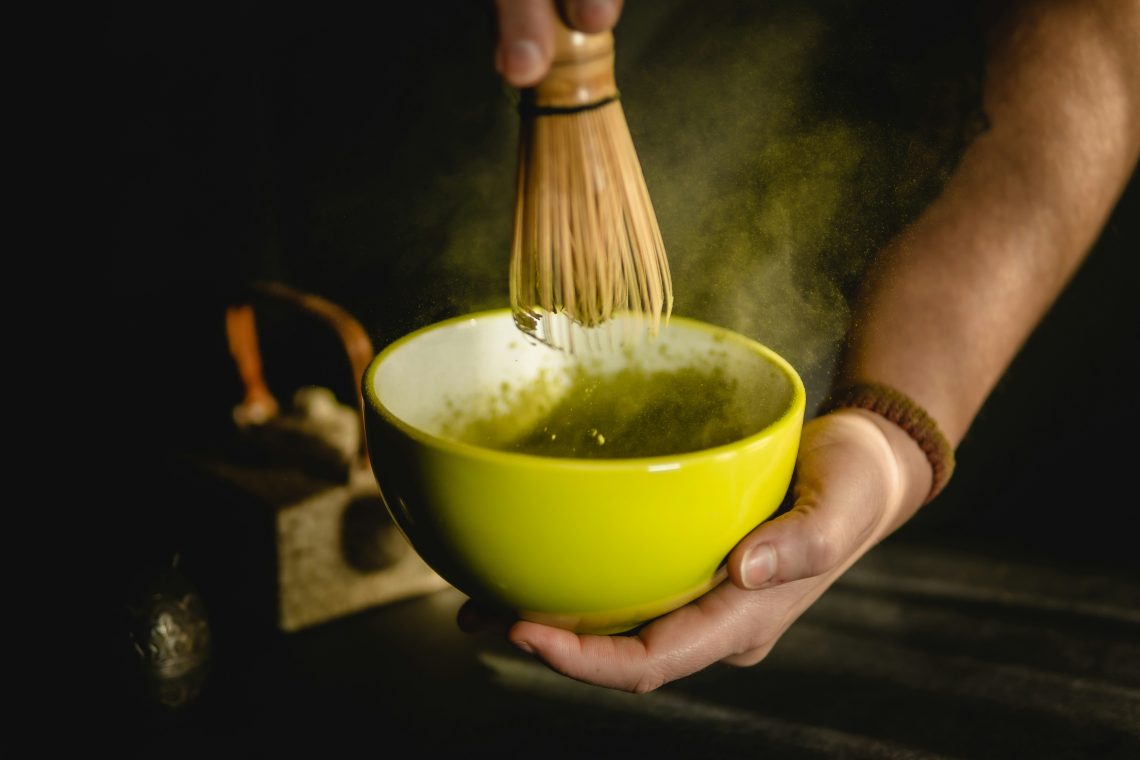
Learning how to make a matcha latte at home takes about five minutes and four simple ingredients. You don’t need an espresso machine. You need good matcha powder, a little warm water, your favorite milk, and one simple technique: whisk the matcha into a smooth paste before the milk goes in.
This guide walks you through that technique step by step. It shows how to make the drink hot or iced, how to adjust the strength and sweetness, and how to fix the most common problems, like clumps, bitterness and flat foam. A printable recipe card is at the bottom of the page.
Homemade Matcha Latte · At a Glance
Smooth, creamy and lightly earthy. Ready faster than a coffee-shop line.
↓ Jump to the printable recipe · Step-by-step method · Iced version · Troubleshooting · FAQ
Why This Method Works
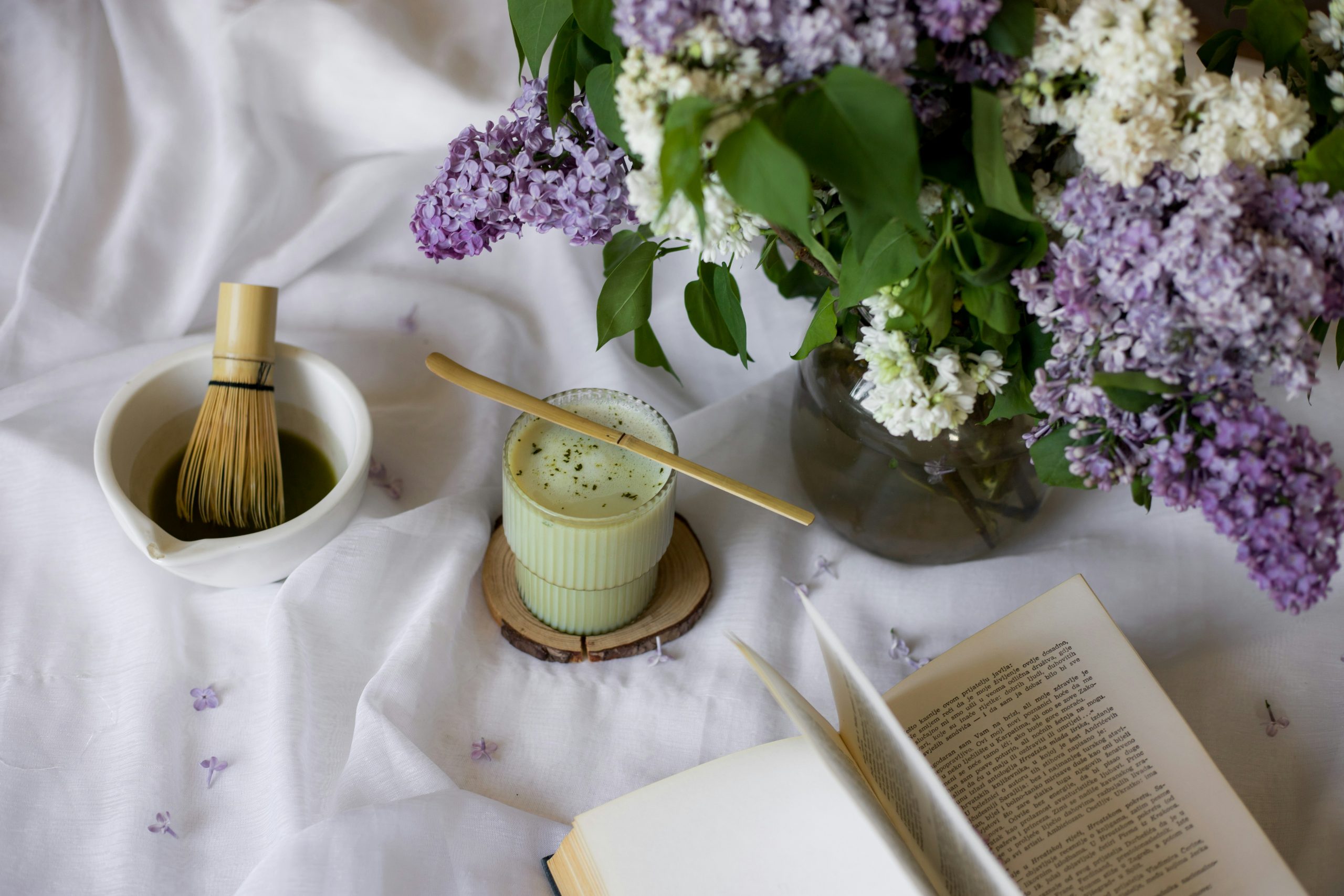
Matcha is green tea leaves ground into a very fine powder. Brewed tea is strained out of the cup, but with matcha you drink the whole leaf. Because the powder doesn’t dissolve, it has to be suspended evenly in the liquid. If you drop dry matcha straight into a mug of milk, the fine particles stick together and form clumps that are hard to break up.
The fix is to make a small, concentrated “shot” first. Sifting breaks up packed powder, and whisking it with a couple of tablespoons of warm water turns it into a smooth paste. That paste blends evenly into the milk. Every step below builds on that one idea.
The three rules for a smooth matcha latte
- Sift first. It takes ten seconds and prevents most clumps.
- Use warm, not boiling, water. About 160–175°F (70–80°C) keeps the flavor mellow instead of harsh.
- Whisk before you add milk. A smooth concentrate is the secret to an even, café-style drink.
Ingredients: How to Make a Matcha Latte at Home
These amounts make one balanced latte, about a 10-ounce mug. Start here, then adjust the strength and sweetness once you’ve tasted it.
| Ingredient | Amount | Why it matters |
|---|---|---|
| Matcha powder | 1 level tsp (about 2 g) | Choose fresh, bright-green, finely milled matcha. Latte or culinary grade works well. Ceremonial grade is optional. |
| Warm water | 2 Tbsp (1 fl oz) | About 160–175°F. Let just-boiled water cool for 2–3 minutes. |
| Milk | ¾ cup (180 ml) | Whole milk and oat milk are the creamiest and froth best. Almond, soy and other milks work too. |
| Sweetener (optional) | 1–2 tsp | Honey, maple syrup, simple syrup or sugar. Add it after tasting. |
For an iced latte, you’ll also need about 1 cup of ice, and use cold milk instead of warm.
Choose your strength
Matcha brands vary, so treat this as a starting guide. Keep the water at 2 tablespoons and change only the amount of matcha.
Mild
½ tsp (about 1 g). Soft, milky and gentle. A good first cup if you’re new to matcha.
Classic ★
1 tsp (about 2 g). Balanced tea flavor with a creamy finish. This is the recipe below.
Strong
1½ tsp (about 3 g). Bold, grassy and slightly bitter. Pairs well with oat milk and a little sweetener.
Tools that help (none are required)
- Fine-mesh sieve or tea strainer: breaks up clumps before you add any liquid.
- Small bowl or wide mug: gives the whisk room to move.
- Bamboo matcha whisk (chasen) or handheld milk frother: either one makes a smooth concentrate. A small kitchen whisk or a jar with a tight lid also works.
- Small saucepan or microwave-safe cup: for warming the milk.
How to Make a Matcha Latte at Home, Step by Step
Set out everything before you start. The whole process takes about five minutes, and you can warm the milk while you whisk.
Sift the matcha
Set a fine-mesh sieve over a small bowl or wide mug, add 1 level teaspoon of matcha, and tap the side of the sieve until the powder falls through. Press any stubborn bits through with the back of a spoon. Matcha packs down in its tin, so don’t skip this step even if the powder looks fine.
Whisk into a smooth concentrate
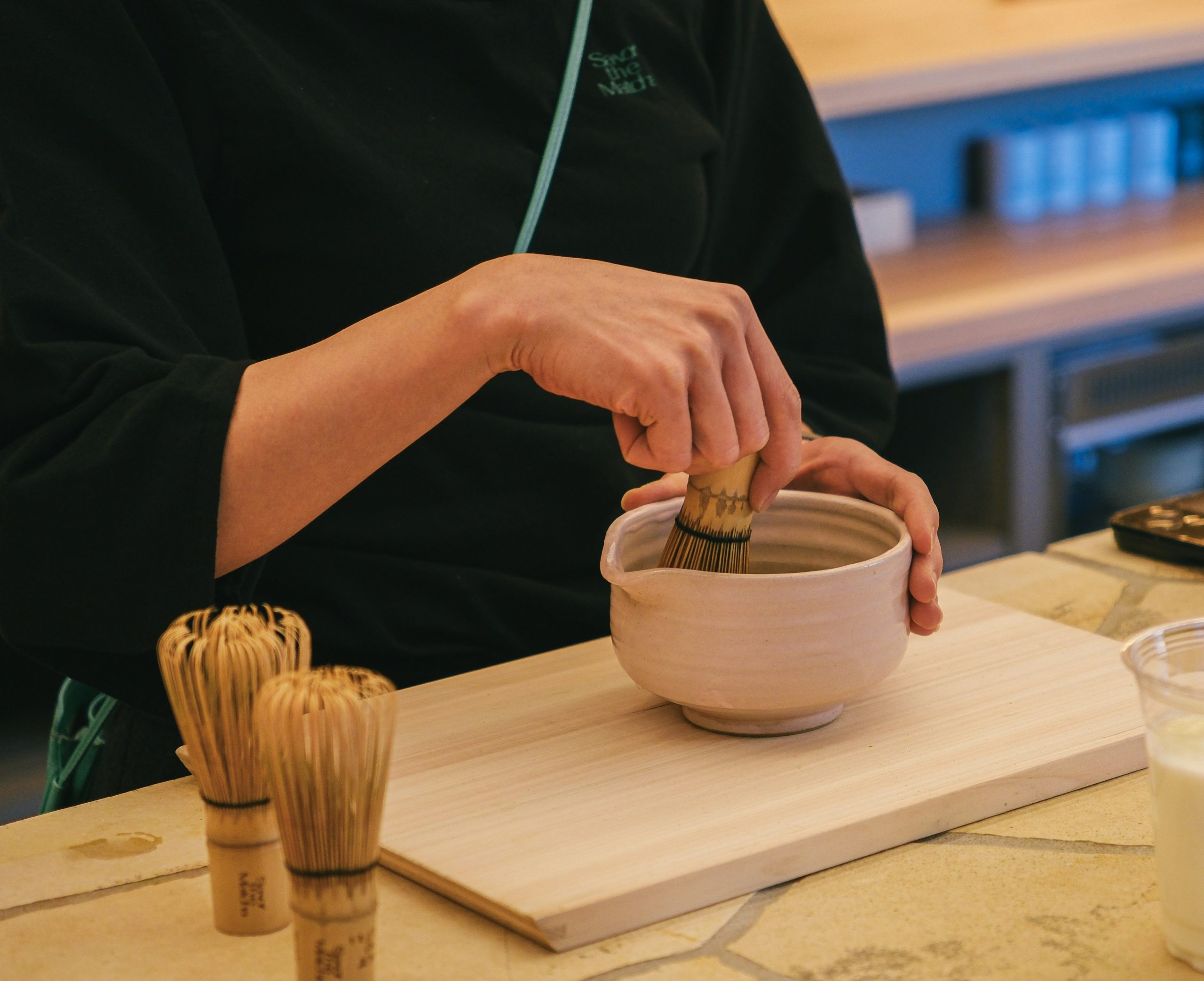
Pour 2 tablespoons of warm water (160–175°F) over the matcha. Whisk briskly in a quick zigzag or “W” motion, not in circles, for 15–20 seconds. Stop when it’s evenly green with no dry specks. A layer of fine foam on top is a good sign.
Using a bamboo whisk? Soak the tines in warm water for a minute first so they’re flexible and don’t snap. No whisk? Use a handheld frother, or shake the matcha and water in a small jar with the lid screwed on tight.
Warm and froth the milk
Heat ¾ cup of milk in a small saucepan over medium-low heat, or in the microwave in 30-second bursts, until it’s hot and steaming with small bubbles around the edge. Don’t let it boil, because boiled milk tastes flat and foams poorly. If you have a thermometer, about 150°F is ideal. Froth it with a handheld frother or whisk, or pump it in a French press 10–15 times. For a latte without foam, just warm it.
Combine, taste and sweeten
Pour the matcha concentrate into your mug. Add the warm milk slowly, holding back the foam with a spoon, then spoon the foam on top. Taste first, then stir in sweetener 1 teaspoon at a time until it’s how you like it. Serve right away. Matcha settles as it sits, so give it a quick stir if you’re sipping slowly.
How to Make an Iced Matcha Latte
The iced version uses the same concentrate. Only the milk changes.
- Sift 1 teaspoon of matcha and whisk it with 2 tablespoons of warm water until smooth, exactly as above.
- Fill a tall glass with ice and pour in ¾ cup of cold milk.
- Slowly pour the matcha concentrate over the top for a layered look.
- Add a liquid sweetener like maple syrup or simple syrup if you want one, since granulated sugar won’t dissolve in a cold drink. Stir well before sipping.
Tip: Ice dilutes the drink as it melts, so if you like a bolder iced latte, use the “strong” amount of matcha.
Tips for a Café-Quality Latte
Store matcha airtight and cold
Light, heat and air dull matcha’s color and flavor. Seal the tin tightly, keep it in the fridge, and use it within a couple of months of opening.
Judge by color
Fresh, good-quality matcha is a vivid green. Dull, yellowish or brownish powder usually tastes flat or bitter.
Warm your mug
Swirl hot water in the mug and pour it out before you start. Your latte stays hot longer.
Change one thing at a time
To dial in your perfect cup, adjust either the matcha, the milk or the sweetener on each try, not all three at once.
Easy Flavor Variations
- Vanilla matcha latte: Stir ¼ teaspoon of vanilla extract into the milk before frothing.
- Honey matcha latte: Whisk 1–2 teaspoons of honey into the warm concentrate so it dissolves before the milk goes in.
- Maple oat matcha latte: Use oat milk and maple syrup for a mellow, nutty drink. It’s especially good iced.
- Coconut matcha latte: Use half coconut milk beverage and half oat milk for a light tropical note.
- Cinnamon matcha latte: Add a pinch of ground cinnamon to the matcha before sifting.
Troubleshooting: Fix Common Matcha Latte Problems
| Problem | Likely cause | How to fix it |
|---|---|---|
| Clumps or gritty bits | The powder wasn’t sifted, or it went straight into the milk. | Sift it, then whisk with a little water before adding milk. |
| Too bitter | The water was too hot, there was too much matcha, or the powder is stale. | Let the water cool to 160–175°F, use the “mild” amount, or try a fresher matcha. |
| Weak or watery | Not enough matcha, or too much milk or ice. | Increase the matcha to 1½ tsp, or use less milk. |
| No foam | The milk boiled, or it’s a low-protein plant milk. | Heat to steaming only (about 150°F). Whole milk or “barista” oat milk froths best. |
| Matcha settles at the bottom | Matcha is suspended, not dissolved. That’s normal. | Stir before drinking, especially if the latte sits for a few minutes. |
Helpful Tools
You can make a great latte with what’s already in your kitchen, but these make it quicker and smoother:
- Matcha powder for lattes: look for a bright-green, finely milled powder.
- Bamboo matcha whisk set: the traditional tool for a silky concentrate.
- Handheld milk frother: whisks the matcha and froths the milk.
- Fine-mesh tea strainer: for sifting out clumps.
Family Recipe HQ may earn a commission from qualifying purchases made through affiliate links, at no additional cost to you.
How to Make a Matcha Latte at Home: FAQ
Can I make a matcha latte without a bamboo whisk?
Yes. A handheld milk frother, a small kitchen whisk, or a small jar with a tight lid all work. Shake the jar hard for about 20 seconds. The bamboo whisk is traditional, but it isn’t required.
What kind of matcha is best for lattes?
Fresh, bright-green, finely milled matcha. Latte or culinary grade is designed to stand up to milk and costs less. Ceremonial grade is smoother and more delicate, so it’s nice if you like a subtle flavor, but you don’t need it.
Why does my matcha latte taste bitter?
Usually the water was too hot or you used too much powder. Let the water cool to about 160–175°F and start with 1 teaspoon or less. Stale matcha can also taste harsh, so check the color.
Can I use cold water for the concentrate?
Yes, especially for iced lattes. Whisk or shake a little longer, since cold water takes slightly more effort to get completely smooth.
Does a matcha latte have caffeine?
Yes. You’re drinking the whole tea leaf, so matcha contains caffeine. The amount depends on the brand and how much powder you use. Use the “mild” amount if you want less.
Can I make it dairy-free?
Absolutely. Oat milk is the most popular dairy-free choice because it’s creamy and froths well. Soy and almond milk also work. Pick an unsweetened milk so you control the sweetness.
Can I make matcha ahead of time?
It’s best whisked fresh, because the flavor and color fade as it sits. If you need to prep ahead, cover the concentrate, refrigerate it, and use it the same day. Shake or whisk it again before adding milk.
More Café Drinks to Make at Home
If you enjoy café-style drinks at home, try our guide to making strong French press coffee for one or two. For a homemade blend to keep in your spice drawer, see how to make your own pumpkin spice.
Final Thoughts on How to Make a Matcha Latte at Home
Once you know how to make a matcha latte at home, it becomes one of the quickest café drinks you can make: sift, whisk with warm water, add milk. Start with the classic amounts, then adjust the strength, milk and sweetness until it’s exactly your cup.
Print RecipeHomemade Matcha Latte
Ingredients
Equipment
Method
- Set a fine-mesh sieve over a small bowl or wide mug. Add 1 level teaspoon of matcha and tap the sieve until all the powder falls through. Press any stubborn bits through with the back of a spoon.
- Pour in 2 tablespoons of warm water (160–175°F, not boiling). Whisk briskly in a zigzag or W motion for 15–20 seconds, until it’s evenly green with no dry specks and a little foam on top. No whisk? Use a handheld frother, or shake the matcha and water in a small jar with a tight lid.
- Heat ¾ cup of milk in a small saucepan over medium-low heat, or in the microwave in 30-second bursts, until it’s steaming with small bubbles at the edge (about 150°F). Don’t let it boil. Froth it with a frother or whisk if you like.
- Pour the matcha concentrate into a mug. Add the warm milk slowly, then spoon any foam on top. Taste, then stir in sweetener 1 teaspoon at a time if you want it. Serve right away, and stir again if the matcha settles.
- Make the concentrate as above. Fill a tall glass with about 1 cup of ice and ¾ cup of cold milk. Slowly pour the matcha over the top, add a liquid sweetener if you like, and stir well before sipping. For a bolder iced latte, use 1½ teaspoons of matcha.