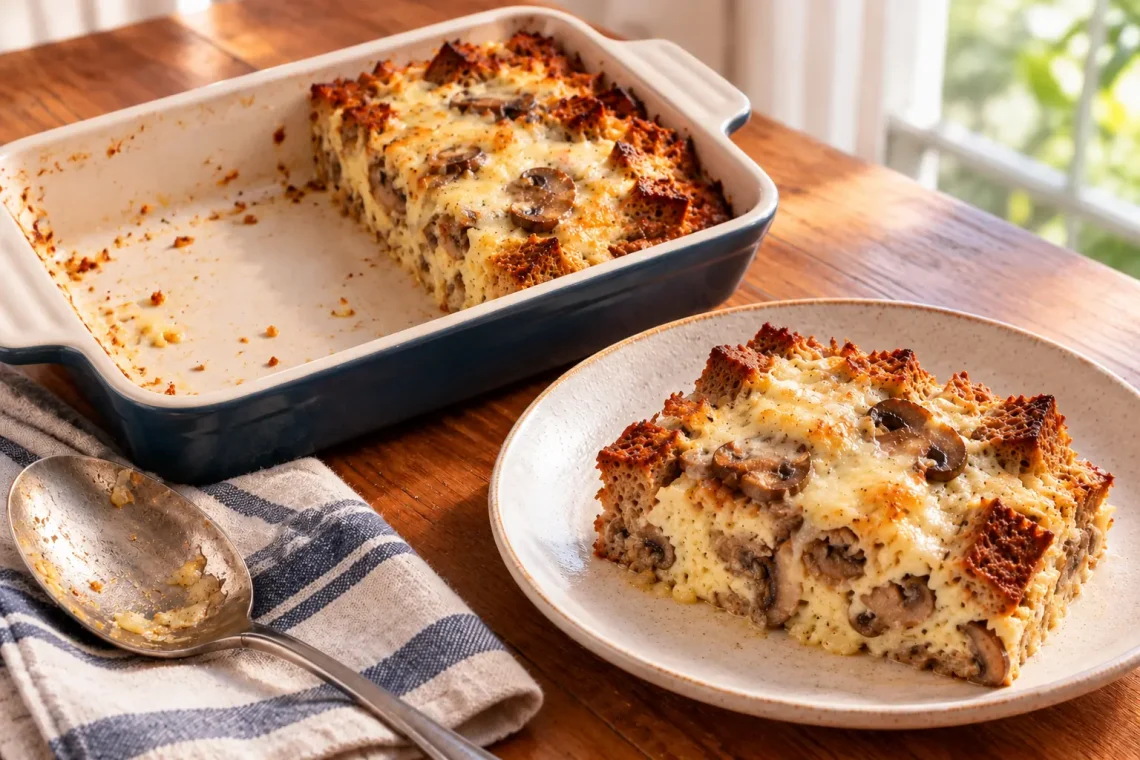
Mushroom Swiss rye strata for two is a savory breakfast bake made from bread cubes, browned mushrooms and an egg-and-milk custard. Rye brings a distinctive flavor that stands up to the mushrooms, while Swiss cheese melts through the middle and across the top. The small dish makes two generous brunch portions.
Affiliate disclosure: As an Amazon Associate I earn from qualifying purchases. These paid links open Amazon search results so you can compare suitable tools.
For the two preparations, a cooking skillet (paid link) handles the mushroom browning and a balloon whisk (paid link) combines the egg-and-milk custard before it is poured over the rye bread.
A strata needs time for the bread to absorb its custard. You can give this one a short refrigerated soak and bake it the same morning, or assemble it in the evening and refrigerate overnight. Either way, cook the mushrooms until their released moisture has evaporated before building the dish. Watery mushrooms can upset an otherwise well-measured custard.
Use bread dryness to choose the soaking time
| Bread condition | Best approach |
|---|---|
| Fresh and soft | Dry or toast the cubes first so they absorb custard without collapsing. |
| Day-old | A shorter refrigerator rest can be enough when the pieces are evenly coated. |
| Very dry | Use the full overnight rest and press exposed corners gently into the custard before baking. |
Cook mushroom moisture away before assembling the strata; otherwise it dilutes the custard around the rye. Bake until the center is set with no liquid custard pooling, then confirm 165°F / 74°C in the center with a food thermometer. Melted cheese and browned edges are supporting cues. Rest before cutting so the two portions hold together.
Choose a same-morning or overnight route
| Stage | Same morning | Overnight option |
|---|---|---|
| Prepare and assemble | 25 minutes | 25 minutes the evening before |
| Refrigerated soak | 30 minutes | 8–12 hours |
| Bake | About 40 minutes | About 40–50 minutes from cold |
| Rest | 10 minutes | 10 minutes |
Allow approximately 1 hour 45 minutes for the same-morning version. The overnight version takes roughly 9¼ hours with an eight-hour soak, mostly unattended. A refrigerator-cold dish may need longer to bake. Use a pan rated for the temperature change and follow the manufacturer’s instructions, particularly with glass or ceramic bakeware.
Bread, skillet filling and custard
Bread and mushroom filling
- 150 g rye sandwich bread, about 3 cups of ¾-inch cubes
- 8 ounces (225 g) cremini or white mushrooms, cleaned and sliced
- ½ small onion, finely diced, about 60 g
- 1 tablespoon (14 g) unsalted butter, plus a little for the dish
- 1 teaspoon olive oil
- ½ teaspoon dried thyme
Custard
- 2 large eggs
- 1 cup (240 ml) whole or 2% milk
- 1 teaspoon Dijon mustard
- ¼ teaspoon fine salt
- ¼ teaspoon black pepper
Cheese for the layers and top
- ½ cup (55 g) grated Swiss cheese, divided
Use a shallow 1-quart oven-safe baking dish, approximately 8 by 5 inches, with enough headroom for the bread to puff. You also need a skillet, baking sheet, bowl, whisk and food thermometer. Bread is measured by weight because three cups can vary substantially depending on the size of the cubes and how loosely they are packed.
Choose rye and check the dish
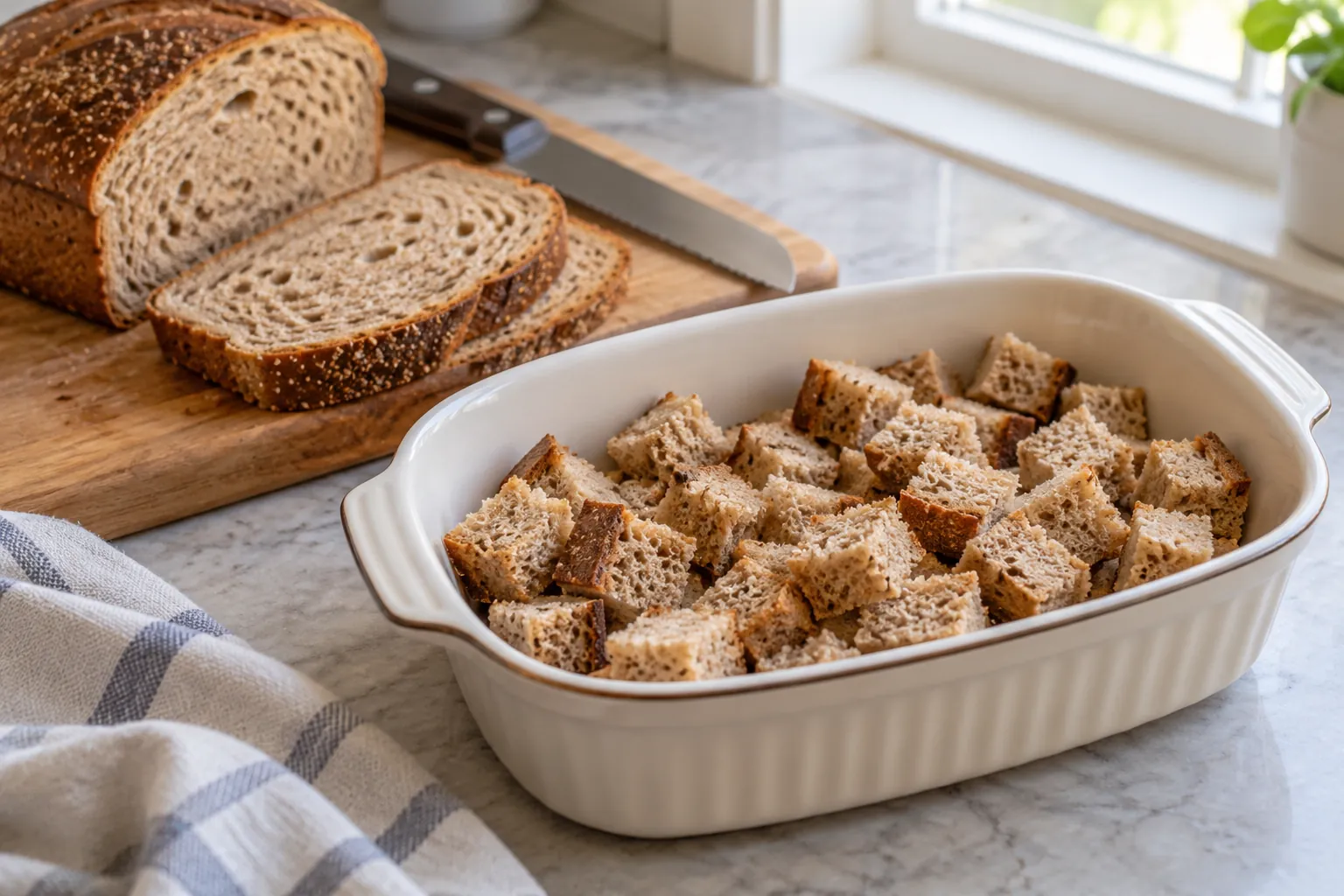
Choose an ordinary rye sandwich loaf with a relatively open crumb. Seeded rye gives a stronger caraway note; seedless rye lets the mushroom flavor dominate. Very dense, thinly sliced rye or pumpernickel may absorb custard differently and is not the reference bread for this version.
Slightly stale bread is useful, but it should still smell fresh and show no mold. Bread does not become suitable for use simply because it will be baked again. If your loaf is fresh and soft, drying the cubes briefly helps them absorb the custard without collapsing immediately.
Cut the cubes evenly and keep the crust unless it is exceptionally tough. Some exposed crust on top gives the finished strata a pleasant contrast with the softer interior. Removing every crust makes the texture more uniform but also changes the prepared weight, so weigh after any trimming.
Check the bread volume without packing it down
After weighing, put the cubes loosely into the empty baking dish to see how they sit. They should leave headroom for the filling and a little puffing rather than requiring force to fit. Then return the bread to its bowl before greasing the dish. This dry check is easier than discovering a capacity problem after the custard has been poured. A tightly packed cup measure can disguise how much bread was actually prepared, which is why the weight remains the reference.
Finish the dry bread and browned filling
- Heat the oven to 300°F / 150°C. Spread fresh bread cubes on a baking sheet and dry for about 10 minutes, turning once, until the surfaces feel dry without deeply browning. Already stale cubes can skip this drying step.
- Meanwhile, heat butter and oil in the skillet over medium-high heat. Add the mushrooms and spread them out. Let them cook for a couple of minutes before stirring so they begin to color.
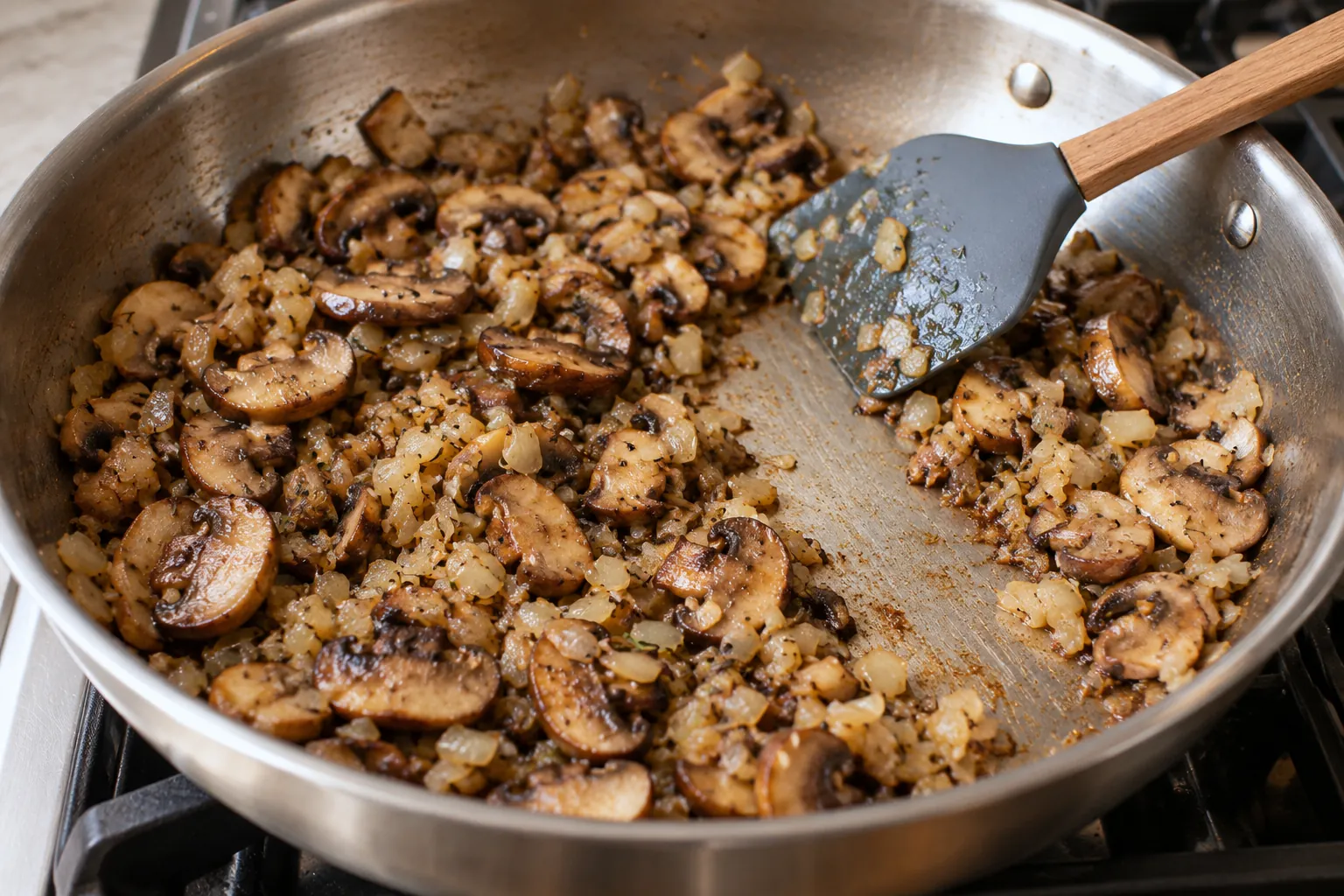
- Add the onion and thyme. Continue cooking for 7–10 minutes, stirring occasionally, until the mushrooms are browned, the onion is tender and there is no pool of liquid in the pan.
- Remove the skillet from the heat and cool the filling until warm. Do not mix steaming-hot mushrooms into the eggs.
If the pan is crowded and the mushrooms are steaming for a long time, continue cooking until the water evaporates before expecting browning. Raising the heat abruptly can burn the onion around the edges. A wide skillet gives the moisture more room to escape.
Watch the pan surface beneath the mushrooms
Draw the spatula through the middle of the skillet as the filling cooks. If liquid immediately runs into the cleared path, continue letting that moisture evaporate. When the pan surface stays visible and the mushroom edges begin coloring, the filling is better prepared for the custard. Keep an eye on the onion at the same time; move darkening pieces toward a cooler part of the skillet instead of trying to brown everything by turning the burner sharply higher.
Assemble mushroom Swiss rye strata for two
- Grease the dish. Coat the base and sides lightly with butter. Add half the bread cubes, half the mushroom mixture and half the cheese. Repeat with the remaining bread and mushrooms, reserving the remaining cheese for the top.
- Whisk the custard. Whisk the eggs until the whites and yolks are fully combined. Add milk, Dijon, salt and pepper, then whisk until smooth enough to pour evenly.
- Pour and press. Pour the custard slowly over the bread, moving around the dish. Press gently with a spatula so the upper cubes contact the liquid. Do not mash the bread into a paste. Sprinkle the reserved Swiss cheese over the top.
- Refrigerate. Cover and refrigerate for at least 30 minutes or overnight for 8–12 hours. Keep the dish chilled until the oven is ready rather than leaving the egg mixture on the counter.
- Bake covered, then uncover. Heat the oven to 350°F / 175°C. Cover the dish loosely with foil and bake for 20 minutes. Remove the foil and continue about 15–25 minutes, longer if needed from very cold.
- Check the center. The surface should be golden and the center set, with no liquid custard pooling when gently pressed. The center should reach 165°F / 74°C, following the FoodSafety.gov casserole guidance.
- Rest. Let stand 10 minutes before dividing. This makes it easier to lift two portions without losing the custard between the bread cubes.
Distinguish soaking liquid from an unfinished bake
Liquid visible between the cubes immediately after assembly is expected: the refrigerated soak gives bread time to take it up. Do not drain it away or add extra bread just because a little custard is visible at that stage. After baking, the requirement changes. The center needs to be set and safely hot, with the thermometer tip in the middle of the food rather than touching the dish or sitting in an air gap between exposed cubes.
Read the center before changing the formula
Soggy center: Check the bread type, mushroom moisture and dish depth. A center that has not reached the safe temperature needs more baking, loosely covered if the top is already brown. A dense bread that never absorbed the liquid may need a different formula rather than more cheese.
Dry top: A few crisp bread corners are expected, but hard cubes may have missed the custard. Press the top gently during assembly and keep the initial covered portion of the bake. Do not add cold milk to a nearly finished hot dish without considering the pan’s temperature limits.
Rubbery custard: Excessive heat or baking beyond the point of doneness can tighten the egg mixture. Begin checking near the lower end of the range and use a thermometer rather than judging only by how dark the cheese becomes.
Lift two portions and build the brunch plate
Serve with sliced tomatoes, a simple green salad or fruit. The strata already includes bread, eggs and cheese, so a fresh side gives a useful contrast. For a sweeter brunch dish on another day, the apple cinnamon French toast casserole uses a different flavor profile.
Gruyère is a reasonable alternative to Swiss if you want a stronger flavor. Avoid adding raw spinach or uncooked vegetables directly to the custard. Cook and drain them first, and keep the total filling quantity similar. For a quicker breakfast to portion ahead, see the spinach and cheddar egg sandwiches.
When serving, make the central cut first and slide a broad serving spoon beneath each portion. Support both the softer lower layer and the crisp upper cubes instead of lifting by the cheese topping. Some bread pieces may separate, which is normal for a spoonable strata; it does not need the rigid edges of a sliced loaf.
Leftovers and reheating
Refrigerate cooked leftovers in a shallow covered container within two hours, or within one hour if the surroundings are above 90°F / 32°C. Keep at 40°F / 4°C or below and use within 3–4 days. Reheat a portion covered until its center reaches 165°F / 74°C, then uncover briefly if you want to dry the top. The USDA leftover guidance supports these handling steps.
Frequently asked questions
Can I skip the soaking time?
The bread needs time to absorb custard. Skipping it can leave dry upper cubes and liquid below. Use the short refrigerated soak if overnight preparation is inconvenient.
Is seeded rye too strong?
It depends on your preference for caraway. Seedless rye is milder. Avoid sweetened specialty loaves unless you want that flavor in a savory breakfast.
Can I use canned mushrooms?
They have a different texture and can be quite wet. Drain and cook off moisture first, but this version is developed around fresh mushrooms.
Can I make it without cheese?
The cheese contributes flavor and some richness. Omitting it is possible to investigate, but the result needs its own seasoning and texture check.
Can I bake it in two ramekins?
Use wide ramekins with sufficient capacity and begin checking earlier. Verify both centers reach the safe casserole temperature; a smaller vessel does not guarantee identical cooking.
Is this enough for dinner?
Mushroom Swiss rye strata for two can be a light dinner with a substantial side salad or cooked vegetables. Portion needs depend on appetite and what else is served.
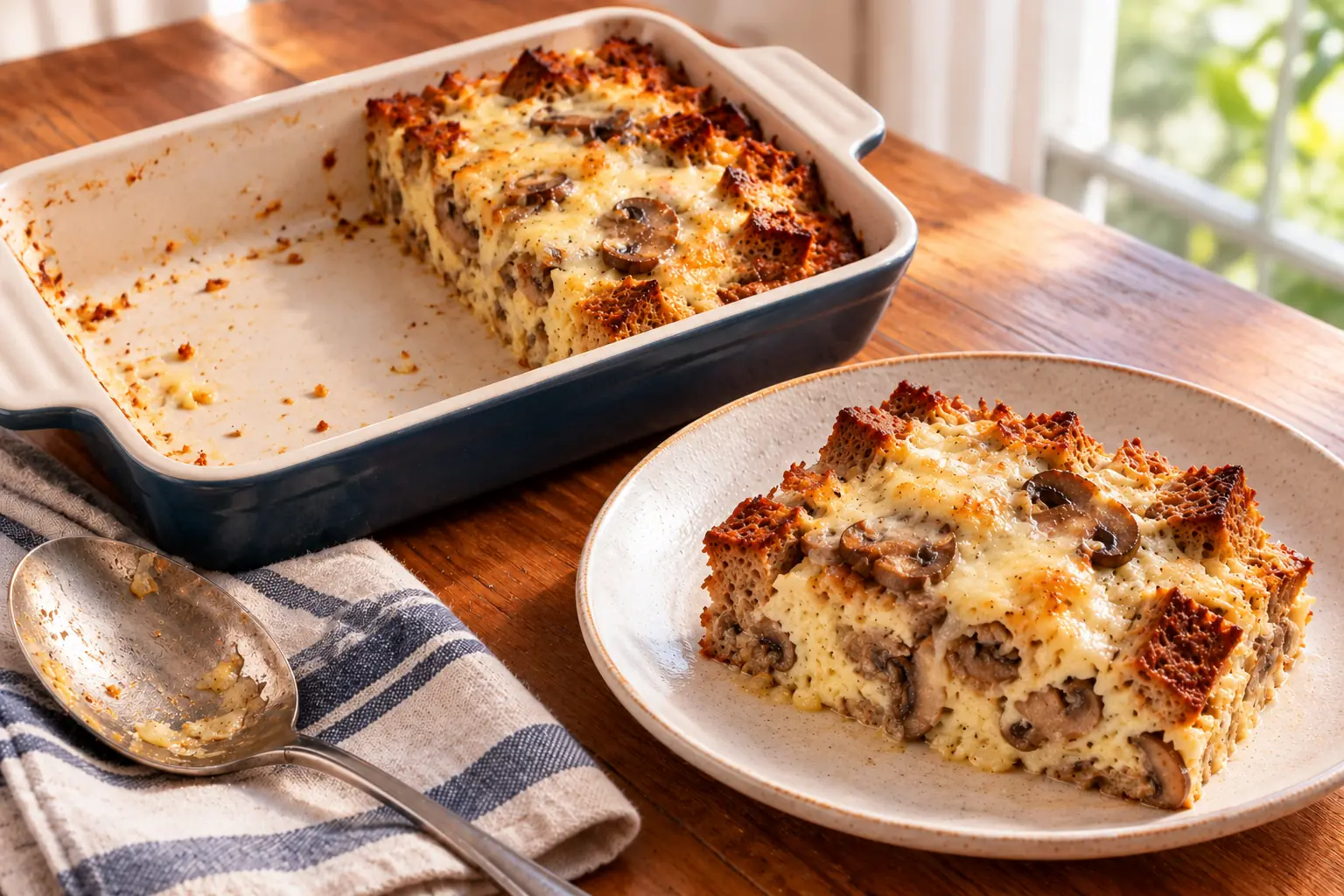
Mushroom Swiss Rye Strata for Two
Ingredients
Equipment
Method
- Heat the oven to 300°F / 150°C. Spread fresh bread cubes on a baking sheet and dry for about 10 minutes, turning once, until the surfaces feel dry without deeply browning. Already stale cubes can skip this drying step.
- Meanwhile, heat butter and oil in the skillet over medium-high heat. Add the mushrooms and spread them out. Let them cook for a couple of minutes before stirring so they begin to color.
- Add the onion and thyme. Continue cooking for 7–10 minutes, stirring occasionally, until the mushrooms are browned, the onion is tender and there is no pool of liquid in the pan.
- Remove the skillet from the heat and cool the filling until warm. Do not mix steaming-hot mushrooms into the eggs.
- Grease the dish. Coat the base and sides lightly with butter. Add half the bread cubes, half the mushroom mixture and half the cheese. Repeat with the remaining bread and mushrooms, reserving the remaining cheese for the top.
- Whisk the custard. Whisk the eggs until the whites and yolks are fully combined. Add milk, Dijon, salt and pepper, then whisk until smooth enough to pour evenly.
- Pour and press. Pour the custard slowly over the bread, moving around the dish. Press gently with a spatula so the upper cubes contact the liquid. Do not mash the bread into a paste. Sprinkle the reserved Swiss cheese over the top.
- Refrigerate. Cover and refrigerate for at least 30 minutes or overnight for 8–12 hours. Keep the dish chilled until the oven is ready rather than leaving the egg mixture on the counter.
- Bake covered, then uncover. Heat the oven to 350°F / 175°C. Cover the dish loosely with foil and bake for 20 minutes. Remove the foil and continue about 15–25 minutes, longer if needed from very cold.
- Check the center. The surface should be golden and the center set, with no liquid custard pooling when gently pressed. The center should reach 165°F / 74°C, following the FoodSafety.gov casserole guidance.
- Rest. Let stand 10 minutes before dividing. This makes it easier to lift two portions without losing the custard between the bread cubes.
Notes
- Yield and dish: Makes 2 generous portions. Use a shallow 1-quart oven-safe dish, approximately 8 by 5 inches, with headroom for puffing. Weigh the rye bread; loosely filled cups can vary.
- Timing: Allow about 1 hour 45 minutes for the same-morning version, including a 30-minute refrigerated soak and 10-minute rest. An overnight soak lasts 8–12 hours and may require a longer bake from cold.
- Assembly: Cook away mushroom liquid and let the filling cool until warm before combining it with eggs. Press bread gently into the custard without mashing. Keep the assembled strata refrigerated until baking; follow the dish manufacturer’s temperature-change guidance.
- Baking: Bake at 350°F (175°C), covered for 20 minutes, then uncovered for about 15–25 minutes or until done. Check the center with a thermometer: it should reach 165°F (74°C). Rest 10 minutes before dividing.
- Leftovers: Refrigerate shallow portions within 2 hours, or 1 hour above 90°F (32°C), at 40°F (4°C) or below. Use within 3–4 days and reheat to 165°F (74°C). FoodSafety.gov storage guidance.