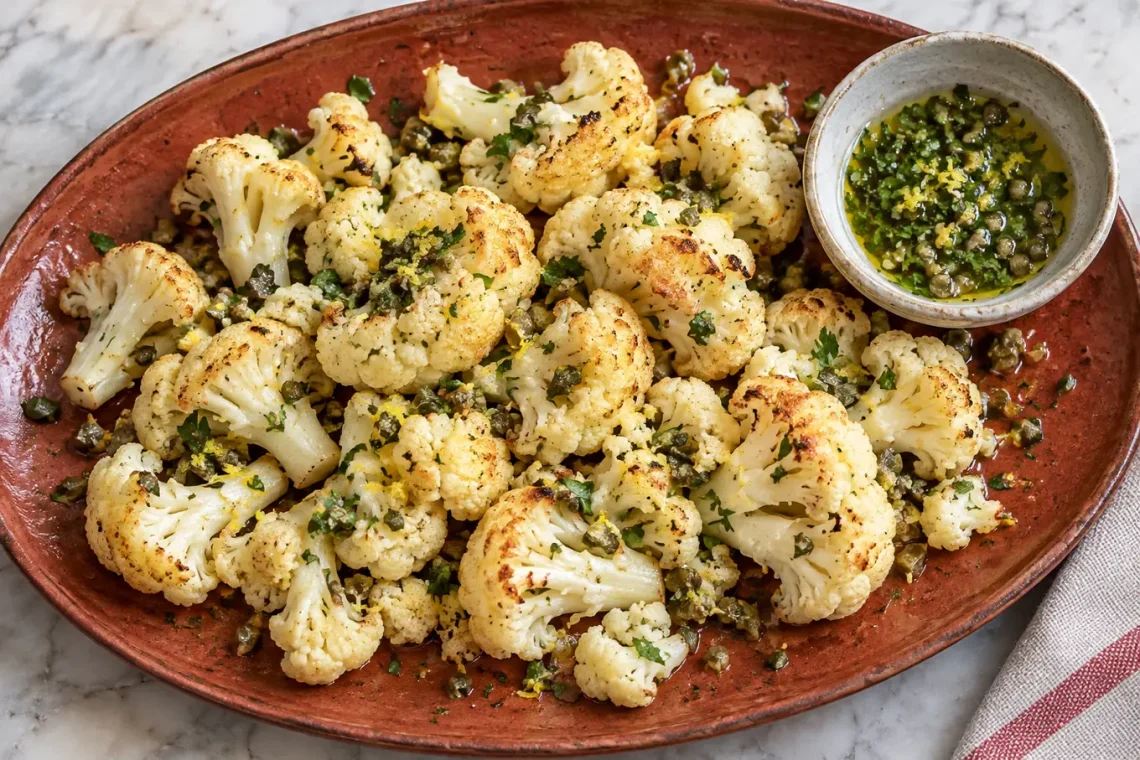
Frozen cauliflower becomes a more interesting side dish when a sharp dressing is added after it roasts. This roasted frozen cauliflower with lemon caper dressing pairs tender florets and browned edges with chopped capers, parsley, and lemon. The dressing takes only a few minutes, but its timing matters: adding it after roasting keeps the cauliflower from sitting in extra moisture while you want the edges to dry.
Affiliate disclosure: As an Amazon Associate I earn from qualifying purchases. Paid links open Amazon search results.
Use the 18-by-13-inch rimmed baking sheet (paid link) specified below to spread the cauliflower out for roasting. A thin spatula (paid link) is useful for turning the florets before the lemon-caper dressing is added.
The method begins with a plain frozen bag, without thawing. Frozen florets vary in size and ice coverage, so the recipe gives a range of cooking time and several checks. Expect a tender center with some roasted edges, not uniformly crisp pieces like a breaded snack.
Jump to recipe · Rate this recipe
Roast first and dress second
Evaporate freezer moisture
Spread cauliflower widely and avoid thawing it into a wet bowl. The first oven stage should dry the surface before deep browning is expected.
Keep the dressing fresh
Whisk lemon and capers separately, then spoon them over the hot vegetables after roasting so the acidity stays bright.
If the cauliflower is tender but pale, move the pan higher for a short final blast. Do not extend the full roast until the small florets become dry and crumbly.
The side dish in brief
- Yield: 4 side servings
- Prep: 10 minutes
- Roasting: 30–40 minutes
- Total: about 45 minutes
- Oven: 425°F / 220°C, conventional
- Equipment: one 18-by-13-inch rimmed metal baking sheet, a large bowl, a thin spatula, and a small bowl for dressing
Ingredients and balance
For the cauliflower
- 1 pound plain frozen cauliflower florets
- 1½ tablespoons olive oil
- ¼ teaspoon garlic powder
- ¼ teaspoon fine salt
- ¼ teaspoon black pepper
For the dressing
- 1 tablespoon drained capers, rinsed and finely chopped
- 1 tablespoon olive oil
- 1 tablespoon lemon juice, plus more only after tasting
- ½ teaspoon finely grated lemon zest
- 2 tablespoons chopped flat-leaf parsley
- 1 teaspoon water, if needed to soften a particularly sharp dressing
Capers contribute a briny, salty flavor. Rinsing lets you begin with a more controlled level of salt, especially when brands differ. Chop them instead of leaving all of them whole so a small spoonful of dressing seasons several florets. The cauliflower’s initial salt is modest because the capers add more later.
Lemon zest gives citrus aroma without much liquid. Lemon juice supplies the acidity that balances roasted vegetable flavor. Parsley is useful for freshness, but the side still works without it. If you have only dried parsley, use 1 teaspoon and let it hydrate in the dressing while the cauliflower cooks; the flavor will be less lively.
Keep the roasting and dressing jobs separate
Set the small dressing bowl beside the lemon and capers, away from the bowl used to oil the frozen florets. This simple separation makes it clear which liquid belongs on the vegetables before roasting and which belongs at the finish. Keep the dressing ingredients together while the cauliflower takes its first uninterrupted turn in the oven.
Chop capers for a more even spoonful
After rinsing and draining, gather the capers into a small pile and chop across it several times. Aim for little pieces distributed through the dressing, rather than a completely smooth paste. A few whole capers are pleasant, but a spoonful made mostly of whole ones can leave one floret very salty and the next barely seasoned.
Chop parsley separately and fold it into the measured lemon and oil mixture. A small bowl wide enough for a fork is easier to stir than a narrow cup. Oil and lemon can separate while the bowl sits; that is expected here. Stir again immediately before spooning so the first portion is not mostly oil and the last mostly capers and lemon.
Roasting sequence
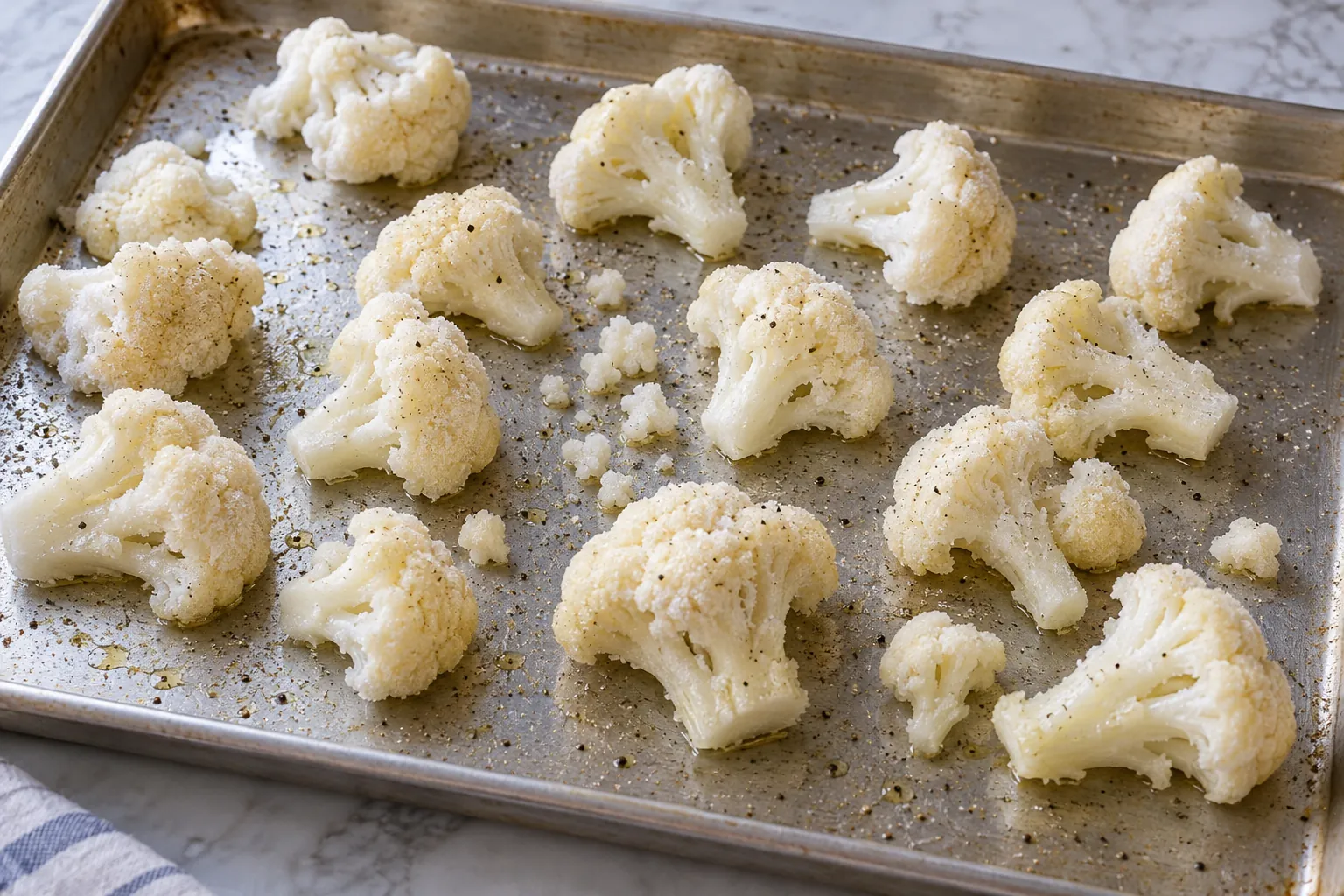
- Heat the oven fully. Put a rack in the middle and heat to 425°F. Lightly grease the metal sheet using a little of the measured roasting oil. A shallow sheet allows moisture to escape more readily than a deep baking dish.
- Separate the frozen pieces. Keep the cauliflower frozen until the oven is ready. Shake loose ice crystals into the sink and separate any large clumps. Do not run the florets under warm water, which adds surface moisture and begins an uneven thaw.
- Season lightly. Toss frozen florets with the remaining roasting oil, garlic powder, salt, and pepper. Oil may briefly look uneven on the icy surface. Spread the pieces over the sheet and rub any visibly dry areas with a little oil already on the pan.
- Give the pieces space. Arrange in a single layer with some open metal between them. Turn broader cut faces downward where possible. If a bag contains many tiny crumbs, keep them near the center of the sheet or reserve them for soup so they do not burn at the edges.
- Roast undisturbed first. Cook for 18–20 minutes before turning. The vegetables should have released much of their initial moisture, and the undersides may begin to color. Use a thin spatula to turn rather than dragging soft florets across the metal.
- Finish by texture. Continue for another 10–20 minutes, checking smaller pieces first. Follow the package cooking instructions and confirm the thick stems are hot and tender. Remove dark, finished pieces individually if necessary. If the sheet is crowded and steamy, divide the food onto a second sheet.
- Mix the dressing. Combine chopped capers, dressing oil, lemon juice, zest, and parsley. Taste a small amount on a cooked floret. Add the teaspoon of water if the mixture is too sharp, or a few drops more lemon if it tastes flat.
- Dress at the table or just before serving. Transfer cauliflower to a broad warm serving bowl. Add two-thirds of the dressing and toss gently once. Offer the remaining dressing separately. Serve promptly so the roasted edges do not sit in liquid longer than necessary.
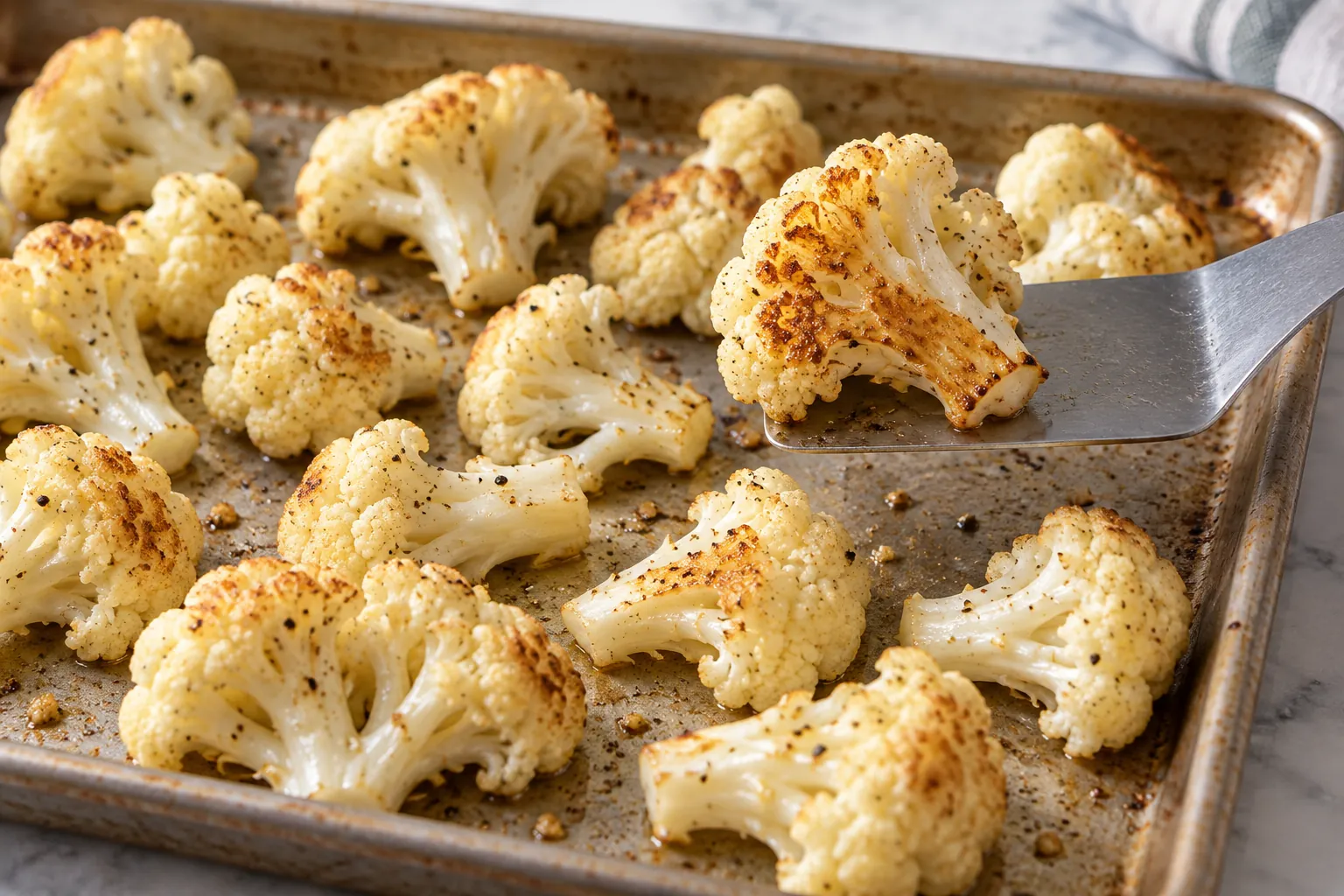
Read the cauliflower, not just the clock
| What you see | What it means | What to do |
|---|---|---|
| Water pooled between florets | Moisture is collecting faster than it evaporates | Spread the pieces more widely and give them more time. |
| Golden tips, firm thick stems | Pieces are uneven in size | Remove small finished florets and continue the larger ones. |
| Dry but pale surfaces | More browning may be possible | Turn a broad side onto the metal and roast briefly longer. |
| Black, bitter tips | Some small pieces have overcooked | Discard badly burned bits and check sooner next time. |
If your oven runs hot, lower the setting slightly and continue until the thickest pieces soften. Browning is desirable only while it tastes pleasant. A partly browned floret that is tender and well seasoned is preferable to a heavily blackened one cooked solely to match a photograph.
Why roasted frozen cauliflower with lemon caper dressing uses a late finish
Roasting is easiest to control when the vegetable’s surface can lose moisture. Frozen cauliflower already contributes water as it thaws in the oven. Adding lemon juice at the beginning introduces more liquid before the edges have a chance to dry. Saving the dressing also keeps the capers from becoming overly dark and the parsley from losing its fresh character.
A wide metal sheet is useful because it gives each piece direct contact with a hot surface. Parchment can simplify cleanup if it is rated for the temperature, although the undersides may brown differently. A thick silicone mat can further change bottom browning; adjust your expectations rather than adding excessive oil to compensate.
Judge the dressing on a piece of cauliflower
Use one cooked floret for the tasting check in step seven. Let it cool enough to eat comfortably, then add a little dressing that includes some chopped caper. Taste the vegetable and dressing together before deciding whether the measured water or a few additional drops of lemon are useful. A sharp dressing tasted alone does not show how it will balance a full bite of cauliflower.
For the final toss, use a broad spoon to lift from underneath once or twice, keeping the tender branches intact. Scrape a little dressing from the bottom of the bowl over an undressed area rather than stirring repeatedly. Leave the remaining dressing in its own bowl with a clean spoon, so each person can season the portion on their plate.
What to serve alongside
This bright side pairs well with plain baked fish, roast chicken, or pork meatballs. Spoon it alongside creamy polenta or mashed potatoes so the capers and lemon contrast with something mild. For a meatless lunch, add warm chickpeas and a piece of toast, keeping the dressing quantity modest so the plate is not overly acidic.
Leftover cauliflower can be chopped into a warm grain bowl or folded through cooked pasta with a splash of pasta water. Reheat the cauliflower first, then add a little fresh lemon or parsley to wake up the flavor. Do not expect the original roasted edges to remain crisp after refrigerated storage.
Adjustments without losing the point of the dish
If you do not enjoy capers, use 1 tablespoon finely chopped green olives, rinsed if very salty. The flavor changes, but the dressing still provides a briny contrast. For a caper-free and olive-free version, use the lemon, parsley, and oil alone, then season carefully after tossing.
Fresh cauliflower can replace frozen, cut into similar florets. It usually releases less water and may finish sooner, so begin checking around 20 minutes. A bag of cauliflower rice cannot use this method: its small granules require a different preparation and would not produce the same side dish.
For some heat, stir a small pinch of crushed red pepper into the dressing. For a richer finish, sprinkle 2 tablespoons finely grated Parmesan over the hot florets before adding a little dressing. Cheese is optional and adds salt; taste before using the full caper mixture.
Storage and reheating
Refrigerate leftovers in shallow containers within 2 hours, or within 1 hour above 90°F. Keep at 40°F or below and use within 3–4 days under USDA leftover guidance. If you know you will have extra, refrigerate some cauliflower without dressing and keep the sauce separately.
Reheat a portion on a small oven-safe tray or in a covered microwave-safe bowl until it reaches 165°F, the leftover reheating endpoint. The oven can dry the edges somewhat, whereas the microwave produces a softer result. Add a small amount of reserved dressing after reheating, then taste before adding more.
For a meatless meal built around a soft base, serve this side with chickpea polenta bowls without tomatoes. Keep the caper dressing light so the two lemon-seasoned components stay balanced.
Frequently asked questions
Do I need to thaw the cauliflower?
No. The method starts from frozen. Thawing can work in other preparations, but here it creates an additional drying task and changes the time needed to release moisture in the oven.
Can I use frozen cauliflower in sauce?
Use plain florets. A cheese or butter sauce changes browning and introduces extra liquid and seasoning. Follow that product’s package method instead of assuming it behaves like plain frozen vegetables.
Why rinse the capers?
Rinsing removes some clinging brine and makes the salt easier to control. You still keep their distinctive flavor. If you skip rinsing, reduce the cauliflower’s salt and taste before using all the dressing.
Can I make the dressing ahead?
Yes. Mix it up to one day ahead and refrigerate. Stir before serving and add parsley closer to the meal if you want its freshest color and flavor. Do not keep the dressing at room temperature for extended periods.
Can I double the recipe?
Use two sheets and rotate their positions if one browns faster. Doubling the food on one sheet traps moisture. The dressing scales directly, but add it in portions and taste rather than pouring all of it over the vegetables at once.
How do I keep the finished side from becoming soggy?
Serve roasted frozen cauliflower with lemon caper dressing promptly, using only enough dressing to season the pieces. Keep any extra sauce at the table. The cauliflower will naturally soften as it sits, especially once dressed.
Rate this recipe
Made this roasted frozen cauliflower? Choose a star rating in the comment form and tell us how you served it.
Roasted Frozen Cauliflower Recipe Card
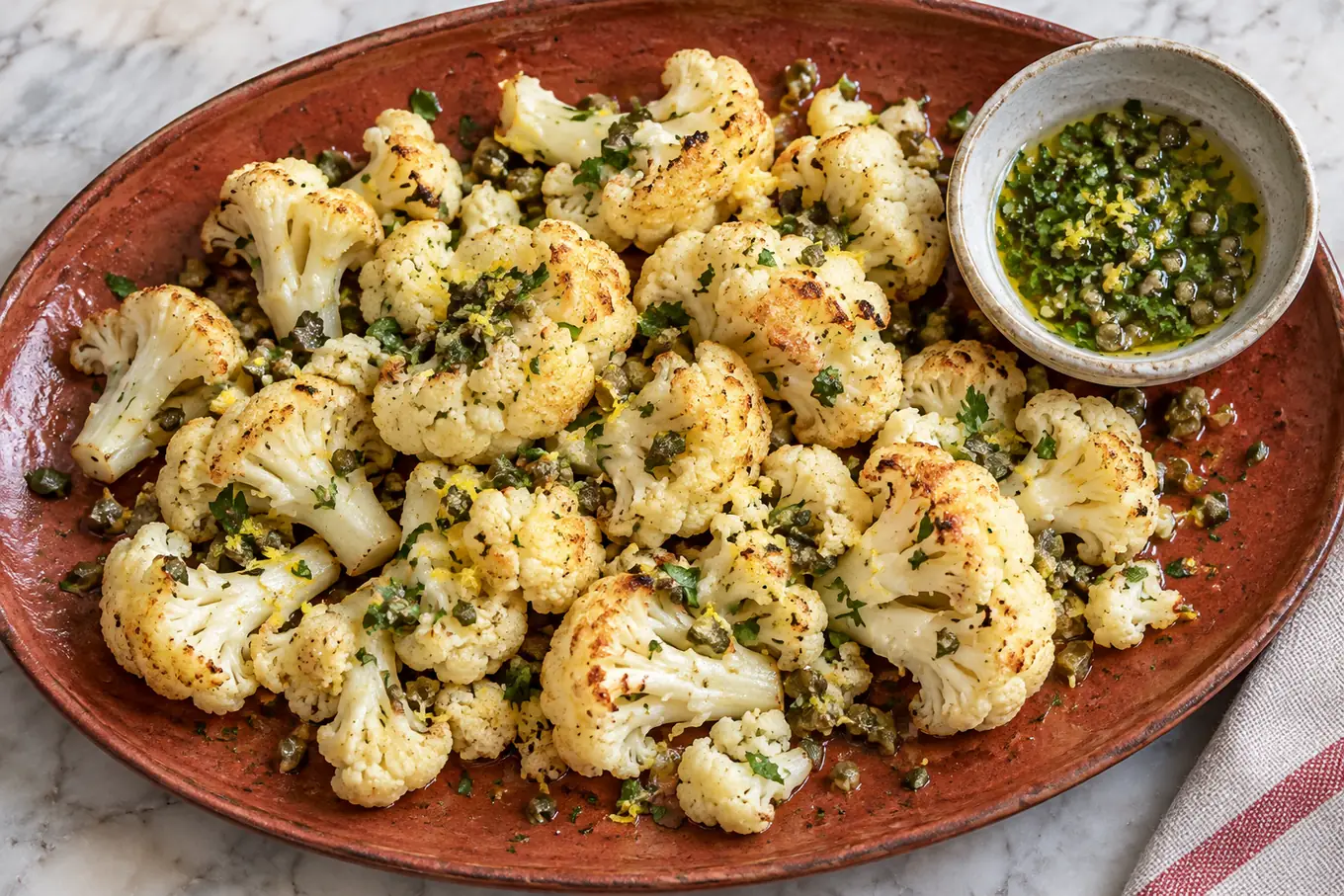
Roasted Frozen Cauliflower with Lemon Caper Dressing
Ingredients
Equipment
Method
- Place a rack in the middle of the oven and preheat to 425°F / 220°C. Lightly grease a rimmed metal baking sheet with a little of the measured roasting oil.
- Keep the cauliflower frozen until the oven is ready. Shake off large ice crystals and separate clumps. Do not rinse under warm water.
- Toss the frozen florets with the remaining roasting oil, garlic powder, salt and pepper. Spread in one layer with open metal between pieces and turn broad cut faces downward where possible.
- Roast undisturbed for 18–20 minutes. The cauliflower should release much of its moisture and begin browning underneath.
- Turn with a thin spatula and roast for another 10–20 minutes, following the package instructions and checking small pieces first. Thick stems should be hot and tender, with some browned edges. Remove dark finished pieces individually if needed.
- Stir the chopped capers, 1 tablespoon olive oil, lemon juice, zest and parsley in a small bowl. Taste a little dressing on a cooked floret. Add the optional water if it is too sharp, or a few drops of lemon if it tastes flat.
- Transfer the cauliflower to a broad serving bowl. Add about two-thirds of the dressing and toss gently once. Offer the rest at the table and serve promptly so the roasted edges do not sit in liquid.
Notes
- Yield and timing: Makes 4 side servings. Allow 10 minutes to prepare and approximately 35 minutes to roast, about 45 minutes total. Frozen floret size and ice coverage vary; expect roughly 30–40 minutes and follow the package cooking requirements.
- Pan and oil: Use an 18-by-13-inch rimmed metal sheet at 425°F (220°C). The 1½ tablespoons roasting oil includes the small amount used to grease the sheet. The separate tablespoon of oil belongs to the dressing.
- Keep frozen: Separate clumps and shake off large ice crystals without thawing or rinsing the florets. Leave open metal between pieces. Remove small finished florets while thicker stems finish if necessary.
- Dressing: Rinse and chop capers, then taste the dressing on a cooked floret before adding more salt or lemon. Start with about two-thirds of the dressing and serve the remainder separately to protect the roasted edges.
- Leftovers: Refrigerate shallow portions within 2 hours, or 1 hour above 90°F (32°C), at 40°F (4°C) or below. Use within 3–4 days and reheat to 165°F (74°C). FoodSafety.gov storage guidance.