
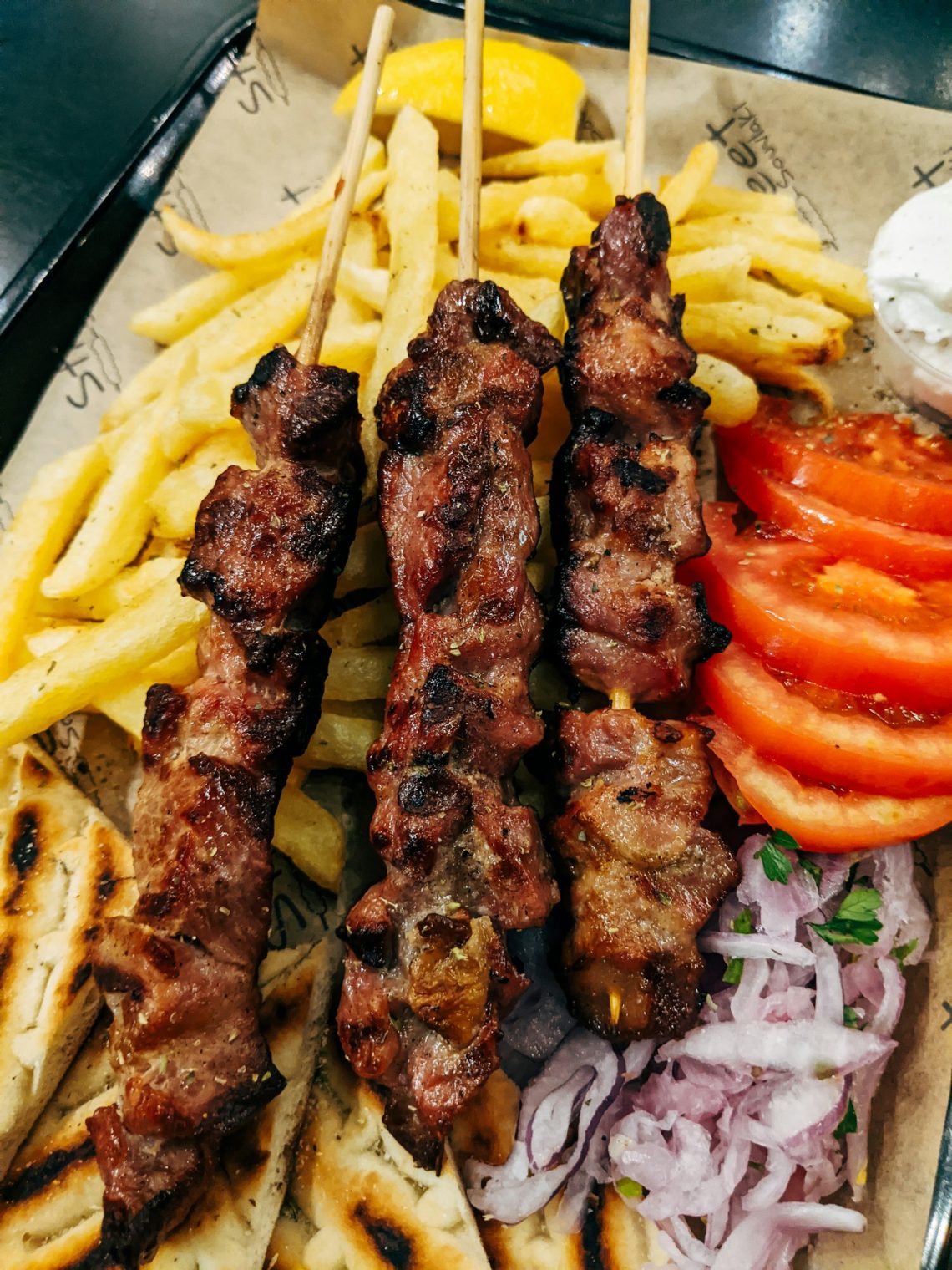
Small pieces, bright flavor, and a short cook
Pork souvlaki skewers with lemon and oregano are a practical way to turn pork tenderloin into a grill dinner with little active cooking time. The cubes take a short marinade, then cook quickly over direct heat. A cucumber yogurt sauce gives the plate a cool contrast and doubles as a spread for warm pita.
This recipe uses tenderloin because its tenderness suits a brief cook. The main challenge is avoiding dry edges while bringing every cube to a safe temperature. Similar piece sizes, loose threading, and a thermometer are more useful than leaving the skewers on the grill until they look very dark.
Preparing tenderloin and choosing the marinade
Remove the thin, silvery membrane from the tenderloin before cutting. Slide a small knife just beneath it and angle the blade slightly upward so you remove the membrane without taking off a thick strip of meat. Trim large loose fat, then cut the pork into roughly one-inch cubes.
The tapered tail of a tenderloin is thinner than the center. Keep its pieces together on one skewer or fold a thin piece once so it does not cook far ahead of the others. Do not pack several tiny scraps into a dense ball, which creates an uneven center.
Lemon, olive oil, garlic, and oregano form a simple marinade. Thirty minutes in the refrigerator is enough for the coating to flavor the surface. A much longer acidic soak is not necessary for tenderloin and can change the outside texture. The marinade adds flavor; it is not a safety treatment for raw meat.
Skewering pork souvlaki skewers with lemon and oregano
Metal skewers make turning straightforward and avoid concerns about wooden ends scorching. Thread the cubes with a small gap between them so heat can reach more of each surface. A tightly compressed line of meat cooks like a thicker roast rather than individual cubes.
Let excess marinade drip back into the bowl. Oil helps prevent sticking, but a heavy coating can drip onto flames and cause flare-ups. Discard the raw marinade after threading. If you want extra lemon flavor at the table, use fresh wedges rather than a spoonful from the raw pork bowl.
Heat and clean the grill before adding the skewers. A properly heated grate helps the meat release after its first side has browned. If it sticks immediately when you try to turn it, give it a little more time rather than tearing it free. Use tongs on the skewer ends, remembering that the metal becomes hot.
Cooking to temperature without chasing dark color
Turn the skewers every few minutes to expose different sides. The pork should develop golden patches while remaining plump. If the surface is blackening quickly, move it to a cooler area and reduce the heat. A charred exterior does not prove the center is safe or tender.
Insert a thin thermometer probe sideways into one of the largest cubes, avoiding the metal skewer. Check more than one skewer, especially if you grouped different sizes. Pork whole cuts should reach at least 145°F, followed by a minimum three-minute rest before eating. The rest is part of the safety guidance, not just a serving suggestion.
Do not press the meat against the grate or repeatedly squeeze it with tongs. That does not speed the center cooking in a useful way and can release juices. Remove finished skewers to a clean plate while any thicker ones continue. A slight pink tint can remain at a verified safe temperature, so use the thermometer instead of color alone.
Cucumber yogurt and serving choices
Grated cucumber contains a surprising amount of water. Squeeze it in a clean towel or press it firmly in a sieve before mixing with yogurt. Otherwise the sauce becomes thin while it sits. Greek yogurt provides a thick base; ordinary plain yogurt will make a looser dip.
Mix the sauce while the pork marinates and refrigerate it until serving. Taste after adding lemon and salt, since yogurt brands vary in tanginess. Dill is optional in spirit, but it adds a fresh herbal note. Chopped parsley or mint can create a different variation if that is what you have.
Serve the skewers on a platter with warm pita and sauce, or slide the meat into pitas at the table. For a bowl dinner, use rice and sliced vegetables instead of bread. Avoid assembling filled pitas far in advance because the yogurt and hot pork soften the bread. If cooking for someone avoiding gluten or dairy, choose suitable alternatives and check every packaged ingredient.
Preparing ahead and handling leftovers
The pork can be trimmed and cubed earlier in the day, then refrigerated until the short marinade. Make the yogurt sauce separately and keep it cold. Use one board for raw pork and another clean surface for cucumber, pita, and cooked meat to avoid cross-contamination.
Refrigerate cooked pork within two hours, or one hour above 90°F, in shallow containers at 40°F or below. Use within three to four days. Remove it from skewers for easier storage and reheat gently to 165°F, adding a little water if needed. Keep yogurt sauce separate from the reheated meat.
Pork souvlaki skewers with lemon and oregano work best as a quick, fresh meal. Let the meat rest properly, then serve while the grill flavor is still vivid and the cucumber sauce is cool.
Frequently Asked Questions
Can I use pork shoulder?
Shoulder needs a different preparation and longer cooking to become tender. It is not a direct replacement for tenderloin in this quick grill method. Pork loin can work if cut evenly, but it may be less tender and needs careful temperature monitoring.
Can I cook the skewers indoors?
Use a suitable grill pan or a broiler-safe pan under a closely watched broiler. Turn regularly and verify 145°F followed by a three-minute rest. Indoor timing depends on the appliance and should not be assumed identical to an outdoor grill.
Should I add vegetables to the same skewers?
You can, but vegetables and pork may finish at different rates. Separate vegetable skewers give you better control. Thick onion wedges or large pepper pieces can remain firm when small tenderloin cubes are already cooked.
Can I marinate overnight?
A short marinade is sufficient here. If preparing a day ahead, keep the pork and marinade separate, then combine closer to cooking. Long exposure to lemon can make the surface texture less pleasant without improving the center flavor.
More ideas for the table
Pork tenderloin temperature guidance explains the 145°F target and three-minute rest. Quick pickled onions are a bright topping for the finished pitas.
Pork Souvlaki Skewers with Lemon and Oregano
Ingredients
Equipment
Method
- Mix olive oil, 2 tablespoons lemon juice, garlic, oregano, 1/2 teaspoon salt, and pepper. Add pork, coat, cover, and refrigerate 30 minutes.
- Stir yogurt, squeezed cucumber, 1 tablespoon lemon juice, dill, and remaining 1/4 teaspoon salt. Refrigerate while the pork cooks.
- Heat a clean grill to medium-high, roughly 425–450°F. Thread pork onto 8 metal skewers with small gaps between pieces. Let excess marinade drip away.
- Grill 10–14 minutes, turning every few minutes, until the thickest cubes reach at least 145°F. Move skewers to a cooler part of the grill if the outside darkens too quickly.
- Rest pork at least 3 minutes before serving. Serve with warm pitas, cucumber yogurt, and lemon wedges. Discard marinade that contacted raw pork.
Notes
Food safety references
Cooking temperatures follow FoodSafety.gov guidance. For storage and reheating, see the USDA guidance on handling leftovers and safe reheating methods.




