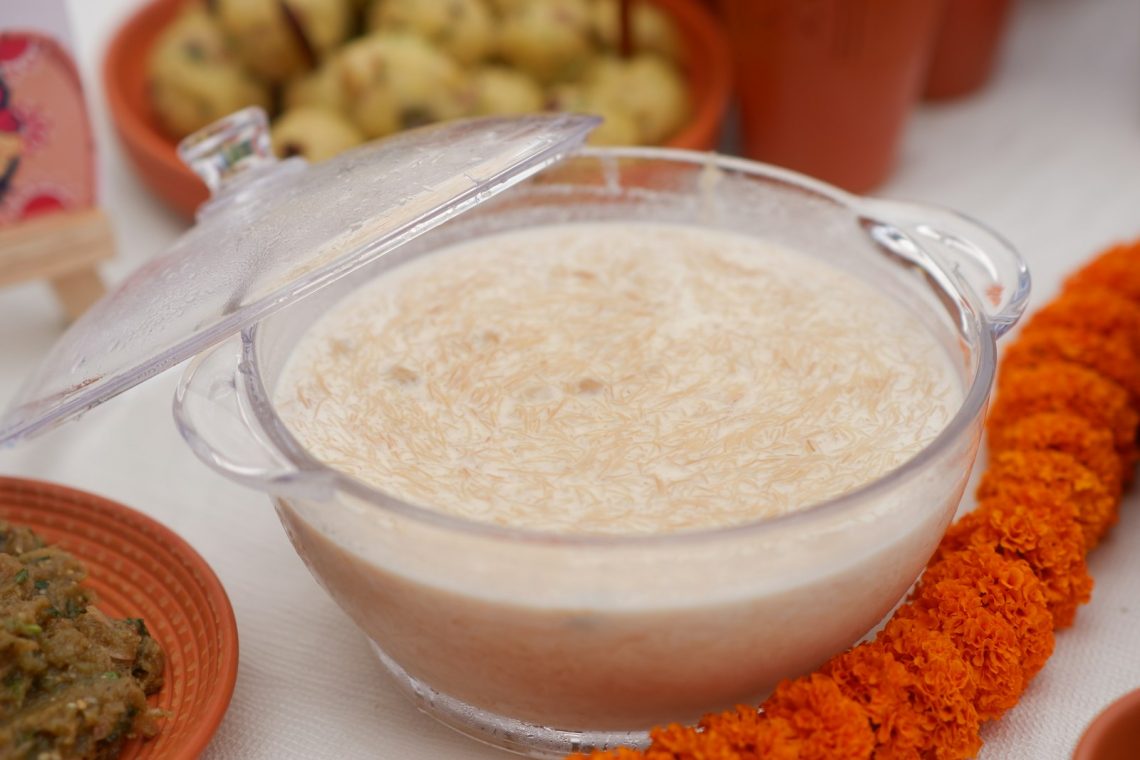
Rice pudding with evaporated milk and dried apricots is a creamy stovetop dessert with small fruit pieces and recognizable rice grains. Evaporated milk adds a concentrated dairy flavor, while ordinary milk keeps the mixture loose enough to simmer gently. Chopped apricots soften near the end instead of disappearing into the pot.
This version begins with uncooked rice and contains no eggs or sweetened condensed milk. The rice cooks partly in water before the dairy is added. That sequence gives the grains a head start and reduces the amount of time a thick milk mixture must spend over the burner.
Use a gentle simmer for creamy rice pudding
Stir the bottom
Evaporated milk concentrates easily, so scrape the base and corners regularly over low heat.
Add apricots by texture
Firm dried pieces need time to plump; very soft pieces can be folded in later to keep their shape.
Tip: Stop cooking while the pudding is slightly looser than the desired serving texture. Rice continues absorbing liquid as it cools. If reheating, restore creaminess with milk before adjusting sweetness.
Evaporated milk is the unsweetened can
Read the label carefully. Evaporated milk and sweetened condensed milk are different products. The latter contains substantial added sugar and is much thicker. Replacing one with the other would change both the sweetness and the amount of liquid in this recipe.
Use a 12-fluid-ounce can of evaporated milk, approximately 354 ml. Shake it before opening if the label instructs you to do so, and stir it if needed. The separate cup of ordinary milk is still part of the formula; do not omit it because the can already contains milk.
Ingredients and timing
- ½ cup (100 g) uncooked short- or medium-grain white rice
- 1 cup (240 ml) water
- ⅛ teaspoon fine salt
- 1 can (12 fluid ounces / 354 ml) evaporated milk
- 1 cup (240 ml) whole or 2% milk, plus a little extra for texture if needed
- ¼ cup (50 g) granulated sugar
- ⅓ cup (45 g) dried apricots, chopped into small pieces
- ¼ teaspoon ground cinnamon
- 1 teaspoon vanilla extract
Affiliate disclosure: As an Amazon Associate I earn from qualifying purchases. Paid links open Amazon search results.
Yield: four modest dessert servings. Prep: 10 minutes. Cooking: about 45 minutes. Rest before warm serving: 10 minutes; approximately 65 minutes total. Chilling for cold service adds refrigeration time. Use a heavy 2- to 3-quart saucepan (paid link), fitted lid, flexible spatula (paid link) and small serving bowls (paid link). A shallow lidded storage container (paid link) is handy for chilling leftovers.
Choose rice and apricots that suit the method
Short- or medium-grain white rice gives a creamy texture while keeping visible grains. Long-grain rice can stay more separate and may need a timing adjustment. Brown rice, instant rice and cooked leftover rice are not direct substitutes for the uncooked white rice in this method.
Rinse the rice briefly under cool water and drain well. This removes loose surface dust without requiring a long soaking step. The measured water is then added to the saucepan. If your rice package gives a notably different cooking method, take that into account rather than assuming every variety behaves identically.
Dried apricots range from soft and orange to firmer and darker. Their color alone does not determine whether they are suitable. Choose fruit that smells fresh. Weigh 45 g of dried apricots before any optional soak. If the fruit is unusually hard, soak it briefly in hot water, then drain and blot well. Cut the prepared fruit into small pieces with a knife or kitchen scissors and use the entire amount.
Cook rice pudding with evaporated milk and dried apricots
- Start the rice. Put the drained rice, measured water and salt into the saucepan. Bring to a gentle simmer, cover and reduce the heat to low. Cook for about 12–15 minutes, until most water is absorbed and the rice is partly tender.
- Add the dairy. Stir in evaporated milk, ordinary milk, sugar and cinnamon. Bring back to a gentle simmer over medium-low heat, stirring along the bottom. Do not leave the pan unattended while the milk heats.
- Cook gently. Simmer uncovered for about 15 minutes, stirring frequently. The grains should continue softening and the liquid should thicken gradually. Use a spatula to reach the corners, where milk and rice can catch.
- Add the apricots. Stir in the chopped fruit and continue cooking for another 5–10 minutes. Taste a cooled spoonful to check that the rice is tender through its center. If still firm, add a little milk and keep cooking gently.
- Finish while loose. Turn off the heat when the pudding is creamy and slightly looser than you want to serve. Stir in vanilla. The rice will continue absorbing liquid as the pudding stands.
- Rest or chill. For warm servings, wait about 10 minutes, stirring once. For cold servings, transfer to shallow containers and refrigerate promptly rather than leaving the saucepan on the counter to cool completely.
How thick should it be?
Hot pudding should slowly flow off the spoon and settle back into the saucepan. A stiff mound while still cooking will become firmer after cooling. Conversely, rice swimming in thin milk may need a little longer simmering, provided the grains are already becoming tender.
Use two checks: grain tenderness and surrounding liquid. Thick liquid does not guarantee fully cooked rice. If the grains still have a hard center, add milk in small measured amounts and continue cooking over low heat. Turning the burner high to finish faster can scorch the bottom before the rice softens.
For cold pudding, leave it especially loose before chilling. Stir in a splash of cold milk after it is thoroughly chilled if needed. Adding a large amount at once can dilute the flavor, so work a tablespoon or two at a time.
Prevent scorching and clumps
A heavy saucepan spreads heat more evenly than a thin one, but regular stirring is still necessary. Scrape across the entire base with gentle strokes rather than only circling the middle. If you notice a patch catching, lower the heat before it becomes a dark layer.
If the milk has burned, transfer the unburned upper portion to a clean pan without scraping the bottom. Stirring burned bits into the pudding spreads their flavor. A thick layer of rice stuck underneath can also mean the mixture needed more liquid or more frequent attention.
Apricot pieces can clump together when chopped. Separate them as they enter the saucepan so all four servings receive fruit. Do not whisk vigorously after the rice becomes tender, or the grains may break into a paste.
Adjust sweetness and serving style
The apricots contribute sweetness as they soften. Taste near the end before deciding to add more sugar. If you prefer a less sweet dessert, begin with 3 tablespoons sugar and adjust after cooking. Cinnamon should remain in the background; a large extra spoonful can make the dairy taste dusty.
Serve warm in small bowls or chilled in individual dishes. A few thin strips of extra apricot make an easy garnish, but keep them separate from the measured cooking fruit. For another small fruit dessert, see the canned pear crisp. The peach cobbler offers a baked alternative.
Cooling, refrigeration and reheating
Cooked rice and dairy need prompt chilling. Divide leftovers into shallow covered containers and refrigerate within two hours at 40°F / 4°C or below. Use within 3–4 days, following USDA leftover guidance. Do not rely on reheating to fix pudding left unrefrigerated beyond safe handling limits.
Reheat only the portion you need, with a splash of milk, until it reaches 165°F / 74°C. Stir during microwave or stovetop reheating so the center warms evenly. Freezing can change the rice and dairy texture, so this recipe is best planned for fresh or refrigerated servings.
Frequently asked questions
Can I use leftover rice?
The water, milk and cooking times here are designed for uncooked rice. A leftover-rice pudding requires different proportions and should start with rice that was handled and chilled safely.
Can I replace the evaporated milk with condensed milk?
No direct swap is recommended. Sweetened condensed milk adds much more sugar and is thicker, so the formula needs rebalancing.
Can I use raisins instead of apricots?
They are a reasonable dried-fruit variation by weight, with a different flavor and sweetness. Watch the final consistency because fruits absorb liquid differently.
Why is the pudding firmer the next day?
The rice continues absorbing liquid and the mixture thickens when cold. Stir in a little milk rather than assuming the batch was ruined.
Does it need eggs to thicken?
No. This version thickens through the rice and gentle reduction. Adding eggs would require a different method to prevent scrambling and ensure safe cooking.
Can I make half a batch?
Halve the ingredients and use a smaller heavy saucepan. Rice pudding with evaporated milk and dried apricots can lose moisture faster in a small quantity, so watch the texture closely.
Rice Pudding with Evaporated Milk and Dried Apricots
Ingredients
Equipment
Method
- Start the rice. Put the drained rice, measured water and salt into the saucepan. Bring to a gentle simmer, cover and reduce the heat to low. Cook for about 12–15 minutes, until most water is absorbed and the rice is partly tender.
- Add the dairy. Stir in evaporated milk, ordinary milk, sugar and cinnamon. Bring back to a gentle simmer over medium-low heat, stirring along the bottom. Do not leave the pan unattended while the milk heats.
- Cook gently. Simmer uncovered for about 15 minutes, stirring frequently. The grains should continue softening and the liquid should thicken gradually. Use a spatula to reach the corners, where milk and rice can catch.
- Add the apricots. Stir in the chopped fruit and continue cooking for another 5–10 minutes. Taste a cooled spoonful to check that the rice is tender through its center. If still firm, add a little milk and keep cooking gently.
- Finish while loose. Turn off the heat when the pudding is creamy and slightly looser than you want to serve. Stir in vanilla. The rice will continue absorbing liquid as the pudding stands.
- Rest or chill. For warm servings, wait about 10 minutes, stirring once. For cold servings, transfer to shallow containers and refrigerate promptly rather than leaving the saucepan on the counter to cool completely.