
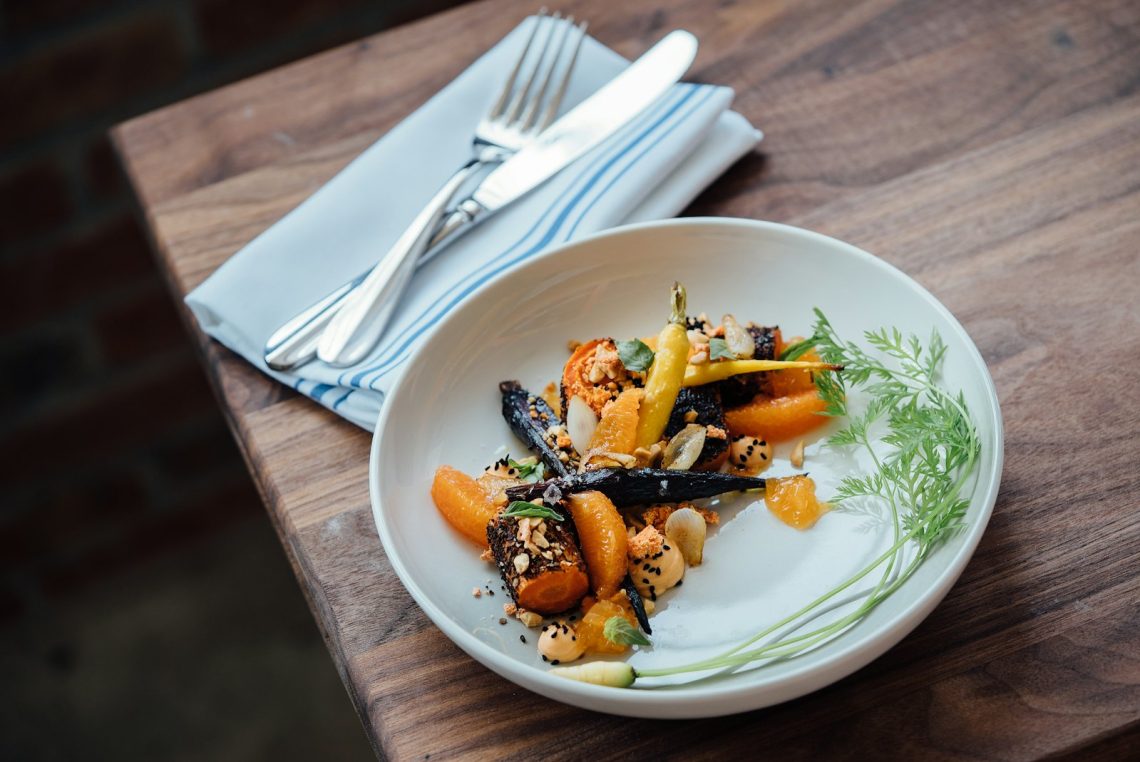
Quick Recipe Overview: This roasted carrot tahini dip blends 2 cups of oven-roasted carrots with 1/4 cup tahini, lemon juice and cumin into a sweet-savory, sesame-rich spread. Roast the carrots at 425°F until fork-tender and browned at the edges, cool them, then blend. It makes about 2 cups, enough for 8 snack servings.
Best method: Roast carrots cut into even 2-inch pieces on a hot sheet pan, cool completely, then blend with tahini added after the carrot base is smooth.
| Prep | 15 minutes | Roast | 20–25 minutes at 425°F |
|---|---|---|---|
| Cool | 15 minutes | Total | About 55 minutes (15 minutes with carrots already roasted) |
| Yield | About 2 cups / 8 servings | Diet | Vegan, dairy-free, contains sesame |
Roasted carrot tahini dip is what happens when you treat carrots the way you would treat chickpeas in hummus: cook them until soft, then blend them with tahini, lemon and cumin. About 1 to 1 1/4 pounds of raw carrots roast down to roughly 2 cups, and that becomes a thick, bright orange dip with a nutty sesame finish.
It is a good fit for anyone who wants a dip that is naturally dairy-free and egg-free, for snack plates, lunch boxes and party trays. Unlike our chickpea roasted carrot dip with cumin, this version has no beans at all, so the carrot flavor and the tahini carry the whole bowl. The texture is lighter and silkier, and the taste is sweeter.
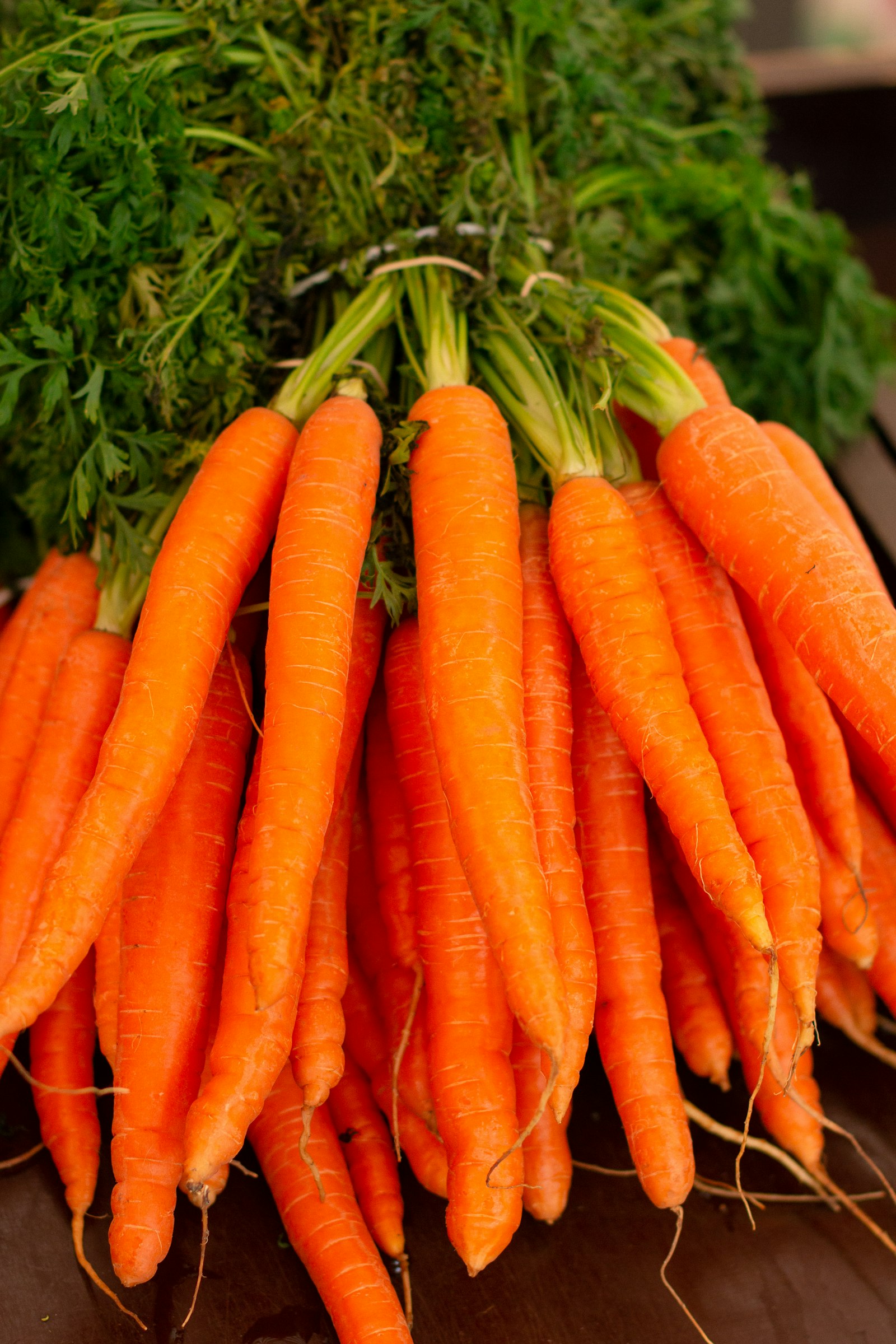
Equipment
- Rimmed sheet pan: a large one gives the carrots room to brown instead of steam.
- Parchment paper (optional) for easy cleanup.
- Food processor or blender: a food processor handles thick dips best. A sturdy fork or potato masher works for a rustic version.
- Silicone spatula for scraping the bowl.
- Measuring cups and spoons, and a small skillet if you toast your own sesame seeds.
Ingredients, substitutions and allergens
| Ingredient | Amount | Why it matters / swaps |
|---|---|---|
| Roasted carrots, cooled | 2 cups (from about 1–1 1/4 lb raw carrots) | The base and the sweetness. Roasting concentrates flavor. Leftover roasted carrots work perfectly. |
| Olive oil for roasting | 1 tablespoon | Helps the carrots brown. Any neutral oil works. |
| Tahini | 1/4 cup | Body, creaminess and sesame flavor. Stir the jar well first. Sunflower seed butter is a sesame-free swap with a stronger taste. |
| Lemon juice | 2 tablespoons | Balances the carrot sugars. Lime juice or 1 tablespoon cider vinegar can stand in. |
| Water | 3 tablespoons, plus more as needed | Loosens the dip. Ice-cold water makes tahini blends a little fluffier. |
| Ground cumin | 1/2 teaspoon | Earthy warmth. Smoked paprika or ground coriander are good alternatives. |
| Olive oil, to finish | 1 tablespoon | Drizzled on top for shine and richness. |
| Toasted sesame seeds | 2 tablespoons | Crunch on top. Chopped toasted pumpkin seeds work too. |
| Fine salt | 1/4 teaspoon, to taste | Bring up the sweetness. Add after tasting. |
| Black pepper | 1/4 teaspoon | Gentle heat. A pinch of Aleppo pepper or chili flakes is a nice extra. |
Allergens: contains sesame (tahini and sesame seeds). The recipe has no milk, eggs, wheat, soy, peanuts, tree nuts, fish or shellfish, but check the labels on your tahini and anything you serve with it, such as crackers or pita, which usually contain wheat.
Why it works: roasting and tahini
Raw or boiled carrots taste mild and watery in a dip. Roasting at a high 425°F drives off moisture and browns the cut surfaces, which deepens the flavor and makes the carrots taste sweeter. Less water in the carrots also means a thicker dip that holds a swirl on the plate.
Tahini is ground sesame paste with plenty of natural oil. When you blend it with lemon juice and a little water, it first tightens up and then turns creamy. That is why the method blends the carrot base first, then adds the tahini, then adjusts the water at the end. Adding all of the water at the beginning is the most common reason a carrot dip turns out runny.
Cumin and lemon are the classic hummus partners for tahini, and they work with carrots for the same reason: the acid cuts through the richness, and the cumin keeps the sweetness from tasting like dessert.
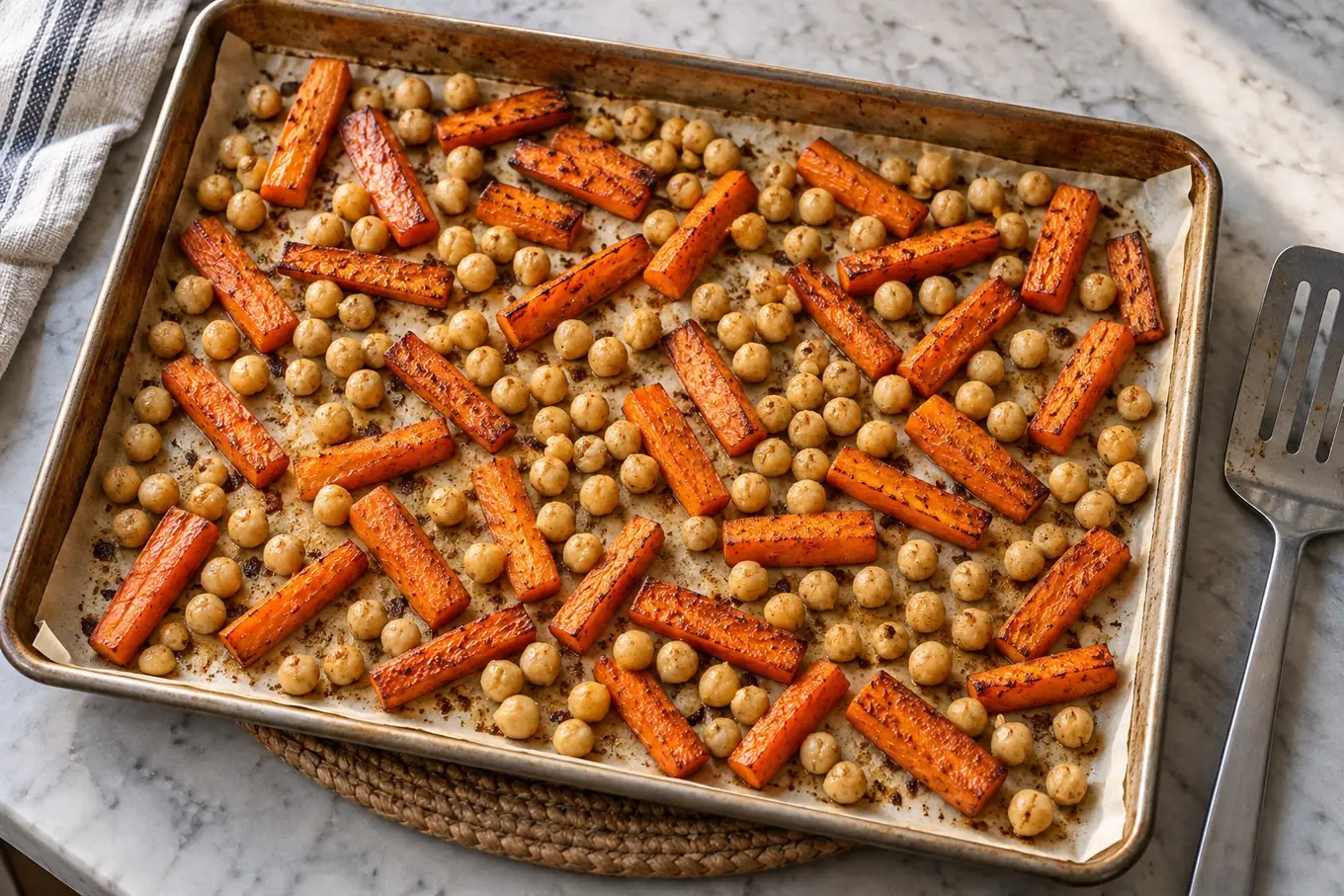
Step-by-step method
- Heat the oven (about 10 minutes). Set the oven to 425°F with a rack in the center. Line a rimmed sheet pan with parchment if you like.
- Cut the carrots (5 minutes). Peel or scrub 1 to 1 1/4 pounds of carrots. Cut them crosswise into roughly 2-inch pieces and halve any very thick pieces lengthwise so all the pieces are about the same size. Cue: pieces of similar thickness, so they finish together.
- Roast (20–25 minutes). Toss the carrots with 1 tablespoon olive oil and spread them out in a single layer. Roast, stirring once halfway. Cue: a fork slides into the thickest piece with no resistance and the edges are lightly browned. Thicker carrots can take a few minutes longer.
- Cool (about 15 minutes). Let the carrots cool on the pan until just warm or at room temperature. Cue: no steam rises when you break a piece open. Hot carrots make a looser, oilier dip.
- Blend the base (1–2 minutes). Measure 2 cups of the roasted carrots into the food processor. Add the lemon juice, 3 tablespoons water and the cumin. Process until mostly smooth, scraping the bowl once. Cue: a thick orange purée with only tiny flecks.
- Add the tahini (1 minute). Add 1/4 cup well-stirred tahini and process for about 1 minute. Cue: the dip turns paler, creamier and smoother.
- Season and adjust (2 minutes). Taste, then add the salt and pepper. If the dip is too thick to swirl, add water 1 teaspoon at a time and pulse. Cue: it holds soft peaks on a spoon and slowly slumps.
- Finish and serve. Spread into a shallow bowl, make a swirl with the back of a spoon, drizzle with 1 tablespoon olive oil and scatter with the toasted sesame seeds. Refrigerate right away if you are not serving it now.
Make-ahead timeline: roast the carrots up to 3 days ahead and refrigerate them. On the day, let them sit out for 10–15 minutes so they blend smoothly, then follow steps 5–8. The whole dip can also be made a day ahead; add the oil and sesame seeds just before serving.
Food safety: this is a cold dip, so the main risks are time at room temperature and leftovers. Refrigerate the roasted carrots and the finished dip within 2 hours (within 1 hour if it is above 90°F), keep the fridge at 40°F or below, and use leftovers within 3 to 4 days. For parties, set out a small bowl and refill with a fresh one from the fridge instead of topping up the old bowl. See the USDA’s guidance on leftovers and food safety and FoodSafety.gov’s cold storage chart.
Troubleshooting
| Problem | Likely cause | Fix |
|---|---|---|
| Dip is runny | Too much water added early, or carrots steamed instead of roasted | Blend in a few more roasted carrots or 1 tablespoon more tahini. Next time add water at the end only. |
| Grainy or fibrous texture | Carrots under-roasted | Roast until a fork slides in easily. Process an extra minute, or push through a sieve for a very smooth finish. |
| Bitter aftertaste | Old or bitter tahini, or burnt carrot edges | Taste the tahini first. Add a little more lemon and salt; trim very dark pieces before blending. |
| Tastes flat | Not enough salt or acid | Add salt a pinch at a time and another teaspoon of lemon juice. |
| Too sweet | Very sweet carrots | Add more cumin, black pepper or a pinch of chili flakes, plus extra lemon. |
| Oily surface | Carrots blended hot, or tahini not stirred | Cool the carrots fully and stir the tahini jar well before measuring. Chill the dip, then stir. |
| Dip thickened in the fridge | Tahini firms up when cold | Stir in water 1 teaspoon at a time before serving. |
What to serve with it
Serve it with cucumber spears, sliced bell peppers, radishes, crackers, warm pita or toasted bread. It also works as a sandwich spread or a base under roasted vegetables.
- Set it next to our roasted red pepper walnut dip for a two-dip platter with very different flavors.
- Make it part of a carrot-themed lunch with a bowl of carrot ginger soup with red lentils.
- If you want more protein in the bowl, try the bean-based chickpea roasted carrot dip with cumin.
Make-ahead, storage and reheating
Refrigerator: store the dip in an airtight container for up to 3 days for the best flavor, and no longer than the USDA’s 3–4 day limit for leftovers. Press plastic wrap onto the surface to keep it from drying out. Keep the garnish separate so the sesame seeds stay crisp.
Freezer: the roasted carrots freeze well for a few months in a freezer bag. The finished dip can be frozen, but tahini blends can turn a little grainy after thawing; thaw in the fridge and re-blend with a splash of water.
Reheating: this dip is meant to be served cold or at cool room temperature, so there is nothing to reheat. If you want it warm, heat it gently and use it the same day; reheat any leftovers to 165°F, following the USDA leftovers guidance.
Frequently asked questions
Can I use raw carrots?
Not for this recipe. Raw carrots stay gritty and taste much milder. If you are short on time, steam carrots until very tender, then dry them well, though the flavor will be less deep than roasted.
Can I use baby carrots?
Yes. Leave them whole, toss with oil and roast until tender and lightly browned. They may need a little longer because they are thick.
Can I make it without a food processor?
Yes. A high-speed blender works with an extra tablespoon of water. For a rustic dip, mash very tender carrots with a fork or potato masher, then stir in the tahini and lemon.
How is this different from hummus?
Hummus is built on chickpeas. This dip uses roasted carrots as the base, so it is lighter, sweeter and has no beans.
What can I use instead of tahini?
Sunflower seed butter is the closest sesame-free swap. Thick Greek yogurt also works, but the dip is no longer dairy-free and will taste tangier.
Why did my dip thicken in the fridge?
Tahini firms up when it is cold. Stir in water a teaspoon at a time until it loosens.
How long can it sit out at a party?
No more than 2 hours, or 1 hour if it is hotter than 90°F. Serve a small bowl and swap it for a fresh one from the fridge.
Is roasted carrot tahini dip vegan?
Yes, as written it is vegan and dairy-free. Check the labels on anything you serve alongside it.
Recommended tools
- 8- to 12-cup food processor for silky dips
- Rimmed half-sheet pan for roasting vegetables
- Silicone spatulas for scraping every bit out of the bowl
As an Amazon Associate I earn from qualifying purchases.
The bottom line
Roast the carrots until they are truly tender, blend the carrot base before adding the tahini, and add water only at the end. Do that and you get a sweet, nutty, dairy-free dip that keeps for a few days and makes vegetables disappear fast.
Roasted Carrot Tahini Dip
Yield: about 2 cups (8 servings) | Prep: 15 min | Roast: 20–25 min | Cool: 15 min | Total: about 55 min
Ingredients
- 1 to 1 1/4 lb carrots (to make 2 cups roasted carrots, cooled)
- 1 tablespoon olive oil, for roasting
- 1/4 cup tahini, well stirred
- 2 tablespoons lemon juice
- 3 tablespoons water, plus more as needed
- 1/2 teaspoon ground cumin
- 1 tablespoon olive oil, to finish
- 2 tablespoons toasted sesame seeds
- 1/4 teaspoon fine salt, or to taste
- 1/4 teaspoon black pepper
Instructions
- Heat the oven to 425°F. Cut the carrots into even 2-inch pieces, halving thick ones lengthwise.
- Toss with 1 tablespoon olive oil, spread in a single layer and roast 20–25 minutes, stirring once, until fork-tender and lightly browned.
- Cool about 15 minutes, until just warm or at room temperature.
- Process 2 cups roasted carrots with the lemon juice, 3 tablespoons water and cumin until mostly smooth.
- Add the tahini and process about 1 minute until creamy.
- Season with salt and pepper. Add water a teaspoon at a time if too thick.
- Swirl into a bowl, drizzle with olive oil and top with sesame seeds. Refrigerate within 2 hours.
Notes
Contains sesame. Keeps up to 3 days refrigerated; stir in a little water if it firms up. Roasted carrots can be made 3 days ahead.




