
You can make roasted shallot vinaigrette without a blender using nothing more than a small baking dish, a fork and a bowl. Roast halved shallots covered and then uncovered until they are soft enough to flatten with light pressure, chop them across their layers, mash them with sherry vinegar, water, Dijon and seasoning, and stir in olive oil. The result is a sweet, savory, spoonable dressing with small soft pieces of shallot, perfect for potatoes, beans, roasted vegetables and grain bowls. It is intentionally textured rather than silky smooth.
Affiliate disclosure: As an Amazon Associate I earn from qualifying purchases. The paid links below open Amazon search results so you can compare suitable tools.
At a glance
- Yield: about 1 cup (roughly 235 ml)
- Oven: 400°F, 20 minutes covered plus 10–15 minutes uncovered
- Total time: about 55–60 minutes, mostly hands-off
- Texture: spoonable, with small soft shallot pieces
- Keeps: 3–4 days in the refrigerator
Why roasted shallot vinaigrette without a blender works
Raw shallots are sharp and crunchy, so a raw shallot dressing usually relies on very fine mincing or a blender. Roasting changes them completely. Gentle heat softens the cell walls, mellows the pungent sulfur compounds and develops natural sweetness. Once a shallot is truly tender all the way through, a fork can break it down into a soft paste with small pieces, no machine needed.
The two-stage roast is the key. Covering the dish for the first 20 minutes traps steam from the added tablespoon of water, which softens the centers evenly. Uncovering for the last 10–15 minutes lets that moisture escape so the cut faces pick up light golden color and a little caramel flavor. Cooking uncovered from the start often gives you shallots that look browned on the outside but are still too firm in the middle to mash.
The mashed shallot also acts as a natural thickener. Its soft solids, helped by a teaspoon of Dijon mustard, hold the oil and vinegar together far better than a plain oil-and-vinegar dressing, so the vinaigrette clings to potatoes and beans instead of pooling at the bottom of the bowl.
Ingredients and equipment notes
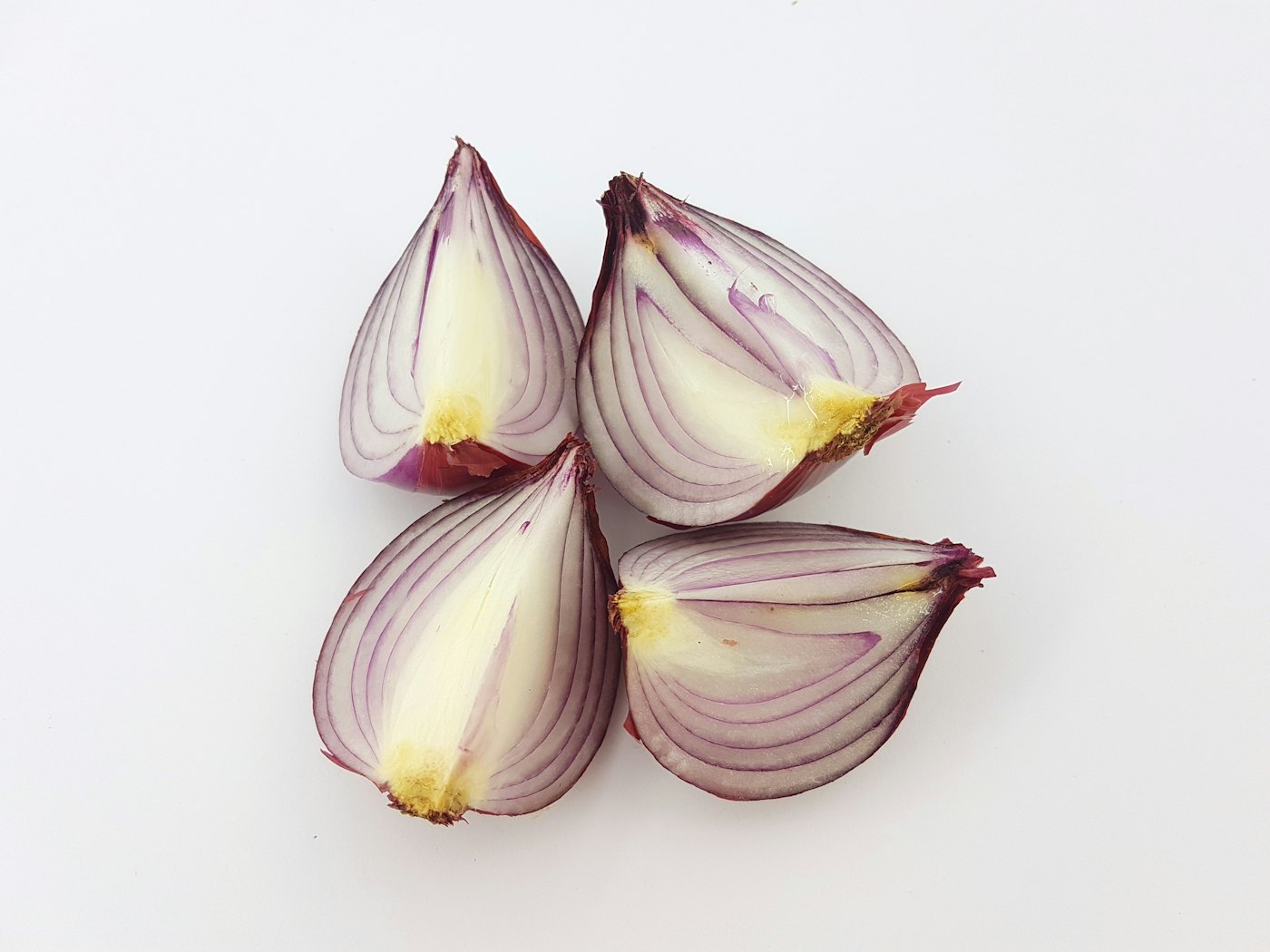
- Shallots (6 ounces / 170 g, peeled and trimmed): Choose firm bulbs without soft spots or green sprouts. Halve them lengthwise and separate large double bulbs. Quarter any piece that is much thicker than the rest so the batch softens at the same pace.
- Olive oil (3 tablespoons, divided): One tablespoon coats the shallots for roasting and two tablespoons go into the dressing. A mild extra-virgin olive oil works well.
- Sherry vinegar (2 tablespoons): Rounded, slightly nutty acidity that suits roasted shallots. Red wine vinegar is the closest substitute; white wine vinegar works but tastes sharper and lighter.
- Water (1 tablespoon for roasting, 2 tablespoons for the dressing): Steam softens the shallots, and water loosens the dressing without adding more oil.
- Dijon mustard (1 teaspoon): Adds tang and helps hold the dressing together.
- Salt and pepper: 1/4 teaspoon fine salt, divided, and 1/8 teaspoon freshly ground black pepper.
For equipment, a small oven-safe baking dish (paid link), around 8 inches square, keeps the shallots snug so they steam instead of drying out. A small mixing bowl (paid link) gives you a firm surface to mash against, and a glass dressing jar with a lid (paid link) makes refrigerator storage and re-mixing easy. You will also need foil or an oven-safe lid, a sharp knife, a fork and measuring spoons.
Tip: the fork test beats color. Press a fork into the thickest shallot half. It should sink in with almost no effort and the piece should flatten against the dish. If the outside is golden but the center resists, add a teaspoon of water, cover again and roast 5 more minutes.
Roasted shallot vinaigrette without a blender recipe
Roasted Shallot Vinaigrette Without a Blender
Ingredients
Equipment
Method
- Heat the oven. Set the oven to 400°F. Peel and trim the shallots, keeping the layers together where practical, and halve lengthwise. If one piece is much thicker than the others, cut it into a quarter so the batch softens at a similar pace.
- Start covered. Put the shallots in the small baking dish and coat with 1 tablespoon of the olive oil and half the salt. Add the tablespoon of roasting water. Cover with foil or an oven-safe lid and roast for 20 minutes.
- Uncover and color. Carefully remove the cover, directing steam away from you. Turn the pieces if needed so they sit against the dish. Roast uncovered for another 10–15 minutes, until lightly golden and very soft through the center. A fork should press into the thickest piece easily.
- Cool and chop. Let the shallots cool for about 10 minutes. Transfer them and any usable oily pan juices to a board or bowl. Chop across any long intact layers, then mash thoroughly with a fork. The base should be soft with small pieces, not long slippery strands.
- Build the dressing. Stir in the sherry vinegar, the 2 tablespoons dressing water, Dijon, remaining salt, and pepper. Add the remaining 2 tablespoons olive oil gradually, stirring firmly with the fork until the mixture is evenly combined.
- Adjust the texture. Taste on a piece of the food you plan to dress. Add water 1 teaspoon at a time if needed for easier spooning. Use a portion immediately or transfer to a covered container and refrigerate promptly. Stir before serving after storage.
Notes
Step-by-step method
- Heat the oven and prep the shallots. Set the oven to 400°F. Peel and trim the shallots, keeping the root end intact where you can so the layers stay together, then halve lengthwise. Quarter any oversized pieces.
- Roast covered. Place the shallots cut side down in the small baking dish. Toss with 1 tablespoon olive oil and half the salt, then add 1 tablespoon water. Cover tightly with foil or a lid and roast for 20 minutes.
- Uncover and color. Remove the cover carefully, tilting it away from you to release the steam. Roast uncovered for 10–15 minutes more, until the cut faces are lightly golden and a fork slides into the thickest piece easily.
- Cool and chop. Let the shallots cool for about 10 minutes. Move them and any golden, oily pan juices to a board. Leave behind any blackened bits. Chop across the layers to shorten long strands.
- Mash. Transfer to the bowl and press and drag a fork against the side until the shallots form a soft, chunky paste with small pieces.
- Build the dressing. Stir in the sherry vinegar, 2 tablespoons water, Dijon, the remaining salt and the pepper. Add the remaining 2 tablespoons olive oil a little at a time, stirring firmly with the fork until evenly combined.
- Taste and adjust. Taste on a piece of the food you plan to dress, not straight from the spoon. Loosen with water, 1 teaspoon at a time, until it spoons easily. Use right away or refrigerate promptly in a covered container.
How to mash shallots by hand for a smoother vinaigrette
Texture depends almost entirely on how soft the shallots are before you start. Fully tender shallots break down in a minute or two of fork work; slightly firm ones stay chunky no matter how long you stir. If you want a finer texture, take two extra steps: chop the roasted shallots finely with a sharp knife before mashing, and sprinkle the remaining salt over them on the board, then press with the flat of the knife. The salt acts as a gentle abrasive and helps them collapse.
Always add the vinegar and water before the last of the oil. The liquids loosen the mash so the mustard and seasoning spread evenly, and the oil then blends into a uniform base instead of slicking over large pieces. The dressing may separate a little as it rests; a quick stir brings it back. Because of the shallot pieces, it is better served from a spoon or a wide-mouth jar than a squeeze bottle.
Troubleshooting your roasted shallot vinaigrette
| Problem | Why it happens | Fix |
|---|---|---|
| Shallots will not mash | Centers were not fully tender | Return to the dish with a teaspoon of water, cover and roast 5 more minutes. |
| Long slippery strands | Layers were not cut across | Chop the mash finely with a knife; more liquid will not shorten them. |
| Too thick to spread | Shallots stayed moist or yield was high | Stir in water 1 teaspoon at a time. |
| Too sharp or acidic | Shallots shrank more than usual | Stir in a teaspoon of olive oil and taste on the food again. |
| Bitter or harsh edge | Burnt pan residue was added | Next time leave blackened bits behind and check color sooner. |
| Separated after chilling | Olive oil firms up when cold | Let it stand 10–15 minutes, then stir well. |
Variations
- Herb finish: stir in 1 tablespoon finely chopped parsley or 1 teaspoon fresh thyme leaves just before serving.
- Red wine version: swap the sherry vinegar for the same amount of red wine vinegar.
- Lemon version: replace half the vinegar with fresh lemon juice and add a little grated zest.
- No mustard: leave out the Dijon; the dressing separates sooner but the shallot still gives it body.
- Half batch: halve everything, use a very small dish and about 2 teaspoons roasting water, and check tenderness early.
- Onion instead of shallot: possible, but onion pieces are larger and roast differently, so judge by the fork test rather than the timing.
Avoid thick balsamic glaze as a swap; it changes both the acidity and the consistency. If you want to add raw garlic, use a small amount and keep the dressing refrigerated on the same short timeline.
Serving ideas and how much to use
This vinaigrette has more body than a thin dressing, so it shines on sturdy foods that small pieces can cling to. Toss it with warm potatoes, cooked white beans or lentils, roasted carrots, green beans, cauliflower or a grain bowl. It is also good spooned over grilled chicken or fish. For tender lettuces, loosen it with a little extra water and use a light hand. It works beautifully in place of the usual dressing in a potato, green bean and white bean salad without mayo.
| Food | Starting amount | Note |
|---|---|---|
| 1 cup cooked beans | 2 tablespoons | Add a teaspoon of water if too thick. |
| 1 pound cooked potatoes | 1/4 cup | Fold in while warm, then taste after a few minutes. |
| Small tray roasted vegetables | 3–4 tablespoons | Spoon over after roasting. |
| Two side salads | 1–2 tablespoons total | Thin slightly and toss gently. |
Storing roasted shallot vinaigrette safely
Homemade vinaigrette with cooked vegetables is not shelf-stable. Transfer it to a clean covered container and refrigerate at 40°F or below within 2 hours of making it, or within 1 hour if the room or outdoor temperature is above 90°F. Use it within 3–4 days. Olive oil thickens and may cloud when cold, so let the jar stand at room temperature for 10–15 minutes and stir before serving, then return the rest to the refrigerator promptly. Do not freeze it; the texture of the shallots and the emulsion suffers.
Food-safety note: vinegar does not make this dressing safe at room temperature. Mixtures of oil with cooked vegetables, garlic or herbs belong in the refrigerator. If you dress leftover cooked potatoes or beans, reheat those leftovers to 165°F first if serving them warm, then add the dressing. See the USDA guidance on leftovers and food safety for more detail.
Make-ahead tip: roast the shallots up to 3 days ahead, cool and refrigerate them in a covered container, then mash and finish the dressing when you need it. Cold shallots take a little more fork work, so let them warm slightly first.
Frequently asked questions
Can roasted shallot vinaigrette without a blender be completely smooth?
Not quite. A fork and knife give an even, finely textured dressing with small soft pieces. For a perfectly smooth puree you would need a blender or immersion blender.
Do I have to use foil?
No. Any oven-safe lid that fits the dish works for the covered stage. Just remove it for the final 10–15 minutes so the shallots can color.
Why not roast the shallots on a sheet pan?
A small batch spread across a large pan dries out at the edges before the centers soften. A snug dish holds the steam around the shallots during the covered stage.
How long does it keep?
Refrigerate within 2 hours (1 hour above 90°F) in a covered container and use within 3–4 days. Stir before each use.
Can I use this as a marinade?
You can, but marinate meat in the refrigerator and discard any marinade that touched raw meat. Set aside a clean portion before marinating if you want some for serving.
Can I warm the dressing?
A gentle warm-up with the food it is dressing is fine; it does not need to boil. It is most flavorful at cool room temperature.
Conclusion
Roasted shallot vinaigrette without a blender is proof that a fork and a little patience can do a machine’s job. Roast the shallots covered and then uncovered until they collapse at a touch, chop across the layers, mash with sherry vinegar, water and Dijon, and stir in olive oil. You get a sweet, tangy, textured dressing that clings to potatoes, beans and roasted vegetables. Keep it refrigerated, use it within a few days, and stir before every serving.




