At the stove / Better sausage, one link at a time
A browned casing and a safely cooked center do not always arrive together. One sausage can be ready while the link beside it still needs several minutes. The trick is to give browning and doneness separate jobs, then take each link out when its own center is ready.
This guide turns the sausage done temp into a practical cooking plan: how to get a reliable reading, what to do when the outside gets ahead of the middle, and how to finish dinner without leaving the sausage sizzling while everything else catches up.
Sausage done temp: the quick answer
Check the center of each link or patty.
Also use this target for mixtures containing poultry.
Reheating home-cooked leftovers? Use 165°F. For commercially fully cooked sausage, follow its package directions. The 145°F rule for a whole pork chop does not apply to raw ground sausage.
Temperature references: FoodSafety.gov safe minimum temperatures and USDA sausage guidance.
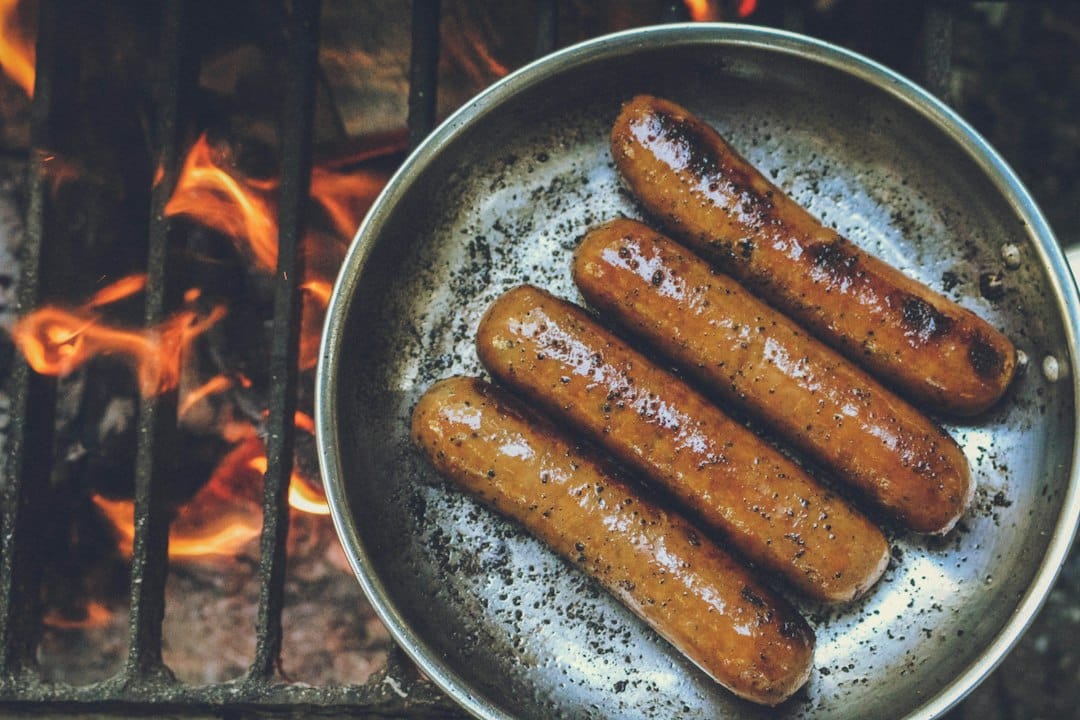
Read two parts of the package before you cook
First, find the cooking status: raw, cook before eating, fully cooked, or ready to eat. Then read the meat ingredients. “Italian,” “bratwurst,” and “smoked” describe a style or process; those words do not settle both questions. A smoked link can still need full cooking, and a pork blend containing turkey needs the poultry temperature.
For the skillet recipe below, choose four refrigerated, fully thawed fresh pork links, about 4 ounces each. Small breakfast links, frozen links, and precooked kielbasa have different cooking needs. Keep the product’s instructions with the sausage and follow any specific directions.
A useful freezer habit: Photograph the ingredient list and cooking directions before discarding a large package. Label divided portions with the date, meat type, and “raw” or “cooked.” That saves you from guessing what an unmarked bag contains a month later.
Two checks, four decisions: look at the casing, then read the center
Use this table while you cook. It keeps a darker crust from becoming the reason you overcook an already finished link.
| Outside | Center | Your next move |
|---|---|---|
| Pale | Below its target | Keep cooking gently. Turn and reposition the link; there is still time for color to develop. |
| Well browned | Below its target | Lower the heat and keep cooking. On a grill, move it to indirect heat. A harder sear will darken the outside further. |
| Lightly browned | At its target | It is cooked. Transfer it to a clean plate rather than chasing an extra-dark crust. |
| Well browned | At its target | Remove that link now. Let the slower links finish separately. |
If the casing is browned but the middle is still cool, do not turn the burner up. Reduce the intensity so cooking can continue without scorching. If the sausage reaches its target while still fairly pale, a flavorful finish can add interest without another long stretch in the pan.
Get a useful reading from a narrow sausage
- Find the thermometer’s sensing area. Read its required insertion depth. A thin digital probe is easier to position in a small link than a long dial-thermometer stem.
- Aim through the side toward the thickest center. Position the sensing area inside the meat, away from the pan or grate. Angle along the link if needed to fit the required depth; do not let the tip exit the other side.
- Wait for a stable reading. If the probe is too shallow or touches the hot pan, reposition it. A sudden high number is a reason to check placement, not permission to stop cooking.
- Check every link. Different sizes and pan positions can finish at different times. Clean the probe as its manufacturer directs after contact with undercooked meat, and use clean utensils for cooked sausage.
The placement and individual-piece checks follow USDA food thermometer guidance.
Do not average two readings. If one properly measured center is below the required temperature, keep cooking that link and check again. The hotter sausage beside it cannot compensate for it. Do not remove raw sausage below its target and count on predicted carryover heat to finish the job.
A calmer skillet method: a gentle start, then a short finish
The printable recipe uses a little water at the beginning, followed immediately by an uncovered finish. This gives you a way to manage the center before the casing spends too long against a dry, hot pan. The timing is an estimate; the thermometer decides when to stop.
- Start cool, with room between the linksPut the sausage, measured water, and oil into the skillet before heating it. Do not prick the casings with a fork. Keep the links in one layer so you can turn and check each one.
- Maintain a gentle covered simmerBring the water to a simmer, lower the heat, and cover. Turn the links partway through. Vigorous boiling or a smoking pan calls for less heat.
- Uncover and pay attention to the change in soundAs water evaporates, the pan changes from bubbling to sizzling. That is your cue to watch the surface more closely and turn the links regularly. It is a heat-management cue, not a doneness test.
- Finish each link on its own scheduleMeasure every center and remove the finished links individually. If a link reaches its temperature during the covered stage, it can come out then; it does not need every remaining minute in the recipe.
Small adjustments that prevent an entire batch from drying out
- Shop by thickness as well as weight. Four evenly sized links are easier to manage than a pan containing one very thick sausage and three thin ones. If sizes differ, start checking the smaller links early.
- Move the sausage, not just the tongs. Turn links and exchange their pan positions as they cook. A burner can create a hot center or one particularly hot edge; the largest link is not automatically the coldest.
- Keep sweet finishes off the hot pan. Maple syrup, honey, and sweet barbecue sauces can darken quickly. Add a small amount after the sausage is safely cooked instead of using a sticky glaze to judge progress.
- Use a clean plate as a finish line. Have it ready before the first temperature check. Removing a finished link is easier when you are not searching for somewhere to put it.
- Treat a split casing as a texture problem. Reduce excessive heat and turn gently, but still check the center. A split, firm skin, or clear juices cannot establish safe doneness.
Three ways to change the flavor after cooking
Choose one finish for four links. These small additions let the sausage leave the heat when it is ready while giving dinner a different character.
Apple–mustard spoon sauce
Stir together ¼ cup unsweetened applesauce, 1 tablespoon Dijon mustard, and 1 teaspoon apple cider vinegar. Add 1 teaspoon maple syrup if you prefer a softer tang. Serve alongside pork sausage, potatoes, or cabbage. The quantities are also included as an optional group in the printable recipe.
Lemon–parsley finish
Mix 2 tablespoons chopped parsley, 1 teaspoon finely grated lemon zest, 2 teaspoons lemon juice, and 1 teaspoon olive oil. Spoon over the finished links. This is a bright option for fennel-seasoned Italian sausage; taste before adding salt because the sausage is already seasoned.
Pickle–mustard relish
Combine 2 tablespoons finely chopped dill pickle, 1 tablespoon whole-grain mustard, and 1 teaspoon pickle brine. Offer it with sausage rolls or potato bowls. Keep the condiment on the side for anyone who prefers a milder bite.
Make the rest of dinner ready before the final check
Dry sausage is sometimes a scheduling problem: it finishes, then sits in a hot skillet while the potatoes catch up. Start the slowest side first and aim to have plates and condiments ready when the links finish.
- Before the sausage goes in: start rice, potatoes, or another long-cooking side. Our rice cooking guide helps you choose a variety and its schedule.
- During the gentle covered stage: mix a finishing sauce, prepare a salad, and put out clean plates.
- During the uncovered finish: focus on the links. Finish the side dishes on their own heat source instead of crowding them into the sausage pan.
For a heartier plate, serve freshly cooked sausage alongside sheet pan gnocchi with frozen green beans. Or spoon warmed white beans and tomato sauce into bowls and add the sausage after it reaches its safe temperature.
Taking the same idea to the grill
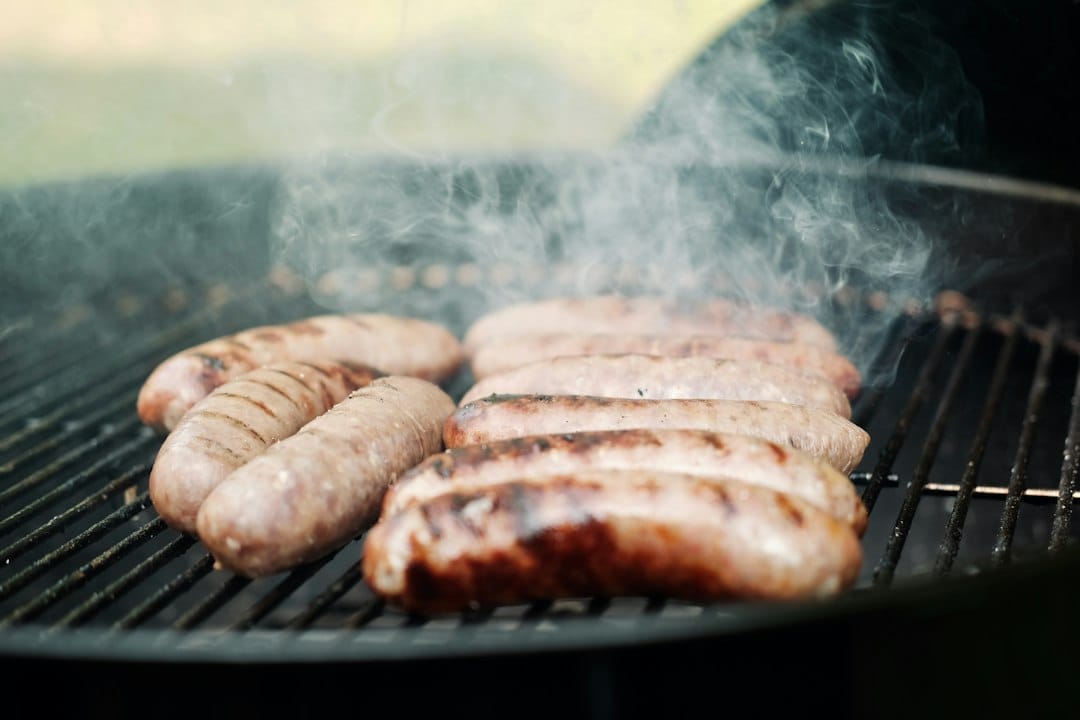
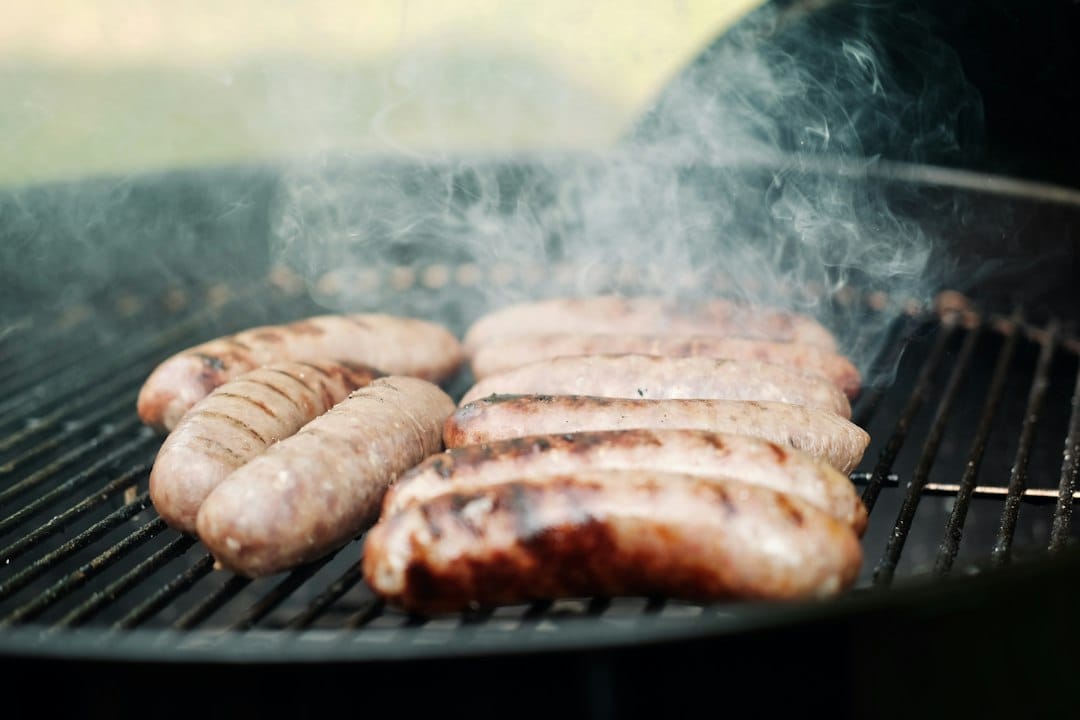
Set up a gentler indirect area and a hotter direct area. Use the gentler side when the center needs more cooking, and use direct heat briefly for color when appropriate. Check each link with a thermometer. The skillet recipe’s minute estimates do not transfer directly to a grill, and grill marks do not reveal the center temperature.
Leftovers have a different temperature target
Keep fresh raw sausage refrigerated at 40°F or below and cook or freeze it within 1–2 days. Refrigerate home-cooked sausage in shallow containers within 2 hours, or within 1 hour when the surroundings exceed 90°F. Use those cooked leftovers within 3–4 days and reheat to 165°F. The initial 160°F pork-sausage target does not replace the leftover reheating target.
For gentler reheating, put the portion you need in a cool skillet with a small splash of water, cover, and heat until each center reaches 165°F. Add the water before the pan becomes hot. In a tomato or bean dish, check the sausage itself; bubbling sauce alone does not prove that its center is hot enough.
Storage and cooling references: FoodSafety.gov cold storage chart and USDA leftover guidance.
Write this on the container: “Cooked: [date] · Use within 3–4 days · Reheat to 165°F.” If you are making food ahead, fully cook it before chilling. Do not refrigerate partly cooked sausage to finish later.
Questions that come up at the stove
Can sausage be pink when it is done?
Color alone cannot tell you. A sausage can retain some pink after reaching its safe temperature, and a browned interior can still be undercooked. Verify the center with a correctly placed thermometer.
What if I do not have a thermometer?
There is no dependable visual substitute for measuring the center. Cutting a link, checking the juices, or squeezing it cannot confirm its temperature. Use a suitable food thermometer and follow the product’s cooking directions.
Should I pierce sausage before cooking?
Do not repeatedly prick the casing to release juices. Turn links with tongs. A deliberate thermometer check is different: it gives you the information needed to stop cooking safely.
Can I use chicken sausage in this skillet recipe?
Use raw, thawed links and follow their package directions. Every center must reach 165°F, and the timing may differ. Fully cooked chicken sausage needs the reheating instructions on its label rather than the raw-link schedule.
Can I double the recipe?
Use two roomy skillets or cook complete batches. Do not pile eight links into a pan that only comfortably holds four. Doubling the amount does not mean doubling the cooking time; check each link individually.
Why did the sausage turn dry even though I used the right temperature?
The reading tells you when the center reaches its target; it cannot undo earlier overcooking. Check sooner, reduce aggressive heat, and take finished links out individually. Very lean sausage and prolonged hot holding can also produce a drier result.
Printable recipe: Gentle Skillet Sausage
Four fresh pork links, a measured splash of water, and a controlled finish. Use the card’s Print Recipe button for the ingredients, equipment, eight steps, and notes. Allow about 33 minutes including preparation and a short serving rest; the cooking time varies with the links and pan.
THE COMPLETE RECIPE
Gentle Skillet Sausage
Yield: 4 servings (1 large link each)
Ingredients
For the sausage
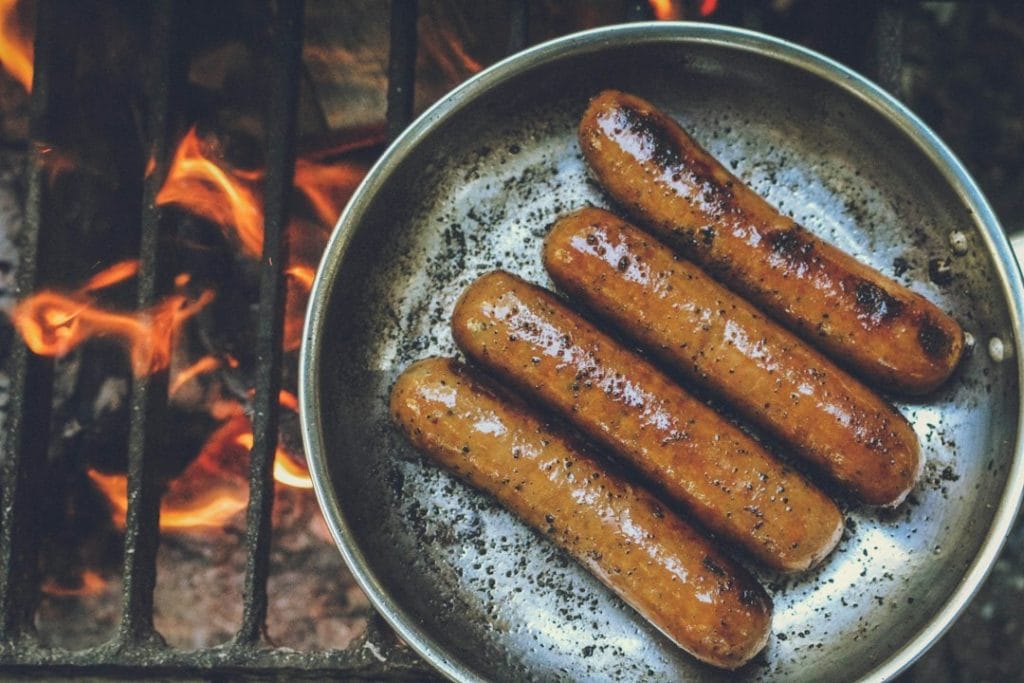
- 4 fresh pork sausage links About 1 pound total, approximately 4 ounces each; refrigerated and fully thawed. Use pork Italian sausage or fresh pork bratwurst without poultry.
- 1/2 cup water Add to the cool skillet before heating.
- 1 teaspoon neutral cooking oil Such as canola oil.
Optional apple–mustard serving sauce
- 1/4 cup unsweetened applesauce
- 1 tablespoon Dijon mustard
- 1 teaspoon apple cider vinegar
- 1 teaspoon maple syrup Optional, for a less tangy finish.
Equipment
- 1 heavy 10- to 12-inch skillet with a lid Large enough for four links in one uncrowded layer.
- 1 pair of tongs Use clean utensils when transferring cooked sausage.
- 1 thin-probe instant-read food thermometer Follow its required insertion depth.
- 1 clean serving plate Keep separate from the plate or tray used for raw sausage.
- 1 Small mixing bowl For the optional serving sauce.
Instructions
Cook in one continuous session
- Confirm the sausage is raw, fully thawed, and made without poultry. This pork recipe requires a center temperature of 160°F (71°C) in every link. Follow any product-specific cooking directions. Set out a clean serving plate and the thermometer. Keep raw-meat equipment separate.
- Arrange the links in one layer with space between them. Add the ½ cup water and 1 teaspoon oil before turning on the heat. Do not pierce the casings with a fork.
- Heat over medium until the water reaches a gentle simmer. Reduce to medium-low, cover, and cook for about 8–10 minutes, turning the links halfway through with tongs. Maintain a gentle simmer rather than a vigorous boil. If the pan dries early, lower the heat; do not splash water into very hot pooled fat.
- Lift the lid away from you. Position the thermometer’s sensing area through the side toward the thickest center of each link, without touching the pan, and wait for a stable reading. Follow the thermometer’s insertion instructions, and clean the probe as directed after contact with undercooked meat before checking another link. Transfer any link already at 160°F to the clean plate using clean utensils; continue cooking the others immediately.
- Keep the remaining links over medium-low to medium heat while the water evaporates, then turn them regularly as the surfaces brown gently. This stage may take another 5–8 minutes, but check temperatures during it. Reduce the heat if the casing darkens quickly. A link that reaches its target can come out even if its surface is still light.
- Recheck the center of every remaining link. Continue cooking any pork sausage below 160°F (71°C), lowering the heat if it is already browned and checking every 1–2 minutes near the endpoint. Clean the probe as its manufacturer directs after contact with undercooked meat. Total cooking commonly takes about 18–25 minutes, including bringing the pan to a simmer; thicker links may take longer. Do not stop based on color or time alone.
- Move each finished link to the clean plate as soon as its center reaches the target. Let it rest for about 3 minutes while you assemble the meal. This brief rest is for serving; it does not replace reaching the required cooking temperature.
- While the links rest, stir the applesauce, Dijon, vinegar, and optional maple syrup together in a clean bowl. Serve alongside the sausage, dividing among four servings. Serve promptly with prepared sides. Do not return cooked sausage to the hot pan simply to wait for dinner.
Notes
Rate This Recipe
Made this recipe? Choose a star rating in the comment form and share how it turned out. Your cooking time and any ingredient changes can help the next reader.
Rate This RecipeHow did your batch turn out? Rate this recipe and leave a cooking note. Tell us the sausage type, approximate link size, and what finish you chose. Those details help the next reader more than a cooking time on its own.