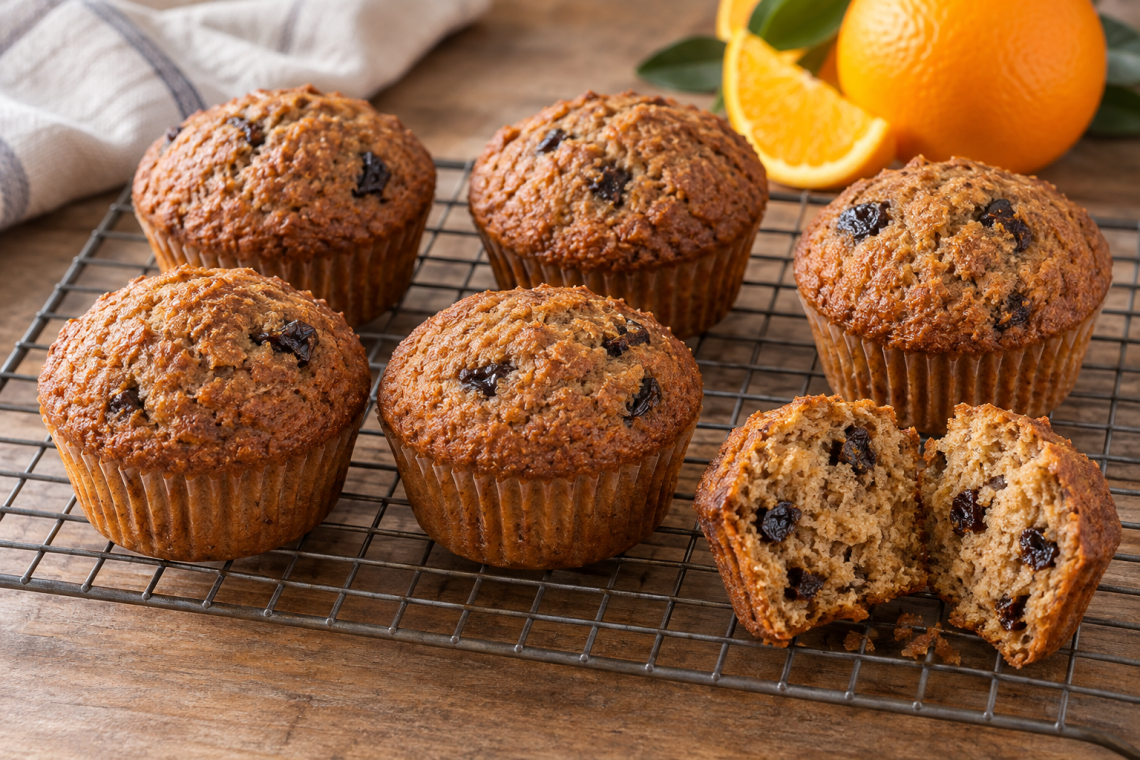
These small batch prune bran muffins make six orange-scented muffins for a breakfast basket that does not need a dozen extras. Chopped prunes add soft fruit pieces, orange zest brightens the bran, and a short soak gives the wheat bran time to absorb milk before the batter is mixed.
The muffins have a tender, close crumb rather than the airy structure of a cupcake. The method uses oil and a whisk, so there is no butter to cream and no mixer to clean. Small, evenly chopped fruit and gentle folding make a bigger difference than elaborate equipment.
Give bran and prunes time to absorb moisture
Soften the fruit
Dice prunes evenly and plump them first if they are firm, then drain excess soaking liquid.
Soak the bran first
Soak the wheat bran in the measured milk for 10 minutes before adding the remaining ingredients. Bake promptly after mixing the final batter.
Distribute zest
Rub orange zest into sugar or whisk it thoroughly through the wet ingredients for even aroma.
Test the center of a muffin away from a prune piece. Cool briefly in the pan, then move to a rack so trapped steam does not soften the sides.
Start by identifying the bran
This recipe calls for plain wheat bran, the loose flakes sold as a baking ingredient. It does not call for bran breakfast cereal, oat bran, or wheat germ. A cereal with added sugar and malt changes the flavor and may absorb the milk differently, while wheat germ does not provide the same structure.
Measure the bran lightly and level the top without packing. A scale helps, but brands vary in the size and density of their flakes, so check the package as well. The listed weight is a practical approximation for loose wheat bran, not a rule for every bran product.
Use soft pitted prunes and check for hard fragments as you chop. The pieces should be approximately 1/4 inch, small enough to fit comfortably in the crumb. Large sticky chunks can pull the muffin apart and leave one bite loaded with fruit while another has none.
Bake six prune orange bran muffins
Yield: 6 standard muffins. Preparation: 20 minutes, including a 10-minute bran soak. Baking: 18–22 minutes. Cooling: 15 minutes. Total: about 55–60 minutes.
Equipment: a standard six-well muffin pan, or six wells of a standard twelve-well pan, paper liners or a little oil for greasing, two mixing bowls, whisk, spatula, and cooling rack. Standard wells hold roughly 1/2 cup to the rim; this is not a mini-muffin formula.
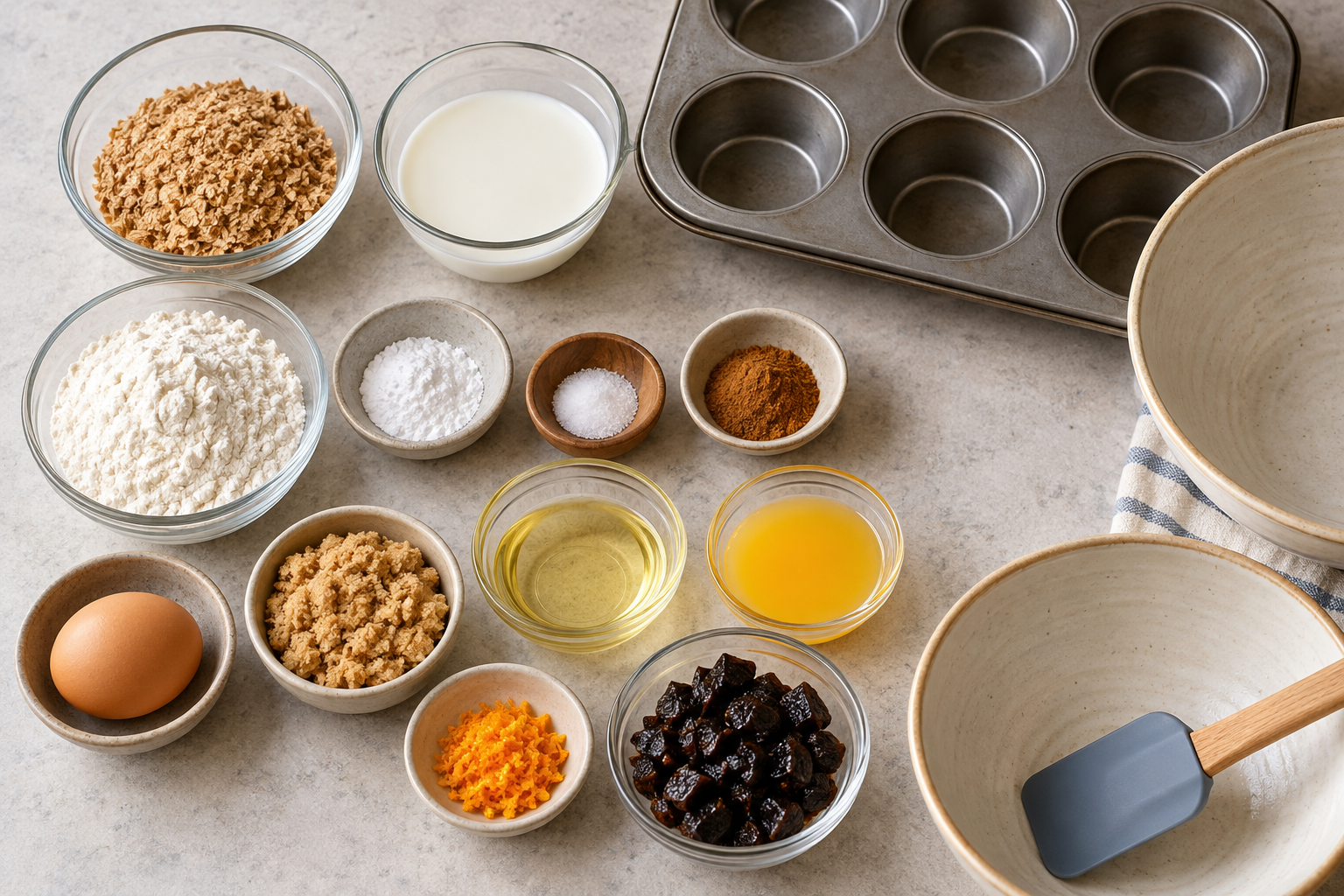
Ingredients
- 1/2 cup plain wheat bran, approximately 25–30 g
- 1/2 cup milk, 120 ml
- 3/4 cup all-purpose flour, spooned and leveled, 90 g
- 1 1/4 teaspoons baking powder
- 1/4 teaspoon fine salt
- 1/2 teaspoon ground cinnamon
- 1 large egg
- 1/4 cup packed light brown sugar, approximately 53 g
- 3 tablespoons neutral oil, such as canola
- 2 tablespoons orange juice
- 1 teaspoon finely grated orange zest
- 1/3 cup finely chopped pitted prunes, approximately 55 g
Step-by-step instructions
- Soak the bran. Mix the wheat bran and milk in a medium bowl and leave for 10 minutes. The flakes should look damp and softened. This rest happens before the baking powder is added, so you are not using up the batter’s waiting time.
- Prepare the oven and pan. Heat a conventional oven to 375°F (190°C) with the rack in the center. Line or lightly grease six standard muffin wells. Wash the orange, grate the zest, and then squeeze and measure the juice.
- Mix the dry ingredients. Whisk together the flour, baking powder, salt, and cinnamon in a separate bowl. Break up visible leavener lumps. Having these distributed now prevents the need for vigorous mixing once the batter is wet.
- Complete the wet mixture. Add the egg, brown sugar, oil, orange juice, and zest to the soaked bran. Whisk until the egg is incorporated and no large sugar lumps remain. Fold in the chopped prunes, separating any pieces that are stuck together.
- Fold the batter. Add the dry mixture to the wet bowl. Use a spatula to lift from the bottom and turn the batter over itself. Stop when the last obvious dry flour disappears. The mixture should look thick and slightly uneven, not smooth and elastic.
- Portion evenly. Divide the batter among the six prepared wells, generally filling each about three-quarters full. Redistribute a spoonful if one muffin has noticeably more batter or fruit. Bake promptly rather than leaving the mixed batter on the counter.
- Check the centers. Bake for 18–22 minutes. The tops should look set and spring back lightly, and a skewer inserted into the center should come out without raw batter. A moist prune smear is different from a coating of uncooked batter, so test another spot if necessary.
- Cool in stages. Let the muffins rest in the pan for 5 minutes, then move them to a rack for at least 10 more minutes. This helps the crumb set and lets steam escape so the bottoms do not remain damp.
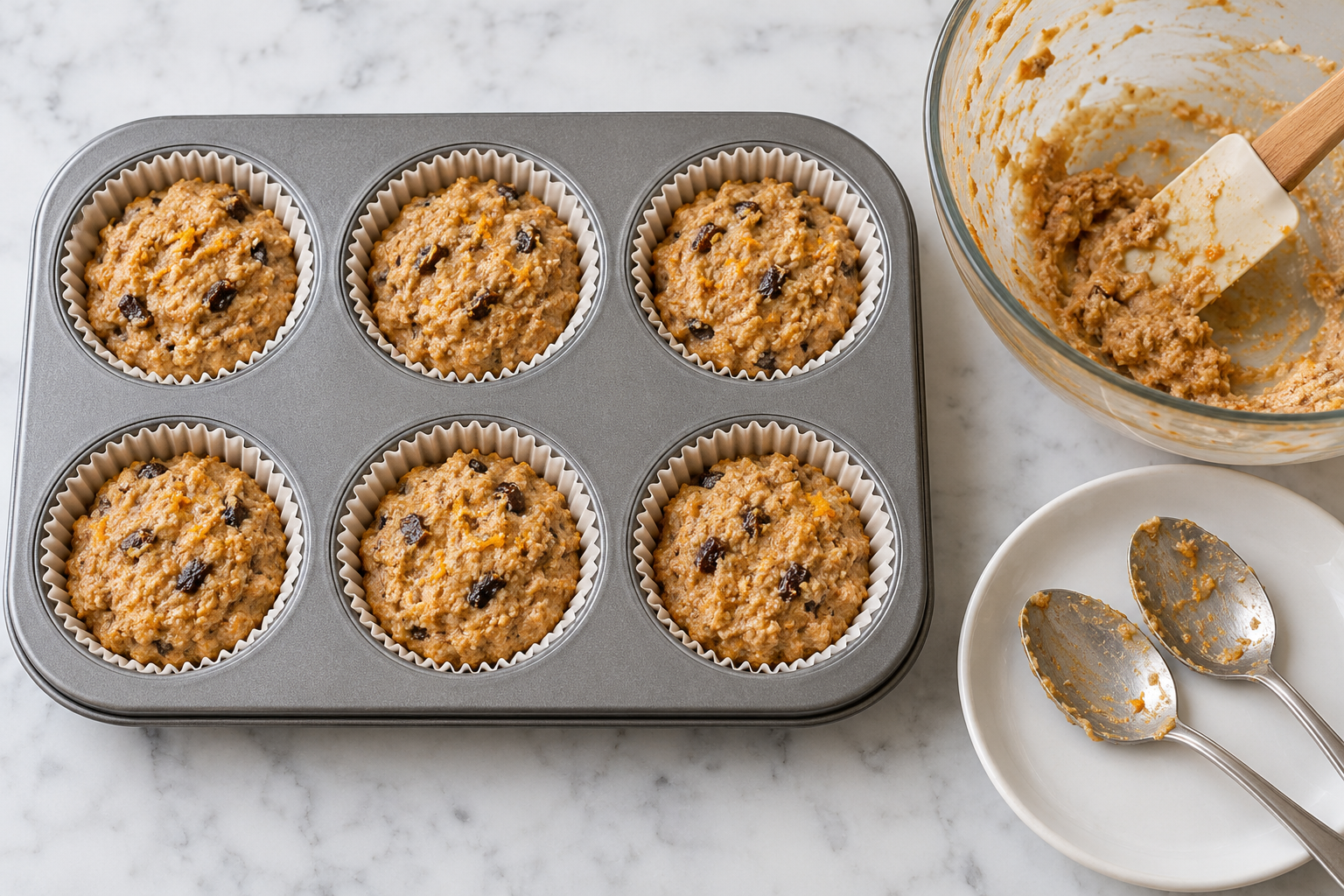
The reason for gentle mixing
Once wheat flour meets liquid, continued mixing can make the muffin crumb tougher. The University of Wyoming’s muffin-method guide explains the separate wet-and-dry approach and the importance of stopping before batter becomes smooth. The visible bran and fruit here make a slightly rough batter completely normal.
The bran soak addresses a different problem: dry flakes competing for liquid after the batter is assembled. It is worth allowing those 10 minutes, especially when using a coarse brand. Keep the sequence intact rather than mixing everything at once and then trying to repair a stiff batter.
Oil stays fluid when mixed, which makes this a straightforward bowl-and-whisk recipe. There is no creaming stage to build air into butter and sugar. The measured baking powder provides the lift, so accurate measurement and prompt baking matter.
Balance orange and prune without extra sweetness
The zest carries most of the orange aroma. Juice adds some flavor and liquid, but adding a large splash of extra juice would change the batter. Measure both ingredients separately. Avoid grating the white pith, which can taste bitter in such a small batch.
Chopped prunes are not the same as prune puree or prune juice. The Sunsweet bran muffin recipe shows another way the fruit can be used in baking, but its liquid-based formula should not be substituted into these measurements. Here, pieces of fruit are intended to remain visible.
If the prunes are very dry, soak them in hot water for 10 minutes, drain well, and pat lightly before chopping. This step is optional for soft fruit and adds time for dry fruit. Do not pour the soaking water into the batter.
Practical swaps
Raisins or chopped dates: replace the prunes with the same volume. Dates generally taste sweeter and can stick together, so separate the pieces while folding. Do not increase the fruit quantity until you have seen how the original amount distributes through six muffins.
Plant beverage: an unsweetened soy or oat beverage can replace the milk. Keep the volume the same. A sweetened drink alters the balance, and a very thin beverage may produce a slightly different crumb.
Different oil: another mild liquid oil works. Strongly flavored olive oil changes the taste, while solid coconut oil would need melting and cooling before use. Butter is not included because this method is arranged around liquid oil.
Need an egg-free muffin: choose a recipe built for that requirement, such as eggless applesauce muffins. Omitting the egg from this small batch affects structure and moisture, so it is not a simple subtraction.
Read the finished crumb
A moist, close crumb is expected. Long tunnels or a rubbery feel can indicate excessive mixing. A dry, crumbly muffin may contain too much flour or may have stayed in the oven too long. Check the flour measurement before trying to fix the next batch by adding more oil.
If the tops brown early while the middle remains wet, check the oven temperature and make sure the pan is centered. A dark muffin pan can brown faster. Tent loosely with foil only after the tops have set enough that the foil will not stick.
If paper liners cling, let the muffins cool more fully before peeling. Warm fruit muffins can be fragile. Lightly greasing the wells instead of using paper is another option, provided you loosen the edges gently before lifting them out.
Serving and keeping six muffins
Serve the muffins slightly warm or at room temperature. They work with plain yogurt or a small amount of butter, but they do not need a sugary glaze. For another citrus bake with different fruit and texture, try small batch cranberry orange muffins.
Cool, cover, and refrigerate within 2 hours for a conservative storage approach, then use within 3–4 days. Freeze individual cooled muffins for up to a month for best texture. Thaw in the refrigerator and warm gently; avoid repeated heating and cooling of the entire batch.
Frequently asked questions
Can I use bran flakes breakfast cereal?
Use plain wheat bran for this recipe. Breakfast cereal has a different density and may include sweetener, salt, and malt. Crushing it does not make it equivalent to the loose bran used here.
Can I make all six with whole-wheat flour?
The recipe has not been formulated for replacing all the flour. Start by replacing only 2 tablespoons of the all-purpose flour with an equal weight of whole-wheat flour if you want to explore that flavor. Expect a slightly firmer crumb.
Can the mixed batter wait overnight?
Prepare the dry ingredients and chop the fruit ahead, but combine the final batter shortly before baking. An overnight rest after adding baking powder changes the rise and hydration, so it is not the intended method.
Can I make twelve muffins?
Yes. Double each ingredient, keep the standard well size, and begin checking at the same baking time. The oven may take a little longer with a fuller pan, so judge the centers rather than extending time automatically.
What can replace the orange juice?
Use the same amount of milk if necessary and retain the orange zest for aroma. The flavor becomes less citrus-forward. Do not replace the juice with concentrated orange extract by volume.
Are the prunes supposed to disappear?
No. Six prune orange bran muffins should contain small, soft pieces of fruit. A few pieces may soften into the crumb, but chopping and folding rather than pureeing preserves the intended texture.
Measure small batch prune bran muffins with confidence
In a six-muffin recipe, a small measuring difference affects a noticeable share of the batter. Arrange the ingredients in three groups: bran with milk for soaking, flour with baking powder and dry seasonings, and the remaining wet ingredients with fruit. Keep the chopped prunes nearby so they are ready when the hydrated bran mixture is assembled.
Use the listed weights consistently
The 90 g flour quantity corresponds to 3/4 cup using the King Arthur Baking reference of 120 g per cup. If you use a scale, place the bowl on it and tare to zero before adding the flour. Stop at 90 g; do not then add another scoop to make the amount look like the volume in a measuring cup.
Without a scale, loosen the flour, spoon it into a dry measuring cup, and level the top without compressing it. Brown sugar needs a different approach: the listed 1/4 cup is packed. Press it into the measure and level it. Treating every dry ingredient with the same packing method can introduce more variation than changing brands.
The bran’s 25–30 g range acknowledges differences in loose flakes. Use plain wheat bran and the lightly filled 1/2-cup measure specified above; do not chase a particular weight by crushing or firmly packing it. Measure the chopped prunes after removing pits or any hard fragments. The recipe’s fruit amount refers to the prepared pieces, rather than a loosely filled cup of whole prunes.
Know what goes into each bowl
Keep baking powder with the flour so it is distributed before the final folding stage. Baking soda is a different ingredient and should not replace it spoon for spoon. Put the brown sugar into the wet mixture, where the whisk can break up its clumps without repeatedly working the flour. A flexible spatula then reaches the flour that can hide underneath the wetter batter at the bottom of the bowl.
Stop briefly during folding to sweep that bottom curve and the sides. A few small batter lumps are acceptable, but pockets of dry flour are not. Once the dry pockets are gone, portion the batter. Avoid scraping the bowl with many extra stirring strokes simply to produce a perfectly smooth surface.
Keep raw batter separate from the finished muffins
Do not taste the batter to assess its sweetness. FDA guidance on flour safety explains that uncooked flour as well as raw eggs can carry harmful germs. Wash the mixing utensils and work surface before using them around the cooled muffins, and use a clean plate when cutting one open.
Judge the baked result after the cooling period. A warm prune pocket can look darker and wetter than the surrounding crumb, so inspect the crumb beside it rather than deciding from the fruit alone. Note your actual baking time and pan type for the next batch. Small batch prune bran muffins should be assessed as six fruit-filled muffins, with the same ingredient quantities each time, before you experiment with larger substitutions.
More recipes for your table
Choose a companion dish or another recipe for the ingredients you have. Each link opens its own instructions and printable recipe.
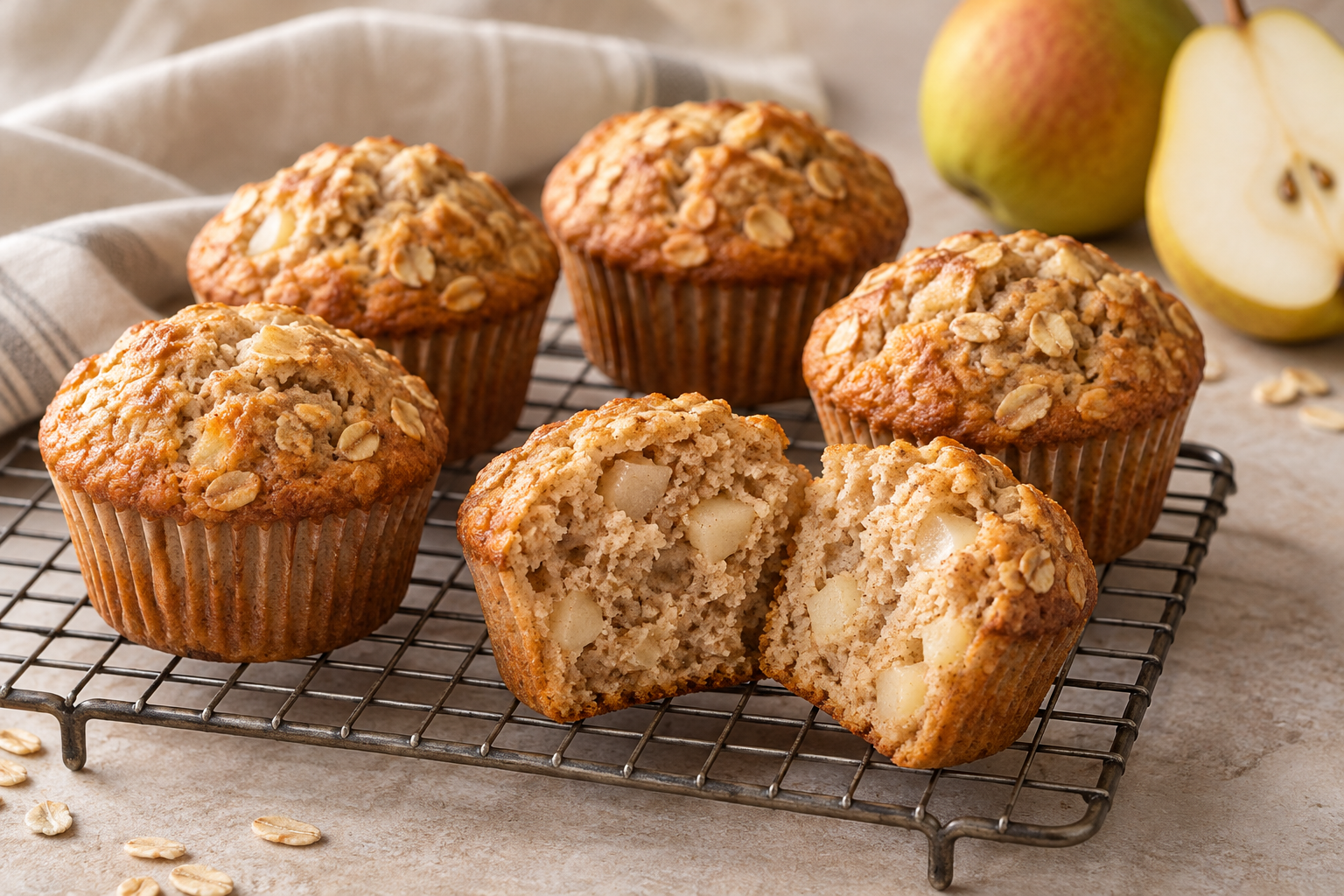
A small fruit muffin batch for another morning.
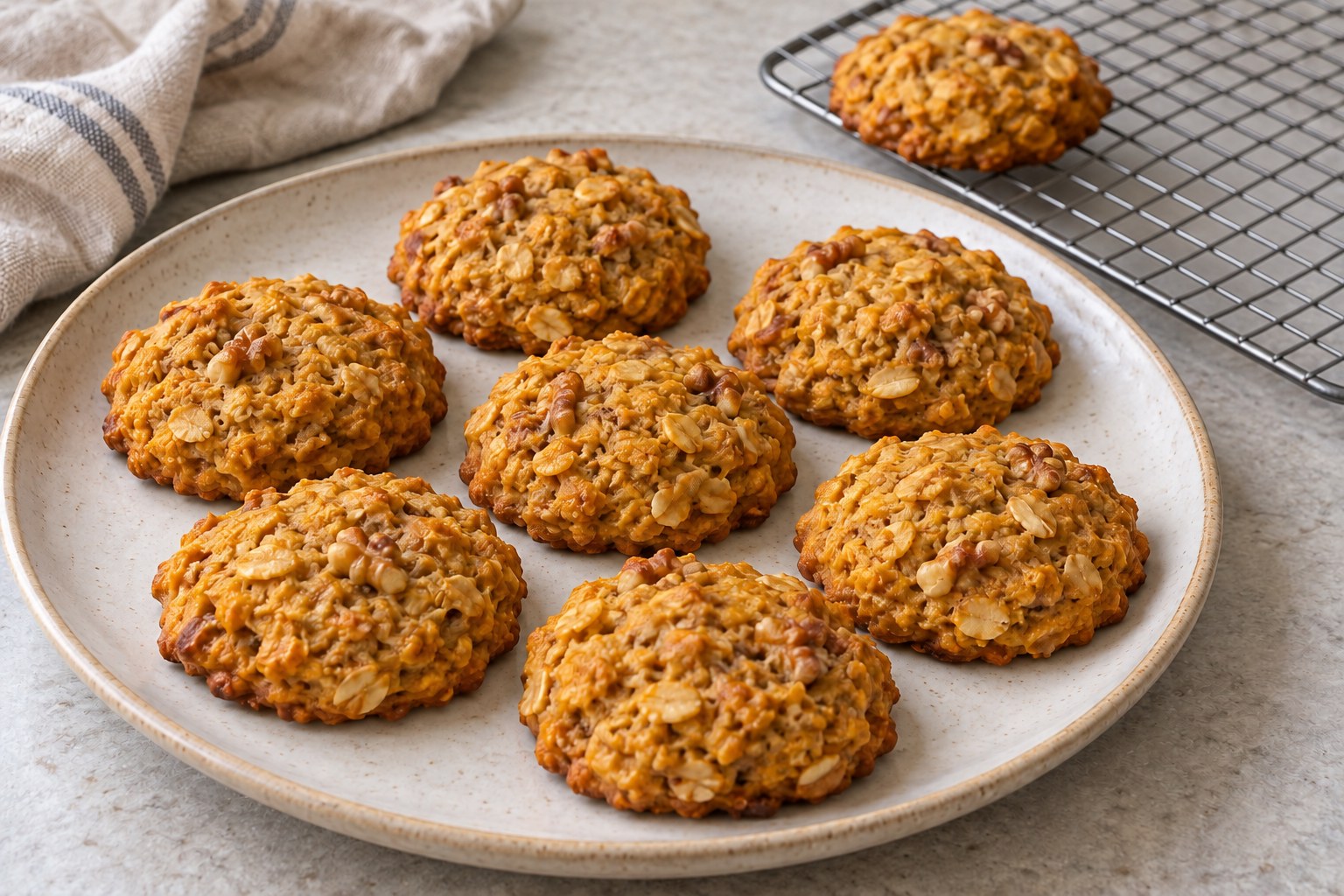
A small batch of soft pumpkin and walnut breakfast cookies.
Equipment for this recipe
Affiliate disclosure: As an Amazon Associate I earn from qualifying purchases.
Use the tools you already have when they match the method. If you need an item, these links open matching Amazon search results.
- Six-well standard muffin pan on Amazon — Choose standard muffin wells rather than mini or jumbo cups.
- Wire cooling rack on Amazon — Let air circulate around the baked loaf or muffins as they cool.
Check the size, material, and manufacturer’s use instructions against the recipe before choosing.
Useful kitchen references
- Ingredient weight chart — A reference for common baking measurements.
Printable recipe
Use the recipe card’s Print control for a kitchen copy. Follow the ingredient quantities and cooking checks in the card when preparing the dish.
Six Prune Orange Bran Muffins
Ingredients
Equipment
Method
- Soak the bran. Mix the wheat bran and milk in a medium bowl and leave for 10 minutes. The flakes should look damp and softened. This rest happens before the baking powder is added, so you are not using up the batter's waiting time.
- Prepare the oven and pan. Heat a conventional oven to 375°F (190°C) with the rack in the center. Line or lightly grease six standard muffin wells. Wash the orange, grate the zest, and then squeeze and measure the juice.
- Mix the dry ingredients. Whisk together the flour, baking powder, salt, and cinnamon in a separate bowl. Break up visible leavener lumps. Having these distributed now prevents the need for vigorous mixing once the batter is wet.
- Complete the wet mixture. Add the egg, brown sugar, oil, orange juice, and zest to the soaked bran. Whisk until the egg is incorporated and no large sugar lumps remain. Fold in the chopped prunes, separating any pieces that are stuck together.
- Fold the batter. Add the dry mixture to the wet bowl. Use a spatula to lift from the bottom and turn the batter over itself. Stop when the last obvious dry flour disappears. The mixture should look thick and slightly uneven, not smooth and elastic.
- Portion evenly. Divide the batter among the six prepared wells, generally filling each about three-quarters full. Redistribute a spoonful if one muffin has noticeably more batter or fruit. Bake promptly rather than leaving the mixed batter on the counter.
- Check the centers. Bake for 18–22 minutes. The tops should look set and spring back lightly, and a skewer inserted into the center should come out without raw batter. A moist prune smear is different from a coating of uncooked batter, so test another spot if necessary.
- Cool in stages. Let the muffins rest in the pan for 5 minutes, then move them to a rack for at least 10 more minutes. This helps the crumb set and lets steam escape so the bottoms do not remain damp.