OVEN TO BREAKFAST BOWL
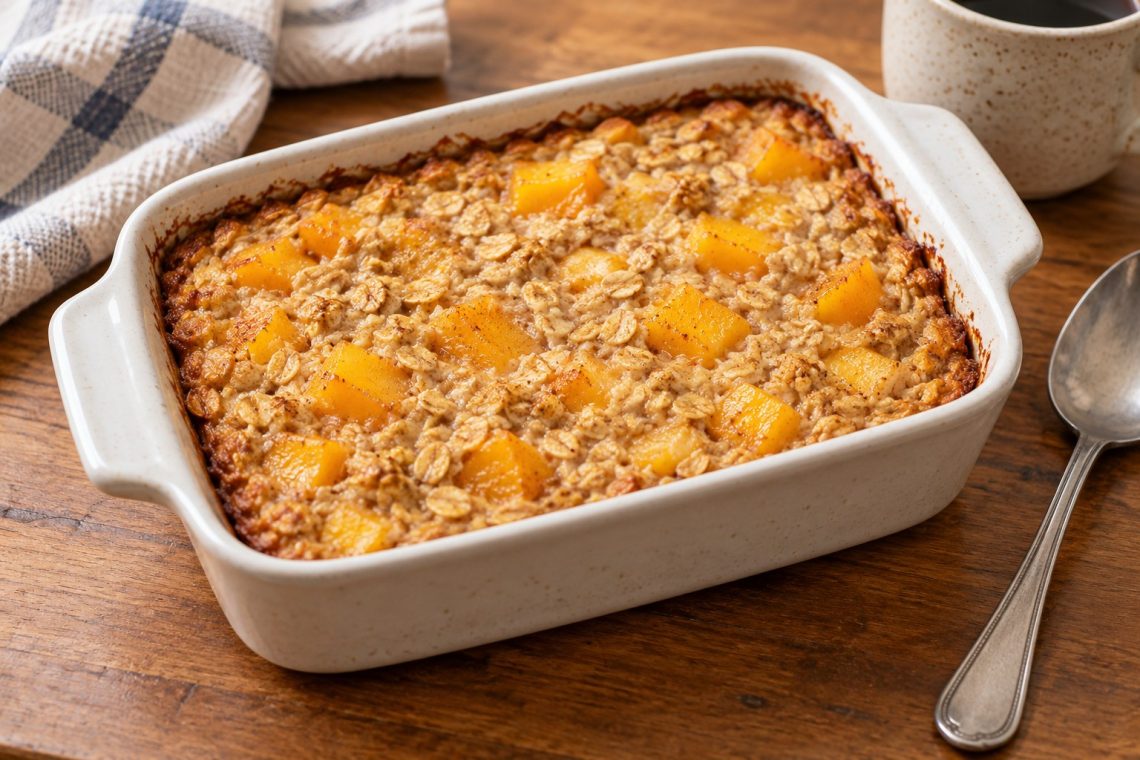
This small batch of peach baked oatmeal without eggs has tender oats, soft pieces of canned peach, and a little cinnamon and vanilla. Applesauce keeps the mixture moist, while the oven gives the top a lightly toasted finish. Expect a warm, spoonable breakfast that settles as it cools, rather than neat, sturdy oatmeal bars.
The key is controlling the liquid from the peaches and choosing a small baking dish. Drain the fruit well, spread the mixture evenly, and let it rest after baking. The center should be moist but no longer surrounded by loose milk, and the oats should feel tender when you take a spoonful.
Peach baked oatmeal without eggs: time and portions
- Prep
- 10 minutes
- Bake
- 35 minutes
- Additional time
- 10 minutes resting
- Total
- 55 minutes
- Yield
- 2 breakfast portions
Start checking the bake around 30 minutes; dish material and oven performance can change the finishing time. Use a small oven-safe dish about 5 by 7 inches with roughly 1-quart capacity, two mixing bowls, a spoon or spatula, sieve, measuring cups, and oven mitts. Match the footprint as well as the capacity: a roughly 5-by-7-inch dish keeps the layer close to its intended depth. A deep 1-quart bowl can need longer, while a wide shallow dish can dry the edges sooner.
Measured ingredients for a small dish
- 1 cup old-fashioned rolled oats, about 80 g
- 3/4 cup milk or unsweetened plant milk
- 1/4 cup unsweetened applesauce
- 1/2 cup canned peaches packed in juice, measured after draining and cutting into 1/2-inch pieces
- 1 tablespoon brown sugar, optional
- 1/2 teaspoon baking powder
- 1/4 teaspoon ground cinnamon
- 1/4 teaspoon vanilla extract
- 1/8 teaspoon fine salt
- 1 teaspoon neutral oil, for greasing the dish
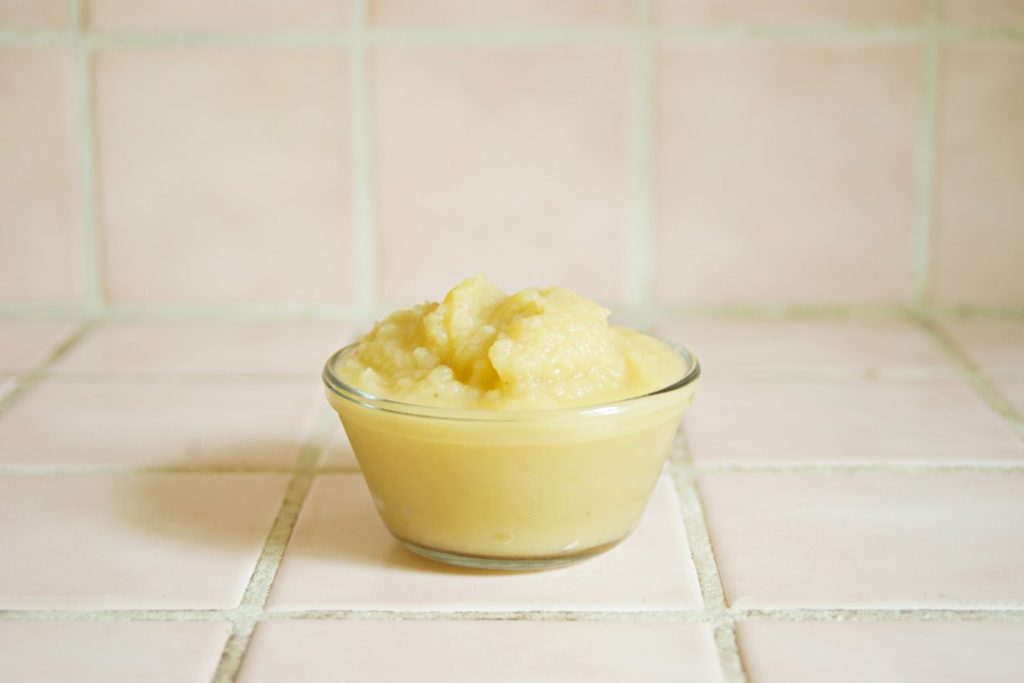
Drain canned peaches before measuring
Peaches packed in juice give you control over the added sweetness. Drain them in a sieve, cut slices or halves into small pieces, and then measure the half cup. Do not pour the can liquid into the oatmeal; it adds both moisture and sweetness that are not included in the formula.
If the pieces still look very wet after chopping, blot gently with a clean towel. They do not need squeezing, which can crush them. Keep the peach pieces around 1/2 inch so they distribute through the oats rather than forming large wet pockets.
Rolled oats give a soft but recognizable texture
Old-fashioned oats keep visible flakes after baking. Quick oats absorb moisture differently and produce a more uniform, porridge-like center. Steel-cut oats are not a direct substitute because this quantity of liquid and baking time is not designed to soften them.
The applesauce adds moisture and a mild fruit sweetness. It helps the mixture settle, but it does not provide the same structure as an egg. Baking powder supplies a little lift rather than making the oats rise into a cake.
Milk choices and sweetness
Dairy milk or an unsweetened plant milk both fit the ingredient list. Choose a flavor you enjoy because it will be noticeable in this simple breakfast. Sweetened vanilla milk can make the optional sugar unnecessary, so taste that ingredient before deciding to add the full tablespoon.
The dish is egg-free as written. If another ingredient must be avoided, use suitable oats, milk, and packaged ingredients for the person eating it. The recipe does not require a separate powdered egg replacement or flax mixture.
Mix the oats, fold in peaches, and bake until settled
- Prepare the dish. Heat the oven to 350°F (175°C). Grease the bottom and sides of the 5-by-7-inch baking dish with the teaspoon of oil. Drain and dice the peaches before mixing the oatmeal.
- Combine the dry ingredients. Stir the oats, baking powder, cinnamon, and salt together in one bowl. Break apart any baking powder lumps so the small amount is distributed evenly.
- Mix the liquid ingredients. In the other bowl, whisk the milk, applesauce, vanilla, and optional brown sugar until the applesauce is dispersed. Stir this mixture into the oats, making sure no dry oats remain at the bottom.
- Add the peaches and spread evenly. Fold in the well-drained peach pieces without crushing them. Transfer to the greased dish and level the surface. Spread fruit throughout the mixture rather than leaving a thick cluster in the middle.
- Bake until the center is no longer liquid. Bake for about 30–35 minutes. The edges should look set, the top lightly colored, and the center moist without a pool of loose milk. If liquid still moves freely when the dish is nudged gently, bake for a few more minutes and check again.
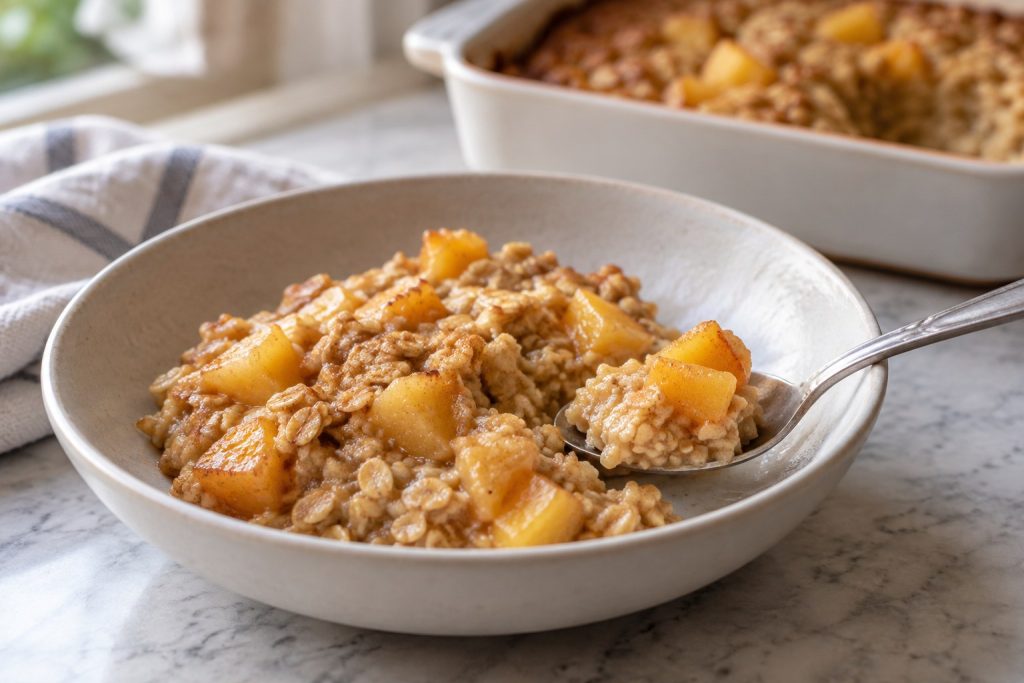
- Rest and spoon into bowls. Let the dish stand for 10 minutes. The oats will settle as they absorb more moisture. Divide into two portions with a serving spoon. Expect a soft scoop that may hold together loosely, not a clean-cut bar.
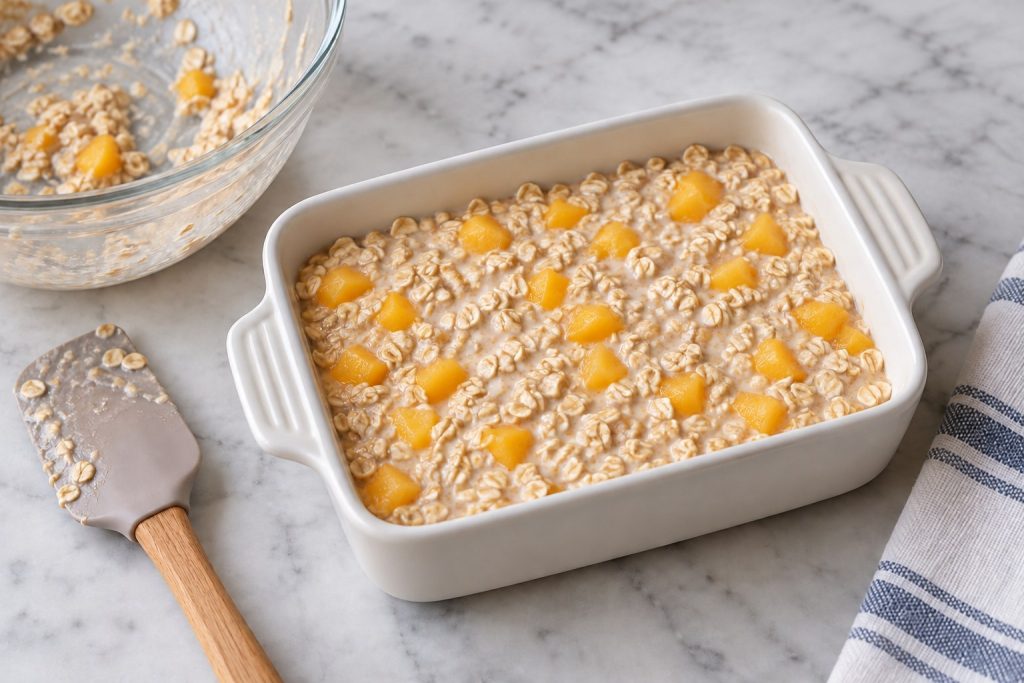
What the egg-free texture should be
Warm baked oatmeal is softer than it looks in the dish. The edges are a little firmer, while the middle stays moist around the peaches. A spoonful should contain tender oats and fruit without liquid running into the empty space behind it.
As it cools, the mixture firms enough to portion more easily, but that does not make it a handheld snack. If you want breakfast bars that travel without a bowl, this particular formula is not designed for that result. Serving it with a spoon avoids the frustration of trying to force neat squares from a moist bake.
Do not keep baking until every trace of moisture disappears. The oats continue to thicken during the rest, and excessive baking can leave dry edges around fruit that is still naturally juicy. Check a small spoonful from the center after resting if you are uncertain.
Troubleshooting wet centers and dry edges
| Problem | What helps |
|---|---|
| Loose milk remains in the center | Bake a little longer. Cover loosely with foil if the top is already well colored. |
| The middle is soft after baking | Give it the full 10-minute rest, then check whether the oats are tender and the liquid absorbed. |
| Edges are dry | Check the milk measurement, avoid an oversized dish, and stop once the center is set. |
| Peaches make wet pockets | Drain more thoroughly and use smaller, evenly distributed pieces next time. |
| Portions fall apart when lifted | Serve with a spoon. This egg-free formula is intended to be soft, not a firm bar. |
On a small screen, scroll the table sideways to see every column.
Fruit and flavor changes that keep the bake manageable
Canned pears can replace peaches in the same drained volume. Cut them to the same size and avoid adding their packing liquid. Very soft fruit should be folded gently so it remains in pieces rather than dissolving into the milk.
Syrup-packed peaches can be used after thorough draining, but the finished oatmeal will be sweeter; omit the optional sugar initially. Fresh peaches vary in ripeness and moisture, so they are less predictable in the stated timing than the canned fruit used here.
A pinch of ground ginger works alongside cinnamon. You can leave out vanilla if necessary. Avoid adding a large handful of extra fruit without adjusting the recipe, because a small baking dish has limited room and extra moisture can delay the center setting.
If you have leftover applesauce, eggless applesauce muffins offer a different bake with a more portable shape. Extra peaches can go toward cake-style peach cobbler when you want dessert rather than breakfast.
Serve warm with a spoon
Peach baked oatmeal without eggs is pleasant on its own, or with a little extra milk poured around a warm portion. A spoonful of plain yogurt is optional if you enjoy it. Add toppings after baking so each person can choose their preferred sweetness and consistency.
For serving two people, scoop approximately half the dish into each bowl. If serving it alongside other breakfast foods, divide into smaller portions. Let very hot fruit cool before eating, since peach pieces can retain heat after the top has stopped steaming.
Bake ahead, refrigerate, and reheat gently
Baking ahead is convenient: divide the leftovers into shallow portions after the brief rest rather than leaving the full dish on the counter for hours. Cover and refrigerate for another breakfast.
Following USDA guidance, refrigerate within 2 hours, or 1 hour above 90°F, at 40°F or below. Use within 3–4 days and reheat leftovers to 165°F if serving hot.
To reheat one portion, add a small splash of milk, cover loosely, and microwave in short intervals. Stir or break the portion apart so the center heats evenly, then check several places with a food thermometer. The oatmeal will become more spoonable as it warms.
For freezing, cool promptly and freeze in individual airtight portions. Thaw in the refrigerator before reheating. The peaches may be softer afterward, which suits the spoonable texture. Add any fresh toppings after heating rather than freezing them with the oatmeal.
Questions about canned-peach baked oatmeal
Can I make it the night before?
Yes. Bake it, cool briefly, and refrigerate promptly. Reheat a portion in the morning or eat it chilled if you like a firmer, pudding-like oat texture.
Why will it not cut into neat squares?
There is no egg-based structure holding the moist oats and peaches into firm bars. Resting improves portioning, but a serving spoon is the right tool for this recipe.
Can I leave out the brown sugar?
Yes. The peaches and applesauce contribute sweetness. The tablespoon of sugar is optional and does not provide the main structure.
Can I use a larger baking dish?
A wider dish makes a thinner layer that dries more quickly. Choose a similar small footprint when possible, and start checking earlier if the mixture is spread much thinner.
Are instant oats suitable?
Plain quick oats can make a softer, more uniform result, but flavored instant packets include other ingredients and are not a direct substitute. Old-fashioned oats give the intended texture.
THE COMPLETE RECIPE
Small Batch Canned Peach Baked Oatmeal Without Eggs
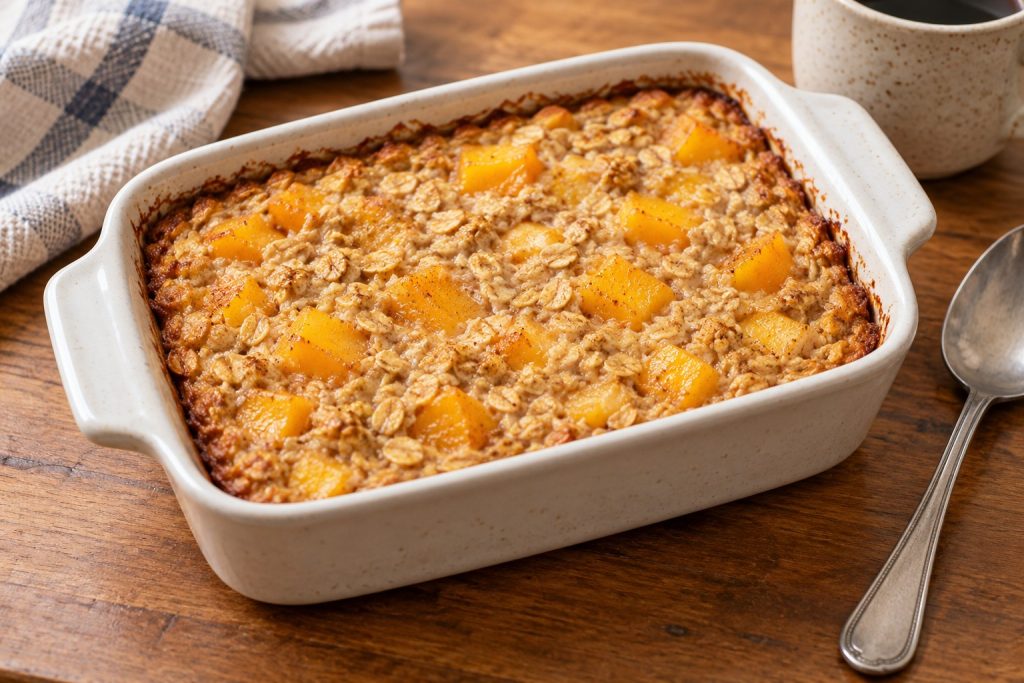
Yield: 2 breakfast portions
Ingredients
- 1 cup old-fashioned rolled oats about 80 g
- 3/4 cup milk or unsweetened plant milk
- 1/4 cup unsweetened applesauce smooth; mash or blend obvious apple pieces before measuring
- 1/2 cup canned peaches packed in juice measure after draining and cutting into 1/2-inch pieces
- 1 tablespoon brown sugar optional
- 1/2 teaspoon baking powder
- 1/4 teaspoon ground cinnamon
- 1/4 teaspoon vanilla extract
- 1/8 teaspoon fine salt
- 1 teaspoon neutral oil for greasing the dish
Instructions
- Prepare the dish Heat the oven to 350°F (175°C). Grease the bottom and sides of the 5-by-7-inch baking dish with the teaspoon of oil. Drain and dice the peaches before mixing the oatmeal.
- Combine the dry ingredients Stir the oats, baking powder, cinnamon, and salt together in one bowl. Break apart any baking powder lumps so the small amount is distributed evenly.
- Mix the liquid ingredients In the other bowl, whisk the milk, applesauce, vanilla, and optional brown sugar until the applesauce is dispersed. Stir this mixture into the oats, making sure no dry oats remain at the bottom.
- Add the peaches and spread evenly Fold in the well-drained peach pieces without crushing them. Transfer to the greased dish and level the surface. Spread fruit throughout the mixture rather than leaving a thick cluster in the middle.
- Bake until the center is no longer liquid Bake for about 30–35 minutes. The edges should look set, the top lightly colored, and the center moist without a pool of loose milk. If liquid still moves freely when the dish is nudged gently, bake for a few more minutes and check again.
- Rest and spoon into bowls Let the dish stand for 10 minutes. The oats will settle as they absorb more moisture. Divide into two portions with a serving spoon. Expect a soft scoop that may hold together loosely, not a clean-cut bar.
Notes
Rate This Recipe
Made this recipe? Choose a star rating in the comment form and share how it turned out. Your cooking time and any ingredient changes can help the next reader.
Rate This Recipe