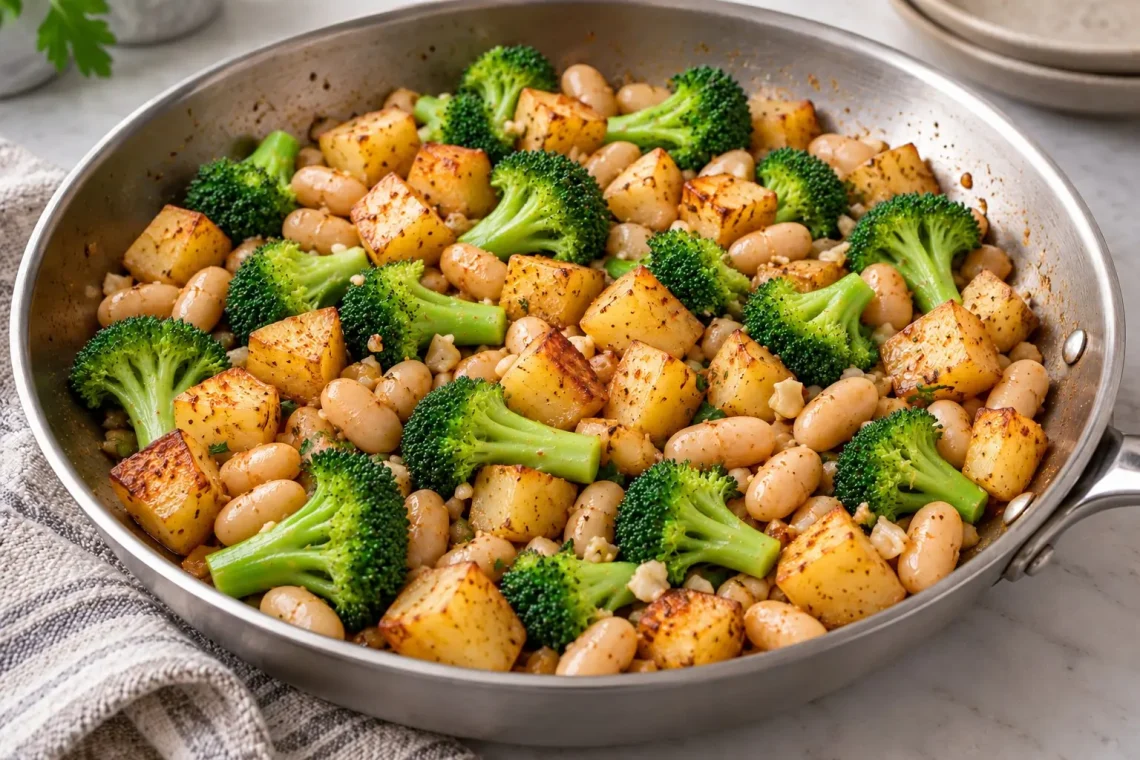
A broccoli potato white bean skillet with paprika without cheese works best when the potato and broccoli enter at different times. Small potato cubes receive a covered head start. Broccoli follows for a shorter steaming stage, and the cannellini beans warm only after both vegetables are tender. Garlic, sweet paprika and lemon provide the measured finish.
Affiliate disclosure: As an Amazon Associate I earn from qualifying purchases. These paid links open Amazon search results for comparing equipment.
Have a lidded skillet (paid link) ready for the potatoes’ covered head start and a broad spatula (paid link) for folding in the cooked vegetables and beans.
The result should contain soft potato centers, broccoli stems that yield easily and mostly whole beans. The pan can be moist without a heavy sauce. This sequence also keeps the garlic away from the long early cooking, when its small pieces could darken before the potatoes have softened.
Let potato size determine the cooking sequence
- Cut potatoes evenly. Small cubes cook predictably and create more browned surface. Oversized pieces force the broccoli to wait too long.
- Give potatoes the first stage. Cook them until the centers are nearly tender before adding broccoli. Use the lid for the potato head start and the shorter broccoli steaming stage; uncover to clear pooled water before seasoning.
- Add broccoli for the final tender-crisp stage. Thin stems and small florets finish faster than large crowns, so check the thickest piece.
- Fold in white beans last. They contribute creaminess without cheese and need only enough time to heat and pick up paprika-seasoned oil.
Final check: pierce the largest potato cube, test a broccoli stem and check that the beans are hot. Finish with the measured lemon juice off the heat, then taste before adding salt or black pepper. Keep the beans mostly whole rather than stirring them into a mashed coating.
A two-vegetable timing plan
Yield: approximately 2–3 servings. Preparation: about 10–12 minutes. Estimated cooking: 18–30 minutes. Total: about 28–42 minutes. Use a wide lidded skillet, broad spatula, cutting board, knife, colander, measuring tools and a small fork for checking vegetables.
The original quarter cup of water starts the covered cooking. Keep the lid ready and have a little extra water available only for the stated dry-pan correction. You are steaming small vegetables in the skillet, not filling a pot to boil them. A lid that fits reasonably well makes that small amount of moisture more useful.
Jump to: printable recipe · ingredients · vegetable cuts · method · FAQs.
Ingredients
- 1 tablespoon olive oil
- 1 medium Yukon Gold potato, cut in 1/2-inch cubes
- 1 1/2 cups small broccoli florets
- 1 can (15 ounces) cannellini beans, drained and rinsed
- 1 garlic clove, minced
- 1/2 teaspoon sweet paprika
- 1/4 cup water
- 1 teaspoon lemon juice
- Salt and black pepper
Prepare the potato and broccoli separately
Keep the potato cubes small and even
Wash the Yukon Gold potato and remove any unsuitable spots. Its thin skin can remain if well cleaned, or peel it for a more uniform appearance. Cut into 1/2-inch cubes. A few much larger pieces make the covered stage harder to judge because the small cubes may be soft while the large centers still resist.
The reference quantity is one medium potato. Do not substitute an oversized baking potato while keeping the same water and cooking expectation. Prepare the cubes before heating the skillet so they enter together and the first pieces do not brown while you finish cutting the rest.
Pay attention to broccoli stems as well as crowns
Rinse the broccoli and cut small florets that fit comfortably on a fork. If one piece has a much thicker stem than its neighbors, split that stem lengthwise. Measure the 1 1/2 cups without packing in a large branch that contains several florets joined by a thick stalk.
Keep the broccoli in its own bowl. Its short later steaming is part of the method, and adding it with the raw potato removes that control. A green crown can look ready before a thick stem softens, so plan to check both parts rather than using color alone.
Keep the finishing ingredients out of the first stage
Rinse and drain the cannellini beans, allowing the main trickle of water to leave the colander. Keep the minced garlic, sweet paprika and lemon nearby but separate from the potato. Garlic and paprika enter after the steaming and brief pan drying; lemon enters after the burner is off.
Sweet paprika gives a mild pepper note rather than smoke. There is no cheese in the measured formula, and the white beans provide a creamy texture of their own. Taste the final combination before salting because canned beans can retain seasoning even after rinsing.
Cook broccoli potato white bean skillet with paprika without cheese
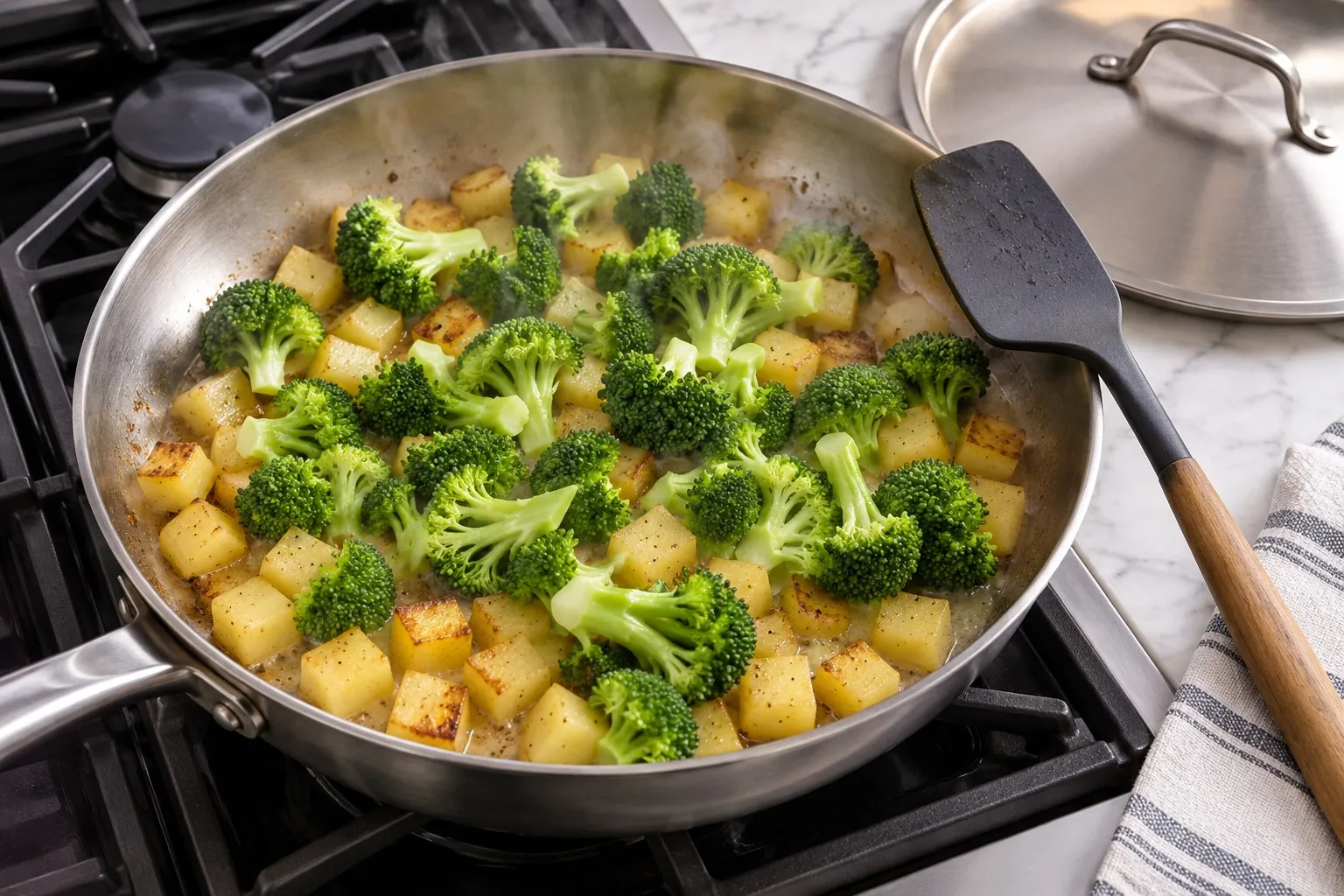
- Start the potato color. Heat the oil over medium heat in the wide skillet. Add the potato cubes and spread them over the base. Cook for about 3–4 minutes, turning once, so a few surfaces begin to color. They do not need to be tender yet.
- Steam under the lid. Add the quarter cup of water and cover carefully. Maintain a gentle simmer for about 7 minutes. If the pan dries rapidly, lower the heat and add a spoonful of water rather than allowing the potato to burn beneath the lid.
- Check before adding broccoli. Lift a larger potato cube and test the center with a fork. It should be nearly tender, with only slight resistance. Give firm cubes more covered time before proceeding. This is the point to protect the later broccoli from overcooking.
- Add the broccoli. Spread the small florets among the potatoes. Cover for another 3–4 minutes, then check a stem. It should yield easily but keep its structure. Continue briefly if a representative thicker stem is still hard, using a little water only if the pan needs it.
- Clear pooled water. Uncover and let excess moisture evaporate. Fold the vegetables gently rather than tossing them hard. The pan should remain lightly moist, without a deep puddle that would dilute the short seasoning stage.
- Add garlic, paprika and beans. Stir in the garlic and sweet paprika for about 30 seconds. Fold in the drained cannellini beans and warm gently for about 2 minutes, or until the beans and vegetables are hot throughout. Use broad lifts to keep the beans whole.
- Finish and portion. Remove from the heat and fold in the teaspoon of lemon juice. Taste before adding salt and black pepper. Divide the potato cubes and broccoli first, then spoon beans into the remaining spaces so the portions have a similar balance.
Use two tenderness checks, then one heat check
| Check | Look or feel for | If unfinished |
|---|---|---|
| Potato before broccoli | A fork enters a large cube with only slight resistance. | Continue its covered stage before adding the florets. |
| Broccoli before beans | A representative stem yields easily without collapsing. | Allow a little more moist cooking, then recheck. |
| Beans at the finish | The combined skillet is evenly hot, with no cool pocket of beans. | Warm gently and fold once more; do not crush the mixture. |
If broccoli becomes softer than planned, extra frying will not make its stems firm again. Finish that batch gently and shorten the broccoli stage on a future kitchen check. If the potato is still hard after broccoli enters, the root needed a longer head start; continue enough cooking for tender centers while accepting softer broccoli in that pan.
Put the meal together before the last bean warming
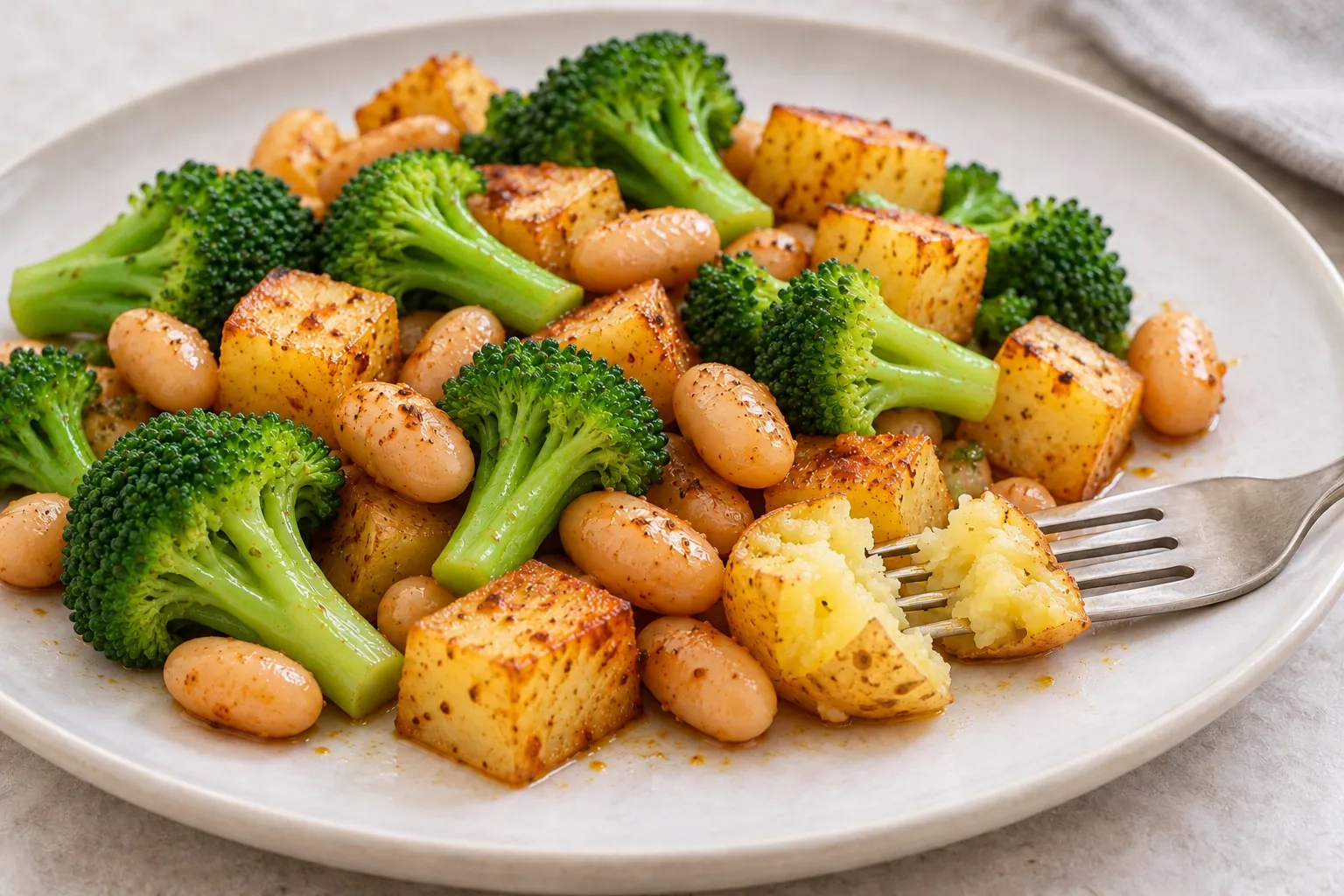
Toast or a small green salad makes an easy accompaniment. Have plates ready before the beans go in so the vegetables can leave the stove promptly. Offer extra lemon separately rather than changing the whole skillet’s measured finish. The bright note should support the potato and broccoli, not overwhelm them.
For two light mains, serve the full pan with the chosen side. For three smaller portions, make sure each has potato as well as broccoli and beans. A larger batch requires more pan space and a fresh moisture check; simply piling twice the raw vegetables under the same lid can change the timing substantially.
Questions before you start
Do I have to boil the potatoes first?
No. The half-inch cubes receive their cooking in the covered skillet stage. Larger pieces need more time and make the sequence less predictable. The important check is nearly tender potato before broccoli enters, followed by fully soft centers at serving.
Can I use another white bean?
Great northern beans are a plausible alternative in the same one-can amount. Drain and rinse them, then use the late warming stage. Their size and firmness may differ from cannellini, so the exact texture is a development variation rather than a tested equivalent.
Can cauliflower replace broccoli?
It needs its own stem-tenderness check and may take a longer covered stage. Use small pieces and avoid assuming the broccoli’s three-to-four-minute estimate is enough. The potato may become softer while waiting, so consider the altered timing before changing the vegetable.
Why does garlic go in near the end?
The potato needs several minutes of browning and steaming. Small minced garlic pieces do not need that entire period. Adding garlic after the vegetables are nearly ready lets it flavor the pan during a brief stage, with the beans arriving soon afterward.
What if the pan is dry before the potato softens?
Add water by the spoonful and cover again over gentle heat. Check that the lid fits and the burner is not driving off moisture too rapidly. Extra oil is not a replacement for the water needed to finish a firm center.
Can broccoli potato white bean skillet with paprika without cheese be made ahead?
It can be refrigerated safely, but the broccoli and beans will be softer after reheating. Keep the first serving as the texture reference. Use a little water, gentle folds and a temperature check rather than long aggressive frying to revive a chilled portion.
Cool, label and reheat
Refrigerate leftovers in shallow covered containers within 2 hours, or within 1 hour above 90°F. Keep at 40°F or below and use within 3–4 days. Reheat to 165°F throughout, stirring gently and checking the middle. Use only enough added water to prevent sticking.
Keep any toast or fresh salad separate during storage. If the beans were opened before this cooking session, include that earlier time in the storage plan. A shallow portion lets you distribute heat with fewer folds, which helps preserve the broccoli crowns and tender bean skins.
Food handling references: USDA leftovers guidance, FDA refrigerated storage advice and FoodSafety.gov reheating temperatures.
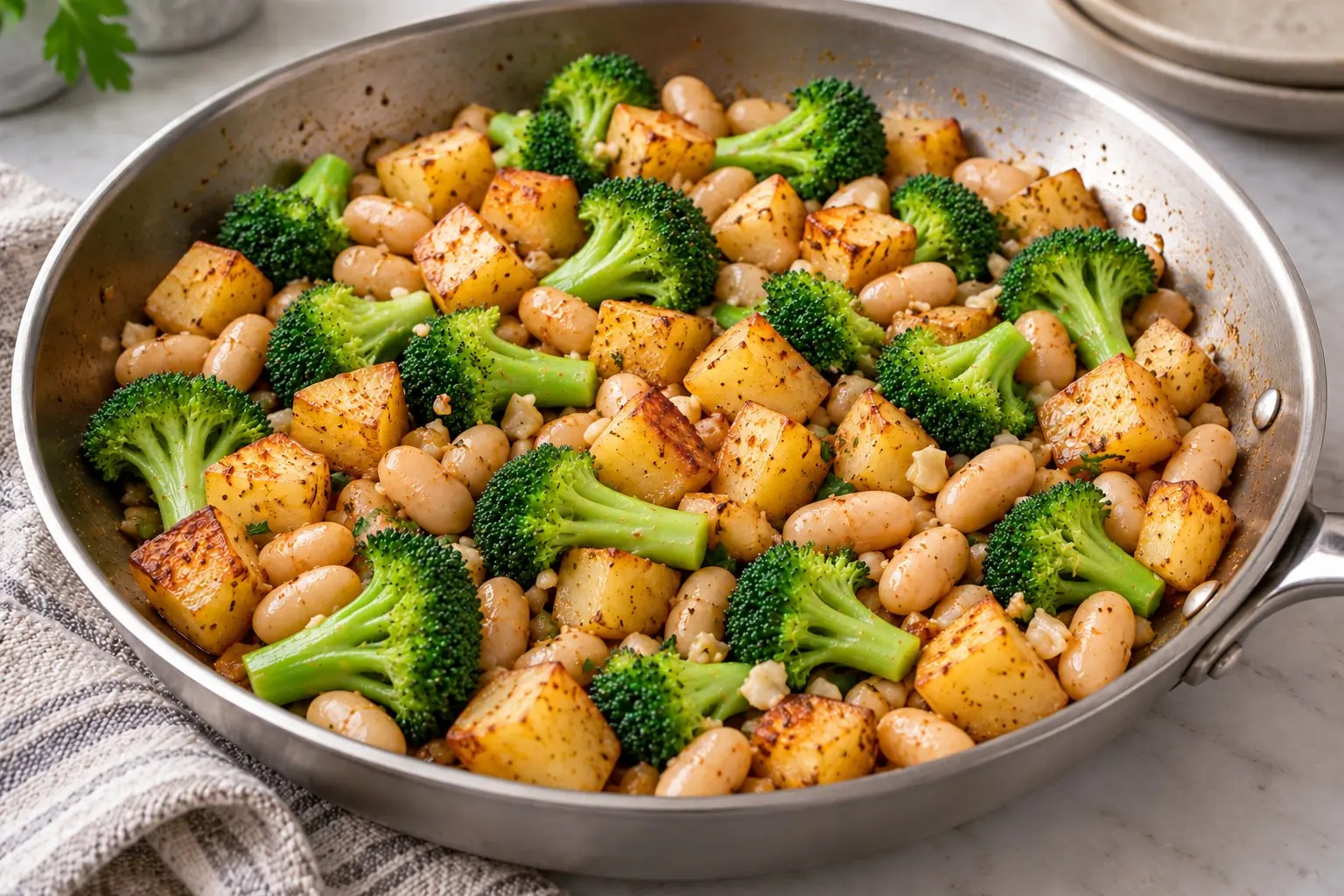
Broccoli Potato White Bean Skillet With Paprika Without Cheese
Ingredients
Equipment
Method
- Start the potato color. Heat the oil over medium heat in the wide skillet. Add the potato cubes and spread them over the base. Cook for about 3–4 minutes, turning once, so a few surfaces begin to color. They do not need to be tender yet.
- Steam under the lid. Add the quarter cup of water and cover carefully. Maintain a gentle simmer for about 7 minutes. If the pan dries rapidly, lower the heat and add a spoonful of water rather than allowing the potato to burn beneath the lid.
- Check before adding broccoli. Lift a larger potato cube and test the center with a fork. It should be nearly tender, with only slight resistance. Give firm cubes more covered time before proceeding. This is the point to protect the later broccoli from overcooking.
- Add the broccoli. Spread the small florets among the potatoes. Cover for another 3–4 minutes, then check a stem. It should yield easily but keep its structure. Continue briefly if a representative thicker stem is still hard, using a little water only if the pan needs it.
- Clear pooled water. Uncover and let excess moisture evaporate. Fold the vegetables gently rather than tossing them hard. The pan should remain lightly moist, without a deep puddle that would dilute the short seasoning stage.
- Add garlic, paprika and beans. Stir in the garlic and sweet paprika for about 30 seconds. Fold in the drained cannellini beans and warm gently for about 2 minutes, or until the beans and vegetables are hot throughout. Use broad lifts to keep the beans whole.
- Finish and portion. Remove from the heat and fold in the teaspoon of lemon juice. Taste before adding salt and black pepper. Divide the potato cubes and broccoli first, then spoon beans into the remaining spaces so the portions have a similar balance.
Notes
- Yield and timing: One batch makes 2 light main portions or 3 smaller servings. Allow about 10–12 minutes to prepare and 18–30 minutes to cook, following the two vegetable-tenderness checks.
- Two covered stages: Cut potato into even ½-inch cubes. Start it first and test a large cube before adding broccoli. Small broccoli florets receive a shorter covered stage; check a representative stem before adding beans.
- Seasoning: Uncover and clear pooled water, stir in garlic and paprika for about 30 seconds, then fold in cooked cannellini beans. Add measured lemon off heat. Do not add cheese or cream to the base recipe.
- Leftovers: Refrigerate in shallow containers within 2 hours, or 1 hour above 90°F (32°C), at 40°F (4°C) or below. Use within 3–4 days and reheat to 165°F (74°C). FoodSafety.gov storage guidance.